Water affects us all. Clean water is a fundamental human need and an essential resource for life. Ensuring access to safe and clean water is not only important for public health and well-being, but it also impacts economic development and environmental sustainability. Therefore, it is critical to prioritise the provision of clean water to communities worldwide.
In Mozambique, the limited access to safe drinking water causes major problems. Dorcas Mozambique has improved the access of safe and clean water in the area with the project waterTime. With the token tap, members of the community can get clean water for a small fee. People who can’t afford this, get the water for free. The proceeds go to the maintenance of the water system and are used to train members of the community on how to maintain the system. In this way, Dorcas also creates jobs in the area.
Today is International Women’s Day: a day that is celebrated around the world! On this day, we specifically acknowledge and honour the achievements and strength of women from all backgrounds. This year, the UN highlights the importance of access to technology and innovation in order to attain gender equality. In an age of constant progress and innovation, technology plays a vital role in the empowerment of women and girls when it is focussed on meeting their needs. The clean cooking energy project of Dorcas aims to empower women and strengthen their position for economic participation. Waliaranga from Tanzania shares how clean cooking improved her health, increases adaptation to climate change and empowered her in her day-to-day life.
Waliaranga: ’Preparing food for my family is one of those chores on top of my priority list. I had never imagined the effects of using firewood as the only source of fuel. Our way of preparing food is not only a miserable experience, but also a damaging habit to the immediate environment and it causes land degradation. On top of that, it’s also very harmful for our health and leads to itching red eyes and constant coughing. These are just some of the prices we are paying for using firewood. We didn’t have a choice then – but now we do.’
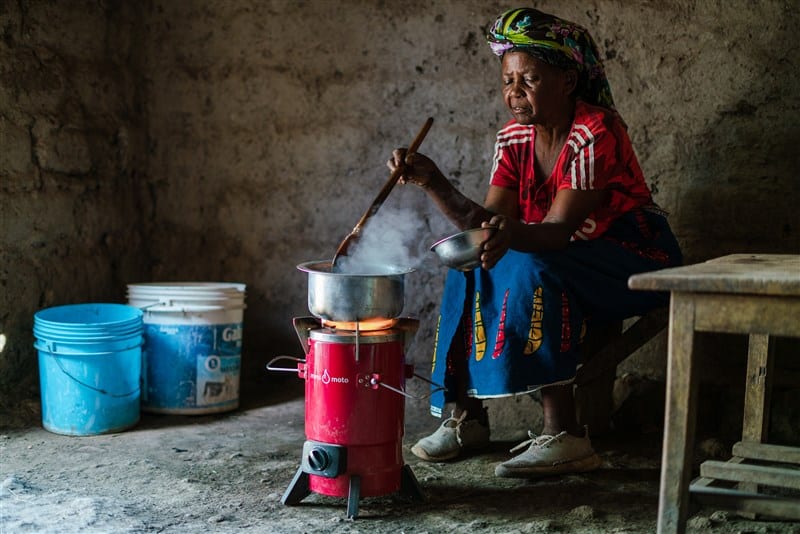
The effects of clean cooking
Waliaranga became part of the clean cooking energy project of Dorcas. Clean cooking is the production and distribution of fuel pellets and briquettes and the inclusive market development of ultra-clean cooking stoves, which positively impacts the lives of many Tanzanians. In this project we establish a socially responsible, innovative entity geared toward social change. Clean cooking leads to increased household resilience, family health and adaptation to climate change because of reduced deforestation, gas emission, workload for women, costs for fuel and new income generating opportunities. The cycle of energy poverty will be broken by making clean cooking affordable and accessible.
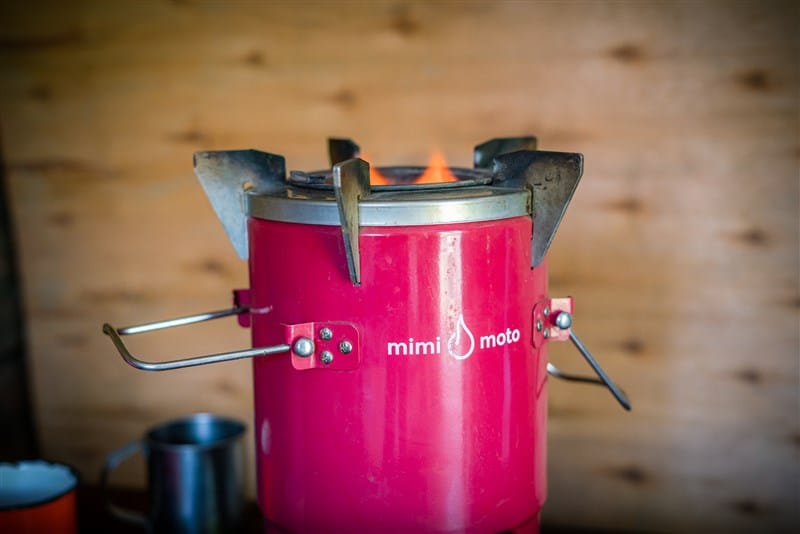
Waliaranga shares: ‘Since we’ve cut down all our trees, we now had to buy firewood at 2,000 Tanzanian shilling a bunch. The clean cooking stove, the Mimi Moto stove, uses recycled wood pellets which are affordable and economically practical – I can cook more food with just one kilogram of recycled wood pellets than with a bunch of smoky firewood. And a kilogram of pellets is only 700 Tanzanian shilling.’
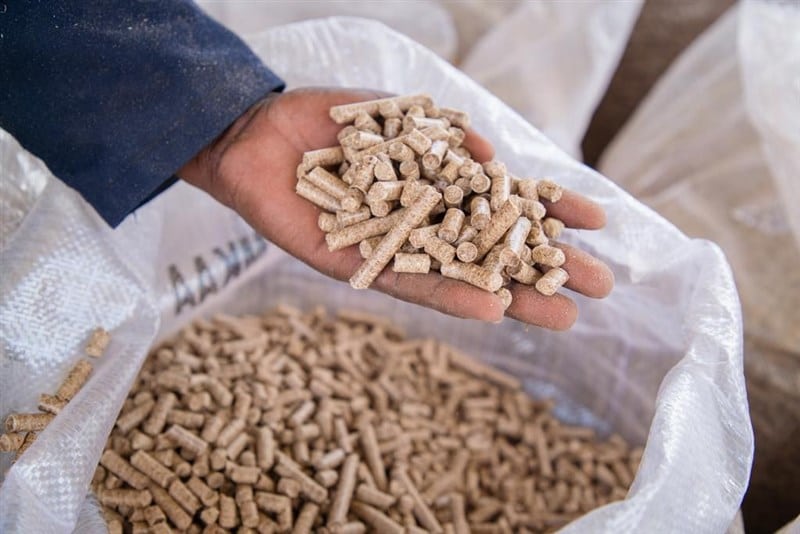
How Clean Cooking improves gender equality
Dorcas is committed to promoting gender equality. This has been deeply embedded in our way of working for many years. One of the ways we want to contribute to increased gender equality, is by creating equal opportunities for economic participation. The reduced workload for women, is essential in their empowerment and access to other sources of income and education. When women and girls are required to spend a lot of time gathering firewood and tending the fire while cooking, this reduces their opportunities to spend that time doing other work (and increase their income) or go to school.
Waliaranga: ’I had never imagined that I would one day just turn on the stove and make a meal in the comfort of my living room. No smoke involved and the cooking goes a lot faster. I don’t have to sit there to keep the fire burning. This gives me time to attend to other chores on my priority list. The clean cooking stove helped to turn things around in my life.’
Today is the 16th World Day of Social Justice. This year’s theme is: Overcoming Barriers and Unleashing Opportunities for Social Justice. Strengthening socials justice is a vital part of the United Nations agenda, while simultaneously the world seems more fractured than ever due to the many crises that we have faced over the last decade. Social justice deserves more attention in the coming years to achieve more equal, thriving and inclusive societies.
Dorcas is committed to combat major inequality and promote social inclusion in the countries we work. As an organisation, we address exclusion by empowering groups that have been structurally marginalised, such as older people, people with disabilities and minority groups. These groups are our key priority, as we recognise that when socials justice for marginalised people and groups is attained, it improves the overall well-being of societies.
Dorcas invests in sustainable change on three levels: individual, community, society. On individual level, we create opportunities for people to develop themselves further, and if necessary, we provide for their basic needs. On community level, we invest in resilient, self-organising communities that work together to solve their problems. At society level, we contribute to a just society in which everyone can participate. Change on these three levels is also important in striving for social justice.
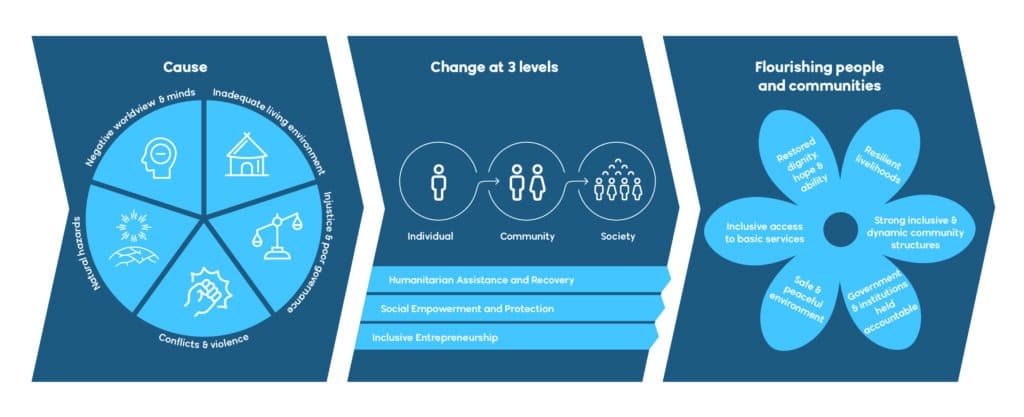
poverty and exclusion to flourishing people and communities.
How we facilitate social justice in countries such as Albania, Lebanon and Ethiopia:
On an individual level, we directly empower people by:
- Supplying in basic needs such as food packages, hygiene products and lifesaving assistance.
- Offering protection such as psychological support, child protection and support to those facing gender-based violence.
- Organising vocational trainings and information sessions on government services.
- Providing legal support and cash-assistance.
These services empower individuals to be thriving members of society and overcome barriers that lead to exclusion.
On community level, we empower communities by:
- Raising awareness on human and social rights and advocating for the rights of the most vulnerable.
- Supporting care and protection of vulnerable people through safety nets.
- Training in community mobilisation and leadership.
- Stimulating the exchange of experience with community representatives.
- Establishing self-help groups and business groups.
- Promoting the protection of vulnerable community members through different approaches, such as awareness raising related to GBV and child rights, capacity building and knowledge on rights.
Strengthening community leaders and capacitating them to engage in promoting human rights is essential in overcoming exclusion and promoting social justice.
On society level, we influence policies and create impact by:
- Continuously collaborating with actors, stakeholders and municipalities to coordinate and complement approaches and services to advocate for change.
- Providing knowledge, information and capacity building.
- Advocating with local government for additional services for marginalised people.
- Offering technical assistance to develop local policy documents.
- Facilitating multi-stakeholder meetings.
- Engaging in advocacy initiatives to reduce rights violations and shed lights on the important role of local partners in humanitarian response.
To continue to improve social justice, Dorcas works towards sustainable development and has clear points of action for the coming years. We will work closely with government institutions to support them in the development of programmes that promote social equity and advocate for more funds on social cohesion. We keep raising awareness on human rights and the importance of the inclusion of marginalised groups to improve social justice. Also, we prioritise activities that strengthen capacity building of local leaders and mobilise communities. We plan to achieve this through establishing formal and informal networks of service providers and stakeholders.
Strengthening social justice in an increasingly divided world struck by multiple crises requires an approach on these three levels. It is not only the world’s economies that are increasingly linked and interdependent; structures within a society are also interconnected.
On individual, community and society level, the capacity building of marginalised people groups needs to increase. Only when everyone has a voice and is included, will we see a thriving world.
Soon the Dutch Ministry of Foreign Affairs will present its “Feminist Foreign Policy”. Following in the footsteps of countries such as Spain, Sweden and Canada, the Netherlands will commit itself to fostering global equality. This will be done through the adoption and implementation of a feminist foreign policy. What this policy will entail in concrete terms is not yet known, but it seems that two target groups in particular will receive extra attention in Dutch foreign policy: (young) women and LGBTIQ+ people. The feminist foreign policy aims to serve the goal that “If more people get equal opportunities, that contributes to a safe, stable and prosperous world” (quote from the website of the Dutch Ministry of Foreign Affairs).
At Dorcas, we think it is a good development that the Netherlands is willing to target people that need extra support. For example, we know that women can be more vulnerable to poverty and exclusion for various reasons. It is important to take this into account in Dutch foreign policies, so that women worldwide receive the support they need. This also applies to LGBTIQ+ people. We therefore understand the desire to focus on equal rights for women and LGBTIQ+ people. However, Dorcas and 25 humanitarian assistance and development organisations fear that other groups of people, such as older persons, people with disabilities and ethnic minorities will automatically receive less attention. Dorcas cannot agree to favouring one person over another. This would undermine the goal of a “safe, stable and prosperous world”.
Dorcas stands for inclusive policies and practices in which everyone can participate regardless of ethnicity, gender, religious background and other personal characteristics. That is why Dorcas in collaboration with 25 organisations has written a letter to the Dutch Ministry of Foreign Affairs. In this letter we jointly request attention for an inclusive foreign policy that takes into account all personal characteristics that could lead to exclusion. As far as Dorcas is concerned, this goes beyond gender and sexual preference alone.
The letter includes suggestions on how the Dutch feminist foreign policy can broaden its scope beyond gender and sexual orientation. Often the overlap between different personality traits creates extra vulnerability. For example, women with a disability are more vulnerable than men with a disability. By recognising this overlap and looking beyond gender and sexual orientation alone, the 26 organisations hope that the Netherlands can make a difference worldwide for everyone in need!
What is a Feminist Foreign Policy?
The Netherlands wants to reduce inequality and strives for equality between men and women and LGBTIQ+ people all over the world. That is why the Ministry of Foreign Affairs is working on feminist foreign policy.
With the choice for a feminist foreign policy, equal rights and equality for women and LGBTIQ+ people will be central to all aspects of Dutch foreign policy. With this, the Netherlands joins a group of frontrunners from countries that are committed to gender equality internationally, such as Germany, Spain, France, Luxembourg, Canada, Mexico and Chile.
Dorcas distributes food, provides health support in a mobile clinic and offers psychosocial support to those affected by the earthquake. Dorcas’ humanitarian assistance coordinator Mirian Wester explains this protection approach that psychosocial support is part of.
‘Surviving an earthquake is incredibly intense’, explains Mirian. ‘It can cause a lot of stress and feelings of insecurity, which can ultimately cause a range of other complaints. Many people have been pulled out from under the rubble, and everyone has lost family and/or friends. On top of that, many people lost their homes, possessions and income in one fell swoop. That obviously has a huge impact on their lives.’
Food and water are basic needs, but so is good psychological help. Difficult experiences need to be processed as soon as possible. Many people are resilient and can talk to friends or family about their feelings and fears. Others need professional support and Dorcas provides that.
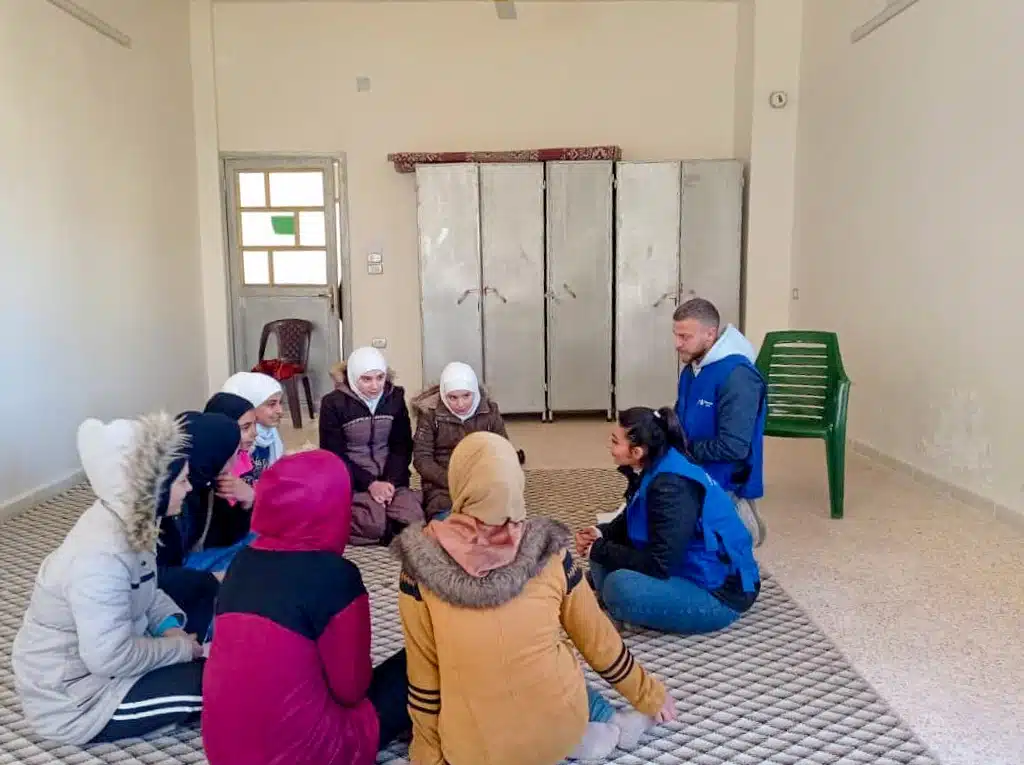
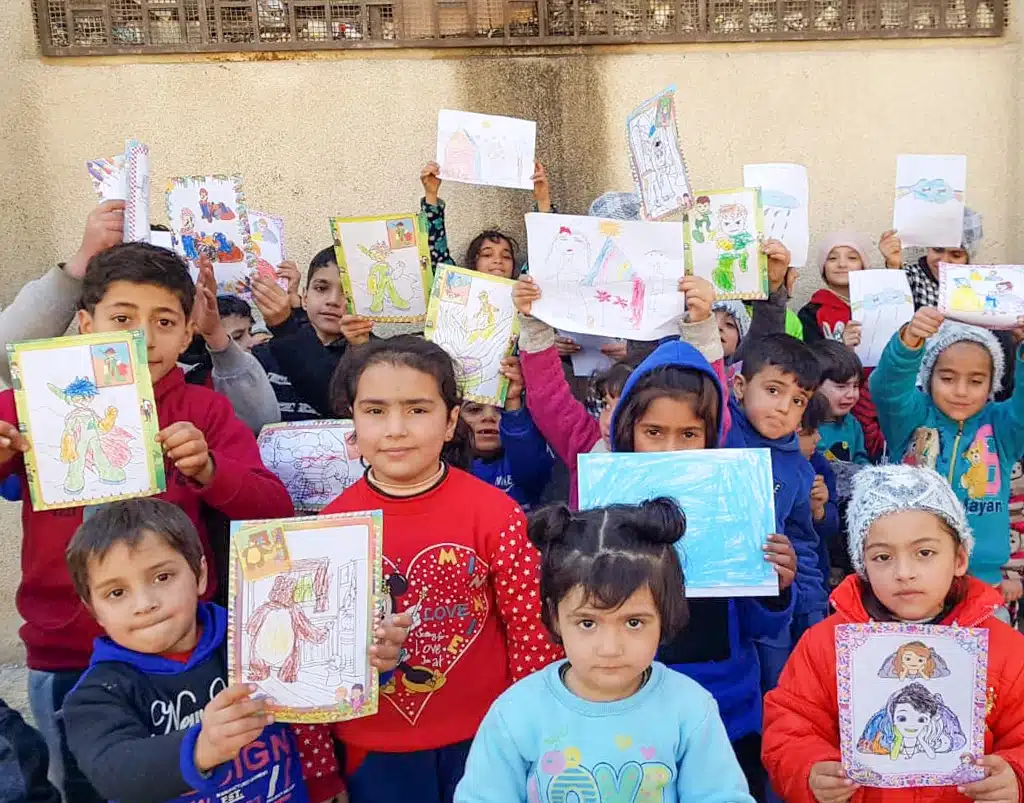
The Dorcas mental health and psychosocial support team in Syria consists mainly of social workers and psychologists, each with their own expertise. For example, some employees are specialised in giving psychosocial support to children. Providing timely help to children is extremely important. If an intense experience is not processed properly, they can carry it with them for the rest of their lives’, says Mirian. Dorcas therefore focuses on psychosocial support for children. The Dorcas Community Centres offer recreational activities to help children feel safe and relaxed and regain their self-confidence. For example, children can colour in pictures or play football with each other. Individual psychosocial sessions are possible, if a child requires specific attention.
Dorcas also organises psychosocial support for adults. This support helps them to cope with the impact of the earthquake, increase their resilience and deal with their experiences in a positive way.
Dorcas also organises awareness sessions about what people can do during and after earthquakes and about the different emotional reactions such a situation can evoke. They then learn how to deal with their reactions, for example, through breathing exercises. Individual psychological sessions are also available for adults.
Currently Dorcas provides support in 13 community centres and temporary shelters. Psychosocial activities take place In the community centres and in the temporary shelters Dorcas distributes food together with local partner organisations. Dorcas social workers visit reception locations and can refer people to the specialised psychosocial support in the centres.
Before these activities started, Dorcas first of all ensured that its staff received psychosocial support to cope with their own experiences. ‘EMDR group sessions and individual sessions were offered by our psychologist from Lebanon, who was on site immediately after the earthquake.’ Many members of staff took advantage of these sessions. Furthermore, the psychologist also gave staff a refresher course on how to give psychological first aid: calming and supporting people by showing empathy, listening and offering practical help, such as access to food. All staff distributing food or collecting data can give this first aid.
A coordinator specialised in psychosocial health is available to all staff to check on everyone’s progress. Mirian: ‘We are very aware that our colleagues were also affected by the earthquake and so we make sure that they get the help they need.’
In Syria, the earthquake caused widespread destruction in infrastructure and civilian buildings in Aleppo, Hama, Idleb, and Lattakia governorates. The impact of this earthquake is enormous. Many buildings in the region who have already suffered damage from the ongoing civil war are now destroyed.
When time passes by, we get more insight on the impact and fear that the biggest disaster is yet to come. After assessments we see:
- Many buildings have collapsed and people are still expected to be under the rubble. Many buildings are unsafe and the risk of collapse is high. In Aleppo, areas are closed due to safety reasons and providing humanitarian assistance is challenging.
- People stay on the streets, in cars, shelters, sports stadiums, mosques and churches. But there are also people who, despite the unsafe state of their homes, do not dare to leave.
- Another disaster is unfolding whilst people have lost everything and many of them do not have the means to provide in basic needs.
- The availability of essential products is limited. Shelters cannot always offer warm clothes, food and water. Given the temperatures, especially at night, it is urgent that people have access to a safe and warm place to stay.
- Syria is in a fuel-crisis and fuel is not always available or affordable. An immediate emergency demand for petrol is requested to support rescue workers and humanitarian organisations.
- Mental health and psychosocial support is essential when dealing with crisis. The continuous aftershocks are causing widespread fear and anxiety among children, older people, women and young people.
Dorcas has been active in Syria for many years. This allowed our staff on the ground to take immediate action. Dorcas is providing support on FSL, non-food items and protection via:
- Delivering food parcels and ready-to-eat meals.
- Supplying blankets and warm clothing.
- Providing health and mental health services and medicine through a mobile unit in Hama and Idleb. Its servicing in hard-to-reach areas.
- Offering mental health and psychosicial support. Our Psychological First Aid programme is designed to provide emotional support and support individuals cope with their negative experience.
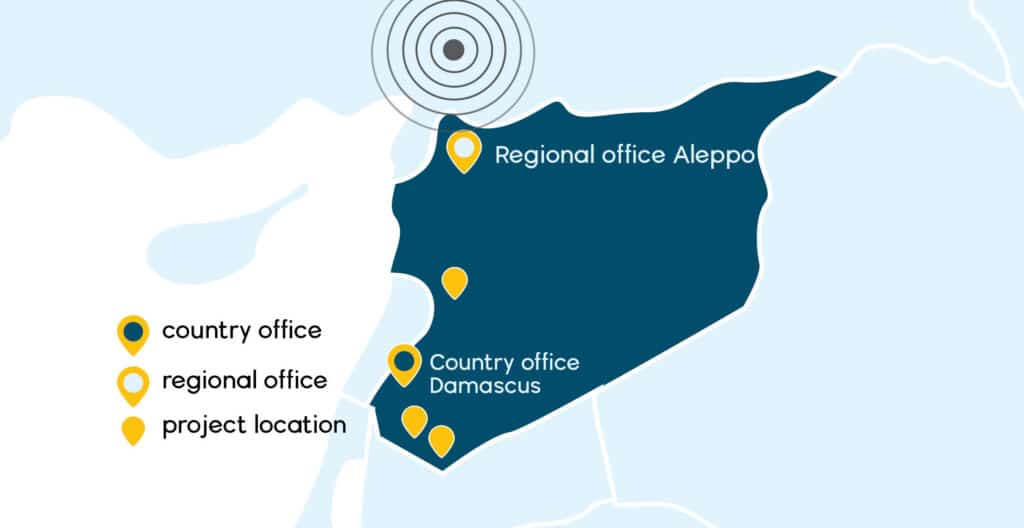
Earthquakes and severe aftershocks are causing great devastation in Syria and Turkey. Dorcas has been active in Syria for many years and is directly experiencing the consequences of this disaster itself. The office in Aleppo was heavily damaged. But country office staff took immediate action, offering support to victims based on what is needed. Blankets, warm clothes and food are currently being distributed.
Najla Chahda (Dorcas’ Country Director in Syria): ‘Our office in Aleppo is damaged and we cannot work there at the moment. It is unsafe. Luckily, we can operate from one of our partners office and continue to provide support to those in need. Our community centre, where many of our programmes are given, is unharmed. For us, it is not a question of taking action. It is in our hearts to support people and that is what we are doing now. We have to do this.’
Due to the Beirut blast, Dorcas has experience in quickly responding to a disaster of this magnitude. The situation and needs of the people who have been affected are continuously assessed. Slowly the situation is becoming clearer, but it remains to be seen whether there will be new earthquakes and how severe they will be. We see older people are unable to leave their homes and when they do, they have nowhere to go. People are afraid to stay indoors, but the current weather conditions make this challenging. Besides distributing clothes, blankets and food, Dorcas also provides first aid to the victims through a mobile clinic. Furthermore, Dorcas is looking into providing cash-money assistance and psychosocial care.
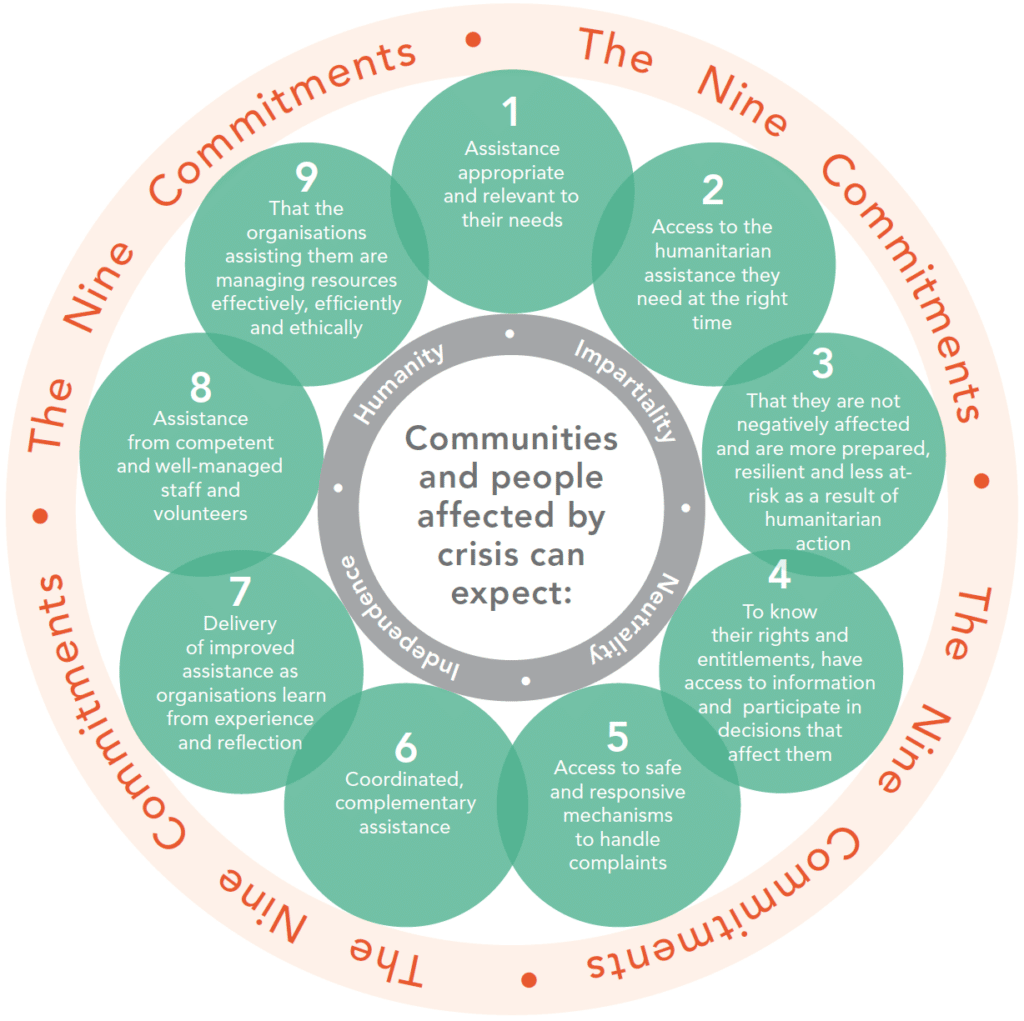
Dorcas is proud to announce that we have undergone verification against the Core Humanitarian Standard (CHS) by the independent auditing body HQAI. The process gives confidence to affected populations, donors, the public and other stakeholders that we are continuously improving the quality and accountability of our services. Quality and accountability are at the heart of our activities and this three-year process will help us assess and ensure the quality of our work, reduce the risk of mistakes and continuously improve our services – for the benefit of our organisation and, not least, the people we work for.
HQAI auditors measured whether Dorcas makes continuous progress in applying our CHS Commitments. The audit included a thorough process of document checks, reviews of practices as well as interviews with staff, affected communities and other local stakeholders.
The audit was an excellent opportunity for us to get insight in our strengths and weaknesses regarding CHS, and how we can further improve. The independent verification gives assurance that Dorcas is continuously improving its programming and operations. Based on the audit, Dorcas is able to further improve its commitment to quality and accountability for the benefit of those in need.
About Core Humanitarian Standard:
The Core Humanitarian Standard on Quality and Accountability (CHS) is a globally recognised voluntary standard that sets out Nine Commitments that organisations and individuals involved in humanitarian response can use to improve the quality and effectiveness of the assistance they provide.
The CHS places communities and people affected by crisis at the centre of humanitarian action. As a core standard, the CHS describes the essential elements of principled, accountable and high-quality humanitarian aid. It is a voluntary and measurable standard. The CHS is the result of a global consultation process. It draws together key elements of existing humanitarian standards and commitments.
#Dignity – Dorcas believes in the value and God-given potential of every single person. Every single person. No one excluded. We see those in need and stand next to them.
#Freedom – Dorcas fights poverty, exclusion and crisis. Why? Every single person deserves to live in freedom. Freedom from poverty, exclusion and crisis. Free to be part of resilient and flourishing communities. Free to make one’s unique contribution to a fair and just world.
#Justice – Dorcas sees a world where poverty, exclusion and crisis marginalise people. We also see the potential of these people and their communities to flourish despite their difficult circumstances. We invest in communities in which everyone can participate and make their contribution.
#All – Dorcas is committed to the overarching principle of the Sustainable Development Goals: leave no one behind. We are part of a global movement of individuals and organisations working for a just and fair world. Together we speak out against injustice and together we act for a world with dignity, freedom and justice for all.
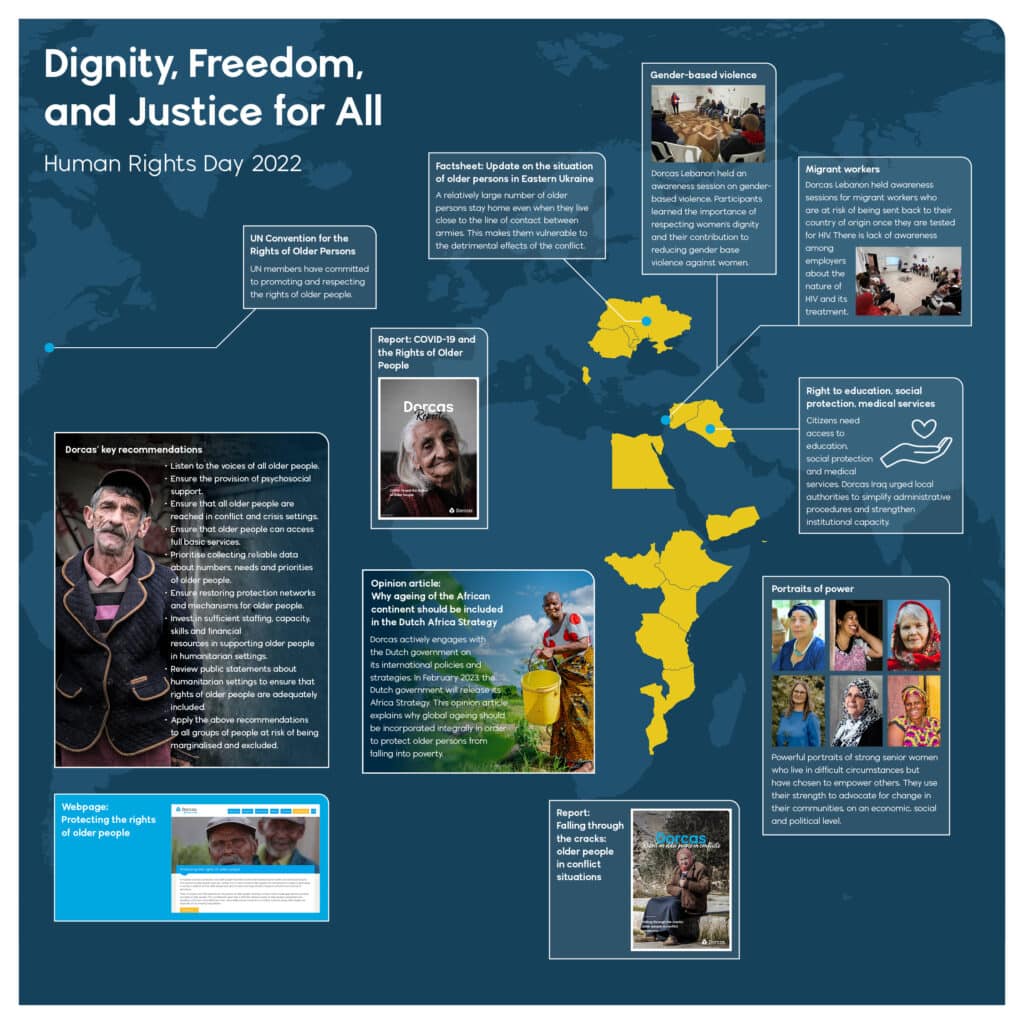
Go to:
- Webpage: Protecting the rights of older people
- Dorcas’ key recommendations
- Report: COVID-19 and the Rights of Older People
- Factsheet: Update on the situation of older persons in Eastern Ukraine (download)
- Gender-based violence (Instagram Tabitha Lebanon)
- Portraits of Power
- Report: Older people particularly vulnerable in conflict situations
- Opinion article: Why ageing of the African continent should be included in the Dutch Africa Strategy
- UN Convention for the Rights of Older People
If you look at the figures, there is only one conclusion: Africa is ageing rapidly and will be doing so till at least 2050. It is obvious that this will have consequences for the way in which sustainable economic development and poverty reduction can be achieved on the African continent. In 2009, the Dutch Advisory Council on International Affairs (AIV) concluded that anticipating the ageing population in low-income countries should be an integral part of Dutch development policy. In the same study, the AIV concluded that the mainstreaming of ageing in development policy is “not progressing well”. The AIV formulates this as follows:
“The lack of prospects of retirement provision for the majority of people living in developing countries means minimal income security for old age.”
Despite the fact that this problem has been known for quite some time, global ageing and its consequences for international cooperation are not an integral part of Dutch development cooperation yet. In fact, Dutch development cooperation policies do not mention global ageing and the rising social protection burden for low-income countries once. However, the Dutch Africa Strategy offers a second chance. In this article, I explain why mitigating the consequences of an ageing continent deserves a place in the Dutch Africa Strategy, and where the first starting points for concrete measures for social protection can be found. Social protection is defined here as policies and programs developed to mitigate the direct consequences of poverty, for example through cash transfers or viable pensions.
Ageing increases the need for social protection
The AIV is not alone in its conclusion that the ageing population should be an integral part of international development agendas: the UN also concluded this and other more recent studies show that, towards 2050, it will be a great challenge to prevent African adults from falling into poverty after their working life. On the African continent challenges regarding ageing are as great as in the rest of the world. Research shows that in all African countries the number of people over the age of 60 will (almost) double towards 2050. Many of these older persons traditionally depend on their social environment, such as neighbours, acquaintances and their children. However, this social environment has been subjected to change: urbanisation (the migration of young people to the city) and the breakdown of traditional extended families (families in which 3 generations live together) mean that African older persons are increasingly dependent on themselves.
In addition, according to research, the percentage of older people receiving a pension is below 10 percent in almost every African society. The lack of viable pensions on this continent often leads people aged 60 and over to depend on their social environment after their working life. This dependency makes older persons potentially vulnerable when the social environment faces adversity such as loss of income, or when the social safety net is not there in the first place. There is therefore an urgent need for social protection for older persons, for example in the form of living pensions, to prevent older persons from falling into (extreme) poverty.
Why simply working more and longer is not the solution
All this means that, without effective policy interventions, more and more older people will have to continue working to individually generate a living income. This is not always possible for every older person due to physical constraints or a lack of skills. An additional problem is that the percentage of older people participating in work worldwide fell between 1960 and 2010. In Sub-Saharan Africa, the labour participation of people over the age of 65 fell from 57 to 48 percent. In the Middle East and North Africa combined the decline is even stronger: from 29 percent in 1960 to 18 percent in 2010. The conclusion is therefore that, instead of working more to meet their increasing needs, older persons have participated less in labour over the last 50 to 60 years.
This confluence of circumstances in which an increase in the number of older people, a lack of social protection and a decreasing labour participation of older people come together, is an obstacle for achieving the SDGs. SDG1 (no poverty) and SDG2 (zero hunger) are directly at risk if mitigating the effects of ageing of the African continent is not integrated into future development strategies.
Starting points for the Africa Strategy
Fortunately, there are always glimmers of hope. An example: the ever-increasing penetration of the mobile phone on the African continent, also among older persons, in combination with the mobile payment technology popular in (Eastern) Africa, makes it relatively easy to reach older persons in remote and rural areas. This is important, because (extreme) poverty is often more concentrated around rural areas. This mobile payment technology does not require any personal data, bank accounts or proof of identity: the telephone number is sufficient to receive and send payments. This enables governments and NGOs to reach individuals in vulnerable situations and to offer social protection in the form of cash transfers, also in remote and rural areas. Small-scale experiments are already underway in countries such as Kenya, Lesotho and Rwanda, with promising results at first glance. With technological heavyweights such as Adyen and Capgemini Nederland, the Netherlands have the knowledge to further develop this infrastructure. This could be the prime example of a successful aid and trade combination: strengthening African public services for marginalised people with the help of Dutch knowledge and skills.
Strengthening social cohesion between young and old, and preventing young people from moving to the cities is more complex. This requires a socio-cultural dialogue that cannot be imposed from European countries. However, local and international NGOs can stimulate the debate in collaboration with diplomatic offices. Also, the Dutch ministry can provide the financial means for lobby & advocacy on the benefits of social protection for potentially vulnerable people such as older persons, people with a disability or women.
Let’s go!
The Africa Strategy specifies how the Netherlands intend to relate to the African continent, both in the European context and bilaterally. A hefty task, especially since the strategy aims to be relevant for the next 10 to 15 years. A wide range of themes such as trade, equal partnerships, climate change, security and migration are therefore incorporated in the strategy. Given the facts presented above, ageing deserves an integral place in this strategy. Let the Africa Strategy therefore be a first step towards finally working on restoring social protection for older persons, making use of Dutch knowledge and expertise where relevant. Only by doing this, we can keep track of achieving the SDGs.