How reliable value chains are strengthening livelihoods in Ethiopia
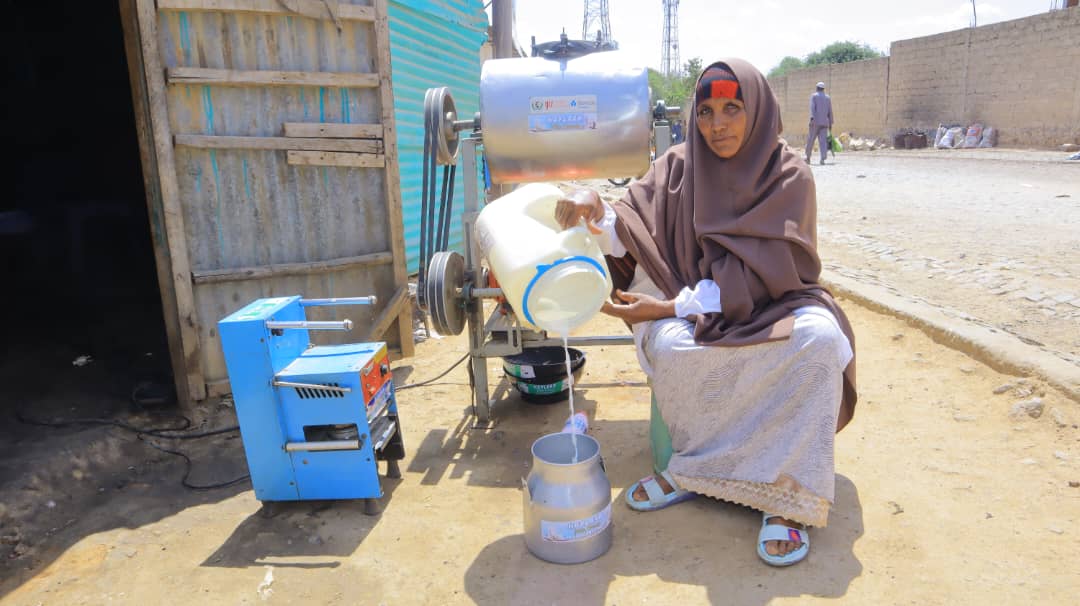
For Momina, chair of Hilkas Milk Cooperative in Moyale, Ethiopia, participating in the camel milk value chain has meant more than earning an income. It has brought structure, trust and dignity. ‘The most important change is dignity. I moved from dependence to leadership,’ she says.
Momina’s story reflects a wider lesson from Dorcas’ recent publication, Building Reliable Value Chains: Lessons from Dorcas’ multi-country experience. Based on an independent evaluation of five value chains in Eastern Africa, the report shows that producers benefit most when the systems around them are reliable: when payments are timely, governance is trusted, quality systems function and market linkages are secure. In Moyale, near Ethiopia’s border with Kenya, these principles are reflected in the daily work of Hilkas Milk Cooperative.
Momina lives in an area affected by drought, conflict and border insecurity. Before the cooperative became a source of stability, her family’s livelihood depended almost entirely on her husband’s income. ‘If my husband earned money, we survived. If he didn’t, we struggled,’ she says. Food, school fees and medicine all depended on one person, leaving her with a constant fear that she would not be able to protect her children if something happened.
When demand is not enough
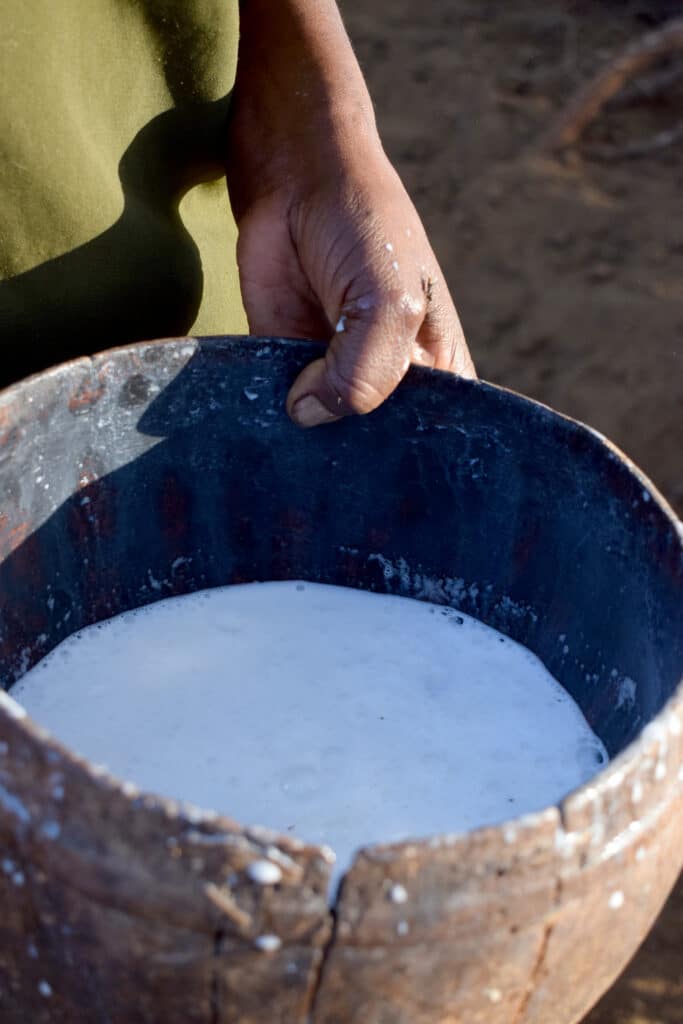
Before joining the cooperative, Momina’s life was centred on her household. She prepared food, fetched water, cared for her children and supported her husband, but she had no personal income and limited opportunities beyond the home. Camel milk had value, but the way it was sold made benefits uncertain. Milk was sold individually, without coordination or knowledge of quality standards and prices. Sometimes it spoiled. Sometimes buyers took advantage of the women. ‘We did not know our rights,’ Momina says.
This reflects one of the central findings in Dorcas’ value chain report: demand is rarely the only challenge. Long-term results often depend on whether supply systems, transaction processes and governance arrangements work consistently. For Momina and other women in Moyale, working together through Hilkas Milk Cooperative offered a different path. But during a period of violent border conflict, the cooperative’s equipment, including refrigerators and related tools, was destroyed by fire. ‘Everything burned. We lost what we had built over years,’ Momina recalls. The loss left many women discouraged, and Momina feared that her children’s future would never improve.
Rebuilding reliability through structure and trust
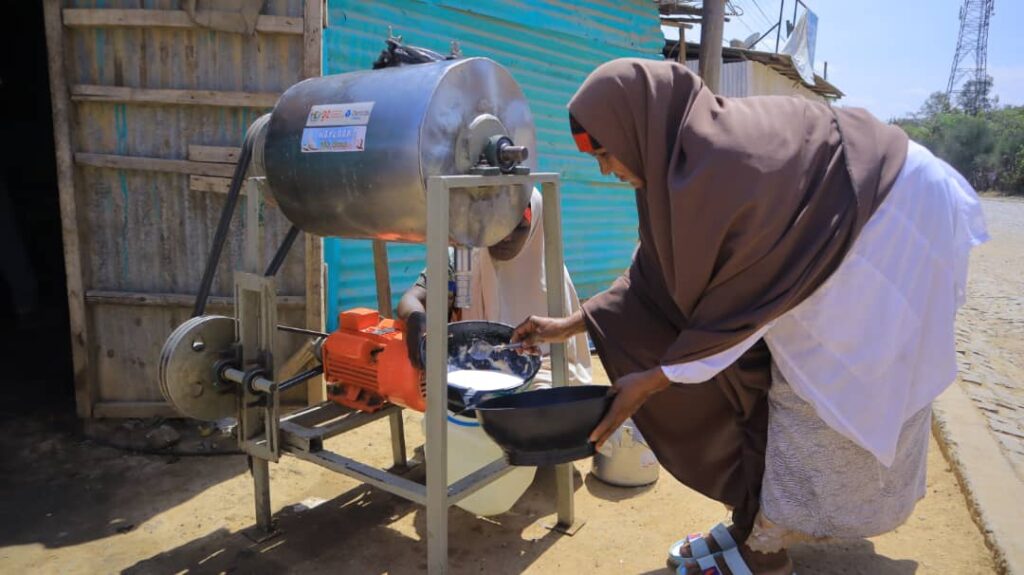
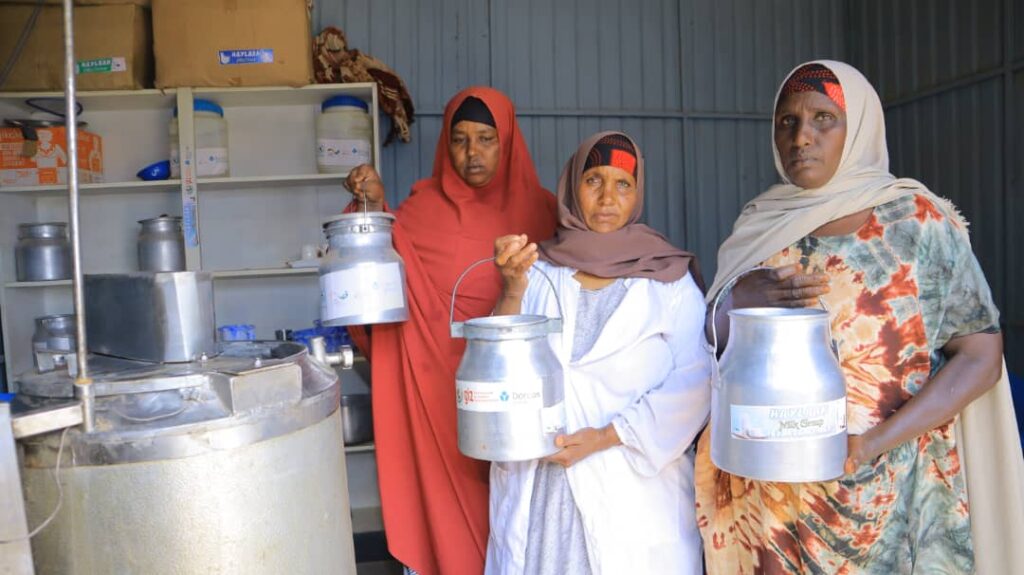
Dorcas supported the cooperative after the destruction. According to Momina, the organisation came not only with equipment, but also with encouragement to rebuild. The women received refrigerators, lactometers, protective equipment and training in cooperation, financial management, recordkeeping and transparent decision-making. In practice, this meant better quality control, clearer records and stronger governance. Momina also travelled to Addis Ababa, Nairobi and Uganda for training, her first time leaving her area, where she learned more about leadership and how strong cooperatives function.
Today, Momina is the chair of Hilkas Milk Cooperative, which has 35 members. Every Saturday, the members meet to review records, save money and deposit funds at the bank. The cooperative also coordinates with ten milk collection centres. ‘Before, there was no structure. Now there is discipline, planning and trust,’ Momina says. This way of working mirrors one of the report’s key lessons: transparent leadership, clear rules and trusted systems do not only improve commercial performance; they also influence who benefits.
For Momina personally, that shift has been profound. She has learned to speak without fear, contribute to decisions and lead with confidence. Her experience also shows why inclusion in value chains needs to be built into the way systems work. Formal cooperative structures, transparent decision-making and direct participation have enabled women like Momina to gain income, influence and recognition.
A stronger future built on dependable systems
The impact reaches beyond the cooperative. Momina’s income now supports her family. She has built her own house, bought basic household items and, most importantly, is able to send her children to school. The regular income and savings have also brought greater security. ‘Even when challenges come, we plan together. We save. We do not panic like before,’ she says.
Looking ahead, Momina hopes the cooperative will grow into a larger production centre that can support more families and contribute to the wider district. Her story brings Dorcas’ value chain findings to life: value chains work best when producers can depend on the systems around them. For Momina, that reliability has meant dignity, stability and leadership. ‘Before Dorcas, I waited for life to happen to me. Now I lead my life and others follow.’