New report highlights what Dorcas has learned about building reliable value chains
Dorcas has published a new report, Building Reliable Value Chains: Lessons from Dorcas’ multi-country experience, presenting lessons from an independent evaluation of five value chains in Eastern Africa. The report explores what enables value chains to deliver reliable benefits for producers and where challenges remain.
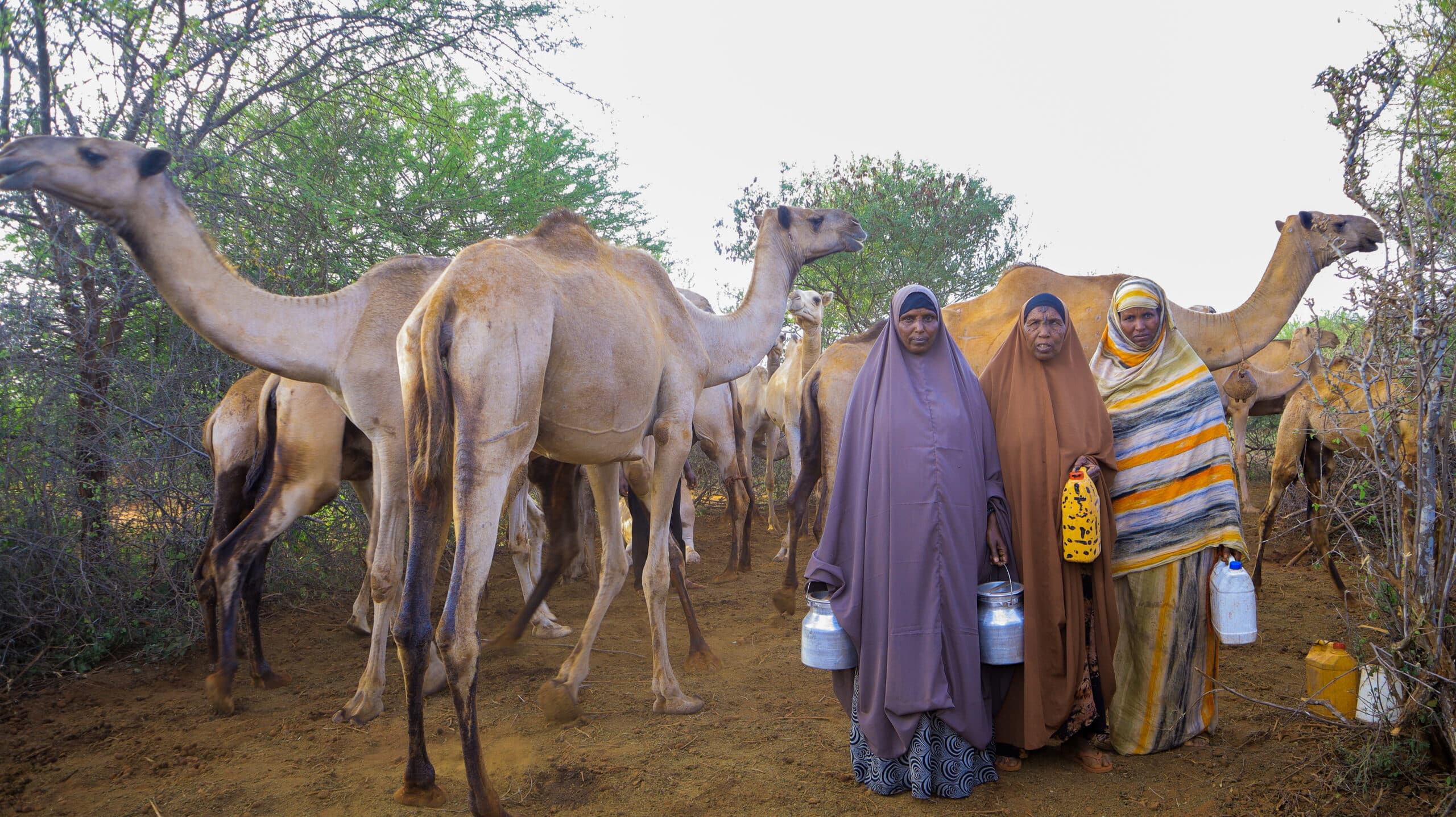
The evaluation examined value chains for honey, camel milk, pasture and milk, and chicken across Kenya, Ethiopia and Tanzania. It drew on household surveys with 933 producers, focus group discussions, key informant interviews, programme monitoring data and portfolio-wide analysis.
Reliability emerged as the defining factor
One of the report’s central findings is that sustainable value chains depend more on reliability than on training alone. Across the assessed value chains, stronger outcomes were associated with timely payments, trusted governance structures, functioning quality systems and secure market linkages. Where these systems worked consistently, producers experienced more stable incomes and stronger market participation. Where they fell short, gains often proved difficult to sustain.
The evaluation found that demand was rarely the main constraint. Instead, the reliability of supply systems, transaction processes and governance arrangements often determined whether value chains delivered long-term results.

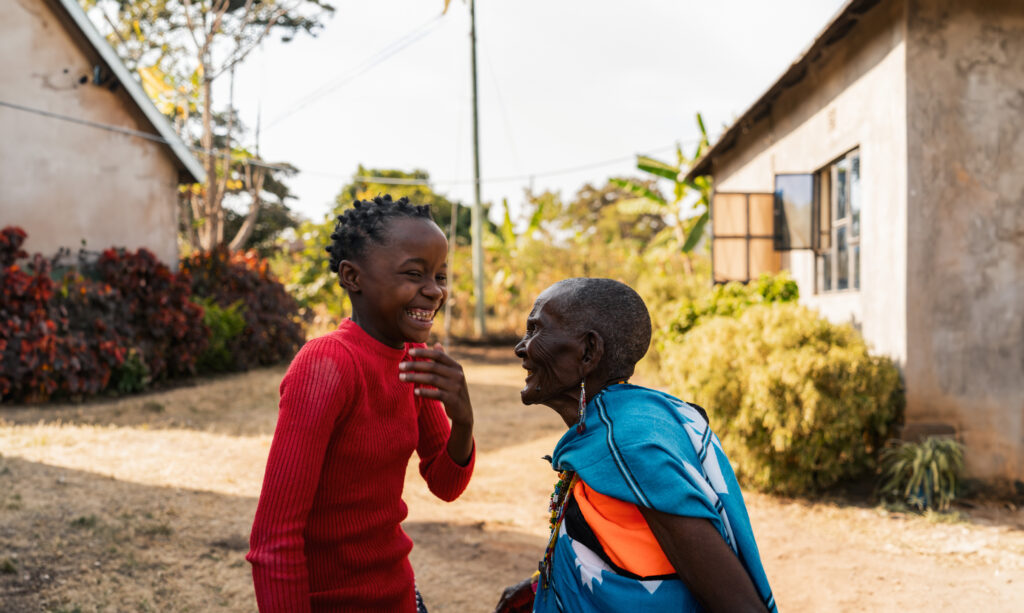
‘We now use modern techniques to keep bees and that means we
Andrea Kosmas
can earn a better income.’
Beekeeper from Chemba, Tanzania
Three patterns across countries
The report identifies three recurring patterns across different countries, products and contexts:
- Reliability predicts sustainability.
- Market-first value chains perform better than production-first approaches.
- Governance quality shapes who benefit.
Value chains that began by identifying buyers, confirming demand and establishing payment systems before scaling production consistently performed better than those that focused first on increasing production. The evaluation found that production growth without secure market access often led to increased output without corresponding income gains.
Governance also proved critical. Transparent leadership, clear rules and trusted payment systems contributed not only to stronger commercial performance but also to more equitable participation and benefit-sharing.
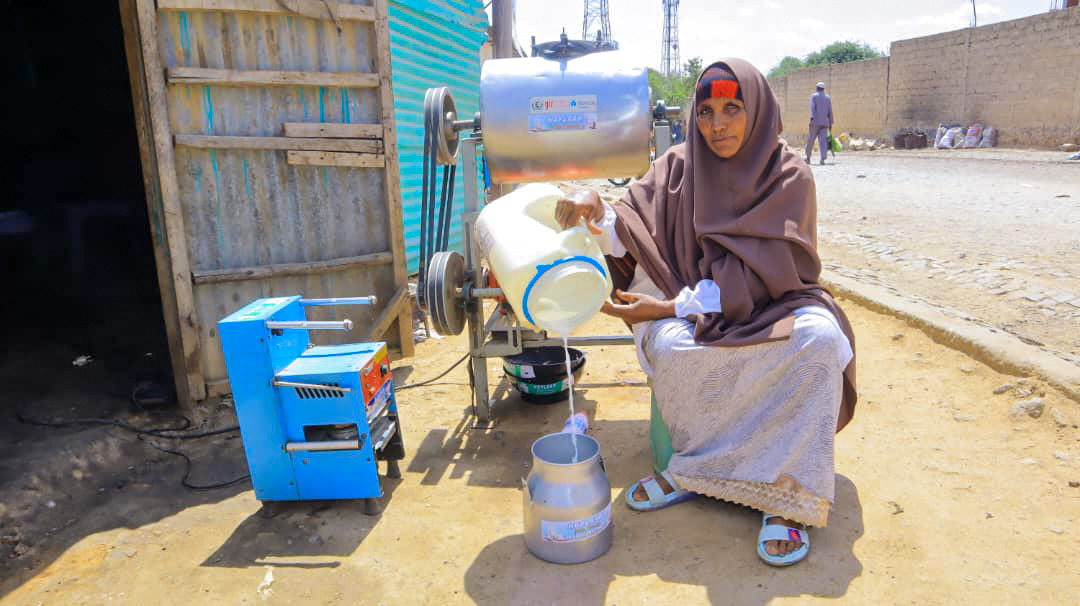
‘Before Dorcas, I waited for life to happen to me. Now I lead my life and others follow.’
Momina Dharar Abdi
Moyale, Ethiopia
Inclusion strengthens performance
The report highlights inclusion as an important design consideration rather than an add-on. Women achieved meaningful gains in income, decision-making and leadership across the value chains where formal cooperative structures and direct payment systems were in place. However, the evaluation also identified ongoing barriers for young people and people with disabilities.
The findings suggest that inclusion is strongest when barriers are addressed from the outset through programme design, including appropriate governance arrangements, accessible participation pathways and payment systems that reach producers directly.
Lessons for practitioners, donors, investors and partners
The report offers practical lessons for organisations involved in value chain development. For programme implementers, it highlights the importance of designing from the market backwards, building baseline data from the beginning and treating payment reliability as a core performance indicator.
For institutional donors, the findings emphasise the importance of assessing governance, market viability and long-term sustainability rather than focusing solely on production outputs. The report also notes that value chain enterprises rarely become fully self-sustaining within a single grant cycle and often require a realistic multi-year pathway to maturity.
For investors and corporate social responsibility partners, the evaluation points to the importance of commercial viability, operational reliability and post-programme sustainability when assessing investment opportunities.
‘Dorcas has shifted from facilitation to enterprise thinking. In programming, you think about impact. In business, you think about return on investment. We need to accept that failure is part of innovation.’
Mobisa Ronald Mose
Value Chain Programmes Manager, Dorcas Kenya
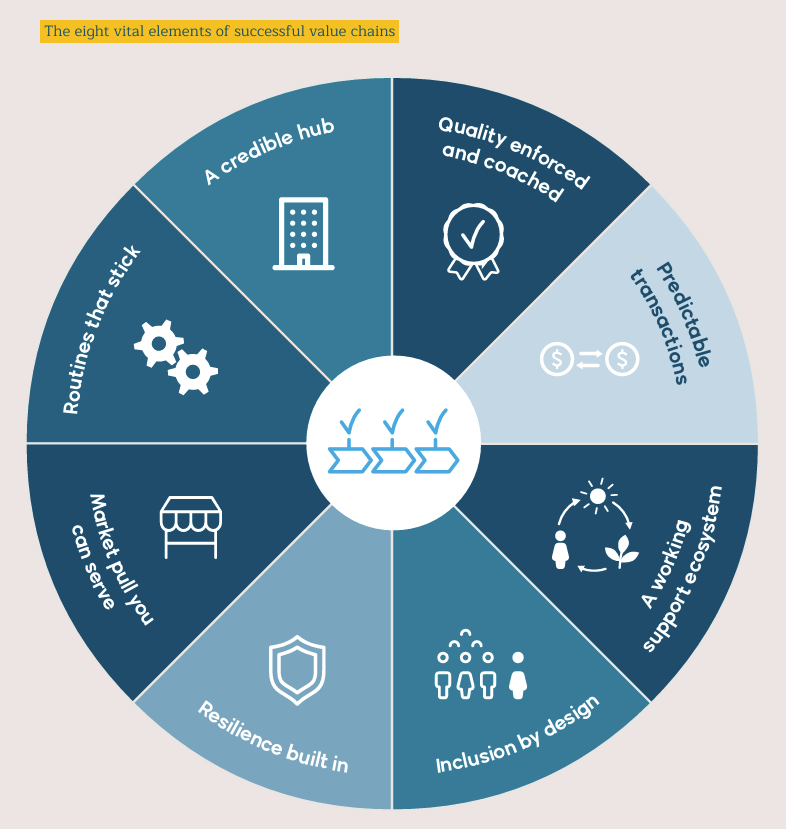
Across five value chains in three countries, the
evaluation identified eight non-negotiable elements. The absence of any one of them led to consistently weaker results. These are not a one-off checklist. They are ongoing design requirements that must be maintained throughout the life of a programme.
Looking ahead
The evaluation also identifies several areas for further learning. These include increasing opportunities for young people, strengthening the measurement of outcomes for women and girls, integrating climate resilience from the start of programme design, and understanding how the approach performs in different contexts beyond Eastern Africa. Early pilots in Albania and Egypt are helping Dorcas explore these questions.
The report concludes that value chains work best when producers can depend on the systems around them. Reliable payments, effective governance, functioning quality systems and trusted market relationships are not supporting conditions but fundamental building blocks for sustainable economic participation.
Connect with us!
Interested in connecting or exploring collaboration opportunities? Dorcas welcomes conversations with NGOs, institutional donors, investors, corporate social responsibility partners, researchers and practitioners who are working to build more inclusive and sustainable value chains. Whether you would like to discuss the report findings, exchange experiences, or explore opportunities for partnership, we would be pleased to hear from you.
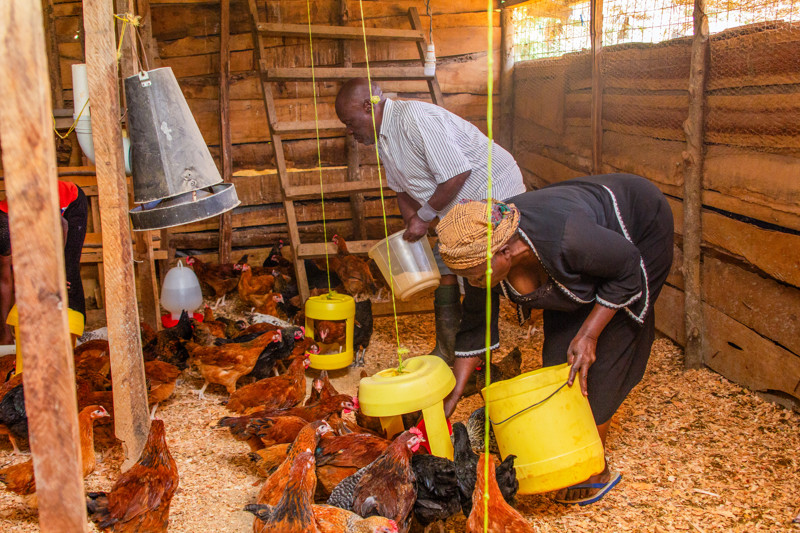
‘Chicken farming is unstoppable on this farm. What we have learnt cannot be taken away from us — and that is what gives us confidence to keep moving forward.’
Annastacia Nyaimbo
Siaya, Kenya