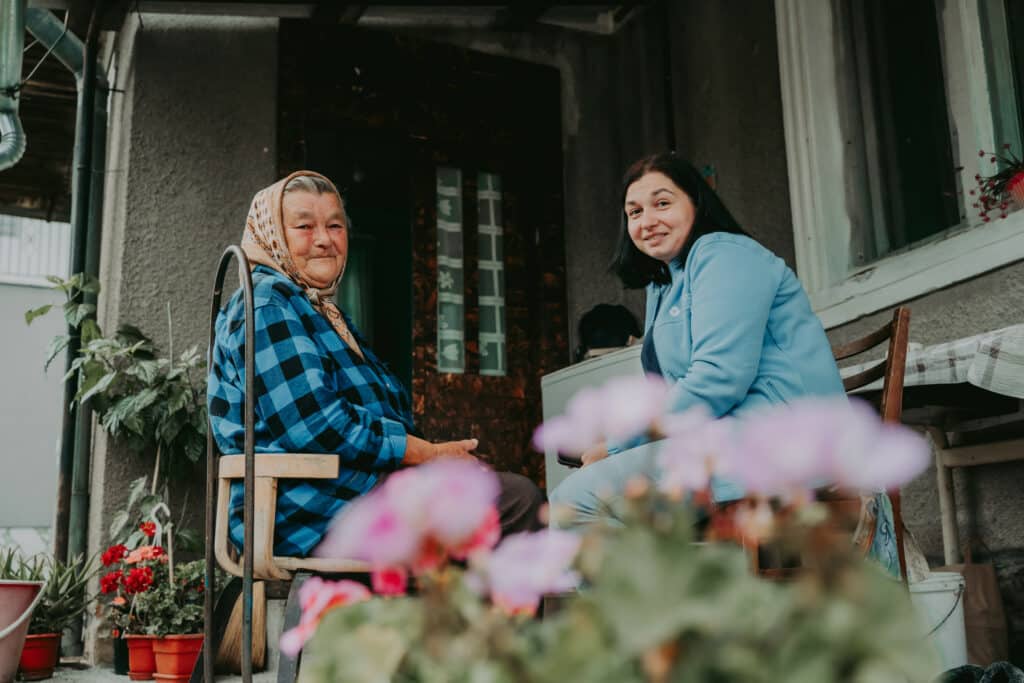
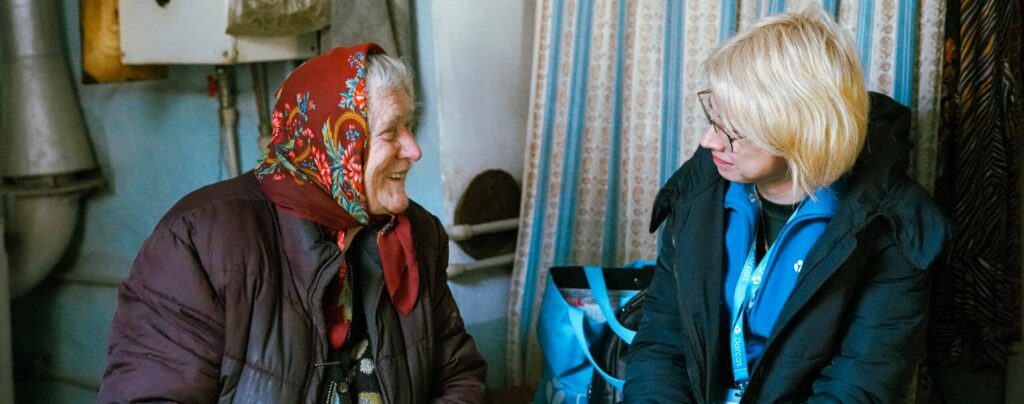
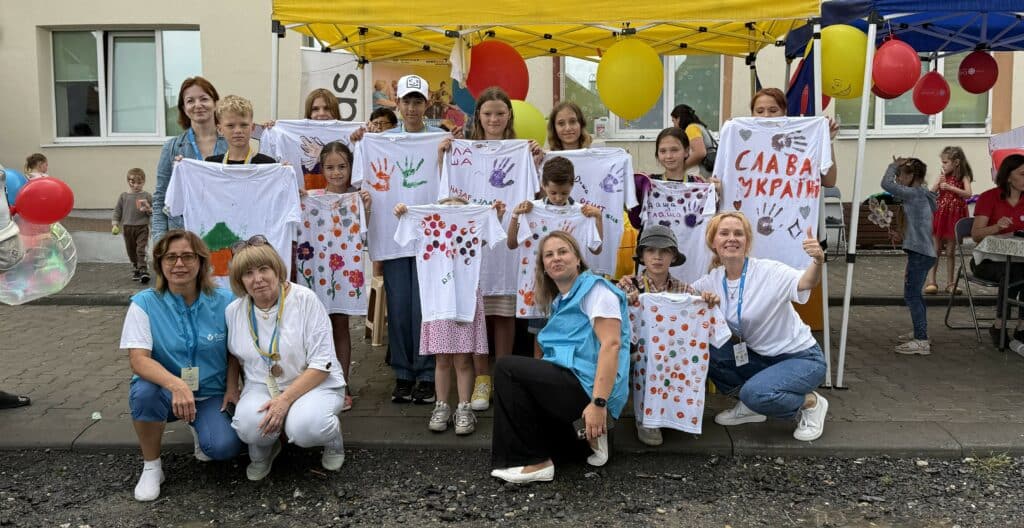
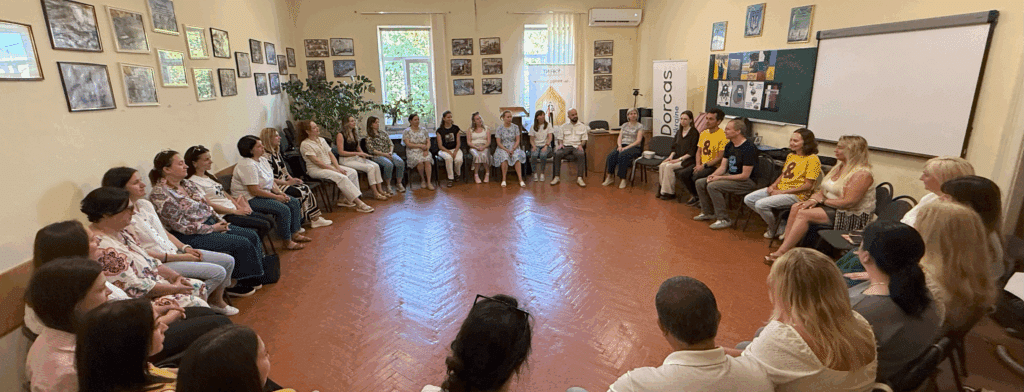
Dorcas Ukraine has taken significant steps forward with its psychosocial support programme for internally displaced persons and others affected by the ongoing conflict in the Zakarpattia region. Around 6,800 people have participated in various programme activities, receiving support in the form of group meetings, individual consultations, training events and other assistance depending on their needs.

The Connect programme

A total of 1,216 participants completed the Dorcas Connect programme, which was designed to provide a space for people to reconnect with themselves and others. To ensure that the knowledge and tools acquired through the programme continue to be available to communities, providing sustainable support, training was also conducted for 1,107 Connect facilitators.

Psychosocial support through creativity and music

Sounds of Change training sessions were delivered to 60 facilitators and 23 trainers through the collaborative efforts of Dorcas, the ‘How Are You?’ mental health support programme, the NGO Sol Diez, and the Sounds of Change team of trainers.

These sessions equipped specialists to implement musical and creative approaches in psychosocial support, thereby enhancing the variety and accessibility of the available assistance.

Evidence-based psychological support (PM+)

In collaboration with WHO and the ‘How Are You?’ programme, Dorcas Ukraine continued to promote evidence-based assistance methods. In particular, it focused on the short-term psychological intervention “Problem Management Plus” (PM+).

Training was conducted for four groups, reaching 61 community representatives. The PM+ programme provides people experiencing high levels of distress and reduced functioning with access to quality psychological support at the community level.

This was made possible thanks to the collaboration of Dorcas Ukraine, the NGO ‘Nehemiah’, the ‘How Are You?’ programme, the Zakarpattia Oblast Centre for Social Services and the Zakarpattia Oblast State Administration.

To prevent specialists from facing challenging cases alone, the project team organised 54 hours of group supervision and 572 hours of one-to-one supervision. Supporting those who support others is an essential part of maintaining a high-quality support system.

Amid the hostilities in Ukraine, there has been a significant decline in the purchasing power of people in the most vulnerable circumstances. These include older people and people with disabilities who have been severely affected by the ongoing conflict.

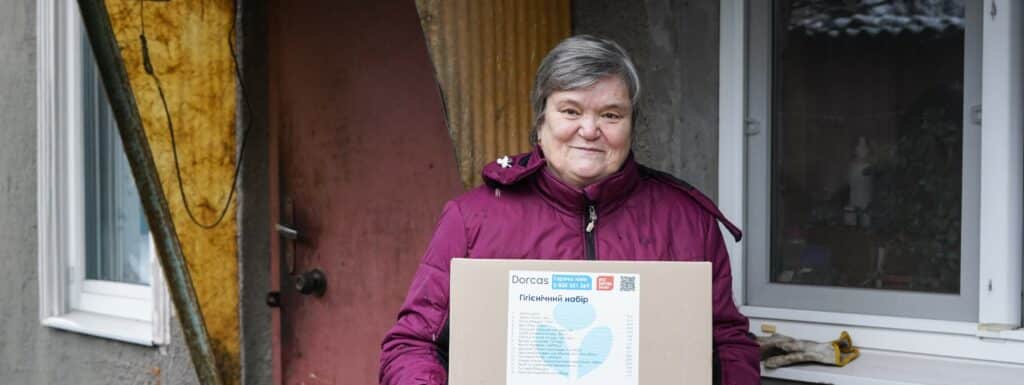
Dorcas provides hygiene kits containing basic essentials to residents of Zaporizhzhia. Thanks to funding from EO Metterdaad, the Dorcas Ukraine team has distributed 210 kits to people with disabilities over the past five months.

Through this joint contribution, hundreds of people have received high-quality care that will prevent complications associated with prolonged bed rest, ease the burden on family members or caregivers, and uphold a sense of dignity in everyday life.

Written by: Agnes Kroese, CEO of Dorcas.

The conflict in Ukraine has now been ongoing for nearly four years. For four years, people on the front line have tried to carry on with their lives while facing an ever-present threat. Sometimes, it seems impossible that things could get any worse.

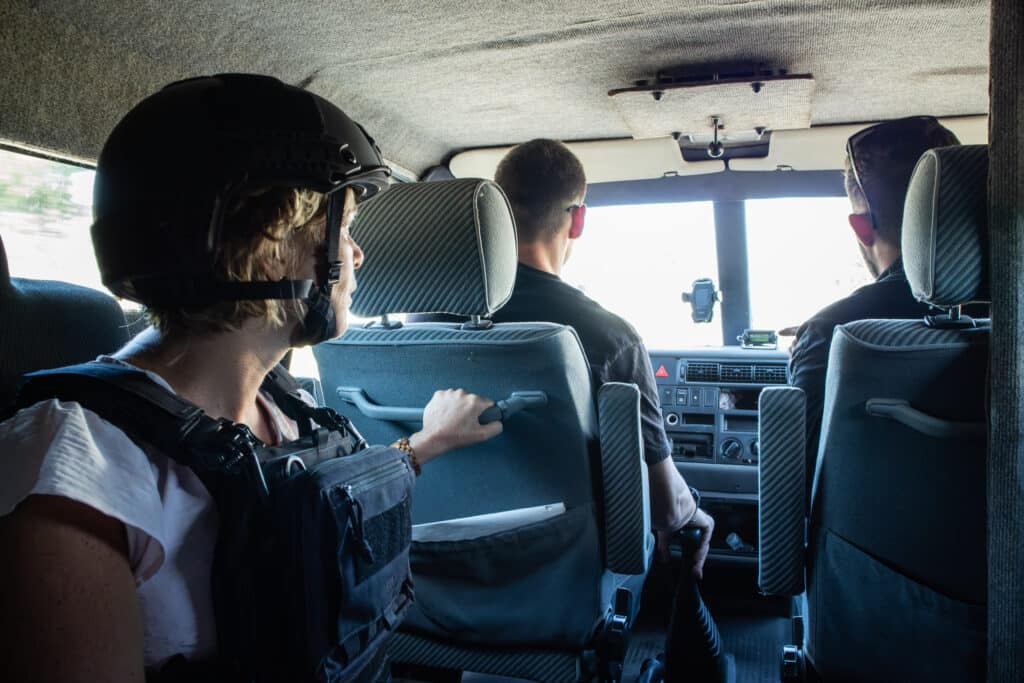
During my visit to Ukraine in 2023, I witnessed the conditions on the front line up close. I was deeply affected by it. Explosions could be heard everywhere, alarms went off at night making sleep almost impossible, and you could not let your guard down for a single moment. At the same time, life goes on: people go to work, do the shopping, cook and live in their homes, even though any building could become a target. As a visitor, it felt surreal to me. But I can return to my safe home in the Netherlands. For those who live there, this is their home and their life.

The team in Ukraine

During my visit, I became even more impressed by the Dorcas Ukraine team. Our colleagues work under constant pressure. They care for the people we support, as well as for themselves and their loved ones. The mental strain they endure is enormous, and their dedication is admirable.

It also became clear to me that destroyed buildings are not just piles of rubble. We see images on TV and feel no connection to those places. However, if you live there and have put down roots, then that is the school where you played as a child, the office where you had your first job interview and the church where you and your children were baptised and married. Everything that shapes your life is suddenly affected.

It did get worse…

This winter has been extreme. For those living on the front line, electricity can be cut off for over seventeen hours a day, while temperatures regularly plummet well below zero. The cold is exhausting and has a profound physical and mental impact. If your phone battery dies during shelling or drone attacks, it becomes almost impossible to stay in touch with loved ones, keep up to date with the news or monitor the threat level in your area.

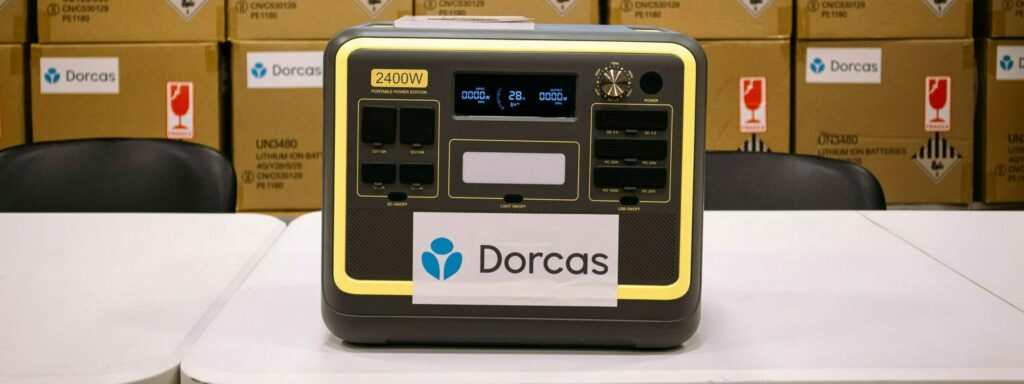
This is where Dorcas steps in. Our emergency kits, which include a sleeping bag, a portable gas stove and a power bank, provide people on the front line with warmth and practical support in these impossible circumstances. These things may seem small, but they make a real difference.

Alongside these kits, Dorcas’s work continues: our colleagues support people every day with groceries, hygiene kits, psychosocial care and all other forms of assistance. Together with the support of everyone contributing, we can support older people and others in vulnerable situations to get through the winter feeling supported and connected.

I would like to sincerely thank everyone who contributes to this assistance. Thanks to your overwhelming support, we can offer hope to those living in extreme circumstances and show them that they are not forgotten.


Donate now to support our urgent humanitarian efforts in Ukraine.

Millions of people in Ukraine currently have no electricity, light or heating, and winter is bringing temperatures well below freezing. ‘The situation is critical due to ongoing drone and shell attacks,’ says Bohdan, Security Officer at Dorcas Ukraine.

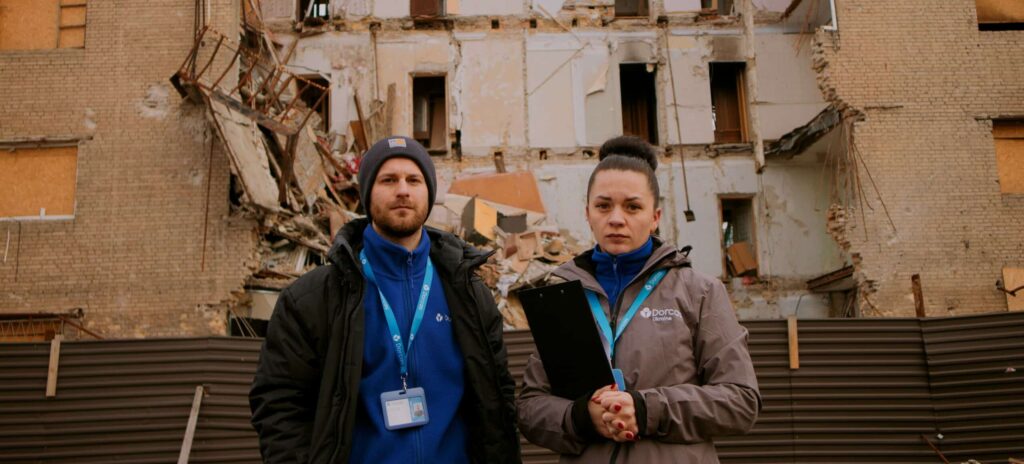
The situation in the city of Zaporizhzhia is particularly severe. ‘There are many damaged houses and apartment buildings that have become uninhabitable due to the shelling,’ explains Bohdan. The entire eastern region around Zaporizhzhia is close to the increasingly volatile front line. ‘The attacks make it unsafe to go outside. Essential services, such as electricity, frequently fail, often for more than ten hours a day.’

Bohdan and his colleagues have been visiting the city to assess where assistance is required. Life in these freezing temperatures is extremely tough. He explains: ‘Older people are finding it particularly hard to cope with the icy conditions, due to constant insecurity and their limited mobility.’

Emergency kits

The extreme cold can quickly become a ruthless enemy, particularly for young children, people with disabilities and older people. To support those in need, Dorcas provides portable emergency kits that enable people to cook, keep warm and maintain contact with family and emergency services.

Each kit contains:

Bohdan emphasises: ‘This support is urgently needed to ensure the safety and health of those on the front line.’


Donate to our emergency support

Jochem Duinhof, political advisor at Dorcas, responds to the Dutch coalition agreement of D66, VVD and CDA.
‘Dorcas is cautiously optimistic about the additional funding for development cooperation. This decision partially reverses the previous government’s harsh budget cuts, directly benefiting people worldwide who live in poverty, crisis, and exclusion. Moreover, these investments serve the interests of the Netherlands itself; our country is not an island. When the world surrounding us prospers, so do we.

The agreement highlights the importance of investing in human rights and a robust diplomatic network. This signifies a necessary break from the previous administration’s approach: the Netherlands is no longer retreating itself but is choosing international engagement based on equal partnerships, with a focus on human rights and climate.

However, there are concerns. The resources allocated for the reconstruction of Ukraine come at the expense of poverty alleviation in the Global South. This creates a painful contradiction: support for one should never come at the expense of another.’

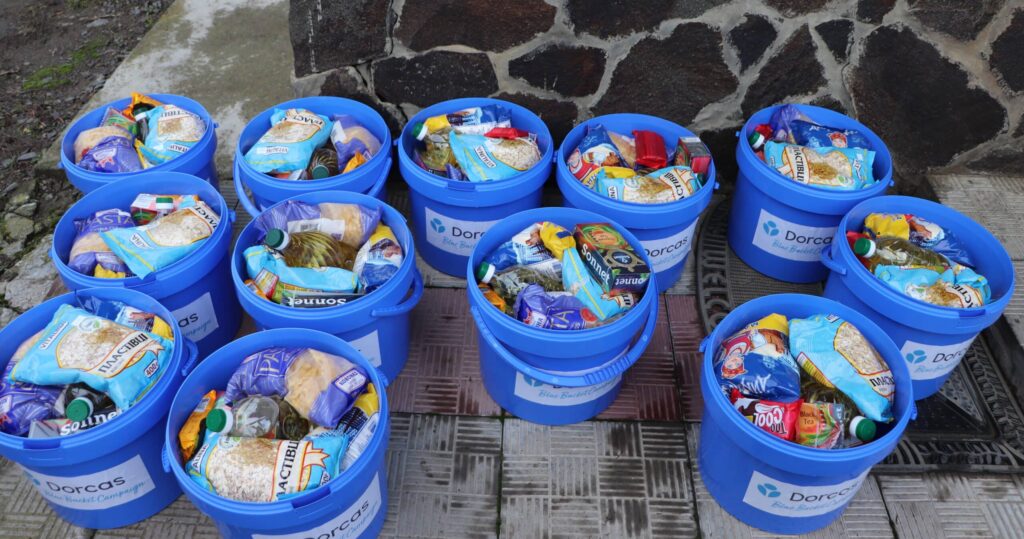
Distributing food in blue buckets to older people and families in vulnerable situations is at the heart of Dorcas’ Blue Bucket Campaign in Eastern Europe. However, the initiative is about more than just providing food: it also focuses on offering personal attention, restoring self-confidence and fostering stronger communities.

In addition to the annual Dorcas Food Campaign in the Netherlands, Dorcas runs a separate food initiative called the Blue Bucket Campaign. This campaign takes place each year in Moldova, Romania, Ukraine and Albania – countries where Dorcas operates in Eastern Europe.

Volunteers, churches and schools collect food in blue buckets for older people and families in vulnerable circumstances. The buckets primarily contain non-perishable items such as oil, flour, and beans, though local fresh produce is often included too.

Attention and appreciation

For many of those who receive the buckets, the food provides a welcome addition to what little they have. However, distributing food involves much more than just handing over supplies. Volunteers who deliver the buckets take the time to chat, offering personal attention that makes older people feel seen and valued. These interactions restore dignity and offer renewed hope for the days ahead.

A snowball effect

The Blue Bucket Campaign has been running in Romania since 2009. Food and monetary donations are collected from supermarkets and other locations.

‘Our campaign grows every year. It truly has a snowball effect. Last year, we almost doubled our efforts, collecting an impressive 5,860 buckets of food,’ explains Mihai Coste, Programme Coordinator at Dorcas Romania.

‘This year, we aim to expand the campaign further. We are seeking to engage more partners and have established a volunteer committee to coordinate the initiative here in Cluj, where our office is located. By involving additional stakeholders, we can reach and assist even more people.’

A social safety net

The Blue Bucket Campaign has a significant impact on communities. It raises awareness of the difficult living conditions often faced by the older generation. It encourages people to look out for one another and offer support to those in need.

Mihai adds: ‘We strive to involve as many community members as possible. We collaborate with churches, volunteers, local development organisations and businesses. Through this approach, we aim to build stronger communities. Ultimately, this creates a social safety net within the community itself, reducing long-term dependency on our assistance.’

> Find out more about the Blue Bucket Campaign <

Reading time: two minutes

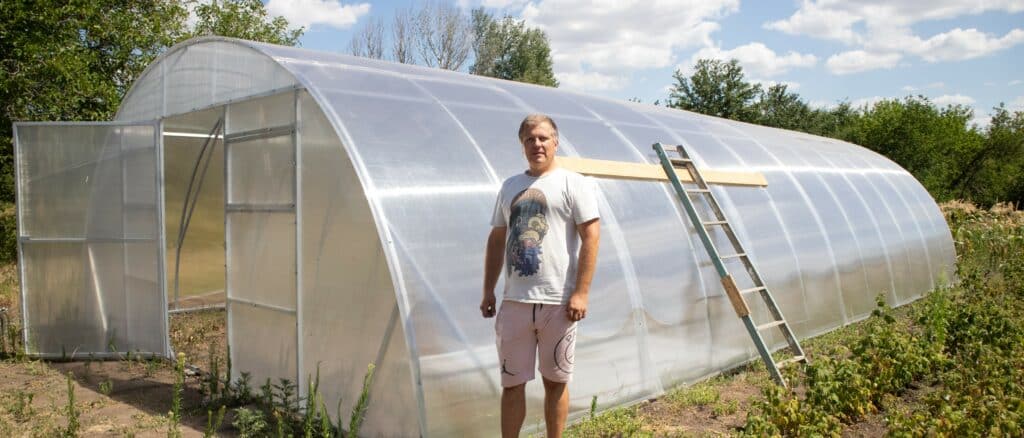
Vitalii and Alona are raising four children, including foster children, in a village in the Zaporizhzhia region, 27 kilometres from the front line. When their apartment in Zaporizhzhia became too small for the family and the ongoing conflict made staying in the city dangerous, they decided to move to the village.

Following the move, Vitalii began farming and selling his produce at the market. Thanks to a grant from Dorcas this year, he was able to install a greenhouse and equip it with heating and irrigation systems, as well as conduct soil and water analysis. ‘I don’t have much experience yet, so also receiving a consultation from a laboratory was helpful. We didn’t know we had fungus in the soil, but now we are working to solve the problem,’ he shares. They plan to grow cucumbers, salad vegetables, and strawberries in the new greenhouse. This will improve the well-being of this large family by establishing a continuous cycle of growing produce for sale.

In 2025, Dorcas expanded its support for farmers in eastern Ukraine, providing grants totalling €16,000 to five households in the Zaporizhzhia region. Despite the constant threat to their lives and livelihoods, farmers remain because, to them, land is not only a source of income, but also a source of dignity, hope and connection between generations. However, mined fields, land damaged by attacks and destroyed equipment remain a challenge for Ukrainian agriculture.

The Zaporizhzhia region has particularly suffered ecosystem disruption due to the destruction of the Kakhovka Reservoir, which has led to a locust invasion this season and threatened the productivity of small orchards. Supporting entrepreneurs in frontline regions gives them the confidence to develop their businesses.

Reading time: 3 minutes

Mental health and psychosocial support (MHPSS) form an integral part of Dorcas’ work. One of the countries in which this assistance is currently particularly vital is Ukraine. Due to the ongoing conflict, many people are experiencing prolonged stress, uncertainty and disruption to their daily lives. Dorcas and its partners have recently adopted an approach that involves using music as a tool for psychosocial support.

MHPSS is essential in areas affected by crisis and conflict because such situations can have a long-lasting impact on people’s emotional well-being, relationships, and ability to adapt. MHPSS provides safe and supportive spaces where people can express themselves, rebuild trust and regain a sense of stability.

Dorcas Ukraine recently supported a training initiative in collaboration with the All-Ukrainian Mental Health Support Programme ‘How Are You?‘, the NGO ‘Sol Diez‘ and the organisation ‘Sounds of Change‘. Designed for education representatives, the training focused on using music as a tool for psychosocial support. Over the course of several days, participants were introduced to accessible methods such as rhythm, clapping, using boomwhackers and collaborative song-writing. These practices offer non-verbal ways to foster emotional connection, reduce tension and promote resilience. The training provided educators with techniques that they can implement immediately in their work to promote emotional well-being within crisis-affected communities. 

Oksana’s experience: putting the training into practice

Oksana, a psychologist at the Centre for Resilience, participated in the training programme. She describes, ‘I have been interested in music for a long time. I feel that it touches deep levels of the psyche. I wanted to learn how to use sound and rhythm in working with emotions, especially when working with children.’ 

During the three-day training, she explored simple yet powerful techniques. Reflecting on the experience, she shared, ‘What impressed me most was how simple exercises with sound bring people together, reduce tension and evoke genuine joy. This was especially evident when we created rhythm together and each voice merged with the others. It was amazing – harmony without words.’ 

Upon returning to her work, Oksana immediately applied these practices with children from a family-type children’s home. The results were clear: emotional relief, increased contact and smiles. She plans to incorporate these music-based methods into her work with children, teenagers and adults.

Like Oksana, all the educators who received the training are now ready to use these music-based methods in their own settings. This is a significant step towards expanding accessible psychosocial support in communities affected by the conflict.

Reading time: 2 minutes

In Ukraine, many families are forced to flee the ongoing conflict, seeking safety in western regions such as Transcarpathia. This displacement has a severe impact on their livelihoods and overall well-being.  

Dorcas Ukraine runs a ‘Future for Children’ programme in Transcarpathia to support families in vulnerable circumstances. The programme focuses not only on the children, but on the entire household, empowering parents by providing them with training in livelihood skills and parenting. This creates safer, more stable and nurturing environments in which children can grow and flourish despite difficult circumstances. 

Lilia’s journey of resilience

Lilia is a single mother raising her son, Ivan. They both participate in the Future for Children programme, which is run by Dorcas. They ended up in a town in the Transcarpathian region, because they were forced to flee the conflict in Kharkiv. 

Lilia and her son moved into a compact settlement for internally displaced people. Despite this, Lilia was feeling anxious and uncertain, and was struggling financially. 

With the support from Dorcas, she completed a course in manicure and pedicure and is now actively working and accepting clients from the dormitory. Thanks to her new profession, she can now support herself and Ivan with her own earnings. 

Lilia seized an opportunity that transformed challenging circumstances into a chance for growth. 

From September 2024 to April 2025, Dorcas Ukraine led the ‘Restoring Hope’ project, which aimed to improve employment opportunities for those affected by the conflict in the Zaporizhzhia and Zakarpattia regions.

Following completion, we assessed the initiative’s impact and found that 99 per cent of participants deemed their involvement as relevant. Of the participants, 65 per cent started or expanded their businesses, while 21 per cent developed existing enterprises further. Additionally, 64 per cent of households reported an increase in income. Particular attention was given to supporting women raising children alone, mothers with multiple children, internally displaced persons living in collective centres, and families caring for older relatives or people with disabilities.

Skills training and support

Each project participant acquired professional skills and received a toolkit to facilitate their work. In rural areas, the project introduced greenhouse gardening initiatives to diversify livelihoods and enhance food security. To foster resilience and sustainable growth, Dorcas supported participants in developing business plans, finding employment opportunities and accessing government assistance. We also established support groups in collaboration with a psychologist and career coach.

The most popular fields of study among participants were beauty therapy, IT and accounting. The majority of participants (81 per cent) were internally displaced persons from the Zaporizhzhia, Donetsk and Kharkiv regions. The appeal of these professions lay in the possibility of utilising skills regardless of location, flexible working hours, and opportunities for both self-employment from home and employment within salons or companies.

Impact and progress

Many participants recounted how they had secured employment in salons or launched home-based sewing services, thereby earning their first independent income. Additionally, course graduates confirmed that these professions were practical and in demand within the local labour market. Providing tools was essential support for entering the beauty industry, where start-up costs can be prohibitive. Participants emphasised that receiving this equipment promptly allowed them to overcome significant financial obstacles.

The Restoring Hope project has equipped residents of Zakarpattia and Zaporizhzhia with the practical skills and resources needed to secure long-term employment or set up small businesses. Networking opportunities during the courses enabled participants to find support, like-minded individuals and partners for their ventures. Through vocational training and ongoing support, those affected by the conflict have been able to integrate into economic sectors, achieving financial independence and adapting to a markedly different environment to that in which they previously lived.

Participants on the project are moving beyond survival towards genuine growth thanks to new skills and support. They are establishing sustainable livelihoods and strengthening their communities. Their progress is a testament to their resilience and determination in the face of adversity.