Why Dorcas considers mental well-being to be a priority
Poverty, disaster and violence impact communities and countries worldwide and have a devastating impact on millions of people’s mental health and psychosocial well-being. Yet humanitarian assistance often just focuses on providing tangible health services, food and shelter. In this article, Dorcas argues why mental health and psychological support (MHPSS) should also be an integral component of both short- and long-term humanitarian assistance.
The importance of mental well-being
Evidence has consistently shown that people with mental illness have greater physical health morbidity and mortality compared to the general population. Heleen Berends, Humanitarian Assistance Expert at Dorcas Ukraine, explains how mental health issues in a conflict situation affect people’s resilience and ability to cope. ‘For example, a few months after the war in Ukraine started, we noticed that teenagers and young adults were having such a hard time. Especially those who had fled from the contact lines. Suddenly they were without school or work, experienced uncertainty about their future and lacked a purpose in their lives. On top of that, they had experienced traumatic events, such as life-threatening bombing, having to leave home and losing loved ones. One of the awful consequences of losing hope like this is an increase in the suicide rate.’
Likewise, millions of other people around the world are confronted with a whole range of mental health issues. Without sufficient support, people can experience long-term or recurring setbacks. This can lead to more serious mental health complaints such as anxiety, depression and (post) traumatic stress that can have a negative impact on a person’s ability to work, earn an income or care for their children, for example. Therefore prevention and early treatment are much better than cure when it comes to mental health.
Dorcas’ approach
Dorcas has a long track record with MHPSS in humanitarian assistance, especially in Lebanon and Syria. Our MHPSS programmes aim to protect or promote psychosocial well-being and prevent or treat mental health complaints. We offer individual therapy, group sessions and creative approaches. Our focus is primarily on people with specific needs, such as older people, children, minority groups and people with disabilities.
MHPSS is integrated into all existing programmes of Dorcas. For example:
- On an individual level, Dorcas provides food security, shelter, clean water, medication (for mental health treatments) and cash programmes. We also support people with referrals to specialised support services.
- On a community level, Dorcas is active in awareness raising, supportive parenting programmes, group sessions, educational activities, livelihood activities, community safety nets for older people, self-help groups for women, youth clubs, life skills activities and supporting (self-) employment opportunities. We also have mobile teams (therapists) that reach out to the community.
- On a society level, Dorcas advocates for the rights of marginalised groups and access to (mental) health care and social services.
Removing the stigmas associated with mental health issues
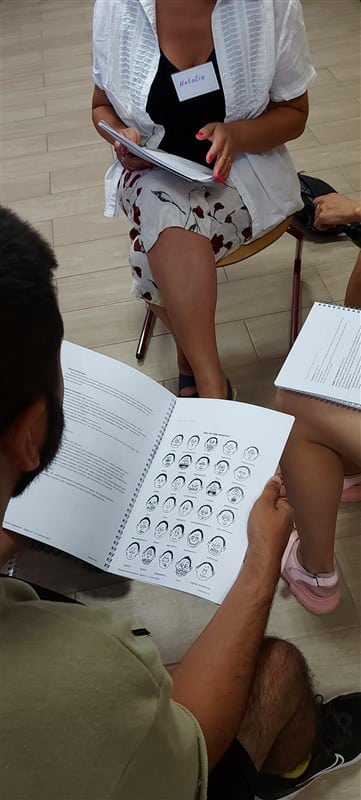
An important part of our approach is removing the stigmas associated with mental health issues. We see how many individuals are hesitant to seek help as they might face stigma. This applies to both very severe traumas (for example, due to sexual violence) and minor traumas (for example, when a child has seen its parents in a panic). Social and cultural beliefs regarding mental health cause a lot of preconceptions. The long-used community-based approach of Dorcas provides a solution to this challenge. Heleen: ‘In our group sessions, the participants share experiences, connect with each other, recognise similar mental health issues, and learn that these are a normal reaction to an abnormal situation. This is how the social cohesion – including mutual trust – that has often been damaged is restored again.’
Example from Yemen
Yemen is facing the largest humanitarian crisis worldwide with ongoing armed conflict, displacement, depleted health delivery systems, a fuel and economic crisis, and a shortage of humanitarian funding. In Yemen, mental health and psychosocial support is underfunded and lacks prioritisation. The population of Yemen lives in extreme poverty and with high fragility. These years of conflict, displacement and emotional distress after traumatic experiences cause a wide range of mental health issues and chronic stress for both adults and children.
Adriaan Jagersma, interim Country Director in Yemen, explains: ‘War brings all kinds of trauma, especially in Yemen where thousands of children have starved to death and many people live in refugee camps and have experienced rocket attacks. All these things take their mental toll. At the same time, we also see a lot of resilience and a great desire to look beyond this crisis. So when we are looking for ways to support people in rebuilding their lives, one of the most important questions to ask is simply: how do you feel? How can we support you in finding hope, confidence and motivation again?’
Staff care
Humanitarian staff may experience direct or indirect exposure to trauma and therefore many stressors in their work. An increased risk for burnout and depression is seen among local and international humanitarian workers. As an employer, Dorcas ensures that all staff have access to supportive tools so that they are self-aware, find a healthy work-life balance and can process intense emotional experiences. This also applies to staff working in situations of extreme and chronic poverty.
In conclusion, mental health is a critical emergency health tool and protection intervention for everyone involved in humanitarian work and development. It is crucial to the overall well-being, functioning and resilience of individual project participants and staff, as well as communities and societies recovering from emergencies and poverty. Dorcas invests in professionals with sufficient psychological knowledge and experience. We believe this is an essential part of structural recovery after poverty, disaster and violence.
The Resilience and Contributions of Older Women
A Dorcas inquiry on the situation of older persons in Eastern Ukraine shows that a relatively large number of older people stay at home even when they live close to an area with active fighting. Sometimes this is out of choice, often it is out of necessity, being unable to flee or start a new life elsewhere.
Older people are resilient and resourceful albeit often not by their own choice. It is a sometimes brutal necessity to just survive. The recent Dorcas report on older people and conflicts and the earlier Dorcas report on COVID-19 and the rights of older people address two global challenges – conflict and COVID-19 – that force older people to be resilient. Resilient whether they like it or not.
A key call to action in both reports is to: ”Listen to the voices of all older people and acknowledge their wisdom, knowledge and experience.” Older people have the right to be seen and listened to. They have the right to participate in priority setting and decision making about topics that matter to them, including humanitarian and other assistance.
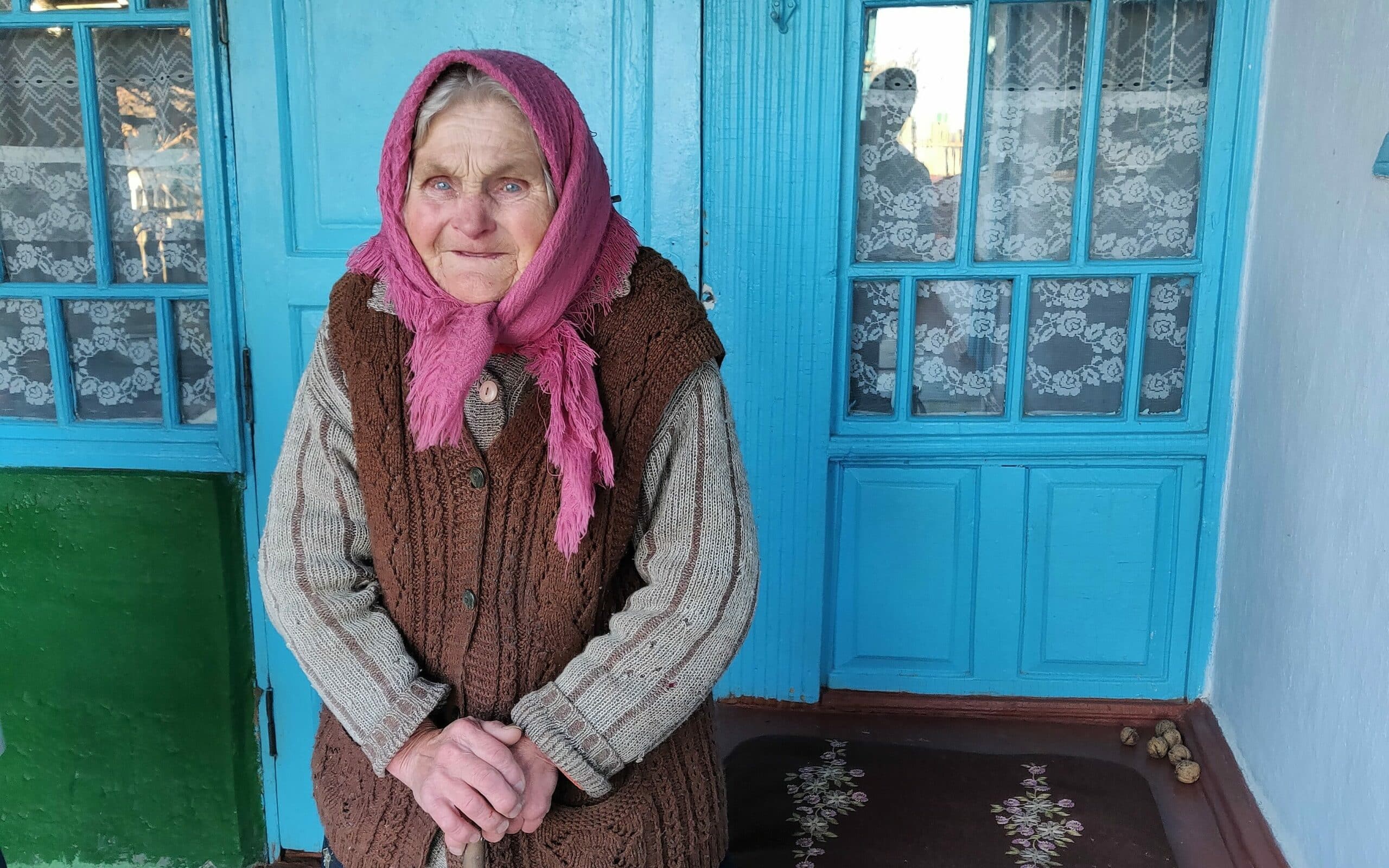
1 October is the International Day of Older Persons. The 2022 edition celebrates the resilience of older people and gives special attention to the resilience and contributions of older women who constitute the majority of older people worldwide.
Older people manage to successfully navigate today’s myriad of global challenges. These global challenges are manifest: the COVID-19 pandemic, the increasing number of conflicts, climate change and major socioeconomic challenges including the current exorbitantly high fuel and energy prices.
The effects of these challenges are felt globally and continue to be significant, particularly for many older women in low-and middle-income countries, who bear the burden of cumulative disadvantage. Recognition of the vital contributions of older women and inclusion of their perspectives and needs is critical to creating policies responsive to local, national and global challenges.
Older women, in particular are the unsung heroes embodying often unseen resilience in living through and responding to climate disaster, pandemic and conflict. They do so as they experience and manage the physical and emotional disruption due to losses of family, income, and social connectedness.
The meaningful contributions and experiences of older women remain largely invisible and disregarded due to gendered disadvantages accumulated throughout the life course. The intersection between discrimination based on age and gender compounds new and existing inequalities, including negative stereotypes that combine ageism and sexism.
Dorcas calls on all governments – in particular the Dutch government – and all private sector and civil society actors, to include older women and other people who are marginalised in all policies.
“All older people have the right to be seen, to be valued for who they are, to be listened to, to participate in all decisions that matter to them, to be protected and supported.”
Nico Smith, Thematic Expert Social and economic Inclusion
In 2021, Dorcas portraits older women using their powerful personalities to advocate for change in their communities: at economic, social and political levels. These normal yet extraordinary women are portraited in word and images in Dorcas’ Portraits of Power. Be inspired by their resourcefulness, their hope and their resilience.
https://dorcas.org/olderpeople
Older people are left behind in Dutch foreign policy. They are not mentioned once in the policy note ‘Doen waar Nederland goed in is’ (Doing what the Netherlands does best), which the government shared with Dutch parliament last June. This is remarkable, as women are cited 36 times in the same note as a group that needs specific attention, and children six times. In addition, the Ministry of Foreign Affairs lacks a strategy to engage and protect older people worldwide through Dutch engagement. The ministry does have such a strategy for young people, called ‘Youth at heart’. Finally, the Netherlands does not participate in the United Nations working group that is drafting a convention on the rights of older persons. While countries such as Germany, Italy, Austria and Great Britain are represented in this group.
It is unfair, however, to solely point to the Dutch government: there are very few Dutch humanitarian aid and international cooperation organisations that specifically target older people. In short, the Dutch lack of attention to older people worldwide is present in both government policies and practices from Dutch international organisations.
Left to their own devices
Given global ageing, the trend that is likely to push the proportion of older people worldwide to more than one in five by 2050, the lack of attention for older persons is a problem. Indeed, it is expected that eighty percent of older persons will live in low- and middle-income countries by 2050. That is precisely where older people are potentially vulnerable. For instance, research shows that in less prosperous countries, more and more (young) residents are moving to the cities. As a result, older people in rural areas are becoming increasingly isolated and dependent upon themselves.
Whereas, for example, the Dutch government supports older persons when the social safety net fails, this is not the case in many other countries. The fact that only 20 percent of older people in low-income countries receive a pension exemplifies this.
It is also known that in conflict situations older people more often stay behind in their endangered place of residence, because they cannot or do not want to flee. We see this in Ukraine, among others, where relatively many older people do not leave their homes. Newspaper Trouw has already written about Anatoli and Irina, two Ukrainian older persons who became trapped in Russian artillery fire. Anatoli suffers from Parkinson’s and cannot flee his home. The two just managed to survive the shelling early May, as proven by the damage to their flat. Like Anatoli and Irina, there are unfortunately many older people who are left behind during conflicts, with potentially dire consequences.
Specific needs
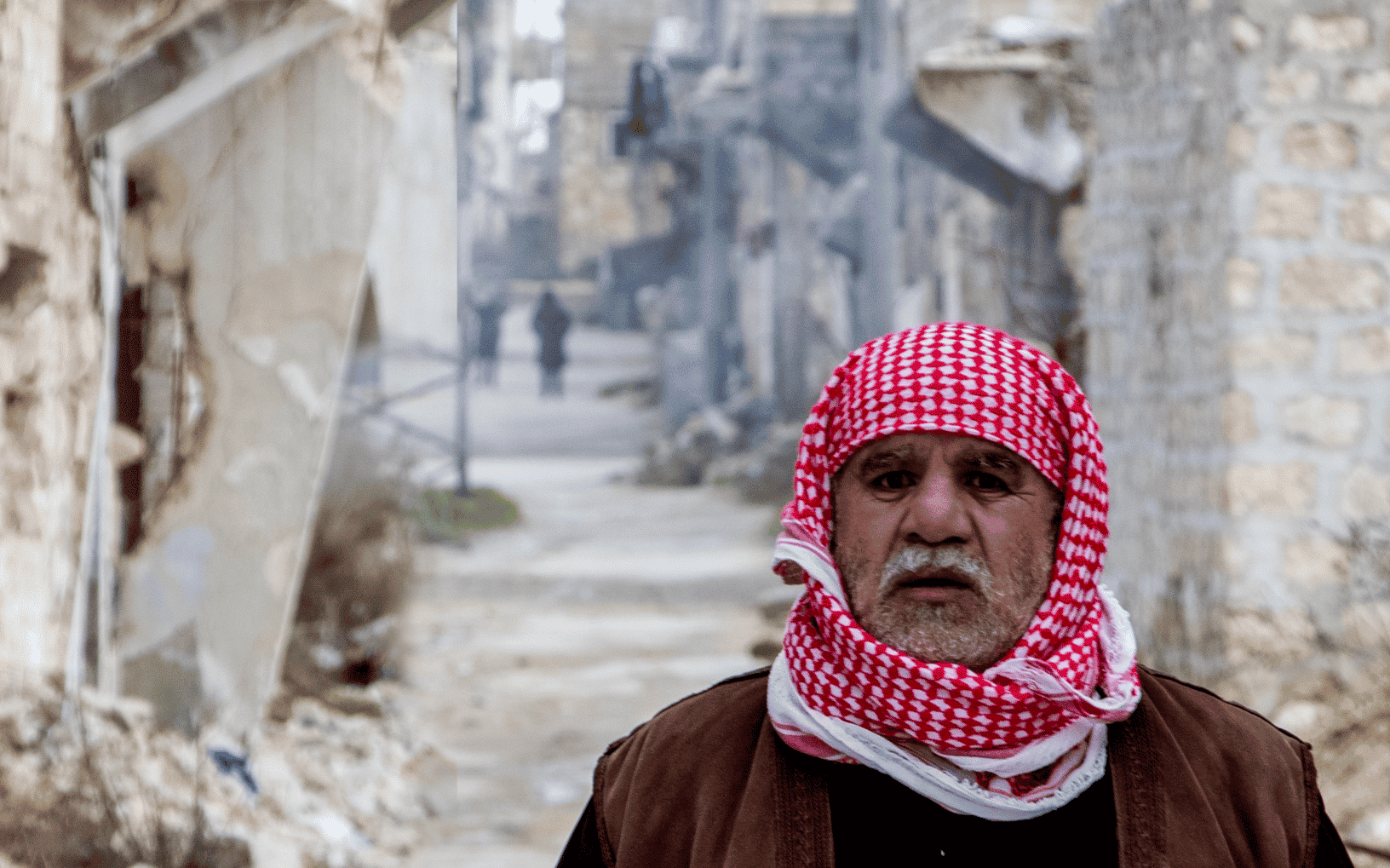
Finally, we know that older people are protected on paper through international law, but little attention is paid to their specific needs and requirements. Case in point, only one of the nine human rights treaties pays specific attention to older people and their rights. As mentioned, a blueprint for a treaty on the rights of older people is being worked on at UN level, unfortunately without the active participation of Dutch representation. The signal that emanates from this is that older people are not a priority in Dutch foreign policy.
It is therefore time for Dutch foreign policy to pay more attention to the sometimes vulnerable position of older people worldwide. A good start would be to concretely safeguard the rights of the older people in Dutch foreign policy, such as in the aforementioned policy paper ‘Doen waar Nederland goed in is’ (Doing what the Netherlands does best).
In addition, the Netherlands could become part of the UN group of countries writing the blueprint for an international treaty on the rights of older people. Finally, it is up to the Dutch humanitarian aid and development cooperation sector to give protection of the rights of older people a higher priority. After all, those who want to work inclusively should not leave older people behind!
After 6 months of full-scale conflict in Ukraine, millions of Ukrainians remain in immediate need of support. Across the country, the Dutch Relief Alliance (DRA) has worked together with local partners as part of its Joint Response to provide food and non-food items, multi-purpose cash assistance, and mental healthcare and psychosocial support to vulnerable households affected by the conflict.
In March, the situation across the country was opaque. There was a huge humanitarian need, but it was unclear where this need was concentrated and where help would be most effective. DRA partners hit the ground running, supporting people where they could. After a few weeks, the partners mapped where they could most effectively help out, scaling up relief efforts. Regrettably, violence continues in parts of the country. Elsewhere, communities have settled into a sort of status quo. The basic needs remain: millions of displaced people need all kinds of help, and the country needs a shift towards reconstruction.
Multi-purpose cash to meet urgent needs
Save the Children works together with Avalyst as part of the Ukraine Joint Response. Across the country, in areas including Dutska, Luhanska, Dnipropetrovska and Vinnytsia, Save the Children and Avalyst provide multi-purpose cash and non-food item kits. In the past 6 months, they were able to meet the immediate needs of more than 500 households.
Avalyst took on the responsibility of registering households, creating an inventory of their needs. After registration, Save the Children took care of cash disbursement, enabling families to determine their own spending on their immediate needs.
Next to non-restricted cash, Avalyst also distributed non-food items, handing Ukrainians in need things like basic hygiene materials, textile, and household goods. In this way, Avalyst and Save the Children help refugees and households to re-establish a semblance of their home routines.
By working together and communicating clearly with local communities, Save the Children and Avalyst have been able to adjust their aid provision to what these communities need. These strong links resulted in more efficient distribution and helped to avoid wasted goods.
Caritas Ukraine, Cordaid’s local partner in the Joint Response, has chosen to focus on distributing non-food items and hygiene kits. In areas around Dnipro and Kyiv, as well as in Ivano-Frankivsk, Caritas found that internally displaced people were most urgently in need of physical items that they lacked access to. Through its dioceses across these areas, Caritas provided emergency food packages, drinking water, warm kits and medical supplies.
Displacement, rising prices, growing needs
In Muchacova a town of 75.000 inhabitants where New Beginning works, an additional of 26.000 refugees from other parts of Ukraine have arrived – including many families with vulnerable children. New Beginning has been a partner of Dorcas for years, focusing on marginalised children. With the start of the Ukraine Joint Response in March, Dorcas and New Beginning have strengthened their partnership to meet the basic needs of refugees, providing food parcels and psychosocial support.
Internally displaced people (IDPs) get to know New Beginning when they come for food support or clothing. Through this first connection New Beginning is able to ask them their needs. IDPs are welcomed to join activities that incorporate elements of psychosocial support. Only 2% of IDPs ask for psychosocial support themselves because of feelings of shame and the taboo on mental health struggles. Good experiences with the children’s clubs lead IDPs to encourage their friends to participate, enabling more children to receive psychosocial support.
New Beginning offers a range of social activities, like a 5-day camp for children and a weekly children’s’ club. While the children play and take part in activities as part of the club, the parents – mainly mothers – go upstairs to have their own meeting and build connections with each other.
According to Alexandra, the Director of New Beginning, “if parents are at rest and show peaceful behaviour, children also develop healthy habits and feel less anxious. We focus firstly on the basic needs and on the parents – then by extension the children will recover. New Beginning has the aim to offer a new beginning. We follow our desire to help the people.”
Lasting partnerships
While the Ukraine Joint Response will come to an end in early September after 6 months, the partnerships established by working together will endure. The conflict rages on and needs remain. Reconstruction of communities, both in cities and in rural areas, will be a focus for the next months and years to return a sense of normality to the lives of Ukrainians.
The peer-to-peer approach under the Joint Response, characterised by trust and equal partnership, has already resulted in ideas and proposals for further cooperation after the end of the Joint Response. Working side by side to rapidly scale the response, overcoming together the myriad obstacles along the way, strengthened the abilities of both side of the partnership. Despite the formal end of the Joint Response, exchange of information, knowledge and best-practices between the Dutch and local partners will continue. Where possible, the DRA partners will support Caritas, Avalyst, and New Beginning, alongside other local partners, in their efforts to reconstruct their country.
The Dutch Relief Alliance Acute Joint Response in Ukraine is led by Dorcas in partnership with Cordaid and Save the Children, alongside a number of local humanitarian organisations. The work of the DRA in Ukraine is made possible in partnership with the Netherlands Ministry of Foreign Affairs.
As a small child, Agnes Kroese already wanted to ‘help people abroad’ and she ended up in South Sudan a few years ago. Since the beginning of this month, she is the new CEO of Dorcas. If you had told me this 10 years ago, I would not have believed you. But I am ready and looking forward to it.
Agnes is very excited to this new step and says: ‘Since my early childhood, I have felt called to dedicate myself to those in need. From close by, I have witnessed what Dorcas’ work means for people who are excluded, live in poverty, or in the midst of conflict and crisis. I have seen the glow return to the eyes of people who find themselves in the most difficult circumstances. I have seen communities flourish. That gives me hope. That motivates me. I would like to use my knowledge and experience to further develop and professionalise Dorcas, so that, together with everyone involved, we can realise a structural impact on even more lives.’
Agnes looks forward to continuing her career at Dorcas as CEO and also Chairman of the Executive Board. Agnes: ‘From close up, I have experienced what Dorcas’ work means for those in need. The change in individuals and the flourishing of communities motivates me and gives me hope. I want to use my knowledge and experience to further develop and professionalise Dorcas, so that, together with everyone involved, we can realise a structural impact on even more lives.’
Agnes studied International Development Studies, and then took a Master’s degree in Emergency Relief. In her role as Country Director South Sudan, she has been actively involved with Dorcas since 2019.
Anatoliy Kurtev, secretary of the city council in Zaporizhzhia, has announced a new information campaign for Zaporizhzhia’s residents about the procedure for emergency situations. Dorcas is one of the partners in this new project.
Dorcas, together with Wodan Security International, proposed an information campaign to prepare the local population for evacuation should the need to evacuate arise. The aim of the campaign is to enable Zaporizhzhia’s residents to act quickly and safely in emergency situations. Particular attention will be paid to vulnerable groups. As part of the campaign, instructions will be prepared that explain each phase of an evacuation, the safe routes to be followed and what needs to be in the emergency suitcase. Dorcas Ukraine will also provide hygiene kits and assist in the setting up of shelters.
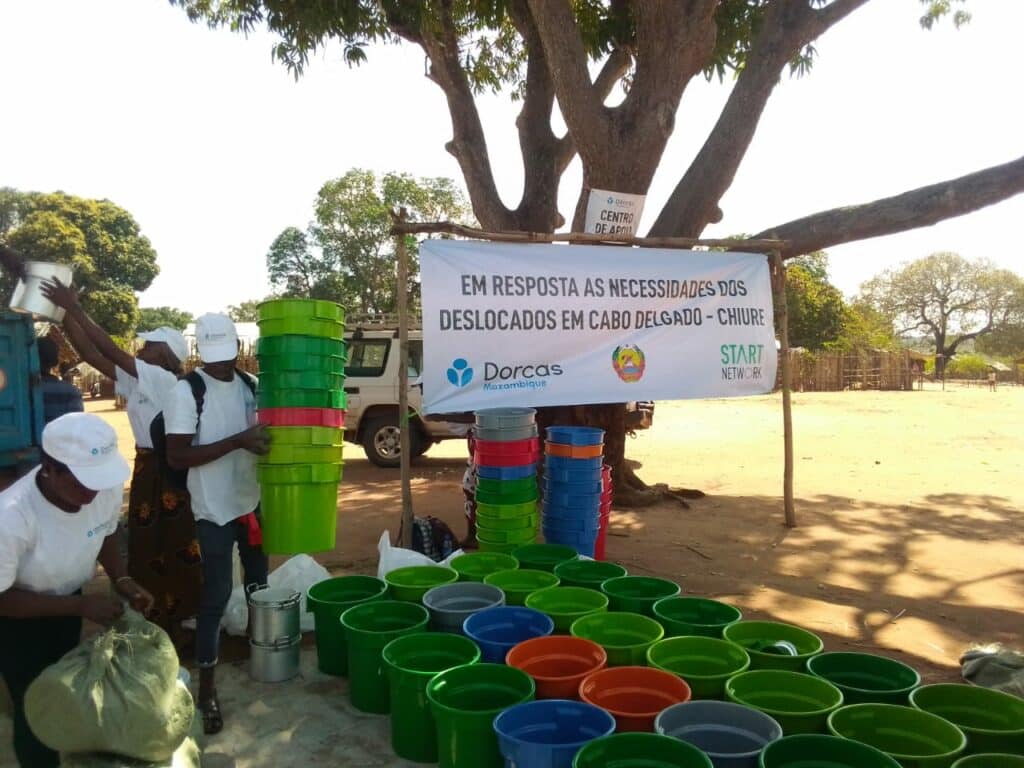
Cabo Delgado is a province severely affected by a complex humanitarian crisis with military tension, climate-induced problems and high levels of poverty. Recent attacks carried out by armed groups in Cabo Delgado have resulted in even more internally displaced persons (IDPs). The armed groups are continuing their advance south, attacking innocent people on the way. These attacks have forced people to flee, mostly to Chiure but also to other neighbouring districts.
Dorcas Mozambique has been active in Cabo Delgado province since 2021. Here it focuses on the District of Chiure with Food Security and Livelihoods, WASH and Humanitarian Recovery activities. Unfortunately, these activities are not enough to meet the huge needs of the IDPs. In Chiure district, most new arrivals live in emergency and communal shelters. Their major needs are food, transportation, dignity and hygiene kits, and non-food items, including kitchen kits and blankets. Dorcas aims to provide priority humanitarian assistance to IDPs who have just arrived in Chiure. We will target 2000 households with basic food and kitchen kits so they can prepare their own meals. These items will be distributed in the resettlement centres of Chiure Sede, Meculane, Chiure Velho and Katapua where most IDPs from the attacks in Ancuabe are found. Dorcas will focus on households with many children, persons with a disability or chronic illness, pregnant/lactating women and older people.
About Start Network:
Start Network was established in 2010. It aims to transform humanitarian action through innovation, fast funding, early action, and localisation. Over the next three years, Start Network will work across four complementary and mutually reinforcing areas to catalyse system change and drive more effective humanitarian action to assist and protect communities in need.
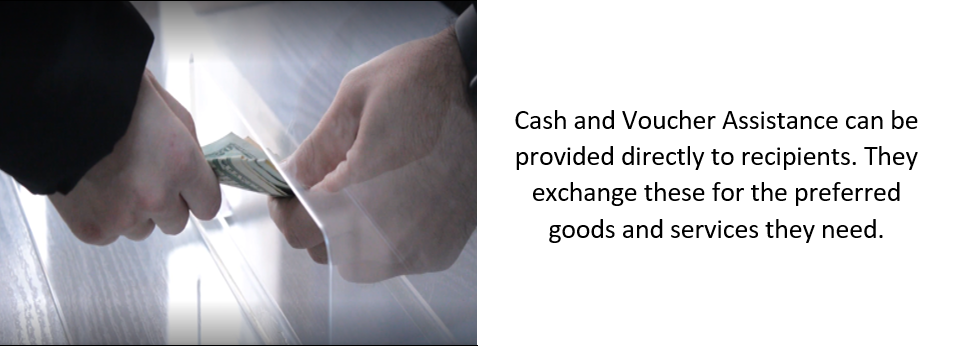
People affected by crisis or exclusion have various needs depending on their personal situation. Cash and Voucher Assistance has become a key delivery modality for addressing humanitarian needs as it supports people’s independence and dignity to decide on their own needs. The 121 Platform offers a suitable solution for Cash and Voucher Assistance with a Humanitarian Organisation Portal, Aid Worker App and Person Affected App. It aims to make cash-based aid easier, safer and faster so that people affected by disasters can meet their own needs. Dorcas conducted a pilot of the 121 Platform in Beirut, Lebanon, where host communities, refugees and migrants were supported with cash.
Lebanon is home to the highest concentration of refugees per capita in the world. Almost half of Lebanese citizens live below the poverty line and many urgently need humanitarian assistance. Lebanon has struggled with a history of war. Furthermore, the 2020 Beirut explosion had a significant impact on the country, which reverberates to this day. The economic and political situation is worsening and a growing number of Lebanese are becoming dependent on aid.
The pilot in Beirut
Dorcas Lebanon started the 121 Platform Pilot in December 2021 for a period of 3 months. A total of 485 project participants (members of the host community, refugees and migrants) disaggregated by gender, participated in the project.
Within the pilot, the following steps were taken:
1. Registration
A group of participants was selected and received a text message about the project. Also, a link was shared so that people could register their request for assistance directly in the Person Affected App via a smartphone. People could do this themselves at their own convenience but if they needed help, they could go to one of the community centres where Dorcas staff members were available to assist with registration.
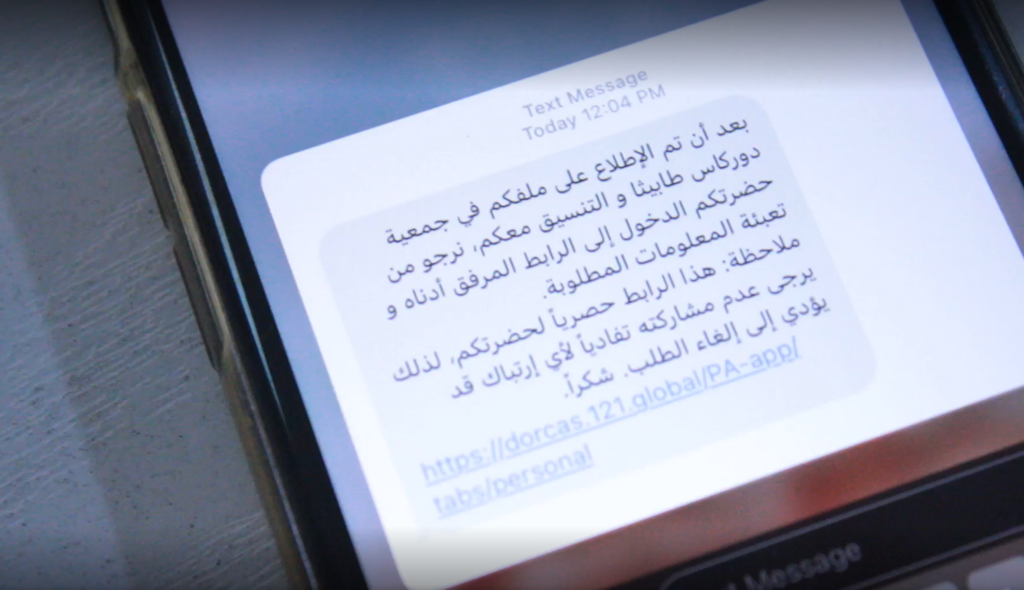
“I was worried that the registration process might be complex, but that was not the case. The questions were clear and specific. It was very easy and smooth to use!”
Male participant
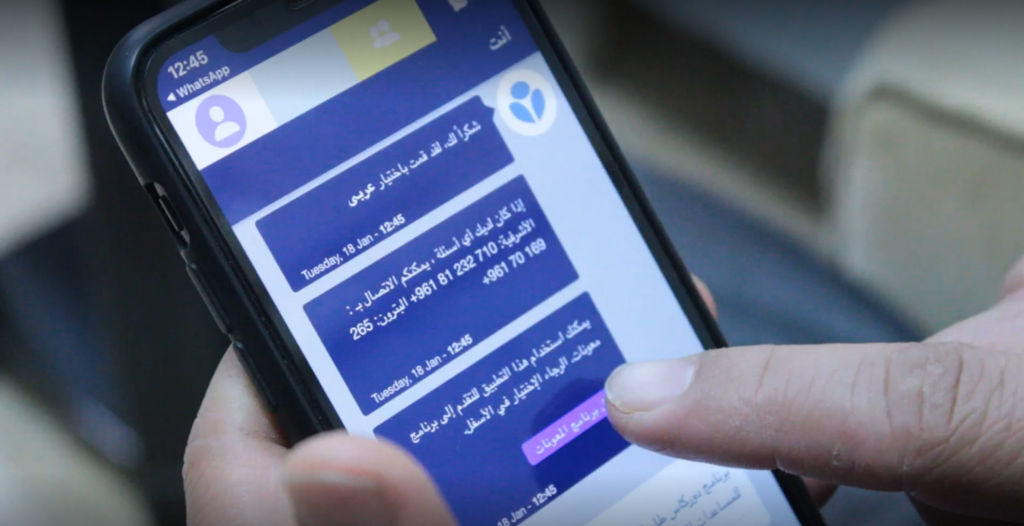
“When you register yourself, you are not ashamed of the situation. Some things are hard to share with someone.”
Anonymous participant
Findings:
- Persons affected viewed self-registration as a more dignified and transparent process than registering directly with aid workers.
- 93 percent of participants experienced no problems in registering.
- 7 percent of them experienced certain issues, such as inability to use the technology or difficulty in understanding the questions.
Lessons learned:
- Register persons affected directly with aid workers if they struggle with literacy and/or digital access.
- Consider other modalities of registration when persons affected are not (sufficiently) familiar with using smartphones.
- Provide flexibility for people with disabilities and older people to appoint a family member to register on their behalf.
- Limit the amount of text in blocks between certain questions in the Person Affected App. This may help to avoid the person affected thinking they have completed the registration when they have not.
- Test registration questionnaires with a diversity of people for language simplicity, comprehensibility and feasibility of self-registration.
2. Validation
A total of 600 people registered. All registrations were reviewed and Dorcas Lebanon selected 485 project participants who were included in the project. A text message confirmed participation in the project towards the project participants. Other registered people received a text message informing them why they were not selected.
“With the Aid Worker App, validating has never been easier. When the registration was finalised, I immediately received a message with all of the applicant’s details. These can be viewed on a tablet or mobile phone and changes can be made when something is incorrect. And most importantly, the Aid Worker App works offline. Which makes it broadly usable in the field.”
Norma Nazarian (Social Worker and Case Manager at Dorcas Lebanon)
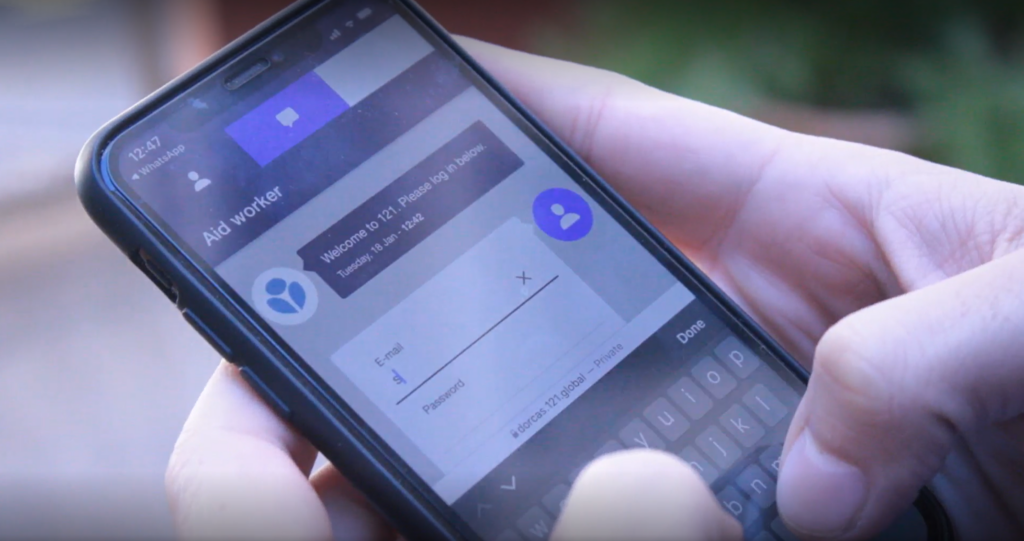
Findings:
- Using the Platform for selection and verification processes helped create confidence in the programme, supported a transparent selection process for the Cash and Voucher Assistance pilot and reduced conflict between community members about validation.
- Having an automated system of validation was perceived to remove potential personal bias.
- Verification and validation of registered persons affected by the Aid Worker App was especially appreciated.
- COVID-19 created new challenges on how to reach people affected and to provide inclusive, safe and quality Cash and Voucher Assistance without physical contact in communities. However, through the Person Affected App and self-registration, the 121 Platform enabled the remote registration of participants.
Lessons learned:
- Consider allowing two phone numbers to be linked to a registration.
3. Payment
The process of authorisation and payment of cash transfers can be handled and monitored online by designated responsible employees. The next step is to inform project participants regarding the payment via bulk messages. Relevant information, such as the amount of money they receive and where and when to collect this, is shared so that project participants can receive the cash.
Findings:
- Persons affected perceived cash distribution through financial services providers as easier, safer and faster than previous cash distribution by hand or through cash machines (ATMs).
Lessons learned:
- Coordinate with financial service providers to ensure the availability of cash in the right currency at all times at cash withdrawal points.
- Assist people with disabilities and older people with transportation to withdrawal points if this is needed.
Aid Worker App and HO-Portal
The solutions within the 121 Platform facilitated data gathering and communication between the project participants and Dorcas Lebanon. The use of the Aid Worker App and the HO-Portal is very easy and efficiently supports the work. It helped to store data securely and ensured the safety of all parties, especially considering the COVID-19 situation in Lebanon.
“Using the 121 Platform helped us to manage our cash project and provide cash support. When people register, their information is immediately included in the HO-Portal. From here you can send people notifications and make payments. Everything that is needed to provide the support is visible. The HO-Portal is fast, easy to use, safe and very reliable.”
Samer El Jamal (Project Officer at Dorcas Lebanon)
Overall experience
Given the generally positive experience in Dorcas Lebanon, we will investigate the possibility of further deploying the use of the 121 Platform within Dorcas in Lebanon and beyond. The 121 Platform is a suitable platform for managing Cash and Voucher Assistance programmes in the context of Lebanon. The simplicity of all stages in the process makes it an easy-to-use system. As contexts vary, we still need to ascertain whether 121 Platform is a suitable solution in new emergency relief settings. However, based on the experiences in Dorcas Lebanon, 121 Platform is definitely a suitable candidate for streamlining cash interventions.
“The 121 Platform is close to perfect. It is fast and the way it is connected to the Person Affected app is good. You cannot see all information, but you can see what you need. And it is user-friendly. Besides the advantages of the Person Affected App, Aid Worker App and HO-Portal, using the 121 Platform might also provide additional assurance to the donor that everything is well-tracked.”
Samer El Jamal (Project Officer at Dorcas Lebanon)
The flow of refugees from Ukraine to Romania seems to be decreasing, which has consequences for the assistance required. Dorcas Romania will now focus on long-term support for Ukrainian refugees, especially their psychosocial well-being and mental health.
The initial flow of refugees often aimed to travel further to relatives or acquaintances in Western Europe. Now those crossing the border have nowhere else to go and remain in Romania. This new situation requires a different approach to emergency aid.
Activities
The refugees are accommodated in churches and social housing facilities. Dorcas Romania supports these reception locations by supplying basic needs, such as food, blankets and hygiene materials. However, because the refugees are there for a longer period, we also provide activities, toys and creative materials, so they have something to do during their stay. And we ensure that children learn the Romanian language so they can attend school soon.
Psychosocial care
Now the refugees live in an unknown place, usually separated from their families. They have often seen and experienced terrible things and would benefit from psychosocial support to process everything they have been through. This support can be provided to Ukrainian refugees who stay at a location for longer and Dorcas Romania will start individual and group psychosocial care soon. Stress and how to cope with difficult situations are some of the topics that will be discussed.
Winter period
Dorcas is also planning ahead for the upcoming winter period. Although future developments are still very uncertain, many refugees are expected to remain in the country. Therefore Dorcas Romania plans to start a new relief project in which winter clothes and blankets will be distributed.
Dorcas published a report entitled ‘Falling through the cracks’, which concludes that, in Ukraine, older people are particularly vulnerable to suffering the consequences of the war with Russia. The researchers based their conclusion on previously published reports and recent information from Ukraine.
The report states that too little is being done to ensure that the help provided meets direct needs of older people. In the report, the situations in Iraq, Yemen, South Sudan and Ukraine are discussed, and it is concluded that the rights of older people are often not protected well enough. The report suggests a UN human rights convention for the rights of older people as a possible solution for generating more attention for the specific needs of older people.
Loss of social safety net and reduced mobility
One of the causes of the vulnerable position of older people in conflict situations identified by the researchers is the lack of available data. Insufficient measurements are carried out about how many older people stay behind in a certain conflict area, and what the specific needs of these people are. Another reason for the particularly vulnerable position of older people in conflict situations is the sudden loss of the social safety net. Some older people depend on their children, neighbours or acquaintances for food, drinks, medication and so forth. When that social safety net is lost, it becomes much harder for older people to access these basic resources. Furthermore, older people are in general less mobile, as a result of which fleeing to a safe region or reaching a bomb shelter in the case of shelling is difficult or even impossible. This means that, during conflicts, older people will often stay in their homes and are therefore more likely to suffer from artillery attacks or to fall into the hands of one of the fighting parties. This means older people are more likely to become victims of burglary, (sexual) violence or even murder.
Older people in Ukraine fall between the cracks
Stories of older people who stay at home because they are unable to flee are coming from Ukraine. Previous research from the original conflict area in East Ukraine, prior to the large-scale invasion on February the 24th, reveals that 86% of older people have a limited mobility, with over 10% of interviewees being completely immobile. Furthermore, 98% of older people staying behind were found to suffer from one or more chronic illnesses, and 70% of older women had insufficient access to medical support. According to this same study, only 6% of older people in this particular conflict area have received humanitarian support during the past six months. These statistics reveal the vulnerability of older Ukrainians who are unable to flee.
In addition, prior to the escalation of February the 24th, the war with Russia was known as the “oldest conflict in the world”. This means that the percentage of older people experiencing negative consequences due to the war is higher in Ukraine than anywhere else in the world (30 percent). It is therefore feared that, following the escalation, many older people find themselves in a perilous situation without appropriate support. As many residents of Ukraine have fled and the men are obliged to join the fight against Russia, it is feared that older people will end up falling between the cracks without the support they need to access basic resources such as food, drinks and medication. Dorcas therefore calls for more attention to be paid to the effects of armed conflicts on older people so that nobody is left behind.