Climate-resilient farming in Tanzania using the ZAI Pit technology
Due to climate change, rainfall in Tanzania has become increasingly erratic. Last year in Chemba, there were fewer rains compared to the previous farming season. Despite these challenges, farmers participating in the PIP approach are showing resilience by embracing drought tolerant maize cultivars, early maturing seeds, and the cultivation of cassava and sorghum, as these are drought tolerant crops.
But we know: the right seed must go hand in hand with the right technology.
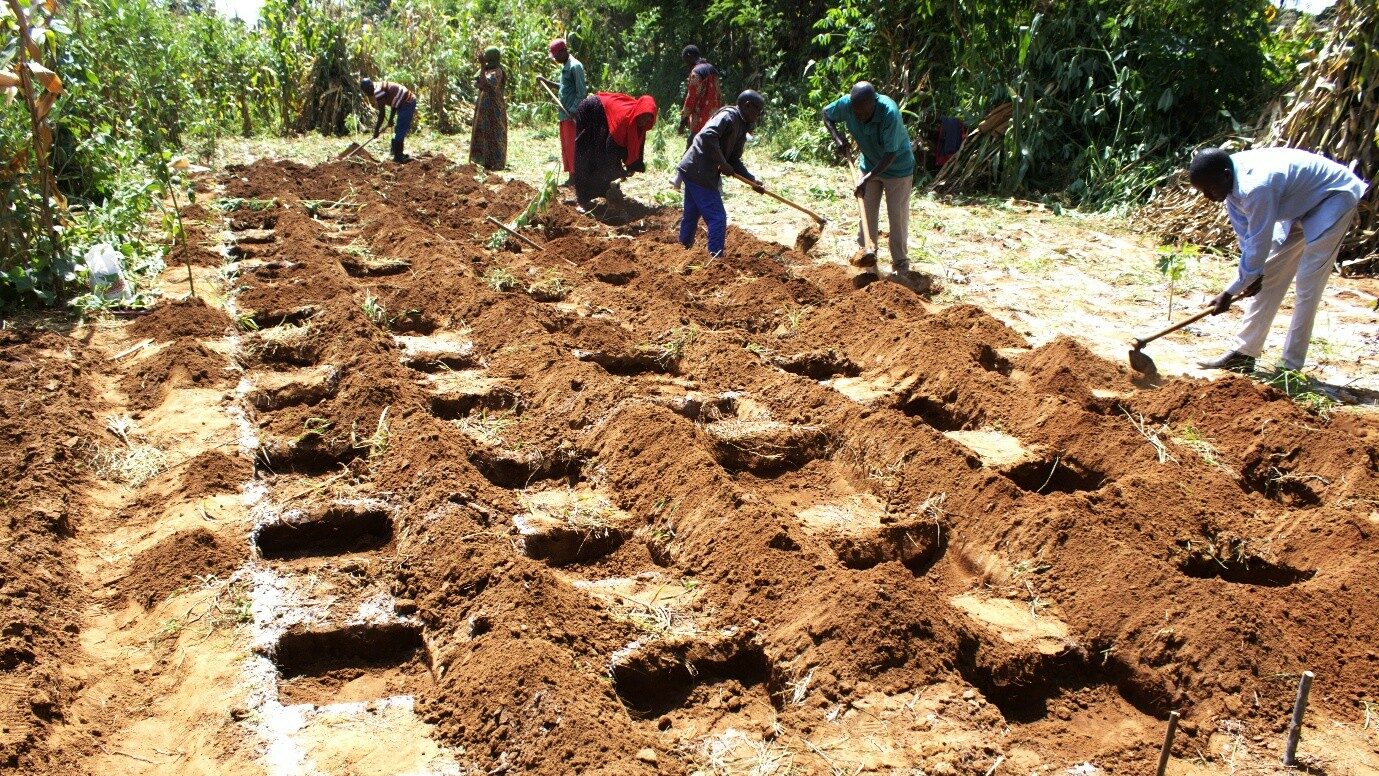
That is why Dorcas Tanzania introduced ZAI Pit technology to project participants, a innovation from Northern Burkina Faso designed to address low rainfall conditions. This method involves digging small pits that conserve moisture, store nutrients, and bring water closer to plant roots. From this, Dorcas Tanzania developed the PIP draft, which applies the same principle but uses equal sized pits arranged in a zig zag pattern, giving plants a competitive advantage over weeds while boosting yield potential.
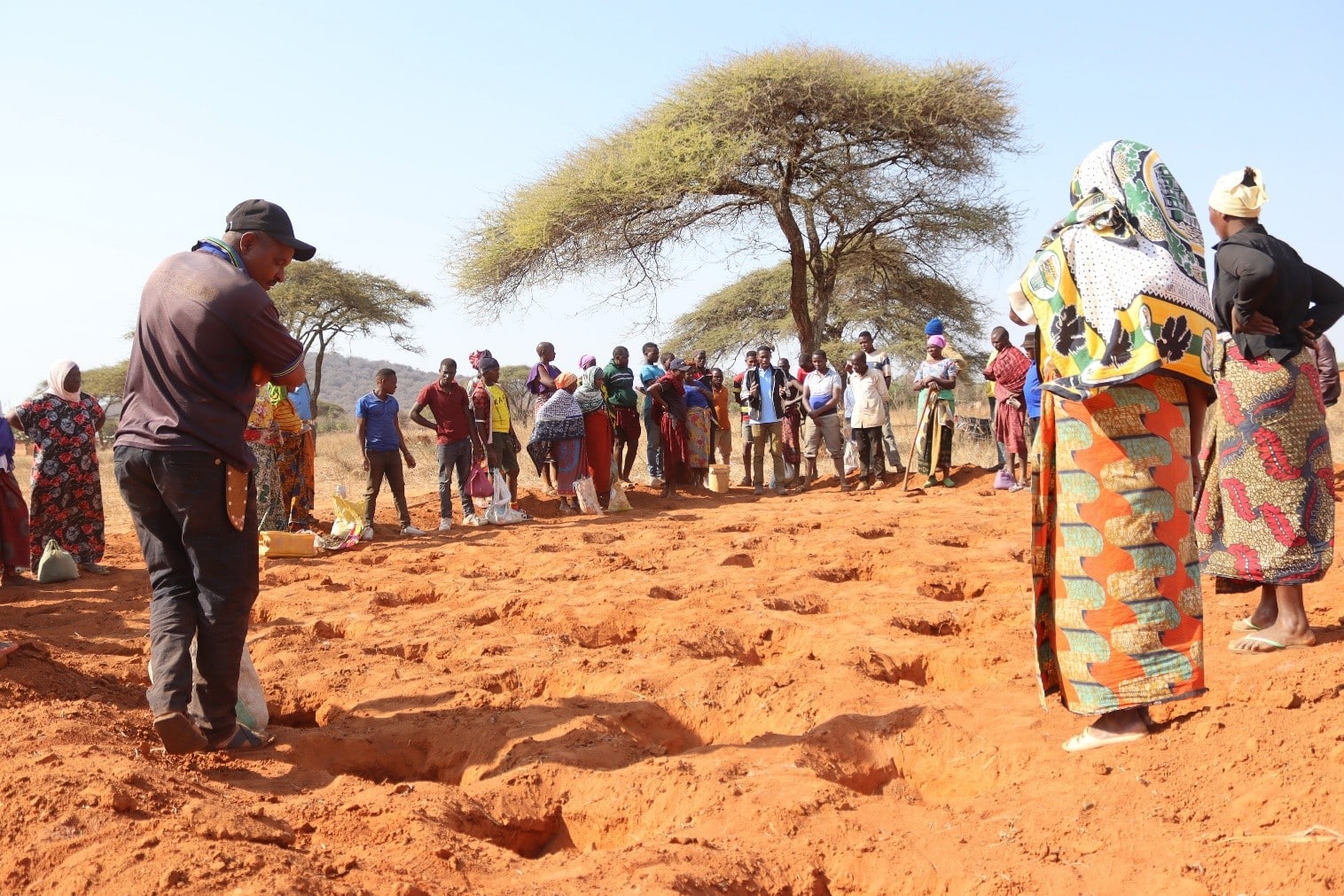
When this technology was adopted in Burkina Faso, farmers reported yield increases of over 200 per cent. In Chemba, over 50 farmers from the villages of Kidoka and Rofati have already undergone training in this method thanks to Dorcas Tanzania’s pioneering efforts. Dorcas Tanzania was the first development practitioner to introduce this practice to the region.
How the ZAI pits work
This is the step by step procedure that is shared with farmers:
Step 1: Site clearance
Remove weeds and unwanted plants. With minimal soil disturbance, the same pits can be reused year after year, a strong soil conservation measure.
Step 2: Field layout
Measure the field to ensure adequate spacing. In one acre, using a zig zag layout, farmers can prepare over 7,300 pits.
Step 3: Site marking
Mark the pits to ensure precision and enable easy division of labour.
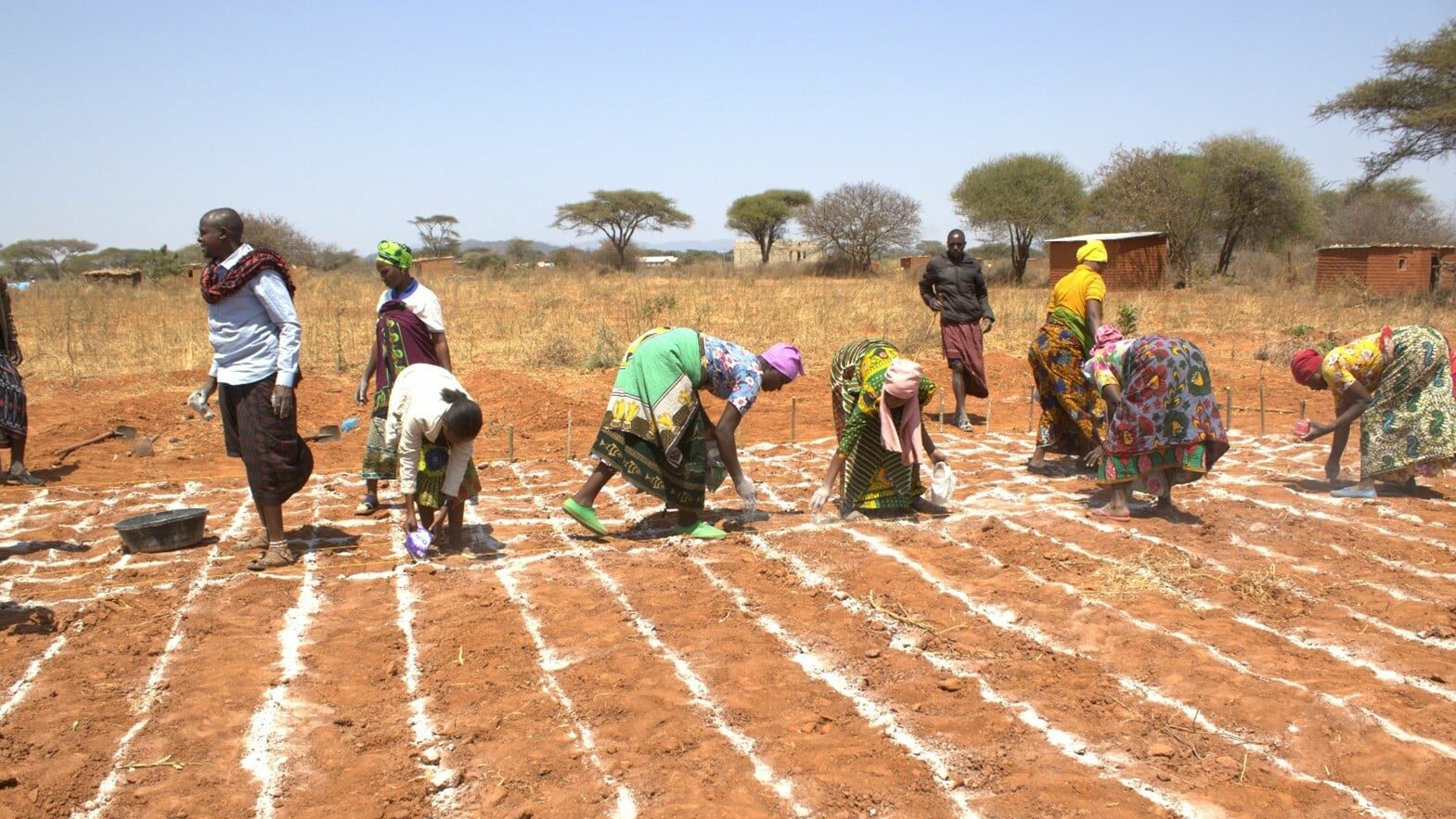
Step 4: ZAI Pit digging
Dig pits 30 cm deep, spaced 80 cm apart, with 40 cm paths to allow easy weeding, monitoring and harvesting. Preparation is best done during the dry season so planting can begin with the first rains.
Step 5: Mixing soil with manure
Place at least four handfuls of manure into each pit, providing maximum nutrients for plant growth.
Step 6: Seed planting
Plant five maize seeds per pit, later thinning to four plants to reduce competition and ensure optimal yield.
Beyond ensuring food security, this technology is a very practical climate change adaptation strategy that enhances resilience, improves livelihoods, and promotes sustainable environmental stewardship.