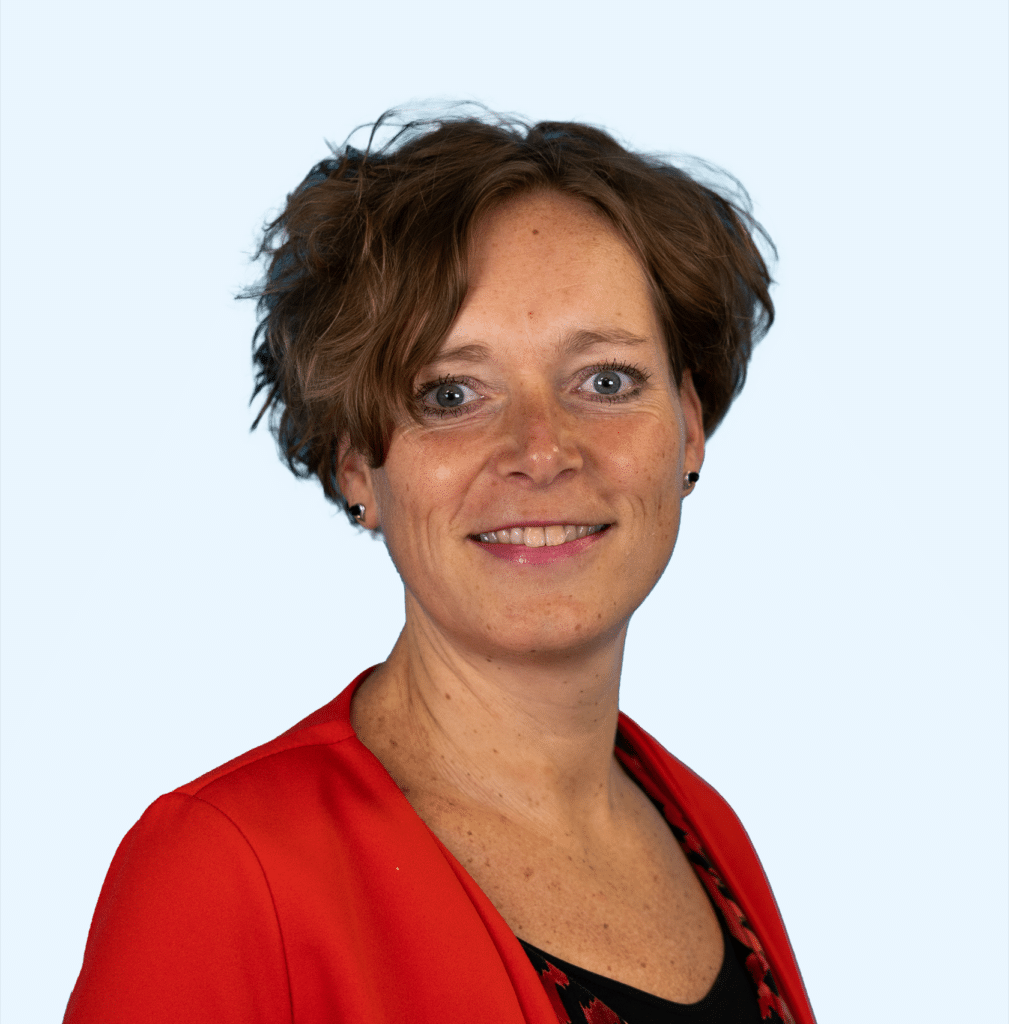
Written by: Agnes Kroese, CEO of Dorcas
When we meet someone new, what do we see?
We can form quick judgements based on first impressions. Are they young or old? Successful or struggling? Confident or insecure? In just a few moments, we have started to put them into a box.
And yet, no one actually wants to be reduced to a label. We want to be seen and valued for who we are, and to know that we belong.
For many older people living in poverty and isolation, feeling truly seen and valued is far from their daily reality. Changes in income, health or independence can affect their sense of security and their ability to participate in community life. Every person has the right to social protection, safety and participation. Yet these rights are not always accessible, and older people are often excluded from decisions that affect them.
But rights do not diminish with age. Older people are not only people who may need care or support – they are rights-holders and valued members of their communities, with knowledge and experience to share.
A moment of mutual respect
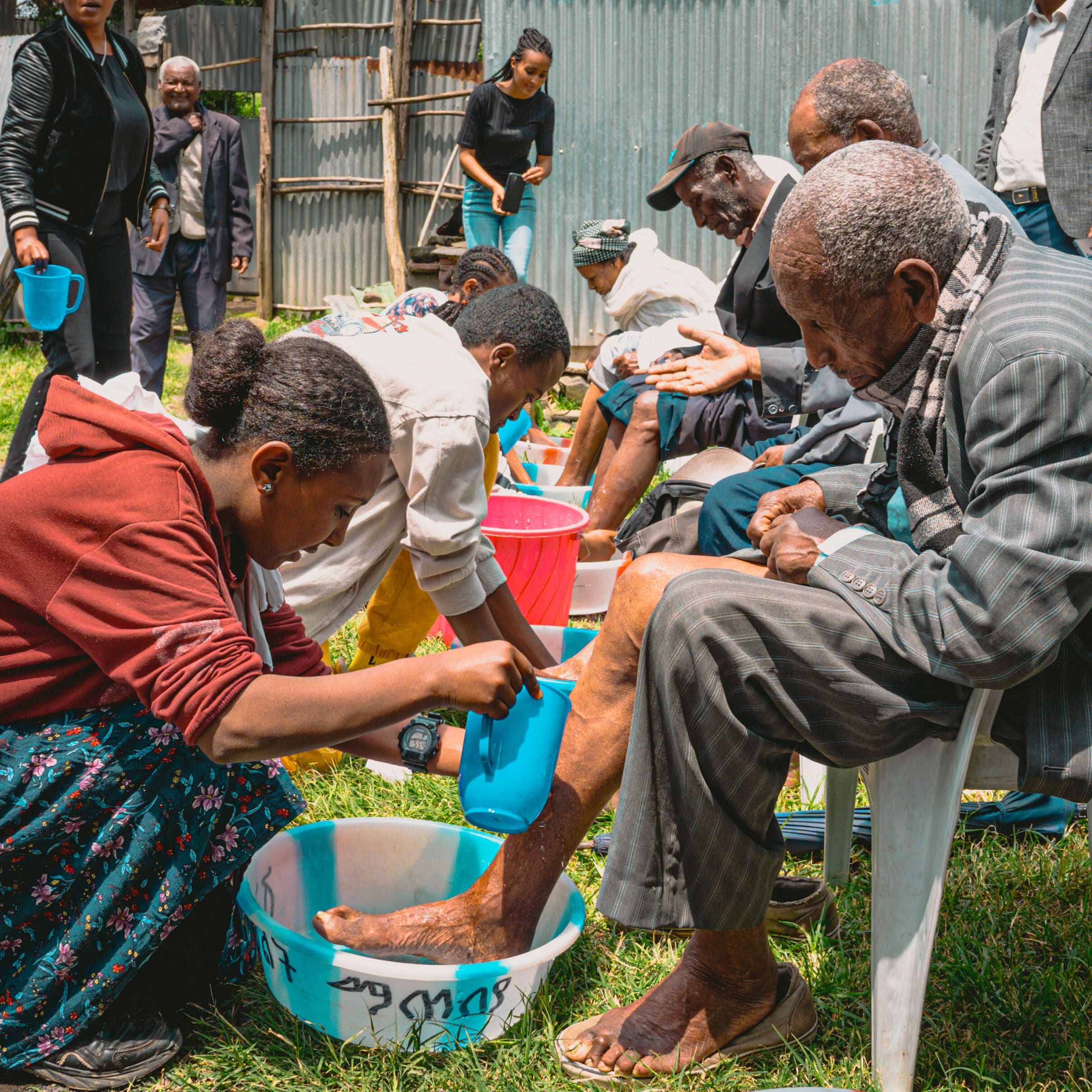
I saw this in a simple but powerful way during a visit to Ethiopia a few years ago. Outside a meeting room, older people were sitting with their feet in buckets of water while young people gently washed them. As they did, the older generation shared stories, memories and lessons from their lives. What stayed with me was not the act of care itself, but the mutual respect it expressed. Care was offered, while experience was honoured and shared across generations.
For me, that moment showed what it means to truly recognise someone. It is more than noticing their needs. It means listening to their voice and recognising the experience they bring to their communities.
Rights and belonging
That is why, for this year’s International Day of Older Persons, Dorcas uses the theme ‘Seen and valued – rights and dignity of older people’. It reflects a principle at the heart of our work: older people should not be defined by their needs or vulnerabilities, but recognised as people with a voice, value and a place in their communities.
At Dorcas, we work with older people living in poverty through Community Safety Nets in Moldova, Ukraine, Romania, Albania, Ethiopia, Tanzania and Egypt. Together with communities, we strengthen social connections and improve access to vital support, so that older people can continue to participate actively in community life.
On 1 October, we take a moment to celebrate older people and reflect on what their rights and dignity mean in practice. Every older person has the right to access the care and support they need, to be safe and to be heard.
A person’s worth is not something we earn through age, productivity or independence. It belongs to every person, at every stage of life.
As part of Dorcas’ 2026 International Day of Older Persons campaign, ‘Seen and valued – rights and dignity of older people’, we are highlighting the rights, dignity and contributions of older people and the value they bring to their communities.
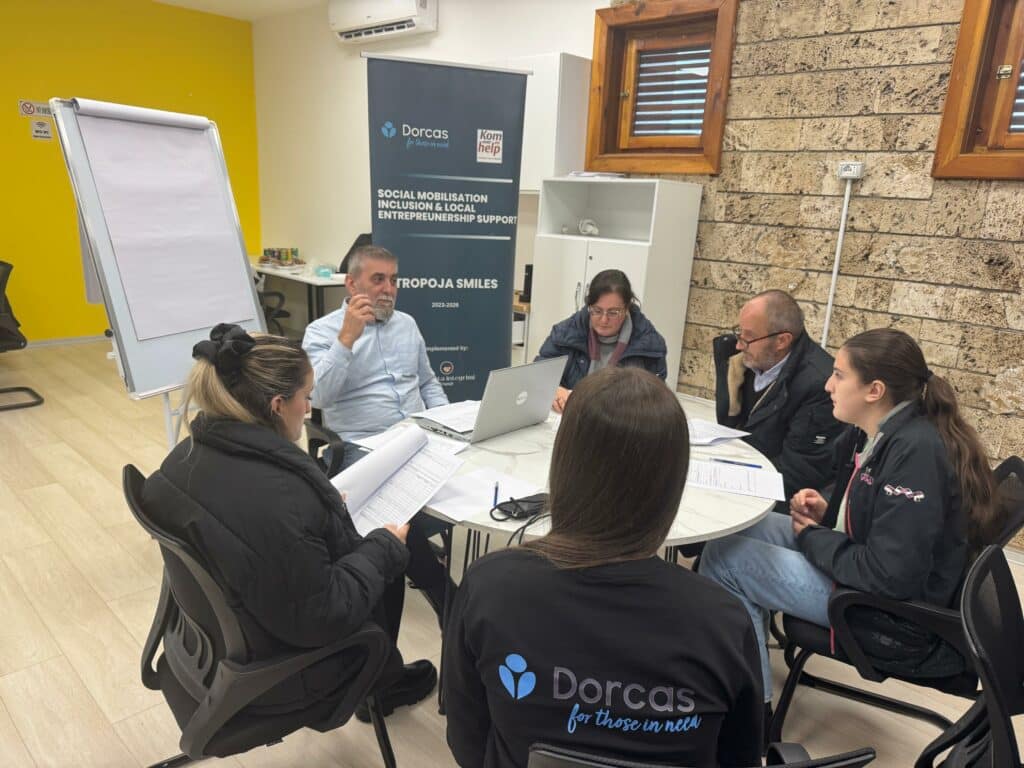
Supporting those facing barriers to self-employment and employability lies at the heart of Dorcas’s work. Economic development is crucial for improving well-being and enabling people to establish sustainable livelihoods. As part of the SMILES programme in Albania, Dorcas is working in the mountainous regions of Tropoja and Puka to create more economic opportunities for those in vulnerable situations.
Economic potential in Tropoja and Puka
Tropoja and Puka are remote and largely rural, with limited infrastructure and an economy centred on meeting daily needs through small-scale farming. Most households rely on farming, livestock and informal trade, with low production levels and limited access to markets, finance and relevant skills.
At the same time, the regions have clear but underused potential. Tourism is growing, especially around Valbona Valley and the Albanian Alps, while agriculture offers opportunities in chestnuts, fruit, livestock and honey.
The main barrier to unlocking this potential is not only production, but access to skills, markets and opportunities. Strengthening this access is key for households to move beyond subsistence.
Economic development within SMILES
The Economic Development approach in SMILES focuses on strengthening livelihoods by working through local value chains, particularly in agriculture and tourism. Rather than supporting people in isolation, the programme takes a practical approach that builds on existing local activity and potential, while strengthening connections within the local economy.
Farmers, small producers and micro-entrepreneurs are supported through training that responds to real needs in their work and businesses, including:
- Business and financial management.
- Agricultural and livestock production.
- Marketing and product quality.
- Customer service and tourism-related skills.
Rather than isolated activities, SMILES builds a more connected local economy where farmers, guesthouse owners and small entrepreneurs can benefit from each other’s development.
What this looks like in practice: two examples
This approach is visible in practice through participants such as Admira from Tropoja. Together with her husband, she runs a small guesthouse in a remote tourism area. Before the programme, their income depended on seasonal and informal work, resulting in limited stability.
Through SMILES, Admira participated in entrepreneurship training, where she learned how to plan and manage a small tourism business. She also accessed microfinance support, which enabled her to invest in improving her guesthouse. Today, she is developing her business and hosting visitors. For her, the most important change is not only economic, but also personal: gaining practical skills, confidence, and the belief that she can build a better future in her own community.
Another example is Dava from Puka. Before joining the programme, she had limited access to training, finance and markets, and mainly relied on traditional farming methods.
Through SMILES, Dava participated in entrepreneurship training and developed a business plan for small-scale greenhouse production. She received a grant of 2,000 euros, which enabled her to establish a greenhouse at her home. With technical support, she now produces vegetables such as tomatoes, peppers and cucumbers, and also grows seedlings for sale within her village.
For Dava, the most important change is the development of new skills, increased confidence, and the ability to turn her agricultural activity into a small income-generating initiative.
Working through local partnerships and looking ahead
Dorcas Albania works through local partner organisations that are embedded in the communities. These partners play a key role in delivering training, mentoring and ongoing support. Over time, they are supported to strengthen their capacity to facilitate local economic development processes. Dorcas provides technical guidance, training and coaching to ensure approaches remain practical and locally grounded.
SMILES shows that economic development is most effective when it strengthens connections between people, skills, markets and opportunities. By linking agriculture with tourism and strengthening local value chains, the programme contributes to a more connected local economy where households in vulnerable circumstances can participate in economic opportunities in their own context.
Jochem Duinhof, political advisor at Dorcas, responds to the Dutch coalition agreement of D66, VVD and CDA.
‘Dorcas is cautiously optimistic about the additional funding for development cooperation. This decision partially reverses the previous government’s harsh budget cuts, directly benefiting people worldwide who live in poverty, crisis, and exclusion. Moreover, these investments serve the interests of the Netherlands itself; our country is not an island. When the world surrounding us prospers, so do we.
The agreement highlights the importance of investing in human rights and a robust diplomatic network. This signifies a necessary break from the previous administration’s approach: the Netherlands is no longer retreating itself but is choosing international engagement based on equal partnerships, with a focus on human rights and climate.
However, there are concerns. The resources allocated for the reconstruction of Ukraine come at the expense of poverty alleviation in the Global South. This creates a painful contradiction: support for one should never come at the expense of another.’
One crisis has followed another in Lebanon, stretching public systems and community resilience to their limits. Existing challenges have been exacerbated by economic collapse, political instability and an influx of refugees. Amid these challenges, Mario has worked at Dorcas for two and a half years as a Communications and Reporting Officer. ‘Given all that Lebanon has been through, I felt I had to contribute to the humanitarian response. I want to support those living in the most vulnerable situations.‘
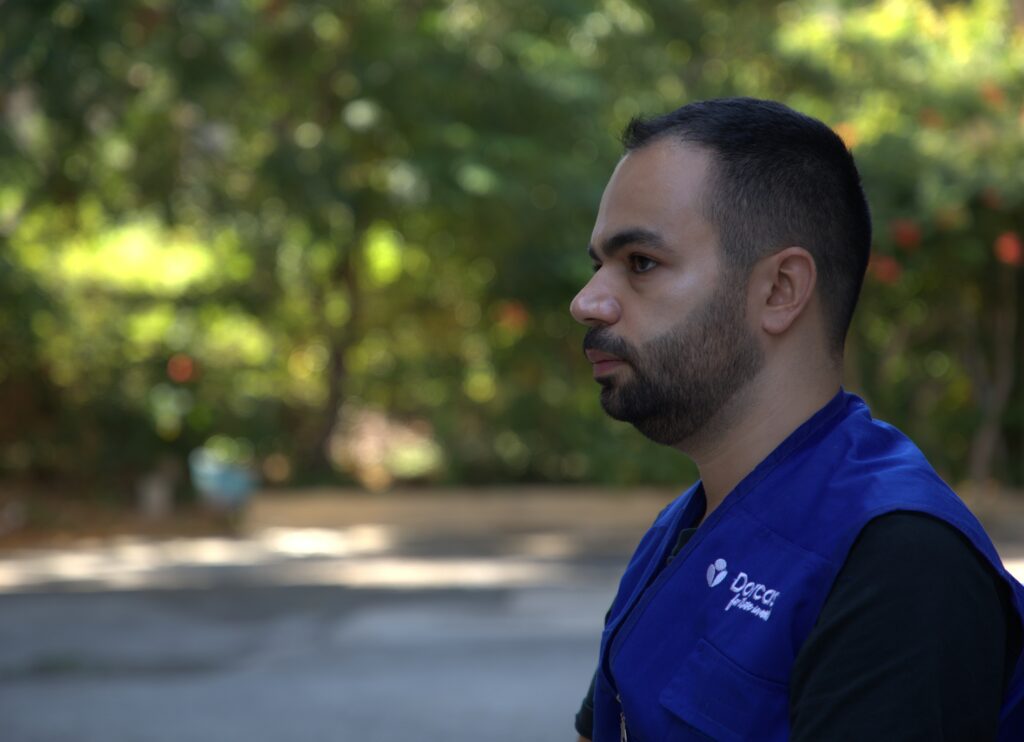
Supporting people in dire need is exactly what Mario and the team of Dorcas Lebanon are doing right now in Akkar, where they are distributing food parcels. ‘When you witness hunger and see people being forced into situations that no one should have to endure, it marks you’, Mario says.
Living at a graveyard
Mario now works extensively in Akkar, one of the poorest regions in northern Lebanon and one of the areas hardest hit in recent years. Thousands of Syrians have arrived here after fleeing their homes. They left everything behind, crossing rivers and fields on foot with little more than the clothes on their backs.
Some ended up in Akkar’s cemeteries. Mario recalls: ‘On day when we went to Akkar, we came across an area that was essentially a graveyard. Families had pitched tents between the graves, with washing lines strung over the tombs and children playing next to the gravestones. People were living there in impossible conditions.’
Food parcels are a lifeline
‘When people receive a food parcel, it is not just food that is received. It provides a sense of relief and reassurance that they are not forgotten. It gives them ten or fifteen days of stability.’
The distribution of the parcels is organised and efficient. Trucks arrive, people gather and lists are checked. Roles are assigned: someone counts, someone carries and someone ensures that everything is fair. ‘It is order in the midst of chaos,’ says Mario. ‘It is dignity in the midst of hardship.’
‘When I’m there, the Dorcas projects stop being anonymous numbers. Instead, you encounter people that have faces and names. They are children tugging at their mother’s sleeve and asking when they will eat. They are fathers carrying boxes with tired arms but proud eyes.’
He recalls a mother who placed her Dorcas parcel in the centre of her tent as if it were a treasure. Rice, lentils and oil – items so ordinary that they might go unnoticed in any kitchen – were laid out here like a feast. ‘Food parcels are a lifeline’, says Mario. ‘When I visit the area, I just try to be present and listen. I want to show people that they are seen.’
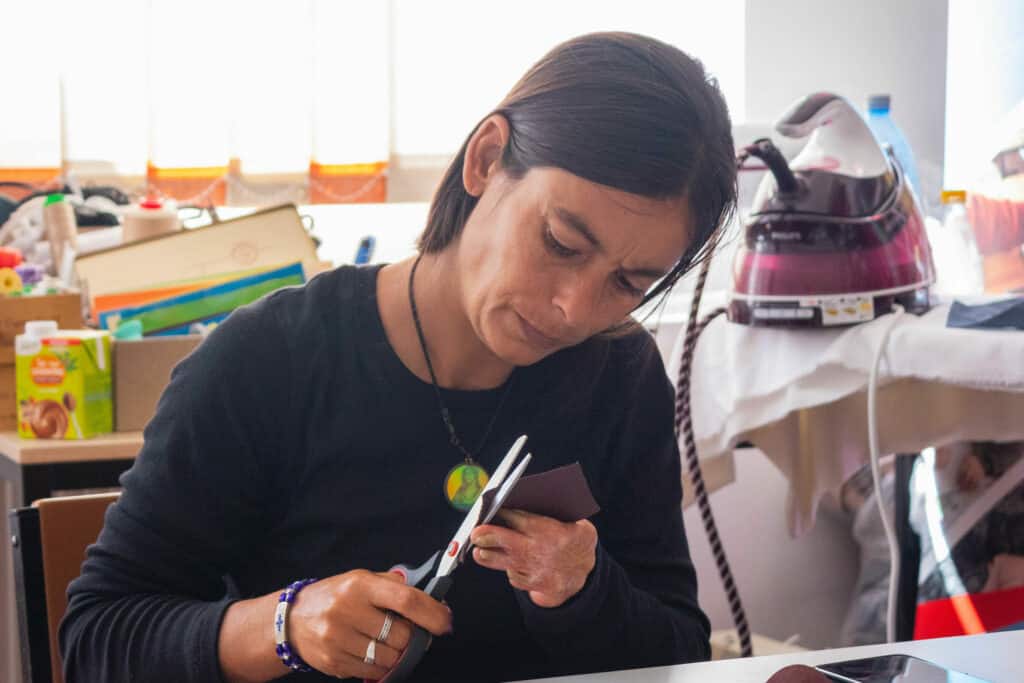
Ioana is a project participant of Dorcas Romania.
Ioana: ‘I stand up for the rights of Roma women to an education and a decent job. When I was 18 months old, my left hand was severely burned in an accident. As a result of this disability, my parents never sent me to school. So, I did not learn to read or write or acquire some of the skills you need to get a job. I married and became a mother. We struggled to survive on a low income, and although we managed to send my son to school, we did not have the money to send my two daughters.
Via my boy’s school, we became involved in a Dorcas project, which made it possible for both my daughters to attend school. Now, several years later, I’m really proud that my son has completed school and enrolled at a vocational college in Oradea.
However, the programme has not only helped my children. I enrolled in a literacy class and learned to read and write, and thanks to the sewing lessons at the local community centre, I am now a skilled seamstress. At the centre, I helped to make the shoes and clothes for a small doll named Aelia, which is used in an educational project for Romanian girls.
I am really grateful for everything the Dorcas project has done for my family. My children are receiving an education I never had and have a better chance of finding a job. I no longer feel ashamed due to my disability, and thanks to the sewing club, my self-confidence has grown and I’ve become a valued member of the local community. I hope that other Roma adults, especially women, will have the chance to acquire the vocational and social skills they need to find employment and live a decent life. And I long for the day when all Roma are no longer viewed as outsiders but are instead valued members of the local communities in which they live.’
𝘛𝘩𝘪𝘴 𝘴𝘵𝘰𝘳𝘺 𝘪𝘴 𝘱𝘢𝘳𝘵 𝘰𝘧 𝘋𝘰𝘳𝘤𝘢𝘴’ 𝘩𝘶𝘮𝘢𝘯 𝘳𝘪𝘨𝘩𝘵𝘴 𝘤𝘢𝘮𝘱𝘢𝘪𝘨𝘯. 𝘙𝘦𝘢𝘥 𝘮𝘰𝘳𝘦 𝘴𝘵𝘰𝘳𝘪𝘦𝘴 𝘢𝘯𝘥 𝘴𝘵𝘢𝘵𝘦𝘮𝘦𝘯𝘵𝘴 𝘰𝘯 𝘰𝘶𝘳 𝘥𝘦𝘥𝘪𝘤𝘢𝘵𝘦𝘥 𝘩𝘶𝘮𝘢𝘯 𝘳𝘪𝘨𝘩𝘵𝘴 𝘱𝘢𝘨𝘦. Human Rights: Contributing to a just society – Dorcas
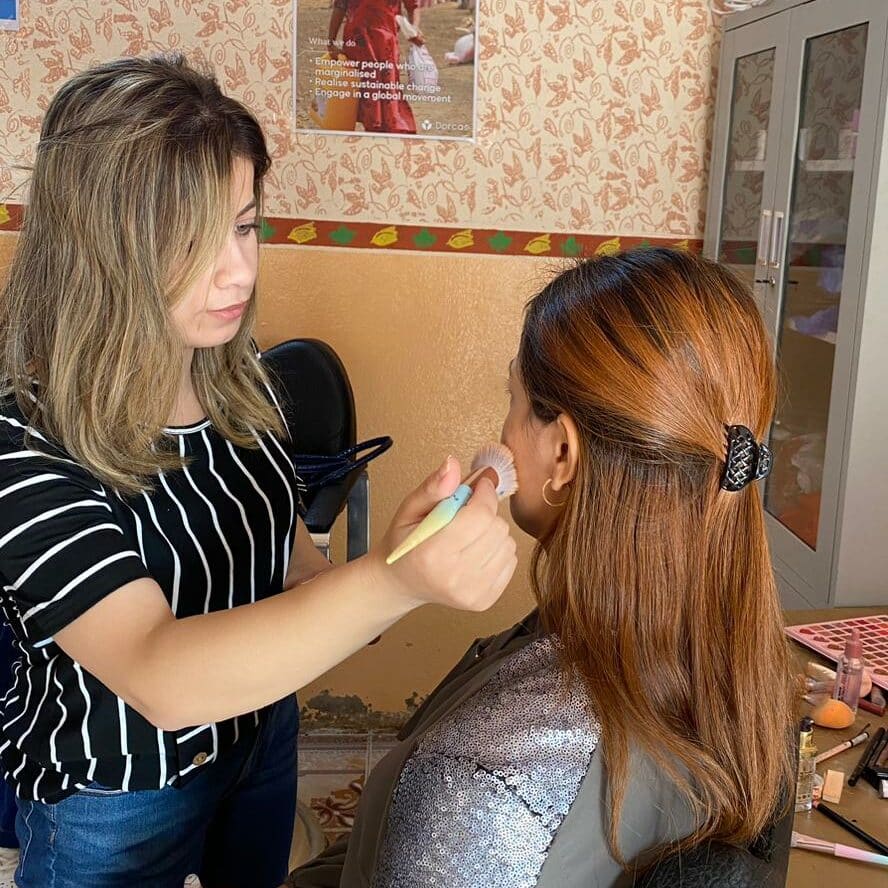
Bahar is a project participant of Dorcas Iraq.
Bahar: ‘The most pressing need for women in our community is empowerment and gender equality. Women in our community face many challenges, including limited access to education, economic opportunities and lack of decision-making power. They are often marginalised, and their voices are not heard.’
‘The Dorcas programme has played a crucial role in addressing these needs by promoting women’s inclusion, providing education and vocational training, supporting women-led businesses and advocating for their rights. Our community still needs continued support for women’s empowerment, including promoting leadership, ensuring equal opportunities and challenging societal norms that perpetuate gender inequality. This needs to be addressed on an ongoing basis.’
‘My hope for the future is that gender equality will be achieved. I would like to see women empowered and safe, with access to education and economic opportunities, so that they can flourish.’
This opinion article is written by Jochem Duinhof. He is a Political Advisor at Dorcas. With this opinion article, he argues for continued support for Ukraine. This article is published in Dutch newspaper Nederlands Dagblad (ND).
Solidarity with Ukraine is under pressure. Not only in the United States, but also in Europe and even in the Netherlands. On the one hand, there is the conflict in the Middle East, which understandably receives a lot of media attention, but pushes the conflict in Ukraine into the background. On the other hand, there seems to be an increasing Ukraine fatigue. In March 2022, only 11 per cent of Dutch people were not in favour of welcoming Ukrainian refugees. According to the most recent poll, this percentage currently stands at 23 per cent. In the week since the large-scale Russian invasion began two years ago, this is a painful conclusion.
Especially among Dutch right-wing parties, support for Ukraine is under pressure. The PVV (Party for Freedom) wants to end all direct support to Ukraine, the BBB (Famer-Citizen Movement) wavers on how unconditional the support should be and FvD (Forum for Democracy) is openly pro-Russian. Also, this week, several right-wing politicians expressed negative views on support for Ukrainians. This time it concerned the reception of Ukrainian refugees in the Netherlands. The politicians painted the picture that Ukrainians favour coming to the Netherlands and come to our country en masse to benefit from our prosperity. With that, the cost of hosting Ukrainians would be higher for the Netherlands than elsewhere, the message is.
This is a false frame that is not based on the facts. The fact that Germany, the Czech Republic and Poland receive at least twice as many Ukrainian refugees in terms of population as the Netherlands is ignored. As is the fact that Belgium receives only a fraction fewer Ukrainians than the Netherlands (0.0063 vs 0.0079 Ukrainians per inhabitant). That this sentiment is being stirred up is nothing new. Yet the frame created is incorrect. In a democracy, opinions are of course allowed to differ, but they should be based on the facts.
Self-interest
Furthermore, the suggestion that supporting Ukraine only costs us something does not do justice to reality. It is naive to turn our heads away from the conflict in Ukraine. Ukraine is our first line of defence: if Ukraine holds out, it is in the direct interest of the Netherlands. However, if Russian forces conquer Ukraine, it is highly questionable whether this will end Russian expansionism. More importantly, Ukraine is fighting for something bigger: self-determination, democracy and human rights. These core values are of great importance to the Netherlands. We benefit from a world in which these core values are respected. So, supporting the Ukrainian people is about much more than our jobs, healthcare and housing: it is about protecting the global system that we have reaped the benefits of for decades. With the growing influence of autocracies such as China and Iran, this system is under pressure. It is therefore essential that we as Europe continue to stand for our democratic values. A Russian victory could therefore have disastrous consequences for our position on the world stage.
Hypocrisy
Above all, tampering with solidarity with the Ukrainian people tends towards hypocrisy. After all, we have been pleading for years for “reception of refugees in the region”. This time, we are the region for Ukrainians. Take for instance a country like Lebanon, which, with its five-and-a-half million inhabitants, receives one-and-a-half million Syrians. That is no less than thirty-five times the number of Ukrainians per Dutch citizen. And to think that Lebanon has been facing a severe political and economic crisis for years. So as far as the reception of Ukrainians is concerned, it is up to us to take our responsibility; after all, we have passionately pleaded for this system for years.
Solidarity
Concluding, this is not the time to abandon Ukrainians. Two years after the large-scale invasion, the struggle continues unabated. This year, the UN calculated, 40 per cent of Ukrainians left behind need humanitarian assistance. Our solidarity with the Ukrainian people is not free, but the costs are low compared to the horrors the people of Ukraine have been facing for two years now. Polarising between Ukrainians and the Dutch is not the solution. We need politicians that bravely face the challenges we face as a country: showing solidarity with the victims of this conflict and effectively addressing problems within our own borders. The two need not be played against each other; we can both show solidarity with Ukraine and address our domestic problems. However, this requires political courage, and the will to show constructive leadership in times of scarcity. With the formation still in full swing, the stakes are high in that respect. Let us therefore hope and pray that our people’s representatives do not abandon Ukraine, especially now.
Nadiia works as a Project Manager for Dorcas Ukraine
Nadiia: ‘The first thing we Ukrainians lost two years ago when the conflict started, was our sense of security. It does not matter how much money you have, you are still at risk. The most vulnerable people are children, older people, families who left the occupied territories and people with disabilities.’
‘I work with older people in Eastern Ukraine. It was during the conflict that a lot of them became very lonely because they were left behind by their relatives. That is why the aim of my work is to develop Community Safety Nets for older people. This is where they can support each other, communicate, develop their skills, hear encouraging words from volunteers and learn that they are not forgotten.’
‘By taking part in various activities, older people forget about the fear and danger, and they feel heard and valued! We all hope that the conflict will end and that we will feel safe in our homeland.’
𝘛𝘩𝘪𝘴 𝘴𝘵𝘰𝘳𝘺 𝘪𝘴 𝘱𝘢𝘳𝘵 𝘰𝘧 𝘋𝘰𝘳𝘤𝘢𝘴’ 𝘩𝘶𝘮𝘢𝘯 𝘳𝘪𝘨𝘩𝘵𝘴 𝘤𝘢𝘮𝘱𝘢𝘪𝘨𝘯. 𝘙𝘦𝘢𝘥 𝘮𝘰𝘳𝘦 𝘴𝘵𝘰𝘳𝘪𝘦𝘴 𝘢𝘯𝘥 𝘴𝘵𝘢𝘵𝘦𝘮𝘦𝘯𝘵𝘴 𝘰𝘯 𝘰𝘶𝘳 𝘥𝘦𝘥𝘪𝘤𝘢𝘵𝘦𝘥 𝘩𝘶𝘮𝘢𝘯 𝘳𝘪𝘨𝘩𝘵𝘴 𝘱𝘢𝘨𝘦. Human Rights: Contributing to a just society – Dorcas
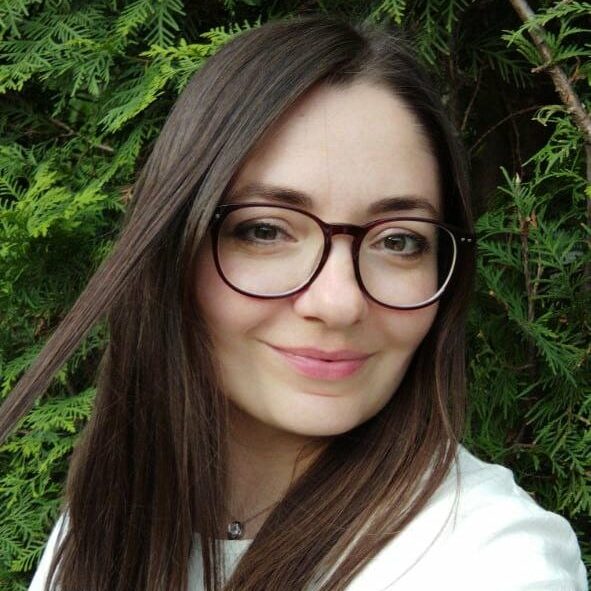
Minsa (32) is a project participant of Dorcas partner Loyac in Yemen.
Minsa fled with her husband and their five children to Aden from an escalated conflict and bombings in Yemen. They experienced a lot of stress and trauma and had no means to support themselves.
Minsa: ‘Dorcas gave us the psychosocial support we needed and through an empowerment programme, we could set up a business and support ourselves as a family. I am really grateful to Dorcas and Loyac for everything they gave us. It had a very positive impact on our overall wellbeing.
Our mental health has improved considerably, and we have become financially stable. Thanks to the training and materials we received, we could set up our own sewing business. We are so happy that we can now buy food and water and provide for our children’s needs. I stand up for the right to proper work because the support we received has given my family a future. Now, my dream is to become an even better entrepreneur.
𝘛𝘩𝘪𝘴 𝘴𝘵𝘰𝘳𝘺 𝘪𝘴 𝘱𝘢𝘳𝘵 𝘰𝘧 𝘋𝘰𝘳𝘤𝘢𝘴’ 𝘩𝘶𝘮𝘢𝘯 𝘳𝘪𝘨𝘩𝘵𝘴 𝘤𝘢𝘮𝘱𝘢𝘪𝘨𝘯. 𝘙𝘦𝘢𝘥 𝘮𝘰𝘳𝘦 𝘴𝘵𝘰𝘳𝘪𝘦𝘴 𝘢𝘯𝘥 𝘴𝘵𝘢𝘵𝘦𝘮𝘦𝘯𝘵𝘴 𝘰𝘯 𝘰𝘶𝘳 𝘥𝘦𝘥𝘪𝘤𝘢𝘵𝘦𝘥 𝘩𝘶𝘮𝘢𝘯 𝘳𝘪𝘨𝘩𝘵𝘴 𝘱𝘢𝘨𝘦. Human Rights: Contributing to a just society – Dorcas
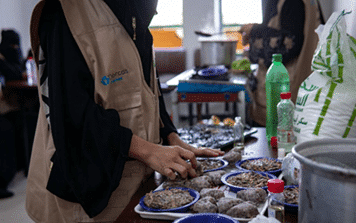
*Not her real name. At the participants request, we have used a pseudonym for this contribution.