Over the past couple of weeks, the situation in the Middle East has become extremely volatile. Ongoing missile strikes across multiple countries have significantly destabilised the region. Although conditions continue to shift, the overall environment is one of uncertainty and escalating risk. 

Dorcas maintains country offices in Lebanon, Syria, Egypt, Yemen and Iraq. The impact of recent developments varies considerably across these countries, with Lebanon currently the most affected and facing the greatest needs. This update provides an overview of each country office and how the evolving situation is influencing our work. 

Lebanon 

Lebanon is currently facing a severe and rapidly escalating humanitarian crisis. Sustained airstrikes have affected southern Lebanon, the Bekaa Valley, Baalbek‑Hermel, Beirut, and Mount Lebanon. Large-scale evacuation orders have caused widespread panic and mass displacement. This escalation comes on top of Lebanon’s multi-year economic collapse, leaving communities in urgent need. 

According to UNHCR, around 517,000 people have been displaced in Lebanon, with more than 117,000 staying in collective shelters. In addition, in the first week of March, over 70,000 Syrians living in Lebanon and nearly 7,000 Lebanese crossed back to Syria, reflecting the scale of recent movements (source UNHCR, March 9th). Recent numbers indicate a displacement of at least 667,000 people (source UNHCR, March 10th).

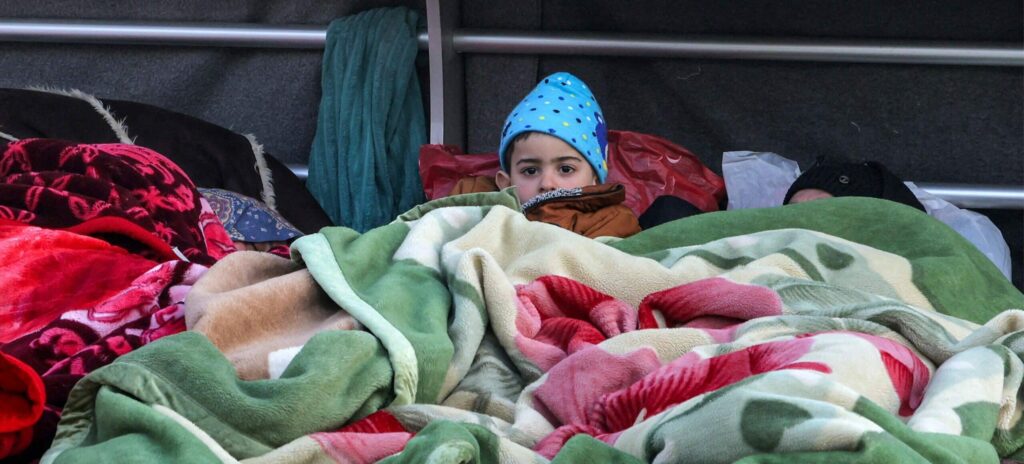
Many displaced people are fleeing with minimal belongings, seeking shelter in schools, public spaces, and overcrowded collective shelters. Capacity in these sites is overstretched, with urgent needs for food, safe water, hygiene items, protection, and psychosocial support.

Najla, Dorcas Country Director in Lebanon and Syria, describes:

People are out on the roads, on the streets and beaches. They are staying outside at night as they have no place to go. We need to start distributing necessary items, such as food parcels now. People need food today. We cannot wait.’ 

Dorcas has been responding immediately since the beginning of the escalation. The response includes: 

This response is being scaled up rapidly in the coming days and weeks. 

Iraq 

The situation in Iraq is tense. The Dorcas Iraq team is safe and maintaining project activities where possible. Communities are experiencing anxiety, particularly in areas already facing limited services, although many continue to show resilience and remain engaged in programme activities. Our teams remain in close contact with them. 

Our projects in Iraq are somewhat affected by travel restrictions and limited access to certain locations. Some activities in areas such as Sinjar and Basra have been rescheduled due to the security situation. 

In recent days, there have been several recent drone incidents targeting critical sites, including industrial facilities and hotels. These developments are concerning, and Dorcas continues to monitor the situation closely. 

Syria  

The situation in Syria is calm at the moment, and the team has not yet been significantly affected by the recent instability and conflict. Although there have been minor incidents, our colleagues on the ground report that life is continuing relatively unchanged. The Dorcas Syria team has been in regular contact with colleagues in Lebanon, discussing ways to provide support and taking steps to do so. 

Egypt 

The situation in Egypt remains stable. All Dorcas staff, the communities in which we work, and our programmes are safe, and there have been no reports of security threats. The main challenge at present is the substantial increase in prices, which is limiting participants’ access to essential goods and services. 

Yemen 

The situation in Yemen, both in the north and the south, remains relatively calm. There have been no significant new impacts on Dorcas’ projects, and the Dorcas Yemen team is generally coping well. 

However, Yemen continues to face a prolonged crisis that requires urgent attention. In addition, a projected increase in fuel prices is expected to further exacerbate the economic situation. 

The situation in the Middle East has become increasingly unstable in recent days, with ongoing missile strikes reported across several countries in the region. This has led to growing insecurity, disruptions to airspace and transport routes, and rising humanitarian concerns.

While developments continue to shift rapidly, the overall picture is one of regional uncertainty and elevated risk.

Dorcas has Country Offices in Lebanon, Syria, Egypt, Yemen and Iraq. Our primary concern remains the safety and wellbeing of our colleagues, partners, and project participants across the region. We continue to follow developments closely.

We kindly ask you to keep the people in the region in your thoughts and prayers, and to join us in hoping for peace and stability across the Middle East.

José Salema, Country Director of Dorcas Yemen, clearly remembers the moment he was asked to provide support to a remote village. ‘It was after a devastating flood,’ he says. ‘Everything was underwater. The harvest was lost, the wells were contaminated and diseases broke out. Worst of all, people could not reach the hospital.’

During the rainy season, the village is located close to a river and far from any basic facilities. There are no markets, schools or hospitals nearby. Most families have no regular income and survive by doing seasonal agricultural work in a neighbouring village on the other side of the river. Life across the river could not be more different: there are solid houses, jobs, food, a bustling market and good facilities. The contrast is stark. These differences often lead to tension and conflict between the villages.

Following the flooding, Dorcas provided emergency assistance in the form of food, clean drinking water, and medical care. However, José and his team wanted to do more than simply provide emergency supplies. José: ‘We asked the people, ‘What do you need to prevent this from happening again?’ The answer was surprisingly simple: a bridge.’

The bridge is a lifeline

For the villagers, the river forms both a boundary and an obstacle. When the water rises, it is impossible to cross. This means no work, no school and no access to healthcare. ‘With a bridge, daily life can continue even when the river floods,’ explains José. ‘Children can go to school and pregnant women can reach the doctor.’

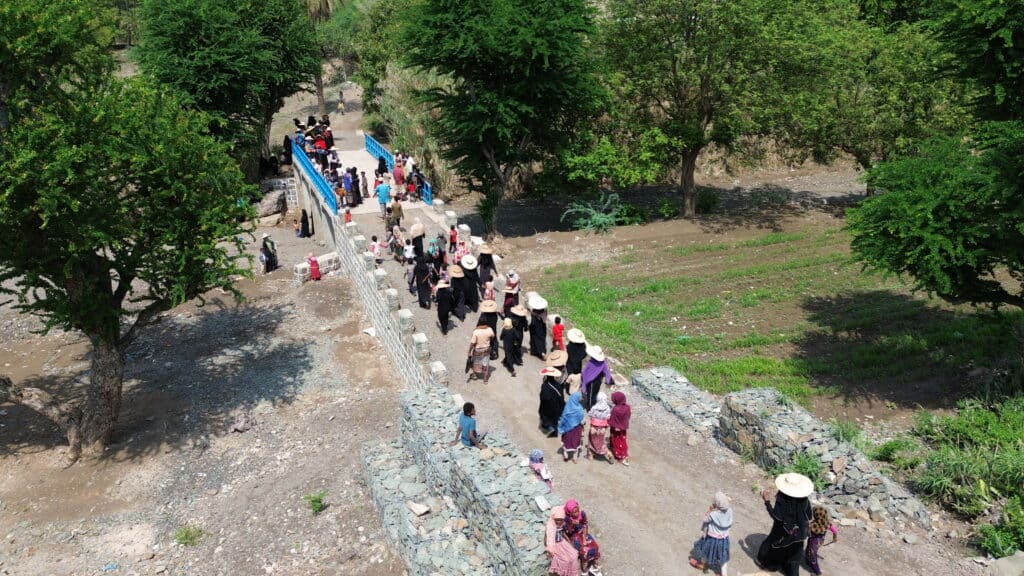
The construction of the bridge was a joint effort. Local contractors and labourers worked alongside the villagers, who received training and built it stone by stone. ‘They are very proud,’ José says. ‘It is their bridge. They have shown that they are capable of creating something valuable. This boosts their confidence and self-worth.’

A bridge to flourishing

The bridge brought with it some unexpected benefits. During construction, the idea emerged to tackle the water problem more structurally as well. ‘We installed an irrigation system that drains excess water and channels it to farmland,’ explains José. “Now the crops no longer flood. There is now enough food for everyone.’

In the past, villagers had to ask their employers for food during difficult times, which often caused tension. Now there is stability. There are no more lost harvests, hunger or conflict. ‘The bridge and the irrigation system have transformed life in the village,’ says José. ‘People are in closer contact with one another, and that also reduces tensions.’

Gezicht vanaf boven op een smalle brug met mensen die erover lopen, omgeven door groene bomen en akkers, met een auto en een ruwe pad onder de brug.

Find out more about the work of Dorcas Yemen!

Reading time: 2 minutes.

Khalid is a father of ten from Yemen. He struggled with the harsh realities of drought and poverty, and found it difficult to provide for his family’s most basic needs. His land was barren and his debts were growing. A lack of resources prevented him from cultivating his land, which had a negative impact on his children’s education and wellbeing.

However, Khalid’s situation changed when he was introduced to Dorcas’s Food Security and Livelihoods (FSL) project. This initiative aimed to support the households most in need, and Khalid was selected as a participant in the agricultural greenhouse project.

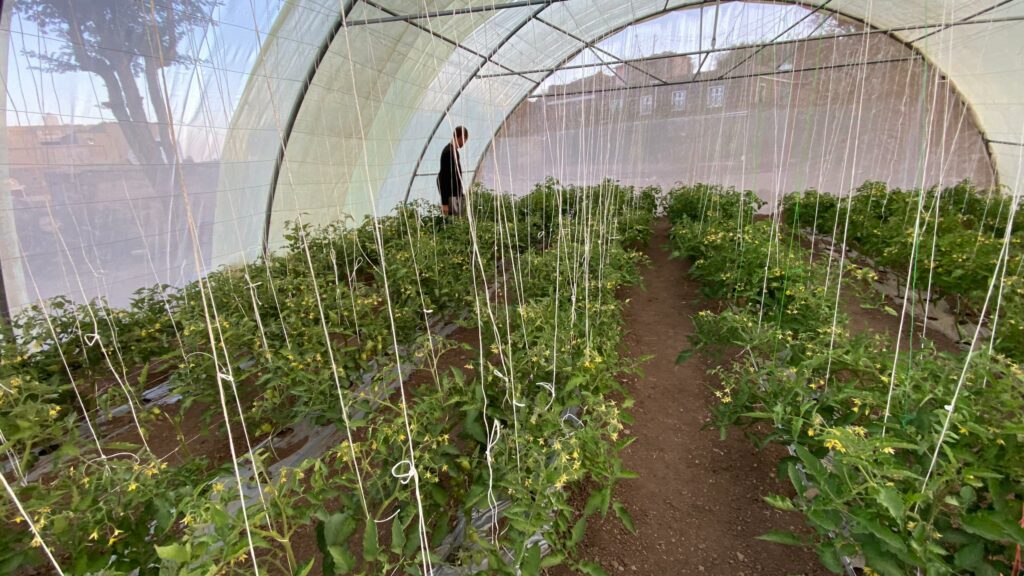
As part of this, he received a modern greenhouse, quality seeds, a drip irrigation system and a water tank. He was also trained in modern farming techniques, crop management and the efficient use of water and fertiliser. With both knowledge and resources at his disposal, Khalid began to cultivate his land with renewed determination.

With continuous guidance from the project team, his crops flourished. When harvest season arrived, his fresh, chemical-free tomatoes were well received in the local market. The income he earned exceeded expectations, enabling him to repay debts, provide his family with nutritious food, and send his children back to school.

Khalid expressed his gratitude, saying: ‘This project didn’t just change my life – it gave me my life back.’ He continues to work in agriculture today, committed to maintaining his greenhouse and sustaining his family’s livelihood.

Khalid’s story shows how targeted, practical support can empower families to regain stability and self-reliance, even in areas affected by long-term drought and hardship.

Reading time: one minute.

Dorcas has joined a coalition of international and national organisations in Yemen to sign a joint statement highlighting the alarming increase in hunger and malnutrition. The statement, released on World Food Day, calls for urgent global action to address one of the world’s most severe humanitarian crises.

Recent reports indicate that food insecurity now affects nearly half of Yemen’s population, leaving millions of families at risk of severe hunger. Malnutrition rates have skyrocketed, with almost one in two children under five now suffering from chronic undernutrition. Furthermore, many communities’ livelihoods continue to collapse under the pressures of conflict, economic instability, and climate shocks.

The situation demands immediate funding to address the most pressing needs, as well as renewed efforts to ensure unhindered humanitarian access throughout the country. Investing in local organisations and integrating measures to protect at-risk communities, especially women and children, from the growing risks of hunger, forced labour and early marriage is also key.

Dorcas continues to work alongside its partners in Yemen to deliver humanitarian assistance, bolster local resilience and promote lasting security and stability. Only through collective commitment and coordinated action can Yemen move towards recovery and a future free from hunger.

Read the full joint statement here.

Reading time: two minutes.

Yemen is facing one of the world’s most severe humanitarian crises, with an estimated 21.6 million people requiring humanitarian assistance in 2025. Despite this urgent need, attention and humanitarian funding remain far too limited. The country is also experiencing a critical public health and protection emergency, with widespread outbreaks of waterborne diseases including cholera, acute watery diarrhoea (AWD), measles, diphtheria, dengue fever, malaria and vaccine-derived polio.

The World Health Organization (WHO) has issued an urgent appeal for emergency health funding, as millions of lives are at risk. Health services in Yemen are overstretched and unable to meet the demands of this major emergency. Approximately 19.6 million people lack access to even the most basic healthcare, and hundreds of healthcare facilities are at risk of closure. Climate-related disasters, such as floods, are increasingly affecting people’s lives and damaging health infrastructure, further exacerbating the situation.

Crisis response by Dorcas

Dorcas is responding to this devastating humanitarian crisis, specifically the cholera outbreak, which has seen 72,144 confirmed cases and nearly 300 fatalities since 2024. In collaboration with the Ministries of Health and Water, we are implementing a multi-sector programme in Taiz and Aden. The project provides urgent water, hygiene and sanitation (WASH) support to people in need, including internally displaced persons (IDPs) and returnees. This will restore access to safe drinking water, prevent the spread of disease, reduce infection risk for the most vulnerable communities, while building their capacity to respond to health emergencies.

To deliver this support, the programme focuses on the following activities:

Activities in Taiz:

Activities in Aden:

These efforts aim to reduce the spread of disease, improve community health and ensure access to vital services during the outbreak. Dorcas is committed to both providing much-needed humanitarian assistance and working towards sustainable solutions in Yemen.

Reading time: 4 minutes

Although we can catch glimpses of global events through the media, many crises remain underrepresented. The complex situation in Yemen is a case in point, despite the urgent need for greater support. Yemen is grappling with a deeply challenging and complex situation that calls for our attention. 

Current situation

The current situation in Yemen is calm yet tense, with the shockwaves of developments in the Middle East reverberating throughout the country. Aden and neighbouring governorates in the south and east are experiencing economic and logistical instability, widespread power cuts and the spread of viral diseases. 

Protests have been ongoing for over a month as citizens express their frustration over the collapse of the currency, the skyrocketing prices of basic commodities and the high cost of living. The situation is further compounded by deteriorating health and education services and delays in salary payments.  

A major development this year has significantly impacted the operational environment. The US Government ordered all humanitarian and development actors receiving US funding to halt operations in Northern Yemen. As a result, some organisations had to withdraw from their target areas. 

Alarming food insecurity

Yemen is also facing alarmingly high levels of food insecurity, with some populations now at risk of famine (IPC Phase 5) for the first time since 2022. Currently, 17.1 million people, nearly half of the country’s population, experience high levels of acute food insecurity (IPC Phase 3 or above). Projections suggest that this figure could increase to 18.1 million people between September 2025 and October 2026, highlighting the severity of the humanitarian crisis and the necessity of ongoing intervention. 

The delayed rainy season has led to dry conditions persisting across Yemen, heightening the risk of drought and exacerbating water scarcity. These climatic challenges are placing an additional burden on communities that are already struggling. 

Dorcas in Yemen 

Dorcas Yemen is dedicated to supporting displaced people, host communities, women and children. Additionally, we focus on people with disabilities and socially marginalised groups. We implement programmes in various sectors, including health, water, sanitation and hygiene (WASH), food security and livelihoods and protection. 

One of our key strengths is our ability to build networks and encourage acceptance within local communities. This involves collaborating with local partners and volunteers to reach marginalised people who are the most difficult to access. Despite the challenging situation and growing needs, Dorcas remains deeply committed to supporting those in need. 

José Salema, Dorcas Yemen’s Country Director, says: ‘From experience, I know that the Yemeni people are very resilient. Despite the current obstacles, we will continue to push forward and support our project participants as we work together to build a better future in Yemen.’

He continues, ‘For now, our key priorities lie in responding to humanitarian needs in close collaboration with established clusters and local institutions. Together, we are reinforcing efforts to mitigate food insecurity and optimise water harvesting and usage. Additionally, we are focusing on improving project participants’ livelihoods and their access to markets.’

Call for action

A month ago, 116 humanitarian organisations, including Dorcas, called for immediate action to prevent Yemen’s descent into further crisis. In light of this collective call for action, it is crucial for humanitarian organisations to align their strategic priorities, including scaling up development assistance and advocating for flexible, timely and predictable funding. 

Dorcas Yemen has launched a rapid response initiative following devastating floods that have severely impacted several regions, including Alshimayatain district in Taiz Governorate, where Dorcas Yemen operates. The floods, which began on 28 July due to heavy rains and seasonal weather patterns, also triggered landslides, further worsening Yemen’s already dire humanitarian situation and leading to widespread destruction.

At least seven governorates across the north and south of the country have been affected, covering an estimated area of 15,000 square kilometres. The floods have destroyed crops and other agricultural assets, leaving over 10,000 people facing severe food insecurity.

In response to these urgent needs, Dorcas Yemen has allocated €100,000 to provide immediate assistance to the affected communities. The response will focus on three key areas:

Dorcas Yemen is working closely with the Ministry of Agriculture and Fisheries in Taiz Governorate, as well as with local community leaders and humanitarian clusters, to ensure that the response is tailored to the needs of the affected population. This collaborative approach will maximise the impact of the assistance efforts and ensure accountability to the communities we serve. Together, we are committed to bringing hope and support to those in need during these challenging times.

Haifa lives in Aden with her husband and has two children. She holds a degree in business administration and is the founder of our partner organisation LOYAC.

Back in 2011, she briefly worked on a project with another international NGO, which she really enjoyed. She then went into banking, but that was not where her heart lay. That was the moment she realised humanitarian work was her vocation and established LOYAC. This NGO has supported hundreds of people, but one story, in particular, sticks in her mind.

Abdullah’s story

‘A few years ago we visited an orphanage in Shaab. There I met Abdullah, a young boy who had already experienced so many intense things in life. His parents had divorced and when his mother remarried he went to live with his father, a soldier. Unfortunately, his father died one day during a fight and Abdullah ended up in the orphanage.

Due to all these traumatic events, Abdullah suffered from a psychological disorder. He was also very sad about losing his father. I was very touched by Abdullah’s story and offered him psychological counselling. At first, Abdullah was very withdrawn and only wanted to draw during the sessions. He drew the same thing every time: a soldier in a field and a man on the ground riddled with bullets. This is how Abdullah expressed his grief at losing his father.

However, Abdullah has gradually learned to talk about things. His grades have also improved and he is increasingly excited about life. When he grows up, he wants to become a pilot!’

Future dreams

Haifa is convinced that Yemen has a brighter future. ‘Peace will prevail and Yemen will once again become a happy country. We wish it, strive for it and dream it. We all hope that our wish will come true.’

In response to the escalating humanitarian crisis in Yemen, Dorcas Yemen has signed a petition urging the international community to amplify its support for the conflict-torn country. The petition, initiated by the Norwegian Refugee Council (NRC), highlights the urgent need for enhanced funding and assistance as Yemen grapples with severe economic downturn, exacerbated by years of conflict.

Yemen, already one of the poorest countries in the Middle East, is facing an unprecedented humanitarian catastrophe. The economic downturn, now in its ninth year, has plunged millions of people deeper into poverty, pushing them to the brink of survival. The situation has been worsened by widespread food insecurity, with millions of Yemenis struggling to access basic necessities.

The ongoing conflict has led to the displacement of millions of people, with families forced to flee their homes in search of safety and shelter. Internally displaced persons (IDPs) face dire living conditions, lacking access to adequate healthcare, clean water and education.

Against this backdrop, Dorcas Yemen has joined forces with other humanitarian organisations to call for increased funding and support from the international community. Dorcas emphasises the critical importance of addressing the root causes of the crisis and providing immediate assistance to those in need.

The effects of the ongoing conflict continue to devastate Yemen, with civilians bearing the brunt of the violence and instability. As the situation worsens, the need for urgent action becomes ever more pressing.

Dorcas Yemen’s involvement in this petition reflects its unwavering commitment to alleviating the suffering of communities in vulnerable situations and advocating for sustainable solutions to humanitarian crises. We urge the international community to heed this call for increased support and solidarity with the people of Yemen during their time of dire need.