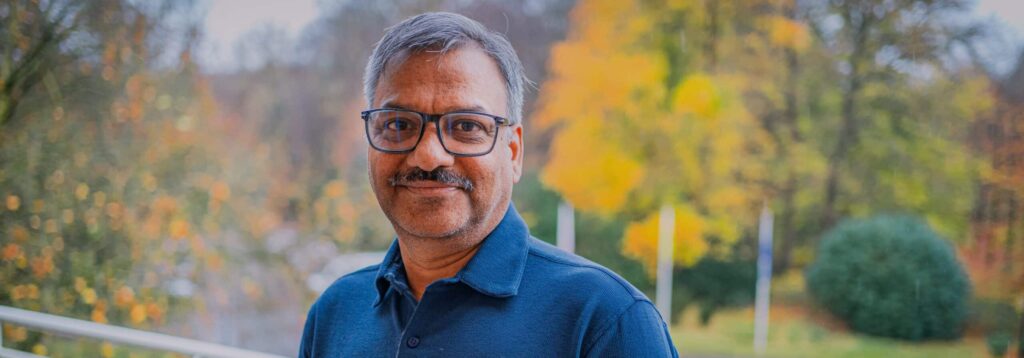
Jitendra Panda, our Country Director in South Sudan, was born and raised in India. Over the past twenty years, he has lived in many different countries across Africa and Asia, always with the aim of supporting those in need.
‘I studied Humanitarian Assistance in India. After that, I started working for the United Nations (UN) in India. My work mainly focused on people’s health. However, I realised that poor health is caused by many underlying issues. That is why I moved to development organisations that focus on more than just health.’
Journey to South Sudan
In 2004, Jitendra left India for Africa, where he worked in Somalia. Over the following years, he also worked in Namibia, Yemen and Lebanon. The organisations he worked for all had one thing in common: the Christian faith. ‘I believe that everyone deserves protection and has the right to a dignified life. As a Christian, I believe it is my responsibility to support those in need by providing them with basic necessities such as water and food.’
In 2023, Jitendra began working for Dorcas and ZOA* in South Sudan. According to the Country Director, South Sudan is a beautiful country. ‘It has all the natural resources that are needed: water, trees and fertile land. Nature could provide everything; there is enough land to produce food for everyone. Unfortunately, South Sudan faces many difficulties resulting in shortages of essential resources,’ Jitendra explains.
Severe flooding
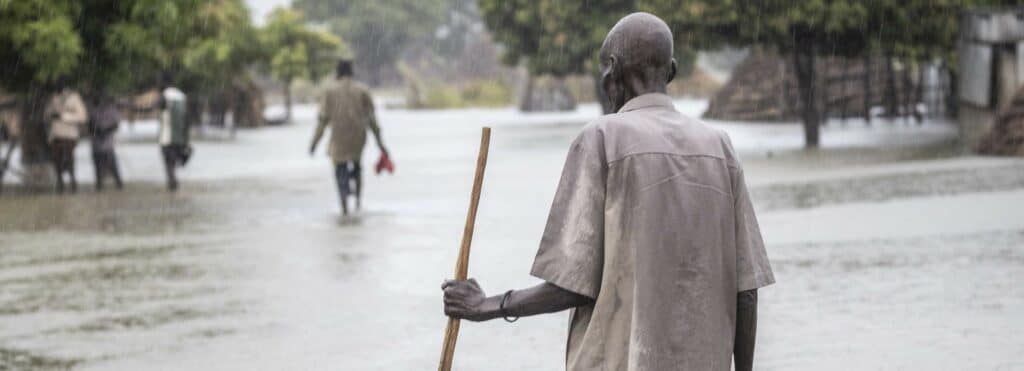
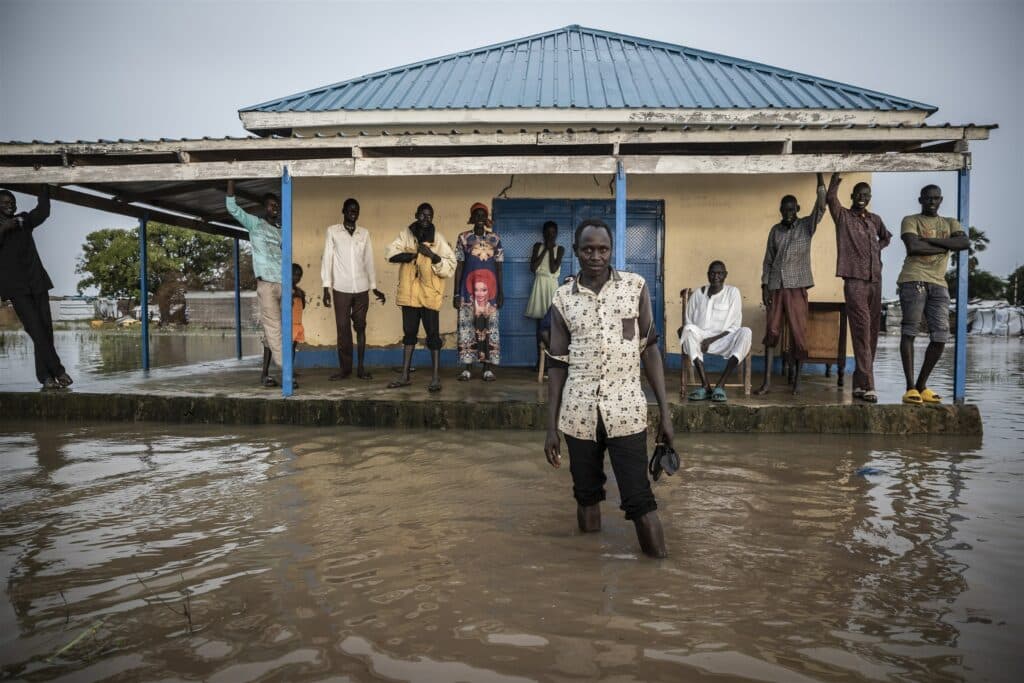
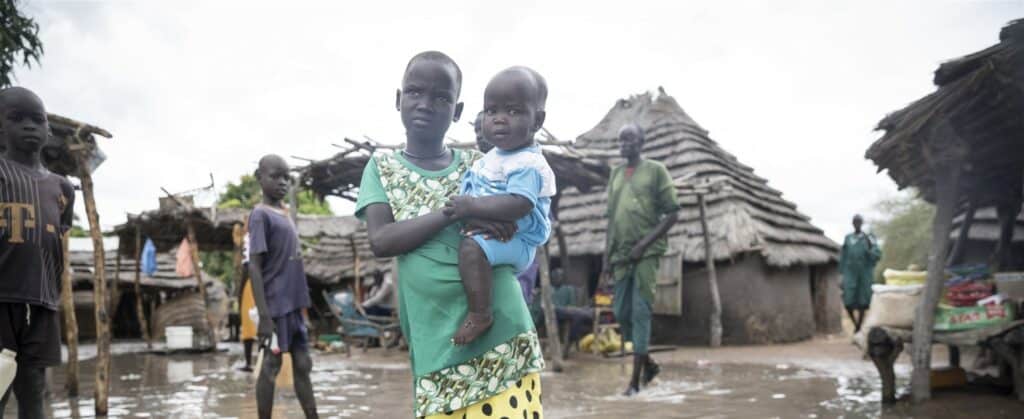
One of this country’s problems is its climate. South Sudan experiences alternating periods of extreme drought and heavy rainfall. Due to the intense rainfall, large parts of the country flood. People are forced to flee to drier, higher ground, and harvests fail. This not only leads to a lack of food, but also to conflicts in the areas where people seek refuge. Dorcas builds dykes to protect homes and farmland from flooding.

Refugees from Sudan
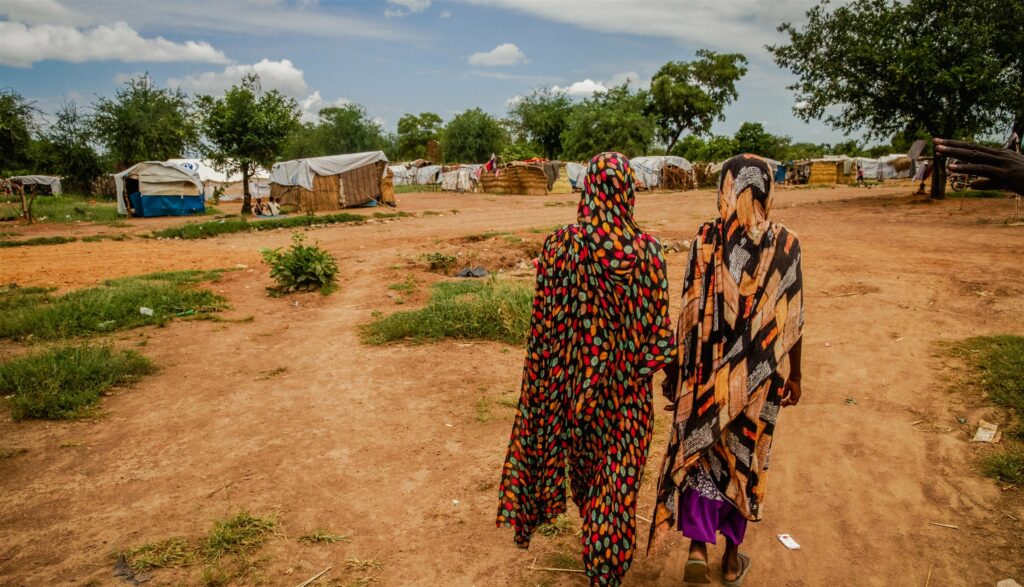
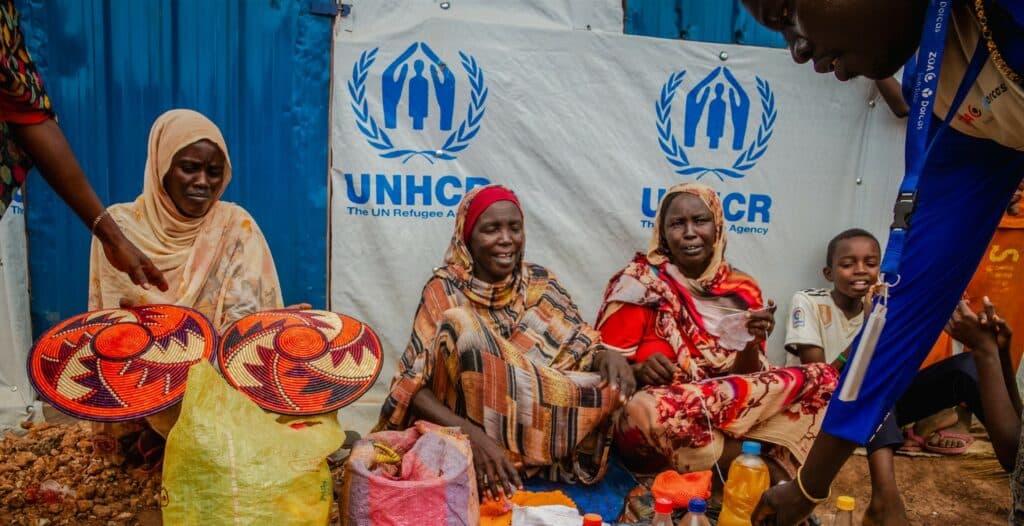
In addition to drought and heavy rainfall, accommodating refugees is also a major challenge in South Sudan. This is due not only to people within the country seeking safer places, but also to the influx of refugees from Sudan.
After the civil war broke out in South Sudan in 2011, millions of people fled to neighbouring Sudan. Two years ago, a civil war broke out there as well, prompting many South Sudanese to return. However, they find that their homes, farms and land have been taken over by those who stayed behind.
Hosted by communities
Jitendra explains: ‘Many refugees are taken in by the communities themselves. They are given a spot to put up a tent and food is shared. For now, this system works, but at some point the food runs out and conflicts arise. We support the communities by distributing food and providing them with the means to grow more, so that conflicts can be prevented.’
‘Dorcas also works with communities to help them deal with conflicts in a peaceful way. People learn to talk to one another and work on solutions together, preventing disputes from escalating into conflict. ‘My dream is that South Sudan will become a peaceful country where people live together in harmony.’

*In South Sudan, Dorcas and ZOA work closely together. By joining forces, we can better tailor our assistance to the needs of the people in South Sudan. Learn more about the work of ZOA Dorcas South Sudan.
Yesterday, the 30th UN Climate Conference (COP30) officially opened in Belém, Brazil, with an urgent call to implement climate pledges. Running until 21 November, the summit is focused on accelerating the implementation of practical solutions to meet national climate goals under the Paris Agreement.
This year, the core theme is climate adaptation, which the summit focuses on through six official action agenda areas:
- Transitioning energy, industry and transport.
- Stewarding forests, oceans and biodiversity.
- Transforming agriculture and food systems.
- Building resilience for cities, infrastructure and water.
- Fostering human and social development.
- Unleashing enablers and accelerators, including on financing, technology and capacity-building (cross-cutting theme).
These six themes are broken down into 30 key objectives, which provide more detail on the actions needed in these areas.
Agriculture and food systems on the agenda
Among the priorities at COP30, the transformation of agriculture and food systems is worthy of note. For decades, climate talks have largely overlooked food and farming, even though these sectors are crucial not only for tackling climate change, but also for ensuring that communities have enough to eat and can flourish in a changing world.
Heleen Berends, Dorcas’s Strategic Programme Advisor, explains:
‘The shift became evident back at COP27, when countries launched a four-year work programme on agriculture and food security (the Sharm El Sheikh Joint Work). Now, governments are reporting on progress and discussing how to increase climate action in the agricultural sector. The Global Action Agenda specifically lists goals such as restoring land, building climate-resilient food systems, and ensuring equitable access to food.’
Heleen adds:
‘This also raises a key issue: roughly one-third of global emissions are driven by food production, and agriculture is a primary driver of biodiversity loss. At the same time, hunger and food insecurity remain widespread. It is therefore essential to rethink how we produce, process and consume food. This needs to include regenerative farming, protecting forests and wetlands, reducing food waste, and promoting truly sustainable diets. Such measures can lower emissions while also ensuring sufficient yields, nutrition and resilience. What is clear, is that the current situation demands immediate action. The world must now come together to pledge sufficient funds and create accessible mechanisms that allow for better and accelerated adaptation.’
The spotlight on food systems also underscores the importance of community-level action, and shows why Dorcas’ work matters more than ever.
How Dorcas supports communities to adapt to climate change
For Dorcas, climate change is not an abstract issue. It directly affects the communities we support. From droughts in Ethiopia and Kenya to floods in South Sudan and wildfires and desertification in Iraq, extreme weather is making farming unpredictable and threatening food security. Those in vulnerable situations often have the fewest resources to cope, which is why climate adaptation is central to our work.
Heleen explains:
‘We support communities in adapting to changing conditions, improving food security, and preparing for disasters. For farmers in vulnerable areas, climate-adaptive solutions are essential.’
In practice, Dorcas combines innovation with local solutions to address climate challenges. In Yemen, solar-powered water systems provide clean drinking water and irrigation. In Iraq, water-saving technologies help trees survive in the desert. In Kenya, wetlands are being restored to manage floods, and schoolchildren plant trees to connect communities with their environment. These locally led solutions build resilience, safeguard livelihoods, and support people to flourish.
Dorcas takes a holistic approach to climate adaptation, working across food systems, land and water management, and community development. In this way, Dorcas transforms global commitments, such as those emphasised at COP30 and in the Belém Declaration, into tangible change for local communities.
In South Sudan, the political, economic, security and humanitarian situation has recently further deteriorated, with security reaching its lowest point since 2018. Renewed clashes between government and opposition forces have escalated violence, putting countless lives at risk. The country has already endured decades of famine, conflict and flooding, and ZOA Dorcas, along with local partners, continues to provide critical support to communities in need in the face of these ongoing challenges.
Additional pressing issues in South Sudan include:
- The devaluation of the local currency and the rising prices of food and basic commodities are severely affecting the population.
- The conflict in Sudan has driven more than a million refugees into South Sudan, straining already limited resources.
- Humanitarian needs are increasing while international funding and support has decreased.
- Extreme weather events – floods, droughts and heatwaves – cause displacement, disrupt livelihoods and fuel conflict over scarce resources.
Our work in South Sudan
Dorcas has been present in South Sudan since 2008 and since 2022, we work in partnership with ZOA, forming the ZOA Dorcas South Sudan consortium. ZOA Dorcas supports communities affected by conflict and natural disasters, focusing on sustainable livelihoods for marginalised groups in hard-to-reach areas. Our aim is to reduce the risks associated with conflict, lack of resources and extreme climatic events.
With a long-term presence and strong local partnerships, we’re well positioned to support those in need. Recent impactful projects include a dyke project to prevent flooding, reclaim farmland, and resettle displaced families, and the installation of tubewells in areas affected by drought to improve access to water.
Find out more about our work in South Sudan.
Dorcas is responding to urgent needs in South Sudan and Ethiopia, addressing crises in some of the most affected regions.
In South Sudan, the northern state of Bahr el Ghazal has been one of the hardest hit areas by the devastating floods, which have displaced families and had a severe impact on livelihoods. Agricultural land has been damaged and the harvest season disrupted, leaving many households facing food insecurity. To support recovery, ZOA Dorcas South Sudan will provide a one-off emergency cash distribution to up to 4,000 people in two counties.
Meanwhile, in Ethiopia’s Oromia State, East Wollega, displacement caused by intercommunal tensions over competition for land and resources and attacks by armed groups has forced thousands of people into overcrowded camps or urban areas. Following an assessment in six districts, the Dorcas Ethiopia team identified Waya Tuka as the area of most urgent need. Dorcas Ethiopia will provide cash assistance to 400 displaced households for two months.
Dorcas is and will continue to be committed to providing timely and effective support in the countries where we work. Reaching those most in need at critical times.
Last week, the UNCR published it’s annual Global Trends Report highlighting the trends in forced displacement over the past year. By the end of 2023, approximately 117.3 million people were forcibly displaced worldwide, with numbers rising to over 120 million in early 2024. The amount of people who are forcibly displaced has been increasing for twelve consecutive years. From the end of 2022 to the end of 2023, there was an 8 per cent increase, equating to 8.8 million people.
South Sudan
2023 was a year of turmoil, with large-scale conflicts and natural disasters. One of the major conflicts in last year, that led to 6 million people internally displaced and 1.2 million fleeding to neigbouring countries, was the conflict in Sudan. The outbreak of violence forced many to leave their homes. According to the UNHCR, South Sudan now hosts around 330,000 refugees, the majority of whom are from Sudan.
ZOA-Dorcas South Sudan supports people fleeing the violence in Sudan through nitiatives such as the SAFER project. Among them are returnees who previously fled violence in South Sudan during the war and are now fleeing back from Sudan. By providing cash, seeds and tools, the project aims to strengthen them and the host communities. The circumstances these refugees returned to is also still dire, and this project supports them them in rebuilding their lives.

Syria and Lebanon
Almost 60 per cent of all forcibly displaced people are internally displaced, meaning they do not cross a border but remain within their country. Syria has the second-largest number of internally displaced people worldwide: 7.2 million.
2023 was a year of yet another crisis in Syria. After more than a decade of war, the crisis in the country was exacerbated when it was was struck by a major earthquake and extreme aftershocks. Although the international community’s attention briefly focused on Syria after the earthquake, it has since faded into the background.
Dorcas works both in Syria and in Lebanon. Lebanon, one of the neighbouring countries hosting many Syrian refugees, is also in crisis, causing tensions between the Lebanese population and Syrian refugees. Dorcas supports these groups by organising group conversations and training sessions that bring together Syrian refugees and the Lebanese host population to resolve tensions. These sessions focus on intergenerational activities and celebrations that break down barriers, promote tolerance and reject stereotypes, all aimed at reducing conflicts and fostering mutual support systems.
In Syria, we support people in need through various programmes. When the earthquake struck, Dorcas Syria staff immediately began providing humanitarian assistance. You can read more about our work in Syria after the earthquake here:
One year after the earthquake in Syria: How did Dorcas support those in need?

Climate change
Climate change is also negatively affecting the safety of forced displaced people and may increasingly affect the number of displaced people. According to the UNHCR Global Trends Report, nearly 75 per cent of all forcibly displaced people lived in countries with high-to-extreme exposure to climate-related hazards at the end of 2023.
As extreme weather events become more frequent, we expect the number of people displaced by climate-induced events to increase. Therefore, taking both mitigating and adaptive measures to combat climate change and increase climate resilience is a key priority for Dorcas in the coming years. We see the climate refugees and we will not leave them behind.
Read the latest Global Trends Report of the UNHCR here
Cor is a former Programme Manager and Country Director at Dorcas.
‘South Sudan is not only plagued by conflicts. It is also prone to flooding due to its relatively low elevation. The country lacks the infrastructure to contain floodwaters, so the rivers overflow and inundate the land. Climate change has worsened this problem because the rainfall is now more frequent and intense.’
‘In the Netherlands, we use dikes to contain water, so why not do the same in South Sudan? With that thought in mind, we initiated a project in collaboration with ZOA to build dikes. Last year, as a pilot project, we constructed a four-kilometre-long dike that provided flood protection for many people. This year, with the assistance of Pharus and EO Metterdaad, we are building two large dikes.’
‘These dikes are being built in a peaceful and conflict-free region that is highly underdeveloped and difficult to reach. For example, during the rainy season, the project area can only be accessed by boat or hollowed-out tree trunks. However, this is definitely a location where Dorcas can make a significant difference.’
‘We want to realise sustainable change, and so before the project started, we extensively researched whether the local population welcomed the idea of dikes. This may sound logical but, unfortunately, we know of cases where humanitarian assistance organisations built dikes only to see these destroyed by fishermen who preferred certain areas to flood. Our research revealed that the local population really welcomed the dikes. Therefore, we know that with this project, we can effectively combat climate change in a sustainable manner together with the local community.’
This story is part of Dorcas’ human rights campaign. Read more stories and statements on our dedicated human rights page. dorcas.org/humanrights

The bicycle is a very useful and handy means of transportation for many people around the world. Not only is cycling good for your health, but it is also a very sustainable way of transportation that is low in costs. Because of the many benefits and the positive impact of the bicycle on the environment, we celebrate world bicycle day each year on the 3rd of June.
Lifechanging bicycles
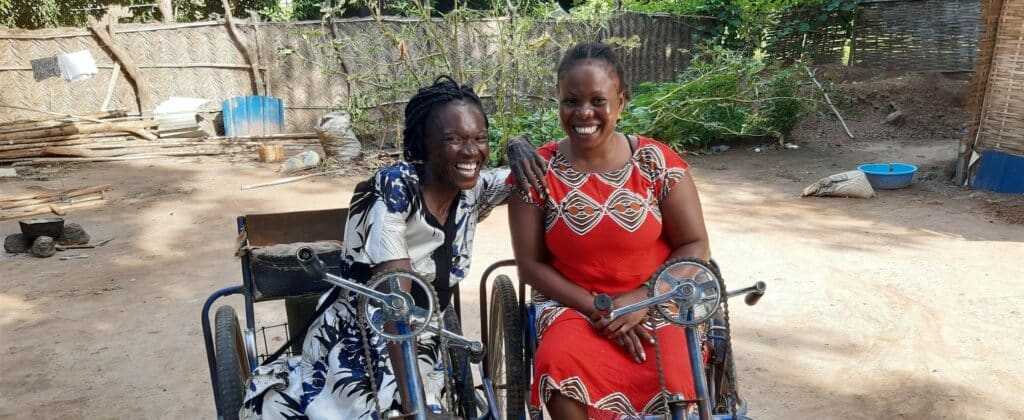
Next to the flexibility and benefits to one’s health and the environment, the access to a bicycle or tricycle for some people is lifechanging. Project participants of our skills for work-project in South Sudan for example received a bicycle because many participants had to travel a long distance to the training facility. Tricycles were given to students with a disability. This was beneficial to the mobility of these students and because they were now able to access education, the bicycles and tricycles strengthened their socio-economic status. Next to that, it also increased their ability to access different livelihood opportunities and it overall significantly improved their lives.
James Kang from South Sudan is one of the students with a disability whose life was positively impacted by the tricycle. Because of the tricycle, he was able to access his classes and complete his business administration certificate. Later, he proceeded to join the university and used the tricycle to get a diploma in Business Administration.
Business by bike
Students in South Sudan received a bicycle through our vocational skills and livelihood improvement-project. The distribution of bicycles to project participants in remote areas has been very instrumental in the improvement of how they conduct their businesses. By bike, students were able to transport their farm produce more easily to the markets in town. For several students with disabilities, the bicycles increased their livelihood opportunities and reduced their transportation costs, as they were no longer reliant on hired motorcycles.
Through the Pride! project, bicycles and tricycles were also distributed to persons with disabilities in order for them to improve their mobility and access activities. Pride! ran from 2021 to 2023 and is funded by the European Union and implemented by a consortium led by Dorcas with partners ZOA Dorcas*, Light for the World, and Help a Child.
Because of all these benefits and the way bicycles considerably improved the lives of many project participants in South Sudan, we happily celebrate world bicycle day!

*In South Sudan – as of 1 May 2022 – Dorcas and ZOA form a joint working organisation under the name ‘ZOA Dorcas South Sudan’. With this collaboration, more impact on the lives of people who are most affected by the crisis and poverty in the country is realised.
The situation in Sudan and South Sudan continues to worsen as thousands of people flee the conflict in Sudan and cross the South Sudanese border. Dorcas shares the worries of the NGO community of South Sudan that the number of returnees and refugees is exceeding previous projections, as the number is already over 50,000. This adds to the dire humanitarian crisis South Sudan is already in. The start of the rainy season will also have a major impact on the area. The situation can become even more catastrophic, as El Niño is predicted, and this may cause heavy rain and floods.
Together with the humanitarian community in South Sudan, we want to raise awareness to the humanitarian crisis that is unfolding in the region. In order to mitigate an even bigger crisis and support those in need, we need to respond now. Humanitarian supplies and especially food items need to be supplied to prevent the severity of food insecurity in the region to worsen.
Dorcas published a report entitled ‘Falling through the cracks’, which concludes that, in Ukraine, older people are particularly vulnerable to suffering the consequences of the war with Russia. The researchers based their conclusion on previously published reports and recent information from Ukraine.
The report states that too little is being done to ensure that the help provided meets direct needs of older people. In the report, the situations in Iraq, Yemen, South Sudan and Ukraine are discussed, and it is concluded that the rights of older people are often not protected well enough. The report suggests a UN human rights convention for the rights of older people as a possible solution for generating more attention for the specific needs of older people.
Loss of social safety net and reduced mobility
One of the causes of the vulnerable position of older people in conflict situations identified by the researchers is the lack of available data. Insufficient measurements are carried out about how many older people stay behind in a certain conflict area, and what the specific needs of these people are. Another reason for the particularly vulnerable position of older people in conflict situations is the sudden loss of the social safety net. Some older people depend on their children, neighbours or acquaintances for food, drinks, medication and so forth. When that social safety net is lost, it becomes much harder for older people to access these basic resources. Furthermore, older people are in general less mobile, as a result of which fleeing to a safe region or reaching a bomb shelter in the case of shelling is difficult or even impossible. This means that, during conflicts, older people will often stay in their homes and are therefore more likely to suffer from artillery attacks or to fall into the hands of one of the fighting parties. This means older people are more likely to become victims of burglary, (sexual) violence or even murder.
Older people in Ukraine fall between the cracks
Stories of older people who stay at home because they are unable to flee are coming from Ukraine. Previous research from the original conflict area in East Ukraine, prior to the large-scale invasion on February the 24th, reveals that 86% of older people have a limited mobility, with over 10% of interviewees being completely immobile. Furthermore, 98% of older people staying behind were found to suffer from one or more chronic illnesses, and 70% of older women had insufficient access to medical support. According to this same study, only 6% of older people in this particular conflict area have received humanitarian support during the past six months. These statistics reveal the vulnerability of older Ukrainians who are unable to flee.
In addition, prior to the escalation of February the 24th, the war with Russia was known as the “oldest conflict in the world”. This means that the percentage of older people experiencing negative consequences due to the war is higher in Ukraine than anywhere else in the world (30 percent). It is therefore feared that, following the escalation, many older people find themselves in a perilous situation without appropriate support. As many residents of Ukraine have fled and the men are obliged to join the fight against Russia, it is feared that older people will end up falling between the cracks without the support they need to access basic resources such as food, drinks and medication. Dorcas therefore calls for more attention to be paid to the effects of armed conflicts on older people so that nobody is left behind.
Dorcas and ZOA are joining forces and will form a partnership in South Sudan. Both organisations have been present in South Sudan for many years and have worked closely together during those years. Per April 1st 2022, Dorcas and ZOA will form a joint working organisation under the name ‘ZOA Dorcas South Sudan’ with a country office in Juba.
“Our complementary expertise and geographical coverage enables us to achieve more impact in reaching those most affected by crisis and poverty in the country”.
Agnes Kroese, country director ZOA Dorcas South Sudan.
The current programmes in the country are not affected by this organisational change, these will continue as planned. The partnership focuses on South Sudan, the international offices of both organisations as well as offices in other countries remain independent entities.