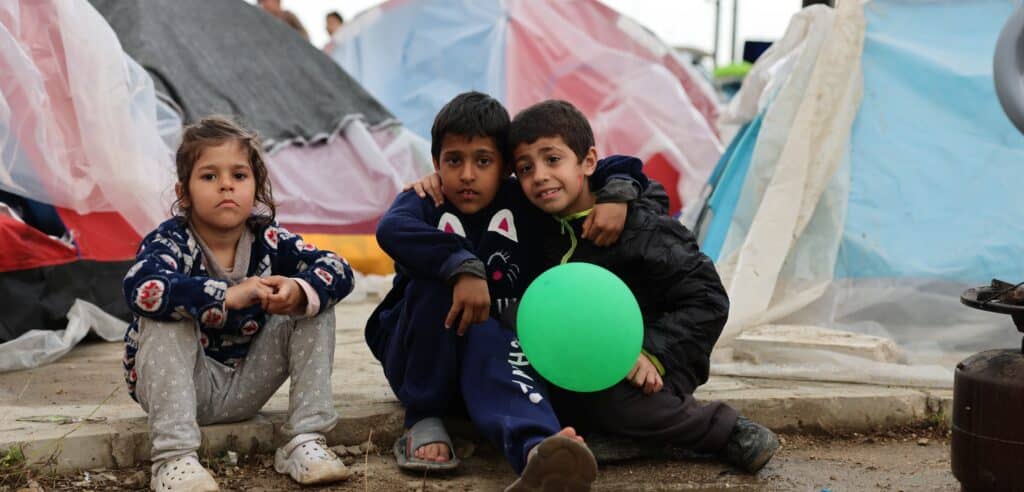
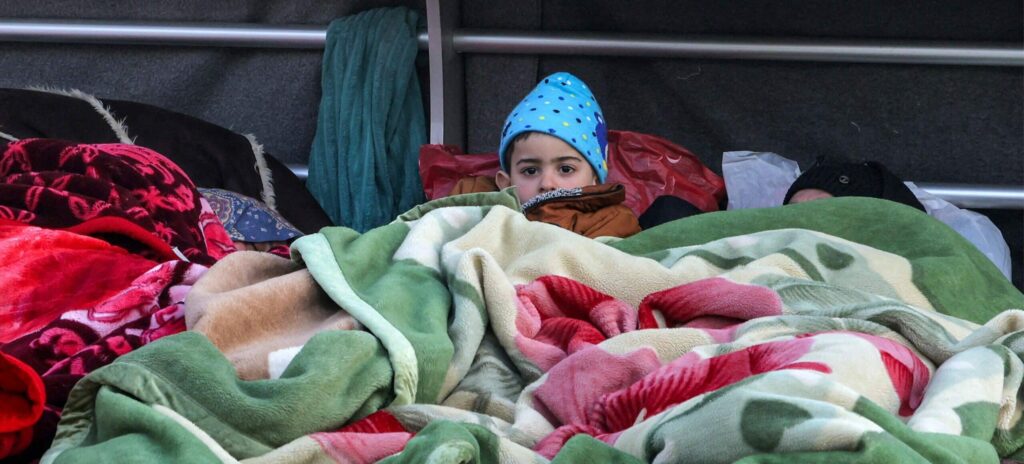
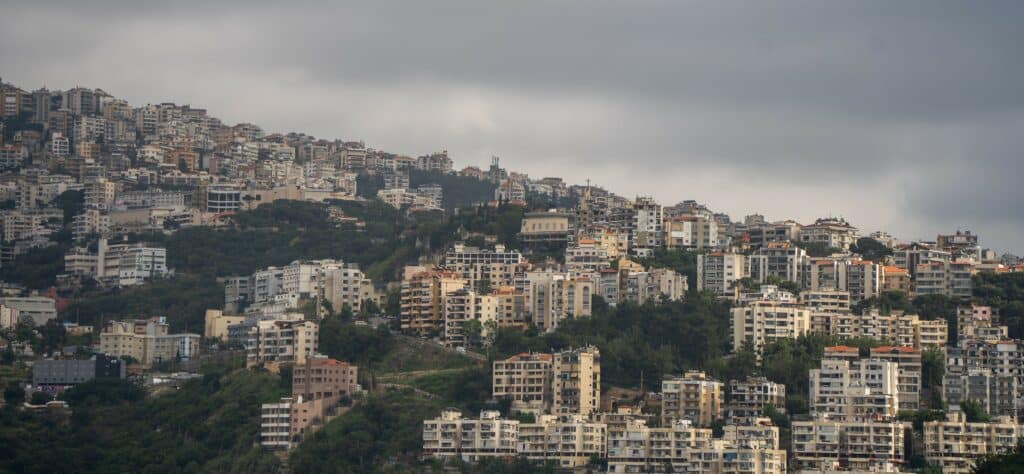
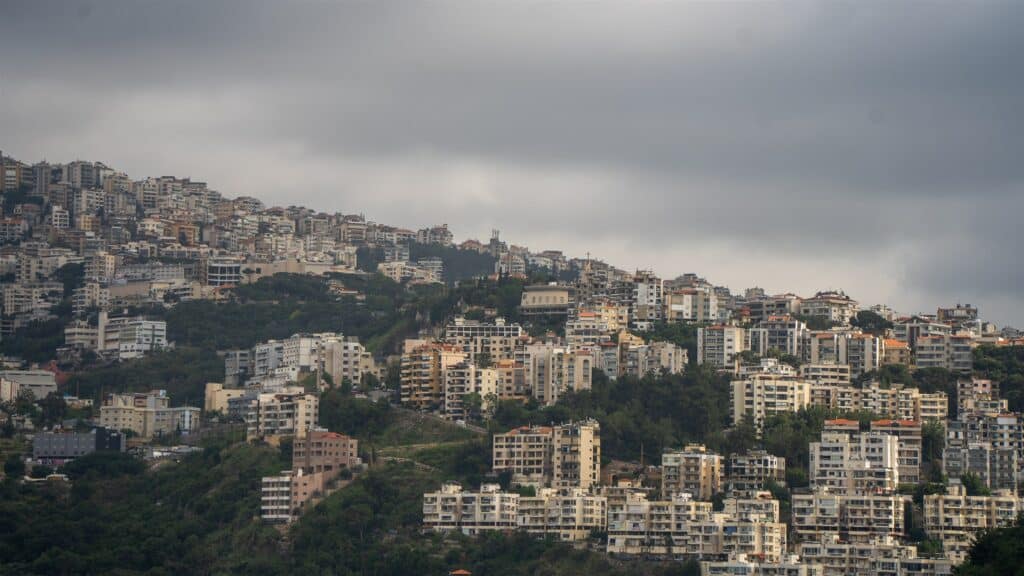
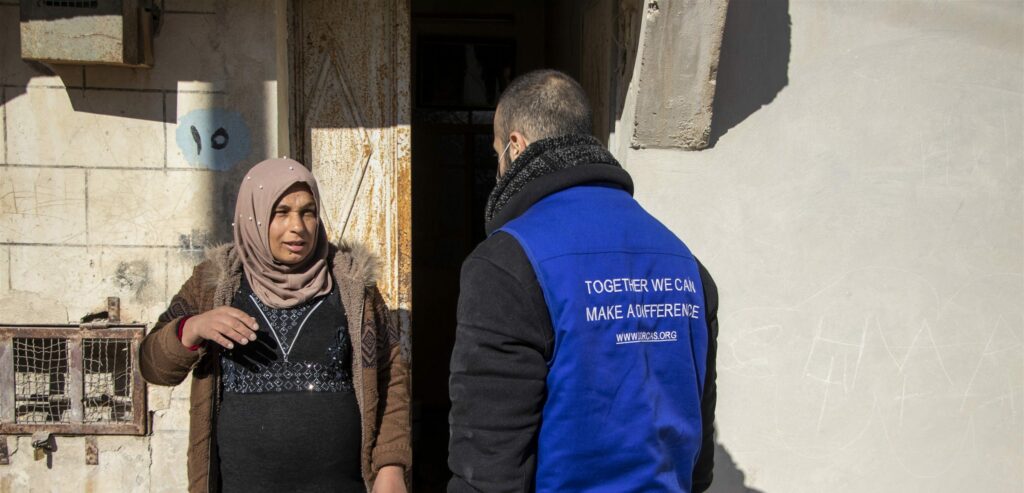
Since the escalation of the conflict in the Middle East, Lebanon has seen large-scale internal displacement. Entire villages have been evacuated, families have fled their homes, and children are sleeping on the streets.To respond to this urgent need, Dorcas is collaborating with EO Metterdaad.
EO Metterdaad is a long-running Dutch humanitarian television programme that highlights global crises and supports emergency assistance initiatives. Through this collaboration, Dorcas and EO Metterdaad aim to highlight the real stories behind the statistics and news items and raise funds to support those in need. So many people have had to flee their homes, losing their security in the process, and now rely on assistance.
Arjan Lock, CEO and presenter at the Evangelical Broadcasting (EO), is currently in Lebanon to document and share the stories of those affected. He is meeting displaced families and Dorcas humanitarian staff to witness and record the scale of the crisis for several television broadcasts in the Netherlands.
‘I see how urgent the need is,’ Arjan said. ‘So many people have fled violence while Lebanon itself is already under great strain. Dorcas staff are doing everything they can to support, providing food, blankets, clothing and temporary shelter. But the crisis is bigger than they can manage alone – more support is urgently needed.’
Dorcas’ response in Lebanon
Dorcas has been responding to the urgent needs of people in Lebanon since the beginning of the escalation and is now scaling up its humanitarian assistance. We have also launched an emergency campaign in the Netherlands to raise funds for our work in Lebanon. This allows us to provide life-saving assistance to displaced families.
Najla, Dorcas’ Country Director in Lebanon, explains: People are terrified and shelters are overcrowded. Assistance cannot wait – people need our support now.
The Dutch TV broadcasts of EO Metterdaad
The situation in Lebanon will be featured in special broadcasts of EO Metterdaad on Saturday 21 and 28 March at 17:50 CET on Dutch channel NPO 2. The programmes follow Dorcas staff as they provide assistance to families who have lost everything.
The photos in this article are made by the EO
Nearly two weeks after the escalation of the ongoing conflict in the Middle East, the situation in Lebanon has become extremely dire. The sharp rise in bombardments since 2 March 2026 has caused widespread displacement and severe humanitarian consequences.
Ongoing mass displacement
On March 13, ReliefWeb reported that one in seven people in Lebanon are now displaced, equating to over 800,000 people. Local sources have informed Dorcas that local authorities already estimate the number of displaced people to be over a million. These figures are expected to rise as continued airstrikes cause widespread chaos and insecurity.
Large numbers of people continue to sleep in public spaces and along the coast, having fled with few belongings and with no access to safe housing. Shelters are under immense pressure and are severely overstretched, with essential supplies depleting rapidly.
The situation is highly critical. Women, children, older people and people with disabilities face heightened risks due to overcrowding, psychological distress and restricted access to services. Without continued, urgent assistance, families will face worsening food insecurity, harsher living conditions and an increased risk to their safety.
Dorcas offering immediate support
From the very beginning of the escalation, Dorcas has been supporting those in need. Our aim is to contribute to the immediate protection of the growing number of people affected. We do this by ensuring timely access to life-saving food assistance, emergency shelter, essential non-food items and integrated protection support. Our support includes:
Hot meals distribution. Dorcas is organising a community kitchen in Mount Lebanon. In partnership with the World Food Programme (WFP), the kitchen will distribute hot meals daily to 2,500 people. Dorcas also monitors the distribution of hot meals prepared by WFP partners that are delivered to collective shelters. This programme currently operates in 80 shelters across Beirut and Mount Lebanon.
Sandwich distribution. In partnership with our long-term partner Mary’s Meals, we provide over 500 sandwiches daily at several shelters and community centres.
Essential non-food items. We are improving the basic living conditions in shelters by providing blankets, mattresses, clothing and hygiene items.
Protection services. Dorcas is reducing protection risks for displaced families by providing psychological first aid, case management, group psychosocial support sessions, recreational activities for children and protection awareness sessions in multiple shelters. This involves providing emotional support, identifying at-risk people and referring them to the appropriate services, and sharing information on safety, child protection and available services.
‘We left with only the clothes we were wearing’
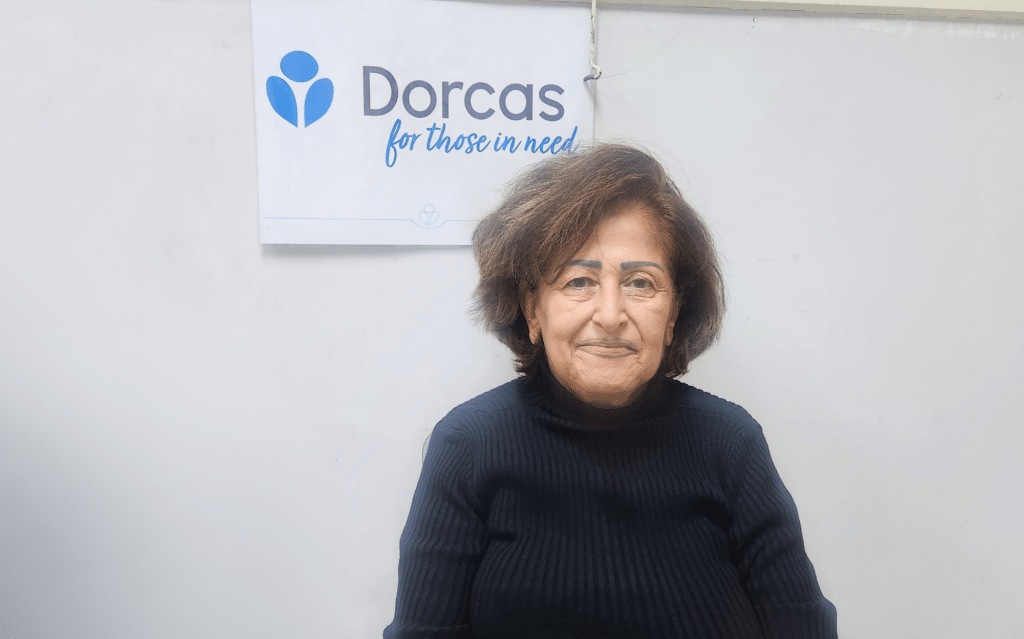
Zeinab (68) fled her home with her son and grandchildren and is now living in a temporary shelter for displaced families. In total, eight members of her family share a small space inside the school. ‘We left our home quickly. There was no time to pack anything,’ she explains.
The journey to the shelter took more than 24 hours. Roads were heavily congested with families fleeing at the same time, turning what should have been a short trip into a long and stressful ordeal.
‘I was worried the entire time,’ Zeinab says. ‘Not for myself, but for my grandchildren. I tried to stay calm so they wouldn’t feel how scared I was. As a grandmother, I try to stay strong for them. But it is not easy when everything in our lives has changed so suddenly.’
On arrival, the family received basic mattresses and blankets to help them settle in. While grateful for the support, daily life in the shelter remains difficult. Like many displaced families, Zeinab and her relatives now rely on humanitarian assistance and community support to cope with each day, while hoping for stability and the chance to return home.
Over the past couple of weeks, the situation in the Middle East has become extremely volatile. Ongoing missile strikes across multiple countries have significantly destabilised the region. Although conditions continue to shift, the overall environment is one of uncertainty and escalating risk.
Dorcas maintains country offices in Lebanon, Syria, Egypt, Yemen and Iraq. The impact of recent developments varies considerably across these countries, with Lebanon currently the most affected and facing the greatest needs. This update provides an overview of each country office and how the evolving situation is influencing our work.
Lebanon
Lebanon is currently facing a severe and rapidly escalating humanitarian crisis. Sustained airstrikes have affected southern Lebanon, the Bekaa Valley, Baalbek‑Hermel, Beirut, and Mount Lebanon. Large-scale evacuation orders have caused widespread panic and mass displacement. This escalation comes on top of Lebanon’s multi-year economic collapse, leaving communities in urgent need.
According to UNHCR, around 517,000 people have been displaced in Lebanon, with more than 117,000 staying in collective shelters. In addition, in the first week of March, over 70,000 Syrians living in Lebanon and nearly 7,000 Lebanese crossed back to Syria, reflecting the scale of recent movements (source UNHCR, March 9th). Recent numbers indicate a displacement of at least 667,000 people (source UNHCR, March 10th).
Many displaced people are fleeing with minimal belongings, seeking shelter in schools, public spaces, and overcrowded collective shelters. Capacity in these sites is overstretched, with urgent needs for food, safe water, hygiene items, protection, and psychosocial support.
Najla, Dorcas Country Director in Lebanon and Syria, describes:
‘People are out on the roads, on the streets and beaches. They are staying outside at night as they have no place to go. We need to start distributing necessary items, such as food parcels now. People need food today. We cannot wait.’
Dorcas has been responding immediately since the beginning of the escalation. The response includes:
Distribution of blankets, clothing, cold meals (sandwiches) and food parcels.
Monitoring of hot meal distributions.
Provision of Psychological First Aid (PFA) and protection support to displaced families and migrant workers.
Recreational activities for children and youth to support emotional wellbeing.
This response is being scaled up rapidly in the coming days and weeks.
Iraq
The situation in Iraq is tense. The Dorcas Iraq team is safe and maintaining project activities where possible. Communities are experiencing anxiety, particularly in areas already facing limited services, although many continue to show resilience and remain engaged in programme activities. Our teams remain in close contact with them.
Our projects in Iraq are somewhat affected by travel restrictions and limited access to certain locations. Some activities in areas such as Sinjar and Basra have been rescheduled due to the security situation.
In recent days, there have been several recent drone incidents targeting critical sites, including industrial facilities and hotels. These developments are concerning, and Dorcas continues to monitor the situation closely.
Syria
The situation in Syria is calm at the moment, and the team has not yet been significantly affected by the recent instability and conflict. Although there have been minor incidents, our colleagues on the ground report that life is continuing relatively unchanged. The Dorcas Syria team has been in regular contact with colleagues in Lebanon, discussing ways to provide support and taking steps to do so.
Egypt
The situation in Egypt remains stable. All Dorcas staff, the communities in which we work, and our programmes are safe, and there have been no reports of security threats. The main challenge at present is the substantial increase in prices, which is limiting participants’ access to essential goods and services.
Yemen
The situation in Yemen, both in the north and the south, remains relatively calm. There have been no significant new impacts on Dorcas’ projects, and the Dorcas Yemen team is generally coping well.
The situation in the Middle East has become increasingly unstable in recent days, with ongoing missile strikes reported across several countries in the region. This has led to growing insecurity, disruptions to airspace and transport routes, and rising humanitarian concerns.
While developments continue to shift rapidly, the overall picture is one of regional uncertainty and elevated risk.
Dorcas has Country Offices in Lebanon, Syria, Egypt, Yemen and Iraq. Our primary concern remains the safety and wellbeing of our colleagues, partners, and project participants across the region. We continue to follow developments closely.
We kindly ask you to keep the people in the region in your thoughts and prayers, and to join us in hoping for peace and stability across the Middle East.
One crisis has followed another in Lebanon, stretching public systems and community resilience to their limits. Existing challenges have been exacerbated by economic collapse, political instability and an influx of refugees.Amid these challenges, Mario has worked at Dorcas for two and a half years as a Communications and Reporting Officer. ‘Given all that Lebanon has been through, I felt I had to contribute to the humanitarian response. I want to support those living in the most vulnerable situations.‘
Mario from Dorcas Lebanon and Syria
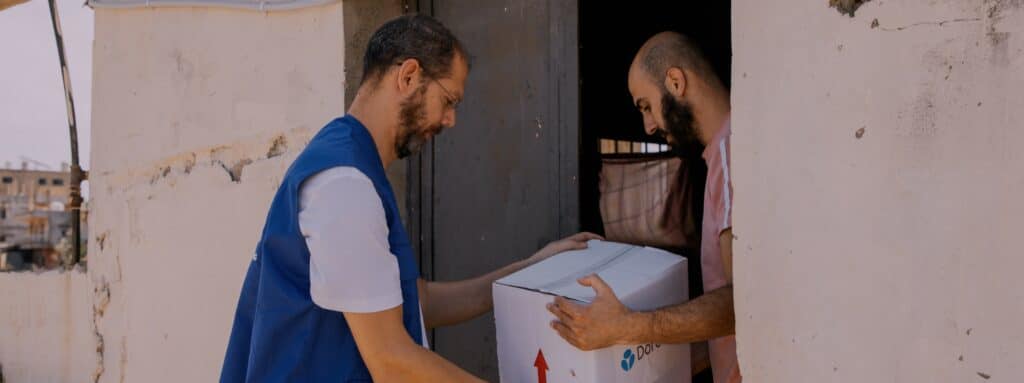
Supporting people in dire need is exactly what Mario and the team of Dorcas Lebanon are doing right now in Akkar, where they are distributing food parcels. ‘When you witness hunger and see people being forced into situations that no one should have to endure, it marks you’, Mario says.
Living at a graveyard
Mario now works extensively in Akkar, one of the poorest regions in northern Lebanon and one of the areas hardest hit in recent years. Thousands of Syrians have arrived here after fleeing their homes. They left everything behind, crossing rivers and fields on foot with little more than the clothes on their backs.
Some ended up in Akkar’s cemeteries. Mario recalls: ‘On day when we went to Akkar, we came across an area that was essentially a graveyard. Families had pitched tents between the graves, with washing lines strung over the tombs and children playing next to the gravestones. People were living there in impossible conditions.’
Food parcels are a lifeline
‘When people receive a food parcel, it is not just food that is received. It provides a sense of relief and reassurance that they are not forgotten. It gives them ten or fifteen days of stability.’
The distribution of the parcels is organised and efficient. Trucks arrive, people gather and lists are checked. Roles are assigned: someone counts, someone carries and someone ensures that everything is fair. ‘It is order in the midst of chaos,’ says Mario. ‘It is dignity in the midst of hardship.’
‘When I’m there, the Dorcas projects stop being anonymous numbers. Instead, you encounter people that have faces and names. They are children tugging at their mother’s sleeve and asking when they will eat. They are fathers carrying boxes with tired arms but proud eyes.’
He recalls a mother who placed her Dorcas parcel in the centre of her tent as if it were a treasure. Rice, lentils and oil – items so ordinary that they might go unnoticed in any kitchen – were laid out here like a feast. ‘Food parcels are a lifeline’, says Mario. ‘When I visit the area, I just try to be present and listen. I want to show people that they are seen.’
The conflict between Israel and Hezbollah has escalated significantly. People in Lebanon are once again living in fear and uncertainty, facing yet another crisis.
The history of conflict between Israel and Lebanon is long and complex, dating back to 1975. Since 7 October 2023, daily exchanges of fire have occurred between Hezbollah, located in southern Lebanon, and Israel. The escalation in late September 2024 resulted that both Israel and Hezbollah have been launching rockets at each other daily.
Crisis upon crisis
Lebanese citizens have faced a long history of instability and conflict. For many, it is yet another crisis in an already precarious situation. Beirut was devastated by a catastrophic blast in 2020, and the country has been enduring prolonged political and economic instability. The country’s economy left hospitals and infrastructure in poor condition and unemployment rates high. Inflation is soaring, and electricity is in short supply. Many young people are leaving the country in search of better opportunities abroad.
Compounding these issues, Lebanon hosts the highest number of refugees per capita in the world. Over two million of the country’s 5.4 million residents are refugees, with more than 70 per cent of them living in poverty. The large refugee population further straining local resources and exacerbating the challenges faced by the population.
Dorcas’ work in Lebanon continues despite the current tensions. We are upscaling the work to ensure that people affected by recent developments also receive the support they need.
Dorcas’ response to the current developments
In response to the recent surge in violence in Lebanon, Dorcas Lebanon has swiftly taken action to provide emergency humanitarian assistance to those displaced by the conflict. The team in Beirut has begun distributing essential supplies, including blankets, mattresses, food, and hygiene products, to displaced people. Alongside these immediate provisions, they are also offering mental health and psychosocial support. Many are grappling with feelings of fear, insecurity, and uncertainty.
Dorcas in Lebanon
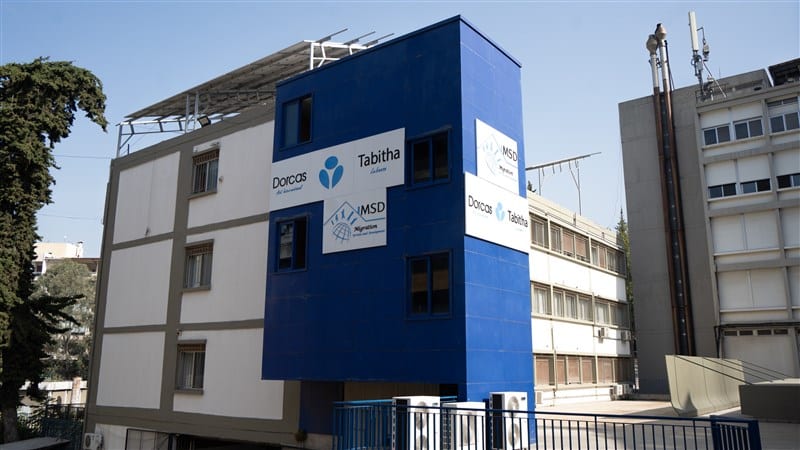
Dorcas first worked in Lebanon in the 1990s, supporting reconstruction programmes after the civil war, and it returned to the country in 2014. Dorcas Lebanon seeks to meet the needs of communities affected by multiple crises, such as low-income households, people living with disabilities and older people. We support women in vulnerable situations by offering protection services and life skills through community centres, children in vulnerable situations through school meals and child development and protection, and young people through peacebuilding activities and teaching them transferable life skills.
In this time of great need, Dorcas remains committed to providing critical support to the people of Lebanon, ensuring that those most affected by the conflict receive both material and emotional assistance.
Last week, the UNCR published it’s annual Global Trends Report highlighting the trends in forced displacement over the past year. By the end of 2023, approximately 117.3 million people were forcibly displaced worldwide, with numbers rising to over 120 million in early 2024. The amount of people who are forcibly displaced has been increasing for twelve consecutive years. From the end of 2022 to the end of 2023, there was an 8 per cent increase, equating to 8.8 million people.
South Sudan
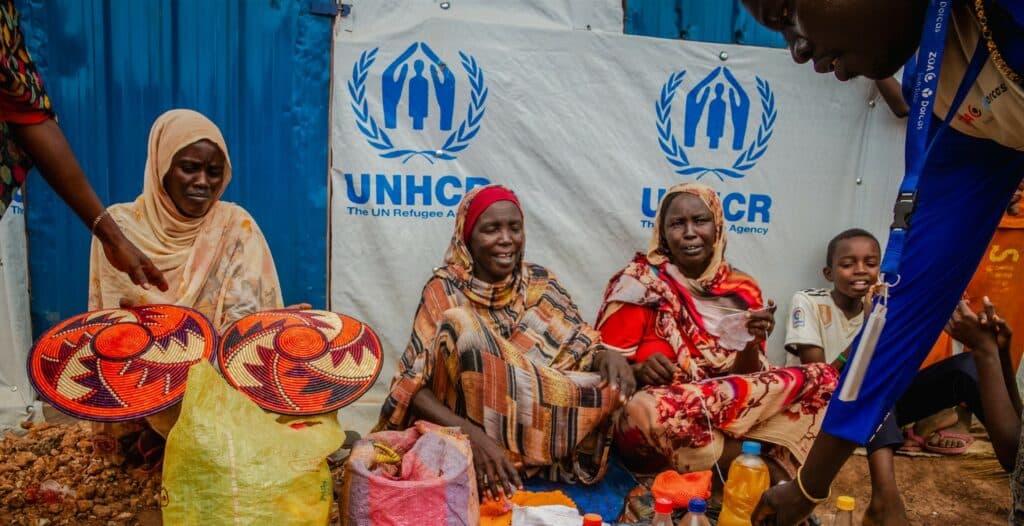
2023 was a year of turmoil, with large-scale conflicts and natural disasters. One of the major conflicts in last year, that led to 6 million people internally displaced and 1.2 million fleeding to neigbouring countries, was the conflict in Sudan. The outbreak of violence forced many to leave their homes. According to the UNHCR, South Sudan now hosts around 330,000 refugees, the majority of whom are from Sudan.
ZOA-Dorcas South Sudan supports people fleeing the violence in Sudan through nitiatives such as the SAFER project. Among them are returnees who previously fled violence in South Sudan during the war and are now fleeing back from Sudan. By providing cash, seeds and tools, the project aims to strengthen them and the host communities. The circumstances these refugees returned to is also still dire, and this project supports them them in rebuilding their lives.
Syria and Lebanon
Almost 60 per cent of all forcibly displaced people are internally displaced, meaning they do not cross a border but remain within their country. Syria has the second-largest number of internally displaced people worldwide: 7.2 million.
2023 was a year of yet another crisis in Syria. After more than a decade of war, the crisis in the country was exacerbated when it was was struck by a major earthquake and extreme aftershocks. Although the international community’s attention briefly focused on Syria after the earthquake, it has since faded into the background.
Dorcas works both in Syria and in Lebanon. Lebanon, one of the neighbouring countries hosting many Syrian refugees, is also in crisis, causing tensions between the Lebanese population and Syrian refugees. Dorcas supports these groups by organising group conversations and training sessions that bring together Syrian refugees and the Lebanese host population to resolve tensions. These sessions focus on intergenerational activities and celebrations that break down barriers, promote tolerance and reject stereotypes, all aimed at reducing conflicts and fostering mutual support systems.
In Syria, we support people in need through various programmes. When the earthquake struck, Dorcas Syria staff immediately began providing humanitarian assistance. You can read more about our work in Syria after the earthquake here:
Climate change is also negatively affecting the safety of forced displaced people and may increasingly affect the number of displaced people. According to the UNHCR Global Trends Report, nearly 75 per cent of all forcibly displaced people lived in countries with high-to-extreme exposure to climate-related hazards at the end of 2023.
As extreme weather events become more frequent, we expect the number of people displaced by climate-induced events to increase. Therefore, taking both mitigating and adaptive measures to combat climate change and increase climate resilience is a key priority for Dorcas in the coming years. We see the climate refugees and we will not leave them behind.
The current conflict in southern Lebanon is the latest in the country’s long list of crises. It is further eroding the weak economy, undermining food security and increasing the strain on basic health services. The worsening socioeconomic situation is sending more people into poverty, fuelling a growing need for humanitarian assistance. However, the geopolitical nature of the conflict and cuts in humanitarian funding from the UN are making it harder to meet people’s basic needs. The Lebanon Humanitarian INGO Forum recently published an urgent plea for the cessation of hostilities in Southern Lebanon, as these are exacerbating the country’s growing humanitarian needs. Dorcas is seeking what role it should play in this rapidly developing and sensitive situation.
Current situation in Southern Lebanon
Over 90,000 people have been displaced so far from southern Lebanon (mostly women and children), some 60,000 remain in the conflict zone, and more than 50 civilians have been killed. Medical facilities have been hit, and damage to water infrastructure has affected water supplies to over 100,000 residents in the South and Nabatieh governorates. Many schools have closed and so 20,000 children cannot continue their education. And almost 2,000 hectares of farmland have been destroyed by fires as a result of shelling, resulting in a loss of income for farmers and further harm to food supplies.
Impact on the work of Dorcas
Dorcas continues its long-established programmes to support Lebanese, Palestinian, Syrian, and migrant worker populations with psychosocial and legal support, school meals and educational support for children, and support to improve income stability. The conflict in Southern Lebanon has not yet impacted these programmes directly but that could change if rising humanitarian needs in the country call for different priorities to be set. Then Dorcas needs additional funding to expand its food security and livelihoods programmes. However, so far, and at the request of the Lebanese authorities, Dorcas has responded to the needs of displaced people from Southern Lebanon by providing food, blankets and mattresses. Dorcas is well-equipped to scale up such specific efforts should the need arise.
Growing and changing humanitarian challenges
The food insecurity crisis in Lebanon is growing. According to an IPC analysis, at least 21 per cent of the population will experience high food insecurity from April to September 2024, increasing the need for food assistance. Unemployment continues to rise, and over 60 per cent of people who have jobs work in the informal economy, where job security is low. Therefore, the need for cash assistance and livelihood support is set to grow. The healthcare situation in Lebanon is dire. Government spending on healthcare has decreased significantly, and the Lebanese pound’s devaluation has rendered the allocated funds almost worthless. Medicines are in short supply and their costs are soaring. Therefore, trying to meet the need for free or low-cost medicines for an increasingly impoverished population with a rising number of patients is an immense challenge.
These humanitarian challenges on the ground are compounded by actual and potential funding cuts. For example, the World Food Program reduced cash assistance to Syrian refugees by 30 per cent and discontinued in-kind food assistance to 33 per cent of assisted Lebanese households. The situation for the estimated 200,000-250,000 Palestinian refugees in Lebanon – most of whom are there as a result of previous conflicts – is particularly precarious. If current UN programmes in education, healthcare, and social safety net assistance stop, a huge humanitarian gap will arise that will be hard to fill. Although INGOs could step into such a gap, the process of transferring the entire responsibility for the Palestinian population across many different organisations would take time and be detrimental to the well-being of Palestinian refugees who rely on these services. Furthermore, the burden of these responsibilities could also have a negative impact on the existing programmes of the organisations concerned.
Dorcas role in the coming months
Dorcas will carefully monitor this funding situation so that in consultation with other INGOs and the Lebanese authorities, it can take appropriate action should the need arise. However, for now, our focus is prioritising food security for the most vulnerable.
Plea for the cessation of hostilities in Southern Lebanon as growing humanitarian needs are further exacerbated: Humanitarian organisation are urgently calling for an end to hostilities in Southern Lebanon. Six months of violence have displaced many people, resulting in severe disruptions to education and healthcare and more people depending on assistance. The financial implications are immense, at a time when the country was just emerging from its worst economic crisis in decades. Despite challenges, humanitarian organisations remain committed to providing assistance to those in need.
Gilberte (63) participates in a project of Dorcas Lebanon.
Gilberte: ‘I stand up for safety because the situation in Lebanon is very insecure. I currently live alone and have no contact with my family due to a family conflict. This made me realise how much I need the support of others in the struggles I face and to be surrounded by people who care for me.’
‘Dorcas has supported me in many ways. For example, I receive food parcels and am enrolled in the hot meals programme. This support has restored my dignity and self-worth because I no longer struggle to meet my basic food needs. Also, my health has improved thanks to the good meals I receive, so now my health costs are less.’
‘I also joined a club Dorcas runs for older people. Since I joined, my social life has improved a lot! My new friends care about me, and I can share my concerns with them. When I take part in club activities, I feel appreciated by the other participants and the staff. They provide me with a sense of security that I really missed and make me feel at home. My overall sense of wellbeing and confidence have improved, and I want to be involved in any new activities that are organised.’
‘I stand up for the right to safety because I wish to live in a country where I do not have to think about how to have a stable and safe life at this age. I look forward to the day that there is no more conflict in Lebanon. But until then, I hope that Dorcas will keep on supporting people like me so that we feel safe, protected and loved.’
Lara and her family are project participants of Dorcas Lebanon.
Lara: ‘I stand up for women’s empowerment and rights because I want women to be strong enough to reclaim their rights and for them to be safe.’
Lara lives with her husband and two daughters in Lebanon. She takes care of the household and also cares for her mother and her mother-in-law.
Lara: ‘As a family, we have gone through a lot of turmoil in the recent years. Because of the Beirut blast in 2020 and the crisis in Lebanon, we needed more assistance to meet our basic needs, but I was embarrassed and reluctant to ask for this. Later, I felt that I became stronger, and I realised that to help myself and others, I needed to ask for support.’
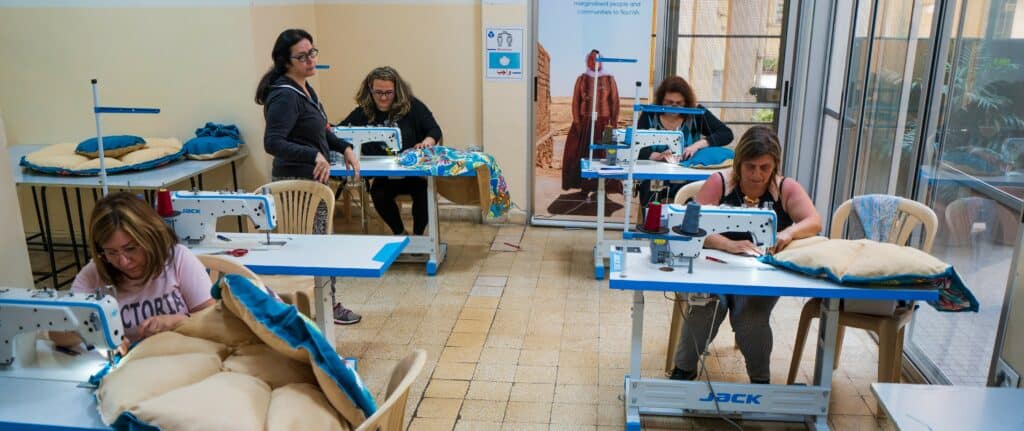
‘We connected with Dorcas, and they provided psychosocial support for my children. This was very beneficial to them. Later, I also participated in sewing sessions and received a sewing machine. This gave me a boost to move forward. With these new skills, I could provide an income for my family. It was a learning opportunity for me, and because of this, I got more empowered and confident. My dream for the future is always to provide for my daughters and, most importantly, to cover their tuition fees so they can receive a good education and have better chances in life.’
This story is part of Dorcas’ human rights campaign. Read more stories and statements on our dedicated human rights page. Human Rights – Dorcas
What are you looking for?
Quick links
Frequently asked questions
Dorcas works with governments, businesses, foundations and other organisations to create lasting change. Visit our partnership page to explore how we can work together.
Dorcas operates in 13 countries across Eastern Europe, Africa and the Middle East. Our programmes focus on livelihoods, protection, water, climate adaptation, crisis response and community development.
Dorcas is committed to transparency and accountability. We publish our annual report, are audited externally and adhere to international quality standards including CHS and Sphere.