The situation in the Middle East has become increasingly unstable in recent days, with ongoing missile strikes reported across several countries in the region. This has led to growing insecurity, disruptions to airspace and transport routes, and rising humanitarian concerns.

While developments continue to shift rapidly, the overall picture is one of regional uncertainty and elevated risk.

Dorcas has Country Offices in Lebanon, Syria, Egypt, Yemen and Iraq. Our primary concern remains the safety and wellbeing of our colleagues, partners, and project participants across the region. We continue to follow developments closely.

We kindly ask you to keep the people in the region in your thoughts and prayers, and to join us in hoping for peace and stability across the Middle East.

Iraq is facing one of the most severe climate crises in the region. Temperatures are rising seven times faster than the global average, and the country is expected to experience increasing flooding, drought, and desertification over the coming decade. These pressures are already undermining livelihoods and economic resilience at the household level, contributing to rising poverty.

By 2035, Iraq is expected to have a water deficit of around ten billion cubic metres, driving drought, soil salinisation, and the loss of around 25,000 hectares of agricultural land each year. It is estimated that 70 per cent of Iraq’s agricultural land is at risk of total degradation due to climate change.

Climate needs assessment

Against this backdrop, Dorcas Iraq conducted a qualitative climate needs assessment in Basra, Ninewa (Sinjar) and Duhok between November and December 2025. The assessment aimed to identify priority climate risks and practical actions to strengthen resilience in agriculture, water management, and ecosystems.

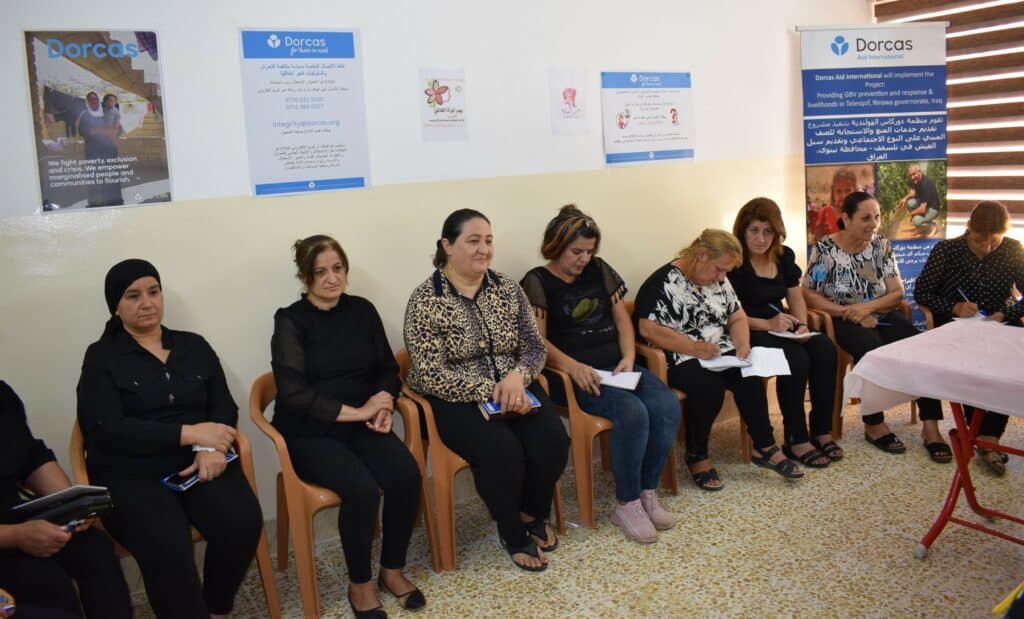
Data was gathered through fifteen key informant interviews across Basra, Ninewa, Duhok and Mosul, as well as two focus group discussions in Sinuni (Balef and Ware Khidre villages), involving 21 participants in total.

Key findings

The assessment highlights a consistent pattern across all locations:

Priority needs per governorate

In Basra, severe water scarcity, high salinity, desertification and industrial pollution are all major issues. Priority areas include the implementation of water-efficient irrigation systems, the establishment of local water storage facilities, the rehabilitation of canals, and the strengthening of governance, particularly with regard to industrial water use.

In Ninewa (Sinjar), prolonged drought, high temperatures and erratic rainfall are causing soil degradation and losses to crops and livestock. Support for climate-smart agriculture, including drip irrigation, rainwater harvesting and coaching through demonstration plots, is especially needed for women, youth, smallholders and internally displaced people.

In Duhok, drought, irregular rainfall, land degradation and frequent wildfires are having an impact on forests and livelihoods. Key priorities include integrated water resource management, community water committees and forest fuel management linked to wildfire prevention.

How Dorcas is contributing

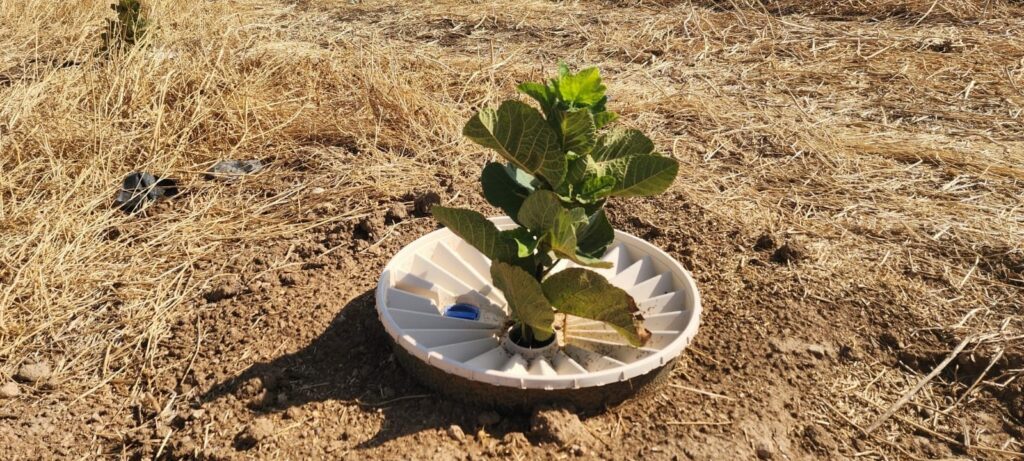
Dorcas addresses these needs by planting trees using water-saving methods such as the Waterboxx, distributing fruit tree seedlings, and providing practical climate adaptation training. Forest-focused activities include pruning and establishing a biomass-to-compost value chain to reduce fire risk and improve soil quality. Dorcas also supports institutional capacity building and green jobs programs, including vocational training in mushroom cultivation.

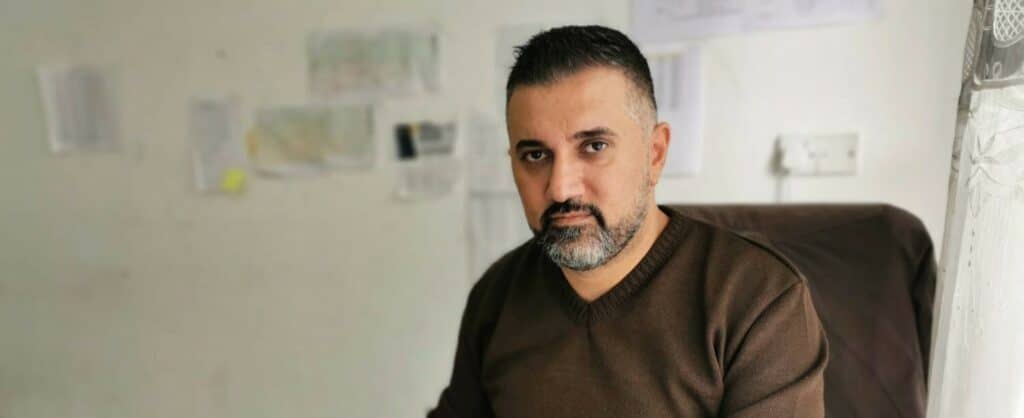
Sargon, Country Director of Dorcas Iraq, explains:

‘Our climate resilience strategy prioritises proactive, evidence-based action. In Basra, we focus on expanding community- and farm-level water storage, improving irrigation efficiency, and addressing soil salinity. In Duhok and Ninewa, we are promoting climate-smart agriculture, restoring degraded land, and strengthening wildfire prevention.

Central to this approach is improved coordination between water authorities, agricultural departments, and local communities, enabling lasting, inclusive climate resilience across Iraq.’

Yesterday, the 30th UN Climate Conference (COP30) officially opened in Belém, Brazil, with an urgent call to implement climate pledges. Running until 21 November, the summit is focused on accelerating the implementation of practical solutions to meet national climate goals under the Paris Agreement.

This year, the core theme is climate adaptation, which the summit focuses on through six official action agenda areas:

  1. Transitioning energy, industry and transport. 
  2. Stewarding forests, oceans and biodiversity. 
  3. Transforming agriculture and food systems. 
  4. Building resilience for cities, infrastructure and water. 
  5. Fostering human and social development. 
  6. Unleashing enablers and accelerators, including on financing, technology and capacity-building (cross-cutting theme). 

These six themes are broken down into 30 key objectives, which provide more detail on the actions needed in these areas.

Agriculture and food systems on the agenda  

Among the priorities at COP30, the transformation of agriculture and food systems is worthy of note. For decades, climate talks have largely overlooked food and farming, even though these sectors are crucial not only for tackling climate change, but also for ensuring that communities have enough to eat and can flourish in a changing world. 

Heleen Berends, Dorcas’s Strategic Programme Advisor, explains:

‘The shift became evident back at COP27, when countries launched a four-year work programme on agriculture and food security (the Sharm El Sheikh Joint Work). Now, governments are reporting on progress and discussing how to increase climate action in the agricultural sector. The Global Action Agenda specifically lists goals such as restoring land, building climate-resilient food systems, and ensuring equitable access to food.’ 

Heleen adds:

‘This also raises a key issue: roughly one-third of global emissions are driven by food production, and agriculture is a primary driver of biodiversity loss. At the same time, hunger and food insecurity remain widespread. It is therefore essential to rethink how we produce, process and consume food. This needs to include regenerative farming, protecting forests and wetlands, reducing food waste, and promoting truly sustainable diets. Such measures can lower emissions while also ensuring sufficient yields, nutrition and resilience. What is clear, is that the current situation demands immediate action. The world must now come together to pledge sufficient funds and create accessible mechanisms that allow for better and accelerated adaptation.’ 

The spotlight on food systems also underscores the importance of community-level action, and shows why Dorcas’ work matters more than ever. 

How Dorcas supports communities to adapt to climate change 

For Dorcas, climate change is not an abstract issue. It directly affects the communities we support. From droughts in Ethiopia and Kenya to floods in South Sudan and wildfires and desertification in Iraq, extreme weather is making farming unpredictable and threatening food security. Those in vulnerable situations often have the fewest resources to cope, which is why climate adaptation is central to our work. 

Heleen explains:

‘We support communities in adapting to changing conditions, improving food security, and preparing for disasters. For farmers in vulnerable areas, climate-adaptive solutions are essential.’ 

In practice, Dorcas combines innovation with local solutions to address climate challenges. In Yemen, solar-powered water systems provide clean drinking water and irrigation. In Iraq, water-saving technologies help trees survive in the desert. In Kenya, wetlands are being restored to manage floods, and schoolchildren plant trees to connect communities with their environment. These locally led solutions build resilience, safeguard livelihoods, and support people to flourish.

Dorcas takes a holistic approach to climate adaptation, working across food systems, land and water management, and community development. In this way, Dorcas transforms global commitments, such as those emphasised at COP30 and in the Belém Declaration, into tangible change for local communities. 

In Iraq, the challenges posed by climate change are enormous, with temperatures rising seven times faster than the global average. Over the next decade, Iraq is expected to experience significant increases in flooding, drought and desertification. These conditions severely affect livelihoods, undermining household economic resilience and contributing to increased poverty.  

To address these challenges, it is essential to implement climate-smart agricultural approaches that enhance climate resilience and strengthen communities. The Waterboxx is a technology that can contribute to this effort. 

The Waterboxx technology  

The Waterboxx is an innovative device developed by Groasis to tackle water scarcity and promote sustainable agriculture in arid areas. It is a cylinder-shaped container that collects and stores rainwater for plants and trees. Its design incorporates features that make it particularly useful in difficult climates such as Iraq.

The Waterboxx works by collecting rainwater and dew through its top, which directs the moisture into a central reservoir. The stored water is then slowly released into the ground through a drip system. This provides a steady supply of water for plants and creates a better environment for seeds to grow in.  

The need for sustainable water management in Iraq is urgent and this technology can contribute to addressing these challenges in a number of ways:

Supporting marginalised households

Dorcas Iraq is working in Sinjar, Iraq, to support people who are particularly at risk to the effects of climate change. This includes female-headed households, households with people with disabilities or chronic illnesses, and older people without support.   

Dorcas Iraq is training nearly 2,500 people in climate-smart agricultural practices and livelihood diversification strategies. Dorcas also provided 50 people with the Waterboxx, tree seedlings and the necessary training to use and maintain the technology. Next year, Dorcas Iraq plans to distribute around 8000 more Waterboxes. This project has already yielded significant positive results, and Dorcas will continue to build on these efforts. One of the project participants who can attest to these positive outcomes is Amin.   

Amin is a farmer who has been tending to the fig, olive and grape trees on his ancestral land for a long time. Recently, he began to notice alarming climate changes that threatened his livelihood. Unpredictable rainfall was causing flooding, while extreme summer heat and prolonged drought were threatening his crops. Concerned about the future of the farm, Amin looked for ways to adapt to these new environmental challenges.  

Amin came into contact with Dorcas and was introduced to the Waterboxx technology. This was exactly what Amin needed to make his farm sustainable, and after installing the Waterboxes he saw significant improvements in water conservation. He was able to grow crops even in drought conditions. The technology’s ability to collect rainwater and condensation makes it a vital tool for farmers in Sinjar, allowing them to adapt to extreme weather patterns. 

Amin’s farm became a model of success and he actively participated in community programmes, sharing his knowledge of sustainable agriculture. His efforts not only ensured the survival of his crops, but also inspired others by demonstrating the impact of innovative technologies. 

Sargon (39) was born and grew up in Bagdad. But in 2006, his family fled due to the conflict and moved to Dohuk. Sargon, who had recently graduated, experienced first-hand what it was like to be internally displaced and live in a new place where you have nothing.

In 2018, he joined Dorcas in Dohuk. He leads a team in the area of domestic violence and child abuse. Sargon experiences the Dorcas working environment as a family that allows him to grow and he transfers the kindness he experiences there to the people his team helps. ‘I am happy to wake up every day and know that my work for Dorcas is not just a job, but a thing that I love to do.

Safety is definitely not something you can take for granted in Iraq. Many women experience domestic violence, rape and enslavement, and child abuse occurs far too often. Ensuring the victims of such violence and abuse receive access to protection and appropriate support is far from easy. ‘We help people acquire the papers they need to obtain the right help. For example, children need papers to go to school or divorced women need a divorce contract to be able to live independent lives. We also help people returning home to obtain the documents they need to reclaim ownership of their property even if the house where they once lived no longer stands.’

Although Sargon is proud of everything his team does, he realises they still have a long way to go.

‘Of all displaced people in Iraq, 80% still have no papers and so no access to all kinds of support and assistance. We’re not there yet’, he says.

Clean drinking water is not merely a convenience, it is a fundamental human need and a cornerstone of public health. However, millions of people around the globe still lack access to safe water sources, leading to severe consequences for their health, livelihoods, and overall well-being. Understanding the gravity of this issue is pivotal, as is the urgent need to address it effectively.

Consequences of inadequate access

The ramifications of inadequate access to clean drinking water are profound and far-reaching. According to recent data from the World Health Organization (WHO) and UNICEF, approximately 785 million people worldwide still lack even a basic drinking-water service, with many more consuming water that is contaminated or unsafe. This precarious situation exposes individuals and communities to a myriad of health risks, including waterborne diseases such as cholera, typhoid fever, and diarrhea, which claim the lives of over 2 million people annually, predominantly children under the age of five.

Moreover, the absence of clean water perpetuates a cycle of poverty, hindering economic development and exacerbating inequalities. Without access to safe water for drinking, cooking, and sanitation, communities struggle to maintain good health, attend school regularly, or pursue livelihood opportunities, trapping them in a cycle of poverty and deprivation.

Importance of clean drinking water

Ensuring universal access to clean drinking water is not just a matter of basic necessity: it is a fundamental human right. Clean water is indispensable for maintaining health, sanitation, and dignity. It serves as a cornerstone for sustainable development, empowering individuals and communities to thrive economically and socially. Additionally, adequate water access is crucial for achieving various Sustainable Development Goals (SDGs), including those related to health, education, gender equality, and poverty eradication.


Agnes Kroese, CEO of Dorcas recently visited Yemen. She met with a wide variety of people, all with one commonality: limited access to clean drinking water.

Armed conflicts and humanitarian crisis have caused Yemenis to seek safer refugee. Many have been living in camps for years.

“I was in one of these camps: a barren, open plain. There was no water to be seen in the wider area. When I asked for drinking water, one of the women showed me a jerrycan. The water in the jerrycan ws clearly polluted.

Agnes Kroese, CEO Dorcas

Role of Dorcas

As a humanitarian organisation committed to addressing the structural causes of poverty and exclusion, Dorcas exemplifies core values such as compassion, justice, and stewardship in its efforts to improve access to clean drinking water. Through targeted interventions and community-led initiatives, Dorcas works alongside communities in vulnerable situations to implement sustainable water solutions that meet their specific needs and circumstances.

Practical solutions

Addressing the global water crisis requires a multifaceted approach that combines infrastructure development, community engagement, and policy reform. Practical solutions include:

The consequences of limited access to clean drinking water are profound and multifaceted, affecting health, livelihoods, and overall well-being. Addressing this global challenge requires collective action, guided by principles of compassion, justice, and stewardship. By investing in practical solutions and empowering communities, we can ensure that everyone, regardless of their circumstances, has access to this essential resource and the opportunity to lead healthy and dignified lives. As we strive towards this goal, organisations like Dorcas play a crucial role in catalysing positive change and transforming the lives of those in need.


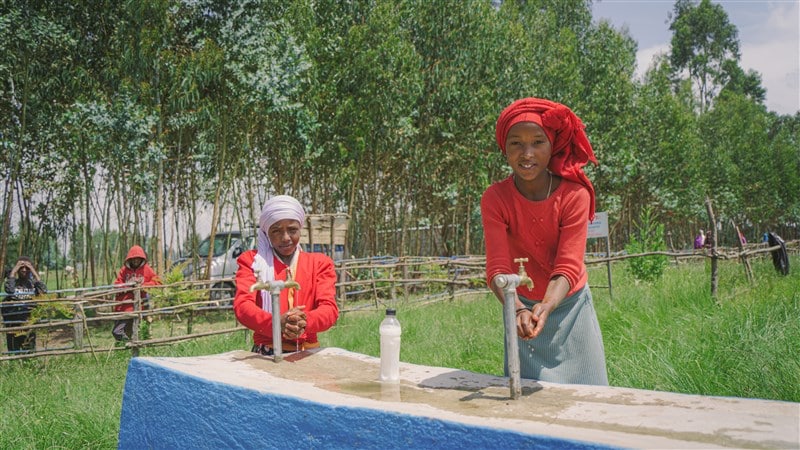
Around the world, as many as one in four people have no access to clean drinking water. Clean drinking water is of vital importance. Dorcas supports communities to improve access to clean and safe water. We do this by, for example, repairing boreholes in Iraq, distributing water in Yemen and building new water taps in Mozambique, Kenya and Ethiopia. Or by installing solar panels so that existing boreholes can be put to better use. In Mozambique, the limited access to safe drinking water causes major problems. With WaterTime, Dorcas Mozambique has improved the access of safe and clean water.

>> Dorcas organises Water Power (Actie Waterkracht) campaign to raise awareness about the lack of access to clean drinking water. More details on this campaign (in Dutch) via Actie Waterkracht.


Bahar is a project participant of Dorcas Iraq.  

Bahar: ‘The most pressing need for women in our community is empowerment and gender equality. Women in our community face many challenges, including limited access to education, economic opportunities and lack of decision-making power. They are often marginalised, and their voices are not heard.’

‘The Dorcas programme has played a crucial role in addressing these needs by promoting women’s inclusion, providing education and vocational training, supporting women-led businesses and advocating for their rights. Our community still needs continued support for women’s empowerment, including promoting leadership, ensuring equal opportunities and challenging societal norms that perpetuate gender inequality. This needs to be addressed on an ongoing basis.’

‘My hope for the future is that gender equality will be achieved. I would like to see women empowered and safe, with access to education and economic opportunities, so that they can flourish.’

Sargon is a Programme Manager at Dorcas Iraq.  

Sargon: ‘I am deeply committed to advocating for the safety and protection of internally displaced persons (IDPs) in Iraq, as well as ensuring that their fundamental human rights are respected and upheld. These individuals are facing an incredibly challenging situation as they’ve been compelled to leave their homes for various reasons, such as conflict, instability, and threats to their safety. My dedication to this issue stems from the deep belief that every human deserves fundamental human rights and protection regardless of circumstances. It’s a matter of empathy, human dignity, and social justice.’

‘This issue holds paramount importance both in my professional and personal life. As a Programme Manager at Dorcas Iraq, I’m closely involved with IDPs. We work directly with these displaced individuals, providing them with essential resources like shelter, food, and protection services.’   

‘Witnessing their struggles and hearing their stories has also profoundly affected me personally. I believe in every person’s inherent dignity and worth, which makes it even more disheartening to witness so many people, including innocent children and vulnerable families, being forcibly uprooted from their homes.’

‘In addition to direct assistance, I’m involved in advocating for their rights at the policy level. This includes collaborating with local and national authorities and international organisations to ensure these vulnerable individuals receive the required protection and assistance. The goal is to create a society where no one is left behind, and everyone has a fair chance to rebuild their lives and regain dignity.’ 

This story is part of Dorcas’ human rights campaign. Read more stories and statements on our dedicated human rights page. Human Rights – Dorcas

In the Zummar sub-district in Iraq, Dorcas provided agricultural assets and supported the improvement of livelihoods for income generation for returnees and internally displaced persons. This project was done in partnership with World Vision International and Harikar NGO and was funded by the Iraq humanitarian fund of OCHA. Othman and Ibrahim, two project participants, share how this project has benefited them.

When Othman returned to his village after the IS conflict, his agricultural business and land had been destroyed. He struggled to get enough income for his family. Dorcas provided Othman with agriculture inputs, training and an irrigation system to be able to rebuild the family’s agricultural business.  

Othman describes: ‘We didn’t have enough income to cover our expenditures, but after I received the agricultural inputs from Dorcas, the expenditures have been reduced. This project has made me more self-reliant, and it has had a very good impact on the community.’ 

Ibrahim also returned to his village after the conflict. When he arrived, he did not have enough income to purchase seeds, fertilisers and to plow the land before planting. As part of the sustainable livelihood project, Ibrahim received rain-fed inputs and training.  

Ibrahim describes: ‘Through this support, we have recultivated our lands. Due to the high prices of seeds, fertilisers and pesticides we were not able to purchase this, but now we are on the right track in our agricultural business.  

Dorcas published a report entitled ‘Falling through the cracks’, which concludes that, in Ukraine, older people are particularly vulnerable to suffering the consequences of the war with Russia. The researchers based their conclusion on previously published reports and recent information from Ukraine.

The report states that too little is being done to ensure that the help provided meets direct needs of older people. In the report, the situations in Iraq, Yemen, South Sudan and Ukraine are discussed, and it is concluded that the rights of older people are often not protected well enough. The report suggests a UN human rights convention for the rights of older people as a possible solution for generating more attention for the specific needs of older people.

Loss of social safety net and reduced mobility

One of the causes of the vulnerable position of older people in conflict situations identified by the researchers is the lack of available data. Insufficient measurements are carried out about how many older people stay behind in a certain conflict area, and what the specific needs of these people are. Another reason for the particularly vulnerable position of older people in conflict situations is the sudden loss of the social safety net. Some older people depend on their children, neighbours or acquaintances for food, drinks, medication and so forth. When that social safety net is lost, it becomes much harder for older people to access these basic resources. Furthermore, older people are in general less mobile, as a result of which fleeing to a safe region or reaching a bomb shelter in the case of shelling is difficult or even impossible. This means that, during conflicts, older people will often stay in their homes and are therefore more likely to suffer from artillery attacks or to fall into the hands of one of the fighting parties. This means older people are more likely to become victims of burglary, (sexual) violence or even murder.

Older people in Ukraine fall between the cracks

Stories of older people who stay at home because they are unable to flee are coming from Ukraine. Previous research from the original conflict area in East Ukraine, prior to the large-scale invasion on February the 24th, reveals that 86% of older people have a limited mobility, with over 10% of interviewees being completely immobile. Furthermore, 98% of older people staying behind were found to suffer from one or more chronic illnesses, and 70% of older women had insufficient access to medical support. According to this same study, only 6% of older people in this particular conflict area have received humanitarian support during the past six months. These statistics reveal the vulnerability of older Ukrainians who are unable to flee.

In addition, prior to the escalation of February the 24th, the war with Russia was known as the “oldest conflict in the world”. This means that the percentage of older people experiencing negative consequences due to the war is higher in Ukraine than anywhere else in the world (30 percent). It is therefore feared that, following the escalation, many older people find themselves in a perilous situation without appropriate support. As many residents of Ukraine have fled and the men are obliged to join the fight against Russia, it is feared that older people will end up falling between the cracks without the support they need to access basic resources such as food, drinks and medication. Dorcas therefore calls for more attention to be paid to the effects of armed conflicts on older people so that nobody is left behind.

Dorcas Report Older People in ConflictsDownload