Across the world, many women continue to face barriers that limit their full participation in society, including in economic life. Limited access to markets, finance, and decision-making restricts their opportunities. Creating equal economic opportunities requires deliberate action.

At Dorcas, inclusion is central to our work. We apply a gender lens and an intersectional approach in selecting project participants, considering age, disability, poverty, and ethnicity to identify those most at risk of exclusion. Through this approach, we strengthen women’s economic participation.

In Dorcas’ economic development work, value chains play a key role. These programmes are designed to strengthen the participation of marginalised groups, including women, by providing chances to learn new skills, take part in production and sales, manage savings and finances, and have a stronger voice in household and community decisions. To see whether these intentions are realised, we studied our value chain projects across Tanzania, Kenya, and Ethiopia. While the study included multiple marginalised groups, this article focuses on what we found about women.

Women’s participation in value chains

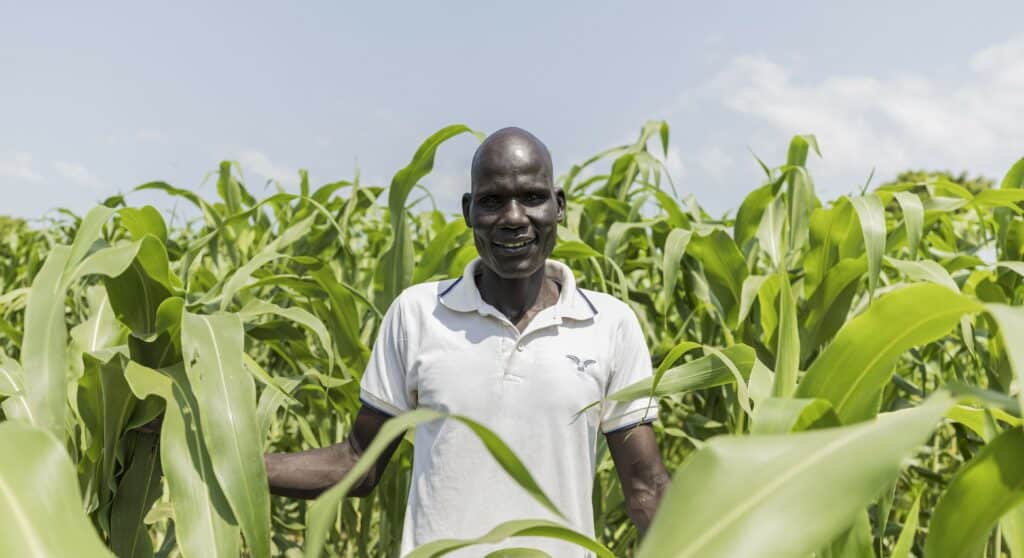
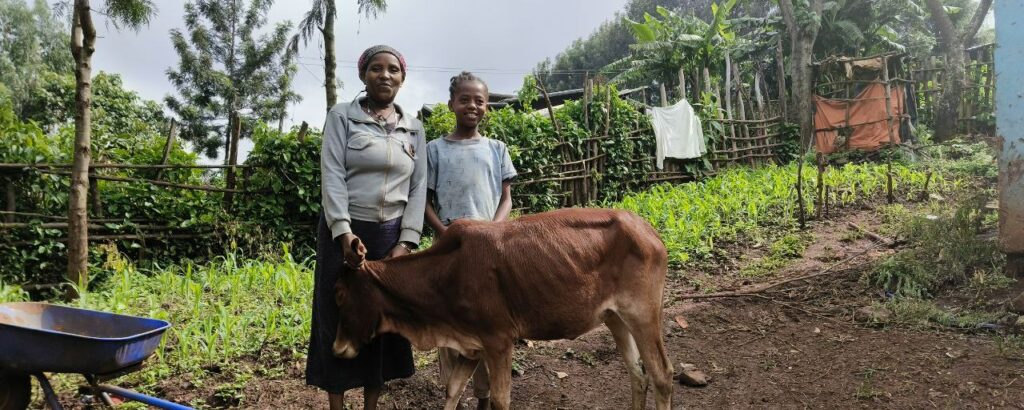
The study shows that women participate actively and consistently. They attend trainings, join group activities, and engage in production linked to markets. Many gain new skills, earn a steadier income, and contribute more to household welfare. Participation also made women’s contributions more visible, leading to more discussion and shared decisions in households and groups, especially where income was regular and institutions strong. In Siaya, for example, predictable poultry income sparked household discussions about expenses: ‘When the chickens started bringing money regularly, I was asked how it should be used,’ a female poultry producer said.

But participation does not automatically mean control. While more households reported joint decision-making, women were rarely sole decision-makers. Traditional norms around asset ownership and authority often limited women’s long-term control.

Certain programme features supported women to participate more fully. Cooperatives and groups offered structure, shared responsibility, and formal recognition of women’s roles. Savings mechanisms helped women manage income and plan ahead. Direct access to markets reduced dependence on middlemen and removed the hassle of daily price negotiations.

Challenges and mitigation

Inclusion brings opportunities but also pressures. Increased participation can mean heavier workloads, exposure to safety risks, and vulnerability to economic shocks. Women, youth, persons with disabilities, and households facing poverty are particularly affected.

Dorcas works to reduce these pressures through group structures, peer support, and savings systems that help households manage uncertainty. Systematic risk management remains important to ensure all participants can benefit safely and fairly.


Lessons for women’s empowerment

From the study, four core lessons emerge for strengthening women’s empowerment in value chains:

  1. Participation alone is not enough. Empowerment requires not only involvement but also influence over outcomes. Women need a say in how income is used and resources managed. Without control over benefits, participation risks remaining symbolic rather than transformative.
  2. Working together strengthens resilience. Cooperatives, savings groups, and Farmer Field Schools provide structure, peer support, and safe spaces to learn and plan. Collective approaches increase predictability, reduce vulnerability, and strengthen women’s voice and legitimacy.
  3. Context matters. Women’s experiences differ. Age, disability, ethnicity, and prevailing social norms shape how they can participate and benefit. Recognising these differences ensures inclusion reaches those most at risk and that empowerment gains last.
  4. Diversifying income increases stability. Relying on a single activity exposes households to shocks. Combining value chain roles with savings, micro-enterprises, or service-based work spreads risk and strengthens long-term economic security.

‘Today, I see myself as a businesswoman’

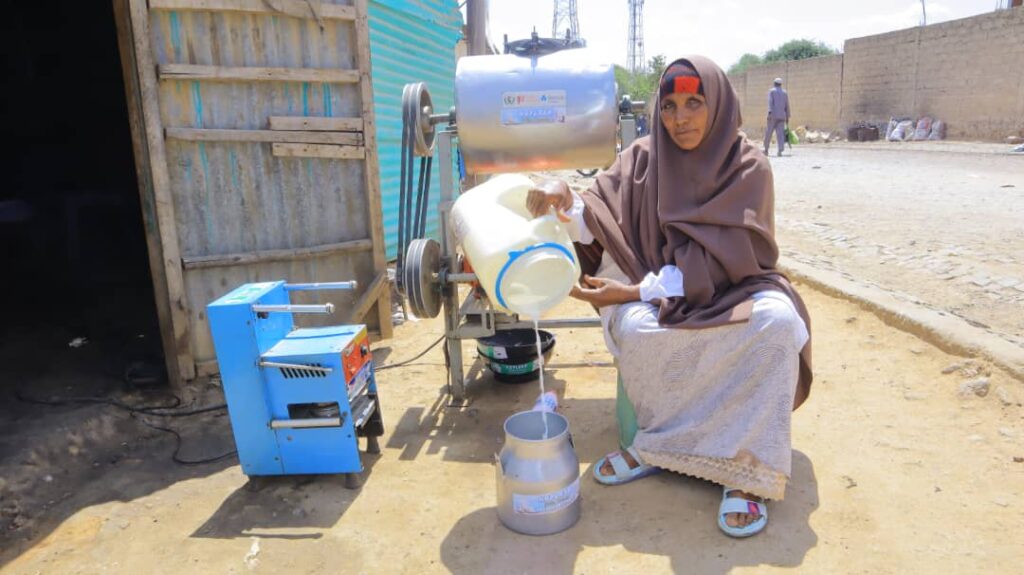
Kadija, a 50-year-old woman from Moyale, Ethiopia, joined the camel milk cooperative to overcome seasonal poverty and uncertainty. She recalls:

‘Before I joined the cooperative, my life was very uncertain. During the dry seasons, work would completely disappear. Some days we struggled just to get food.’Through the milk collection centre, Kadija gained a stable income and became a recognised economic contributor in her household and community. She explains:

‘Today, I see myself as a businesswoman. I have a stable income, I save money, and I plan better. People respect me more, and I have a voice not only in my home but also in the community.’

She also highlights the importance of working together:

‘Working together changed everything for me. Through the cooperative, women support each other, share responsibilities, and inspire one another to keep going.”

Her story reflects the broader findings: when women gain access to skills, markets, income, and collective support, economic participation can translate into greater stability, recognition, and confidence.


Communities in Fedis and Midega Tola woredas, East Hararge, Ethiopia, are facing acute and rapidly worsening food insecurity following prolonged drought conditions. In response, Dorcas has launched a rapid, multi‑sectoral emergency intervention to support 28,000 drought‑affected people in the Fedis and Midega Tola woredas, as well as surrounding towns and market centres including Harar and Dire Dawa.

Running from 31 January to 16 April 2026, the programme is designed to deliver immediate, life‑saving assistance while helping households stabilise their living conditions and reduce reliance on harmful coping strategies. The intervention is funded by the Start Network and implemented by World Jewish Relief, Dorcas Ethiopia, and Coalition Child Support Association at £350,000.

Targeting those in the most vulnerable situations

The crisis disproportionately impacts people already experiencing multiple vulnerabilities. Dorcas prioritises households headed by women and girls, pregnant and caregiving women, persons with disabilities, older adults, and Indigenous populations. These groups were identified through rapid assessments and community consultations as being at the highest risk of deteriorating food security, protection concerns, and loss of income.

A multi‑sectoral approach to an urgent crisis

To respond effectively to diverse and urgent needs, the programme integrates cash assistance, in‑kind support, WASH interventions, and protection services.

Cash transfers

More than 12,600 people will receive multipurpose cash transfers, enabling families to immediately purchase essential food and basic items. Market assessments confirm that local markets are functional and able to absorb increased demand, making cash the most efficient and dignified means of support.

In‑kind support

An additional 13,850 people will benefit from distributions of food and non‑food items. These include WASH materials, shelter kits and health‑related supplies—items that are critical when household resources are severely strained.

WASH activities

Safe access to water, sanitation and hygiene services is essential to preventing disease outbreaks during food crises. The project therefore restores access to safe water and provides hygiene materials to reduce health risks for affected families.

Livelihoods and early recovery support

In addition to meeting immediate survival needs, the project includes activities aimed at protecting and restoring livelihoods. This includes provision of animal feed to prevent further loss of livestock—an asset central to rural livelihoods in East Hararge.

Protection and psychosocial support

Crises heighten risks of exploitation, violence, and social exclusion. Dorcas therefore integrates safeguarding, psychosocial support, and community‑based feedback mechanisms to protect dignity and ensure assistance is appropriate and accountable.

Measuring impact

Success for this rapid response is defined by measurable improvements in household safety, well‑being, dignity, and coping capacity within a 45‑day window. By supporting both immediate needs and early recovery, the intervention aims to reduce the use of negative coping strategies – such as skipping meals, forced migration, or selling essential assets – and to strengthen resilience ahead of longer‑term recovery efforts.

Building foundations for longer‑term recovery

While this emergency response provides urgent assistance, it also creates a foundation for more sustainable interventions. The combination of cash support, livelihood protection and strengthening of local market systems supports communities maintain critical stability while recovery and development programmes are mobilised.

Dorcas remains committed to standing alongside vulnerable households in East Hararge, ensuring they receive the support they need. Not only to survive the current crisis, but to rebuild their lives with dignity and hope.

At the Dorcas Technical and Vocational Education and Training (TVET) Centre on the outskirts of Addis Ababa, young people are purposefully building their future in a training facility. In an environment where professional skill development is central, they are acquiring technical capabilities, strengthening their confidence, and opening up new perspectives. With youth unemployment remaining a significant challenge in Ethiopia, the centre plays a crucial role in equipping young people with the skills they need to succeed in the labour market. 

A programme where skills and dignity grow together

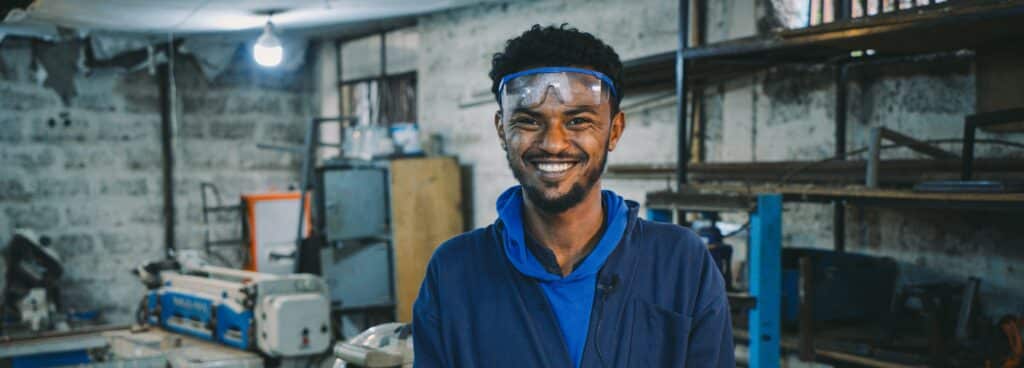
The TVET programme combines practical skills with personal development. Students can choose to specialise in metalwork, woodworking or garment production. They study theory in the classroom alongside hands-on training with industry-standard tools. Life skills sessions and introductory business training help students to understand how to work and how to shape their future with intention and resilience.

Each course lasts four to six months, with around 25 students per class. A one-month placement in a cooperative introduces them to the realities of modern workplaces and brings their learning to life.

Reaching those who need support the most 

Participants are aged between 15 and 32 and are selected in collaboration with Woreda-level government offices. This ensures that opportunities reach young migrants, school dropouts, individuals escaping unsafe situations, and young people without family support.

Many participants initially arrive feeling uncertain and hesitant due to challenging past experiences. However, as they refine their skills, receive structured guidance and build their competence, they undergo a significant transformation. They become more confident communicators, their self-belief grows, and they begin to take responsibility for their choices. This personal development is as important as the technical training itself.

Support that extends beyond the training  

Through Job and Business Services (JBS), students receive support in connecting with employers and exploring opportunities in small businesses. This personalised support enables most graduates to quickly secure dignified employment, with positive knock-on effects for their families and communities. Families gain stability, younger siblings stay in education, and communities see capable, hopeful young people fulfilling their potential.

Stories of courage and change   

A young girl from the north of the country came to Addis Ababa to escape an arranged marriage arranged by her family. She was only 16 years old at the time. Travelling alone, she quickly found that life in the city was uncertain. Everything changed when she enrolled on a garment training course at the Dorcas TVET centre.

She now works as a supervisor at WARIT Furniture and continues her education through an evening programme. In her own words:

‘I survived those difficult days, now I am working to realise my dreams.’

Strengthening communities through skilled youth 

When young people gain confidence, skills and employment, communities change with them. The TVET programme not only lifts individuals, it strengthens families, inspires peers and reduces the social pressures associated with youth unemployment. A generation once considered marginalised becomes a generation of contributors, innovators and role models. 

Looking ahead: building a centre of excellence 

The TVET centre continues to grow. Its development into a centre of excellence in furniture making includes a dedicated woodworking workshop and new machinery. Plans for the future include expanding into new fields where there is high demand for skilled workers:

Dorcas also has a long-term vision to establish a self-sustaining business wing linked to the TVET centre, which would be a significant step towards becoming an independent training institute.

Where new paths begin

Across Ethiopia, many young people face uncertainty, exposure to risk and limited prospects for advancement. The Dorcas TVET Centre offers them a structured environment in which to develop market-relevant skills, receive professional guidance and access new growth opportunities. It offers a space where competence leads to dignity, where mentorship supports informed decision-making and where tangible opportunities provide a sense of direction and possibility in place of uncertainty.

‘I graduated in Business Management, but I couldn’t find a job. As a result, I wasn’t earning anything and was unable to provide for my family.’ Eshetee, a 31-year-old from Ethiopia, was unemployed for a long time. However, after taking part in a training programme run by Dorcas, he was able to open his own barbershop and now earns enough to support his family.

Eshetee is married and the father of a daughter who is just over a year old. He lives with his family just outside Shashemene, a town in south-west Ethiopia. After finishing his studies, he, like many other young Ethiopians, found it difficult to get a job. ‘I was barely earning anything. I took whatever work I could find on the streets, but it wasn’t enough to support my parents or maintain my own family.’

Barber training

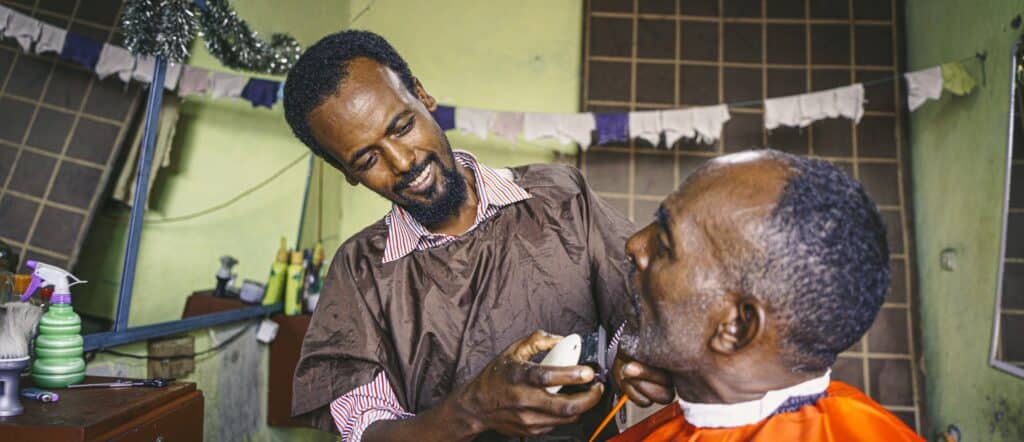
Eshetee heard about Dorcas’ vocational training programmes through friends. He enrolled on the barbering course. Within a few weeks, he had mastered the finer points of the trade. He also completed a skills course, which boosted his confidence and taught him about planning and social skills.

After completing the training, he opened a barbershop with the support of a loan. The business is now thriving and attracts many customers. ‘I now earn enough to support my family. I can rent a house and I am financially independent. When my daughter is old enough, I will also have enough to send her to school. I would not have achieved any of this without the training,’ says Eshetee proudly.

Dreams of expansion

He is already thinking about the future. ‘I would like to invest in better materials and new chairs. I would also like to hire staff to allow me to expand my business. Eventually, I hope to open another shop in a different location.’

Yesterday, the 30th UN Climate Conference (COP30) officially opened in Belém, Brazil, with an urgent call to implement climate pledges. Running until 21 November, the summit is focused on accelerating the implementation of practical solutions to meet national climate goals under the Paris Agreement.

This year, the core theme is climate adaptation, which the summit focuses on through six official action agenda areas:

  1. Transitioning energy, industry and transport. 
  2. Stewarding forests, oceans and biodiversity. 
  3. Transforming agriculture and food systems. 
  4. Building resilience for cities, infrastructure and water. 
  5. Fostering human and social development. 
  6. Unleashing enablers and accelerators, including on financing, technology and capacity-building (cross-cutting theme). 

These six themes are broken down into 30 key objectives, which provide more detail on the actions needed in these areas.

Agriculture and food systems on the agenda  

Among the priorities at COP30, the transformation of agriculture and food systems is worthy of note. For decades, climate talks have largely overlooked food and farming, even though these sectors are crucial not only for tackling climate change, but also for ensuring that communities have enough to eat and can flourish in a changing world. 

Heleen Berends, Dorcas’s Strategic Programme Advisor, explains:

‘The shift became evident back at COP27, when countries launched a four-year work programme on agriculture and food security (the Sharm El Sheikh Joint Work). Now, governments are reporting on progress and discussing how to increase climate action in the agricultural sector. The Global Action Agenda specifically lists goals such as restoring land, building climate-resilient food systems, and ensuring equitable access to food.’ 

Heleen adds:

‘This also raises a key issue: roughly one-third of global emissions are driven by food production, and agriculture is a primary driver of biodiversity loss. At the same time, hunger and food insecurity remain widespread. It is therefore essential to rethink how we produce, process and consume food. This needs to include regenerative farming, protecting forests and wetlands, reducing food waste, and promoting truly sustainable diets. Such measures can lower emissions while also ensuring sufficient yields, nutrition and resilience. What is clear, is that the current situation demands immediate action. The world must now come together to pledge sufficient funds and create accessible mechanisms that allow for better and accelerated adaptation.’ 

The spotlight on food systems also underscores the importance of community-level action, and shows why Dorcas’ work matters more than ever. 

How Dorcas supports communities to adapt to climate change 

For Dorcas, climate change is not an abstract issue. It directly affects the communities we support. From droughts in Ethiopia and Kenya to floods in South Sudan and wildfires and desertification in Iraq, extreme weather is making farming unpredictable and threatening food security. Those in vulnerable situations often have the fewest resources to cope, which is why climate adaptation is central to our work. 

Heleen explains:

‘We support communities in adapting to changing conditions, improving food security, and preparing for disasters. For farmers in vulnerable areas, climate-adaptive solutions are essential.’ 

In practice, Dorcas combines innovation with local solutions to address climate challenges. In Yemen, solar-powered water systems provide clean drinking water and irrigation. In Iraq, water-saving technologies help trees survive in the desert. In Kenya, wetlands are being restored to manage floods, and schoolchildren plant trees to connect communities with their environment. These locally led solutions build resilience, safeguard livelihoods, and support people to flourish.

Dorcas takes a holistic approach to climate adaptation, working across food systems, land and water management, and community development. In this way, Dorcas transforms global commitments, such as those emphasised at COP30 and in the Belém Declaration, into tangible change for local communities. 

Reading time: three minutes.

For more than five years, the western parts of Ethiopia, particularly the Wollega area, have faced persistent conflict. On 6 June 2025, violence flared once again in the border villages of East Wollega and Benishangul Gumuz, where clashes between the UAGs (Unidentified Armed Groups) forced thousands to flee their homes. In just one day, more than 11,000 people were displaced, with the unrest quickly spreading to neighbouring communities and pushing the total number of newly displaced to over 22,000. 

The crisis has left families seeking refuge in towns such as Angar under extremely difficult conditions, especially during the rainy season. Urgent humanitarian needs include shelter, food, clean water, and protection, with many people living in overcrowded temporary shelters or public buildings. Health risks are rising due to shortages of essential medicines and limited access to care, while children, women, and older people face heightened vulnerability. 

Emergency response by Dorcas 

Dorcas Ethiopia is launching a rapid emergency project through our project office to provide immediate support to families who have been forced to flee conflict. The project will provide 1,000 internally displaced households with unrestricted cash assistance for two consecutive months, giving them the flexibility to decide how to meet their most urgent basic needs. Priority will be given to households in the most vulnerable circumstances, including those headed by women, older people, people with disabilities, and households affected by chronic illness. 

Dorcas will actively engage with displaced community members by holding community engagement sessions to explain the programme’s objectives, and by listening carefully to feedback through established channels. This ensures that assistance remains transparent and accountable. We will continue to play an active role in local coordination platforms alongside government bodies, UN agencies, and humanitarian partners. This will strengthen other responses and contribute to wider resilience in the region. 

Expected outcomes: 

By addressing the shortfall caused by recent funding cuts, this project will deliver essential life-saving support. Dorcas Ethiopia remains committed to providing long-term support to communities facing hardship in one of the country’s most challenging contexts. 

Ahmed, a 20-year-old young man from Abosto Kebele in Shashamene Town, Ethiopia, faced significant challenges early in life. He dropped out of school due to financial difficulties and moved to Addis Ababa in search of work. He found a job as a waiter in a café, where he worked for five months. Despite his efforts, his meagre income was not enough to cover basic living expenses such as rent, food and clothing. Struggling to make ends meet, he returned to his family in Shashamene.

Discovering the SHINES project

Fortunately, while in Shashamene, Ahmed came across information about Dorcas Ethiopia’s SHINES project, which offered vocational training to unemployed youth. Ahmed was selected as one of 670 participants for a five-day training session. The training, facilitated by experts from DOT Ethiopia, covered key areas such as business development skills, life skills and entrepreneurship.

Reflecting on his experience, Ahmed said: ‘The five-day training helped me understand my potential, set clear goals and develop a vision for my future. I gained essential skills in business planning, teamwork and the positive attitude needed to succeed in the business world. I can now map my business assets, communicate effectively, manage stress and make informed decisions to succeed in life and business.’

Growing the business and providing employment

Inspired by the training, Ahmed decided to use his five months’ experience in Addis Ababa to start a breakfast and snack service business. Although he struggled to secure start-up capital from credit service providers due to a lack of collateral, he turned to his family, relatives and friends for support. With their support, he raised enough money to start the business. Ahmed’s business began to flourish. He employed three local youths, saved some money and earned his own income.

Expressing his satisfaction with his progress, Ahmed said: ‘I am happy to provide employment for the young people who work with me. I have become a reason for them to lead a productive life without having to migrate. I have bought a modern machine to make chips from local potatoes. I now have substantial savings in my bank account and continue to save. In the near future, I plan to expand my fast-food business into a café near the main road.’

Ahmed is not only transforming his own life, he is also contributing to the success and progress of his employees. He is optimistic about his future and the impact he can continue to have on his community.

Find out more about Dorcas’ work in Ethiopia.

Dorcas is responding to urgent needs in South Sudan and Ethiopia, addressing crises in some of the most affected regions.

In South Sudan, the northern state of Bahr el Ghazal has been one of the hardest hit areas by the devastating floods, which have displaced families and had a severe impact on livelihoods. Agricultural land has been damaged and the harvest season disrupted, leaving many households facing food insecurity. To support recovery, ZOA Dorcas South Sudan will provide a one-off emergency cash distribution to up to 4,000 people in two counties.

Meanwhile, in Ethiopia’s Oromia State, East Wollega, displacement caused by intercommunal tensions over competition for land and resources and attacks by armed groups has forced thousands of people into overcrowded camps or urban areas. Following an assessment in six districts, the Dorcas Ethiopia team identified Waya Tuka as the area of most urgent need. Dorcas Ethiopia will provide cash assistance to 400 displaced households for two months.

Dorcas is and will continue to be committed to providing timely and effective support in the countries where we work. Reaching those most in need at critical times.

Dorcas supports older people through our Community Safety Net (CSN) approach. This involves mobilising different actors and organisations so that everyone is involved. Only by working together can we provide the right support to ensure older people can live with dignity and flourish. In our CSN report, we found that involving churches as natural allies is one of the best practices in this approach. 

One such partner is the Ethiopian Guenet Church (EGC) in Bishoftu. Dorcas Ethiopia runs a project in Bishoftu that supports around 150 older people, with the EGC playing a key role. The majority of participants in the project are women over the age of 60, representing up to 75 per cent. Most of them are widows. After losing their husbands, Ethiopian women often face considerable challenges, as many have no formal education and were financially dependent on their spouses. They are left to manage on their own, often with a small pension and little or no other income. 

Dorcas and the EGC support these project participants in a number of ways. They receive practical assistance such as food, clothing, blankets and medical check-ups. Bedridden older people receive regular visits and support in their homes. Their clothes are washed and household chores are done. This is done by volunteers from the EGC, but young people are also involved to encourage contact between the generations. 

As well as practical support, the project offers a range of activities for older people. There are weekly coffee ceremonies and holidays are celebrated together. On special occasions such as Christmas and Easter, the older people receive something extra: a chicken, eggs and flour to make injera (a traditional dish).  

Dorcas and the EGC also encourage the community to care for their older people and organise training sessions to empower older people to advocate for themselves.  

We also invest in partnerships, including with the government, to support older people in securing safe, private housing, to advocate for their rights and to raise awareness on special occasions such as the international day of older persons.   

1 October is the UN International Day of Older People, and one of its aims is to ensure that people can grow old with dignity and continue to participate in society. In the countries where Dorcas works, older persons are often marginalised, lack access to basic services and struggle to survive on meagre incomes. With its community safety net programme, Dorcas tackles these issues by enabling local communities to care for and protect their older people. 

What are community safety nets? 

Dorcas started to develop and implement the community safety nets (CSN) approach in 2017. A community safety net (CSN) mobilises different organisations in a community to provide a safe and supportive environment for older people in which they can flourish. It also raises awareness about the issues older people face.  

‘I have a large number of people to talk to now, and I feel like a human. I am back to normal.‘ – Quote from a project participant.

Evaluation of the CSN approach 

This year, Dorcas commissioned an evaluation of its CSN projects in Albania, Egypt, Ethiopia, Moldova, Romania, Tanzania and Ukraine to discover the impact of the programme and which best practices can be implemented to make it more sustainable.  

Older people’s dignity restored 

The dignity of older people is restored through the wide range of social, intergenerational, income-generating and spiritual activities that CSNs offer. Participants become more active in their local communities and feel valued. Less able-bodied participants are not forgotten either: those who are bedridden receive home visits. Valuable traditions are created, social cohesion is strengthened, and communities discover that they can do more than they originally realised to enable older people to flourish. 

‘CSN taught us how to cook healthy food.‘ – Quote from a project participant.

Challenges encountered 

However, the transition from Dorcas’ original Adopt-a-Granny approach to sustainable community safety nets that make full use of local resources is not a straightforward path. There have been many challenges along the way for example:  

Best practices?  

The various CSN projects are still in a state of transition. As a result, no clear set of best practices has emerged from the evaluation. However, various successful practices were found, such as actively involving participants, churches as natural allies in caring for older people, creating a shared and diverse ownership of a CSN, and holding governments accountable. 

Peer-to-peer and social support systems are gaining traction. What began with volunteers inviting attendees has flourished into a self-sustaining cycle where attendees extend the invitation to their friends. This exemplifies the power of social support in fostering a safe and inclusive community.‘ – Actor from Egypt 

Next steps for CSNs 

The evaluation report made various recommendations about the next steps for CSNs. These include:  

In the coming months, the Dorcas country offices in Albania, Egypt, Ethiopia, Moldova, Romania, Tanzania and Ukraine will use the evaluation to take appropriate measures to improve the sustainability and impact of their CSN projects. 

Curious to learn more? Read the evaluation report below:

Dorcas Evaluation report on community safety net approachDownload