Social farming harnesses the power of agriculture to deliver care and support for people in vulnerable situations. It involves using agricultural resources such as plants, animals, and land to provide health, social and educational services to vulnerable groups. This includes individuals with mental or physical health needs, people facing social exclusion or long-term unemployment, and those recovering from addiction.
Activities on social farms can include animal care, vegetable cultivation, fence maintenance and food production. Often run by family farmers in partnership with care providers, these farms offer flexible, community-based alternatives to institutional care.
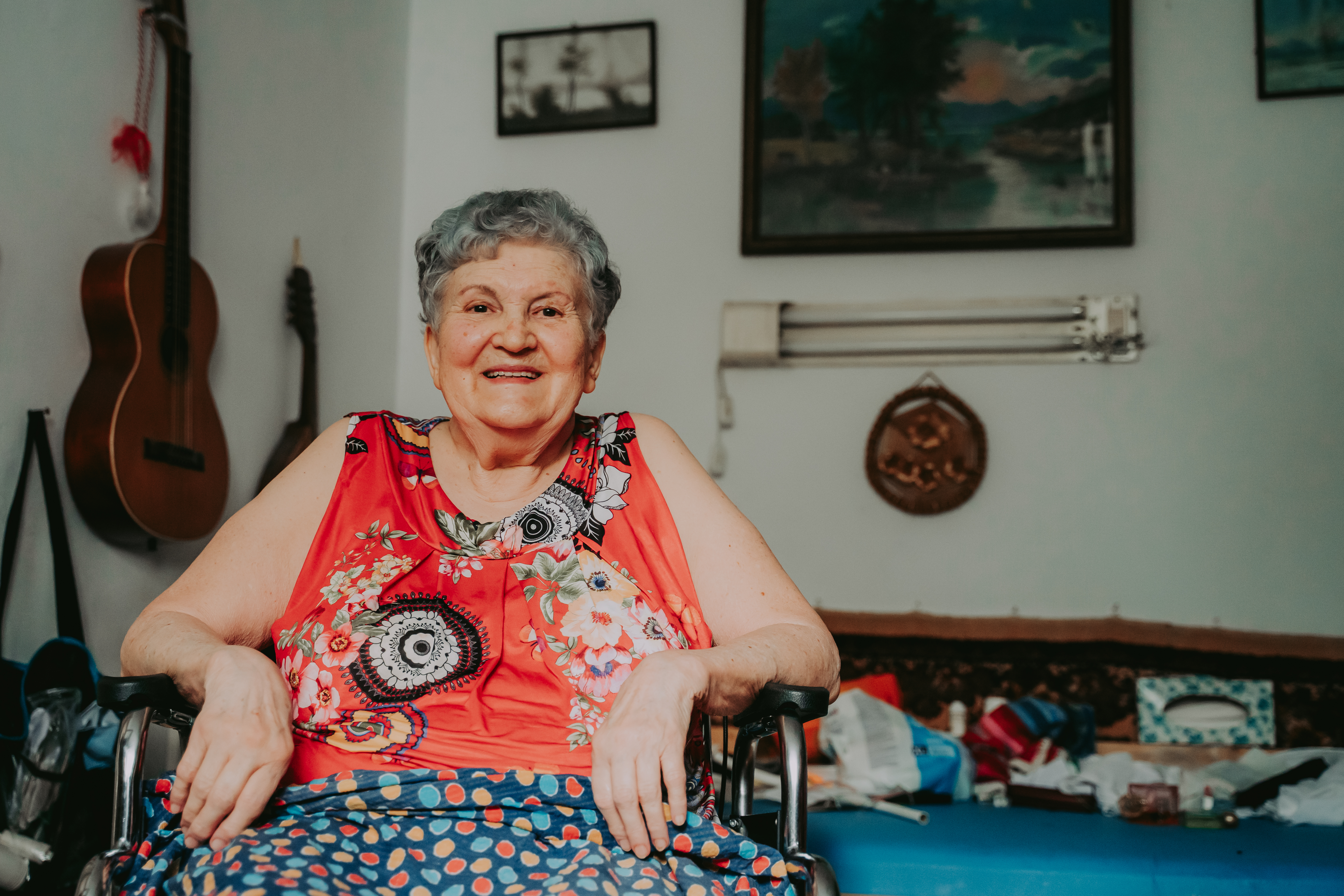
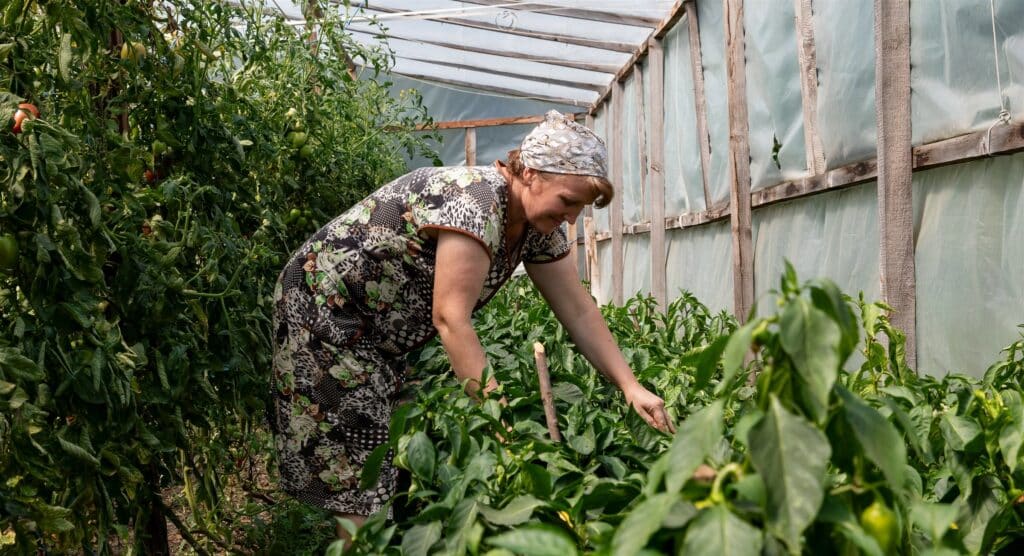
This approach comes to life in places like Romania. Since 2003, Attila has been running a social farm that restores dignity and strengthens community ties. Together with older people from the local Dorcas project, he cultivates vegetables and flowers in greenhouses, creating a space where purpose and belonging flourish.
Greenhouses
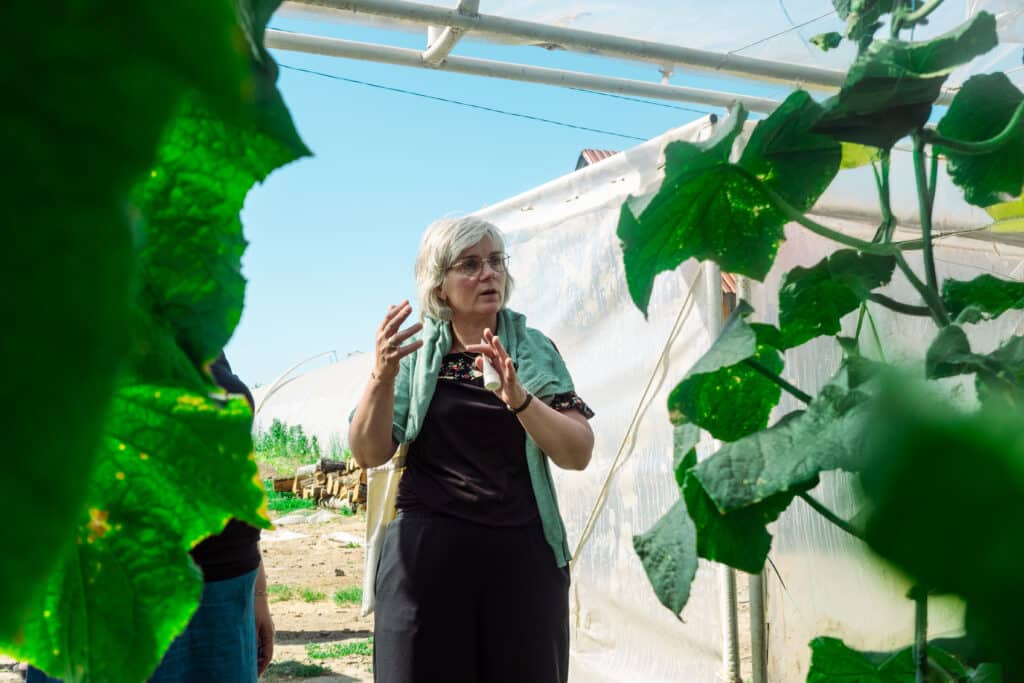
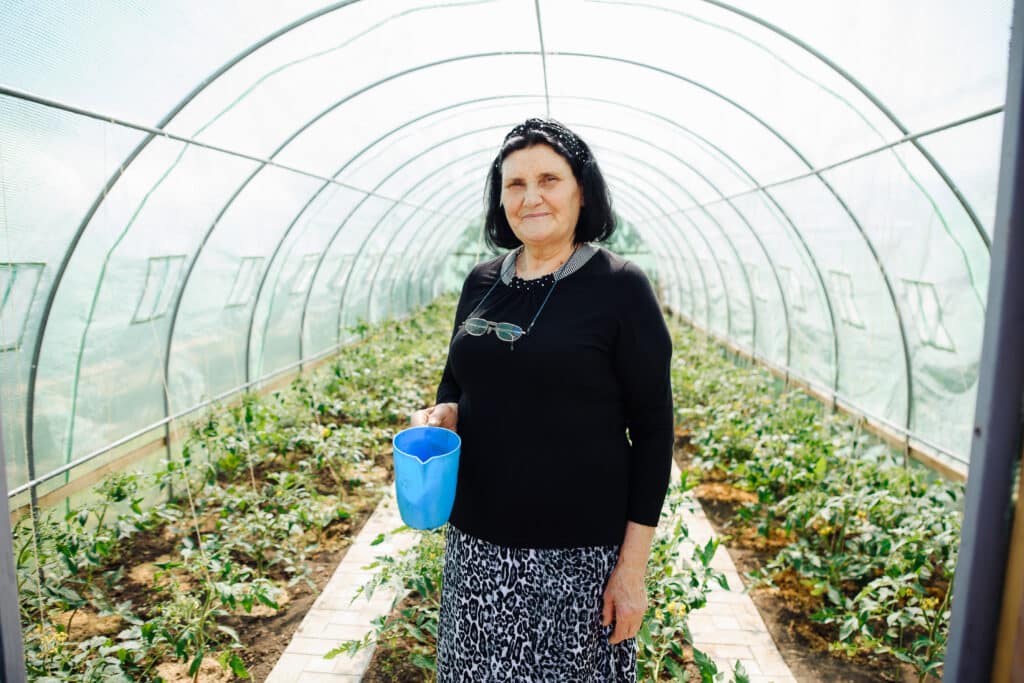
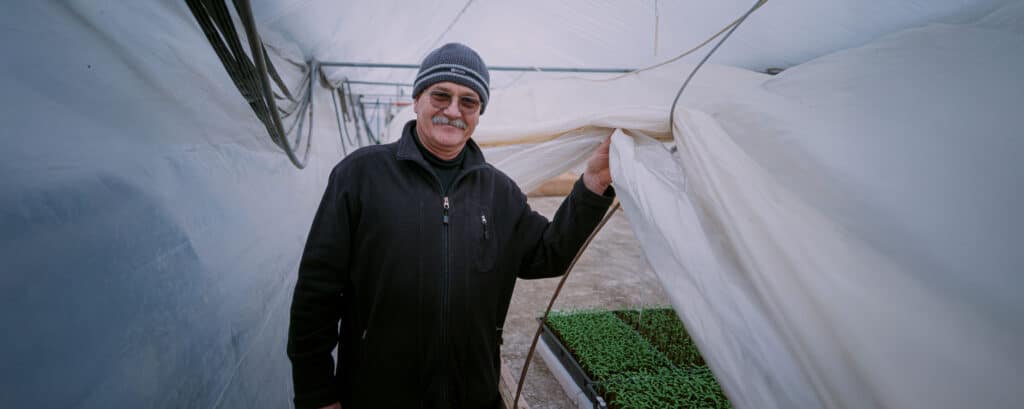
Behind a modest roadside building, two greenhouses brim with life. Here, Attila grows vegetables and flowers with the help of older people from the local Dorcas project. Together, they sow seeds not only for food but for friendship and purpose.
‘Before we started the farm, there was a lot of hopelessness,’ Attila shares. ‘Now I see smiling faces. There’s a sense of belonging again.’
The work in the greenhouses serves many goals. It provides extra food for older people, helping them stretch their pensions. But just as importantly, it brings people together creating connection, dignity, and a sense of being needed.

A season of growth
Each March, the growing season begins. Participants take on different tasks, from preparing the soil and planting seeds to weeding and harvesting. Their involvement depends on their physical ability, and everyone contributes in their own way. Some earn a small income through their work. Others grow vegetables on their own patch of greenhouse soil. Many take seeds home to plant in their gardens, extending the impact even further.
Harvesting hope
The greenhouses are full of life: lettuce, strawberries, cabbage, tomatoes, cucumbers and sometimes flowers, especially lilies, which thrive here. The produce and seeds are sold locally, and the income is reinvested into thesupport programme for older people. But the farm’s impact goes far beyond food and finances.
‘Sometimes schoolchildren visit,’ Attila says. ‘Older people share their knowledge, and suddenly there’s a bridge between generations.’
Attila also employs paid staff many of whom become so inspired by the farm’s mission that they volunteer in other activities for older people. The spirit of giving back is contagious. The change in the community is unmistakable. Where once there was resignation ‘I can’t do anything anymore’ there is now joy, energy, and engagement.
‘There’s more love in the community,’ Attila reflects. ‘This project hasn’t just changed the lives of older people it’s transformed the whole village. Life is more vibrant. People look out for each other.’
These farms are part of Dorcas’ broader strategy to restore dignity, promote inclusion, and create sustainable livelihoods through community-based solutions.
Reading time: three minutes.
Dorcas is proud to announce the publication of its strategic plan 2026-2030: Local power creates lasting change. This roadmap sets out Dorcas’s vision for the coming years, focusing on empowering local communities, driving innovation, and creating measurable impact for people vulnerable to poverty, exclusion, and crises.
Facing a changing world
The world is rapidly evolving, with technological, economic, and demographic shifts often hitting the most marginalised the hardest. Dorcas recognises that the needs of the communities it serves are growing, even as funding environments become more challenging. From climate-induced agricultural issues in Africa to ongoing conflicts in the Middle East and the isolation of older people in Eastern Europe, Dorcas’s mission is more vital than ever.
Three pillars for impact
The new strategic plan is built on three core pillars:
- Grow: By 2030, Dorcas aims to reach 1.5 times as many people as our income increases over 60 million euros and a significant increase in volunteers and supporters.
- Quality: By 2030, Dorcas has a clear track record, invests in quality standards and continuous improvement to ensure its support leads to lasting, positive change.
- Positioning: Dorcas seeks to be recognised as a leading international partner in humanitarian and development cooperation, with a strong presence in the Netherlands and beyond.

Seven programmatic themes
Dorcas will apply seven programmatic themes to sharpen expertise, strengthen its track record, and define clear organisational positioning. By 2030, Dorcas aims to harmonise and standardise our approaches resulting from these themes through a lens of inclusion and vulnerability, with community-based programming as our core approach.
Dorcas’s approach is defined by the following programmatic themes:
- Crisis Response
- Protection
- Community Development
- Climate Adaptation
- Water
- Livelihoods and Food Security
- Economic Development
These themes guide Dorcas’s work across the Middle East, Eastern Europe, and Eastern Africa.

Empowering local communities
A key feature of the strategic plan is the commitment to localisation. Dorcas will invest in building the capacity of local partners and country offices, shifting expertise and resources closer to the communities served. By 2030, country offices will have expanded their programme portfolios by 40 per cent, strengthening both their sustainable presence and overall impact.
Innovation and collaboration
Dorcas will foster a culture of innovation, investing in new ideas and partnerships to address emerging challenges. The organisation will also strengthen its fundraising, aiming to double its supporter base and become the largest charity thrift store chain in the Netherlands.
Looking ahead
Dorcas’s strategic plan 2026-2030 is a response to a fragile and unpredictable world. By focusing on local power, operational excellence, and strategic partnerships, Dorcas is committed to enabling people and communities to flourish in the face of adversity.
Read the full strategic plan:
Dorcas supports older people through our Community Safety Net (CSN) approach. This involves mobilising different actors and organisations so that everyone is involved. Only by working together can we provide the right support to ensure older people can live with dignity and flourish. In our CSN report, we found that involving churches as natural allies is one of the best practices in this approach.
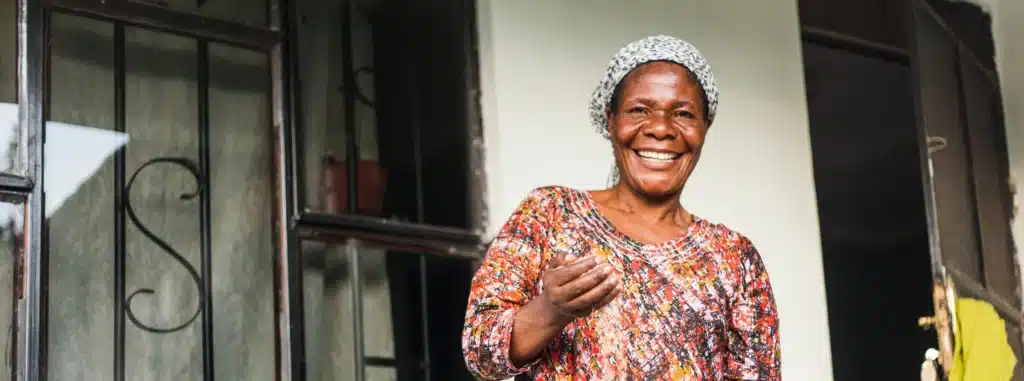
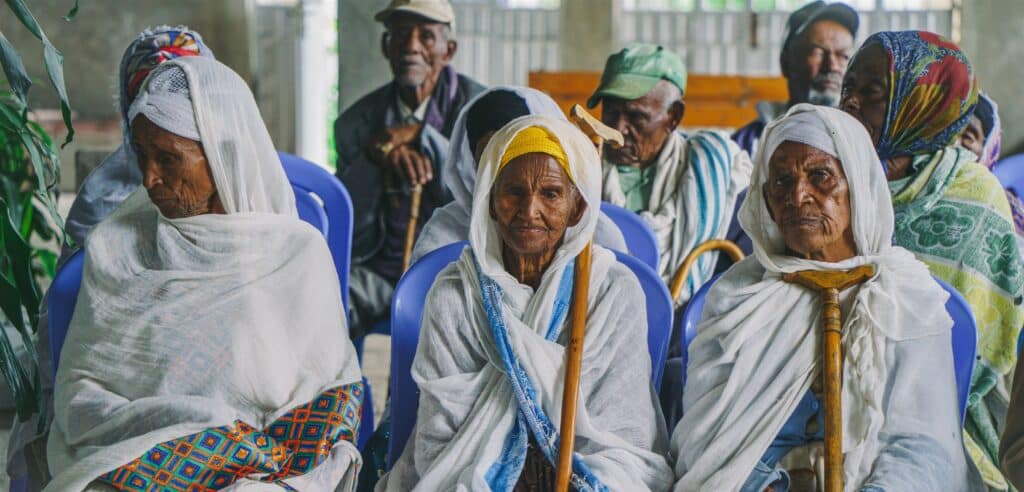
One such partner is the Ethiopian Guenet Church (EGC) in Bishoftu. Dorcas Ethiopia runs a project in Bishoftu that supports around 150 older people, with the EGC playing a key role. The majority of participants in the project are women over the age of 60, representing up to 75 per cent. Most of them are widows. After losing their husbands, Ethiopian women often face considerable challenges, as many have no formal education and were financially dependent on their spouses. They are left to manage on their own, often with a small pension and little or no other income.
Dorcas and the EGC support these project participants in a number of ways. They receive practical assistance such as food, clothing, blankets and medical check-ups. Bedridden older people receive regular visits and support in their homes. Their clothes are washed and household chores are done. This is done by volunteers from the EGC, but young people are also involved to encourage contact between the generations.
As well as practical support, the project offers a range of activities for older people. There are weekly coffee ceremonies and holidays are celebrated together. On special occasions such as Christmas and Easter, the older people receive something extra: a chicken, eggs and flour to make injera (a traditional dish).
Dorcas and the EGC also encourage the community to care for their older people and organise training sessions to empower older people to advocate for themselves.
We also invest in partnerships, including with the government, to support older people in securing safe, private housing, to advocate for their rights and to raise awareness on special occasions such as the international day of older persons.

1 October is the UN International Day of Older People, and one of its aims is to ensure that people can grow old with dignity and continue to participate in society. In the countries where Dorcas works, older persons are often marginalised, lack access to basic services and struggle to survive on meagre incomes. With its community safety net programme, Dorcas tackles these issues by enabling local communities to care for and protect their older people.
What are community safety nets?
Dorcas started to develop and implement the community safety nets (CSN) approach in 2017. A community safety net (CSN) mobilises different organisations in a community to provide a safe and supportive environment for older people in which they can flourish. It also raises awareness about the issues older people face.
‘I have a large number of people to talk to now, and I feel like a human. I am back to normal.‘ – Quote from a project participant.
Evaluation of the CSN approach
This year, Dorcas commissioned an evaluation of its CSN projects in Albania, Egypt, Ethiopia, Moldova, Romania, Tanzania and Ukraine to discover the impact of the programme and which best practices can be implemented to make it more sustainable.
Older people’s dignity restored
The dignity of older people is restored through the wide range of social, intergenerational, income-generating and spiritual activities that CSNs offer. Participants become more active in their local communities and feel valued. Less able-bodied participants are not forgotten either: those who are bedridden receive home visits. Valuable traditions are created, social cohesion is strengthened, and communities discover that they can do more than they originally realised to enable older people to flourish.
‘CSN taught us how to cook healthy food.‘ – Quote from a project participant.
Challenges encountered
However, the transition from Dorcas’ original Adopt-a-Granny approach to sustainable community safety nets that make full use of local resources is not a straightforward path. There have been many challenges along the way for example:
- Many local communities are not used to taking ownership of a situation.
- Parties are often more willing to donate than become involved as partners.
- Advocacy efforts towards government are still in its very early stages.
- A better balance needs to be found between the positive and negative effects of providing material support to older persons.
Best practices?
The various CSN projects are still in a state of transition. As a result, no clear set of best practices has emerged from the evaluation. However, various successful practices were found, such as actively involving participants, churches as natural allies in caring for older people, creating a shared and diverse ownership of a CSN, and holding governments accountable.
‘Peer-to-peer and social support systems are gaining traction. What began with volunteers inviting attendees has flourished into a self-sustaining cycle where attendees extend the invitation to their friends. This exemplifies the power of social support in fostering a safe and inclusive community.‘ – Actor from Egypt
Next steps for CSNs
The evaluation report made various recommendations about the next steps for CSNs. These include:
- Continuing to invest in asset-based community development.
- Realising a more strategic approach to advocacy.
- Promoting multistakeholder approaches.
- Seeking to diversify funding sources for CSN projects.
In the coming months, the Dorcas country offices in Albania, Egypt, Ethiopia, Moldova, Romania, Tanzania and Ukraine will use the evaluation to take appropriate measures to improve the sustainability and impact of their CSN projects.
Curious to learn more? Read the evaluation report below:
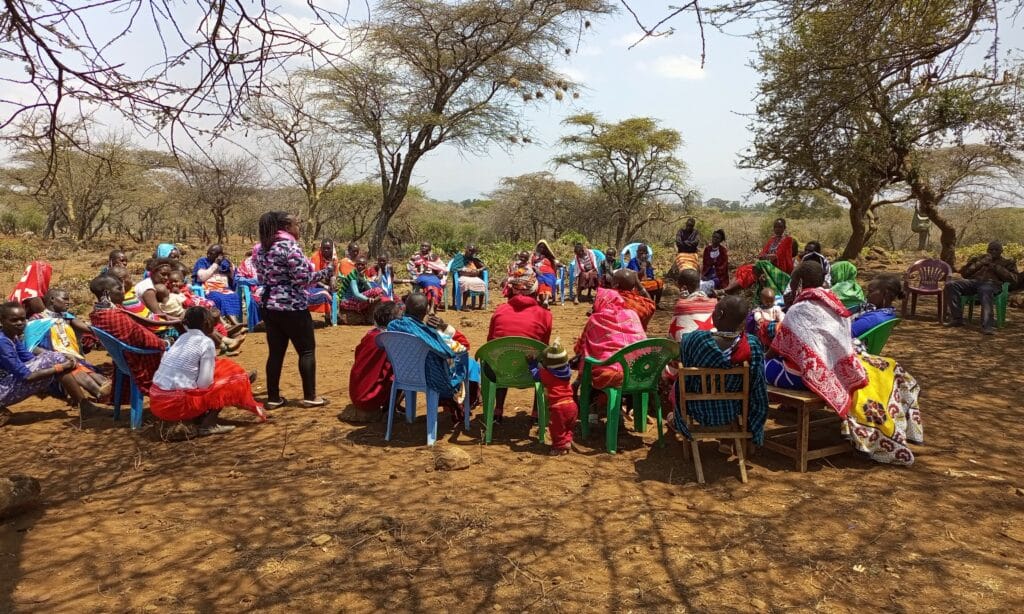
In Kajiado South, Kenya, the Ilaramatak Esukuta Village Savings and Loan Association (VSLA), a women’s savings group comprising 38 women, is a symbol of hope and resilience. This group is one of 30 VSLAs supported by Dorcas Kenya through the Loitoktok Future for Children project in partnership with Shokut Naretoi community programme organisation. The project uses the Dorcas Future for Children approach, which focuses on life skills for children and parents, household strengthening, community child protection and advocacy for improved government child protection policies.
The project reaches 235 households, identified through a community-led participatory process and grouped by geographical location to facilitate training and follow-up. These households have been through six consecutive failed rainy seasons from October 2020 to December 2023, resulting in devastating drought conditions across the Horn of Africa. The impact has been severe, leading to livestock losses, food insecurity and reduced access to education and healthcare for many families.
An integrated approach to empowerment
The process began with training in positive parenting, where parents learned essential skills such as communicating clearly and becoming role models for their children. Households were also trained in entrepreneurship, smart agriculture, financial literacy and child rights and protection. These small groups eventually evolved into VSLAs, with the Ilaramatak Esukuta VSLA being the first to be trained and officially formed on 24 March 2021.
Initially consisting of 38 women, 15% of whom were subsistence farmers, petty traders or casual labourers, and 60% of whom were housewives or unemployed, the group faced significant economic challenges. However, their determination and the training they received paid off. From May 2021 to May 2022, the group saved a substantial amount, issued numerous loans, and made a considerable profit. In their second cycle, the group saved a larger amount and made an even greater profit from loans.
The financial success of the group has been transformational. Members have gained confidence in managing their finances and many have opened personal bank accounts, further increasing their financial independence.
Impact beyond finance
The Ilaramatak Esukuta VSLA has promoted social growth and economic empowerment among its members. Business growth within the group has had a positive ripple effect, with their children attending school more regularly, leading to better learning outcomes. The group’s culture of savings and financial management has also deepened, with members consistently saving a notable amount per week.
Together, the group invested in a 100-seat tent and 100 plastic chairs, which they rent out for social events. This income-generating activity (IGA) has provided additional financial support for members. Individually, members have started or expanded their businesses, attributing their success to the skills they learned through VSLA training. For example, Somoina expanded her charcoal business and now saves a significant amount per week. Through backyard gardening and selling excess vegetables to the community, Katito Elizabeth has improved her family’s nutrition and income.


Mary, the group’s chairperson, describes how VSLA’s leadership training transformed her from a shy person to a confident leader: ‘Before joining the VSLA, I was a very shy person, someone who avoided speaking in public or taking on leadership roles. But through the leadership training, I started to build my self-esteem and believe in my abilities. It was a gradual process, but eventually I found myself taking on the role of chairperson for our group. At 57 years old, I never imagined I would be a leader, let alone one who could speak confidently and resolve conflicts within a group. This experience has opened my eyes to my potential and I now believe that I can aspire to any position within the group or in the wider community. The transformation has been incredible and has given me a sense of purpose and confidence that I never had before.’
As the Ilaramatak Esukuta VSLA enters its third cycle, all of the original members remain active. The group now plans to support members without IGAs to set up their own, and they are looking to buy another tent to increase their income.
Ilaramatak Esukuta’s story of resilience, empowerment and hope is a reflection of Dorcas’ Future for Children’s profound impact in transforming lives and communities.

Arendje is a thematic expert on Community Safety Nets at Dorcas. She is also one of the driving forces behind CPOE, a network of Christian humanitarian assistance organisations and other NGOs operating in Eastern Europe.
Arendje: ‘In Eastern Europe, numerous Christian NGOs are active. Some organisations specialise in specific areas, working within a niche, while others engage in various activities. Several years ago, CPOE was established by larger organisations, including Dorcas. CPOE aims to connect both large and small Christian organisations to share knowledge and expertise, provide a platform for networking, enhance external visibility, and serve as a catalyst for joint projects. This approach has proven effective: organisations previously unaware of each other’s existence are now collaborating.’
‘As CPOE, we can assist more participants in strengthening their capacities and train our members on current topics such as project cycle management, agriculture, and the history of the Roma in Eastern Europe. From Dorcas, I bring a wealth of knowledge and experience that supports others in their work and opens doors to additional knowledge partners. We are eager to witness positive change in Eastern Europe, and CPOE can contribute to that goal. A while ago, we, along with nineteen organisations, wrote a letter to informer Ronald Plasterk, drawing attention to the humanitarian situation in Ukraine. We could make a collective impact that individual organisations could not have achieved alone. Together we are joining forces for a flourishing Eastern Europe.’
Conference
‘As CPOE, our goal is to connect people. Therefore, we are organising a conference in Romania in June, bringing together participants from the network. During this engaging conference, we will focus on interaction and knowledge-sharing, taking time to truly listen to each other’s stories and experiences.’
‘Lectures will cover topics such as human trafficking, Roma issues, working methodologies, and economic development. I am proud that we, as CPOE, can organise this conference and look forward to a rewarding time.’
For more information about the CPOE conference, please visit: Conference Eastern Europe 2024 – Prisma (prismaweb.org)

𝘛𝘩𝘪𝘴 𝘴𝘵𝘰𝘳𝘺 𝘪𝘴 𝘱𝘢𝘳𝘵 𝘰𝘧 𝘋𝘰𝘳𝘤𝘢𝘴’ 𝘩𝘶𝘮𝘢𝘯 𝘳𝘪𝘨𝘩𝘵𝘴 𝘤𝘢𝘮𝘱𝘢𝘪𝘨𝘯. 𝘙𝘦𝘢𝘥 𝘮𝘰𝘳𝘦 𝘴𝘵𝘰𝘳𝘪𝘦𝘴 𝘢𝘯𝘥 𝘴𝘵𝘢𝘵𝘦𝘮𝘦𝘯𝘵𝘴 𝘰𝘯 𝘰𝘶𝘳 𝘥𝘦𝘥𝘪𝘤𝘢𝘵𝘦𝘥 𝘩𝘶𝘮𝘢𝘯 𝘳𝘪𝘨𝘩𝘵𝘴 𝘱𝘢𝘨𝘦. Human Rights: Contributing to a just society – Dorcas
Nadiia works as a Project Manager for Dorcas Ukraine
Nadiia: ‘The first thing we Ukrainians lost two years ago when the conflict started, was our sense of security. It does not matter how much money you have, you are still at risk. The most vulnerable people are children, older people, families who left the occupied territories and people with disabilities.’
‘I work with older people in Eastern Ukraine. It was during the conflict that a lot of them became very lonely because they were left behind by their relatives. That is why the aim of my work is to develop Community Safety Nets for older people. This is where they can support each other, communicate, develop their skills, hear encouraging words from volunteers and learn that they are not forgotten.’
‘By taking part in various activities, older people forget about the fear and danger, and they feel heard and valued! We all hope that the conflict will end and that we will feel safe in our homeland.’
𝘛𝘩𝘪𝘴 𝘴𝘵𝘰𝘳𝘺 𝘪𝘴 𝘱𝘢𝘳𝘵 𝘰𝘧 𝘋𝘰𝘳𝘤𝘢𝘴’ 𝘩𝘶𝘮𝘢𝘯 𝘳𝘪𝘨𝘩𝘵𝘴 𝘤𝘢𝘮𝘱𝘢𝘪𝘨𝘯. 𝘙𝘦𝘢𝘥 𝘮𝘰𝘳𝘦 𝘴𝘵𝘰𝘳𝘪𝘦𝘴 𝘢𝘯𝘥 𝘴𝘵𝘢𝘵𝘦𝘮𝘦𝘯𝘵𝘴 𝘰𝘯 𝘰𝘶𝘳 𝘥𝘦𝘥𝘪𝘤𝘢𝘵𝘦𝘥 𝘩𝘶𝘮𝘢𝘯 𝘳𝘪𝘨𝘩𝘵𝘴 𝘱𝘢𝘨𝘦. Human Rights: Contributing to a just society – Dorcas

Gilberte (63) participates in a project of Dorcas Lebanon.
Gilberte: ‘I stand up for safety because the situation in Lebanon is very insecure. I currently live alone and have no contact with my family due to a family conflict. This made me realise how much I need the support of others in the struggles I face and to be surrounded by people who care for me.’
‘Dorcas has supported me in many ways. For example, I receive food parcels and am enrolled in the hot meals programme. This support has restored my dignity and self-worth because I no longer struggle to meet my basic food needs. Also, my health has improved thanks to the good meals I receive, so now my health costs are less.’
‘I also joined a club Dorcas runs for older people. Since I joined, my social life has improved a lot! My new friends care about me, and I can share my concerns with them. When I take part in club activities, I feel appreciated by the other participants and the staff. They provide me with a sense of security that I really missed and make me feel at home. My overall sense of wellbeing and confidence have improved, and I want to be involved in any new activities that are organised.’
‘I stand up for the right to safety because I wish to live in a country where I do not have to think about how to have a stable and safe life at this age. I look forward to the day that there is no more conflict in Lebanon. But until then, I hope that Dorcas will keep on supporting people like me so that we feel safe, protected and loved.’
𝘛𝘩𝘪𝘴 𝘴𝘵𝘰𝘳𝘺 𝘪𝘴 𝘱𝘢𝘳𝘵 𝘰𝘧 𝘋𝘰𝘳𝘤𝘢𝘴’ 𝘩𝘶𝘮𝘢𝘯 𝘳𝘪𝘨𝘩𝘵𝘴 𝘤𝘢𝘮𝘱𝘢𝘪𝘨𝘯. 𝘙𝘦𝘢𝘥 𝘮𝘰𝘳𝘦 𝘴𝘵𝘰𝘳𝘪𝘦𝘴 𝘢𝘯𝘥 𝘴𝘵𝘢𝘵𝘦𝘮𝘦𝘯𝘵𝘴 𝘰𝘯 𝘰𝘶𝘳 𝘥𝘦𝘥𝘪𝘤𝘢𝘵𝘦𝘥 𝘩𝘶𝘮𝘢𝘯 𝘳𝘪𝘨𝘩𝘵𝘴 𝘱𝘢𝘨𝘦. Human Rights: Contributing to a just society – Dorcas
Dorcas is grateful to announce the start of a new EU-funded programme aimed at strengthening the capacity of Civil Society Organisations to develop innovative solutions related to the environment, digitalisation, and gender equality.
In the heart of Upper Egypt, disadvantaged communities face numerous challenges. Evidence underscores the critical role that local Civil Society Organisations (CSOs) can play in mobilising, capacitating, and empowering community members. This becomes particularly effective when CSOs work in synergy with each other, local government entities, and the private sector. Despite their good intentions, many CSOs face challenges that hinder their efficiency. These include a need for human capacity, financial, and data resources and limited technical capacity related to programme design, monitoring, and networking for multi-stakeholder collaboration. Many organisations operate with traditional top-down knowledge transfer methods and rely heavily on external funding. They often need to become more familiar with asset-based community development methods that leverage locally available resources.

Catalysts for change
To empower the disadvantaged communities, the programme will select twenty local CSOs in Beni Suef to systematically enhance their organisational, institutional, and technical capacities. This four-year action plan employs a trajectory of mentoring, coaching, and on-the-job training to empower these CSOs to become catalysts for change within their communities.
Central to the programme’s approach is adopting the Farmer Field and Business Schools (FFBS) method, a proven and tested market-based agricultural extension technique. This approach aims to bolster the CSOs and economically empower 2,000 small-scale female farmers in the region, driving social and economic progress.
Training and support
Furthermore, the programme provides CSOs with opportunities to propose and implement innovative ideas and initiatives that directly address the pressing needs of their communities. With comprehensive training and support, CSOs can craft sound and feasible plans and receive essential on-the-job assistance during implementation.
Beyond the selected CSOs, the programme extends its reach to local actors, community groups, and other relevant stakeholders . This inclusive approach aims to foster collaboration and ensure the sustainability of the programme results.
Each year on the first of October, we celebrate the international day of older persons. This is an important international day for Dorcas, as we focus on supporting marginalised people and communities and older people are often marginalised and their rights neglected. They often have little income and limited access to health care and social security. In addition to that, they face discrimination and stigmatisation based on cultural norms and social prejudices, like ageism.
According to the United Nations, the number of people aged over 65 is expected to more than double from 761 million in 2021 to 1.6 billion in 2050. The number of people over 80 years old is projected to grow even faster. These numbers increase the urgency of taking the unique set of challenges older people face seriously. In this article we elaborate further on why older people require more of our attention and share some recommendations on how you can include them in your programme.

Lack of income and social protection
Dorcas has community safety nets programmes for older people in seven countries: Albania, Egypt, Ethiopia, Moldova, Romania, Tanzania and Ukraine. A main problem in these countries is that older people often have little income and that pensions are so low that they are hardly sufficient for covering their daily needs. Insufficient pensions put them in a much greater risk to external shocks as they have less margin to absorb these financially. In Ukraine for example, many older people who were already marginalised have been affected greatly by the ongoing conflict that led to a massive increase in inflation. Their already challenging socio-economic position has therefore become even more dire. Our local colleagues see that older people in Moldova will often accept poor paid jobs in order to survive. All in all, the lack of social protection causes many problems for older people in the countries Dorcas works in. This must become more of a priority for civil society organisations and government actors in the coming years, as the number of older people is rapidly increasing.
Loneliness and stigmas
Another major issue that older people face, is loneliness and isolation. In Albania, Moldova, Romania and Ukraine for example, many older people either have no family to support them or their families moved to the cities or abroad. In Egypt, local Dorcas colleagues have experienced that older people are also often neglected by their families. Next to the practical and financial needs, this is one of the most pressing issues. Loneliness greatly affects their well-being. Older people need connection, community and the opportunity to contribute.
Another reason why older people require our attention, is because of the challenging stigmas and prejudices they face. In Egypt, this is a major issue. There is a stigma that older people’s duty has ended, they are solely recipients of care and are no longer productive. Supporting older people and inviting them to participate in certain activities may therefor lead to opposition in certain contexts.

Seven ways to include older people in your program
Dorcas supports older people through our community safety nets programme. In this programme, the community plays a central role in making sure people have access to the support structures they need. There are different types of community safety nets, depending on the level on which actors are involved, and a mix of different types is needed to meet the different needs of older people.
One of the participants in this programme, is Moges from Ethiopia. Before joining the programme five years ago, Moges did not have the means to get enough to eat or pay for medical treatment. He would only eat one meal a day. His house was in very bad shape, as the back wall and roof of his house were falling apart. When Moges joined the Dorcas programme, his life has changed drastically. He is now able to eat three times a day, he gets medical treatment, his house was renovated, he actively participates in the programmes social gatherings and has made many new friends.

Dorcas supports older people by building a social safety net around them, so that the community increasingly looks after them. We encourage different groups in the community to use their resources to support and involve them in the community. We also advocate for the rights of older people among government actors and encourage to governments to improve the social security services.
Dorcas has seven recommendations for (I)NGO’s and other actors who are involved in contexts where older people are marginalised, in order to better protect their rights:
- Listen to the voices of all older people and acknowledge their wisdom, knowledge and experience. Provide accessible methods for them to participate in, make decisions about and provide feedback on the assistance provided to them. Ensure this input is incorporated into interventions.
- Ensure the provision of psychosocial support to older people, particularly those living alone. Support and engage older people in activities which help overcome their loneliness.
- Ensure that older people who have fled can access full basic services, including food and water, healthcare including mental health support, social services including pensions, transport and information.
- Prioritise collecting reliable data about numbers, needs and priorities of older people.
- Ensure that community, family or other support and protection networks and mechanisms for older people are restored and strengthened.
- Ensure that any funding provided for responses to crises caused by conflicts includes older people as a priority at-risk group, and that there is attention for sub-groups of the older population that face specific risks.
- Ensure that older people who have not been able to leave their homes, including those living in institutions, are reached, evacuated if they wish, provided with essential life-saving humanitarian support and tailored and prioritised assistance.