Jitendra Panda, our Country Director in South Sudan, was born and raised in India. Over the past twenty years, he has lived in many different countries across Africa and Asia, always with the aim of supporting those in need.
‘I studied Humanitarian Assistance in India. After that, I started working for the United Nations (UN) in India. My work mainly focused on people’s health. However, I realised that poor health is caused by many underlying issues. That is why I moved to development organisations that focus on more than just health.’
Journey to South Sudan
In 2004, Jitendra left India for Africa, where he worked in Somalia. Over the following years, he also worked in Namibia, Yemen and Lebanon. The organisations he worked for all had one thing in common: the Christian faith. ‘I believe that everyone deserves protection and has the right to a dignified life. As a Christian, I believe it is my responsibility to support those in need by providing them with basic necessities such as water and food.’
In 2023, Jitendra began working for Dorcas and ZOA* in South Sudan. According to the Country Director, South Sudan is a beautiful country. ‘It has all the natural resources that are needed: water, trees and fertile land. Nature could provide everything; there is enough land to produce food for everyone. Unfortunately, South Sudan faces many difficulties resulting in shortages of essential resources,’ Jitendra explains.
Severe flooding
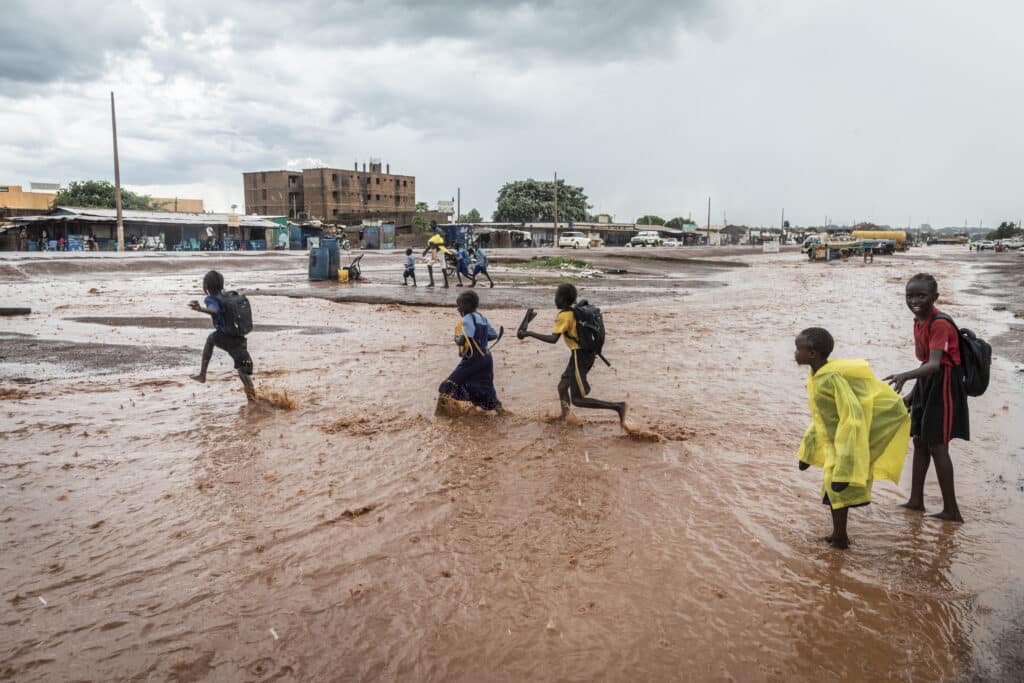
One of this country’s problems is its climate. South Sudan experiences alternating periods of extreme drought and heavy rainfall. Due to the intense rainfall, large parts of the country flood. People are forced to flee to drier, higher ground, and harvests fail. This not only leads to a lack of food, but also to conflicts in the areas where people seek refuge. Dorcas builds dykes to protect homes and farmland from flooding.
Refugees from Sudan
In addition to drought and heavy rainfall, accommodating refugees is also a major challenge in South Sudan. This is due not only to people within the country seeking safer places, but also to the influx of refugees from Sudan.
After the civil war broke out in South Sudan in 2011, millions of people fled to neighbouring Sudan. Two years ago, a civil war broke out there as well, prompting many South Sudanese to return. However, they find that their homes, farms and land have been taken over by those who stayed behind.
Hosted by communities
Jitendra explains: ‘Many refugees are taken in by the communities themselves. They are given a spot to put up a tent and food is shared. For now, this system works, but at some point the food runs out and conflicts arise. We support the communities by distributing food and providing them with the means to grow more, so that conflicts can be prevented.’
‘Dorcas also works with communities to help them deal with conflicts in a peaceful way. People learn to talk to one another and work on solutions together, preventing disputes from escalating into conflict. ‘My dream is that South Sudan will become a peaceful country where people live together in harmony.’
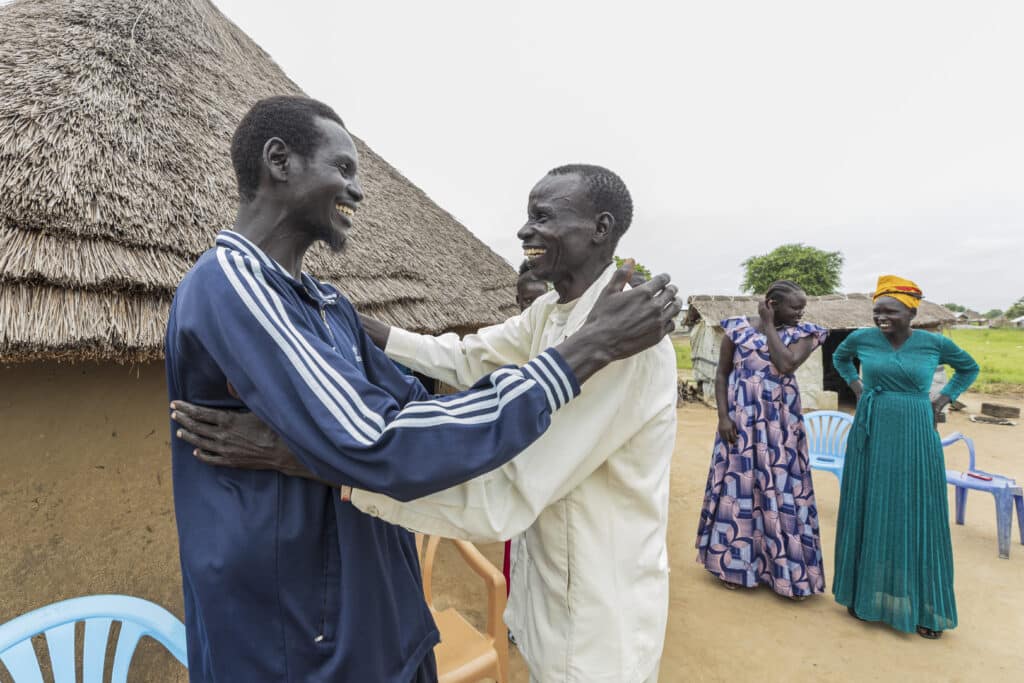
*In South Sudan, Dorcas and ZOA work closely together. By joining forces, we can better tailor our assistance to the needs of the people in South Sudan. Learn more about the work of ZOA Dorcas South Sudan.
Social farming harnesses the power of agriculture to deliver care and support for people in vulnerable situations. It involves using agricultural resources such as plants, animals, and land to provide health, social and educational services to vulnerable groups. This includes individuals with mental or physical health needs, people facing social exclusion or long-term unemployment, and those recovering from addiction.
Activities on social farms can include animal care, vegetable cultivation, fence maintenance and food production. Often run by family farmers in partnership with care providers, these farms offer flexible, community-based alternatives to institutional care.
This approach comes to life in places like Romania. Since 2003, Attila has been running a social farm that restores dignity and strengthens community ties. Together with older people from the local Dorcas project, he cultivates vegetables and flowers in greenhouses, creating a space where purpose and belonging flourish.
Greenhouses
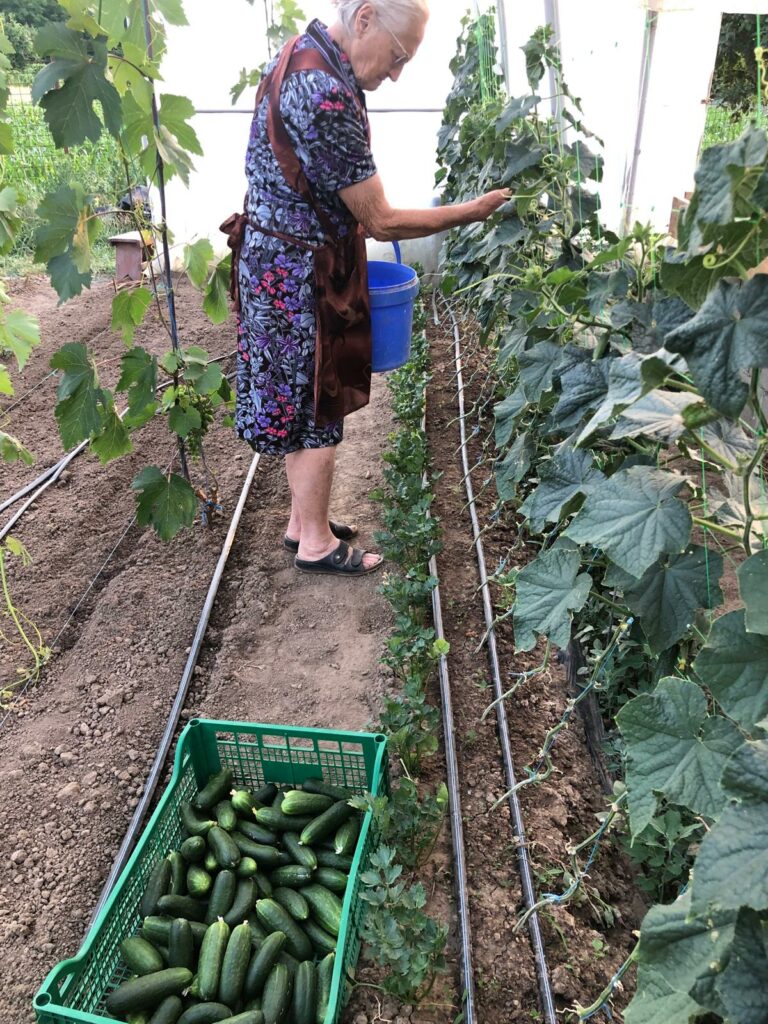
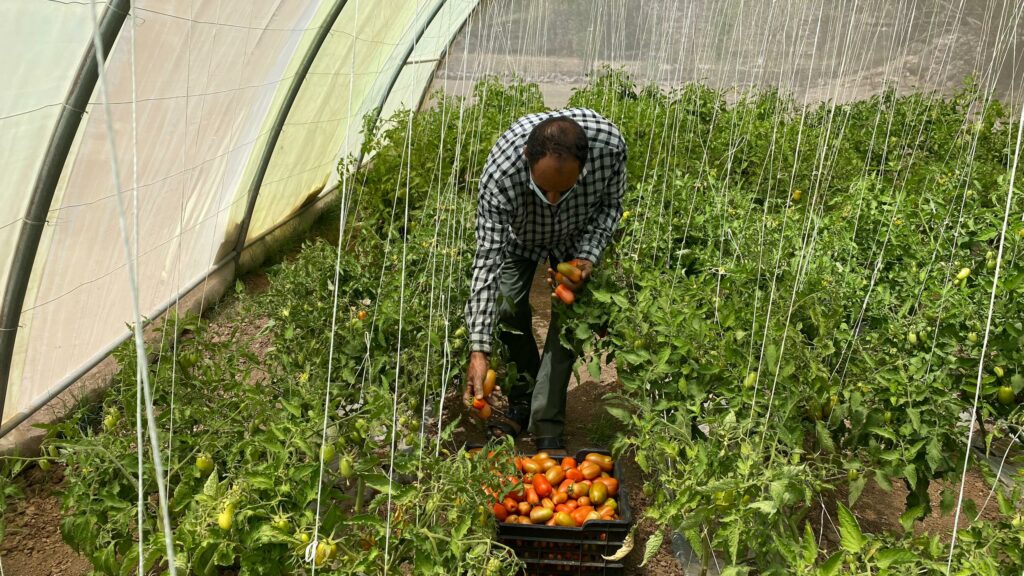
Behind a modest roadside building, two greenhouses brim with life. Here, Attila grows vegetables and flowers with the help of older people from the local Dorcas project. Together, they sow seeds not only for food but for friendship and purpose.
‘Before we started the farm, there was a lot of hopelessness,’ Attila shares. ‘Now I see smiling faces. There’s a sense of belonging again.’
The work in the greenhouses serves many goals. It provides extra food for older people, helping them stretch their pensions. But just as importantly, it brings people together creating connection, dignity, and a sense of being needed.
A season of growth
Each March, the growing season begins. Participants take on different tasks, from preparing the soil and planting seeds to weeding and harvesting. Their involvement depends on their physical ability, and everyone contributes in their own way. Some earn a small income through their work. Others grow vegetables on their own patch of greenhouse soil. Many take seeds home to plant in their gardens, extending the impact even further.
Harvesting hope
The greenhouses are full of life: lettuce, strawberries, cabbage, tomatoes, cucumbers and sometimes flowers, especially lilies, which thrive here. The produce and seeds are sold locally, and the income is reinvested into thesupport programme for older people. But the farm’s impact goes far beyond food and finances.
‘Sometimes schoolchildren visit,’ Attila says. ‘Older people share their knowledge, and suddenly there’s a bridge between generations.’
Attila also employs paid staff many of whom become so inspired by the farm’s mission that they volunteer in other activities for older people. The spirit of giving back is contagious. The change in the community is unmistakable. Where once there was resignation ‘I can’t do anything anymore’ there is now joy, energy, and engagement.
‘There’s more love in the community,’ Attila reflects. ‘This project hasn’t just changed the lives of older people it’s transformed the whole village. Life is more vibrant. People look out for each other.’
These farms are part of Dorcas’ broader strategy to restore dignity, promote inclusion, and create sustainable livelihoods through community-based solutions.
Reading time: 2 minutes.
Khalid is a father of ten from Yemen. He struggled with the harsh realities of drought and poverty, and found it difficult to provide for his family’s most basic needs. His land was barren and his debts were growing. A lack of resources prevented him from cultivating his land, which had a negative impact on his children’s education and wellbeing.
However, Khalid’s situation changed when he was introduced to Dorcas’s Food Security and Livelihoods (FSL) project. This initiative aimed to support the households most in need, and Khalid was selected as a participant in the agricultural greenhouse project.
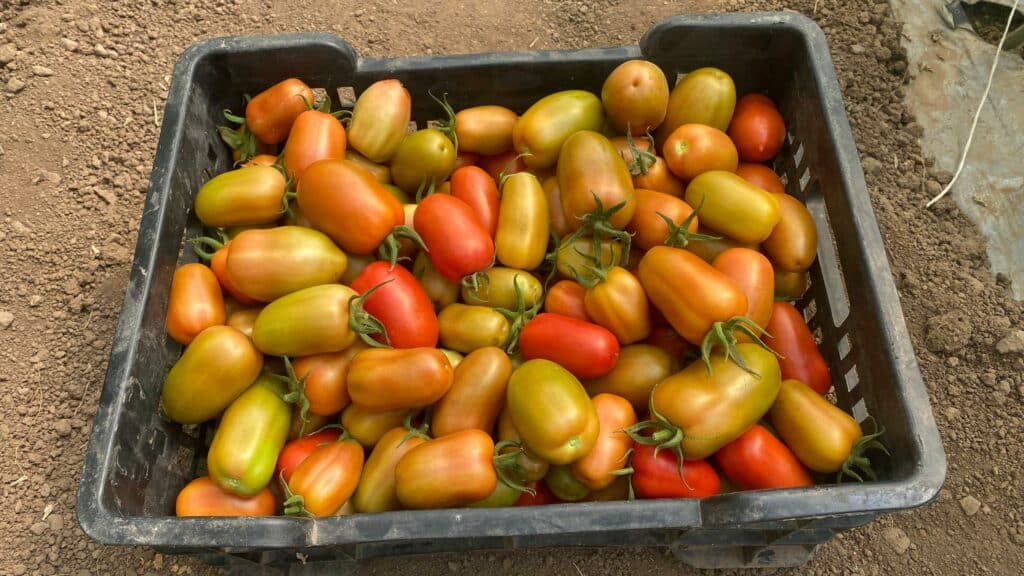
As part of this, he received a modern greenhouse, quality seeds, a drip irrigation system and a water tank. He was also trained in modern farming techniques, crop management and the efficient use of water and fertiliser. With both knowledge and resources at his disposal, Khalid began to cultivate his land with renewed determination.
With continuous guidance from the project team, his crops flourished. When harvest season arrived, his fresh, chemical-free tomatoes were well received in the local market. The income he earned exceeded expectations, enabling him to repay debts, provide his family with nutritious food, and send his children back to school.
Khalid expressed his gratitude, saying: ‘This project didn’t just change my life – it gave me my life back.’ He continues to work in agriculture today, committed to maintaining his greenhouse and sustaining his family’s livelihood.
Khalid’s story shows how targeted, practical support can empower families to regain stability and self-reliance, even in areas affected by long-term drought and hardship.
Running from the northernmost tip of Groningen to the southernmost point in Limburg in eight days. Matthias Jagersma took on this 420-kilometre challenge. His motivation: to raise money for Dorcas projects in Yemen . With his run, Matthias managed to raise no less than 6,000 euros.
How did you come up with the idea for this run?
‘I saw a video on social media of a man who ran the length of Africa. I thought it was such a great idea that I decided to do it too. But I wanted to make it a bit more achievable, as I wasn’t really a runner at all. That’s how the idea arose to run the length of the Netherlands.’
Matthias (right) ran together with his father Adriaan (left)

Why did you run for Yemen ?
‘I myself lived in Yemen for more than six years. I grew up there and saw that it’s not an easy place to live. It’s such a beautiful country, but it’s being completely destroyed. People are hungry, in fact, they lack all basic necessities. There is especially a need for water, food, and a safe place to live. My father set up the country office in Yemen for Dorcas, and that’s how I ended up with this organisation.’
Did you prepare in any special way?
‘I really started running from scratch. First just a few kilometres a week, eventually up to about fifty to sixty kilometres. We also mapped out the entire route ourselves and put together a support team. They travelled along each day with a van and took care of food, drinks, and setting up the tents.’
How did you experience the run?
‘It was a really great experience. It was wonderful to see how different the Netherlands is. We started out among the fields in Groningen, went across the Veluwe, and ended in the hills of Limburg. But it wasn’t all beautiful. On day 2 my friend Floris had to drop out due to an injury. And on the fifth day, I had knee trouble myself. That was really a low point, physically and mentally. I started doubting whether I would make it. Together with my father, I adapted the plan. With the help of a brace and walking poles, I was still able to keep going by walking.’
And did you actually make it to the finish?
‘Yes, fortunately I did. On the last day my knee had recovered enough and I could even run again! Which was just as well, as we made it in just before a huge hailstorm. Crossing the finish line was truly a fantastic feeling.’
Wim van Dorp (71) from Delft took part in the Nijmegen Four Days Marches for the 40th time this year. With his participation in the walking event, he raises money for Dorcas every year. This year, he walked for water projects in Kenya.
‘Everything went very well. On to next year!’ Wim reflects on the 2025 edition.
With his participation, Wim has raised over 2,000 euros for Dorcas’s water projects in Kenya. ‘Water is the most important thing a person needs. You can nicely link that to the Nijmegen Four Days Marches; drinking enough water always plays a big role there, too.’
Wim started walking the Nijmegen Four Days Marches forty years ago, encouraged by his father, who had already been taking part for years. ‘I thought walking was more for children or old people, not for a young lad like me,’ Wim says. Yet his father persuaded him, and he joined in once.
He appeared at the start untrained. ‘It was very tough. I crossed the finish line more dead than alive.’ Yet from that moment, Wim was hooked. ‘It was fantastic. The atmosphere, the people, the whole spectacle. I really caught the walking bug.’
Wim decided to take part again the following year, and every year after that. A total of forty times. However, he never walked together with his father. ‘Because of his age, my father walked the shorter distance, so we never started at the same time. We did meet each other along the route sometimes. My father passed away two years ago. For me, taking part now feels like a tribute to him.’
Except for once, Wim has completed every edition. ‘My grandmother had passed away and was buried on the last day of the Nijmegen Four Days Marches. As the eldest grandson, I had to be there, of course. If you miss a day, you are excluded and unfortunately do not receive a cross.’
Besides raising money during the Nijmegen Four Days Marches, Wim also supports Dorcas in other ways. For 35 years, he has been collecting clothing and other textiles. The reason was the conflict in former Yugoslavia in the 1990s. ‘I saw images of the conflict on television. All those people fleeing. That affected me deeply, and I wanted to do something for them,’ Wim says.
He called the churches in his area and asked them to join a collection campaign for clothing and other items. Around ten churches from Delft and the surrounding area took part. The proceeds from the campaign were overwhelming. ‘A lorry even had to be organised to transport all the items.’
In the years that followed, Wim organised a collection campaign every year. He also placed a container at his house, where people could hand in clothing and other textiles throughout the year. The proceeds were always for Dorcas. ‘Dorcas is simply a reliable organisation that does what it promises. And what I find beautiful about this organisation is that it is Christian and bears witness to this by practically supporting people in need.’
The large-scale collection campaigns are now a thing of the past. However, the textile container is still prominently placed in Wim’s front garden. ‘I’ve stopped all the campaigns and now only collect textiles on a small scale.’
And he continues to raise money for Dorcas through the Nijmegen Four Days Marches. He also plans to be at the start again next year. ‘I hope to continue as long as my health allows. It’s just so incredibly fun. I don’t like big crowds or all that music and noise at all. Yet I really enjoy it. Every time is actually the same, but each time it’s also different.’

Reading time: two minutes
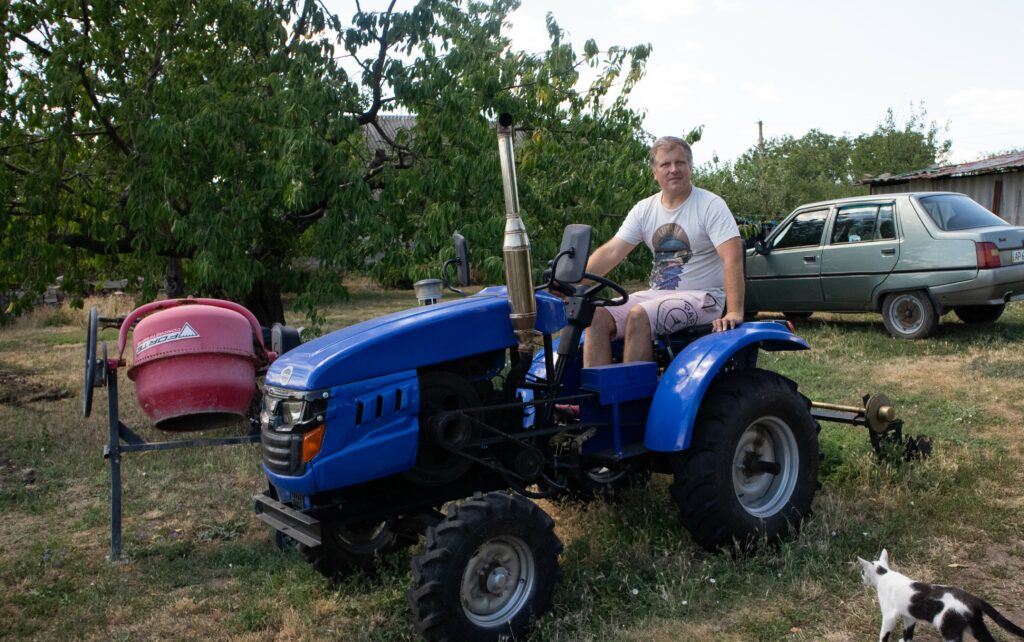
Vitalii and Alona are raising four children, including foster children, in a village in the Zaporizhzhia region, 27 kilometres from the front line. When their apartment in Zaporizhzhia became too small for the family and the ongoing conflict made staying in the city dangerous, they decided to move to the village.
Following the move, Vitalii began farming and selling his produce at the market. Thanks to a grant from Dorcas this year, he was able to install a greenhouse and equip it with heating and irrigation systems, as well as conduct soil and water analysis. ‘I don’t have much experience yet, so also receiving a consultation from a laboratory was helpful. We didn’t know we had fungus in the soil, but now we are working to solve the problem,’ he shares. They plan to grow cucumbers, salad vegetables, and strawberries in the new greenhouse. This will improve the well-being of this large family by establishing a continuous cycle of growing produce for sale.
In 2025, Dorcas expanded its support for farmers in eastern Ukraine, providing grants totalling €16,000 to five households in the Zaporizhzhia region. Despite the constant threat to their lives and livelihoods, farmers remain because, to them, land is not only a source of income, but also a source of dignity, hope and connection between generations. However, mined fields, land damaged by attacks and destroyed equipment remain a challenge for Ukrainian agriculture.
The Zaporizhzhia region has particularly suffered ecosystem disruption due to the destruction of the Kakhovka Reservoir, which has led to a locust invasion this season and threatened the productivity of small orchards. Supporting entrepreneurs in frontline regions gives them the confidence to develop their businesses.
Dorcas Kenya and our partner, Kitise Rural Development (KRD), have recently concluded the Makueni Pasture and Milk Value Chains Project. Through this initiative, we worked to enhance livelihoods in Makueni County by promoting climate-smart agriculture, developing value chains, and empowering young people.
Farming in Kikome village: A practical learning experience
One of the project participants was Boniface, a 28-year-old pastoralist and dairy farmer from Kikome village in Makueni County. He lives with his wife, Faith, and their two children. Before joining the project, Boniface cultivated a small plot of land, but he had limited knowledge of pasture management, seed selection, and planting methods. Consequently, his milk production was low, resulting in an income that was insufficient to meet his family’s needs.
‘Through the project, I was able to join the Kikome Farmer Field School, where I gained practical skills in pasture and milk production,’ Boniface shares.
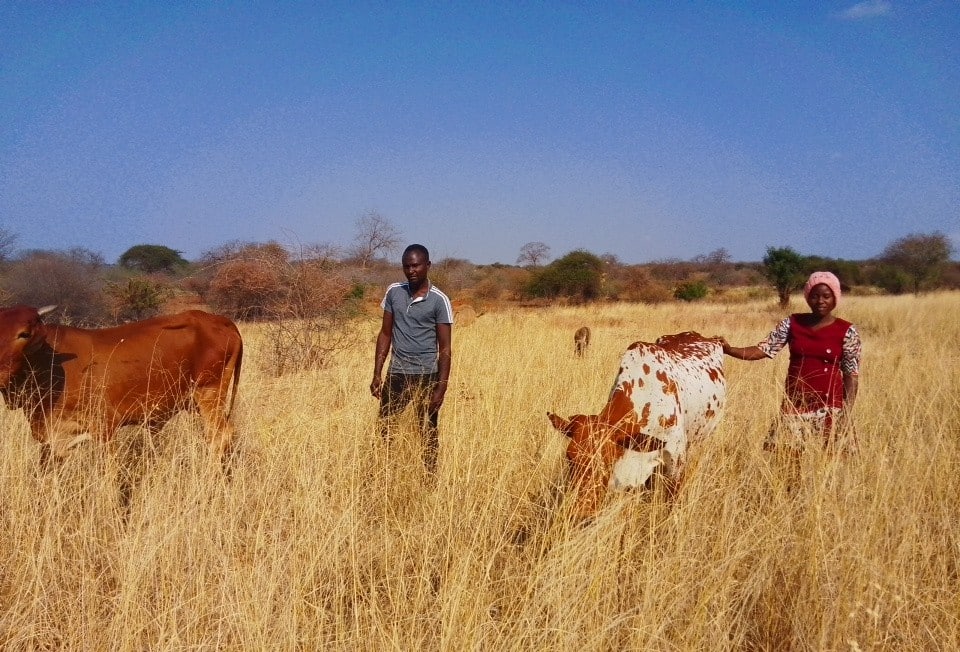
His strong commitment led to him being selected for a six-week intensive course at the Dairy Training Centre in Kenya, where he gained knowledge of soil fertility, feeds and feeding, breeding and animal health.
‘After the training, I planted more pasture the right way. I fed my animals well and put into practice what I had learnt. My milk yield increased from three to six litres per day,’ Boniface explains.
Income growth and community recognition
With the monthly income he now makes, Boniface can now comfortably pay school fees and support his family. He has become a peer-led farmer, offering guidance to others, and was recently contracted by the government to collect data and register farmers for upcoming agricultural programmes.
Boniface: ‘I highly appreciate the work carried out by KRD and Dorcas. I look forward to expanding my farming business and sharing my knowledge with other farmers.’
Reading time: 2 minutes
In Ukraine, many families are forced to flee the ongoing conflict, seeking safety in western regions such as Transcarpathia. This displacement has a severe impact on their livelihoods and overall well-being.
Dorcas Ukraine runs a ‘Future for Children’ programme in Transcarpathia to support families in vulnerable circumstances. The programme focuses not only on the children, but on the entire household, empowering parents by providing them with training in livelihood skills and parenting. This creates safer, more stable and nurturing environments in which children can grow and flourish despite difficult circumstances.
Lilia’s journey of resilience
Lilia is a single mother raising her son, Ivan. They both participate in the Future for Children programme, which is run by Dorcas. They ended up in a town in the Transcarpathian region, because they were forced to flee the conflict in Kharkiv.
Lilia and her son moved into a compact settlement for internally displaced people. Despite this, Lilia was feeling anxious and uncertain, and was struggling financially.
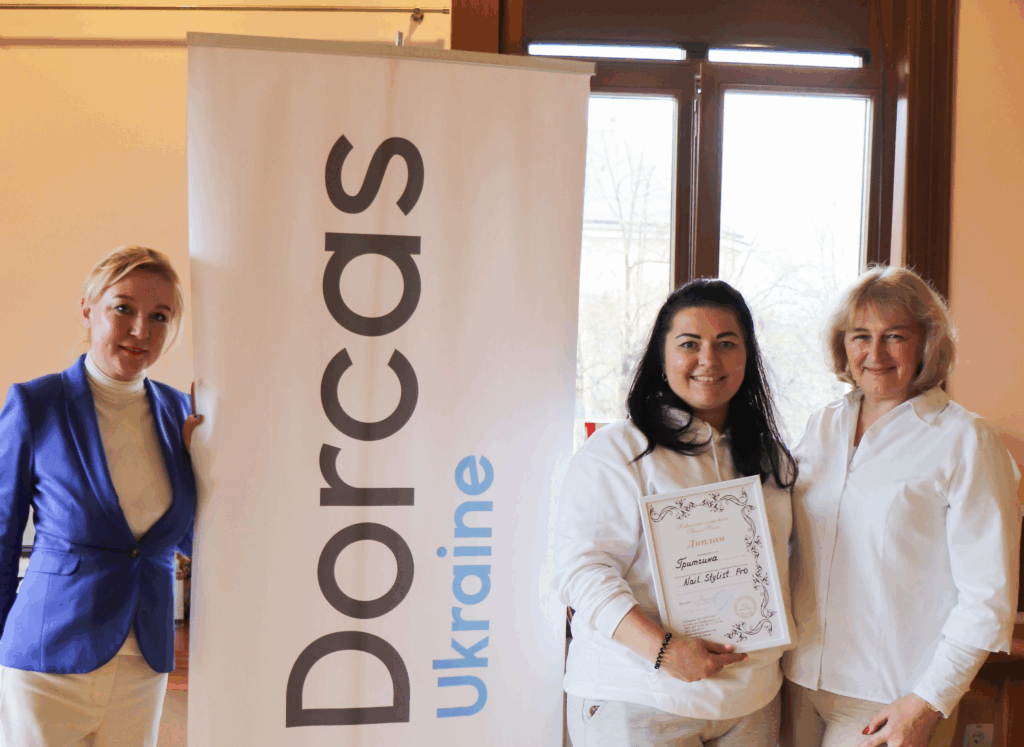
With the support from Dorcas, she completed a course in manicure and pedicure and is now actively working and accepting clients from the dormitory. Thanks to her new profession, she can now support herself and Ivan with her own earnings.
Lilia seized an opportunity that transformed challenging circumstances into a chance for growth.
In this 45th anniversary year, it’s the perfect time for Agnes Kroese, CEO of Dorcas, to look back at our roots and hear from Dirk Jan and Janneke Groot, the founders of Dorcas.
Rolling up our sleeves and offering support: that is what Dorcas stands for. But where does that determination come from? “We don’t need to save the whole world, but we can make a difference for that one person.”
When Janneke was in her early twenties, she longed for adventure and challenge—anything but an ordinary life. “I had prayed that I wouldn’t end up in a typical housewife routine,” she recalls. And indeed, life took a different turn. First, she and Dirk Jan dedicated themselves to the Christelijke Stichting voor Hulp aan Gewetensvervolgden (Christian Foundation for Aid to the Persecuted for their Beliefs) (CSHG). They provided support to persecuted Christians in countries like Romania and Russia, which were closed to the Gospel at that time. Later, they founded Dorcas.
A calling?
Dirk Jan had a gift for mobilising people. He travelled across the country to give presentations. “I did feel called to do this work, although I felt like Moses, who said: ‘Go to Aaron, he can do it much better.’ But I was really the one who had to do this.”
With combined efforts
From emergency aid operations to supporting older people, setting up thrift shops, and transporting goods: Dirk Jan and Janneke were involved every step of the way during the 45 years that Dorcas has existed.
“I loved it when the trucks we had loaded through combined efforts set off,” says Janneke. “I clearly remember the last transport very well—25 trucks driving in convoy under police escort. It was beautiful and gave such a sense of solidarity.”
Dirk Jan adds: “That’s exactly what the food campaign generated: a shared sense of purpose as we worked together to collect food items.”
On our knees
Leading a humanitarian organisation while raising a family of three young children was not easy. “Our whole life revolved around Dorcas. It was like having an extra child at our kitchen table.” A few years after founding Dorcas, Dirk Jan even left his paid job. How did they make the decision to live off donations? “On our knees.” By which they mean: through prayer.
Policy from the Bible
Prayer and their faith in Jesus Christ have always been Dirk Jan and Janneke’s source of strength. Dirk Jan based his first policy plan on Matthew 25, a passage that still guides Dorcas’s mission today.
“In that passage, Jesus says, ‘Whatever you did for one of the least of these brothers and sisters of mine, you did for me.’ You can hold on to that in everything, right?” Janneke agrees. “We don’t need to save the whole world, but we can make a difference for that one person.”
After an open and heartfelt conversation with the founders about Dorcas’ beginnings, growth, and challenges, the CEO reflects with admiration. “What started as a deep sense of calling and a desire to support people in need has grown into a professional organisation. Driven by our faith and a shared passion for justice, we are committed to making sustainable change in the lives of marginalised people and communities,” Agnes concludes.
The ongoing conflict in Ukraine has disrupted countless lives and displaced many families from their homes, forcing them to adapt to new and often challenging environments. For some, difficulties go beyond displacement as they navigate the complexities of caring for a relative with special needs. Raisa, a 71-year-old mother, and her husband Viktor, along with their son Vitalii, who has severe epilepsy, are facing these difficulties. Evicted from their home in Gulyaypol, the family now lives in a modest house in Zaporizhzhia and has had to adapt to a new reality. In the midst of these challenges, the support of volunteers through the Dorcas home visiting programme has been a lifeline. These volunteers provide both practical and emotional support.
At 31 years old, Vitalii is an adult, but to his mother he is still her child – and in need of her care. His epileptic seizures, which take hold of his body unexpectedly, are a constant challenge. Before the conflict, their lives in Gulyaypole were stable. Vitalii had access to the local services and support he needed, and Raisa, despite her own health issues, was able to provide him with the physical care he needed. However, the conflict forced the family to relocate.
Initially, they stayed with relatives, but with eight people in a single room, they soon realised that they needed to find their own accommodation. They found an abandoned house, and although it required a lot of work, it offered the promise of more space and a sense of stability. ‘After we made it a bit more comfortable, I started to feel at home,’ Raisa recalls.
Impact of volunteer support
In the midst of these challenges, a valuable source of support was Angela, a volunteer with the Dorcas home visiting programme, funded by the UHF. Through this initiative, Vitalii has been provided with an orthopaedic bed, which has greatly improved his comfort and quality of life. Angela also assists by delivering hygiene kits and supporting the family to connect with essential services, including legal support. Raisa and Viktor greatly appreciate this support and consider Angela a member of their family.
One of the family’s current challenges is getting Vitalii out into the fresh air. ‘We have made progress,’ Raisa explains, ‘but we struggle to get Vitalii into the yard because of my physical condition and Viktor’s sore back. We’re hoping to find a stretcher to make it easier.’
Raisa’s greatest wish is to be able to give her son the care he needs. The support they receive from the home visiting programme gives them a sense of hope and dignity, despite the challenges.