Mona’s life in Lebanon is a constant balancing act, with one urgent need always competing with another. Both her parents have passed away, and most of her eleven siblings are married and live elsewhere. She now lives with two of her brothers. One has a disability and relies on her for all his care needs, while the other is older and unable to find work.
Her caring responsibilities prevent her from taking a job. The family depends on financial support from a younger brother and assistance from Dorcas Lebanon.
Her brother with a disability needs physiotherapy, but the family cannot afford it. Food is another daily struggle. Meat has almost disappeared from their meals, fruit is unaffordable and sometimes they can only buy vegetables one at a time. Even cooking gas has become a major expense, making it difficult to provide nutritious meals.
Since receiving support from Dorcas, however, some of this pressure has eased. Mona now receives a hot meal every week. The support means more to her than the food itself. She recalls craving baked kibbeh, and having it delivered to her door that same week. She also remembers receiving a pizza that felt more like a surprise than assistance.
‘It feels like a mother’s cooking, not food from an organisation,’ she says. Having lost her own mother, she finds this personal touch particularly comforting. The meals also free up money for other essential expenses.
Living with loss
Mona has experienced significant loss. Her sister, whom she describes as ‘the family’s backbone’, passed away during the years of conflict. More recently, she also lost her mother and a young niece. Despite the many challenges she faces, Mona values the support she receives from Dorcas.
‘You never feel needy,’ she says. ‘You keep your dignity.’
The Dorcas staff ask how she is doing and invite her to take part in activities. These personal connections make the centre feel more like a family than an institution. Attending a course also helped Mona recognise her own value and rebuild her confidence, encouraging her to continue caring for others.
In Yemen, where violence continues to displace families, sustaining a livelihood can make a difference beyond one household. In Al-Kadhiyah village in Taiz Governorate, farmer Siddiq experience shows how.
Building resilience amid displacement
Shifting violence is forcing families across Yemen, including in rural Taiz, to leave their homes and farmland in search of safety. Many are seeking refuge in nearby communities, but they may be forced to move again as the conflict continues to spread.
With the support of Dorcas and Pharus Foundation, which provided him with agricultural training and livelihood assistance, Siddiq has been able to continue farming despite the insecurity and market disruptions in his area. This has enabled him to provide his family with food and maintain some stability amid the uncertainty surrounding his community. When three families fleeing violence arrived with no shelter or resources, he opened his family home to them. His generosity provided them with shelter at a time when finding a safe place to stay was an immediate concern.
From household resilience to community solidarity
Yemen remains in the grip of one of the world’s most severe humanitarian crises. Years of conflict and economic instability have left millions struggling to meet their basic needs, while the latest escalation of violence has added to the pressure.
‘The ongoing humanitarian crisis in Yemen is one of the worst in the world. The country has been ravaged by conflict and famine for so many years. Now that fighting broke out again last month and the population has suffered yet another blow, we cannot do anything other than take action for these families who had to flee at a moment’s notice,’ says Dorcas CEO Agnes Kroese.
By sustaining his own family’s livelihood, Siddiq has also been able to offer three displaced families a place to stay, showing how resilience can create room for solidarity even in times of crisis.
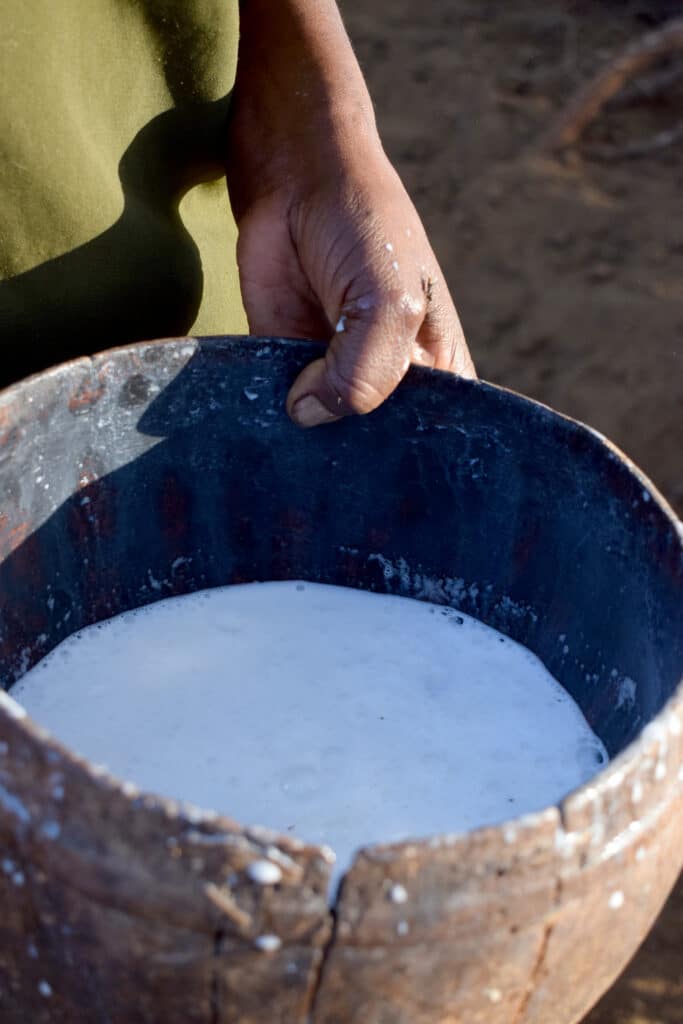
For Momina, chair of Hilkas Milk Cooperative in Moyale, Ethiopia, participating in the camel milk value chain has meant more than earning an income. It has brought structure, trust and dignity. ‘The most important change is dignity. I moved from dependence to leadership,’ she says.
Momina’s story reflects a wider lesson from Dorcas’ recent publication, Building Reliable Value Chains: Lessons from Dorcas’ multi-country experience. Based on an independent evaluation of five value chains in Eastern Africa, the report shows that producers benefit most when the systems around them are reliable: when payments are timely, governance is trusted, quality systems function and market linkages are secure. In Moyale, near Ethiopia’s border with Kenya, these principles are reflected in the daily work of Hilkas Milk Cooperative.
Momina lives in an area affected by drought, conflict and border insecurity. Before the cooperative became a source of stability, her family’s livelihood depended almost entirely on her husband’s income. ‘If my husband earned money, we survived. If he didn’t, we struggled,’ she says. Food, school fees and medicine all depended on one person, leaving her with a constant fear that she would not be able to protect her children if something happened.
When demand is not enough
Before joining the cooperative, Momina’s life was centred on her household. She prepared food, fetched water, cared for her children and supported her husband, but she had no personal income and limited opportunities beyond the home. Camel milk had value, but the way it was sold made benefits uncertain. Milk was sold individually, without coordination or knowledge of quality standards and prices. Sometimes it spoiled. Sometimes buyers took advantage of the women. ‘We did not know our rights,’ Momina says.
This reflects one of the central findings in Dorcas’ value chain report: demand is rarely the only challenge. Long-term results often depend on whether supply systems, transaction processes and governance arrangements work consistently. For Momina and other women in Moyale, working together through Hilkas Milk Cooperative offered a different path. But during a period of violent border conflict, the cooperative’s equipment, including refrigerators and related tools, was destroyed by fire. ‘Everything burned. We lost what we had built over years,’ Momina recalls. The loss left many women discouraged, and Momina feared that her children’s future would never improve.
Rebuilding reliability through structure and trust
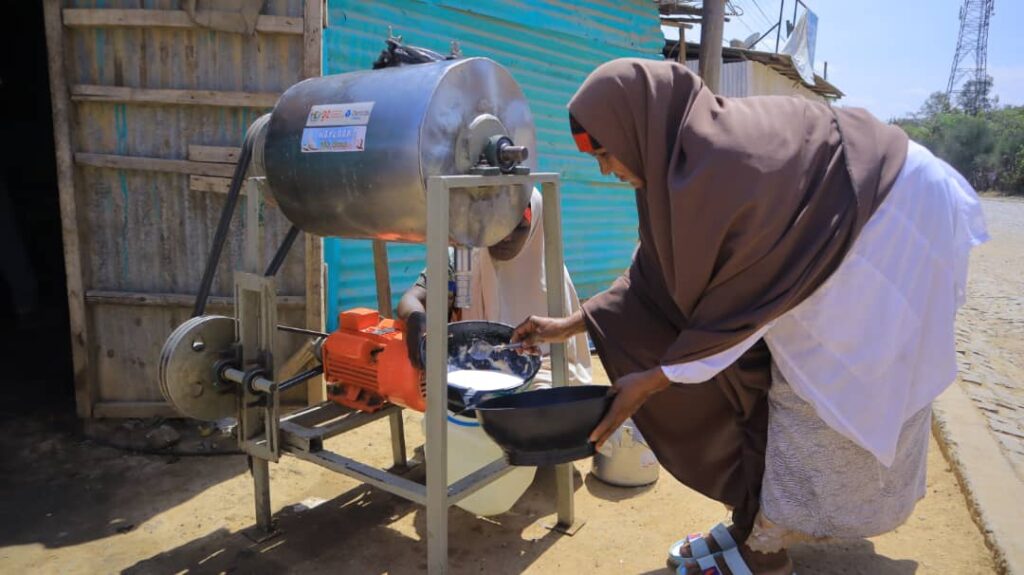
Dorcas supported the cooperative after the destruction. According to Momina, the organisation came not only with equipment, but also with encouragement to rebuild. The women received refrigerators, lactometers, protective equipment and training in cooperation, financial management, recordkeeping and transparent decision-making. In practice, this meant better quality control, clearer records and stronger governance. Momina also travelled to Addis Ababa, Nairobi and Uganda for training, her first time leaving her area, where she learned more about leadership and how strong cooperatives function.
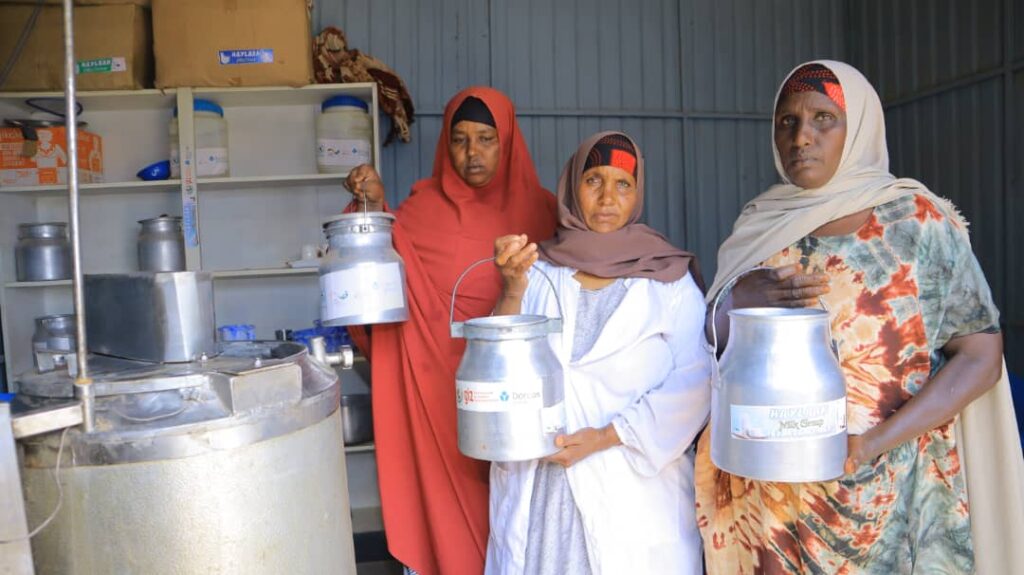
Today, Momina is the chair of Hilkas Milk Cooperative, which has 35 members. Every Saturday, the members meet to review records, save money and deposit funds at the bank. The cooperative also coordinates with ten milk collection centres. ‘Before, there was no structure. Now there is discipline, planning and trust,’ Momina says. This way of working mirrors one of the report’s key lessons: transparent leadership, clear rules and trusted systems do not only improve commercial performance; they also influence who benefits.
For Momina personally, that shift has been profound. She has learned to speak without fear, contribute to decisions and lead with confidence. Her experience also shows why inclusion in value chains needs to be built into the way systems work. Formal cooperative structures, transparent decision-making and direct participation have enabled women like Momina to gain income, influence and recognition.
A stronger future built on dependable systems
The impact reaches beyond the cooperative. Momina’s income now supports her family. She has built her own house, bought basic household items and, most importantly, is able to send her children to school. The regular income and savings have also brought greater security. ‘Even when challenges come, we plan together. We save. We do not panic like before,’ she says.
Looking ahead, Momina hopes the cooperative will grow into a larger production centre that can support more families and contribute to the wider district. Her story brings Dorcas’ value chain findings to life: value chains work best when producers can depend on the systems around them. For Momina, that reliability has meant dignity, stability and leadership. ‘Before Dorcas, I waited for life to happen to me. Now I lead my life and others follow.’
Read the report: building reliable value chains
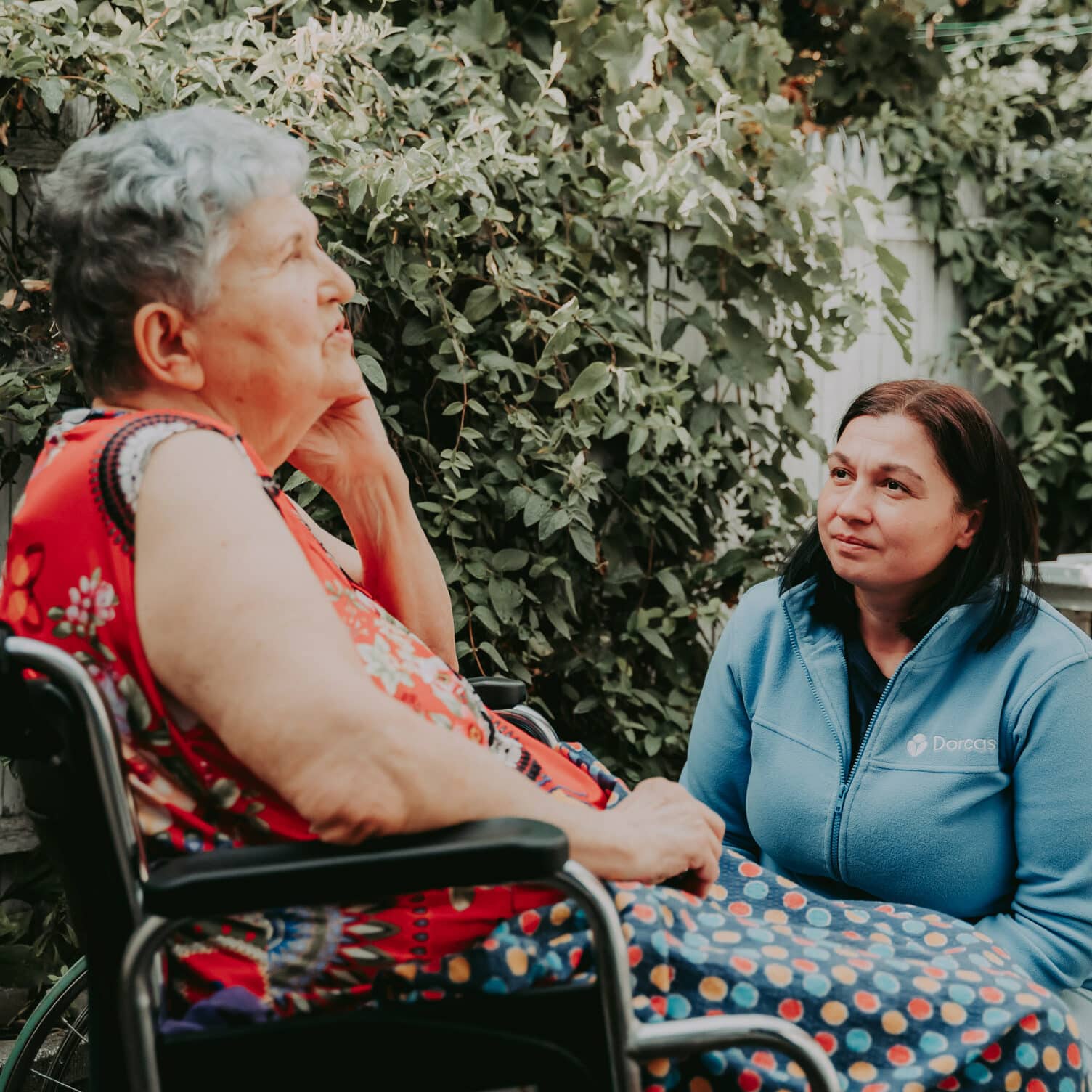
Piroska has been part of the Community Safety Nets (CSN) programme in Romania since 2012. After losing parts of both legs in a train accident, everyday life became a significant challenge. Living on a small pension, she struggled to meet her needs and manage daily tasks. Alongside practical support, she needed something just as important: people she could rely on.
Over the years, the CSN programme of Dorcas Romania has supported Piroska in making her home more accessible and meeting essential needs. She has received monthly food packages, medication and hygiene products, as well as support with utility bills and minor repairs. Her bathroom door was widened so she could use it with her wheelchair, and cleaning assistance was arranged through local authority services.
Mobility has also been an important part of maintaining her independence. Prosthetic legs gave her greater freedom of movement for a period, and a small electric mobility vehicle made it easier for her to get around.
More than practical support
Today, complications related to diabetes mean Piroska can no longer use her prosthetic legs, and moving around has become difficult again. Yet after more than a decade in the programme, she knows there are people she can turn to. When she has a problem, feels unwell or is admitted to hospital, she calls the people she has come to trust through the Dorcas team.
This sense of connection is strengthened through having regular contact. Volunteers make visits to Piroska and also come to see her on her birthday. These visits have become an important part of her life.
A community that stays close
Community-based support is about more than responding to practical needs. Through Community Safety Nets, Dorcas works with local actors to strengthen the support around older people and connect them with the assistance and relationships they need to remain part of their communities.
For Piroska, that support has made life safer and more dignified. It has also given her something that cannot be measured in material terms: the reassurance that she is seen, heard and valued.
Her story shows why the rights and dignity of older people are closely connected to community life. Accessible living conditions and support with essential needs matter, but so do relationships, trust and the reassurance that someone will be there when needed. When communities stay connected to older people, they can ensure that no one has to face life’s challenges alone.
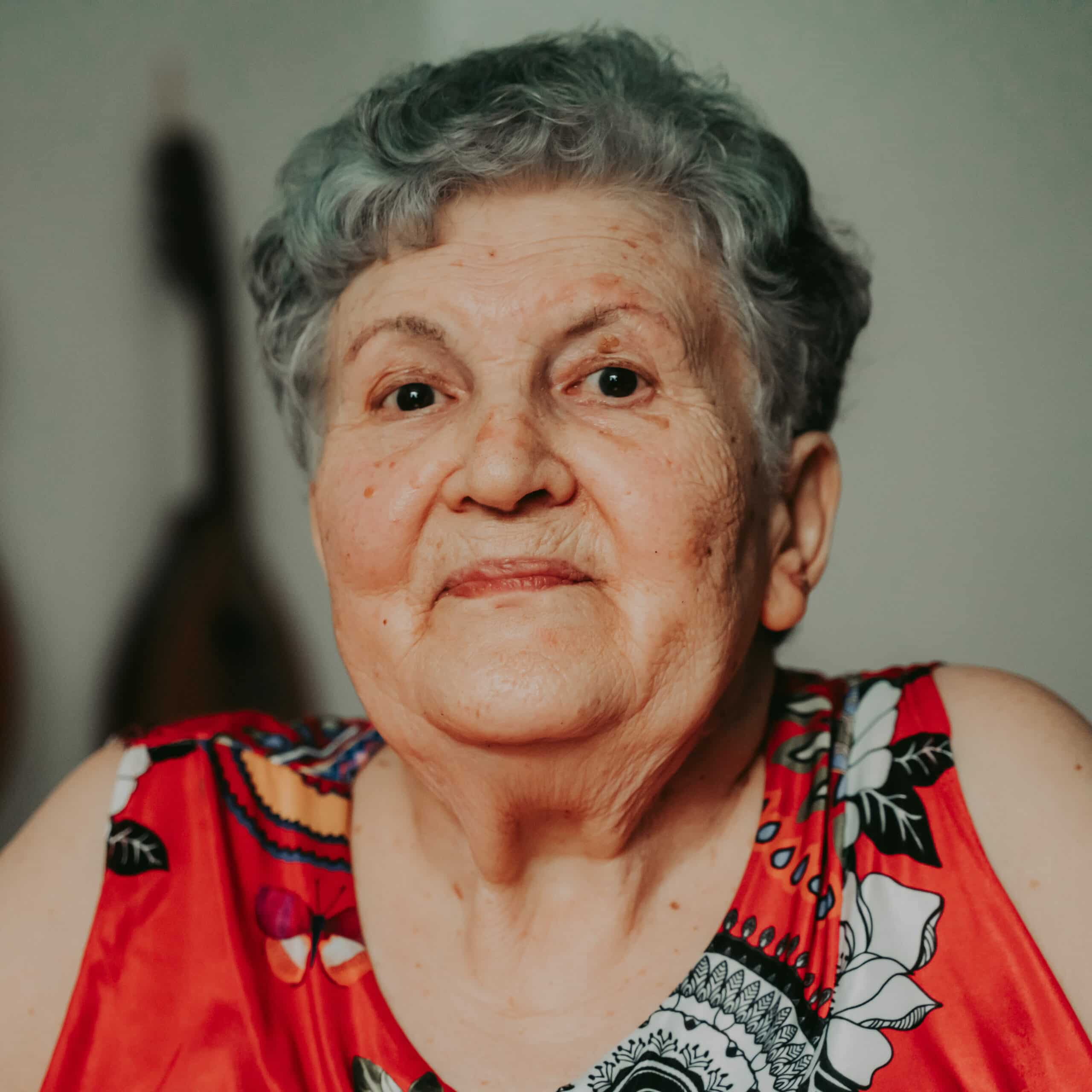
As part of Dorcas’ 2026 International Day of Older Persons campaign, ‘Seen and valued – rights and dignity of older people’, we are highlighting the rights, dignity and contributions of older people and the value they bring to their communities.
Growing older should never mean being left behind. Yet many older people face barriers that make it difficult to live with dignity, stay connected to their communities and meet their everyday needs.
When access to social protection, healthcare and other essential services is limited, and family support is not available, older people can be left with few options. But dignity is about more than material support. It is also about being seen and valued, remaining connected to others and having opportunities to contribute to their own wellbeing.
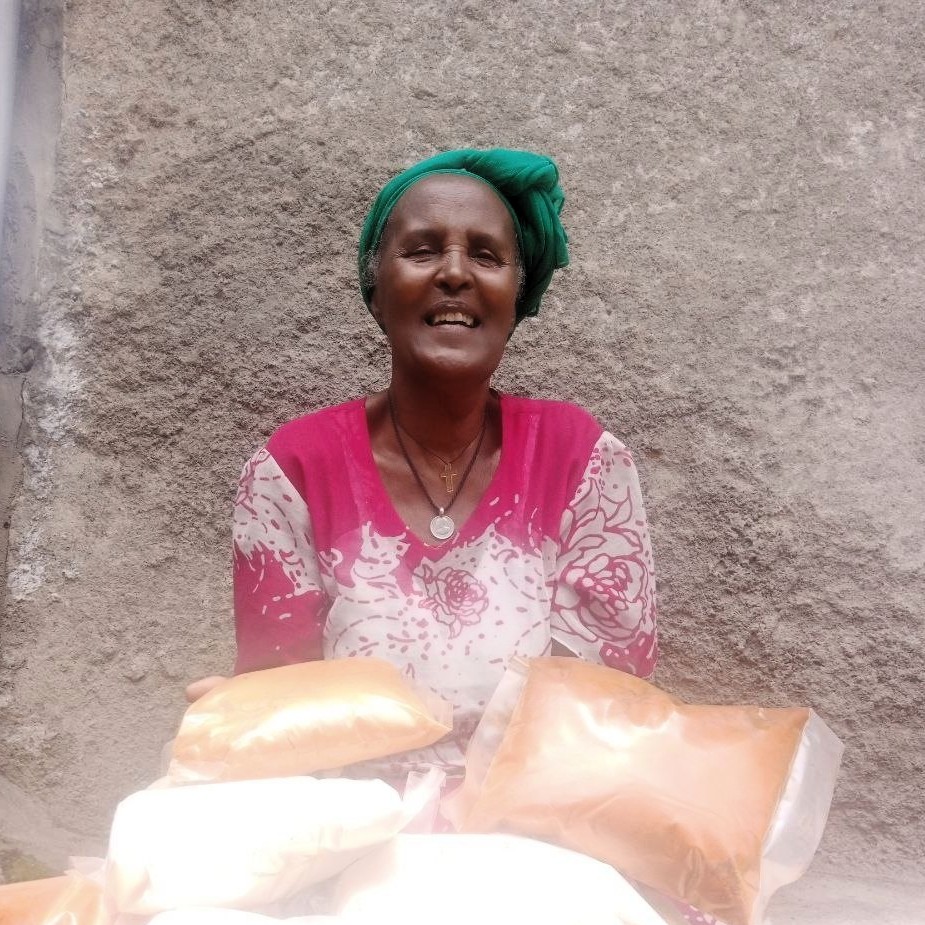
In Addis Ababa, Ethiopia, Mulu Ayal has experienced these challenges herself. Without adequate support, she struggled to meet her household’s basic needs. The Woreda Women, Children and Social Affairs Office recognised her situation and referred her to Dorcas Ethiopia, where she joined a programme for older people facing poverty and exclusion.
Essential support
Through the project, Mulu Ayal has received food, hygiene products and medical care, support her to manage everyday life and maintain her health and wellbeing over the past three years.
The project also enabled Mulu Ayal to build a more secure livelihood. After receiving basic business and entrepreneurship training, she was given start-up capital to launch a small home-based business selling traditional spices and dried food products.
The income she earns now helps cover household expenses and has brought greater stability to her life.
As part of Dorcas’ 2026 International Day of Older Persons campaign, ‘Seen and valued – rights and dignity of older people’, we are highlighting the rights, dignity and contributions of older people and the value they bring to their communities.
In Moldova, many older people are living on limited pensions, with reduced mobility and few opportunities to stay connected. For those living alone or with little family support, daily life can become quiet and isolated.
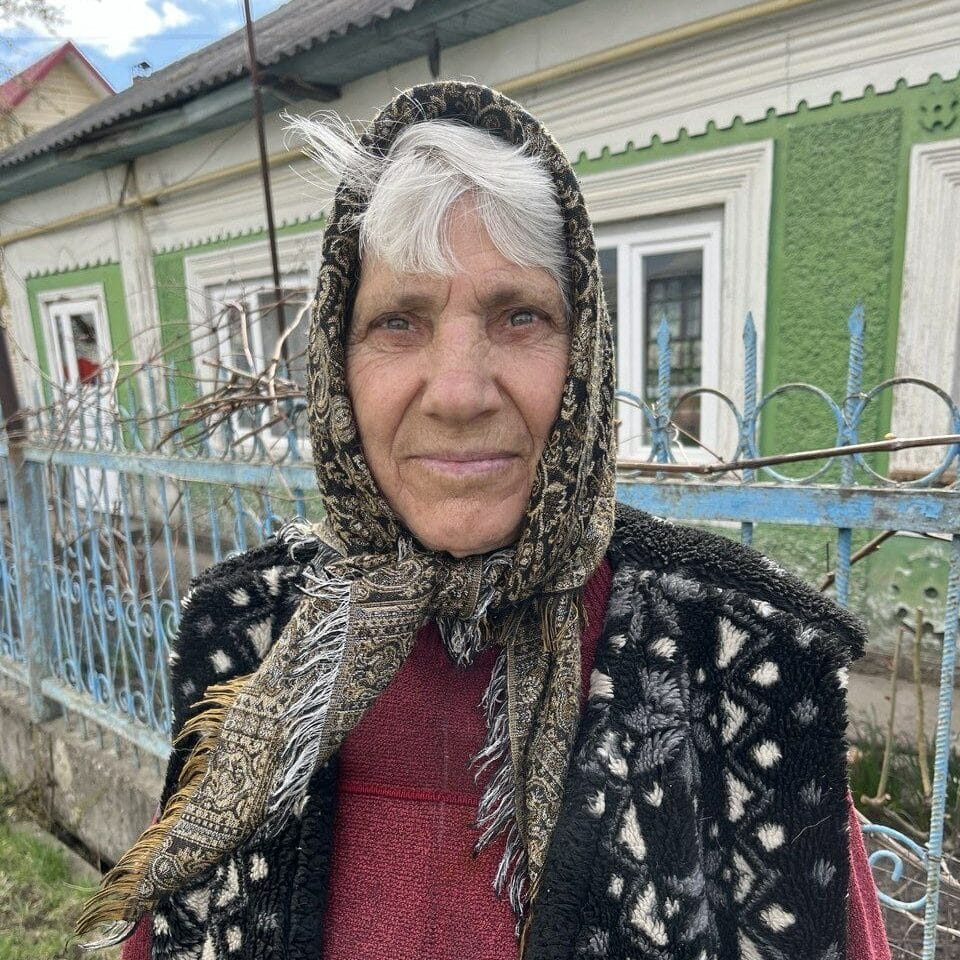
Elena, an older woman living alone in Moldova, knew this reality well. But through Dorcas’ Community Safety Nets (CSNs), her story began to change, showing how regular contact, community life and practical support can support older people to feel seen, valued and connected again.
A life with limited support
Elena, a pensioner in Moldova, knows what it means to have limited support around her. Living on a modest income, she lives alone and has no children. Relatives, including several nieces and nephews, visit only occasionally. A neighbour has become an important source of companionship, but before Elena joined the project, much of her daily life was marked by solitude.
Finding friendship and hope
Joining the CSN-project of Dorcas Moldova gave Elena new opportunities to connect with others. Alongside practical support, she received visits from project staff and took part in community celebrations and activities with other participants.
She remembers the moments that brought particular joy: Christmas gifts, financial support that helped her buy firewood for the winter, visits from project staff and community gatherings where she could spend time with others. For Elena, these moments were about more than practical support. They gave her a sense of connection and reminded her that she was not forgotten.
Through spending time with other participants, Elena formed new friendships. They shared experiences, spent time together and supported one another. Over almost 20 years of implementation in the community, the project has helped strengthen social connections among older people who might otherwise experience isolation.
Elena: ‘For me, this project does not only mean I support. It means that I am not forgotten. It means that someone, somewhere, thinks of me and reaches out a hand. The gifts, the visits, the kind words – they have all brought light into my soul. They made me feel joy and hope again.’
Growing older with dignity
Elena hopes to see wider change for pensioners in Moldova, including fairer pensions, decent living conditions and the opportunity to grow older in peace and dignity.
Elena’s story highlights that protecting the rights and dignity of older people also means ensuring they can participate in community life and maintain meaningful connections with others. Practical support matters, but so do regular visits, a sense of belonging and opportunities to stay connected. Being seen and valued means knowing that you still have a place in your community.
As part of Dorcas’ 2026 International Day of Older Persons campaign, ‘Seen and valued – rights and dignity of older people’, we are highlighting the rights, dignity and contributions of older people and the value they bring to their communities.
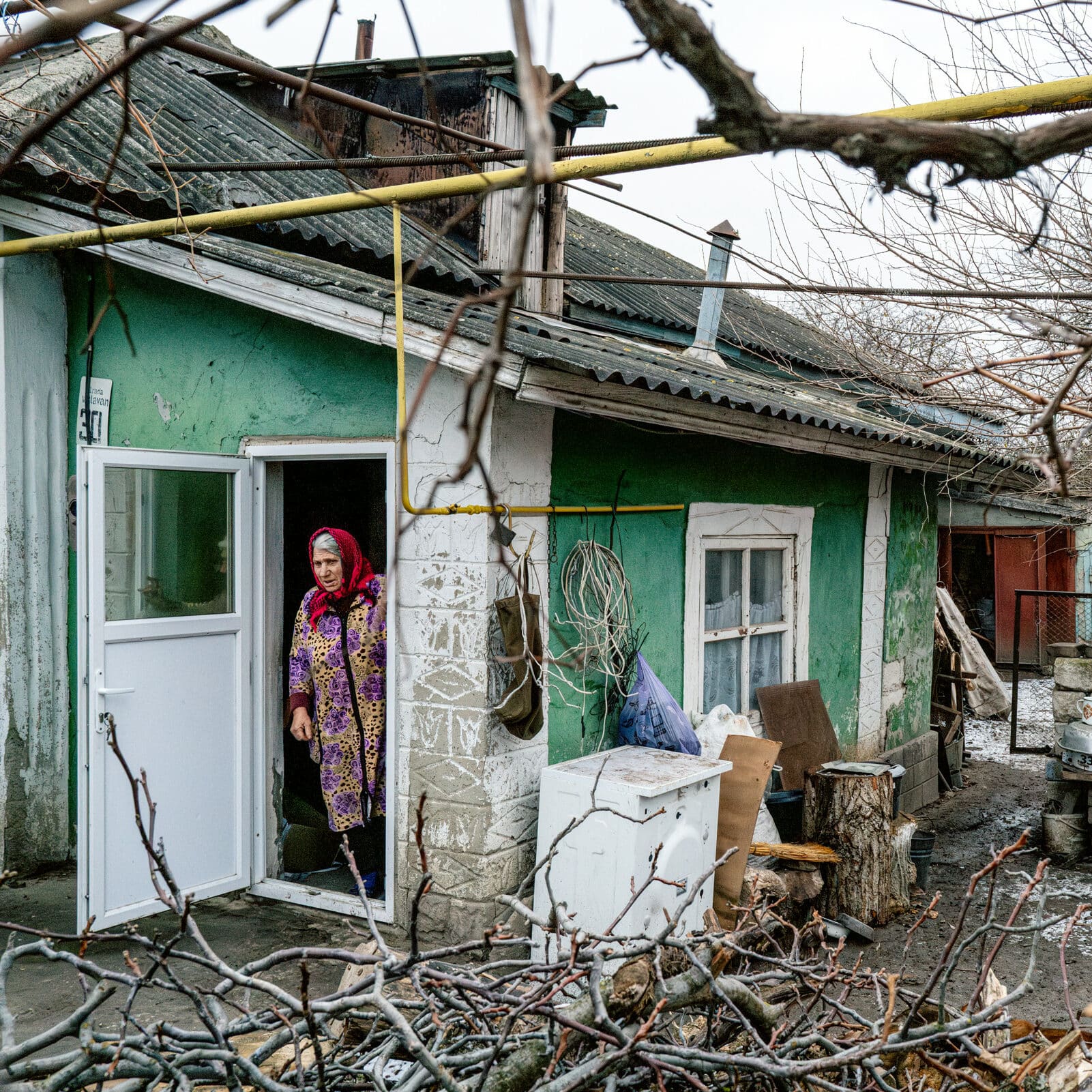
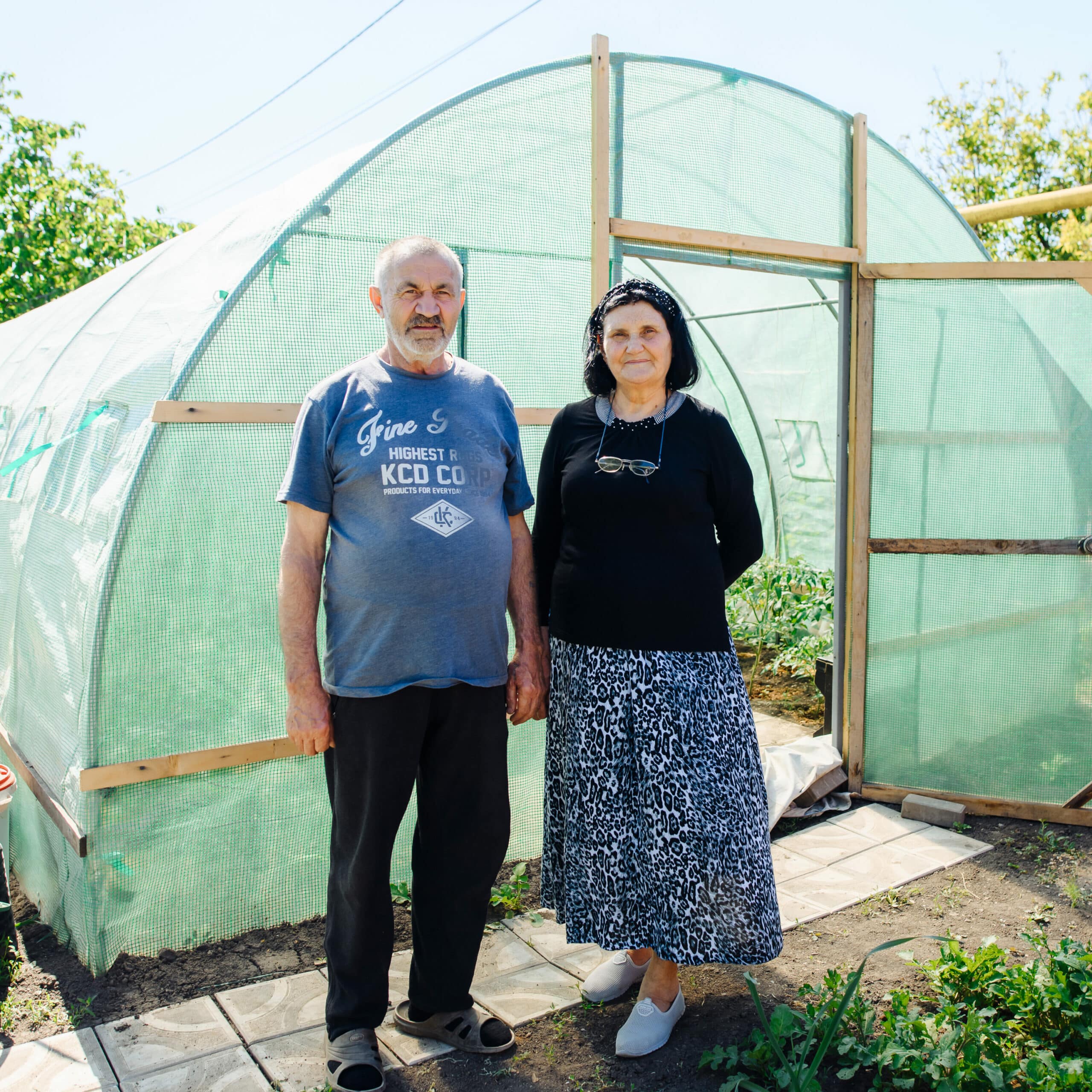
Ecaterina has been part of a Dorcas programme in Moldova since 2018. She lives with her husband, one of her daughters and her granddaughter. Her daughter moved in with them after her husband passed away, while her other daughter lives with her own family.
Ecaterina manages household expenses on a pension, which is not always easy. Her husband continued to work occasionally after retirement, while Ecaterina worked as a cleaner at the church.
Starting something of their own
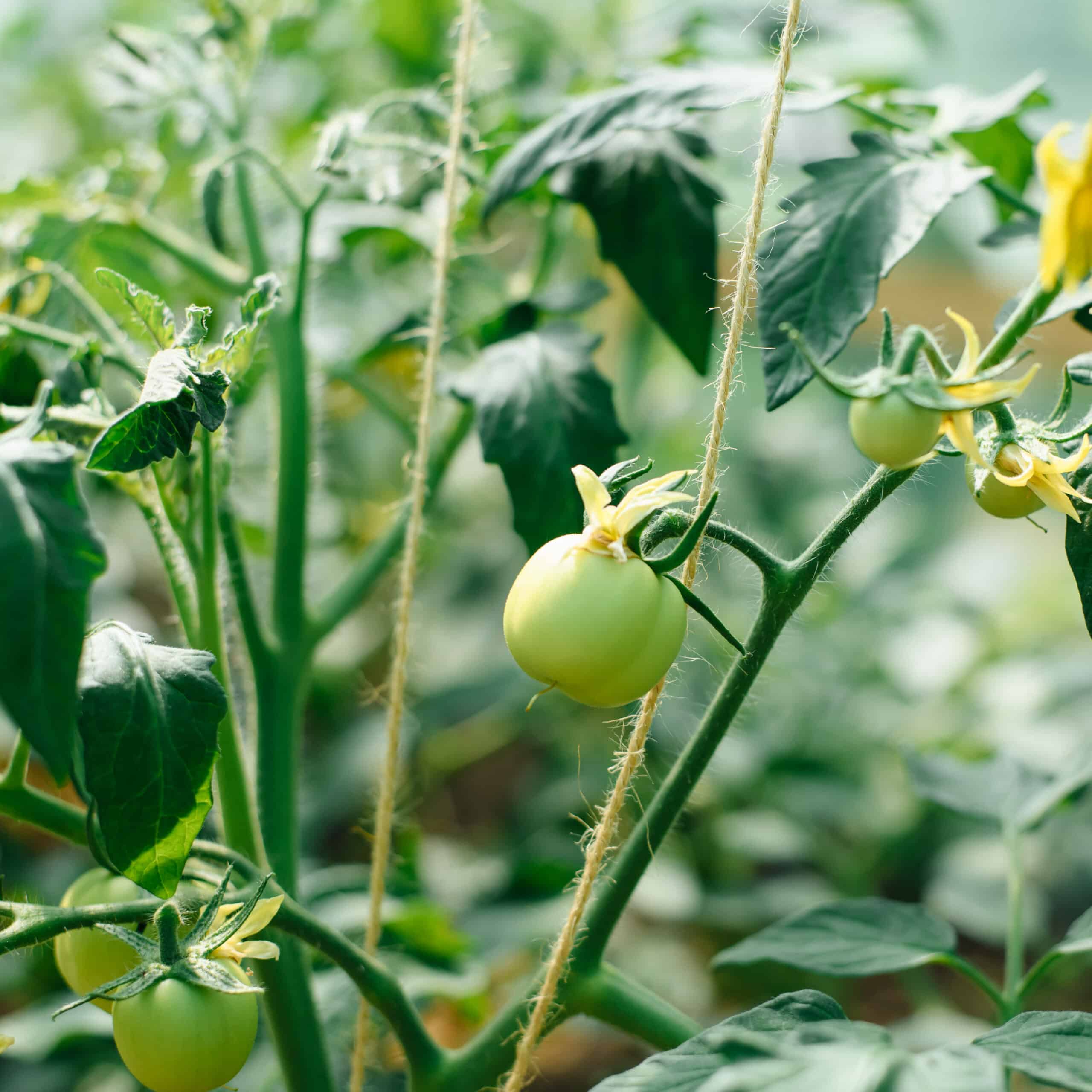
In 2018, Ecaterina became involved in a Dorcas income-generating activity (IGA) project.
‘We decided to start this small activity so that we could grow vegetables and herbs for our family, and sometimes sell some of what we produce,’ Ecaterina explains.
The project has become part of Ecaterina’s everyday life, alongside other activities she takes part in. She also receives food and hygiene products through the project.
‘I have felt a lot of support through this project. I take part in different activities, and I have wonderful opportunities to be useful to others. The greenhouse provides products for our family and gives us an opportunity to stay involved.’
The experience encouraged Ecaterina and her family to take the next step themselves.
‘We liked this activity so much that afterwards we decided to buy another greenhouse with the money we had saved,’ she says.
More than material support
For Ecaterina, the project is also a place where people come together. She has seen changes in how participants relate to one another.
‘People who are part of this project feel more encouraged, safer and socialise more.’
Looking ahead, Ecaterina hopes to stay healthy and continue caring for her family and their garden.
‘I pray that God will give us health, so that we can continue to work and take care of ourselves, our family and our garden.’
Ecaterina’s experience is one example of Dorcas’ wider work with older people. Through Community Safety Nets, Dorcas works with older people and their communities to strengthen social connections, improve access to support and create opportunities for older people to remain active and participate in community life.
As part of Dorcas’ 2026 International Day of Older Persons campaign, ‘Seen and valued – rights and dignity of older people’, we are highlighting the rights, dignity and contributions of older people and the value they bring to their communities.
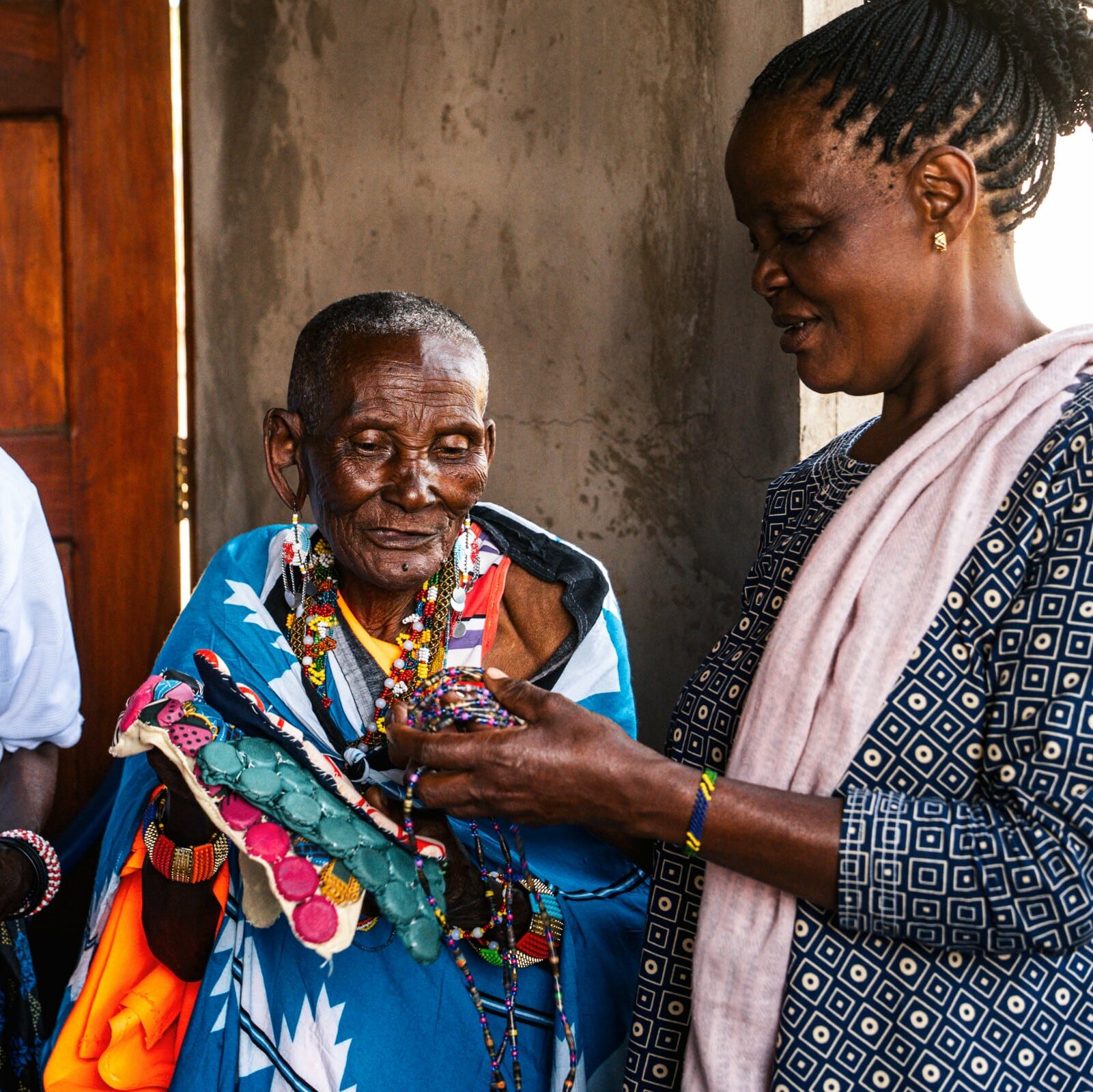
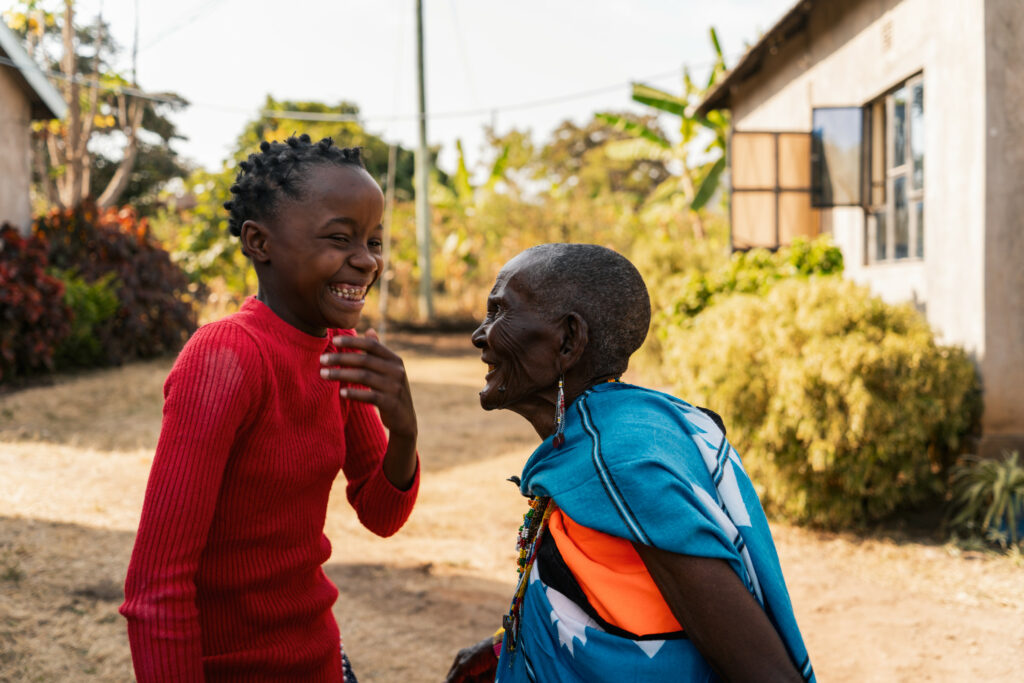
Maria (78) lives in rural Tanzania and is solely responsible for caring for her seven-year-old granddaughter, Queenie. For years, they faced significant challenges, including limited access to food, adequate clothing and the resources needed to maintain their home. Since joining Dorcas’ Community Safety Net programme, Maria has gained access to support that has strengthened her wellbeing, resilience and ability to care for her granddaughter.
Maria lives in an area where the dry climate contributes to food insecurity. Her eleven children and seventeen grandchildren live across the region, but Queenie is the grandchild who lives with her. This responsibility placed additional pressure on Maria, particularly given her limited resources. When a Dorcas staff member visited her village and assessed her situation, Maria was included in the programme.
Through the community safety net programme, Maria receives support that addresses both her immediate needs and longer-term wellbeing. She received essential items, including blankets, food, clothing and a mattress. Volunteers regularly visit her to support her with household tasks such as cleaning and laundry. Equally important is the regular social contact and personal attention she receives, helping to reduce isolation and strengthen her connection with the community.
Protection through inclusion, support and empowerment
Maria’s story is one example of how Dorcas supports people facing vulnerability to strengthen their wellbeing, resilience and ability to participate in their communities. Across both humanitarian and development contexts, Dorcas’ protection work focuses on addressing risks such as neglect, exclusion, abuse and discrimination, while promoting dignity, access to support and social inclusion. In Tanzania, older people may face specific vulnerabilities linked to poverty, loneliness, stigmatisation and limited access to support.
‘Protection is about creating a safe environment in which people can live with dignity, free from neglect, exclusion, abuse and discrimination,’ says Sjoerd Vos, Thematic Expert Social Empowerment and Protection at Dorcas. ‘By bringing older people together in groups and providing access to psychosocial support, life skills, income-generating activities and social safety nets, these projects strengthen their self-confidence, resilience and social position. In this way, we contribute to their protection and wellbeing, enabling them to participate actively in their communities and look to the future with greater confidence.’
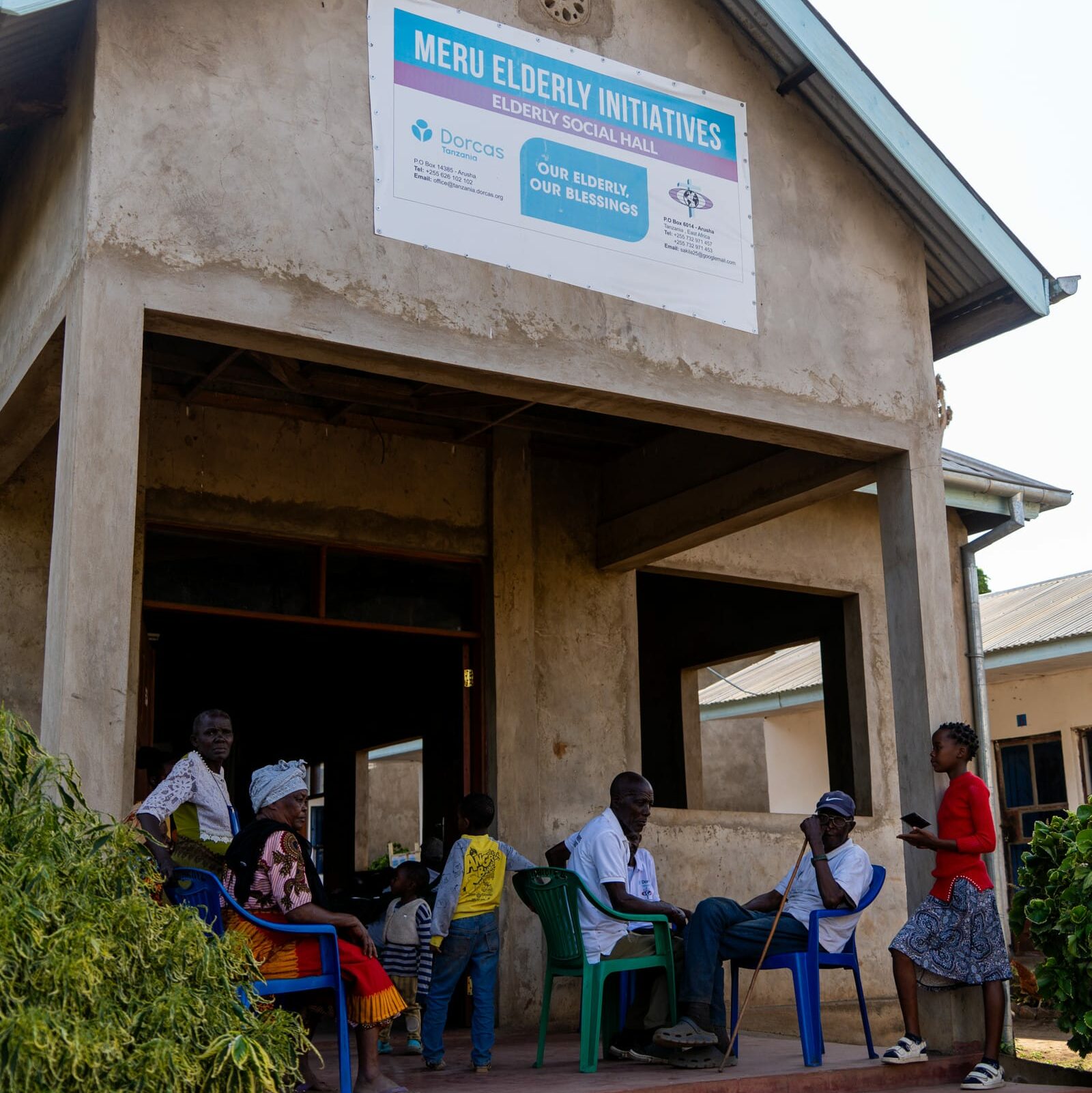
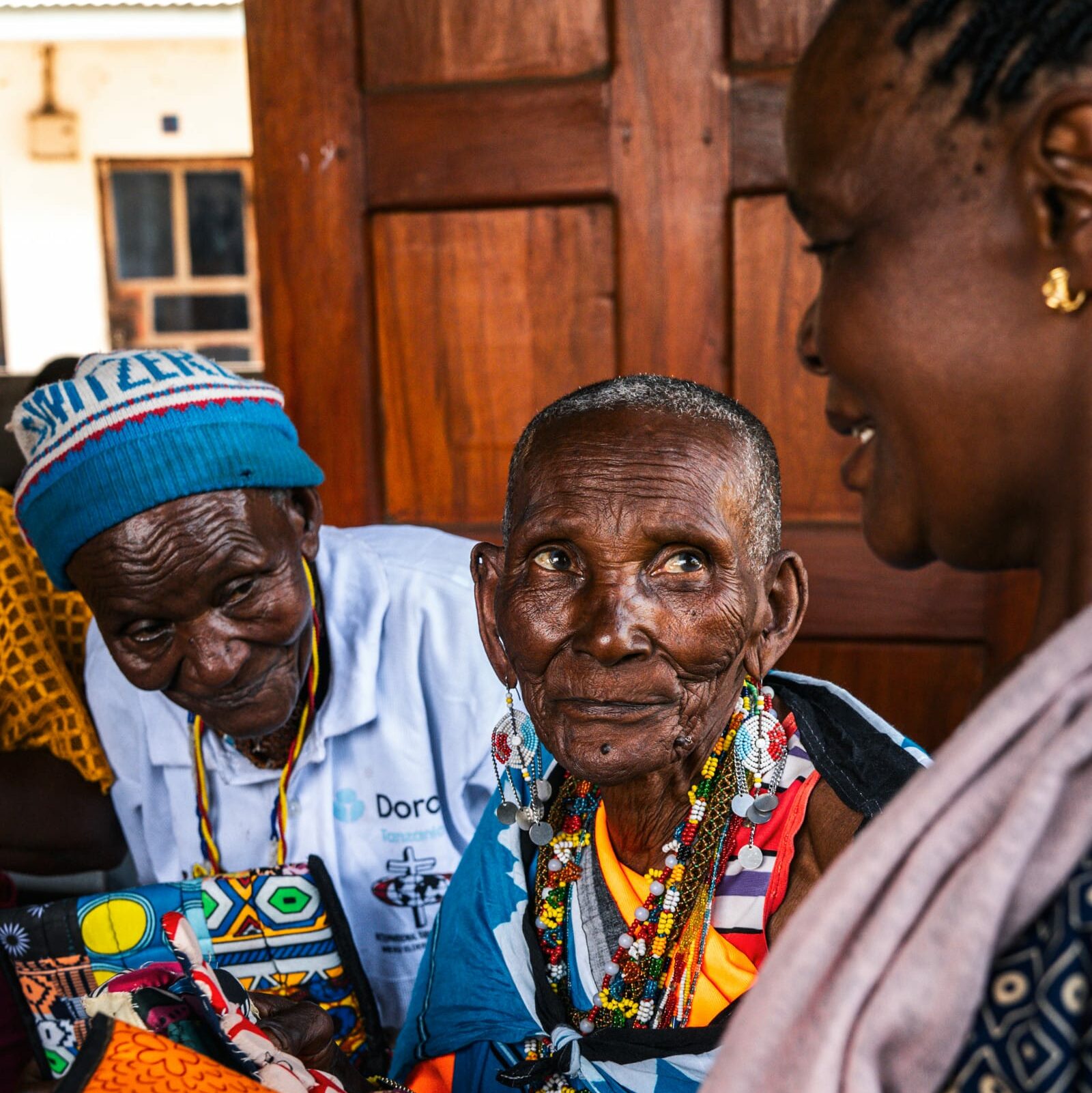
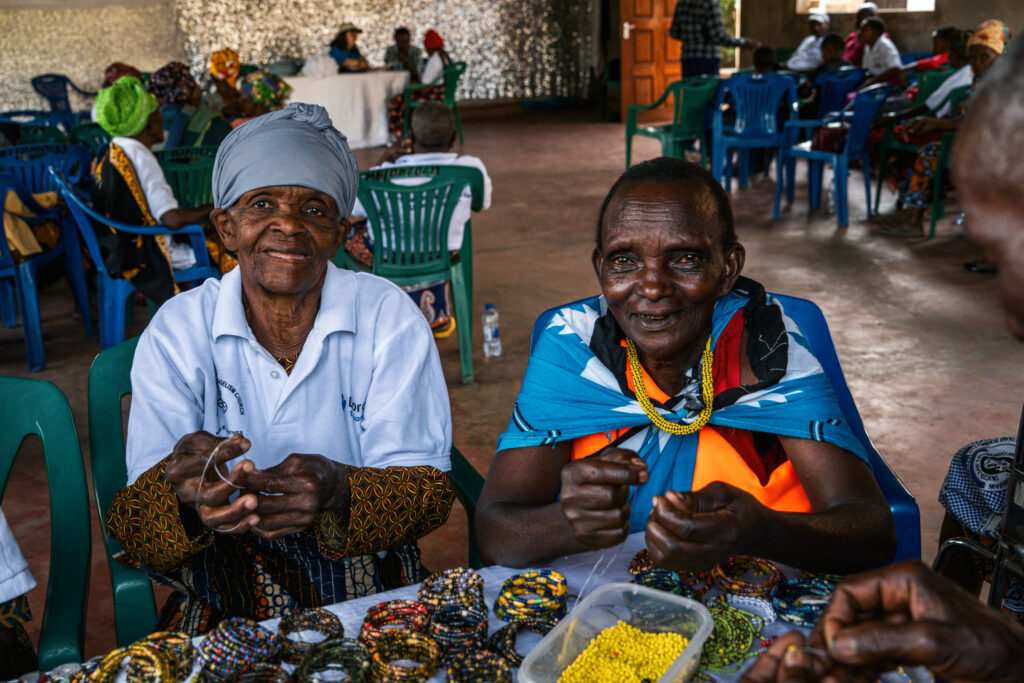
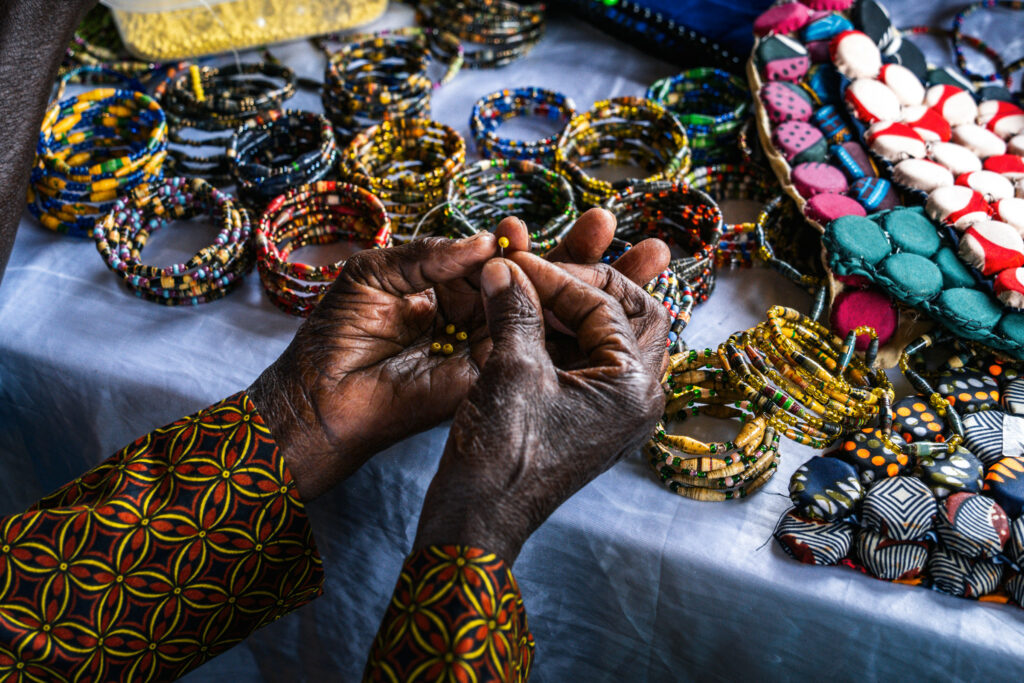
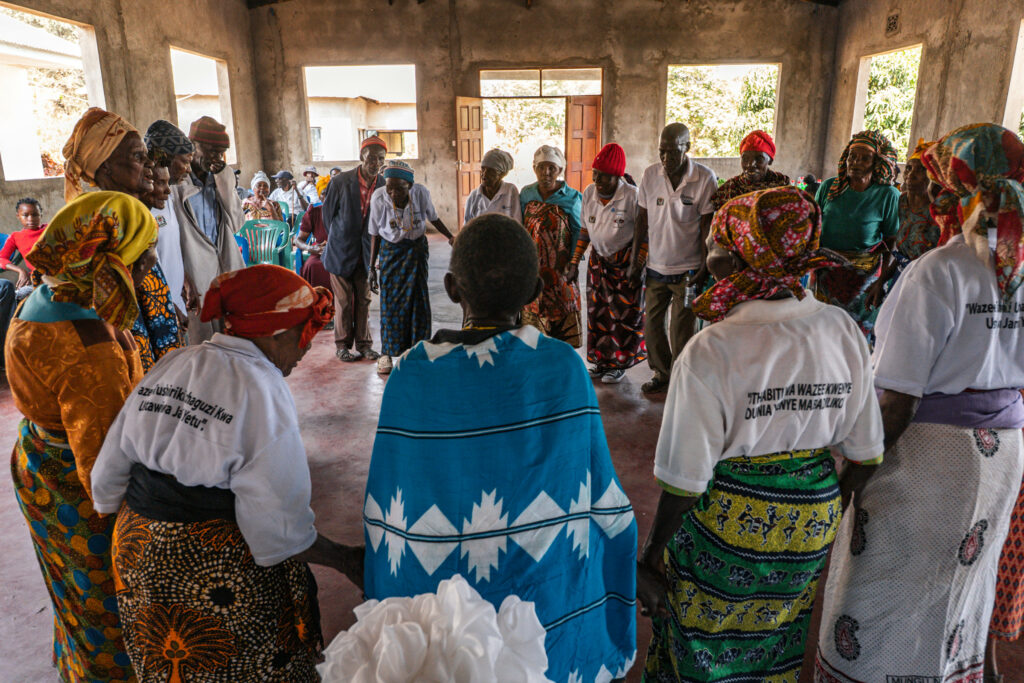
As part of the programme, Maria was invited to attend activities at a local older people’s centre. Here, she meets other older people, participates in traditional dances, creates jewellery, shares her work with others and discusses experiences from her life. These activities strengthen social connections and provide opportunities for participation and mutual support.
Maria also participated in an organised outing with the group. ‘We visited a safari park. For the first time in my life, I saw giraffes, elephants and zebras up close. It was a day I’ll never forget.’
Strengthening livelihoods and community resilience
The programme also supports Maria in developing skills to strengthen her economic resilience. She learned how to grow vegetables, care for chickens and goats, and sell crops, eggs and milk to generate an income.
‘We have more food and a greater variety to eat because of the milk, eggs and vegetables. I feel much healthier.’
The programme also involves younger generations. Queenie participates in activities with other children, where they learn how they can support and care for their grandparents. She has seen the positive changes in her grandmother.
‘My grandmother smiles again and has so much more energy.’
Maria reflects on the difference the programme has made in her life. ‘Life used to be very hard, but now I feel hopeful again. The programme has given me support, friendships and opportunities to learn. I feel supported by my community and better able to face the future.’
Through its community safety net programme, Dorcas supports older people facing vulnerability by strengthening access to social support, practical assistance, skills development and community networks. This integrated approach contributes to the protection, dignity and resilience of older people.
In rural Tanzania, the Participatory Integrated Planning (PIP) approach has supported families in transforming their farms into sustainable sources of food and income. For William, a pastor, his wife Elizabeth and their five children, the programme has brought about lasting change. They have changed their farming methods and improved their household’s financial security. They have also become a source of inspiration for other farmers in the community. Today, they are building a stronger future for their family and others.
William and Elizabeth live with their family in Chemba, Tanzania. They own a small plot of land where they grow vegetables and keep livestock. Despite their hard work, their production was barely enough to sustain the household and they often had to spend their limited resources on buying extra food.
Before joining the project, William farmed in the same way as many others in his community: growing a single crop, keeping a small number of animals and doing little long-term planning. The farm generated too little income to support the family adequately. William explains:
‘My wife was the first to participate in the PIP programme. She eventually persuaded me to join as well. The training provided by Dorcas enabled us to expand our livestock and purchase more goats. Overall, the improvements have been remarkable, and Dorcas played a key role in making that possible.’
The training introduced William and Elizabeth to a mixed farming approach. Rather than relying on a single vegetable crop, they learned the value of diversification and how different crops can strengthen both food security and income generation. They also learned how to work with improved goat breeds that produce more milk and meat, and how to make the most productive use of a small plot of land.
‘When we grew only one type of vegetable, it was never enough,’ William explains. ‘The training showed us the importance of diversification. We now grow a variety of crops and manage livestock more effectively. That has brought significant benefits to our family.’
The impact of PIP
The family now generates income through the sale of surplus vegetables. Elizabeth has seen a major change in the household’s finances and food security.
Elizabeth says: ‘I used to spend around 5,000 Tanzanian shillings every day on vegetables, and even then we often did not have enough,’ she says. ‘At the market, I had to buy whatever was available. Now I no longer need to spend money on vegetables, and I can choose what we will eat from our own farm.’
William adds:
‘We now have financial security. Vegetable sales can generate up to 10,000 Tanzanian shillings a day, while we no longer need to buy vegetables ourselves. Part of that income is used for irrigation, and the rest helps us pay school fees and cover essential household expenses.’
The impact extends beyond improved finances. According to Elizabeth, the project has also strengthened family relationships.
‘I have seen how the project has brought greater love and unity to our family,’ she says. ‘We share the work, we share the harvest, and that sense of togetherness means a great deal to me.’
William agrees.
‘Elizabeth inspired me to become involved. She shared what she was learning through the training and encouraged me to participate. Through that process, I realised that successful farming is something you do together. It has strengthened our family and helped us build a more secure future.’
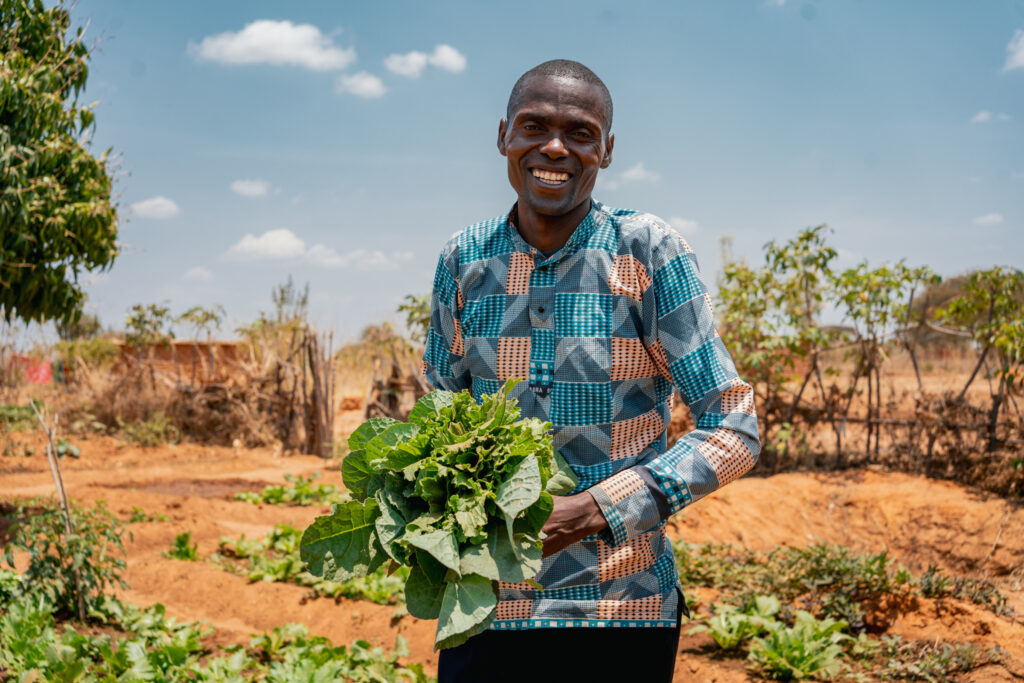
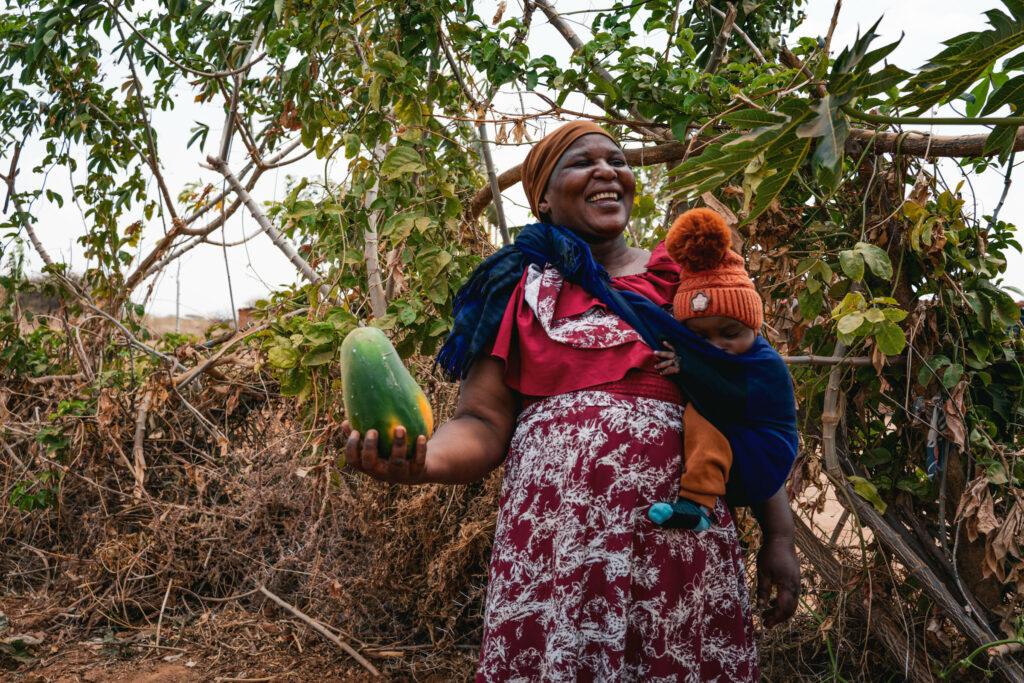
Today, William and Elizabeth are passing on their knowledge to other farmers in the community. They regularly invite neighbours to their farm to demonstrate how a mixed farming approach works in practice. They also visit other farmers to support them in applying the new techniques and overcoming challenges. William and Elizabeth distribute seeds and share practical knowledge that others can use on their own farms.
As a result, their influence now reaches far beyond their own household. Across the community, more families are keeping chickens and goats, cultivating a wider variety of crops and applying the techniques introduced through the PIP training programme. The family greatly values the opportunity to support others in the community to develop their livelihoods.
Syria has faced many challenges over the last decade. Years of conflict and subsequent displacement have left many people struggling to make ends meet. Dorcas Syria supports those in need by providing livelihood training and practical assistance to support them in rebuilding their lives and earning a sustainable income. One of our project participants is Shukriya.
Shukriya is a woman in her fifties who lives in Aleppo. She is married and a mother of five children. Despite her own health issues and caring for two children with health problems, she did not give up. She continued to search for ways to secure a better life for her family.
In 2011, ongoing conflict and heavy shelling forced her and her family to flee. They left their partly destroyed home behind. While her husband took on various jobs to provide for the family, Shukriya cared for the children. Accessing medical care was a daily challenge due to the conflict and the poor state of health services. During this time, one of her daughters passed away, causing her profound grief.
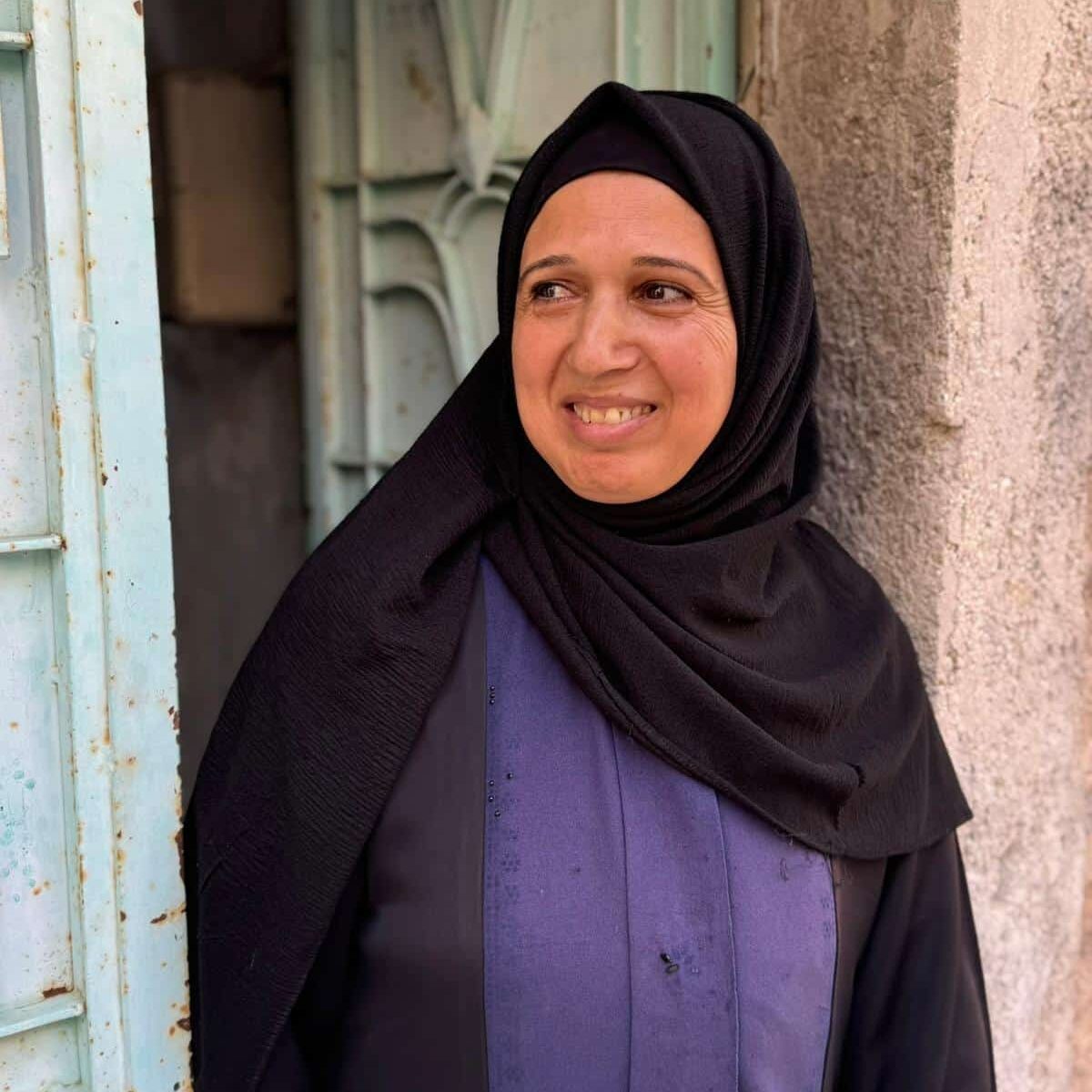
A step towards economic flourishing
When the security situation improved, Shukriya returned to Aleppo in 2019 and made a decision that changed her life. Despite her family responsibilities and the long distances she had to walk each day to attend, she enrolled in a training course in detergent production at the Syrian Amanah Centre and received a certificate.
After completing the course, Shukriya started her own small detergent-making business even though she had very limited resources and no proper equipment. Her husband supported the venture while working at a small street stall. Later, Shukriya applied to the Dorcas Syria Livelihoods Programme to further expand her business. She participated in focus group discussions, demonstrating strong determination. As part of the programme, she was given the opportunity to attend training in small business management and entrepreneurship.
Building a sustainable future
These training sessions equipped Shukriya with improved skills in market analysis, pricing and marketing. She also received equipment to grow her business. Today, she continues to develop her business and expand her customer base by improving the quality of her products. Despite ongoing economic challenges and rising raw material costs, she has not given up. Thanks to her hard work, her income has increased by more than 50 per cent.
Shukriya says, ‘I am thankful that Dorcas supported my project. Today, I can provide a decent life for my family.’