This year, with the support of World Vision International, the Dorcas Ukraine team is actively implementing a project to train IDPs and affected people in Transcarpathia in entrepreneurial skills. This is a unique opportunity for people from remote areas and the big city to learn a new trade or improve their skills to start their own business.
Many people who moved from eastern Ukraine worked in factories or had technical jobs, but when they arrived in Zakarpattia Oblast they were unable to find work. A significant number of families are left without a breadwinner because the men are defending the country. That is why we target single mothers, members of large families, people supporting a relative with a disability, mothers on maternity leave and other vulnerable groups.
We offer training in various specialities: hairdresser, barber, nail artist, cook, eyebrow artist, make-up artist, seamstress. Students also learn digital skills: UI/UX design, Python, digital marketing, product owner, basic programming, digital design, AI specialist, SMM specialist, software tester, accountant and target analyst. All are relevant and in demand in Ukraine. Support for the development of greenhouse farming will also be offered to local residents. At the end of each course, project participants also receive gift kits to help them start their own businesses. For example, those who learned to be hairdressers received trimmers, scissors and machines. In one case, a girl opened her own salon immediately after graduating and hired classmates she had studied with during the project.
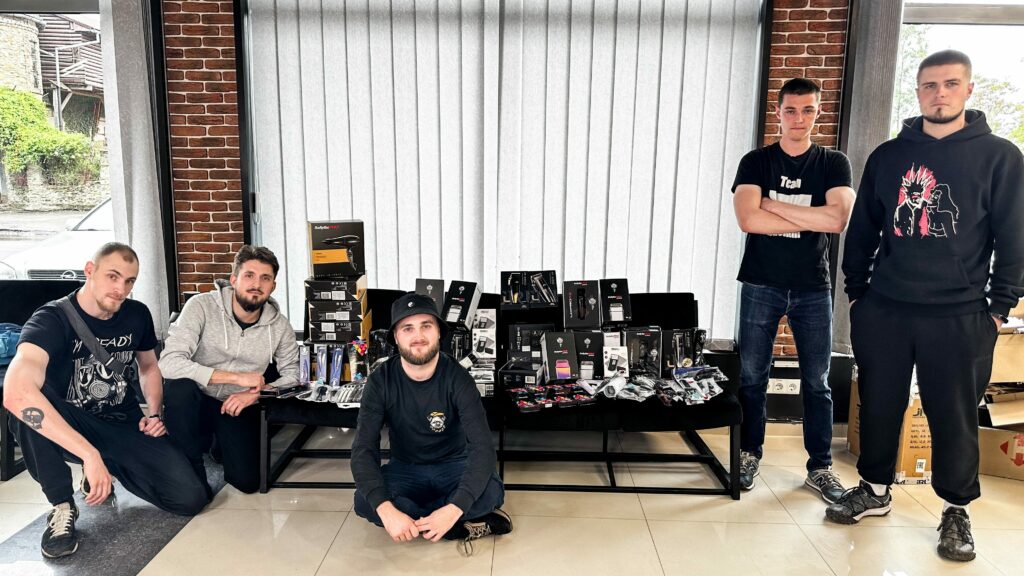
In total, 444 participants have been able to learn a new trade in a variety of areas since the project began, with more planned for the future. By August, the project will have trained more than 500 participants. 117 of those who have already completed their training have either found a job or started their own business.
This programme is not just about training or employment. It is about the adaptation and integration of a population that has been forced to leave everything behind and start their lives from scratch. For example, several men have found work after school and their families have returned from abroad. A son can provide quality care for a seriously ill mother. The mother, who was forced to raise her children on her own, is now a manicurist and is confident about the future. A family in the village with a stable income can now finish building the house of their dreams.
This is just the beginning of the changes that are taking place in the lives of Ukrainians as a result of Dorcas’ work in Ukraine.
ALMERE/NIJKERK – Eastern Europe lacks a stimulating business climate, hindering entrepreneurs in small and medium-sized enterprises (SMEs) from developing their businesses. Obtaining loans is complex and very costly. Moreover, specific knowledge, such as expertise in export, is not accessible to smaller entrepreneurs. These factors prevent otherwise successful companies from growing into solid SME enterprises. The Dutch foundations Dorcas and Kom over en help aim to offer entrepreneurs a new growth perspective through the investment company SharInvest, which they have jointly established.
SharInvest connects investors in the Netherlands with entrepreneurs in Eastern Europe. This initiative focuses not on startups but on established companies with growth potential. This growth aligns a healthy financial return with social impact. To qualify for an investment from SharInvest, companies must demonstrably contribute positively to the local community, for example, by creating jobs for people with fewer employment prospects. Investors in the Netherlands provide not only financial input but also knowledge and access to their networks to Eastern European entrepreneurs.
SharInvest offers Dutch investors a return that consists of social impact on local communities and a modest financial return. Dorcas and Kom over en help, the initiators, have been active in Eastern Europe for decades and possess extensive knowledge of the local (business) culture and social structure. Both foundations also have a large network and contacts with local churches, social organisations, and governments.
Several Dutch entrepreneurs are involved in the establishment of SharInvest. Over the coming years, the investment company aims to grow significantly to give a positive boost to local communities and increase the self-reliance of individuals. Investing in SharInvest is possible starting from €100,000.
About SharInvest
SharInvest invests in local small and medium-sized enterprises in emerging countries in Eastern Europe. The investment company is a driving force behind growth and sustainability by contributing to access to finance, knowledge, markets, and relevant networks. Through this, SharInvest invests in tangible and sustainable impact in Eastern Europe.
The newly formed Dutch government presented the coalition agreement which show significant budgetary cuts within development cooperation. The overall budget will be cut by 2.4 billion euros annually. This means a reduction of no less than 30 per cent of the current development cooperation budget.
This decision will make it more difficult to support people in need. Dorcas is therefore disappointed in the result of the negotiations between the new government parties. A large portion of the budget has already been laid down in various multilateral treaties, leaving much less financial means for the work of organisations such as Dorcas.
This disappointing news does not mean that we will give up. Together, we work hard to continuously support those in need.
“The challenges faced by people in need demand more international cooperation, not less. The severe cuts by the Dutch government directly affect people living in very difficult circumstances. Fortunately, we are supported by a large and active group of supporters, donors, sponsors, and volunteers. It is mainly thanks to them that we can continue our work.”
Agnes Kroese, CEO
The current conflict in southern Lebanon is the latest in the country’s long list of crises. It is further eroding the weak economy, undermining food security and increasing the strain on basic health services. The worsening socioeconomic situation is sending more people into poverty, fuelling a growing need for humanitarian assistance. However, the geopolitical nature of the conflict and cuts in humanitarian funding from the UN are making it harder to meet people’s basic needs. The Lebanon Humanitarian INGO Forum recently published an urgent plea for the cessation of hostilities in Southern Lebanon, as these are exacerbating the country’s growing humanitarian needs. Dorcas is seeking what role it should play in this rapidly developing and sensitive situation.
Current situation in Southern Lebanon
Over 90,000 people have been displaced so far from southern Lebanon (mostly women and children), some 60,000 remain in the conflict zone, and more than 50 civilians have been killed. Medical facilities have been hit, and damage to water infrastructure has affected water supplies to over 100,000 residents in the South and Nabatieh governorates. Many schools have closed and so 20,000 children cannot continue their education. And almost 2,000 hectares of farmland have been destroyed by fires as a result of shelling, resulting in a loss of income for farmers and further harm to food supplies.
Impact on the work of Dorcas
Dorcas continues its long-established programmes to support Lebanese, Palestinian, Syrian, and migrant worker populations with psychosocial and legal support, school meals and educational support for children, and support to improve income stability. The conflict in Southern Lebanon has not yet impacted these programmes directly but that could change if rising humanitarian needs in the country call for different priorities to be set. Then Dorcas needs additional funding to expand its food security and livelihoods programmes. However, so far, and at the request of the Lebanese authorities, Dorcas has responded to the needs of displaced people from Southern Lebanon by providing food, blankets and mattresses. Dorcas is well-equipped to scale up such specific efforts should the need arise.
Growing and changing humanitarian challenges
The food insecurity crisis in Lebanon is growing. According to an IPC analysis, at least 21 per cent of the population will experience high food insecurity from April to September 2024, increasing the need for food assistance. Unemployment continues to rise, and over 60 per cent of people who have jobs work in the informal economy, where job security is low. Therefore, the need for cash assistance and livelihood support is set to grow. The healthcare situation in Lebanon is dire. Government spending on healthcare has decreased significantly, and the Lebanese pound’s devaluation has rendered the allocated funds almost worthless. Medicines are in short supply and their costs are soaring. Therefore, trying to meet the need for free or low-cost medicines for an increasingly impoverished population with a rising number of patients is an immense challenge.
These humanitarian challenges on the ground are compounded by actual and potential funding cuts. For example, the World Food Program reduced cash assistance to Syrian refugees by 30 per cent and discontinued in-kind food assistance to 33 per cent of assisted Lebanese households. The situation for the estimated 200,000-250,000 Palestinian refugees in Lebanon – most of whom are there as a result of previous conflicts – is particularly precarious. If current UN programmes in education, healthcare, and social safety net assistance stop, a huge humanitarian gap will arise that will be hard to fill. Although INGOs could step into such a gap, the process of transferring the entire responsibility for the Palestinian population across many different organisations would take time and be detrimental to the well-being of Palestinian refugees who rely on these services. Furthermore, the burden of these responsibilities could also have a negative impact on the existing programmes of the organisations concerned.
Dorcas role in the coming months
Dorcas will carefully monitor this funding situation so that in consultation with other INGOs and the Lebanese authorities, it can take appropriate action should the need arise. However, for now, our focus is prioritising food security for the most vulnerable.
Plea for the cessation of hostilities in Southern Lebanon as growing humanitarian needs are further exacerbated: Humanitarian organisation are urgently calling for an end to hostilities in Southern Lebanon. Six months of violence have displaced many people, resulting in severe disruptions to education and healthcare and more people depending on assistance. The financial implications are immense, at a time when the country was just emerging from its worst economic crisis in decades. Despite challenges, humanitarian organisations remain committed to providing assistance to those in need.
Read the full plea issued by Lebanon Humanitarian INGO Forum
In response to the escalating humanitarian crisis in Yemen, Dorcas Yemen has signed a petition urging the international community to amplify its support for the conflict-torn country. The petition, initiated by the Norwegian Refugee Council (NRC), highlights the urgent need for enhanced funding and assistance as Yemen grapples with severe economic downturn, exacerbated by years of conflict.
Yemen, already one of the poorest countries in the Middle East, is facing an unprecedented humanitarian catastrophe. The economic downturn, now in its ninth year, has plunged millions of people deeper into poverty, pushing them to the brink of survival. The situation has been worsened by widespread food insecurity, with millions of Yemenis struggling to access basic necessities.
The ongoing conflict has led to the displacement of millions of people, with families forced to flee their homes in search of safety and shelter. Internally displaced persons (IDPs) face dire living conditions, lacking access to adequate healthcare, clean water and education.
Against this backdrop, Dorcas Yemen has joined forces with other humanitarian organisations to call for increased funding and support from the international community. Dorcas emphasises the critical importance of addressing the root causes of the crisis and providing immediate assistance to those in need.
The effects of the ongoing conflict continue to devastate Yemen, with civilians bearing the brunt of the violence and instability. As the situation worsens, the need for urgent action becomes ever more pressing.
Dorcas Yemen’s involvement in this petition reflects its unwavering commitment to alleviating the suffering of communities in vulnerable situations and advocating for sustainable solutions to humanitarian crises. We urge the international community to heed this call for increased support and solidarity with the people of Yemen during their time of dire need.
Several targets in Yemen have been bombed in recent weeks in response to Houthi attacks in and around the Red Sea. At this time, Dorcas Yemen staff, our partners’ staff and our project participants are safe. Although our team is safe, staff are still very concerned for the people of Yemen, who were already in a very difficult situation. Despite these challenging developments, they continue to work tirelessly to support those in need.
The impact of the security threat in the Red Sea is already being felt by humanitarian actors, with disruptions to trade pushing up prices and causing delays in the delivery of life-saving supplies. Shortages and increased costs of basic commodities such as food and fuel will only exacerbate an already dire economic crisis, increase aid dependency and increase protection risks. All actors have a legal obligation to ensure the safe and unhindered delivery of humanitarian assistance so that people in need can access these services. If the current situation worsens, there is also the possibility of large movements of internally displaced people in the region. If this is the case, we will reassess what action needs to be taken.
International Humanitarian Law provides vital guidance and boundaries during war and conflict. But what exactly does this body of law entail and does Dorcas need to adhere to it? We explore the importance of international humanitarian law through four questions and answers.
What is International Humanitarian Law?
International Humanitarian Law, also known as the laws of armed conflict, has been established to safeguard human dignity during wars and conflicts, reduce unnecessary suffering and protect the rights of all parties involved, including civilians and combatants. This means, for example, that civilians, wounded soldiers, and even prisoners of war not participating in the armed conflict must be protected. Additionally, the law prohibits the use of children under fifteen as soldiers and specifies that women and children must be shielded from sexual violence. Furthermore, it provides guidelines on weapons not being deployed when civilians are involved in a situation.
Does this law address aid workers?
Yes, it does because according to the laws of war, humanitarian workers must always have unrestricted movement in a crisis area. Denying them access to such areas is prohibited.
What if parties fail to comply with humanitarian law?
Although the rules of international humanitarian law may seem logical, these are often not adhered to in practice. The legal provisions apply to states and, in principle, nations that violate international humanitarian law can be held accountable for their actions by organisations such as the United Nations or the International Court of Justice. However, independent investigators often face difficulties accessing areas where conflict or war is ongoing, making it extremely challenging to obtain the objective information required. Furthermore, although under international humanitarian law, aid workers and convoys must be granted access to war or conflict zones, this does not always happen in practice. And even if various parties exert pressure in such cases, enforcing access remains difficult.
What does humanitarian law mean for an organisation like Dorcas?
Dorcas is an organisation for development and humanitarian assistance that adheres to humanitarian principles and fully supports the provisions of international humanitarian law. Our primary objective is to assist all affected individuals in crisis areas. We remain impartial, neutral and independent, which means that during a conflict, we do not take sides and do not consider a person’s skin colour, political preferences, or which side of the conflict they belong to. Our role as a humanitarian assistance organisation is to identify the person in need and provide assistance under all circumstances.
Recently, the protracted conflict between Israel and the Palestinian territories has escalated. The situation currently remains uncertain.
We do not work in the affected areas. However, the conflict is exerting an influence on the stability in the Middle East. Since the escalation, tensions have also increased in Lebanon, Syria and Egypt, countries where Dorcas is active. The UN is very concerned that the conflict will spread to Lebanon.
For the time being, our programmes in Lebanon, Syria and Egypt can continue. The current situation does not directly affect our work in these countries. However, we will continue to closely monitor the developments, and if risks for the safety of our colleagues or project participants arise, we will take appropriate action. In Lebanon, we are also collaborating with partners on contingency plans in order to start an immediate response in case of escalation.
Dorcas is grateful to announce the start of a new EU-funded programme aimed at strengthening the capacity of Civil Society Organisations to develop innovative solutions related to the environment, digitalisation, and gender equality.
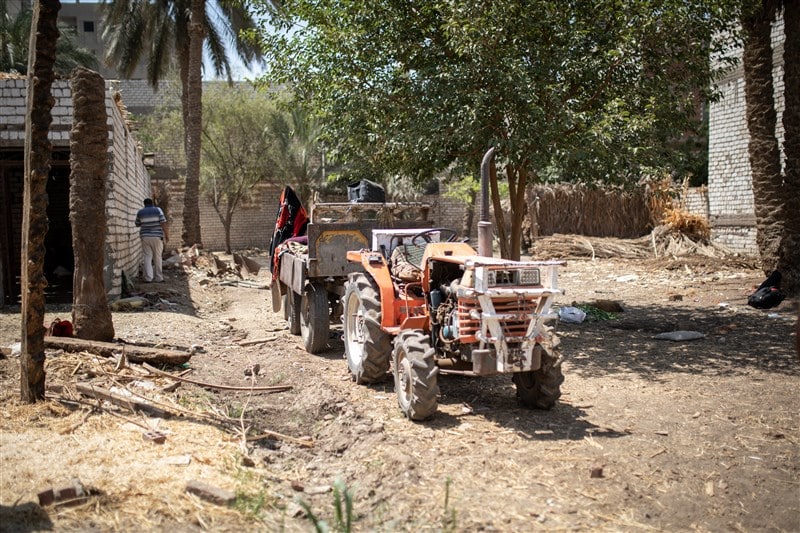
In the heart of Upper Egypt, disadvantaged communities face numerous challenges. Evidence underscores the critical role that local Civil Society Organisations (CSOs) can play in mobilising, capacitating, and empowering community members. This becomes particularly effective when CSOs work in synergy with each other, local government entities, and the private sector. Despite their good intentions, many CSOs face challenges that hinder their efficiency. These include a need for human capacity, financial, and data resources and limited technical capacity related to programme design, monitoring, and networking for multi-stakeholder collaboration. Many organisations operate with traditional top-down knowledge transfer methods and rely heavily on external funding. They often need to become more familiar with asset-based community development methods that leverage locally available resources.
Catalysts for change
To empower the disadvantaged communities, the programme will select twenty local CSOs in Beni Suef to systematically enhance their organisational, institutional, and technical capacities. This four-year action plan employs a trajectory of mentoring, coaching, and on-the-job training to empower these CSOs to become catalysts for change within their communities.
Central to the programme’s approach is adopting the Farmer Field and Business Schools (FFBS) method, a proven and tested market-based agricultural extension technique. This approach aims to bolster the CSOs and economically empower 2,000 small-scale female farmers in the region, driving social and economic progress.
Training and support
Furthermore, the programme provides CSOs with opportunities to propose and implement innovative ideas and initiatives that directly address the pressing needs of their communities. With comprehensive training and support, CSOs can craft sound and feasible plans and receive essential on-the-job assistance during implementation.
Beyond the selected CSOs, the programme extends its reach to local actors, community groups, and other relevant stakeholders . This inclusive approach aims to foster collaboration and ensure the sustainability of the programme results.
Dorcas and Woord en Daad will continue their cooperation on job creation for Ethiopian youth in 2023. Since 2016, Dorcas and Woord en Daad have collaborated in Ethiopia on job creation for young people. Within the Employable Youth Ethiopia (EYE) programme, they realised more than 20,000 jobs between 2016-2021 within a multi-party consortium through intensive cooperation with vocational schools, entrepreneurial training providers and private parties. Several networks were also launched to improve dialogue between stakeholders.
After the EYE programme ended, both parties decided not to terminate the infrastructure built up and to complete innovations. For instance, the Centre of Excellence model, in which vocational schools train young people for companies based on pre-made job and wage guarantees, will be further developed with in 2023. Entrepreneurship training providers are also developing new collaborations to better support young people get (digital) business support and access to start-up capital.
This week, Agnes Kroese, CEO of Dorcas and Rina Molenaar, CEO of Woord en Daad signed a new partnership agreement that reflects the intention to work together in the coming years to make structural changes in the youth and employment system and to create jobs on a large scale. ‘We know each other and have built a special shared history in Ethiopia,’ Agnes Kroese said, ‘It would be illogical not to do our utmost to continue to seek collaboration, be complementary to each other and continue to tap into the potential of each other and others. That serves the interest of the young people we are both committed to.’
Rina Molenaar agrees: ‘This partnership agreement is a starting point for a joint exploration of how to achieve large-scale change. In this, we must be able to put our own role into perspective, become ambitious to be modest and proactively engage in cooperation.’
The continuing EYE programme brings together key Ethiopian stakeholders such as the Ministry of Skills and Labour, the Chamber of Commerce, workers’ and employers’ organisations and micro-credit umbrellas to discuss and improve current schemes and policies. Meanwhile, the programme is innovatively creating hundreds of new jobs for young people. In this, Dorcas and Woord en Daad are supported by Dutch companies and thrift shops.