Across Kenya, communities are experiencing the growing impacts of climate change. Rainfall has become increasingly erratic, harvests are less reliable, and many rural families struggle to secure enough food throughout the year. In the semi-arid county of Kitui, these pressures are compounded by environmental degradation caused by illegal charcoal production, which has accelerated deforestation and reduced vital sources of forage for livestock and bees.
To address these challenges, Dorcas Kenya works with local communities to build climate-resilient livelihoods, increase incomes and strengthen household food security. Through the Honey Value Chain Project, farmers are organised into Farmer Field Schools where they receive training on best production and harvesting methods, modern beehives, and support to connect with cooperatives, enabling them to sell their honey together at fair prices.
One of the farmers who embraced this opportunity is Justus Makau Mutua, whose story reflects the hope and transformation this project brings.
Choosing a sustainable future
Justus (33) lives in Kitui County with his wife and their two children, a seven-year-old and a four-year-old. After graduating from the University of Nairobi with a degree in Commerce, he made the deliberate decision to return to his home village rather than seek employment in the city. He opened a small butcher’s shop at the local market and traded livestock, but the income was inconsistent and insufficient to support his family.
Meanwhile, life in Kitui was becoming increasingly difficult. Years of failing rains left many households facing food shortages. As trees disappeared due to charcoal production, pastureland and bee forage were depleted. When Dorcas Kenya launched the Honey Value Chain Project, Justus grasped the opportunity to build a more resilient livelihood.
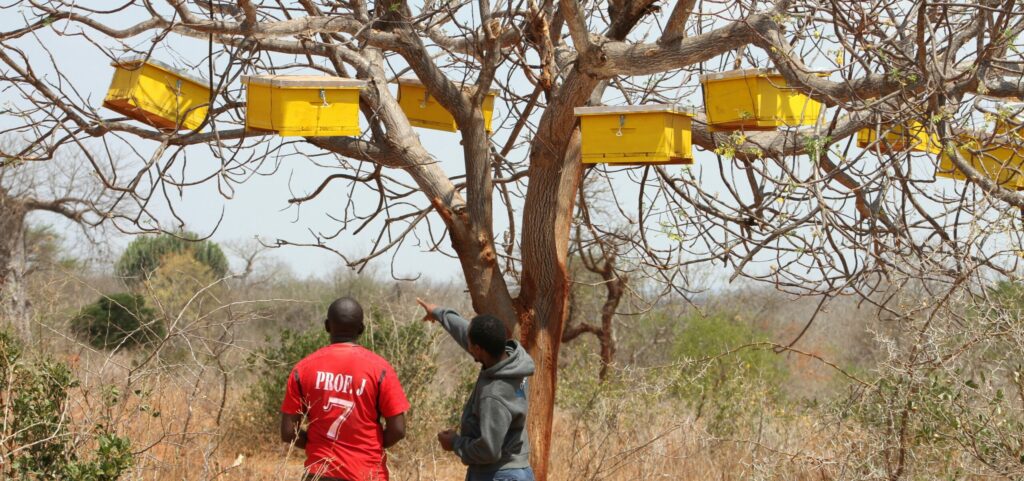
Although beekeeping in his community was traditionally practised by older men, Justus decided to give it a try. In 2021, he cautiously began with ten modern hives, which were provided through the project. He soon saw results.
With training from Dorcas Kenya, he learned how to set up an apiary, attract and manage colonies, and safely harvest and process honey. Techniques such as cleaning hives with basil and applying beeswax increased his productivity. Dorcas Kenya also connected his group to cooperatives, enabling farmers to sell their honey collectively and secure fair prices.
Today, Justus manages 60 hives. He is the secretary of his local beekeeping group and encourages young people and women to take up the practice, challenging long-held stereotypes in the process.
Improved income and better food security
This year, Justus harvested 235 kilograms of honey, earning him 63,450 Kenyan shillings (approximately €460). This income enables him to pay his children’s school fees, buy food for his family and reinvest in his butcher’s business. His success has also inspired those around him: his father, Mzee Mutua, has started keeping bees too, and now manages ten hives alongside his son.
For families like Justus’, beekeeping directly contributes to food security. Honey is a reliable product that can be harvested even in difficult seasons. Meanwhile, Dorcas Kenya is working with communities on landscape restoration and climate-smart practices to ensure that there is enough forage for the bees year-round.
Justus dreams of expanding to 200 hives and using the additional income to invest in rental housing. However, his motivation goes beyond personal growth. ‘I want to show other young people that beekeeping can offer a dignified and sustainable livelihood,’ he says.
Through the Honey Value Chain Project, Dorcas Kenya continues to support farmers like Justus in building resilience, restoring the environment and securing a more stable future for their families.
Yesterday, the 30th UN Climate Conference (COP30) officially opened in Belém, Brazil, with an urgent call to implement climate pledges. Running until 21 November, the summit is focused on accelerating the implementation of practical solutions to meet national climate goals under the Paris Agreement.
This year, the core theme is climate adaptation, which the summit focuses on through six official action agenda areas:
- Transitioning energy, industry and transport.
- Stewarding forests, oceans and biodiversity.
- Transforming agriculture and food systems.
- Building resilience for cities, infrastructure and water.
- Fostering human and social development.
- Unleashing enablers and accelerators, including on financing, technology and capacity-building (cross-cutting theme).
These six themes are broken down into 30 key objectives, which provide more detail on the actions needed in these areas.
Agriculture and food systems on the agenda
Among the priorities at COP30, the transformation of agriculture and food systems is worthy of note. For decades, climate talks have largely overlooked food and farming, even though these sectors are crucial not only for tackling climate change, but also for ensuring that communities have enough to eat and can flourish in a changing world.
Heleen Berends, Dorcas’s Strategic Programme Advisor, explains:
‘The shift became evident back at COP27, when countries launched a four-year work programme on agriculture and food security (the Sharm El Sheikh Joint Work). Now, governments are reporting on progress and discussing how to increase climate action in the agricultural sector. The Global Action Agenda specifically lists goals such as restoring land, building climate-resilient food systems, and ensuring equitable access to food.’
Heleen adds:
‘This also raises a key issue: roughly one-third of global emissions are driven by food production, and agriculture is a primary driver of biodiversity loss. At the same time, hunger and food insecurity remain widespread. It is therefore essential to rethink how we produce, process and consume food. This needs to include regenerative farming, protecting forests and wetlands, reducing food waste, and promoting truly sustainable diets. Such measures can lower emissions while also ensuring sufficient yields, nutrition and resilience. What is clear, is that the current situation demands immediate action. The world must now come together to pledge sufficient funds and create accessible mechanisms that allow for better and accelerated adaptation.’
The spotlight on food systems also underscores the importance of community-level action, and shows why Dorcas’ work matters more than ever.
How Dorcas supports communities to adapt to climate change
For Dorcas, climate change is not an abstract issue. It directly affects the communities we support. From droughts in Ethiopia and Kenya to floods in South Sudan and wildfires and desertification in Iraq, extreme weather is making farming unpredictable and threatening food security. Those in vulnerable situations often have the fewest resources to cope, which is why climate adaptation is central to our work.
Heleen explains:
‘We support communities in adapting to changing conditions, improving food security, and preparing for disasters. For farmers in vulnerable areas, climate-adaptive solutions are essential.’
In practice, Dorcas combines innovation with local solutions to address climate challenges. In Yemen, solar-powered water systems provide clean drinking water and irrigation. In Iraq, water-saving technologies help trees survive in the desert. In Kenya, wetlands are being restored to manage floods, and schoolchildren plant trees to connect communities with their environment. These locally led solutions build resilience, safeguard livelihoods, and support people to flourish.
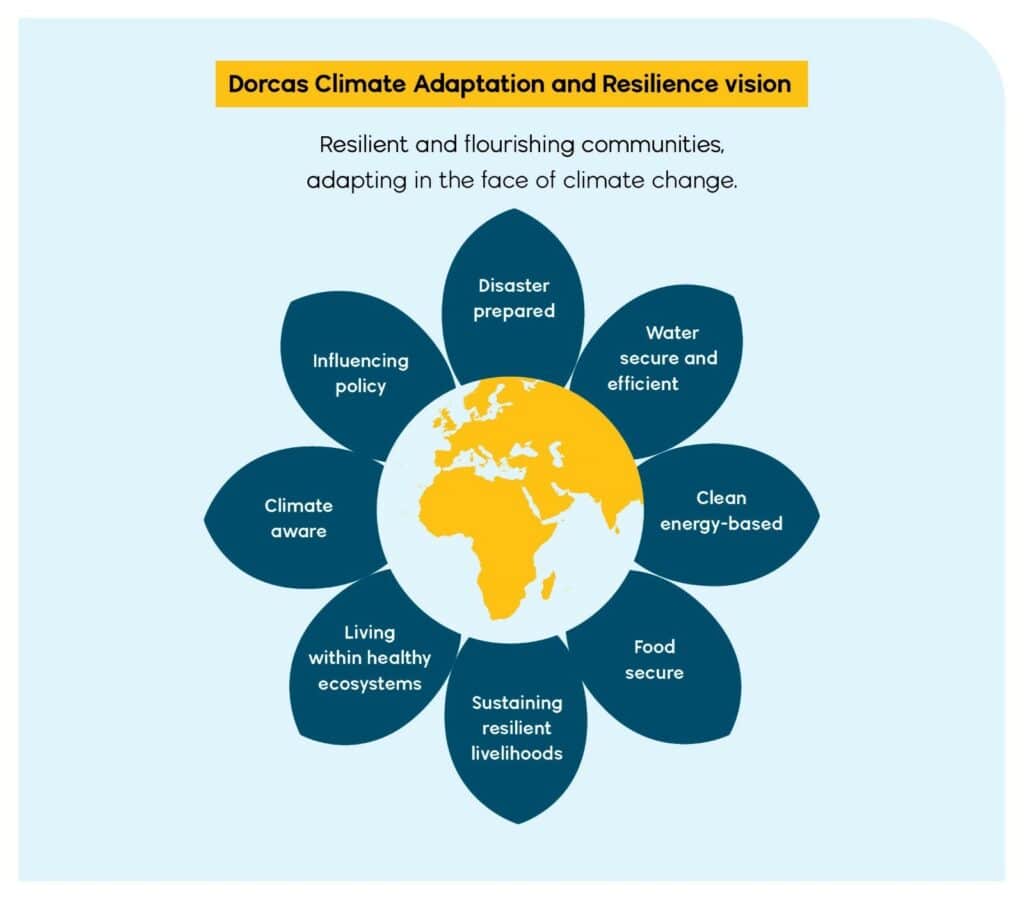
Dorcas takes a holistic approach to climate adaptation, working across food systems, land and water management, and community development. In this way, Dorcas transforms global commitments, such as those emphasised at COP30 and in the Belém Declaration, into tangible change for local communities.
Reading time: 3 minutes
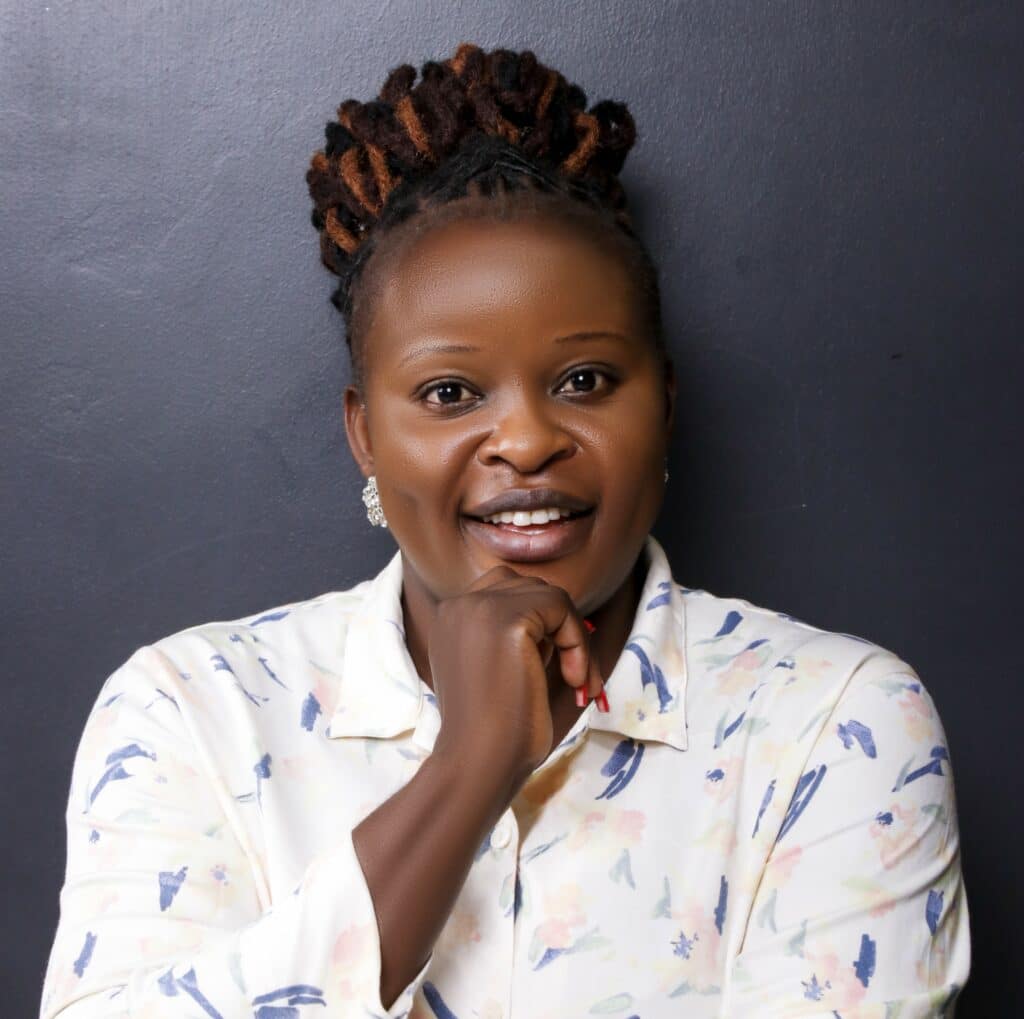
Brendah, 33, from Kenya, works for Dorcas on Climate Adaptation and Resilience. Brendah: ‘My passion for the climate started in primary school. To reduce greenhouse gas emissions from artificial fertilisers, we did a project on green manure fertilisers using Tithonia (Mexican sunflower, ed.). I decided to continue the research at home with our own crops. And it worked! It felt good to be able to provide an environmentally friendly solution at home.’
‘In my work for Dorcas, I contribute to solutions focused on self-reliance and climate resilience every day. The great thing is that children are also part of these solutions. For instance, we have established an afforestation programme together with schoolchildren. This is particularly important in areas where biodiversity has declined significantly. The children are allowed to plant a tree themselves and are given the option to practise at home by planting a tree there, too.’
‘It is wonderful to see how they take care of their own trees by watering them with bottles during dry periods. Through this project, children not only learn about the climate, but they also gain hope for the future. This is just one of the many climate initiatives that we are carrying out with the community. We are raising awareness among men, women, children, and young people.’
‘Why we should not give up’
‘It gives me enormous satisfaction that I can see first-hand how our initiatives are changing lives and ways of thinking. Many people live in poverty, so when someone is able to earn an income and send their children to school thanks to a climate-proof investment, it touches me deeply. In my work, I see a lot of dedication. From my colleagues and the people in the communities. They want change, and our projects give them hope. This is why we should not give up on development cooperation. Even if only to address the ongoing inequality and poverty in the world. However, it must be locally driven and supported by the local population. Only then will movement occur and opportunities be created.’
‘As a development worker, I have learned to be patient. Real change takes time. God calls us to take that time to care for the earth and support people so they can flourish. However, we cannot achieve this alone in Kenya. We also need support from the Netherlands. That is why I am appealing to you: to keep praying and giving. The people of Kenya are not helpless; they are resourceful and determined. They just need the means.’
What would I say to young Brendah?
‘That a better, more sustainable future is getting closer and closer!’
This interview was originally published in the Nederlands Dagblad on Saturday, 28 June. You can read the article (in Dutch) here.
The deepening climate crisis is reshaping the way people in many parts of the world live, grow food and manage natural resources. Food systems are becoming more exposed and susceptible to climate shocks. Land degradation and deforestation are accelerating biodiversity loss and reducing agricultural productivity. Meanwhile, water insecurity, droughts and floods continue to threaten sustainable livelihoods.
At Dorcas, supporting communities to adapt to these changing conditions is a key priority. Our efforts focus on three pillars, which are interconnected and form the foundation of our climate adaptation strategy: food, water and land.
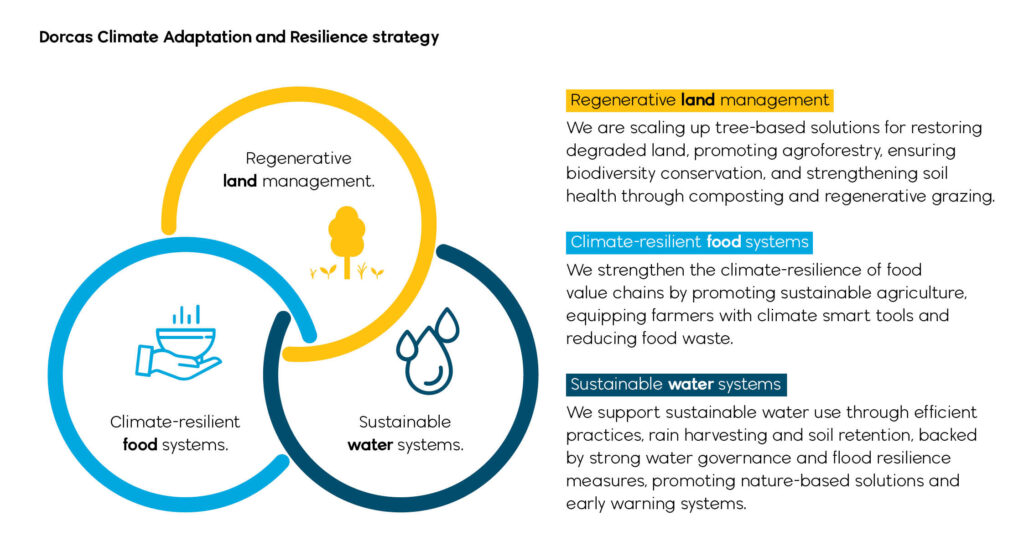
In this article we elaborate on these three key areas and how we work to support communities to become more resilient in the face of climate shocks.
Climate-resilient food systems
Our approach begins by addressing the urgent challenge of transforming food production to withstand climate stress. Food systems worldwide are facing immense pressure, and smallholder farmers are particularly at risk as they often lack control over essential resources like seeds, supply chains, and markets.
To tackle these challenges, Dorcas focuses on building farming systems that are both climate-resilient and regenerative. We emphasise practices that restore soil health, enhance biodiversity, and utilise nature-based pest control methods. Farmers receive hands-on training to implement techniques that regenerate soil and improve productivity.
In addition, Dorcas equips farmers with relevant tools, such as access to real-time weather and market data, drought-resistant crops, and precision irrigation systems.
We are also committed to strengthening agricultural value chains to create inclusive and sustainable food systems. By connecting smallholder farmers to local and regional markets, improving supply chains, and promoting better food processing and storage methods, we reduce waste and post-harvest losses while ensuring long-term agricultural resilience.
PIP in Tanzania
One example of our work to support climate-resilient food systems is the PIP project in Chemba, Tanzania. As part of this initiative, two demonstration farms have been set up in the village and a mini dam has been renovated and enlarged to improve rainwater harvesting.
These farms serve as practical learning centres where smallholder farmers can adopt climate-smart practices, such as agroforestry, growing drought-tolerant crops, regenerating soil and using integrated livestock systems. These methods help to mitigate the effects of climate change, including erratic rainfall, prolonged dry spells and soil degradation.
The improved mini-dam increases the community’s capacity to store rainwater, ensuring a more reliable supply for irrigation and livestock during dry periods. ‘At first, we struggled with severe droughts that led to famine,’ says a 75-year-old local farmer. ‘But now, with the availability of this dam, we can continue farming even during the dry season, ensuring sustainable food security all year round.’
Sustainable water systems
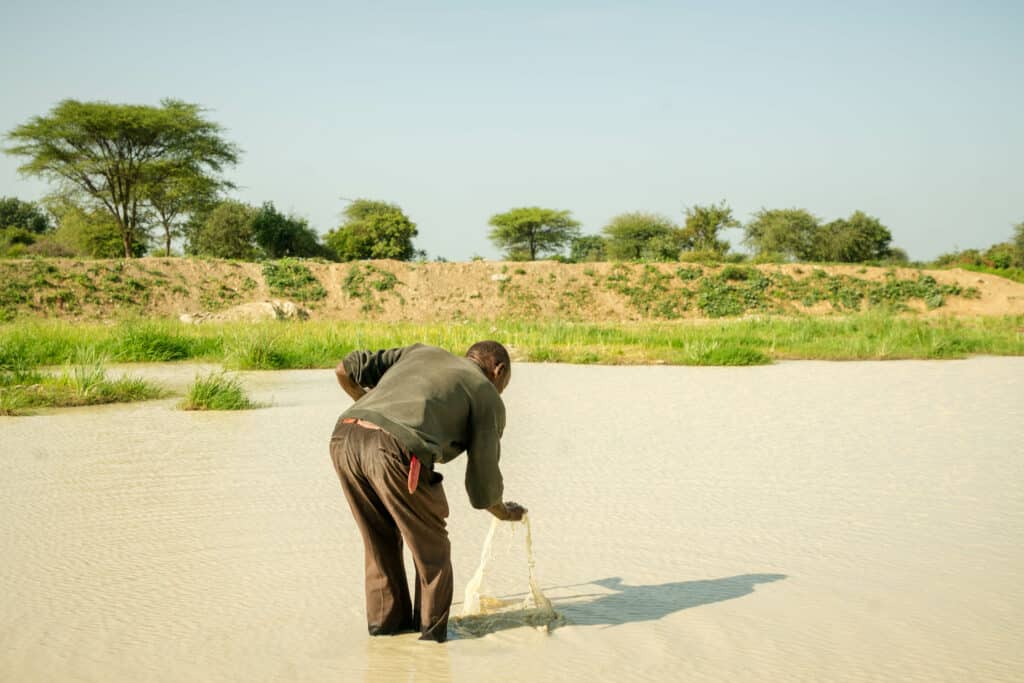
Resilient food systems depend on dependable water access, making water security a critical focus. Increasing water shortages, driven by climate change and poor water management, threaten farming and communities, while frequent flooding damages farmland and infrastructure.
At Dorcas, we are committed to ensure sustainable water use for agriculture and communities. We promote efficient techniques such as rainwater harvesting, groundwater replenishment, and soil water retention through methods like contour farming and terracing, supported by stronger water management structures.
We also work to mitigate flooding by enhancing:
- Watershed management.
- Nature-based solutions like wetlands and buffer zones.
- Early warning systems to prepare communities for climate-related disasters.
Supporting bees with a water pan in Kenya
One example of Dorcas’s work to support sustainable water use is in Ngiluni village, Kenya, where we are working through our local partner, the Makindu Rural Development Programme (MRDP). Farmers from the Ngiluni Farmer Field School have received training in hive management and were equipped with 100 modern hives, 1,130 bee-friendly plants, and a water pan. ‘Before the interventions, our hives used to have low colonisation rates and hive abandonment was the norm of the day,’ explains 37-year-old Makau Mutua, a local farmer. The water pan now provides bees with easy access to water, reducing the need to travel long distances and improving colonisation rates. As a result, a bee multiplication centre has been established, and farmers are now planning to start a commercial tree nursery and practise agroforestry to make full use of the rainwater collected.
Regenerative land management
Healthy land is essential for maintaining sustainable food and water systems. Our third focus area is dedicated to restoring and safeguarding landscapes to ensure long-term resilience. Deforestation exacerbates soil erosion and biodiversity loss, while land degradation undermines food production and ecosystem stability.
At Dorcas, we are addressing these challenges through tree-based solutions for climate resilience, which include:
- Restoring degraded land via large-scale tree planting (afforestation) and natural regeneration (reforestation).
- Integrating trees into farming systems through agroforestry practices.
- Encouraging conservation measures to protect biodiversity.
To bolster soil health, we support environmentally friendly methods such as composting and biochar, advocate agroforestry to revitalise soil nutrients, and promote regenerative grazing to prevent land overuse.
Planting trees in the desert with the Waterboxx in Iraq
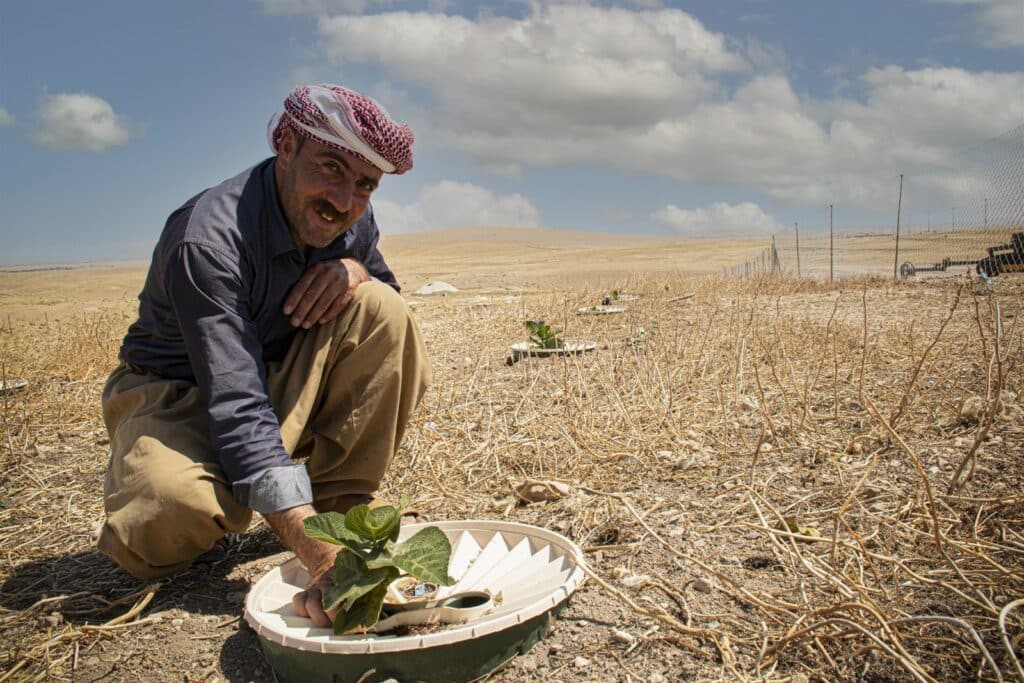
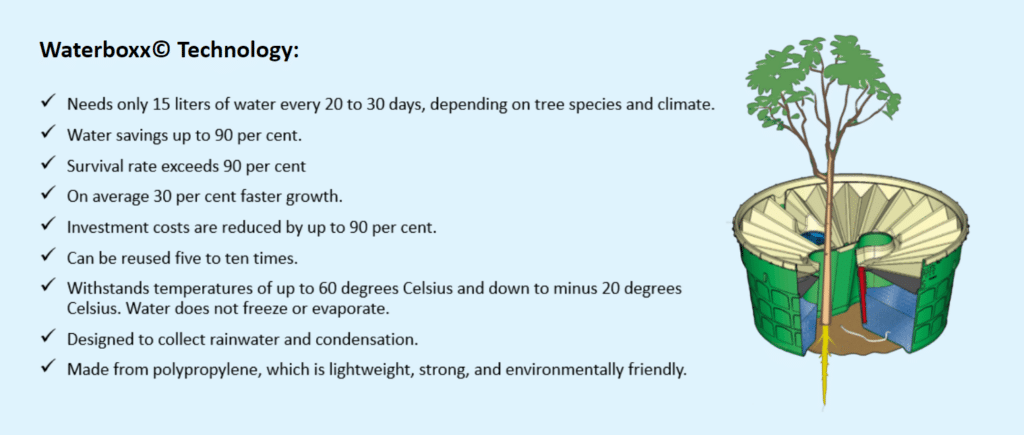
One example of our work to support regenerative land managment is the Waterboxx initiative in Iraq. Developed by Groasis, this innovative device fosters tree growth with minimal water by collecting rainwater and dew, which is released gradually to preserve soil moisture. This approach is vital for land restoration and food security. Farmer Amin, who cultivates figs, olives, and grapes, reported a 90 per cent reduction in water usage thanks to the Waterboxx, enabling him to recover after years of drought: ‘This is exactly what I needed,’ he remarked.
Flourishing communities
With these efforts, we are committed to supporting communities to become resilient in the face of climate change:
In Iraq, the challenges posed by climate change are enormous, with temperatures rising seven times faster than the global average. Over the next decade, Iraq is expected to experience significant increases in flooding, drought and desertification. These conditions severely affect livelihoods, undermining household economic resilience and contributing to increased poverty.
- By 2035, Iraq is expected to face a severe water deficit of around ten billion cubic metres, which will have a profound impact on the country’s agriculture and livelihoods.
- Iraq’s water shortage leads to drought and soil salinisation, resulting in the loss of 25,000 hectares of agricultural land each year.
- Already 70 per cent of Iraq’s agricultural land is at risk of total degradation from climate change.
To address these challenges, it is essential to implement climate-smart agricultural approaches that enhance climate resilience and strengthen communities. The Waterboxx is a technology that can contribute to this effort.
The Waterboxx technology
The Waterboxx is an innovative device developed by Groasis to tackle water scarcity and promote sustainable agriculture in arid areas. It is a cylinder-shaped container that collects and stores rainwater for plants and trees. Its design incorporates features that make it particularly useful in difficult climates such as Iraq.
The Waterboxx works by collecting rainwater and dew through its top, which directs the moisture into a central reservoir. The stored water is then slowly released into the ground through a drip system. This provides a steady supply of water for plants and creates a better environment for seeds to grow in.
The need for sustainable water management in Iraq is urgent and this technology can contribute to addressing these challenges in a number of ways:
- Water conservation: By collecting and storing rainwater, the Waterboxx reduces the need for increasingly scarce traditional water sources. This is particularly important in areas of severe drought.
- Soil fertility: The gradual release of water from the Waterboxx helps to keep the soil moist, which is vital for plant health and prevents soil problems such as salinisation.
- Increased agricultural productivity: By providing a reliable source of water, the Waterboxx supports more consistent growth of crops and trees. This can help ensure stable food production and support local livelihoods in areas affected by climate change.
- Ecosystem restoration: By enabling plants to grow, the Waterboxx also contributes to the restoration of degraded land, which can help combat desertification and promote biodiversity.
Supporting marginalised households
Dorcas Iraq is working in Sinjar, Iraq, to support people who are particularly at risk to the effects of climate change. This includes female-headed households, households with people with disabilities or chronic illnesses, and older people without support.
Dorcas Iraq is training nearly 2,500 people in climate-smart agricultural practices and livelihood diversification strategies. Dorcas also provided 50 people with the Waterboxx, tree seedlings and the necessary training to use and maintain the technology. Next year, Dorcas Iraq plans to distribute around 8000 more Waterboxes. This project has already yielded significant positive results, and Dorcas will continue to build on these efforts. One of the project participants who can attest to these positive outcomes is Amin.
Amin is a farmer who has been tending to the fig, olive and grape trees on his ancestral land for a long time. Recently, he began to notice alarming climate changes that threatened his livelihood. Unpredictable rainfall was causing flooding, while extreme summer heat and prolonged drought were threatening his crops. Concerned about the future of the farm, Amin looked for ways to adapt to these new environmental challenges.
Amin came into contact with Dorcas and was introduced to the Waterboxx technology. This was exactly what Amin needed to make his farm sustainable, and after installing the Waterboxes he saw significant improvements in water conservation. He was able to grow crops even in drought conditions. The technology’s ability to collect rainwater and condensation makes it a vital tool for farmers in Sinjar, allowing them to adapt to extreme weather patterns.
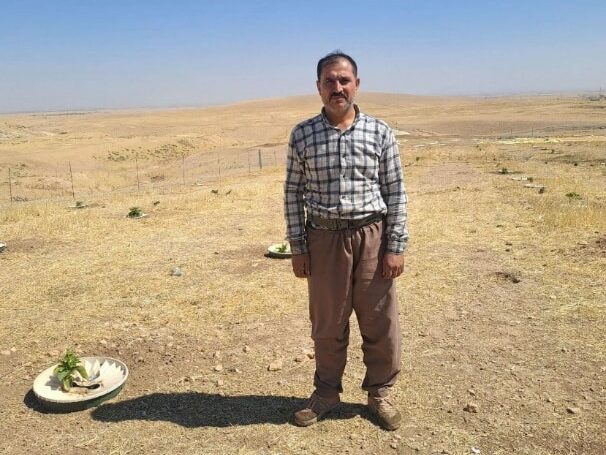
Amin’s farm became a model of success and he actively participated in community programmes, sharing his knowledge of sustainable agriculture. His efforts not only ensured the survival of his crops, but also inspired others by demonstrating the impact of innovative technologies.