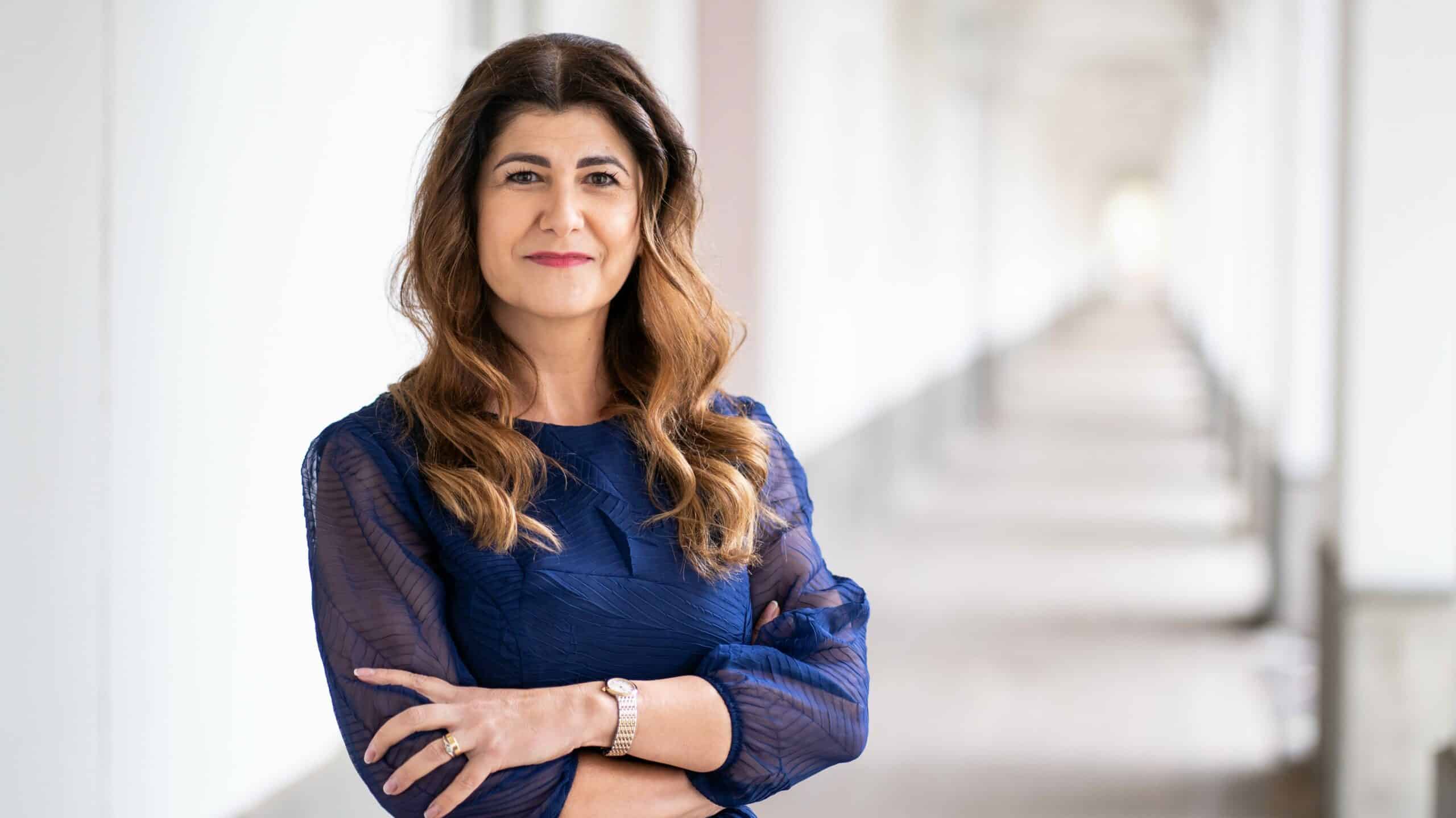
Written by: Agnes Kroese, CEO of Dorcas
Of course, I’ve had some sleepless nights over the past few weeks. I would lie staring at the ceiling, feeling a knot in my stomach when thinking about what awaits us with this new cabinet. A minister who has repeatedly made it clear in the past that she is not a fan of supporting people in need. A minister who is no longer responsible for development cooperation but for development aid.
You might think: ‘What’s in a name?’ But even this name change is so telling. Where for years we have worked to move away from the ‘white saviour complex’ and have stood alongside people instead of positioning ourselves above them as a development organisation, the new name clearly signifies a step backwards. ‘Aid’ implies a power dynamic: I am the helper, you are the one in need, and soon the person who needs help is seen as weak and incapable. At Dorcas, we prefer to speak of ‘supporting,’ which is based on the strength of the people themselves. We believe in the wonderful potential that each person has received from God.
It’s not the consequences of cuts in development cooperation that keep me awake at night. We are incredibly grateful for our loyal supporters. Due to their involvement in prayer and financial support, we are not completely dependent on government subsidies. But I worry about the equality of people; I see how it is increasingly at risk. In the choice of a ministerial title, but also closer to home, around me. How people talk about each other, how relationships harden, and opinions are fired at each other like toxic arrows, without seeing the person behind the opinion.
Based on the new minister’s past, you could say that Dorcas has every reason to be suspicious. To feel abandoned as an organisation. Is what we have built over the past years now being undone? Fortunately, it’s not about us as Dorcas. It’s not about a minister and not about a cabinet that does not hold development cooperation in high regard. It’s about fellow human beings in need. Looking back at what has been is not really my thing. Looking out for people in need, wherever they are, is a Biblical command that gets me out of bed every morning. Giving them the tools to realise their own development ignites an energy in me that makes me rise with fresh courage even after a restless night.
Agnes Kroes is CEO of Dorcas. Agnes: ‘I contribute with great dedication to our mission in creating opportunities for people and communities to flourish. One of the ways I do this is through a monthly column in Dutch newspaper Nederlands Dagblad. In this column, I share insights from my professional experience at Dorcas. My aim is to inspire, inform and encourage readers to engage with Dorcas’ initiatives, campaigns, and projects.‘
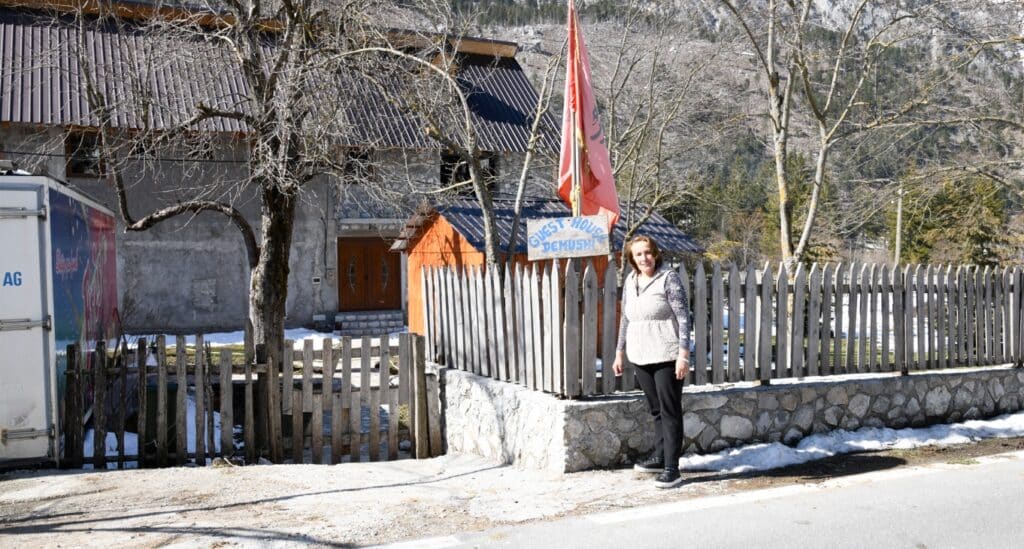
Edmira (51) lives with her husband and three children in the village of Valbona, Tropoja, Albania. A few years ago, she participated in a project by Dorcas Albania, receiving support in the form of potato seeds. This initial assistance marked the beginning of a transformative journey for her family.
As time passed, Edmira generated a good income from her agricultural efforts. Her husband, a tourist guide, led hikers through the scenic mountains. Recognising the potential of tourism, Edmira and her family decided to convert their home into a guesthouse to accommodate visitors.
With financial support from the TICP Programme, funded by Dorcas and Kom over en help, Edmira was able to apply for a soft loan under the Enterprising People and Communities (EPC) component. This loan enabled her to renovate their house into a guesthouse, aiming to boost the family’s income.
Edmira’s determination to grow her business and develop her entrepreneurial skills was unwavering. The soft loan allowed her to enhance the quality of her guesthouse, improving both service and accommodation for tourists. She also participated in capacity-building activities focused on tourism service quality, management, business planning, and technical assistance.
Today, Edmira is a shining example for other women aspiring to start their own businesses and invest in their communities. Her business is thriving, thanks to the initial support she received. She now mentors other women, offering support and guidance to those who wish to follow in her footsteps.
In her guesthouse, tourists can enjoy comfortable accommodation and delicious meals prepared with organic produce grown by Edmira. Her prices are competitive, and she is dedicated to providing the best service to visitors exploring Valbona and its surroundings. Her husband continues to work as a tourist guide, assisting travellers with their luggage on horseback.
Edmira and her family are deeply grateful for the help they received through the programme, which has enabled them to build a successful business and contribute to their community.
The SMILES programme provides an integrated approach to improve the well-being of people in vulnerable circumstances in Tropoja and Puke, Albania.
The programme is based on two Dorcas concepts, namely Social Empowerment and Protection (SEP) and Inclusive Entrepreneurship (IE). As such, the social and economic development components of the SMILES programme complement and reinforce each other.
Tropoja and Puka share similar social and economic conditions, representing an impoverished rural and mountainous area where small-scale farming, livestock rearing and petty trade are among the main livelihood activities. Isolation, lack of government support and limited individual and organisational capacity, among other factors, have maintained a system characterised by semi-subsistence livelihoods based on traditional production methods and low revenues.
SMILES brings together a variety of actors who will not only benefit from, but also promote and contribute to the development of the local economy and tourism sector in the region, while ensuring that this is a process that is carried and led by the local community itself.
The intervention deliberately makes links with local people and their various livelihoods so that the whole area benefits, not just a privileged few. The whole process will be supported at the society level by involving actors such as local authorities, MFIs, tourism agencies and specific training institutions. In addition, security networks will be developed for the most marginalised people who struggle to provide for themselves.
Through SEP, the intervention aims to create the basis for increased cooperation and strong community structures (formal and informal groups and associations) that can play a sustainable role in the local development process. In this respect, the Asset-Based Community Development approach will be instrumental in empowering individuals and groups to identify and make use of existing assets in their communities. As part of the SEP component, Community Safety Nets will be established to take care of the most marginalised people in the community.
In the SMILES programme, social and economic empowerment go hand in hand, with the Inclusive Entrepreneurship (IE) approach ensuring that participants can take advantage of the various economic opportunities in the target area. This includes capacity building in areas such as business and marketing skills, employability skills, agriculture and livestock skills, but also activities that lead to an enabling environment for entrepreneurship (e.g. improved access to capital, improved infrastructure and simplification of rules and regulations).
The main target groups of the programme are:
Small and medium-sized farmers
Small- and medium-sized farmers want to develop their farms but lack capacity in a number of areas, including business development and management, modern production technologies and marketing skills. They also have limited access to finance to invest in their farms. The intervention will address farmers (including women) through training and mentoring, building on previous experience of the TICP programme. A revolving fund will be established as part of the programme to improve their access to investment capital.
Small guesthouse owners
The programme will provide relevant training to guesthouse owners and staff, including business development and management, customer relations, promotion, marketing and gastronomy. It will also offer financial support to develop and expand their businesses.
Income generation potential
There are a significant number of families living in poverty who are willing to improve their situation by engaging in income-generating activities. They do not have the material and financial resources, as well as the capacity to carry out income generating activities. The intervention will support urban and rural households to engage in income generating activities. Opportunities to serve the tourism market will be explored, such as the production and marketing of handmade souvenirs.
Youth and children
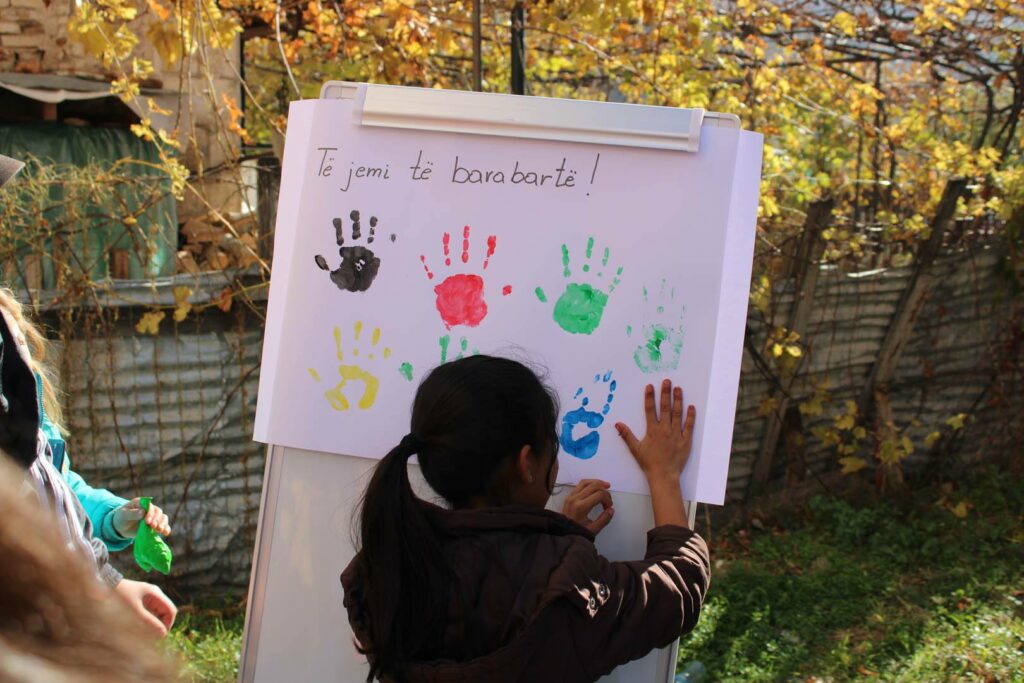
Through the Future for Children approach, youth and children belonging to the above-mentioned households living in poverty will participate in general life skills activities (Aflatoun), parenting and employability programmes.
Marginalised households
They have no potential for income generation and are dependent on others for support. Government economic support, which amounts to only about 8,000 ALL, and other social services are not sufficient to meet their needs. Through the establishment of CSNs, the intervention will address the basic needs of approximately 130 families (about 500 family members) by supporting them with material assistance through CSNs, health care/home visits, medicines and hygiene materials.
Older people
There is an increasing number of lonely older people, especially from remote rural areas, who have vital needs in terms of access to basic services, especially health services. They do not have the means to cope with this situation on their own. The intervention will facilitate socialisation and access to health and other services through the development of community safety nets (including volunteers and cooperation with the municipality).
Specialist medical visits will also be facilitated for emergencies. The safety nets will be maintained with the involvement of the municipality, other public institutions, businesses and individuals. The intervention will work towards the institutionalisation of the safety nets through the creation of the Social Impact Committee with representatives of key actors. It will also carry out the “Blue Bucket” campaigns to raise awareness and active participation of the community.
Last week, the UNCR published it’s annual Global Trends Report highlighting the trends in forced displacement over the past year. By the end of 2023, approximately 117.3 million people were forcibly displaced worldwide, with numbers rising to over 120 million in early 2024. The amount of people who are forcibly displaced has been increasing for twelve consecutive years. From the end of 2022 to the end of 2023, there was an 8 per cent increase, equating to 8.8 million people.
South Sudan
2023 was a year of turmoil, with large-scale conflicts and natural disasters. One of the major conflicts in last year, that led to 6 million people internally displaced and 1.2 million fleeding to neigbouring countries, was the conflict in Sudan. The outbreak of violence forced many to leave their homes. According to the UNHCR, South Sudan now hosts around 330,000 refugees, the majority of whom are from Sudan.
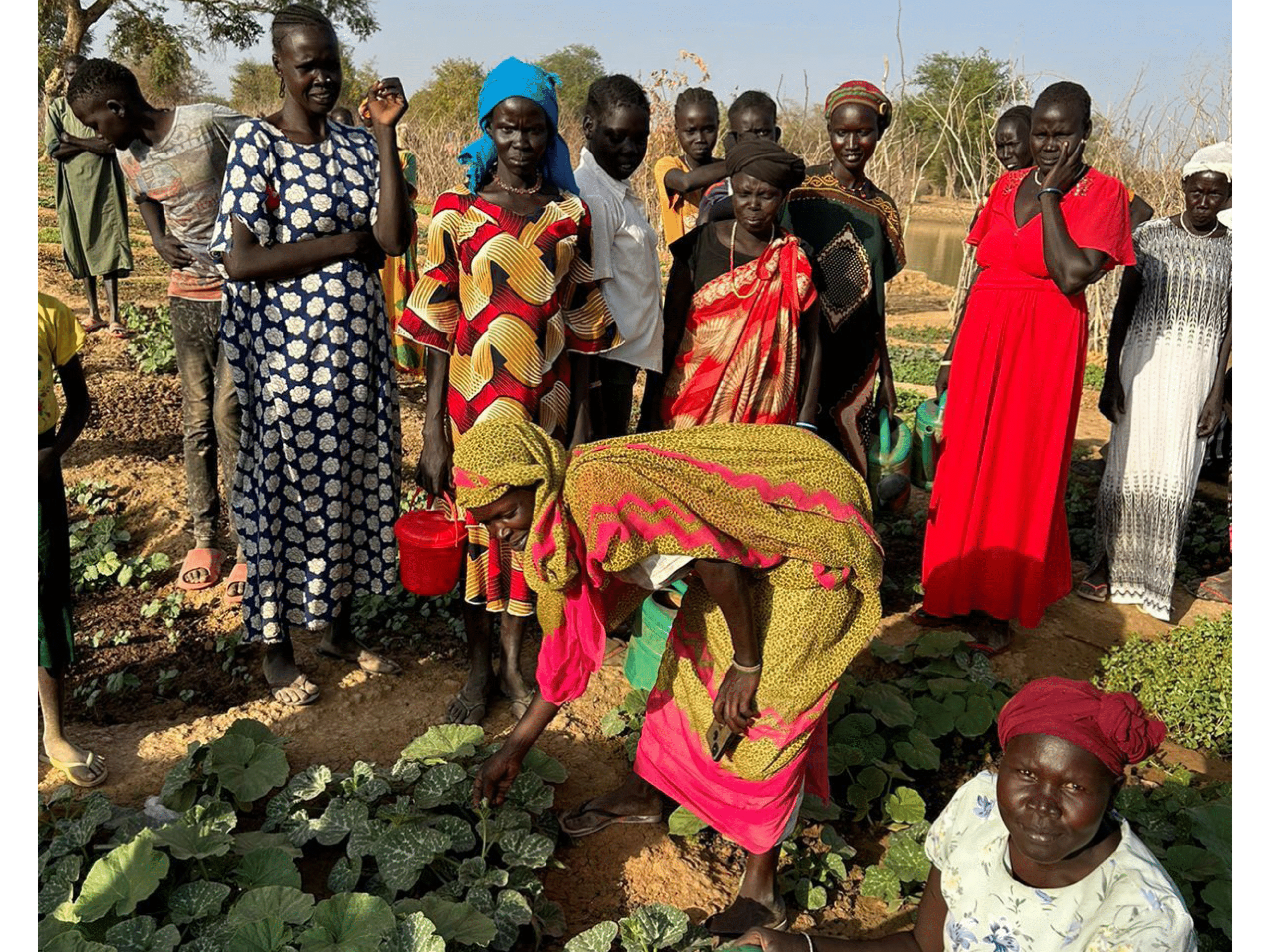
ZOA-Dorcas South Sudan supports people fleeing the violence in Sudan through nitiatives such as the SAFER project. Among them are returnees who previously fled violence in South Sudan during the war and are now fleeing back from Sudan. By providing cash, seeds and tools, the project aims to strengthen them and the host communities. The circumstances these refugees returned to is also still dire, and this project supports them them in rebuilding their lives.
Syria and Lebanon
Almost 60 per cent of all forcibly displaced people are internally displaced, meaning they do not cross a border but remain within their country. Syria has the second-largest number of internally displaced people worldwide: 7.2 million.
2023 was a year of yet another crisis in Syria. After more than a decade of war, the crisis in the country was exacerbated when it was was struck by a major earthquake and extreme aftershocks. Although the international community’s attention briefly focused on Syria after the earthquake, it has since faded into the background.
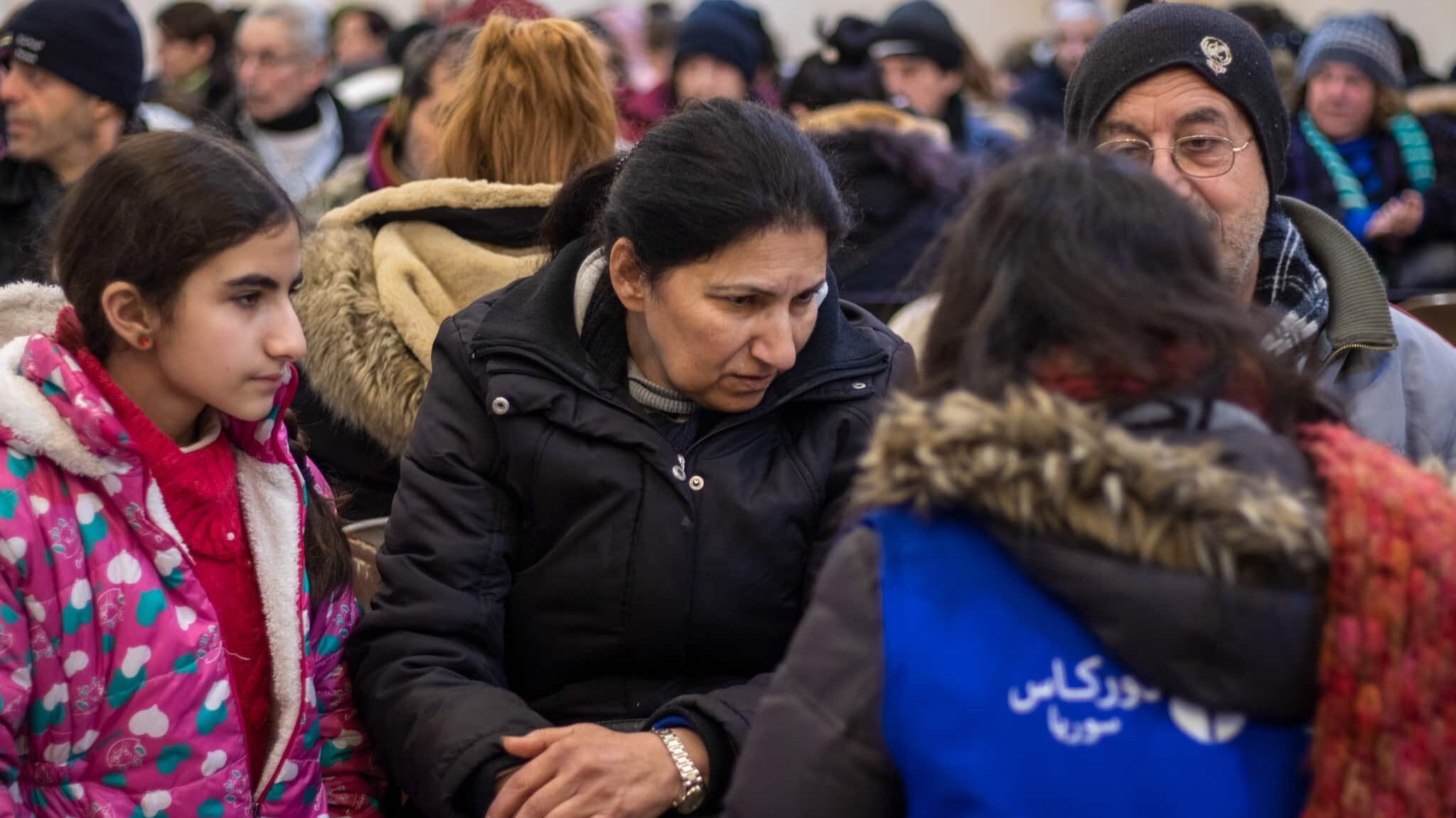
Dorcas works both in Syria and in Lebanon. Lebanon, one of the neighbouring countries hosting many Syrian refugees, is also in crisis, causing tensions between the Lebanese population and Syrian refugees. Dorcas supports these groups by organising group conversations and training sessions that bring together Syrian refugees and the Lebanese host population to resolve tensions. These sessions focus on intergenerational activities and celebrations that break down barriers, promote tolerance and reject stereotypes, all aimed at reducing conflicts and fostering mutual support systems.
In Syria, we support people in need through various programmes. When the earthquake struck, Dorcas Syria staff immediately began providing humanitarian assistance. You can read more about our work in Syria after the earthquake here:
One year after the earthquake in Syria: How did Dorcas support those in need?
Climate change
Climate change is also negatively affecting the safety of forced displaced people and may increasingly affect the number of displaced people. According to the UNHCR Global Trends Report, nearly 75 per cent of all forcibly displaced people lived in countries with high-to-extreme exposure to climate-related hazards at the end of 2023.
As extreme weather events become more frequent, we expect the number of people displaced by climate-induced events to increase. Therefore, taking both mitigating and adaptive measures to combat climate change and increase climate resilience is a key priority for Dorcas in the coming years. We see the climate refugees and we will not leave them behind.
Read the latest Global Trends Report of the UNHCR here
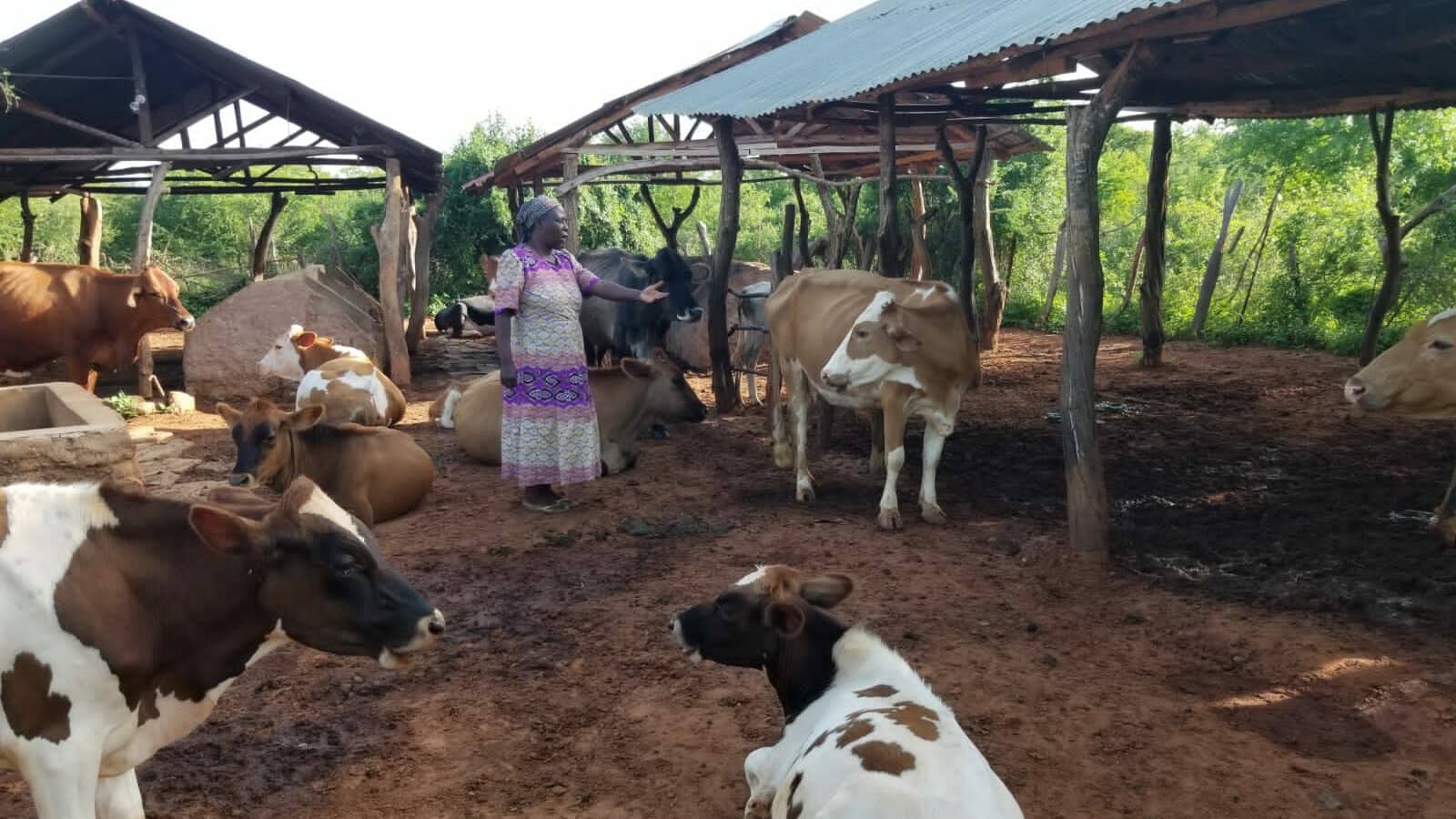
‘Welcome to my farm’, says a proud 79-year-old Bernard Mutisya. ‘I’m blessed with six daughters and a son, and we have grandchildren too.’
‘I used to keep five indigenous cows that each produced two litres of milk per day and I grew some crops like maise. But my crops regularly failed due to severe drought. Then I received commercialised pasture and dairy farming training through the Farmer Field School project. I set aside two hectares of land to use as pasture and I sold the native cows and bought three Ayrshire cows. Our farm expanded thanks to the training and extension options we received, and we started to grow drought-resistant grass and crops for silage’, explains Bernard.
‘Now we have twenty cows: seven lactating cows, four calves and nine heifers’, says Bernard’s wife Philomena. ‘We produce more than 50 litres of milk each day, which we sell to Kitise Farmers’ Cooperative Society’, adds Bernhard as he continues their story.
‘We are grateful to Dorcas for supporting the installation of a mini-processing plant at the cooperative society where the milk is processed into yoghurt and a local dairy product mala. Thanks to the plant, I have a reliable market for my milk and a good income. That means I can now invest more in our dairy business to create opportunities for my children and grandchildren. My dream is a more mechanised farm that can produce homemade supplements, including dairy meal, maise germ and maise bran. And I’d like to have more pasture, improve my dairy breeds and hire a qualified vet’, concludes Bernard enthusiastically.
This impact story was first published in 2023.
Sargon (39) was born and grew up in Bagdad. But in 2006, his family fled due to the conflict and moved to Dohuk. Sargon, who had recently graduated, experienced first-hand what it was like to be internally displaced and live in a new place where you have nothing.
In 2018, he joined Dorcas in Dohuk. He leads a team in the area of domestic violence and child abuse. Sargon experiences the Dorcas working environment as a family that allows him to grow and he transfers the kindness he experiences there to the people his team helps. ‘I am happy to wake up every day and know that my work for Dorcas is not just a job, but a thing that I love to do.
Safety is definitely not something you can take for granted in Iraq. Many women experience domestic violence, rape and enslavement, and child abuse occurs far too often. Ensuring the victims of such violence and abuse receive access to protection and appropriate support is far from easy. ‘We help people acquire the papers they need to obtain the right help. For example, children need papers to go to school or divorced women need a divorce contract to be able to live independent lives. We also help people returning home to obtain the documents they need to reclaim ownership of their property even if the house where they once lived no longer stands.’
Although Sargon is proud of everything his team does, he realises they still have a long way to go.
‘Of all displaced people in Iraq, 80% still have no papers and so no access to all kinds of support and assistance. We’re not there yet’, he says.
Haifa lives in Aden with her husband and has two children. She holds a degree in business administration and is the founder of our partner organisation LOYAC.
Back in 2011, she briefly worked on a project with another international NGO, which she really enjoyed. She then went into banking, but that was not where her heart lay. That was the moment she realised humanitarian work was her vocation and established LOYAC. This NGO has supported hundreds of people, but one story, in particular, sticks in her mind.
Abdullah’s story
‘A few years ago we visited an orphanage in Shaab. There I met Abdullah, a young boy who had already experienced so many intense things in life. His parents had divorced and when his mother remarried he went to live with his father, a soldier. Unfortunately, his father died one day during a fight and Abdullah ended up in the orphanage.
Due to all these traumatic events, Abdullah suffered from a psychological disorder. He was also very sad about losing his father. I was very touched by Abdullah’s story and offered him psychological counselling. At first, Abdullah was very withdrawn and only wanted to draw during the sessions. He drew the same thing every time: a soldier in a field and a man on the ground riddled with bullets. This is how Abdullah expressed his grief at losing his father.
However, Abdullah has gradually learned to talk about things. His grades have also improved and he is increasingly excited about life. When he grows up, he wants to become a pilot!’
Future dreams
Haifa is convinced that Yemen has a brighter future. ‘Peace will prevail and Yemen will once again become a happy country. We wish it, strive for it and dream it. We all hope that our wish will come true.’
Written by: Agnes Kroese, CEO of Dorcas
In recent weeks, the development sector in the Netherlands has taken several hard blows. The new plans of the future government (Hoofdlijnenakkoord) announced not only severe cuts, but also restricting tax benefits on donations to civil society organisations. I am deeply concerned about this and when I heard it, it almost hurt physically. We are on the eve of the biggest cuts in development cooperation in Dutch history. How can we continue to look at ourselves in the moral mirror when the global poverty and inequality gap is growing in the background? A gap that will not disappear by hiding behind our Dutch dikes, but that requires us to work together to tackle these problems both far away and close to home.
Besides reducing government costs, the cuts are also intended to make NGOs less dependent on government subsidies. At the same time, the new government is blocking another important source of funding, donations from individuals. Limiting the tax benefits on donations will make it less attractive for people like you to donate. Research has already shown a decline in giving, and experts predict that this decline will increase as a result of these plans.
You would expect that by restricting one, alternatives would be encouraged. However, the opposite is the case. It feels as if this is giving us one extra blow after the other. Our financial resources are being eroded, but so are the resources we can mobilise through society. It is a painful reality that may even force us to make difficult and painful choices in the future. Fewer projects, less support, less impact….
I dread to think about what this means for those in need. Like lonely older people in Albania who are not seen, children in Egypt who have no space to play, learn and develop their talents, youth unemployment in Ethiopia which remains extremely high, and there are countless other examples.
No matter how hard these government policies hit us, Dorcas remains more than one hundred per cent committed to the people who so urgently need our support. We have been doing this for almost 45 years and we will continue to do so. At a time when the world is facing so many conflicts and disasters, it is crucial to work for a more equal world. That is why we are calling on everyone in the Netherlands to continue to support relief organisations with donations, but also with time and prayer. So that we can continue to do what we do best: support people in need.
Together, let us ensure a future where we do not abandon our neighbours and those close to us, but continue to support and empower those who are struggling. Let us keep investing in hope and change. It is what the world needs, especially now!
Agnes Kroes is CEO of Dorcas. Agnes: ‘I contribute with great dedication to our mission in creating opportunities for people and communities to flourish. One of the ways I do this is through a monthly column in Dutch newspaper Nederlands Dagblad. In this column, I share insights from my professional experience at Dorcas. My aim is to inspire, inform and encourage readers to engage with Dorcas’ initiatives, campaigns, and projects.‘
In many parts of the world, menstruation is still a taboo. In Tanzania this is also very much an issue. Lilian, Country Director of Dorcas Tanzania, is deliberately speaking out on this issue because ‘breaking the silence restores the dignity of women’.
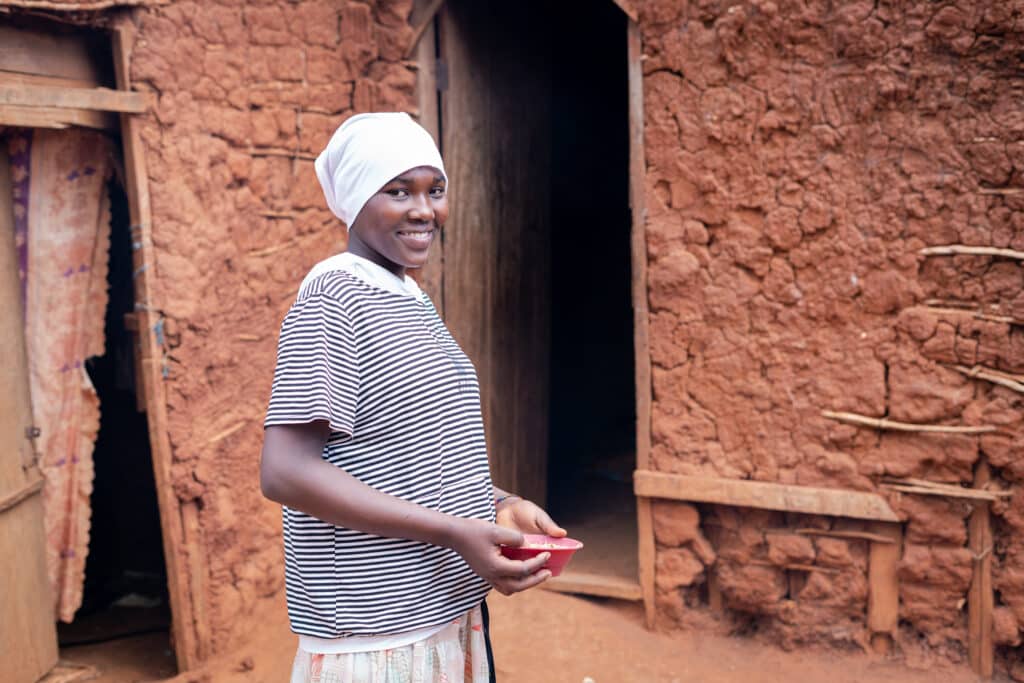
Latifa, from Tanzania, remembers very well the first time that she had her period. She woke up in the middle of the night and had a terrible stomach ache. Latifa went to the toilet and saw that she had started bleeding. She was shocked and went to see her mother. Her mother was very calm, which surprised Latifa, and said: ‘You are an adult now and that means you have to abide by new rules.’ Latifa was no longer allowed to play with boys, because if she did she would get pregnant. And when she had her period, she was not allowed to pick vegetables or go to the well to fetch water. Then there was the challenge of not leaking and staining her clothes. All this led to Latifa isolating herself when she was menstruating and not going to school. Her life became difficult and lonely.
No exception
Latifa’s story is no exception across Tanzania, according to Lilian. The MHM4Her (Menstrual Hygiene Management for Her) project is one of the projects of Dorcas Tanzania, which started in 2016 in the Manyara region. Lilian: ‘This is an area with a lot of poverty and a lack of clean water and sanitation. We offered support and found that many girls in the area were not going to school when they were menstruating. This was not only because of the stomach aches, but also because they did not have proper sanitary facilities to change and they were embarrassed if they stained their clothes. As you can imagine, the consequences for the girls were enormous. Some of them never went back to school. I immediately knew that addressing this issue would be our new challenge.’
Breaking the silence
Lilian and her team started working on a plan to support the young women to get back to school. The first step was to ensure that the schools had good sanitation facilities. They also raised awareness about hygiene and menstrual products. The male leaders were also involved in this process. Lilian: ‘At first they were angry. They were embarrassed by us. We explained to them that they should be aware of these issues because they are the ones who make the decisions. The young boys have also been taught about menstruation. Girls were often laughed at by the boys and we wanted to break the silence and we also wanted to explain to them what menstruation is really all about. We told them that it is not something bad, but that menstruation is about life.’
The Manyara project was not the end of the story. With the support of the government and a number of other organisations, similar projects have been launched in other parts of Tanzania over the past few years. Menstrual hygiene is now part of Tanzania’s school curriculum. Lilian: ‘Because we started talking about it, people’s views in Tanzania have changed. It takes time, but I believe the taboo will be broken and this will lead to more gender equality in our country.’
This article is translated from an interview that appeared in the Dutch newspaper ‘Nederlands Dagblad’ (4 May 2024). The original text is written by: Hilde Kooij-Tromp.
Ioana is the Co-founder and Director of ASA Association, an implementing partner of Dorcas. ASA Association aims to fight poverty and exclusion and to develop communities in Romania, especially Roma communities.
Ioana: ‘For many Roma, the cycle of prejudice and exclusion starts when they are young. Roma children experience social marginalisation and segregation from the outset of their educational journey.’
‘We fight for Roma children’s right to a proper education. We want to ensure these kids get the same quality of education as kids from more privileged backgrounds. Obstacles that many Roma children face, such as a lack of appropriate clothes for school, poor personal hygiene, unhealthy eating habits, or an imbalanced family dynamic, should not limit their access to such education.’
‘In partnership with Dorcas Romania, we implement a complex programme that meets the needs of children and their parents. First and foremost, we want to educate adults about the importance of education for their children because Roma children are more likely to attend school if their parents are supportive. The children in our programmes don’t just go to school. We also involve them in after-school activities, summer camps, and special events where they learn life and social skills. Finally, we address the issue of social exclusion at a community level by involving mayors, school administrators, doctors, and social workers in our programme and by organising public events.’
‘Our love for these children motivates us to keep going. We’ve seen the first Roma children complete elementary school and head on to high school. Every Roma child has the right to a proper education and the opportunities this offers in life.’
𝘛𝘩𝘪𝘴 𝘴𝘵𝘰𝘳𝘺 𝘪𝘴 𝘱𝘢𝘳𝘵 𝘰𝘧 𝘋𝘰𝘳𝘤𝘢𝘴’ 𝘩𝘶𝘮𝘢𝘯 𝘳𝘪𝘨𝘩𝘵𝘴 𝘤𝘢𝘮𝘱𝘢𝘪𝘨𝘯. 𝘙𝘦𝘢𝘥 𝘮𝘰𝘳𝘦 𝘴𝘵𝘰𝘳𝘪𝘦𝘴 𝘢𝘯𝘥 𝘴𝘵𝘢𝘵𝘦𝘮𝘦𝘯𝘵𝘴 𝘰𝘯 𝘰𝘶𝘳 𝘥𝘦𝘥𝘪𝘤𝘢𝘵𝘦𝘥 𝘩𝘶𝘮𝘢𝘯 𝘳𝘪𝘨𝘩𝘵𝘴 𝘱𝘢𝘨𝘦. Human Rights: Contributing to a just society – Dorcas