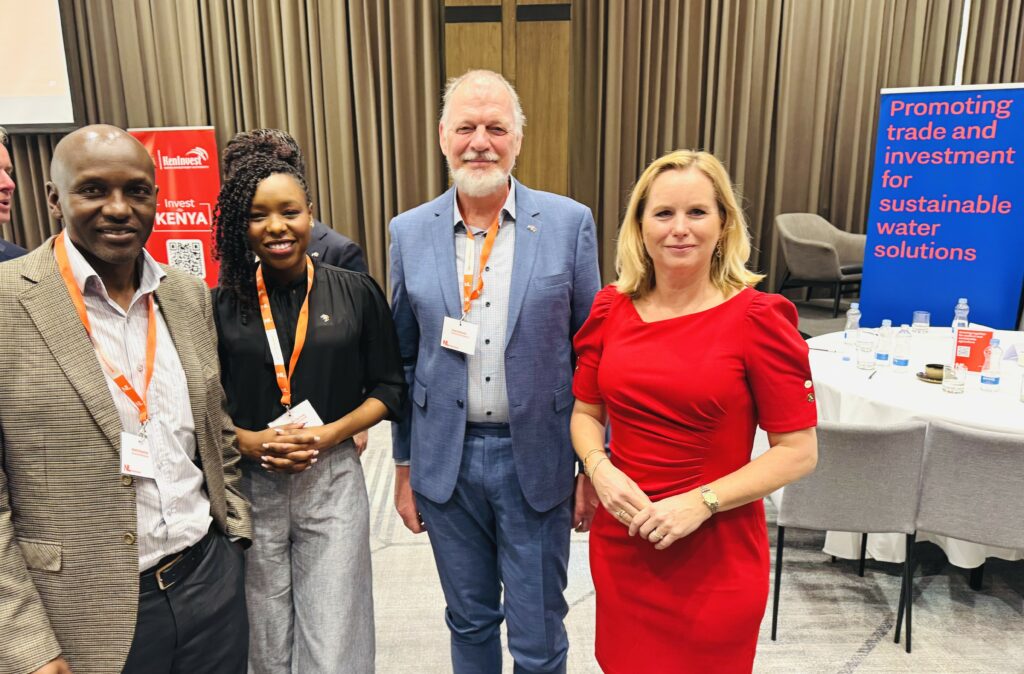
Dorcas took part in the Netherlands Trade Mission to Kenya from 17–20 March 2025. Focusing on sustainable agriculture and water, the mission provided a valuable platform for engagement, collaboration and visibility. The event was led by the Dutch Minister of Foreign Trade and Development Cooperation, Reinette Klever, and timed to coincide with the State Visit of King Willem-Alexander and Queen Máxima. It brought together key stakeholders from government, the private sector, development organisations, and research institutions.
Highlighting the Siaya Water and Sanitation Project
One of the key moments for Dorcas was our presentation on the Siaya Water and Sanitation Project. Edwin, Country Director of Dorcas Kenya, and Daniella, Thematic Expert, shared insights on our partnership with Maji Milele, Siaya County Government, North Gem CDP and Netherlands Enterprise Agency (RVO). The Public Ownership-Private Management model used in this initiative received significant interest, with several organisations expressing a desire to replicate and scale up the approach in other regions. This underlines the growing demand for sustainable water solutions in Kenya.
So far, the project has had a substantial impact, providing access to safe water for more than 115,000 people and improved sanitation for more than 97,000 people.
Learn more about the impact by watching the video below:
Building partnerships and looking ahead
Dorcas participated in a series of high-level meetings, networking events and site visits. These engagements enabled us to connect with new partners who share our vision for sustainable development. We explored opportunities to collaborate with various organisations interested in sustainable agriculture and water solutions.
Participation in this mission has considerably boosted Dorcas’ visibility among key stakeholders in both Kenya and the Netherlands. The interest in the Siaya model, coupled with promising new contacts, offers exciting opportunities for future collaboration.
This mission reaffirmed our commitment to impactful and sustainable solutions in water and agriculture. We look forward to furthering our work for communities in Kenya and beyond.
Learn more about Dorcas Kenya.
Today marks three years since the full-scale invasion of Ukraine began. Over this time, many have endured immense suffering and loss. Yet despite these challenges, Dorcas Ukraine has seen the extraordinary resilience of our project participants, who continue to show unwavering strength.
Meet Tetiana (60)
Tetiana and her husband Serhii lived in Pologi, a town occupied in 2022. After the occupation, they were evacuated to Zaporizhzhia. Tetiana recounts: ‘There was constant shelling and we ran out of food, money and medicine for Serhii, who had suffered a stroke. With no communication or electricity, we had to travel across the city just to charge our phones. We left everything behind, taking only our cats.’
Reflecting on the last few years, Tetiana shares: ‘We have endured much. Though we carry on with our daily lives, we’re constantly confronted with the cycle of mourning what we’ve lost, followed by healing and growing stronger. I’ve had to let go of the pain of losing our home, which is now occupied by others.’
A new beginning in Zaporizhzhia
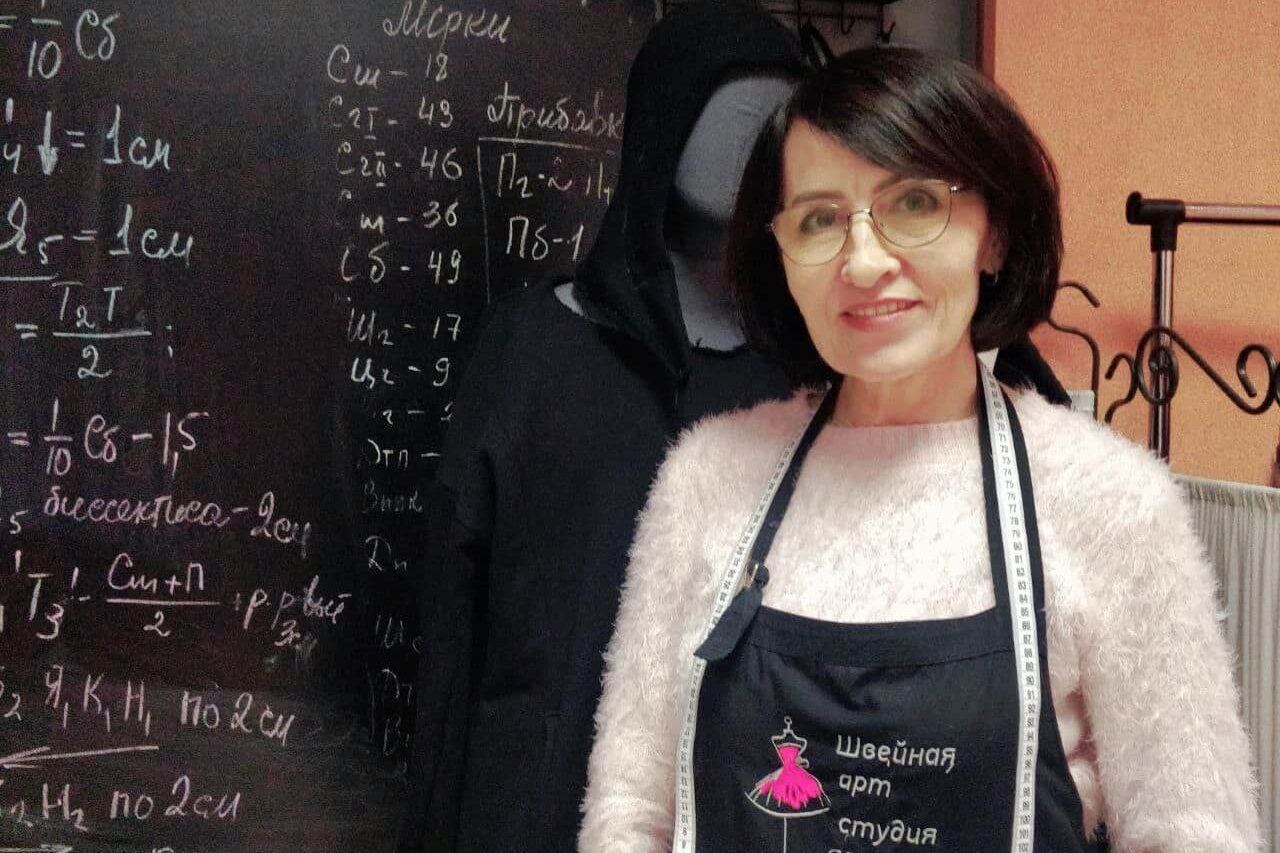
In Zaporizhzhia, Tetiana connected with Dorcas Ukraine through our ‘restoring hope’ project. Through this initiative, she enrolled in a sewing course, which has contributed to improving her family’s livelihood. Learning to sew had always been a dream of Tetiana, and despite the challenges, she was able to make it a reality.
Tetiana now plans to start by repairing clothes before moving on to tailoring. Together with her daughter, she also aims to create adaptive clothing for the wounded in hospitals.
At Dorcas, we remain committed to supporting people like Tetiana to rebuild their lives with dignity and hope. Her story is a reminder that even in the face of immense loss, new beginnings are possible.
Between October and December, the Dorcas team, with the support of the Ukraine Humanitarian Fund (UHF), provided cash assistance for winter fuel to 4,258 households in the Zaporizhzhia region. This initiative has become an essential support for people in need, who have found themselves in a complicated situation due to the conflict and economic crisis. Over the past year, the problem has been exacerbated by continuing attacks on energy infrastructure.
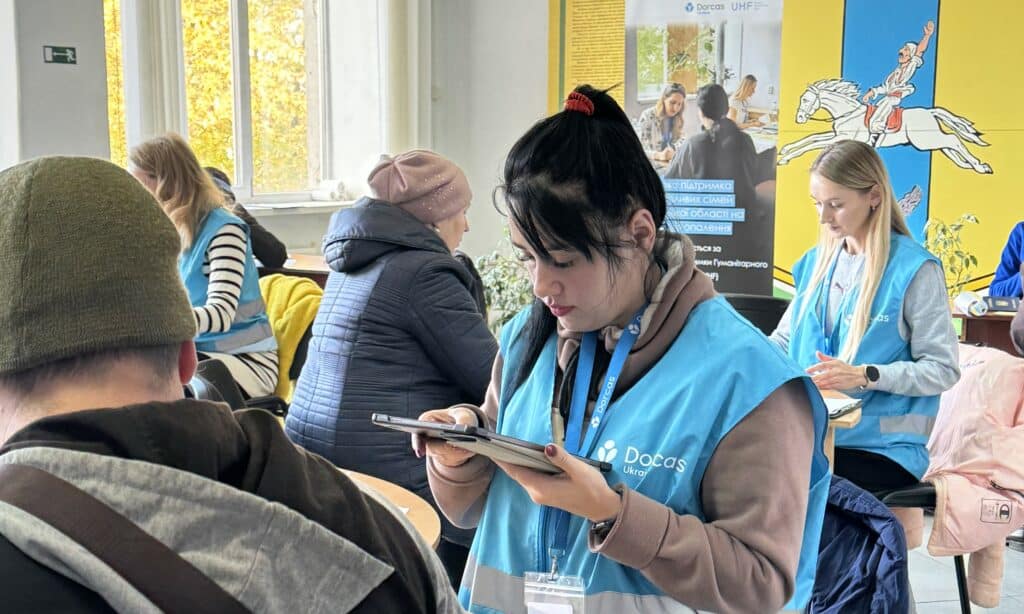
In addition, declining support from several funds has led to a significant increase in the number of internally displaced people at risk. IDPs are also often housed in privately rented or substandard housing, which, like most housing in Ukraine, may lack adequate insulation. Returnees and non-displaced persons also face similar insulation challenges in their homes, and the situation is exacerbated by conflict-related damages such as leaking roofs, broken windows and damaged perimeter walls that compromise the thermal integrity of the houses.
As a result, heating their homes for at least three months has become an unbearable financial burden for people with disabilities, older people, large families and single parents. The amount of assistance was around 505 euros per household. The funds enabled families to buy firewood and briquettes to keep their homes warm during the cold months.
This underscores the importance of international support in continuing to support Ukrainians who are enduring and struggling to survive in the midst of the conflict.
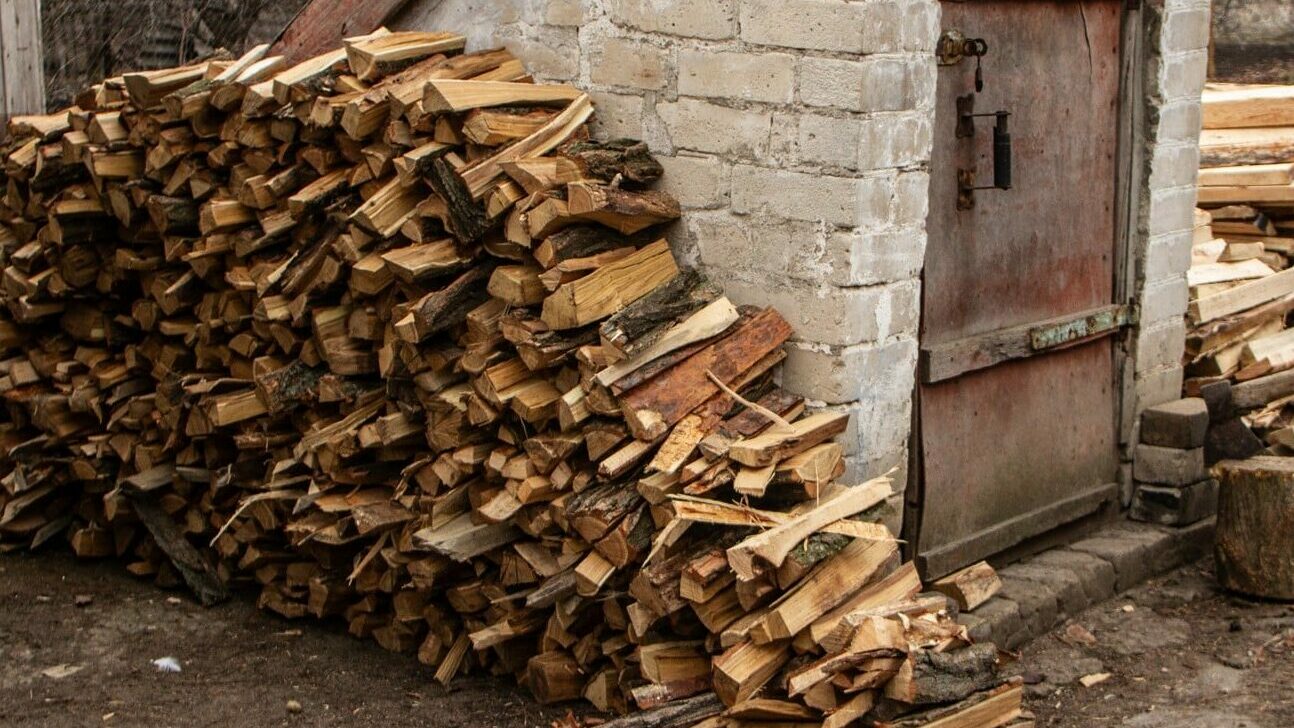
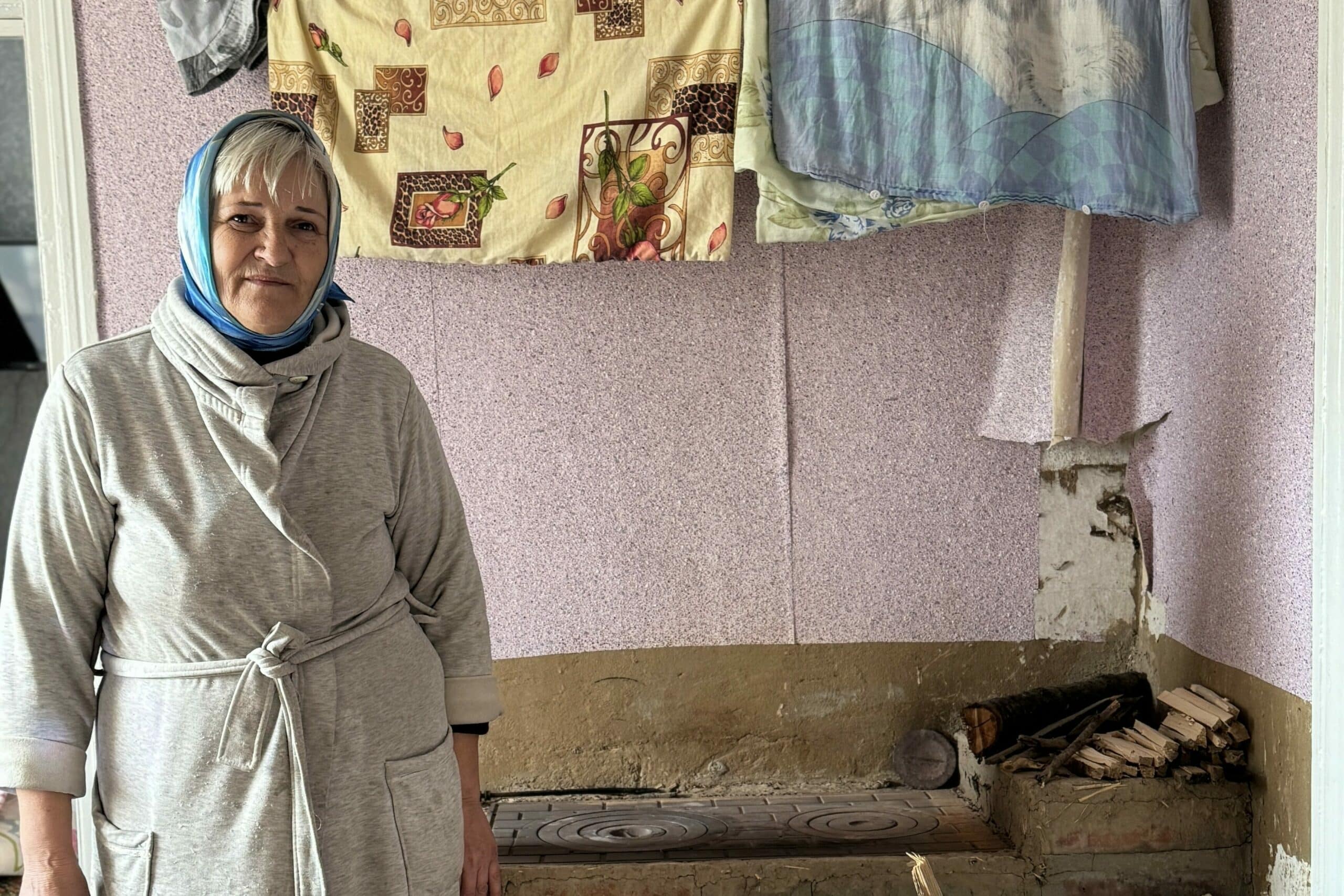
The impact of this assistance can be seen in families like Valentyna’s. Forced to leave Zaporizhzhia due to the ongoing hostilities, Valentyna and her husband have settled in Vilnyansk, where they face a daily struggle to make ends meet. With limited financial resources, they rely on collected branches and cones to heat their home. Thanks to financial support from the Dorcas team and UHF, they were able to buy enough solid fuel to get them through the winter and provide a warm and stable environment for their grandchildren. Their story reflects the resilience of Ukrainian families and the important role humanitarian assistance plays in supporting them to face these difficult times with dignity and hope.
Kenya is severely affected by climate change, experiencing challenges such as prolonged droughts, rising temperatures, erratic rainfall and floods. These environmental stresses caused by global warming have led to land degradation and deforestation, further exacerbating the country’s vulnerability. To combat this, the Kenyan government has set a target to plant 15 billion trees by 2032 to reduce the country’s greenhouse gas emissions and enhance climate resilience. In addition to improving air quality, trees help prevent flooding, support biodiversity, and strengthen ecosystems, while also playing a key role in regenerative agriculture and sustainable land management practices by restoring soil health and preventing further degradation.
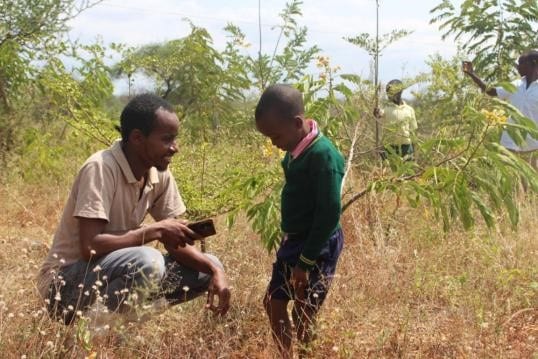
In line with these efforts, Dorcas Kenya launched the Kitui climate change project in 2021 to combat climate change while engaging children and supporting both their education and future resilience. This was done under the slogan ‘A child, a tree’, where each child is assigned a tree to plant, care for and maintain. The project has successfully planted 55,000 seedlings and distributed 100,000 seed balls of indigenous, bee-friendly trees. Survival rates measured one year after planting were over 65 per cent for the tree seedlings and 50 per cent for the seed balls. Building on these efforts, Dorcas Kenya launched the Marsabit climate change project in 2024, which aims to plant 8,400 tree seedlings in schools by 2027.
Why is the involvement of children and schools in solutions to climate change such a valuable practice? This article explores how engaging children not only empowers them to take ownership of their future, but also builds wider community resilience, and highlights why the education system is such a fruitful setting for these initiatives.
The role of education in climate action
Schools are an ideal setting for climate action projects as they provide a structured environment where children can learn and actively participate in initiatives such as tree planting. Dorcas works with schools that are motivated to get involved, have at least one hectare of land and an active environmental club. Through these school environmental clubs, children gain knowledge and skills about the impact of climate change awareness, particularly how it affects their future livelihoods, the country’s economy and biodiversity. This encourages a deep understanding of the importance of environmental conservation and climate action. Including climate education in schools not only equips students with the information they need to address climate challenges but also builds a sense of responsibility and ownership. In this way, education creates a generation that is more informed, engaged and ready to lead the way to climate resilience.
The power of children in the creation of a sustainable future
Children are powerful agents of change, and Dorcas’ projects have shown how quickly they can adapt to new practices and behaviours, especially when given the opportunity to participate in hands-on activities. Through involvement in tree planting and environmental clubs, children develop a strong sense of ownership.
Daniella Maroma, Thematic Expert on Climate Adaptation and Resilience at Dorcas, describes: ‘During my visit to the schools in Kenya, I witnessed something truly remarkable. The children proudly showcased their trees, their faces lighting up as they pointed out how tall they had grown. Each tree was a living testament to their care, dedication and belief in a brighter future. These children are not just caring for trees, they are actively shaping a more resilient and sustainable world. Their actions are a powerful reminder that meaningful change begins with simple, determined steps.’
Children who grow trees to maturity are further encouraged through individual and school awards, which motivate them to continue their efforts. One of the schools Dorcas has worked with, Athi Primary School, is a good example of how highly motivated children can be. It now has at least 300 surviving trees, and the children carry water from their homes to keep the trees from drying out. This commitment often inspires their peers to get involved, creating a ripple effect in their schools and communities. Tree planting not only improves the environment in various ways but also secures a sustainable future for children by promoting biodiversity and supporting long-term climate resilience in their communities.
Dorcas hopes to inspire young children to take a leading role in environmental conservation and in tackling the effects of climate change, ensuring a sustainable future for generations to come.
The provision of emergency cash assistance is a critical aspect of child protection, particularly in times of conflict and displacement. Through the work of Dorcas Ukraine and its sub-partner, Nevo, a dedicated field team provides timely and essential child protection services to children in need in the Zaporizhzhia region.
These children face challenges beyond the immediate threat of conflict. Many experience displacement, separation from family and friends, and the psychosocial impact of abandonment. Non-payment of child support following divorce also remains a common problem. In addition, many grandmothers or mothers are raising children alone because their husbands are away in military service. Children with disabilities in vulnerable situations are also a key priority for cash assistance, since mothers often lack jobs and steady income due to caregiving responsibilities.
To address these needs, case managers provide tailor-made cash assistance. The level of cash support is determined by the child protection cluster and may vary according to individual circumstances. This support is used to meet basic needs such as winter clothing, school supplies and materials to promote psychosocial well-being.
Thanks to funding from the Ukraine Humanitarian Fund (UHF), 99 children living near conflict zones have already received this vital support. By meeting their immediate needs, this emergency cash assistance provides not only practical support, but also hope and stability for children and their families at a difficult time.
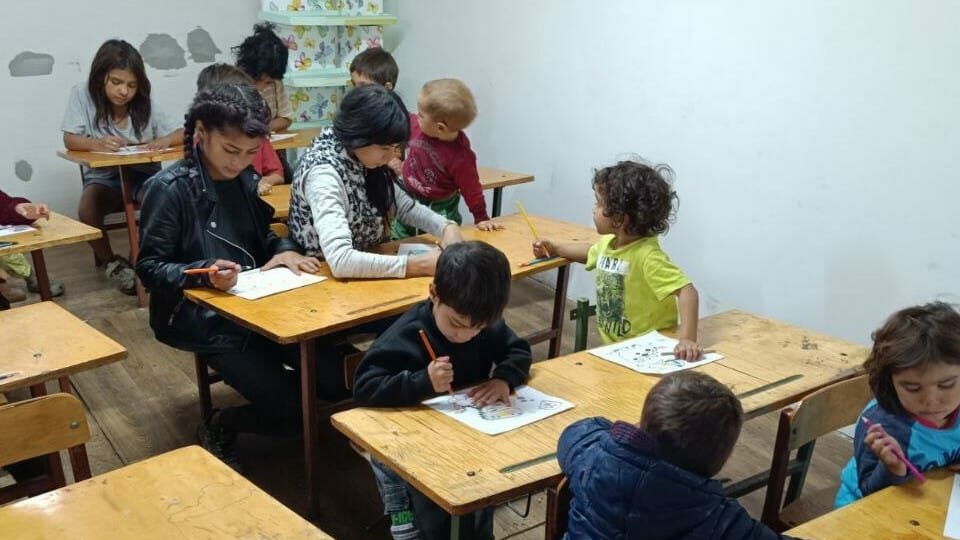
Extra-curricular activities are an important way for children to discover their talents, build confidence, socialise and develop positive habits. Recognising the importance of these opportunities, Dorcas Ukraine’s Future for Children programme works with its partner NGO ‘New Beginning’ to provide sports, educational and psychosocial activities for children in Transcarpathia. Each week, up to 80 children take part in these activities, 80 per cent of whom are from the Roma community.
During the warmer months, the children enjoy nature outings where they plant trees, bushes and flowers with volunteers, benefiting both the environment and their sense of community. Art therapy has proved to be a popular activity for participants, providing a creative outlet for self-expression. The programme also includes psychosocial workshops led by specialists focusing on feelings and emotions, visits to local museums, school preparation support and engaging activities such as photography challenges. More than just fun, these after-school initiatives provide children with essential skills, emotional resilience and a supportive community.
By investing in this programme, Dorcas Ukraine is supporting a brighter future for children in very vulnerable circumstances, empowering them to flourish.
Dorcas is responding to urgent needs in South Sudan and Ethiopia, addressing crises in some of the most affected regions.
In South Sudan, the northern state of Bahr el Ghazal has been one of the hardest hit areas by the devastating floods, which have displaced families and had a severe impact on livelihoods. Agricultural land has been damaged and the harvest season disrupted, leaving many households facing food insecurity. To support recovery, ZOA Dorcas South Sudan will provide a one-off emergency cash distribution to up to 4,000 people in two counties.
Meanwhile, in Ethiopia’s Oromia State, East Wollega, displacement caused by intercommunal tensions over competition for land and resources and attacks by armed groups has forced thousands of people into overcrowded camps or urban areas. Following an assessment in six districts, the Dorcas Ethiopia team identified Waya Tuka as the area of most urgent need. Dorcas Ethiopia will provide cash assistance to 400 displaced households for two months.
Dorcas is and will continue to be committed to providing timely and effective support in the countries where we work. Reaching those most in need at critical times.
In conflict-affected regions, it is vital to ensure the well-being and safety of communities in vulnerable situations. The Dorcas Ukraine team, in partnership with organisations such as the Ukraine Humanitarian Fund, is providing vital support to the Zaporizhzhia region, offering not only material assistance but also hope for a safer future. Efforts are focused on restoring stability in the face of ongoing threats, particularly from shelling and bombing, and ensuring that local communities can maintain their homes and sense of security.
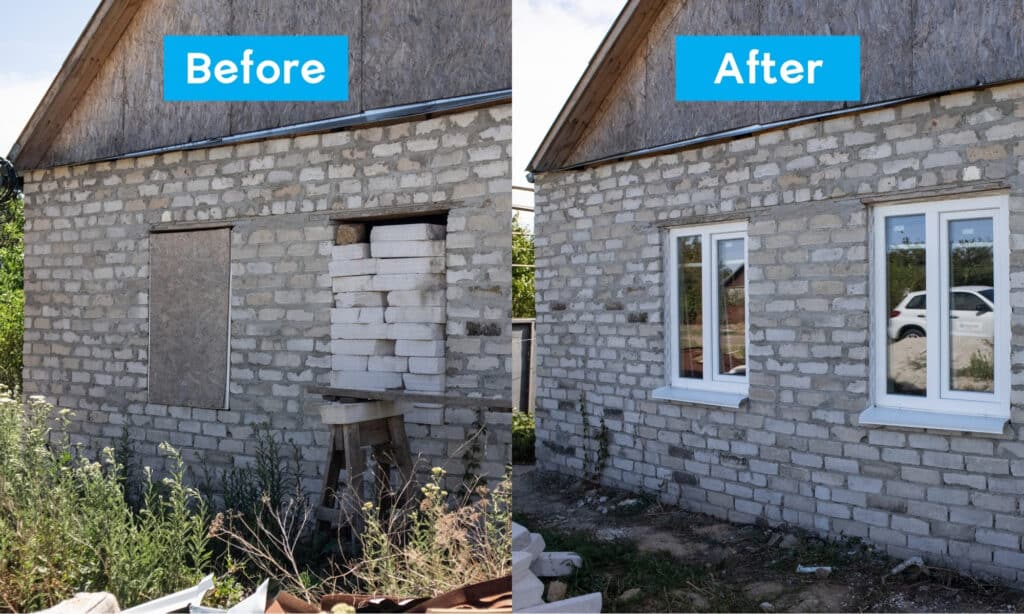
A key element of this work is the repair of damaged homes, which is particularly critical as winter approaches. Replacing windows and doors in 37 homes was an important step in preparing for the colder months. As well as protection against the harsh winter conditions, these repairs are a source of physical and psychological reassurance for the residents. Many of the people supported are older or have a disability and are unable to leave their homes due to health issues, lack of family support or fear of the unknown.
In addition to physical repairs, Dorcas places particular emphasis on ensuring that people in need have access to essential resources. Repairs, psychological support and non-food parcels are life-saving during periods of increased shelling when local infrastructure is damaged.
Through these initiatives, we are not only rebuilding homes, but also fostering the belief that despite the challenges they face, the people of Zaporizhzhia can persevere and overcome adversity. A warm, safe home is not only a refuge, but also a symbol of support and resilience in these difficult times.
In times of conflict, ensuring access to quality psychosocial support is essential to maintaining people’s well-being. In the regions affected by the ongoing conflict in Ukraine, significant efforts are being made to provide therapeutic and educational opportunities for children and adults. Art therapy has become an important part of this support, promoting mental health and building community resilience.
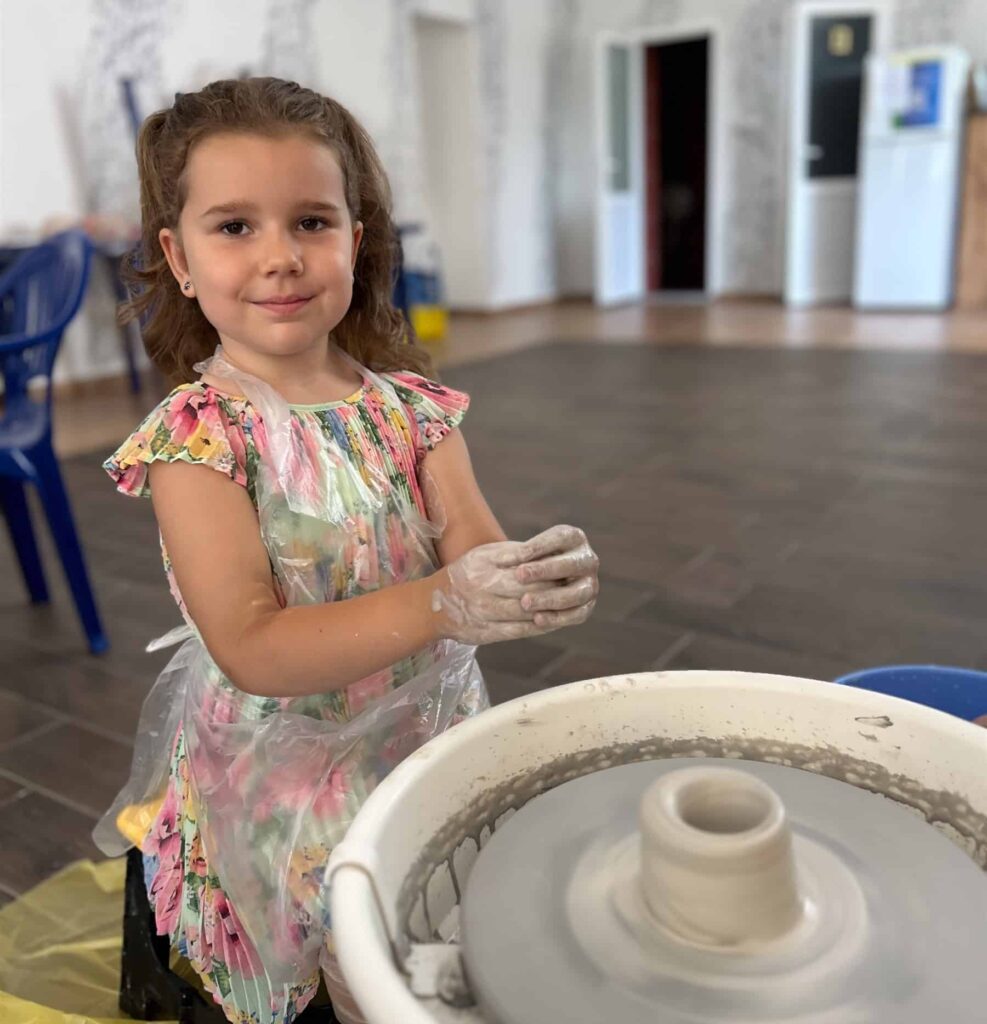
Dorcas is working with the organisation ‘Nevo’ to create child-friendly spaces in communities across the Zaporizhzhia region. As part of a comprehensive multi-sectoral support project, clay therapy groups have been set up to provide support. This form of art therapy encourages self-expression, has a calming effect and reduces stress. Participants develop their ability to concentrate, improve their fine motor skills and stimulate their imagination and creativity. The sessions have a wide range of participants, with the youngest member of the group being just five years old. Parents also appreciate this type of support, as many children don’t have many opportunities to develop and interact with their peers because they have to study online due to the conflict.
The clay therapy sessions are complemented by interactive sessions led by legal experts, who remind children and young people of their fundamental rights in an engaging and playful way. In addition, Nevo specialists use these sessions to educate participants about the importance of preventing and addressing domestic and gender-based violence.
Thanks to funding from the Ukrainian Humanitarian Fund (UHF), these activities are currently held in six locations in the communities of Pavlivska, Vilnyanska and Kushugumska. This initiative is an important step in the provision of psychosocial support and in building the resilience of the affected communities during these difficult times.
These weeks, foreign policy is at the centre of debates in the Dutch parliament. Members of parliament are discussing the historic cuts in development cooperation and Dutch diplomatic clout. While the consequences of almost every other cut are calculated to the last decimal point, this is not the case with foreign policy. This is risky, because these major cuts will not only affect people in vulnerable situations abroad. They also damage our own economy, security and safety. So the government needs to stop pretending that this is free money and properly map out the consequences of these large-scale cuts.
First the numbers. Between 2025 and 2029, the Schoof government will cut more than €10 billion from development cooperation and €267 million from diplomacy. This austerity operation is therefore historically large. This is the result of the coalition agreement between the PVV, VVD, NSC and BBB and of decisions in the latest budget documents. For example, the cabinet has gone beyond the coalition agreement and made a substantial additional cut in development cooperation. This is the result of the historic decision not to allow the development cooperation budget to grow in line with economic growth for the first time in 50 years.
Abroad, the cuts will mainly affect marginalised people in low-income countries. For example, we know that when the British government made significant cuts in development cooperation, the consequences were disastrous, especially in the lowest-income countries. For example, the UK prevented 60 per cent fewer mothers from dying in childbirth and 550,000 children were unable to go to school. And the £17 million cut to a social safety net fund in Ethiopia immediately deprived 350,000 people of vital financial and food assistance.
But the cuts will also have major consequences closer to home. After all, a third of our collective income is earned abroad. Development cooperation contributes directly to this, as civil servants calculated in 2014, when cuts were also made. For every euro of assistance to partner countries, Dutch exports increased by 70 to 90 cents. The added value for our economy was 40 to 55 cents per euro of assistance, which resulted in around 15,000 jobs at the time. The substantial cuts in development cooperation are therefore costing us jobs and income.
The cuts also weaken the Netherlands’ position and influence on the world stage at a strategic level. Whether it is security, conflict prevention or human rights, these commitments require more and more capacity. In the latest budget, the government itself states that the Netherlands ‘should stand up more actively for its interests and values’ as ‘the economic and demographic centre of gravity in the world’ shifts east and south.
The previous government also emphasised the growing importance of partnerships with emerging countries in Asia and Africa. Think of the access to strategic raw materials from Africa that we will desperately need for the energy transition. Or containing the growing number of wars in the regions around Europe, which are damaging our important trade. The budget, which is currently being cut, is an important instrument for responding to these developments.
In short, cuts in the Netherlands’ international involvement are not free. To pretend that they are is to ignore the fact that our economy, our security and our very existence depend to a large extent on other countries. The least this cabinet can do is to properly map out the consequences of the budget cuts. Then politics can do its job and, if it wishes, limit the negative consequences. If you do not want to do this for people who have to deal with war, crisis and exclusion on a daily basis, then do it out of a well understood self-interest. This is not only a gesture of humanity, but also of good governance.
Written by: Jochem Duinhof – Political Advisor at Dorcas and Bas Bijlsma – Executive Director & Founder of Data for Peace and Security.