Iraq is facing one of the most severe climate crises in the region. Temperatures are rising seven times faster than the global average, and the country is expected to experience increasing flooding, drought, and desertification over the coming decade. These pressures are already undermining livelihoods and economic resilience at the household level, contributing to rising poverty.
By 2035, Iraq is expected to have a water deficit of around ten billion cubic metres, driving drought, soil salinisation, and the loss of around 25,000 hectares of agricultural land each year. It is estimated that 70 per cent of Iraq’s agricultural land is at risk of total degradation due to climate change.
Climate needs assessment
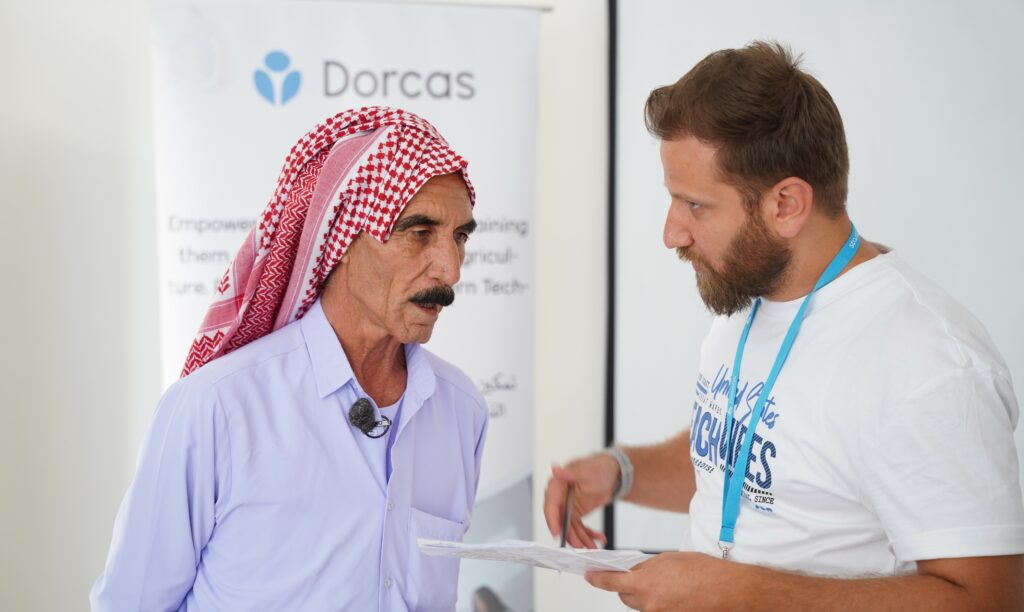
Against this backdrop, Dorcas Iraq conducted a qualitative climate needs assessment in Basra, Ninewa (Sinjar) and Duhok between November and December 2025. The assessment aimed to identify priority climate risks and practical actions to strengthen resilience in agriculture, water management, and ecosystems.
Data was gathered through fifteen key informant interviews across Basra, Ninewa, Duhok and Mosul, as well as two focus group discussions in Sinuni (Balef and Ware Khidre villages), involving 21 participants in total.
Key findings
The assessment highlights a consistent pattern across all locations:
- Climate adaptation is taking place, but largely in a reactive and project-driven manner.
- Water scarcity poses the greatest challenge across sectors and regions.
- The limited uptake of climate-smart practices reduces resilience and productivity.
- The groups most affected are smallholder farmers, women (including those in female-headed households), young people, households dependent on the climate and displaced people in Sinjar.
Priority needs per governorate
In Basra, severe water scarcity, high salinity, desertification and industrial pollution are all major issues. Priority areas include the implementation of water-efficient irrigation systems, the establishment of local water storage facilities, the rehabilitation of canals, and the strengthening of governance, particularly with regard to industrial water use.
In Ninewa (Sinjar), prolonged drought, high temperatures and erratic rainfall are causing soil degradation and losses to crops and livestock. Support for climate-smart agriculture, including drip irrigation, rainwater harvesting and coaching through demonstration plots, is especially needed for women, youth, smallholders and internally displaced people.
In Duhok, drought, irregular rainfall, land degradation and frequent wildfires are having an impact on forests and livelihoods. Key priorities include integrated water resource management, community water committees and forest fuel management linked to wildfire prevention.
How Dorcas is contributing
Dorcas addresses these needs by planting trees using water-saving methods such as the Waterboxx, distributing fruit tree seedlings, and providing practical climate adaptation training. Forest-focused activities include pruning and establishing a biomass-to-compost value chain to reduce fire risk and improve soil quality. Dorcas also supports institutional capacity building and green jobs programs, including vocational training in mushroom cultivation.
Sargon, Country Director of Dorcas Iraq, explains:
‘Our climate resilience strategy prioritises proactive, evidence-based action. In Basra, we focus on expanding community- and farm-level water storage, improving irrigation efficiency, and addressing soil salinity. In Duhok and Ninewa, we are promoting climate-smart agriculture, restoring degraded land, and strengthening wildfire prevention.
Central to this approach is improved coordination between water authorities, agricultural departments, and local communities, enabling lasting, inclusive climate resilience across Iraq.’
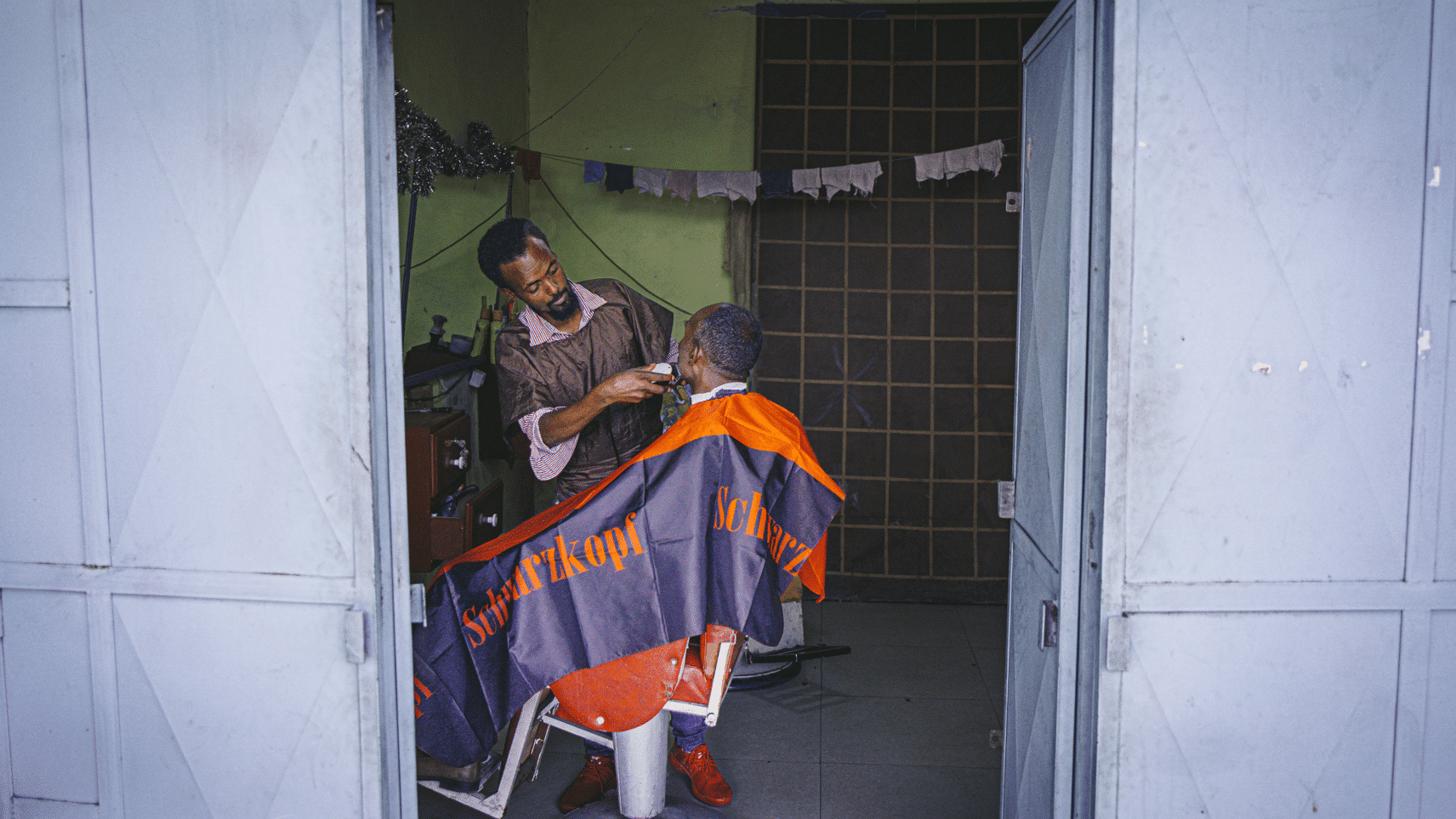
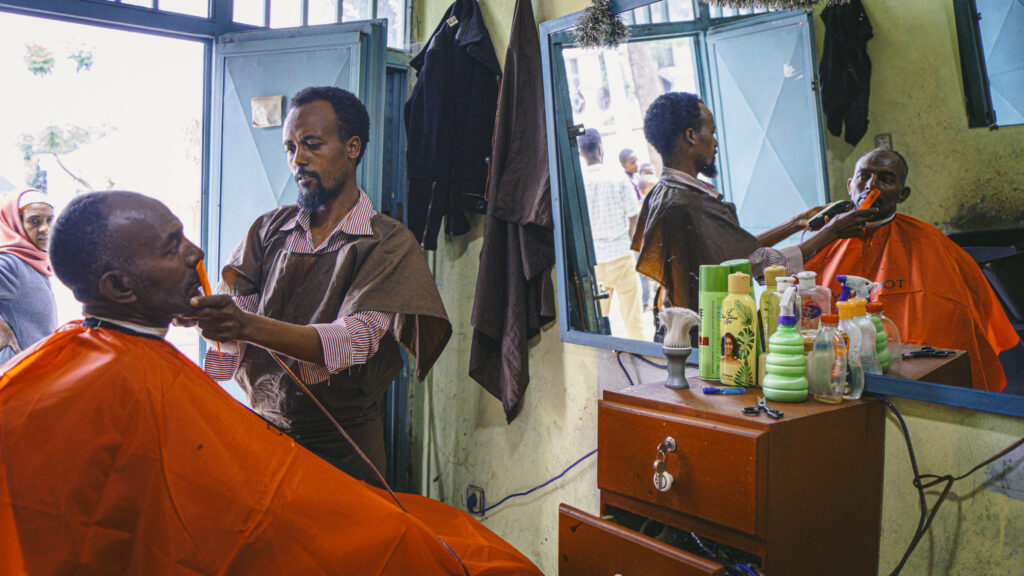
‘I graduated in Business Management, but I couldn’t find a job. As a result, I wasn’t earning anything and was unable to provide for my family.’ Eshetee, a 31-year-old from Ethiopia, was unemployed for a long time. However, after taking part in a training programme run by Dorcas, he was able to open his own barbershop and now earns enough to support his family.
Eshetee is married and the father of a daughter who is just over a year old. He lives with his family just outside Shashemene, a town in south-west Ethiopia. After finishing his studies, he, like many other young Ethiopians, found it difficult to get a job. ‘I was barely earning anything. I took whatever work I could find on the streets, but it wasn’t enough to support my parents or maintain my own family.’
Barber training
Eshetee heard about Dorcas’ vocational training programmes through friends. He enrolled on the barbering course. Within a few weeks, he had mastered the finer points of the trade. He also completed a skills course, which boosted his confidence and taught him about planning and social skills.
After completing the training, he opened a barbershop with the support of a loan. The business is now thriving and attracts many customers. ‘I now earn enough to support my family. I can rent a house and I am financially independent. When my daughter is old enough, I will also have enough to send her to school. I would not have achieved any of this without the training,’ says Eshetee proudly.
Dreams of expansion
He is already thinking about the future. ‘I would like to invest in better materials and new chairs. I would also like to hire staff to allow me to expand my business. Eventually, I hope to open another shop in a different location.’
Written by: Agnes Kroese, CEO of Dorcas.
The conflict in Ukraine has now been ongoing for nearly four years. For four years, people on the front line have tried to carry on with their lives while facing an ever-present threat. Sometimes, it seems impossible that things could get any worse.
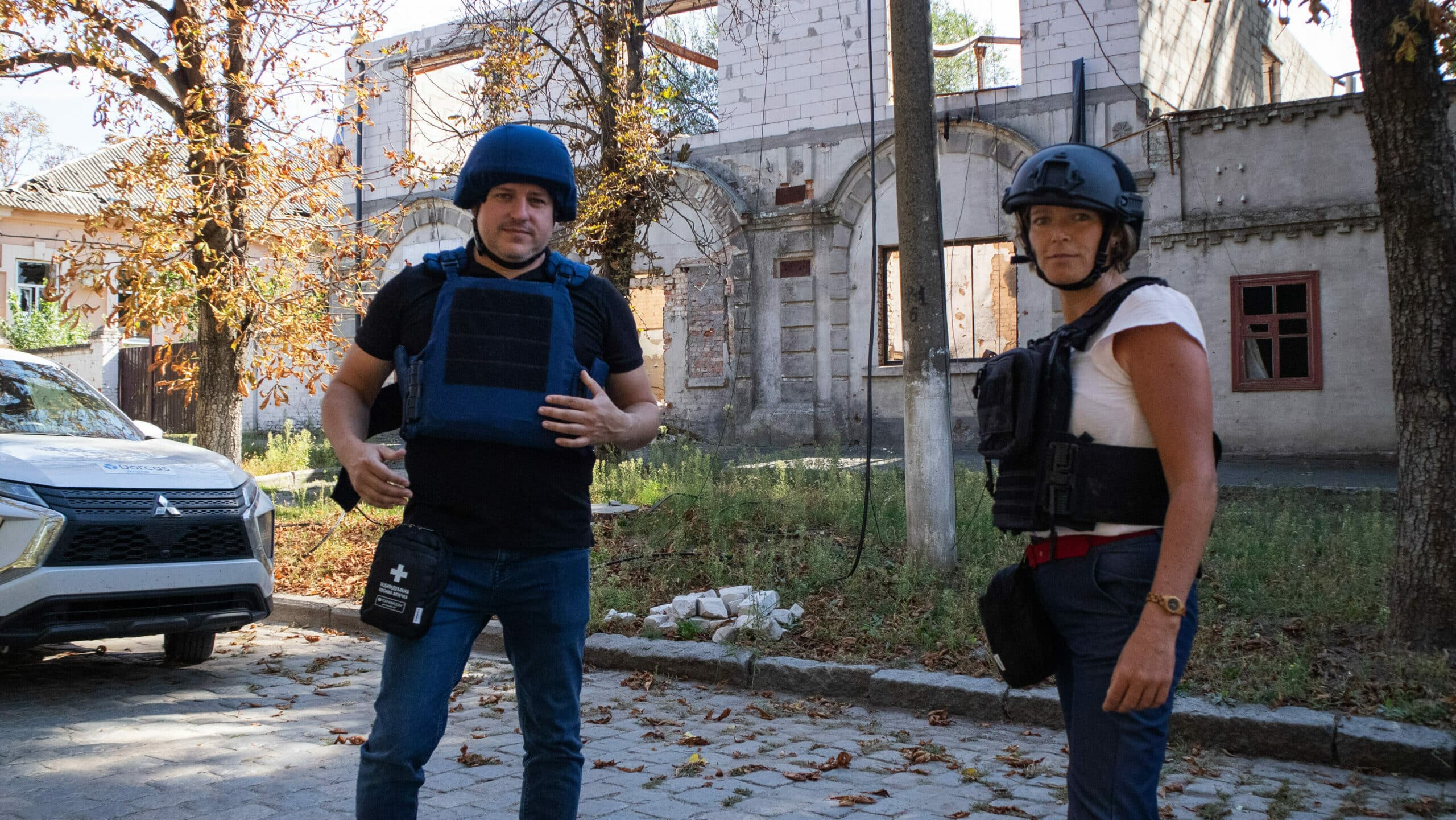
During my visit to Ukraine in 2023, I witnessed the conditions on the front line up close. I was deeply affected by it. Explosions could be heard everywhere, alarms went off at night making sleep almost impossible, and you could not let your guard down for a single moment. At the same time, life goes on: people go to work, do the shopping, cook and live in their homes, even though any building could become a target. As a visitor, it felt surreal to me. But I can return to my safe home in the Netherlands. For those who live there, this is their home and their life.
The team in Ukraine
During my visit, I became even more impressed by the Dorcas Ukraine team. Our colleagues work under constant pressure. They care for the people we support, as well as for themselves and their loved ones. The mental strain they endure is enormous, and their dedication is admirable.
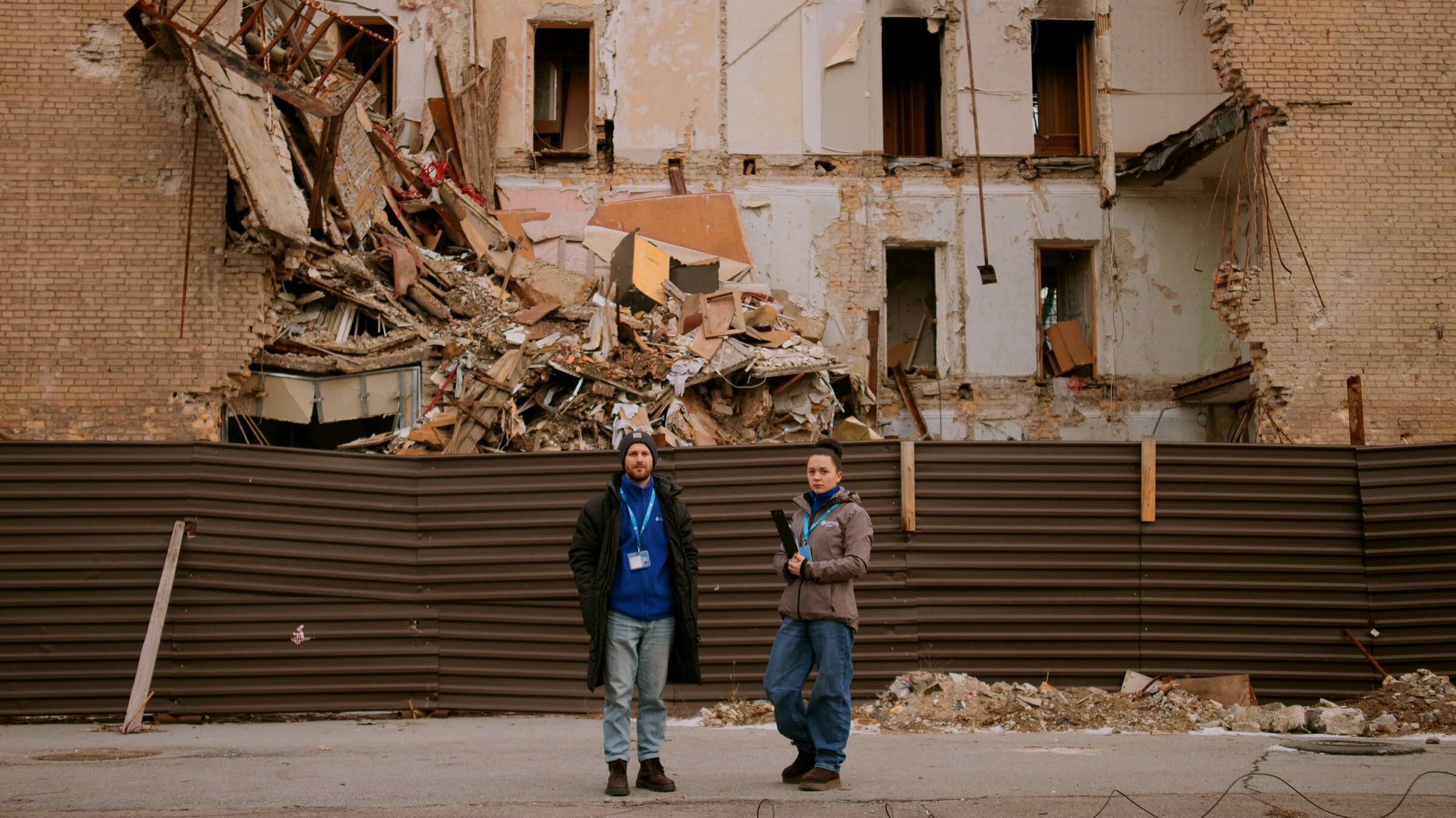
It also became clear to me that destroyed buildings are not just piles of rubble. We see images on TV and feel no connection to those places. However, if you live there and have put down roots, then that is the school where you played as a child, the office where you had your first job interview and the church where you and your children were baptised and married. Everything that shapes your life is suddenly affected.
It did get worse…
This winter has been extreme. For those living on the front line, electricity can be cut off for over seventeen hours a day, while temperatures regularly plummet well below zero. The cold is exhausting and has a profound physical and mental impact. If your phone battery dies during shelling or drone attacks, it becomes almost impossible to stay in touch with loved ones, keep up to date with the news or monitor the threat level in your area.
This is where Dorcas steps in. Our emergency kits, which include a sleeping bag, a portable gas stove and a power bank, provide people on the front line with warmth and practical support in these impossible circumstances. These things may seem small, but they make a real difference.
Alongside these kits, Dorcas’s work continues: our colleagues support people every day with groceries, hygiene kits, psychosocial care and all other forms of assistance. Together with the support of everyone contributing, we can support older people and others in vulnerable situations to get through the winter feeling supported and connected.
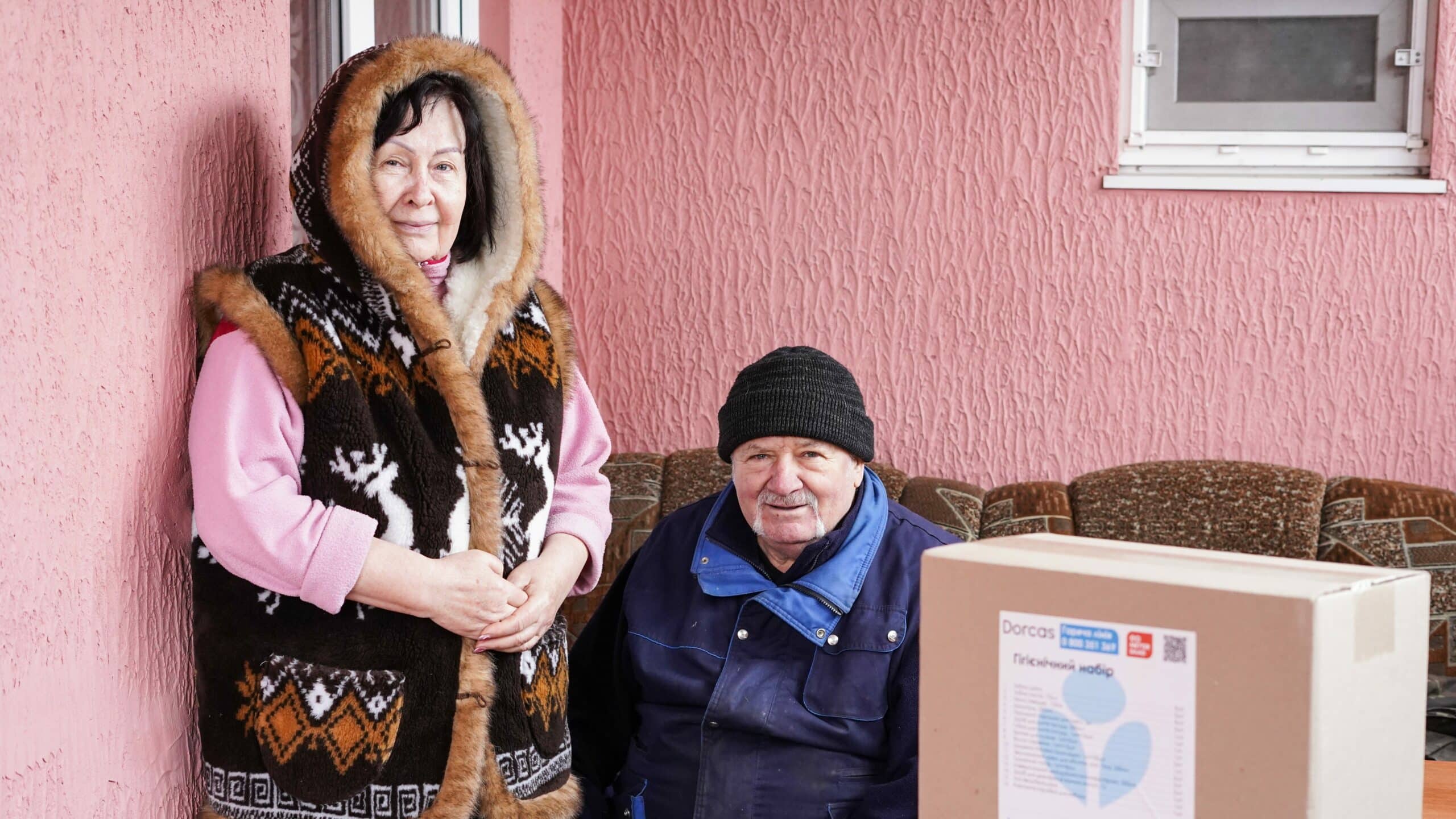
I would like to sincerely thank everyone who contributes to this assistance. Thanks to your overwhelming support, we can offer hope to those living in extreme circumstances and show them that they are not forgotten.
Donate now to support our urgent humanitarian efforts in Ukraine.
Millions of people in Ukraine currently have no electricity, light or heating, and winter is bringing temperatures well below freezing. ‘The situation is critical due to ongoing drone and shell attacks,’ says Bohdan, Security Officer at Dorcas Ukraine.
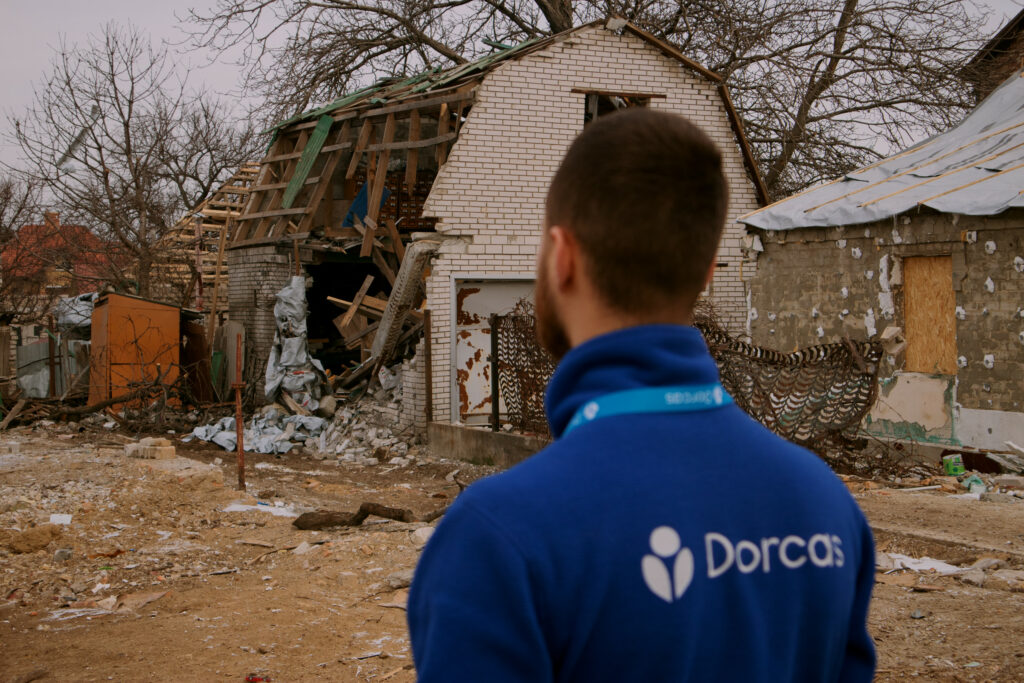
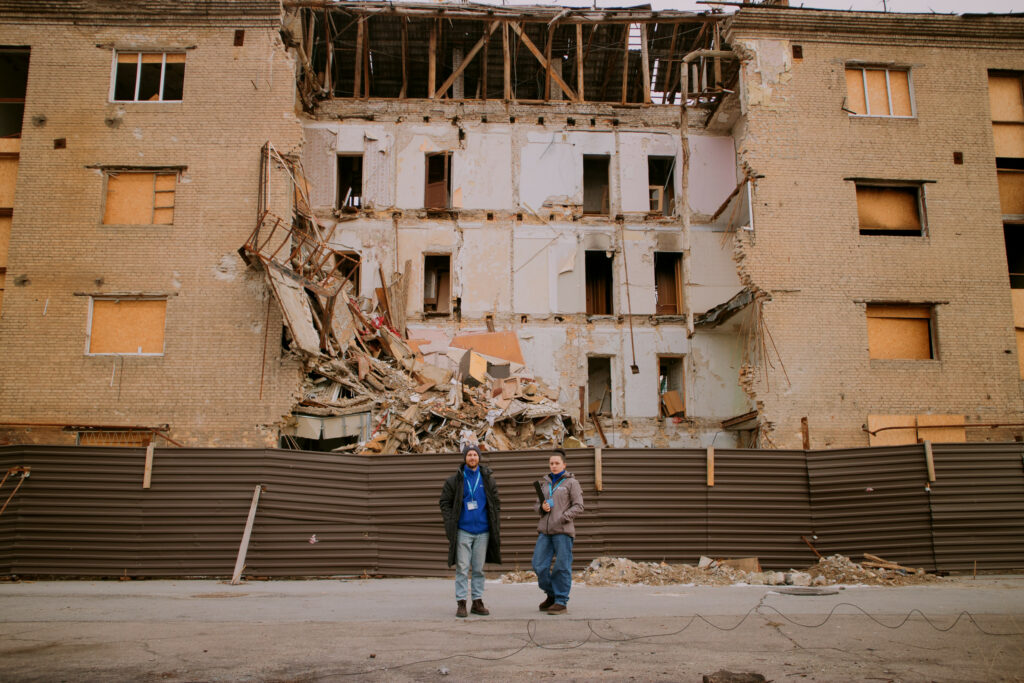
The situation in the city of Zaporizhzhia is particularly severe. ‘There are many damaged houses and apartment buildings that have become uninhabitable due to the shelling,’ explains Bohdan. The entire eastern region around Zaporizhzhia is close to the increasingly volatile front line. ‘The attacks make it unsafe to go outside. Essential services, such as electricity, frequently fail, often for more than ten hours a day.’
Bohdan and his colleagues have been visiting the city to assess where assistance is required. Life in these freezing temperatures is extremely tough. He explains: ‘Older people are finding it particularly hard to cope with the icy conditions, due to constant insecurity and their limited mobility.’
Emergency kits
The extreme cold can quickly become a ruthless enemy, particularly for young children, people with disabilities and older people. To support those in need, Dorcas provides portable emergency kits that enable people to cook, keep warm and maintain contact with family and emergency services.
Each kit contains:
- 1 × mini portable gas stove with gas cartridges for 3 months.
- 1 × rechargeable torch.
- 1 × thermal blanket.
- 1 × sleeping bag suitable for extreme cold.
- 1 × power bank.
- 1 × thermos flask.
Bohdan emphasises: ‘This support is urgently needed to ensure the safety and health of those on the front line.’
Donate to our emergency support
Jochem Duinhof, political advisor at Dorcas, responds to the Dutch coalition agreement of D66, VVD and CDA.
‘Dorcas is cautiously optimistic about the additional funding for development cooperation. This decision partially reverses the previous government’s harsh budget cuts, directly benefiting people worldwide who live in poverty, crisis, and exclusion. Moreover, these investments serve the interests of the Netherlands itself; our country is not an island. When the world surrounding us prospers, so do we.
The agreement highlights the importance of investing in human rights and a robust diplomatic network. This signifies a necessary break from the previous administration’s approach: the Netherlands is no longer retreating itself but is choosing international engagement based on equal partnerships, with a focus on human rights and climate.
However, there are concerns. The resources allocated for the reconstruction of Ukraine come at the expense of poverty alleviation in the Global South. This creates a painful contradiction: support for one should never come at the expense of another.’
One crisis has followed another in Lebanon, stretching public systems and community resilience to their limits. Existing challenges have been exacerbated by economic collapse, political instability and an influx of refugees. Amid these challenges, Mario has worked at Dorcas for two and a half years as a Communications and Reporting Officer. ‘Given all that Lebanon has been through, I felt I had to contribute to the humanitarian response. I want to support those living in the most vulnerable situations.‘
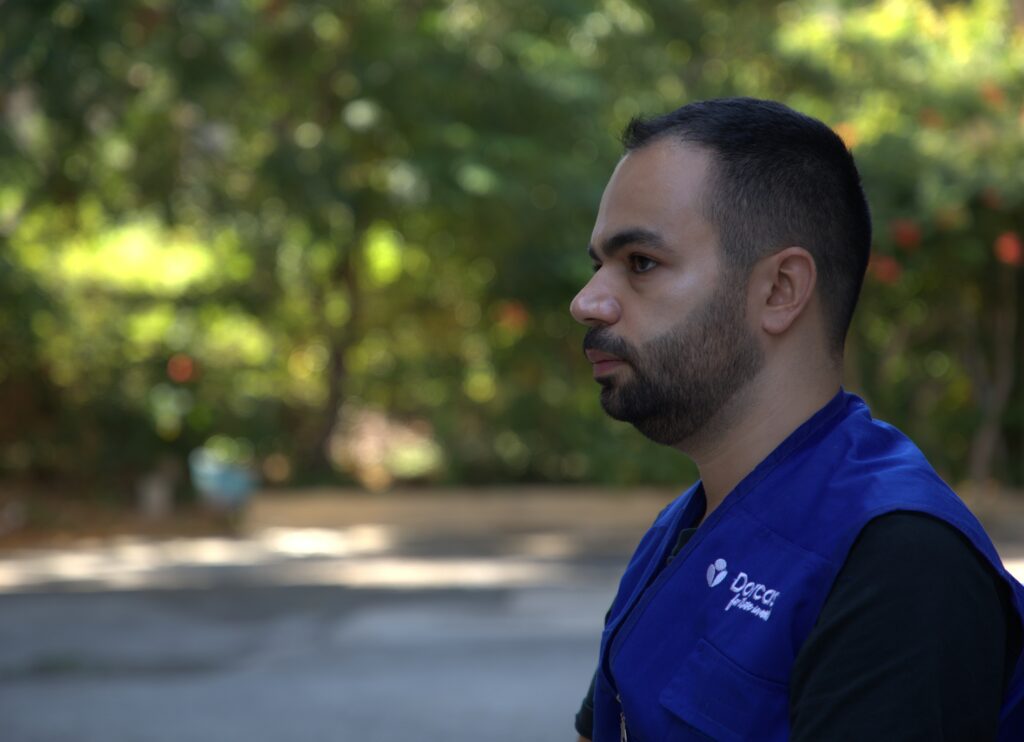
Supporting people in dire need is exactly what Mario and the team of Dorcas Lebanon are doing right now in Akkar, where they are distributing food parcels. ‘When you witness hunger and see people being forced into situations that no one should have to endure, it marks you’, Mario says.
Living at a graveyard
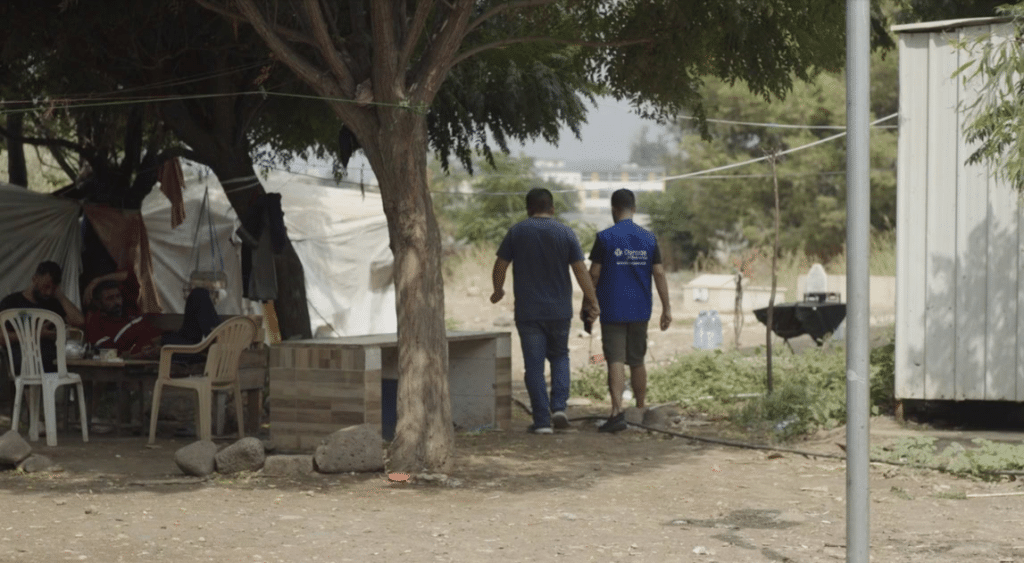
Mario now works extensively in Akkar, one of the poorest regions in northern Lebanon and one of the areas hardest hit in recent years. Thousands of Syrians have arrived here after fleeing their homes. They left everything behind, crossing rivers and fields on foot with little more than the clothes on their backs.
Some ended up in Akkar’s cemeteries. Mario recalls: ‘On day when we went to Akkar, we came across an area that was essentially a graveyard. Families had pitched tents between the graves, with washing lines strung over the tombs and children playing next to the gravestones. People were living there in impossible conditions.’
Food parcels are a lifeline
‘When people receive a food parcel, it is not just food that is received. It provides a sense of relief and reassurance that they are not forgotten. It gives them ten or fifteen days of stability.’
The distribution of the parcels is organised and efficient. Trucks arrive, people gather and lists are checked. Roles are assigned: someone counts, someone carries and someone ensures that everything is fair. ‘It is order in the midst of chaos,’ says Mario. ‘It is dignity in the midst of hardship.’
‘When I’m there, the Dorcas projects stop being anonymous numbers. Instead, you encounter people that have faces and names. They are children tugging at their mother’s sleeve and asking when they will eat. They are fathers carrying boxes with tired arms but proud eyes.’
He recalls a mother who placed her Dorcas parcel in the centre of her tent as if it were a treasure. Rice, lentils and oil – items so ordinary that they might go unnoticed in any kitchen – were laid out here like a feast. ‘Food parcels are a lifeline’, says Mario. ‘When I visit the area, I just try to be present and listen. I want to show people that they are seen.’
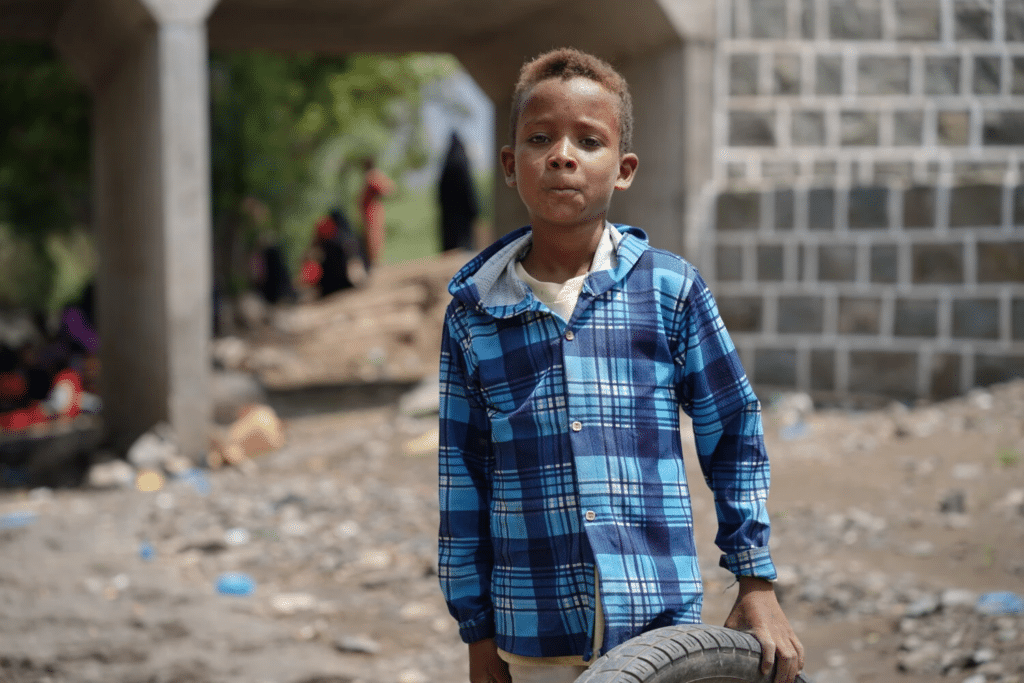
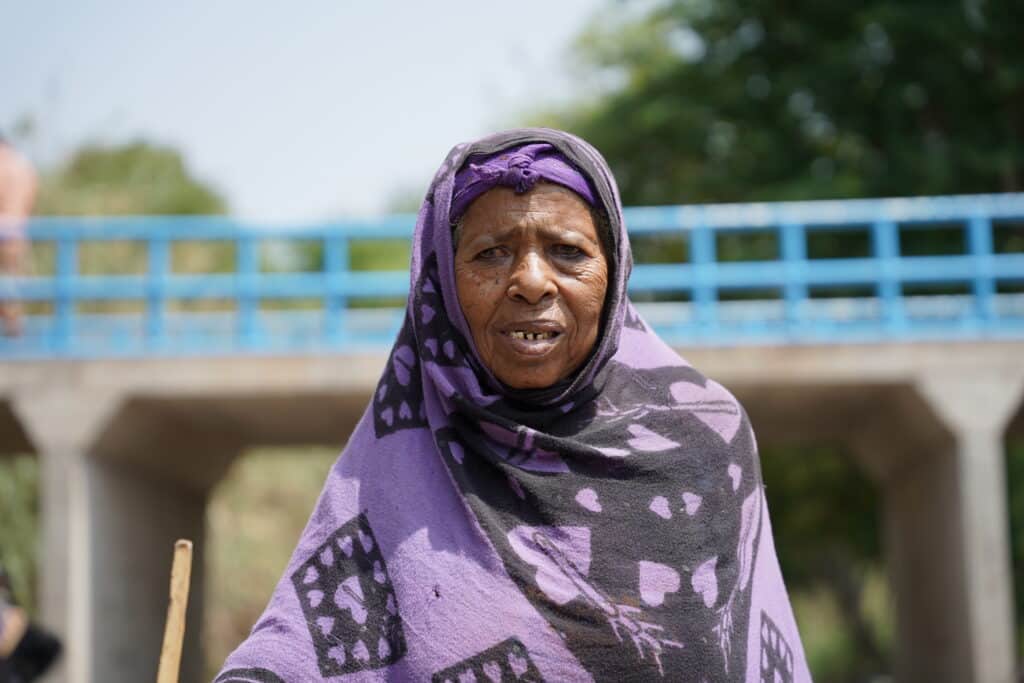
José Salema, Country Director of Dorcas Yemen, clearly remembers the moment he was asked to provide support to a remote village. ‘It was after a devastating flood,’ he says. ‘Everything was underwater. The harvest was lost, the wells were contaminated and diseases broke out. Worst of all, people could not reach the hospital.’
During the rainy season, the village is located close to a river and far from any basic facilities. There are no markets, schools or hospitals nearby. Most families have no regular income and survive by doing seasonal agricultural work in a neighbouring village on the other side of the river. Life across the river could not be more different: there are solid houses, jobs, food, a bustling market and good facilities. The contrast is stark. These differences often lead to tension and conflict between the villages.
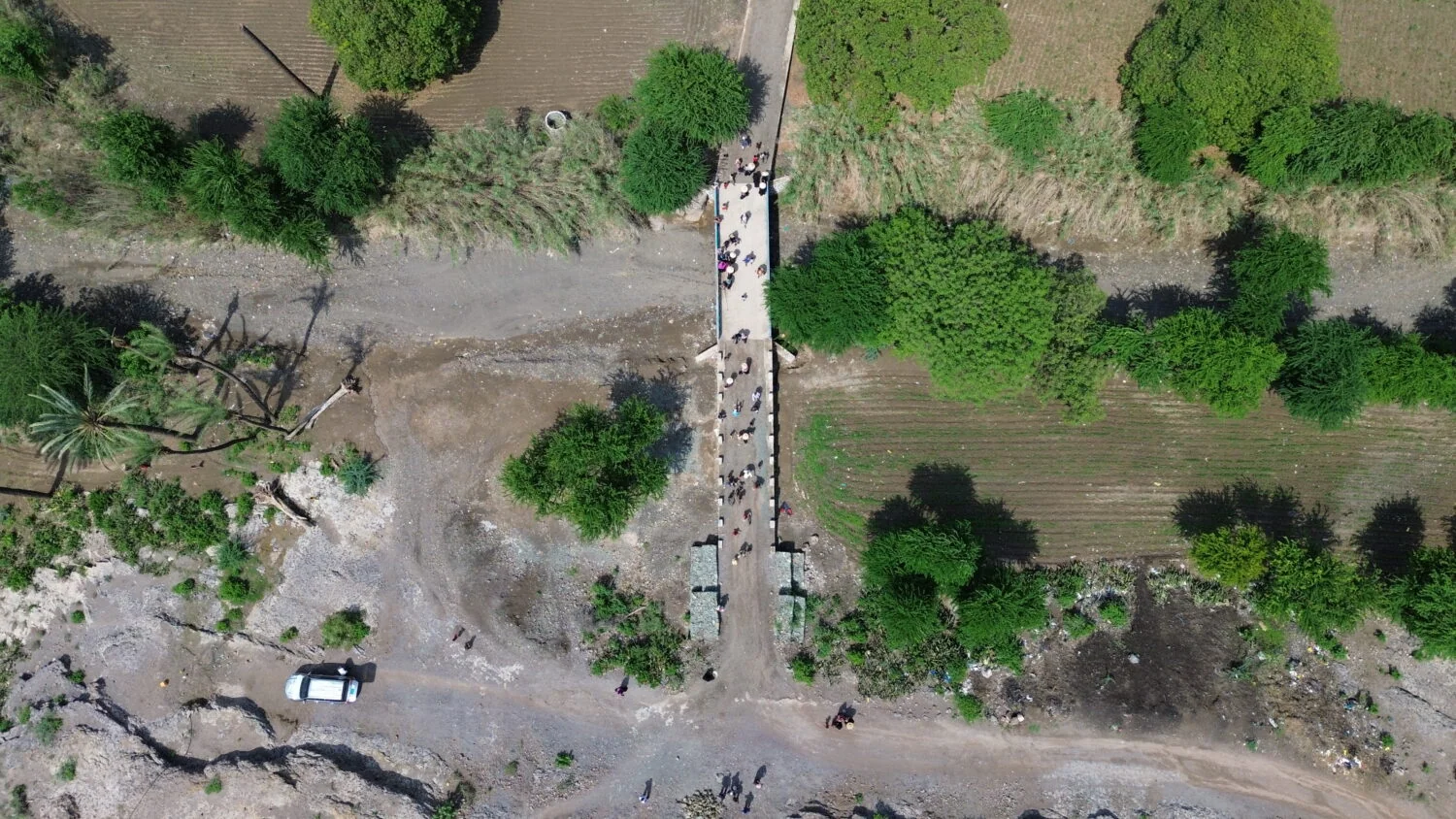
Following the flooding, Dorcas provided emergency assistance in the form of food, clean drinking water, and medical care. However, José and his team wanted to do more than simply provide emergency supplies. José: ‘We asked the people, ‘What do you need to prevent this from happening again?’ The answer was surprisingly simple: a bridge.’
The bridge is a lifeline
For the villagers, the river forms both a boundary and an obstacle. When the water rises, it is impossible to cross. This means no work, no school and no access to healthcare. ‘With a bridge, daily life can continue even when the river floods,’ explains José. ‘Children can go to school and pregnant women can reach the doctor.’
The construction of the bridge was a joint effort. Local contractors and labourers worked alongside the villagers, who received training and built it stone by stone. ‘They are very proud,’ José says. ‘It is their bridge. They have shown that they are capable of creating something valuable. This boosts their confidence and self-worth.’
A bridge to flourishing
The bridge brought with it some unexpected benefits. During construction, the idea emerged to tackle the water problem more structurally as well. ‘We installed an irrigation system that drains excess water and channels it to farmland,’ explains José. “Now the crops no longer flood. There is now enough food for everyone.’
In the past, villagers had to ask their employers for food during difficult times, which often caused tension. Now there is stability. There are no more lost harvests, hunger or conflict. ‘The bridge and the irrigation system have transformed life in the village,’ says José. ‘People are in closer contact with one another, and that also reduces tensions.’
Find out more about the work of Dorcas Yemen!
Jitendra Panda, our Country Director in South Sudan, was born and raised in India. Over the past twenty years, he has lived in many different countries across Africa and Asia, always with the aim of supporting those in need.
‘I studied Humanitarian Assistance in India. After that, I started working for the United Nations (UN) in India. My work mainly focused on people’s health. However, I realised that poor health is caused by many underlying issues. That is why I moved to development organisations that focus on more than just health.’
Journey to South Sudan
In 2004, Jitendra left India for Africa, where he worked in Somalia. Over the following years, he also worked in Namibia, Yemen and Lebanon. The organisations he worked for all had one thing in common: the Christian faith. ‘I believe that everyone deserves protection and has the right to a dignified life. As a Christian, I believe it is my responsibility to support those in need by providing them with basic necessities such as water and food.’
In 2023, Jitendra began working for Dorcas and ZOA* in South Sudan. According to the Country Director, South Sudan is a beautiful country. ‘It has all the natural resources that are needed: water, trees and fertile land. Nature could provide everything; there is enough land to produce food for everyone. Unfortunately, South Sudan faces many difficulties resulting in shortages of essential resources,’ Jitendra explains.
Severe flooding
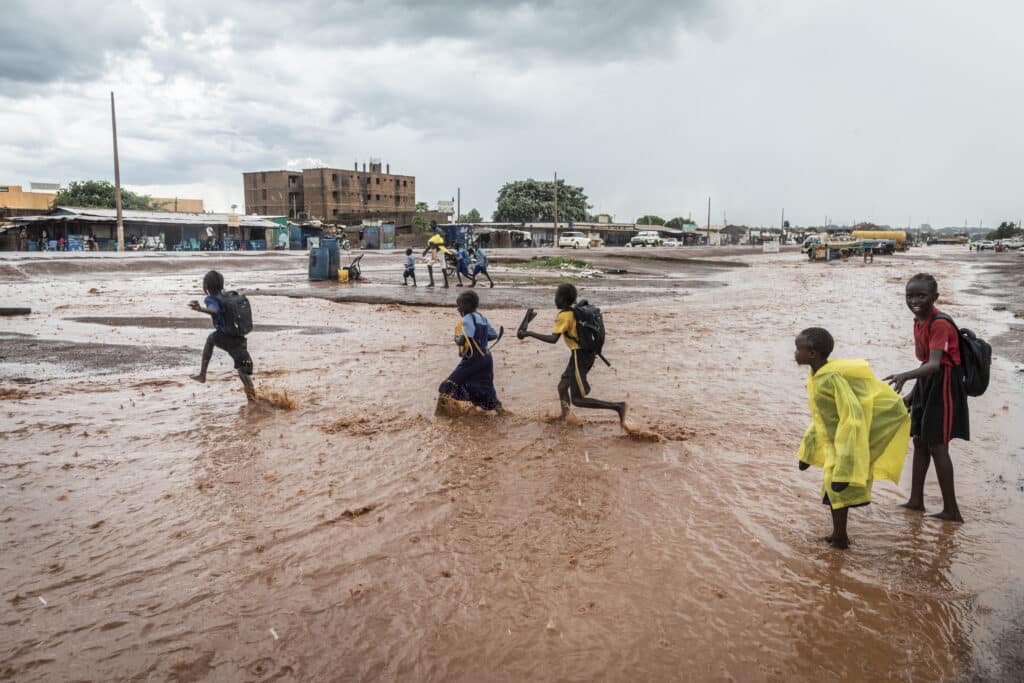
One of this country’s problems is its climate. South Sudan experiences alternating periods of extreme drought and heavy rainfall. Due to the intense rainfall, large parts of the country flood. People are forced to flee to drier, higher ground, and harvests fail. This not only leads to a lack of food, but also to conflicts in the areas where people seek refuge. Dorcas builds dykes to protect homes and farmland from flooding.
Refugees from Sudan
In addition to drought and heavy rainfall, accommodating refugees is also a major challenge in South Sudan. This is due not only to people within the country seeking safer places, but also to the influx of refugees from Sudan.
After the civil war broke out in South Sudan in 2011, millions of people fled to neighbouring Sudan. Two years ago, a civil war broke out there as well, prompting many South Sudanese to return. However, they find that their homes, farms and land have been taken over by those who stayed behind.
Hosted by communities
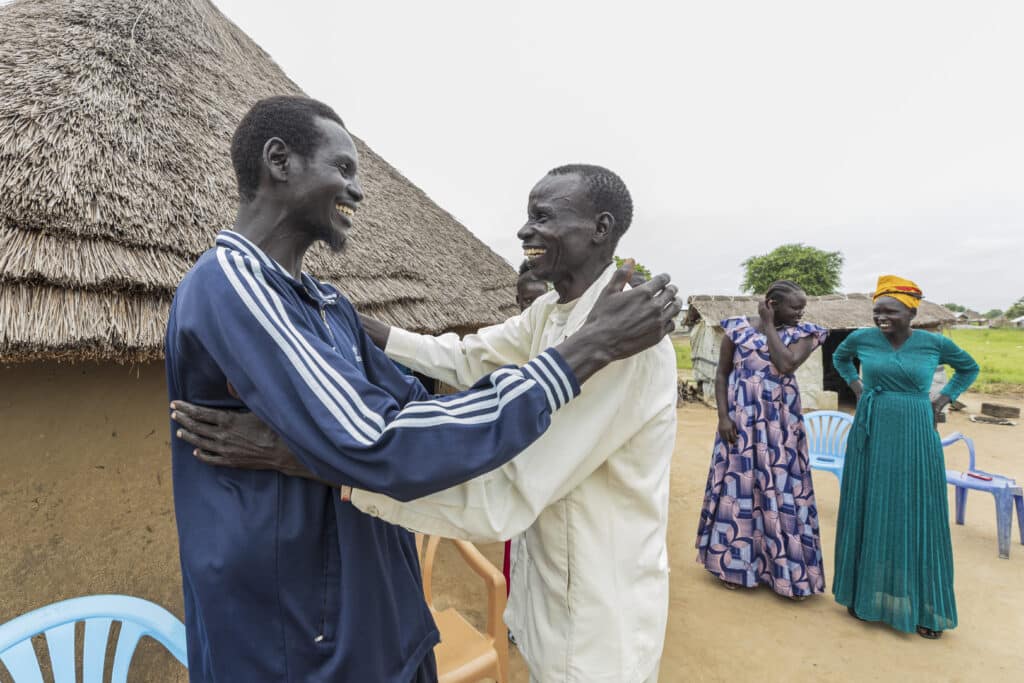
Jitendra explains: ‘Many refugees are taken in by the communities themselves. They are given a spot to put up a tent and food is shared. For now, this system works, but at some point the food runs out and conflicts arise. We support the communities by distributing food and providing them with the means to grow more, so that conflicts can be prevented.’
‘Dorcas also works with communities to help them deal with conflicts in a peaceful way. People learn to talk to one another and work on solutions together, preventing disputes from escalating into conflict. ‘My dream is that South Sudan will become a peaceful country where people live together in harmony.’
*In South Sudan, Dorcas and ZOA work closely together. By joining forces, we can better tailor our assistance to the needs of the people in South Sudan. Learn more about the work of ZOA Dorcas South Sudan.
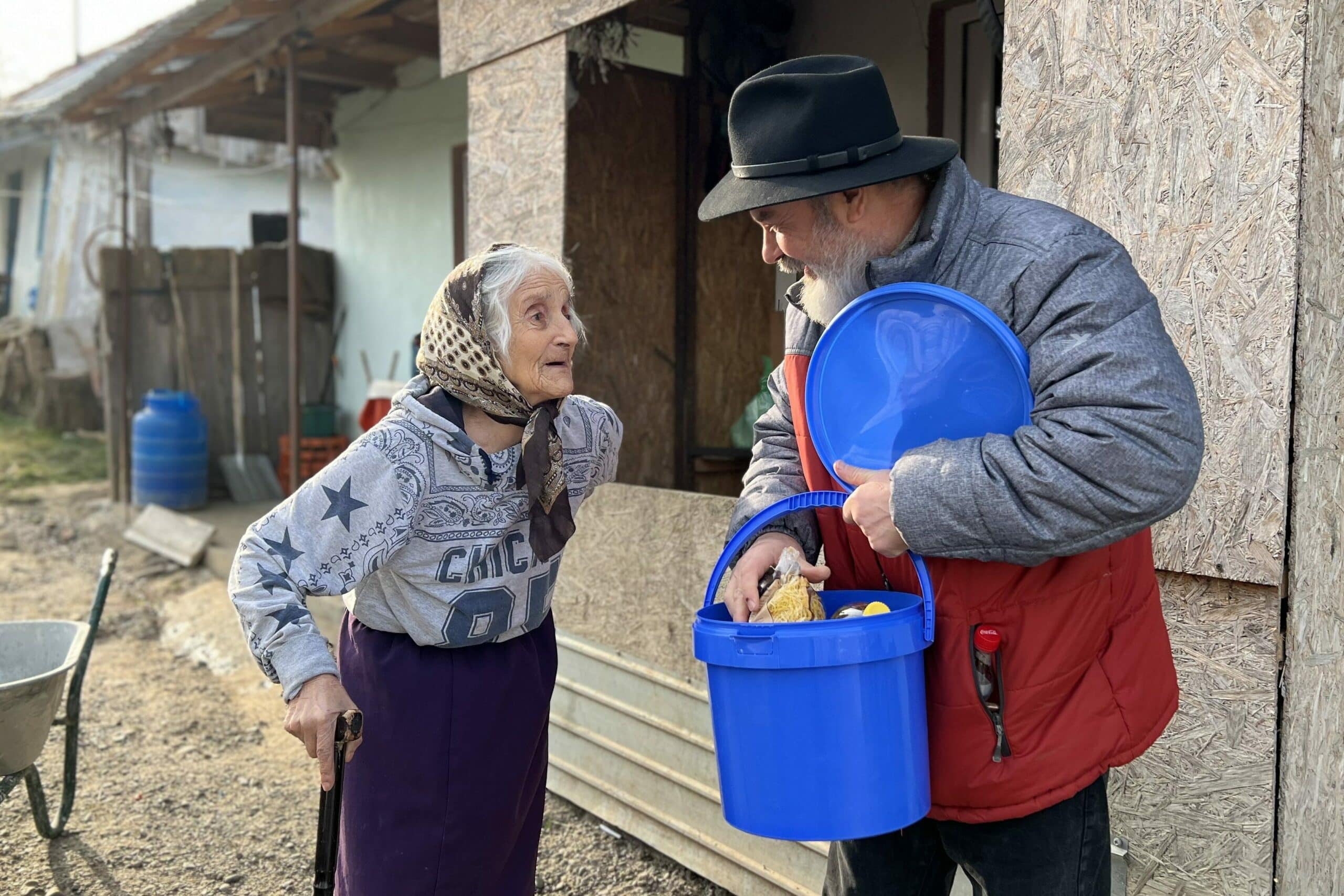
Distributing food in blue buckets to older people and families in vulnerable situations is at the heart of Dorcas’ Blue Bucket Campaign in Eastern Europe. However, the initiative is about more than just providing food: it also focuses on offering personal attention, restoring self-confidence and fostering stronger communities.
In addition to the annual Dorcas Food Campaign in the Netherlands, Dorcas runs a separate food initiative called the Blue Bucket Campaign. This campaign takes place each year in Moldova, Romania, Ukraine and Albania – countries where Dorcas operates in Eastern Europe.
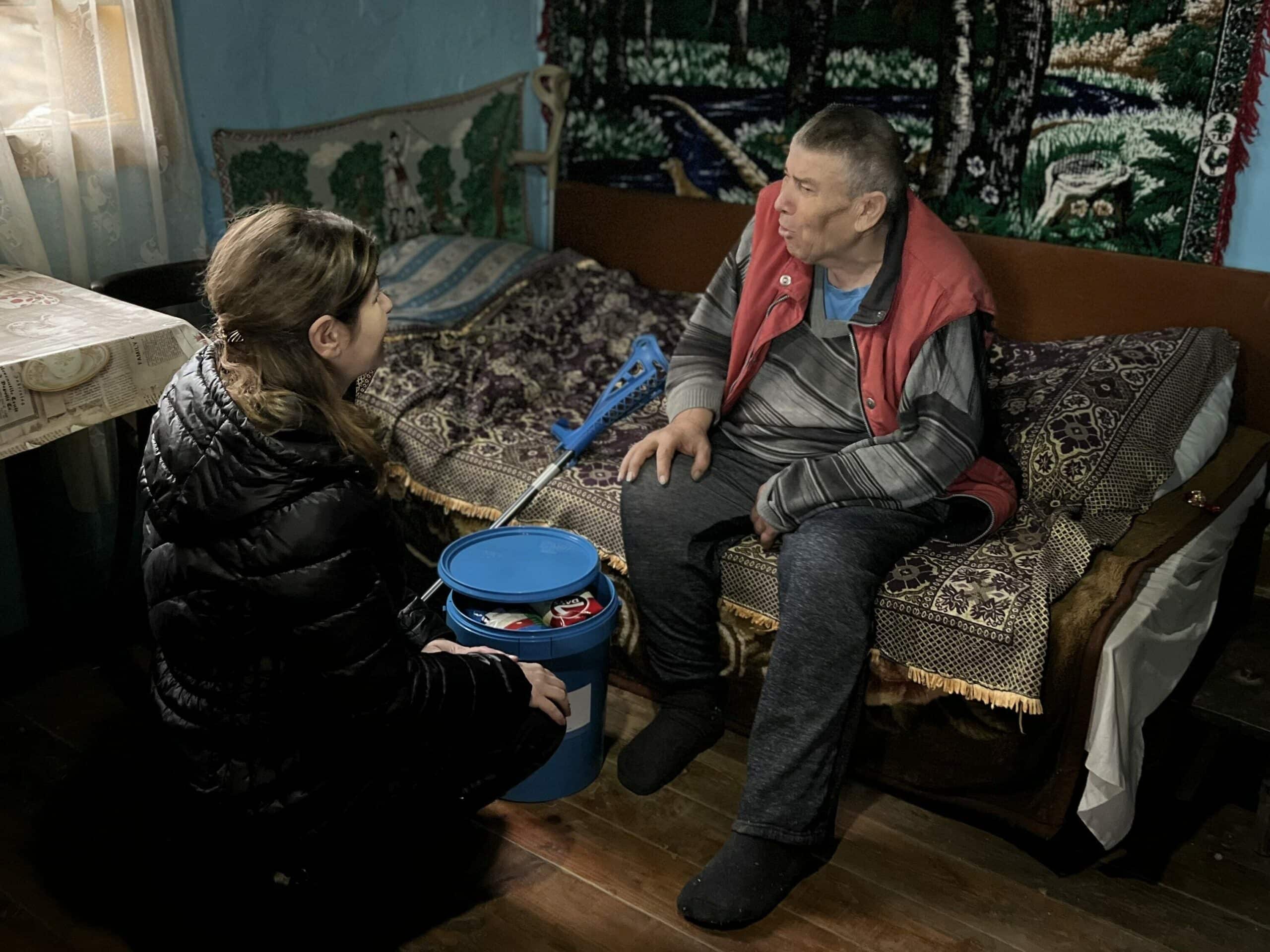
Volunteers, churches and schools collect food in blue buckets for older people and families in vulnerable circumstances. The buckets primarily contain non-perishable items such as oil, flour, and beans, though local fresh produce is often included too.
Attention and appreciation
For many of those who receive the buckets, the food provides a welcome addition to what little they have. However, distributing food involves much more than just handing over supplies. Volunteers who deliver the buckets take the time to chat, offering personal attention that makes older people feel seen and valued. These interactions restore dignity and offer renewed hope for the days ahead.
A snowball effect
The Blue Bucket Campaign has been running in Romania since 2009. Food and monetary donations are collected from supermarkets and other locations.
‘Our campaign grows every year. It truly has a snowball effect. Last year, we almost doubled our efforts, collecting an impressive 5,860 buckets of food,’ explains Mihai Coste, Programme Coordinator at Dorcas Romania.
‘This year, we aim to expand the campaign further. We are seeking to engage more partners and have established a volunteer committee to coordinate the initiative here in Cluj, where our office is located. By involving additional stakeholders, we can reach and assist even more people.’
A social safety net
The Blue Bucket Campaign has a significant impact on communities. It raises awareness of the difficult living conditions often faced by the older generation. It encourages people to look out for one another and offer support to those in need.
Mihai adds: ‘We strive to involve as many community members as possible. We collaborate with churches, volunteers, local development organisations and businesses. Through this approach, we aim to build stronger communities. Ultimately, this creates a social safety net within the community itself, reducing long-term dependency on our assistance.’
> Find out more about the Blue Bucket Campaign <
Across Kenya, communities are experiencing the growing impacts of climate change. Rainfall has become increasingly erratic, harvests are less reliable, and many rural families struggle to secure enough food throughout the year. In the semi-arid county of Kitui, these pressures are compounded by environmental degradation caused by illegal charcoal production, which has accelerated deforestation and reduced vital sources of forage for livestock and bees.
To address these challenges, Dorcas Kenya works with local communities to build climate-resilient livelihoods, increase incomes and strengthen household food security. Through the Honey Value Chain Project, farmers are organised into Farmer Field Schools where they receive training on best production and harvesting methods, modern beehives, and support to connect with cooperatives, enabling them to sell their honey together at fair prices.
One of the farmers who embraced this opportunity is Justus Makau Mutua, whose story reflects the hope and transformation this project brings.
Choosing a sustainable future
Justus (33) lives in Kitui County with his wife and their two children, a seven-year-old and a four-year-old. After graduating from the University of Nairobi with a degree in Commerce, he made the deliberate decision to return to his home village rather than seek employment in the city. He opened a small butcher’s shop at the local market and traded livestock, but the income was inconsistent and insufficient to support his family.
Meanwhile, life in Kitui was becoming increasingly difficult. Years of failing rains left many households facing food shortages. As trees disappeared due to charcoal production, pastureland and bee forage were depleted. When Dorcas Kenya launched the Honey Value Chain Project, Justus grasped the opportunity to build a more resilient livelihood.
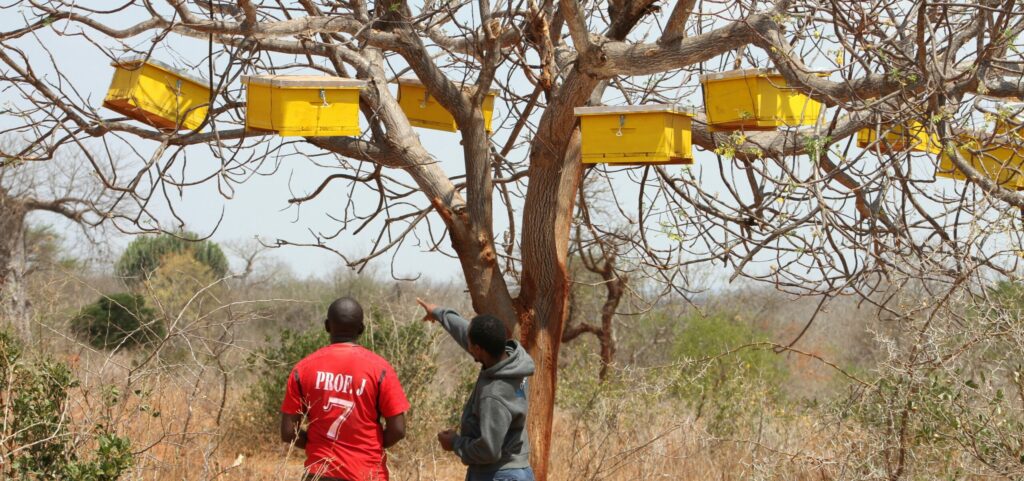
Although beekeeping in his community was traditionally practised by older men, Justus decided to give it a try. In 2021, he cautiously began with ten modern hives, which were provided through the project. He soon saw results.
With training from Dorcas Kenya, he learned how to set up an apiary, attract and manage colonies, and safely harvest and process honey. Techniques such as cleaning hives with basil and applying beeswax increased his productivity. Dorcas Kenya also connected his group to cooperatives, enabling farmers to sell their honey collectively and secure fair prices.
Today, Justus manages 60 hives. He is the secretary of his local beekeeping group and encourages young people and women to take up the practice, challenging long-held stereotypes in the process.
Improved income and better food security
This year, Justus harvested 235 kilograms of honey, earning him 63,450 Kenyan shillings (approximately €460). This income enables him to pay his children’s school fees, buy food for his family and reinvest in his butcher’s business. His success has also inspired those around him: his father, Mzee Mutua, has started keeping bees too, and now manages ten hives alongside his son.
For families like Justus’, beekeeping directly contributes to food security. Honey is a reliable product that can be harvested even in difficult seasons. Meanwhile, Dorcas Kenya is working with communities on landscape restoration and climate-smart practices to ensure that there is enough forage for the bees year-round.
Justus dreams of expanding to 200 hives and using the additional income to invest in rental housing. However, his motivation goes beyond personal growth. ‘I want to show other young people that beekeeping can offer a dignified and sustainable livelihood,’ he says.
Through the Honey Value Chain Project, Dorcas Kenya continues to support farmers like Justus in building resilience, restoring the environment and securing a more stable future for their families.