Addisu is a Granny Association Chairman in Ethiopia at the Samaritan Vision Charity Organisation. This is a partner of Dorcas Ethiopia.
‘I stand up for older people in my country because they are often marginalised due to neglect, abuse and exploitation by society. Older people face many challenges, for example: accessing health care, social services and legal protection. In my experience, they often lack information, resources and also the confidence to speak up for their interests and needs. It is not uncommon for older people in Ethiopia to be denied the right to make decisions about their finances, property and even sometimes what they eat due to abuses and violence occurred in their own homes.’
‘By advocating for older people, we can support them to achieve a better quality of life, dignity, and respect. We can learn from their wisdom and experience and appreciate their contributions to society. As a member of the granny association, I take part in efforts to mobilise resources, raise awareness, and work with policymakers to create positive change for my fellow seniors. We also provide financial support and resources for older people and their families and empower them to stand up for their own rights.’
‘Advocacy for the rights of older people is very important. Since I am an older man myself, I believe it makes me more responsible than others to stand up for their rights.’
This story is part of Dorcas’ human rights campaign. Read more stories and statements on our dedicated human rights page. Human Rights – Dorcas
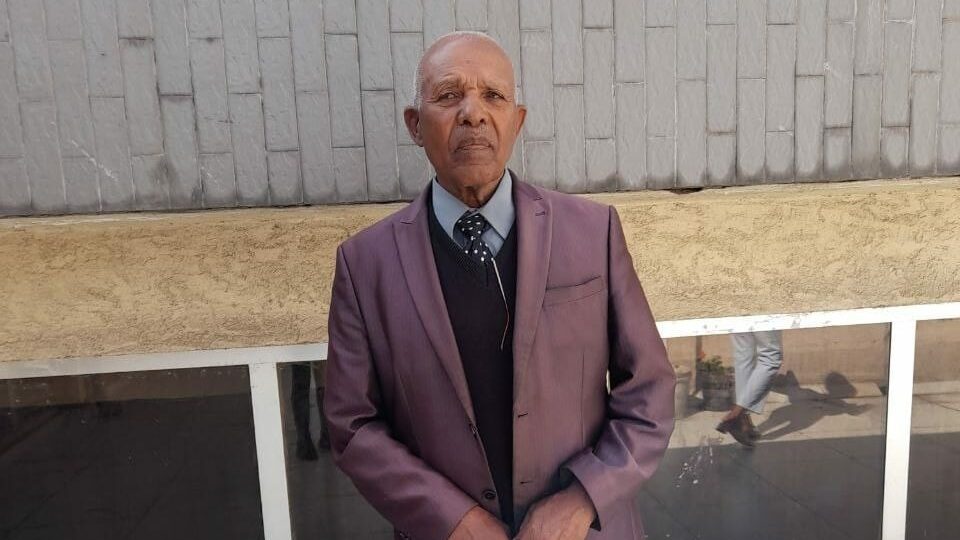
*Not his real name. At the participants request, we have used a pseudonym for this contribution.
Each year on the first of October, we celebrate the international day of older persons. This is an important international day for Dorcas, as we focus on supporting marginalised people and communities and older people are often marginalised and their rights neglected. They often have little income and limited access to health care and social security. In addition to that, they face discrimination and stigmatisation based on cultural norms and social prejudices, like ageism.
According to the United Nations, the number of people aged over 65 is expected to more than double from 761 million in 2021 to 1.6 billion in 2050. The number of people over 80 years old is projected to grow even faster. These numbers increase the urgency of taking the unique set of challenges older people face seriously. In this article we elaborate further on why older people require more of our attention and share some recommendations on how you can include them in your programme.
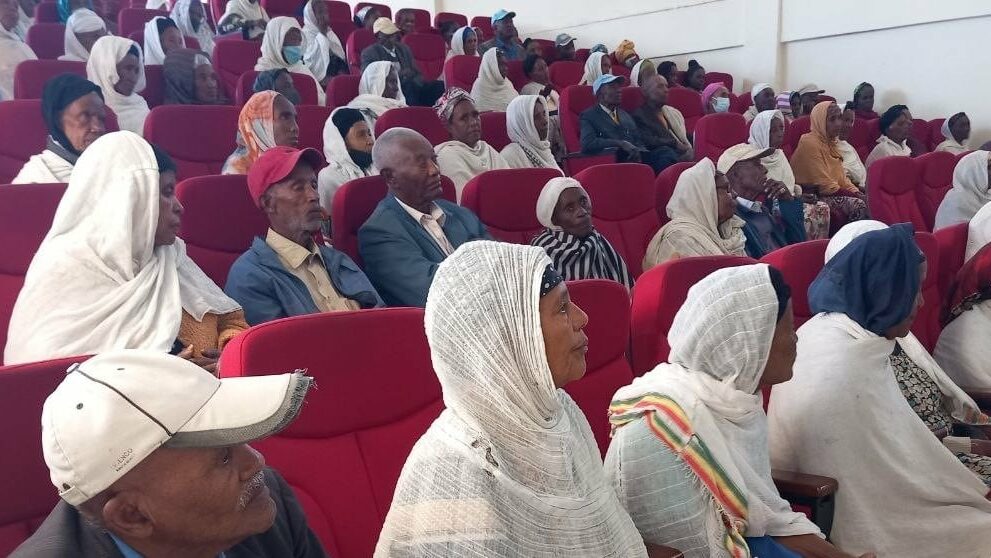
Lack of income and social protection
Dorcas has community safety nets programmes for older people in seven countries: Albania, Egypt, Ethiopia, Moldova, Romania, Tanzania and Ukraine. A main problem in these countries is that older people often have little income and that pensions are so low that they are hardly sufficient for covering their daily needs. Insufficient pensions put them in a much greater risk to external shocks as they have less margin to absorb these financially. In Ukraine for example, many older people who were already marginalised have been affected greatly by the ongoing conflict that led to a massive increase in inflation. Their already challenging socio-economic position has therefore become even more dire. Our local colleagues see that older people in Moldova will often accept poor paid jobs in order to survive. All in all, the lack of social protection causes many problems for older people in the countries Dorcas works in. This must become more of a priority for civil society organisations and government actors in the coming years, as the number of older people is rapidly increasing.
Loneliness and stigmas
Another major issue that older people face, is loneliness and isolation. In Albania, Moldova, Romania and Ukraine for example, many older people either have no family to support them or their families moved to the cities or abroad. In Egypt, local Dorcas colleagues have experienced that older people are also often neglected by their families. Next to the practical and financial needs, this is one of the most pressing issues. Loneliness greatly affects their well-being. Older people need connection, community and the opportunity to contribute.
Another reason why older people require our attention, is because of the challenging stigmas and prejudices they face. In Egypt, this is a major issue. There is a stigma that older people’s duty has ended, they are solely recipients of care and are no longer productive. Supporting older people and inviting them to participate in certain activities may therefor lead to opposition in certain contexts.

Seven ways to include older people in your program
Dorcas supports older people through our community safety nets programme. In this programme, the community plays a central role in making sure people have access to the support structures they need. There are different types of community safety nets, depending on the level on which actors are involved, and a mix of different types is needed to meet the different needs of older people.
One of the participants in this programme, is Moges from Ethiopia. Before joining the programme five years ago, Moges did not have the means to get enough to eat or pay for medical treatment. He would only eat one meal a day. His house was in very bad shape, as the back wall and roof of his house were falling apart. When Moges joined the Dorcas programme, his life has changed drastically. He is now able to eat three times a day, he gets medical treatment, his house was renovated, he actively participates in the programmes social gatherings and has made many new friends.

Dorcas supports older people by building a social safety net around them, so that the community increasingly looks after them. We encourage different groups in the community to use their resources to support and involve them in the community. We also advocate for the rights of older people among government actors and encourage to governments to improve the social security services.
Dorcas has seven recommendations for (I)NGO’s and other actors who are involved in contexts where older people are marginalised, in order to better protect their rights:
- Listen to the voices of all older people and acknowledge their wisdom, knowledge and experience. Provide accessible methods for them to participate in, make decisions about and provide feedback on the assistance provided to them. Ensure this input is incorporated into interventions.
- Ensure the provision of psychosocial support to older people, particularly those living alone. Support and engage older people in activities which help overcome their loneliness.
- Ensure that older people who have fled can access full basic services, including food and water, healthcare including mental health support, social services including pensions, transport and information.
- Prioritise collecting reliable data about numbers, needs and priorities of older people.
- Ensure that community, family or other support and protection networks and mechanisms for older people are restored and strengthened.
- Ensure that any funding provided for responses to crises caused by conflicts includes older people as a priority at-risk group, and that there is attention for sub-groups of the older population that face specific risks.
- Ensure that older people who have not been able to leave their homes, including those living in institutions, are reached, evacuated if they wish, provided with essential life-saving humanitarian support and tailored and prioritised assistance.
Last July, Jochem Duinhof, political advisor at Dorcas, visited the Dorcas offices and community safety nets programmes in Moldova and Romania. Jochem elaborates on the challenges older people face in Moldova and Romania and how the support of the community equips them to overcome these challenges and build meaningful relationships.
Community safety nets
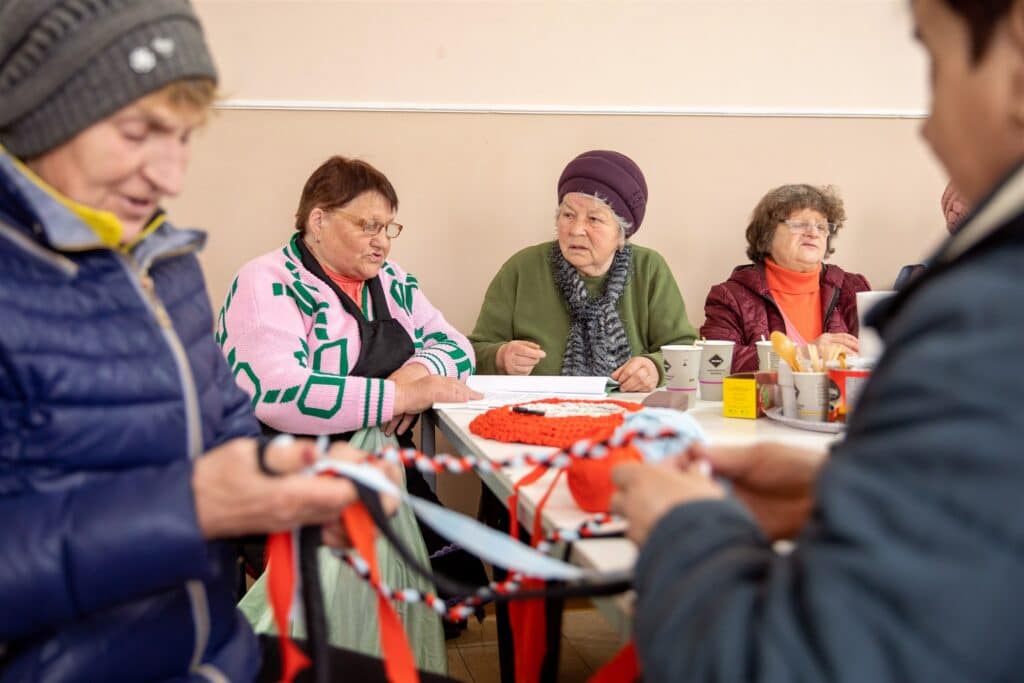
In situations where people are marginalised, safety nets are needed to support them. In a community safety net, the community plays a prominent role in making sure people have access to the support structures they require. Community safety nets are formed by multiple community actors, such as churches or volunteer organisations, and complement the social protection that is provided by the government. The community safety nets programmes of Dorcas Moldova and Romania focus on supporting older people, as they are often marginalised and excluded. A community safety nets programme for older people respond to the different needs they have, such as: a cooking club for fellowship, a social club to decrease isolation or groups that undertake income-generating activities together.
Jochem: Older people in Moldova and Romania face some major challenges. Since the start of the conflict in Ukraine, the gas prices have risen tremendously. They already had to make tough financial choices in the winter and now the situation has become even more dire. They often don’t have enough money at the end of the month to buy food and medicine. One of the ways they cope, is by buying preservable goods in the summer when they are cheaper. When winter comes, they chop their own wood or only heat one room in the house to safe costs. Older people also often face loneliness and isolation. Their children move away to work in the cities or abroad and it is more common that they send money back to support their children, not their parents.’
Jochem continues ‘What stood out to me when I visited the community safety nets programmes is what a big impact the role of the community has in the lives of older people. Their need to feel they are valued and belong is just as important as their financial needs. I spoke with several women in Moldova, who mentioned that the community helped them out of loneliness. They form friendships, visit each other outside of the organised meetings and help one another in whatever way they can. Doras contributes to a community environment in which all people, even the most marginalised, are seen and get opportunities to participate. Community structures become stronger as community members get more empowered. This is a big part of the work of Dorcas.’
Dorcas also supports older people through the community safety nets programmes by supplying food parcels every two months. Furthermore, Dorcus supplies seeds and materials for the cultivation of crops. The older people tend to a vegetable garden together and this supplies them with fresh produce to share among the community. There are also groups that make crafts together, which they sell. These activities increase their income, give them a great sense of achievement and it offers the opportunity to overcome some of the challenges they face together.
About Dorcas’ community safety nets
Community safety nets are part of our long-term objective to have an increased number of vulnerable people receive support through a community safety net. We aim to achieve inclusive social development of vulnerable people within empowered communities. The prime focus is mobilising and organising communities to take ownership of problems and work on opportunities in an asset-based way. Dorcas has community safety nets programmes in Albania, Egypt, Ethiopia, Moldova, Romania, Tanzania, and Ukraine.
The Dutch Africa strategy is ‘the vehicle par excellence’ for increasing social protection for vulnerable groups, state Jochem Duinhof and Zina Nimeh in this opinion article. That is how you give these groups space ‘to assume their role in the community’ – and such an opportunity does not come along that often is their urgent message to the government ministers responsible for the strategy.
By: Jochem Duinhof and Zina Nimeh
A while ago, one of us was in Tanzania and visited Noni’s family. Noni is an eight-year-old girl and she enthusiastically spoke about her good school results. Her grandmother Adamma listened with pride. Due to rising food prices as a result of inflation, she has difficulty taking care of Noni and her older brother.
Noni’s parents are both absent: her father fled the family immediately after Noni was born, and the mother now lives and works in a city far away. If civil society actors had not intervened, Adamma would have been on her own in raising her grandchildren. Then Noni would have almost certainly have been removed from school to help provide for the family’s livelihood.
Lack of safety nets
As the story shows, older persons in Africa are vulnerable to poverty and, in particular, they frequently suffer from a lack of social protection: only 27 percent receive some form of financial support after their working life (figures from 2020). They often then become dependent on those around them, and not everyone has access to a social safety net.
Urbanisation and the deterioration of traditional extended families mean that older persons are left to take care of themselves. The lack of governments that can provide financial support also affects African older persons. According to research, the number of older persons receiving a pension is below ten percent in almost all African countries.
As a result, they often have to provide for their livelihood and that of their grandchildren on their own and the risk that they end up in long-term poverty is very high. In Africa, only nine percent of persons with disabilities receive some form of financial support, and in 2020, just fifteen percent of mothers received some form of social benefits for their children.
Opportunities within the strategy
On Tuesday, 30 May, the Dutch government ministers Hoekstra (Foreign Affairs) and Schreinemacher (Foreign Trade and Development Cooperation) published the Dutch Africa strategy, which outlines the policy for ten to fifteen years. The strategy is an excellent opportunity to boost the development of social safety nets for older persons, persons with disabilities and vulnerable families with children so that they can play their part in the community.
In its current form, the strategy pays little attention to this specific development challenge even though plenty of opportunities exist to tackle it effectively. For example, the Netherlands could more actively support African governments in providing a financial safety net to potentially vulnerable people, including older persons, in the form of benefits, pensions and health insurance.
Such a safety net improves people’s resilience in the face of adversity, helps to prevent children from being taken out of school to contribute to the family’s livelihood or stops essential production assets from being sold to meet short-term needs. An additional advantage is that a financial safety net has no strings attached: recipients decide what they spend the money on, such as water, food or education. And research has demonstrated that this approach is effective.
The Dutch government could help to realise this change by putting its own tax system in order so that Western multinationals can no longer channel African tax money through the Netherlands. And the Netherlands, together with the international community, could invest more in cancelling the debts of African nations. Both interventions are necessary to give African governments sufficient financial strength to provide social safety nets.
Another way to contribute is to advocate internationally for a global social protection fund. New research has outlined for the first time how social protection funding could be available to all at a relatively low cost and that it would have tremendously positive effects on reducing poverty and inequality. The Africa strategy is the vehicle par excellence for developing such activities in the near future.
Financial safety nets offer children like Noni a more stable home base from which they can develop and look forward to the day when they will be grandparents themselves – no child should be deprived of that perspective.
Jochem Duinhof is a political advisor at Dorcas Aid International, and Zina Nimeh is an associate professor of public policy at the United Nations University in Maastricht.
In the Zummar sub-district in Iraq, Dorcas provided agricultural assets and supported the improvement of livelihoods for income generation for returnees and internally displaced persons. This project was done in partnership with World Vision International and Harikar NGO and was funded by the Iraq humanitarian fund of OCHA. Othman and Ibrahim, two project participants, share how this project has benefited them.
When Othman returned to his village after the IS conflict, his agricultural business and land had been destroyed. He struggled to get enough income for his family. Dorcas provided Othman with agriculture inputs, training and an irrigation system to be able to rebuild the family’s agricultural business.
Othman describes: ‘We didn’t have enough income to cover our expenditures, but after I received the agricultural inputs from Dorcas, the expenditures have been reduced. This project has made me more self-reliant, and it has had a very good impact on the community.’
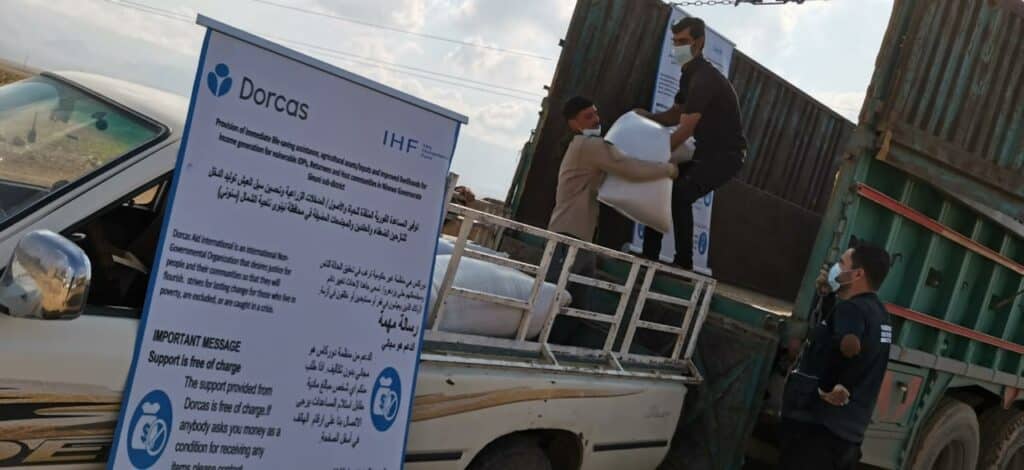
Ibrahim also returned to his village after the conflict. When he arrived, he did not have enough income to purchase seeds, fertilisers and to plow the land before planting. As part of the sustainable livelihood project, Ibrahim received rain-fed inputs and training.
Ibrahim describes: ‘Through this support, we have recultivated our lands. Due to the high prices of seeds, fertilisers and pesticides we were not able to purchase this, but now we are on the right track in our agricultural business.
The United Nations describes droughts as one of the greatest threats to sustainable development. Forecasts predict that by 2050, droughts may affect more than 75 percent of the world’s population. The magnitude of this problem requires the international community’s attention every day, but today, on the world day to combat desertification and drought, we want to specifically highlight the importance of climate resilience and global action to combat drought and the correlation between drought and floods.
Recent research by Kimutai et al. (2023) shows that the chances of drought in the horn of Africa is 100 times higher due to climate change. This is not only related to the lack of rainfall, but especially to how fast the water dampens again due to high temperatures. Though the amount of rainfall is important, the effects of global warming and high temperatures are thus even more impactful.
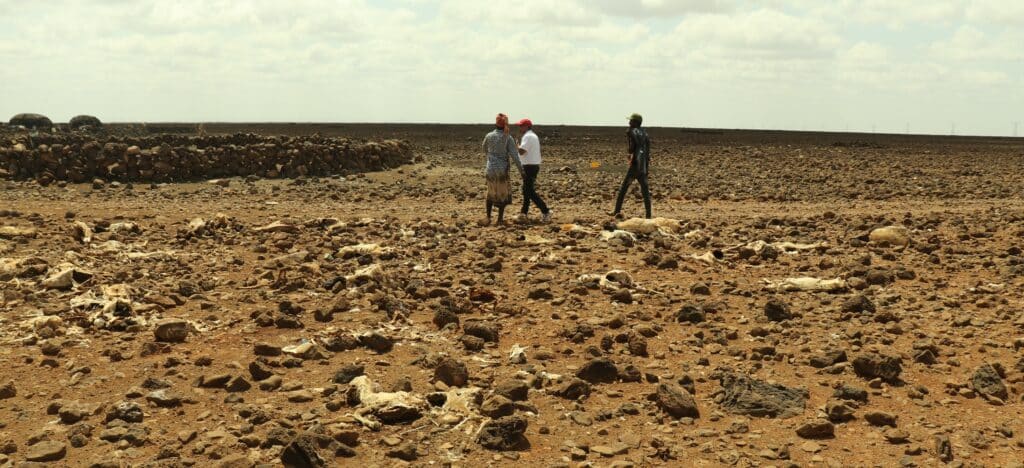
Though we may all know the pictures of the dusty, dry landscapes in the horn of Africa, there is also still a lot of flooding in the region. This may lead to the misconception that these floods contradict the increase and severity of droughts that are predicated; however, this is definitely not the case. When we see floods in otherwise dry areas, it is important to be aware and spread awareness on that this excessive amount of rain does not solve the shortage of water or even out drought. When a lot of rain falls in a very short period of time after longer periods of drought, the soil is not able to fully “take it in” and this leads to a shallow absorbance of the rain. This also increases the chance of floods, since the water flows off because it is not absorbed by the soil. One of the places where this became evident, is in Borena, Ethiopia.
Droughts and floods in Ethiopia
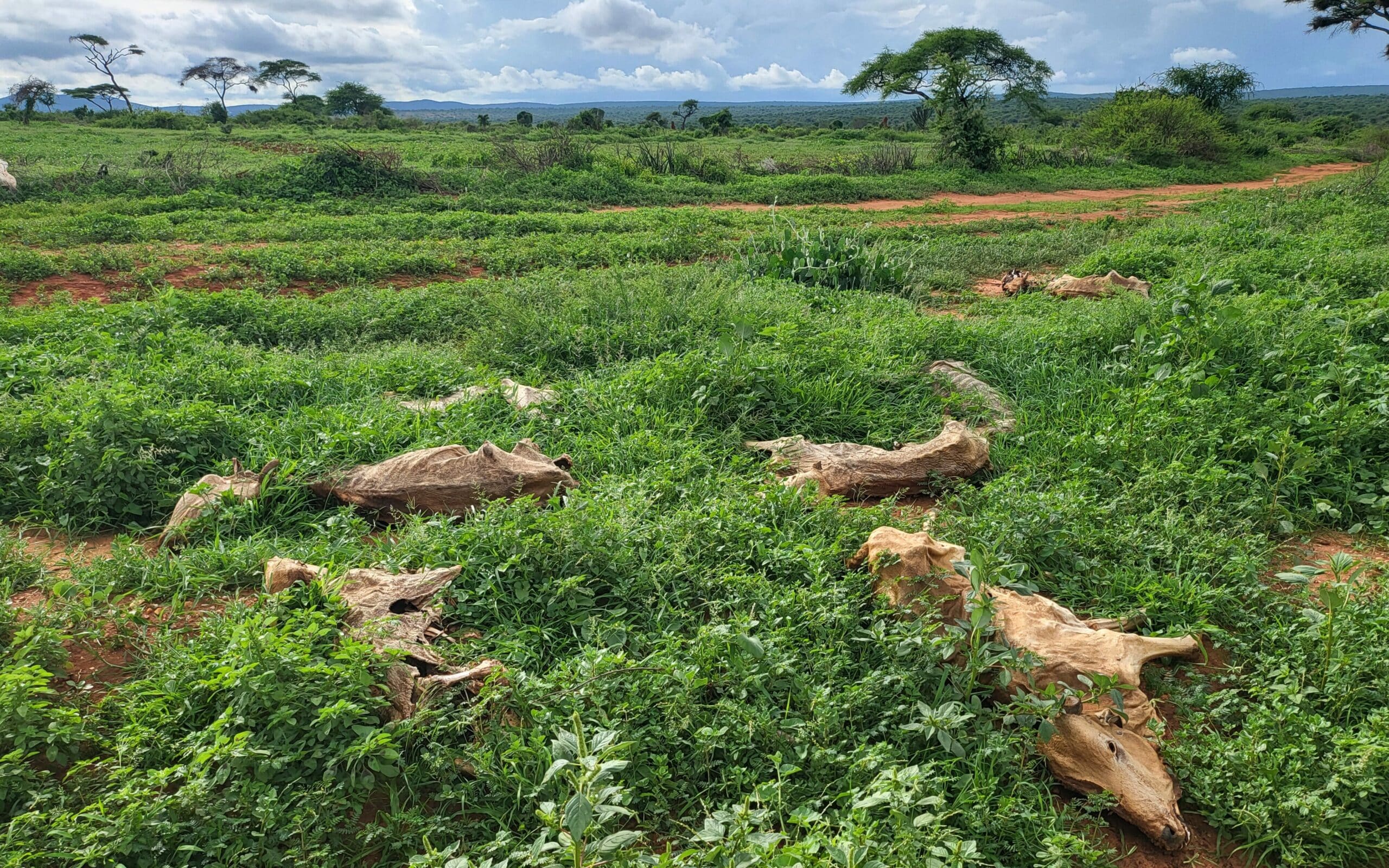
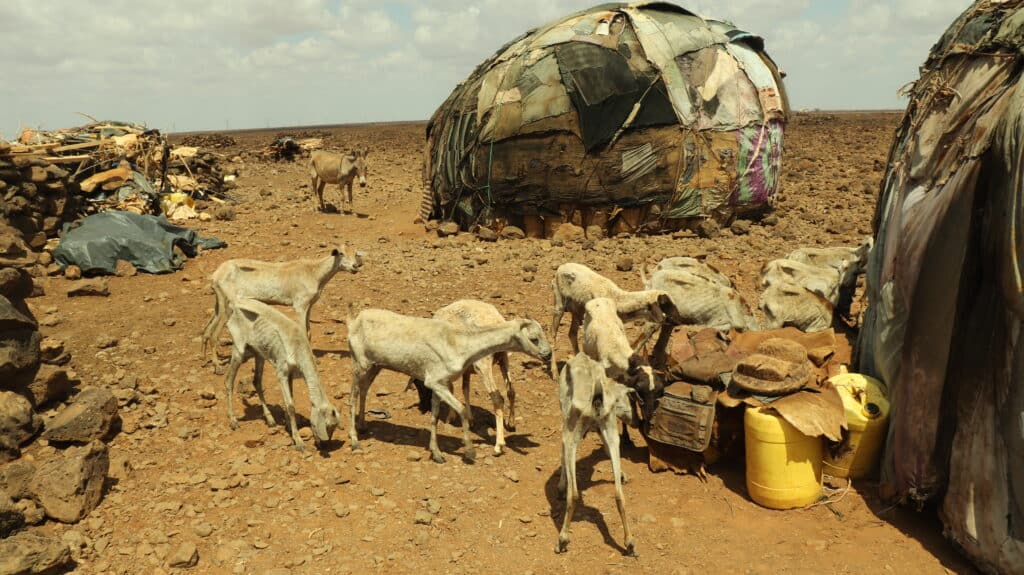
Fikru Tarekegn, Country Director of Dorcas Ethiopia, describes: ‘Borena is located in the southern part of Ethiopia, which is known for pastoralism and drought. The frequency of drought has increased over the recent years due to climate change. There was no rain for the last two-and-a-half years, and this caused a huge problem in the area. As a result, more than 3.3 million livestock died. As the economy is dependent on livestock, the life and livelihood of the community were disrupted which resulted malnutrition, psychosocial problems, to deal with unpreferred coping mechanisms and migration. Unfortunately, the recent rain in the area was also a disaster as it came in big volume and became a flood. The flood has also killed the animals that survived the drought, and it brought water borne diseases.’
When the high intensity of rain came after two and-a-half years of drought, the landscape may have looked very healthy and green for a period of time, but this may give wrong impression. The livestock continued to die after the rainfall due to the flooding. Additionally, it was also thought that the livestock was also possibly dying because they were no longer used to the large amounts of water and grass and their intestines could not cope with this.
Droughts and floods in Kenya
In Kenya, desertification continues to pose a challenge over the years to 84 percent of the Kenyan landscapes that are classified as arid or semi-arid. Edwin Onyancha, Country Director of Dorcas Kenya describes: ‘These lands support 34 percent of the population and 60 percent of livestock. These drylands have seen unprecedented land degradation often exacerbated by effects of climate change, deforestation, loss of biodiversity, overgrazing, over-use of underground water, prolonged droughts and flooding, as well as conflicts over competition for natural resources. Increasingly, livelihoods, especially those related to livestock production and agriculture, continue to be affected as these landscapes become more vulnerable to vagaries of the weather. There is an urgent need to address desertification through broad supportive policies that define management of fragile landscapes to protect biodiversity and natural resources, as well as addressing effects of climate change through both adaptation and mitigation. Regional and cross-border conservation efforts that promote restoration and regeneration of natural resources (forests, woodlands, watershed, nature-based solutions etc.) needs to be supported. These efforts should go alongside strengthening capacities of residents on land use systems, conservation, particularly using indigenous knowledge and modern technologies, as well as implementing strategies to effectively address cross-border and inter-ethnic conflicts.’
Climate resilience
For Dorcas, climate resilience is central to our work and in all of our projects this is taken into account. Climate resilience is about adjusting to climate change, countering environmental degradation and minimising risk from disasters. We work with communities to prepare for and negate the effects of climate changes, thereby reducing the vulnerability of communities and their ecosystems. The cases of Ethiopia and Kenya show how important this is as climate change heavily affects rural communities. By adapting to cope with the effects of climate change, communities, enterprises and institutions can build up their climate-change resilience.
Kimutai, J; Barnes, C; Zachariah, M; Philip, S; Kew, S; Pinto, I; Wolski, P; Koren, G; Vecchi, G; Yang, W; Li, S; Vahlberg, M; Singh, R; Heinrich, D; Pereira, CM; Arrighi, J; Thalheimer, L; Kane, C; Otto, FEL (2023). Human-induced climate change increased drought severity in Horn of Africa. DOI: https://doi.org/10.25561/103482
The bicycle is a very useful and handy means of transportation for many people around the world. Not only is cycling good for your health, but it is also a very sustainable way of transportation that is low in costs. Because of the many benefits and the positive impact of the bicycle on the environment, we celebrate world bicycle day each year on the 3rd of June.
Lifechanging bicycles
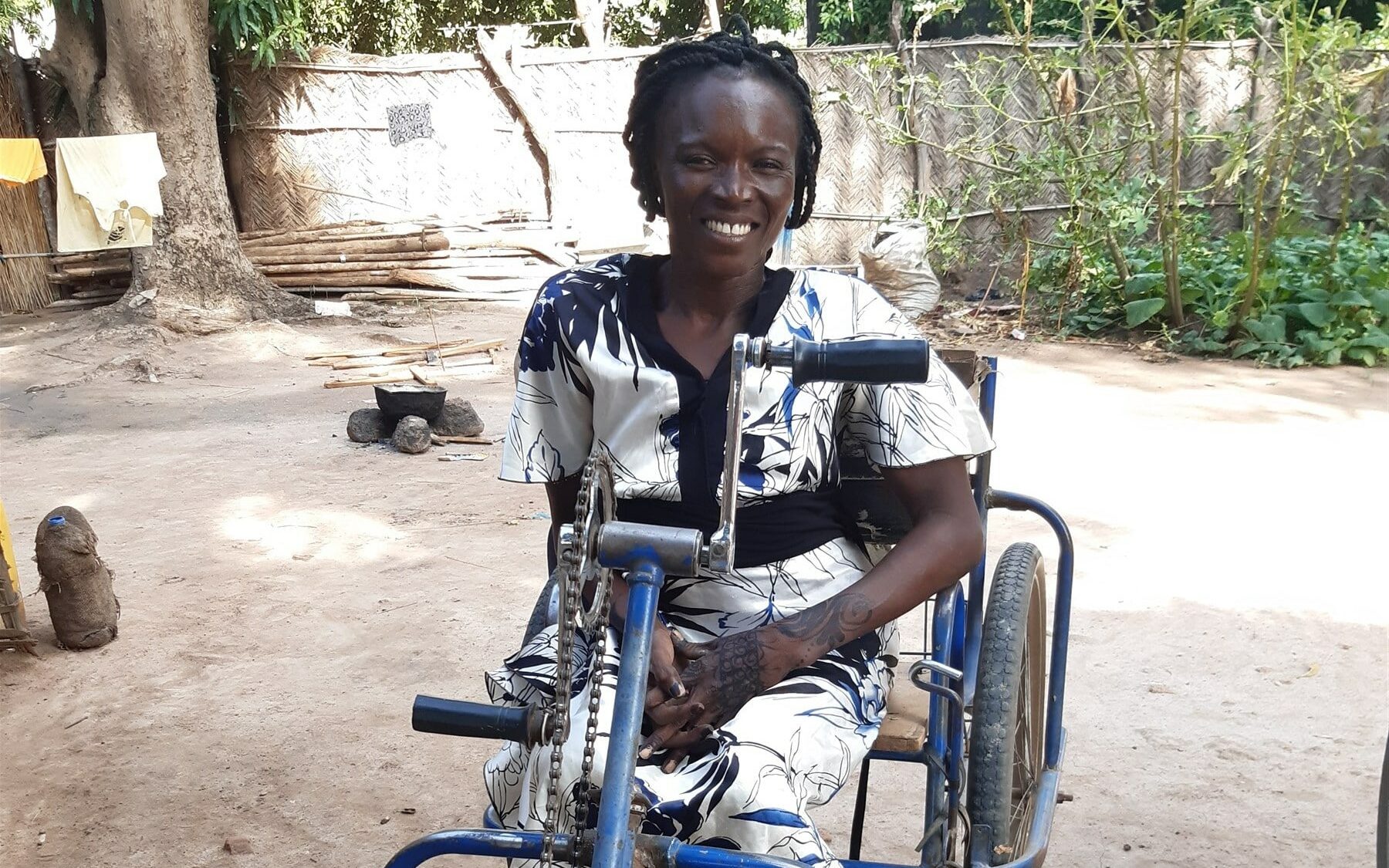
Next to the flexibility and benefits to one’s health and the environment, the access to a bicycle or tricycle for some people is lifechanging. Project participants of our skills for work-project in South Sudan for example received a bicycle because many participants had to travel a long distance to the training facility. Tricycles were given to students with a disability. This was beneficial to the mobility of these students and because they were now able to access education, the bicycles and tricycles strengthened their socio-economic status. Next to that, it also increased their ability to access different livelihood opportunities and it overall significantly improved their lives.
James Kang from South Sudan is one of the students with a disability whose life was positively impacted by the tricycle. Because of the tricycle, he was able to access his classes and complete his business administration certificate. Later, he proceeded to join the university and used the tricycle to get a diploma in Business Administration.
Business by bike
Students in South Sudan received a bicycle through our vocational skills and livelihood improvement-project. The distribution of bicycles to project participants in remote areas has been very instrumental in the improvement of how they conduct their businesses. By bike, students were able to transport their farm produce more easily to the markets in town. For several students with disabilities, the bicycles increased their livelihood opportunities and reduced their transportation costs, as they were no longer reliant on hired motorcycles.
Through the Pride! project, bicycles and tricycles were also distributed to persons with disabilities in order for them to improve their mobility and access activities. Pride! ran from 2021 to 2023 and is funded by the European Union and implemented by a consortium led by Dorcas with partners ZOA Dorcas*, Light for the World, and Help a Child.
Because of all these benefits and the way bicycles considerably improved the lives of many project participants in South Sudan, we happily celebrate world bicycle day!
*In South Sudan – as of 1 May 2022 – Dorcas and ZOA form a joint working organisation under the name ‘ZOA Dorcas South Sudan’. With this collaboration, more impact on the lives of people who are most affected by the crisis and poverty in the country is realised.
The situation in Sudan and South Sudan continues to worsen as thousands of people flee the conflict in Sudan and cross the South Sudanese border. Dorcas shares the worries of the NGO community of South Sudan that the number of returnees and refugees is exceeding previous projections, as the number is already over 50,000. This adds to the dire humanitarian crisis South Sudan is already in. The start of the rainy season will also have a major impact on the area. The situation can become even more catastrophic, as El Niño is predicted, and this may cause heavy rain and floods.
Together with the humanitarian community in South Sudan, we want to raise awareness to the humanitarian crisis that is unfolding in the region. In order to mitigate an even bigger crisis and support those in need, we need to respond now. Humanitarian supplies and especially food items need to be supplied to prevent the severity of food insecurity in the region to worsen.
A safe and healthy working environment is a fundamental right. Today, on the World Day for Safety and Health at Work, we want to highlight the importance of this topic, specifically of providing good staff care that lowers work-related stress.
The World Day for Safety and Health at Work focuses on advocating towards governments and employers to provide a context in which risks in the workplace are minimised and for them and employees to take these risks seriously. Lowering work-related stress and high work pressure, are an important part of promoting health and safety.
People who work for Dorcas can be confronted by difficult and stressful circumstances, such as conflict, instability and natural disaster. Our colleagues are very motivated and actively working to support people who face poverty, exclusion and crisis, but they also live in these challenging contexts themselves. It is therefore of great importance to consider how to support staff when they are facing stress inducing situations. This is relevant for Dorcas, but also for other organisations that supply humanitarian assistance and facilitate development cooperation.
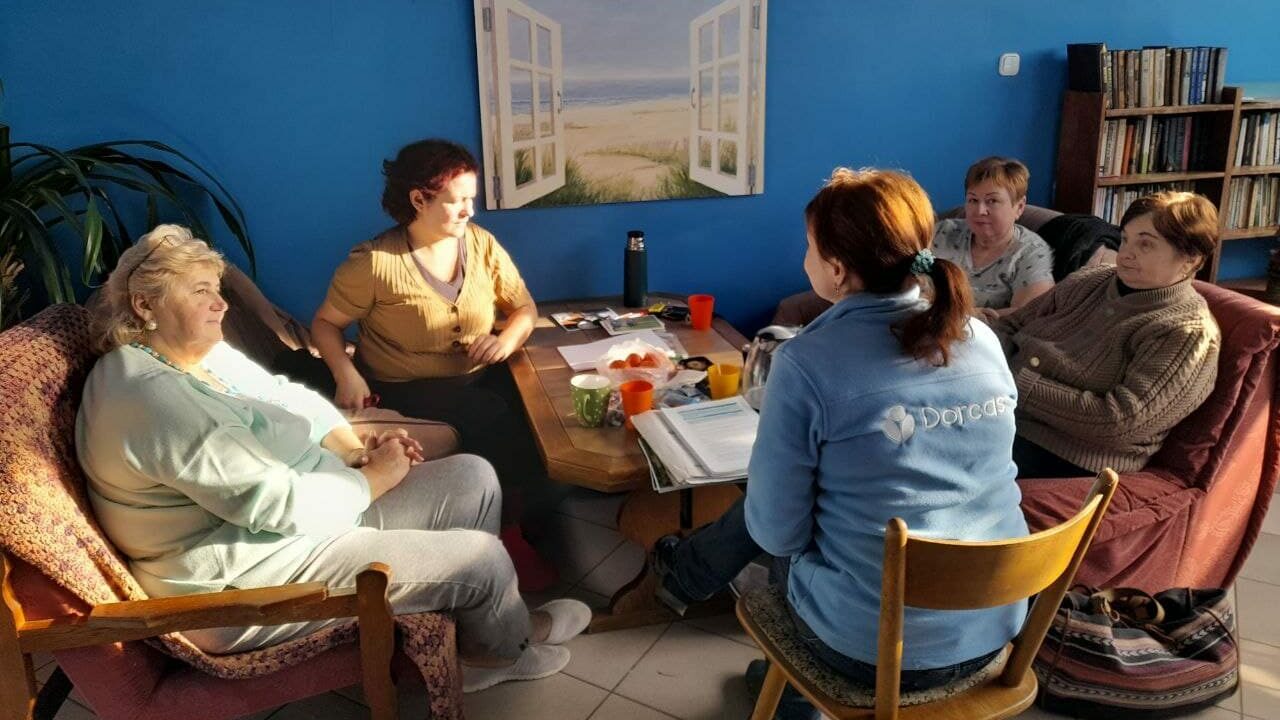
Annerieke Kisjes, International HR Advisor at Dorcas, describes: ‘While our colleagues are providing humanitarian assistance and psychosocial support, they also have to face these circumstances in their own lives. When the conflict in Ukraine started, colleagues from Dorcas Ukraine had to evacuate and became internally displaced persons, while they were simultaneously helping others who were fleeing the violence. We actively offered support and counselling to our colleagues, which benefited them a lot. Also, recently a mayor earthquake caused devastation in Syria. Our colleagues in Syria immediately started to supply shelter and meals to those in need. At the same time, the Dorcas office in Syria was severely damaged, their own houses were not safe to return to and for some it was unsure whether friends and family were safe.’
Maureen Mahfouz, Mental Health and Psychosocial Support Coordinator for Dorcas Lebanon, describes: ‘It is challenging because we live in a very difficult context. We work with people who are suffering from injustice and traumatic events, which is very stressful. Activities that could help us deal with distress are not always possible because of for example the economic crisis and lack of time. However, as a team we receive training to deal with this and to build and strengthen our relationships, as we face this together.’
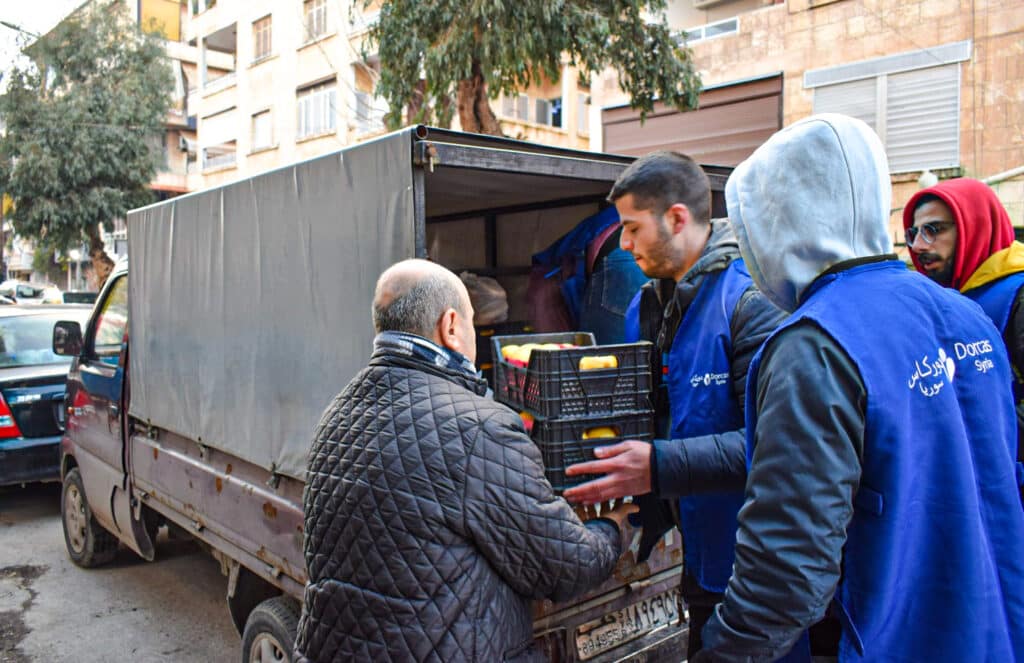
As an organisation that works in difficult circumstances, Dorcas has a responsibility towards its employees to make sure that they are safe and receive the support they need. Psychosocial support is a vital part of this. We offer coaching, counselling, mentoring and training and right now, we are rolling out a worldwide staff-care project to be able to even better support Dorcas employees. The staff care that is needed in the country offices, can differ across different cultures and we are sensitive to the needs of our staff. In collaboration with the Antares Foundation and our country offices, we endeavour to address key areas for improvement and organise the necessary support, training and guidance in strengthening psychosocial resilience of Dorcas staff, volunteers and partners. In this way, we support our colleagues, and this enables them to support project participants and to continue to work on the frontline for those in need.