Clean drinking water is not merely a convenience, it is a fundamental human need and a cornerstone of public health. However, millions of people around the globe still lack access to safe water sources, leading to severe consequences for their health, livelihoods, and overall well-being. Understanding the gravity of this issue is pivotal, as is the urgent need to address it effectively.
Consequences of inadequate access
The ramifications of inadequate access to clean drinking water are profound and far-reaching. According to recent data from the World Health Organization (WHO) and UNICEF, approximately 785 million people worldwide still lack even a basic drinking-water service, with many more consuming water that is contaminated or unsafe. This precarious situation exposes individuals and communities to a myriad of health risks, including waterborne diseases such as cholera, typhoid fever, and diarrhea, which claim the lives of over 2 million people annually, predominantly children under the age of five.
Moreover, the absence of clean water perpetuates a cycle of poverty, hindering economic development and exacerbating inequalities. Without access to safe water for drinking, cooking, and sanitation, communities struggle to maintain good health, attend school regularly, or pursue livelihood opportunities, trapping them in a cycle of poverty and deprivation.
Importance of clean drinking water
Ensuring universal access to clean drinking water is not just a matter of basic necessity: it is a fundamental human right. Clean water is indispensable for maintaining health, sanitation, and dignity. It serves as a cornerstone for sustainable development, empowering individuals and communities to thrive economically and socially. Additionally, adequate water access is crucial for achieving various Sustainable Development Goals (SDGs), including those related to health, education, gender equality, and poverty eradication.
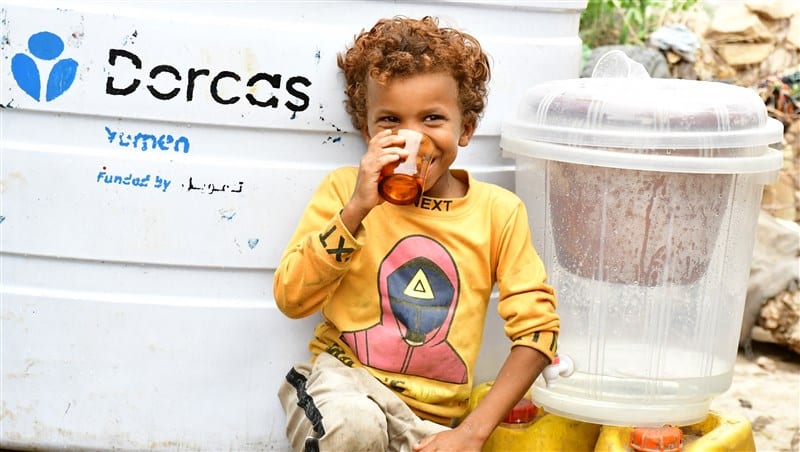
Agnes Kroese, CEO of Dorcas recently visited Yemen. She met with a wide variety of people, all with one commonality: limited access to clean drinking water.
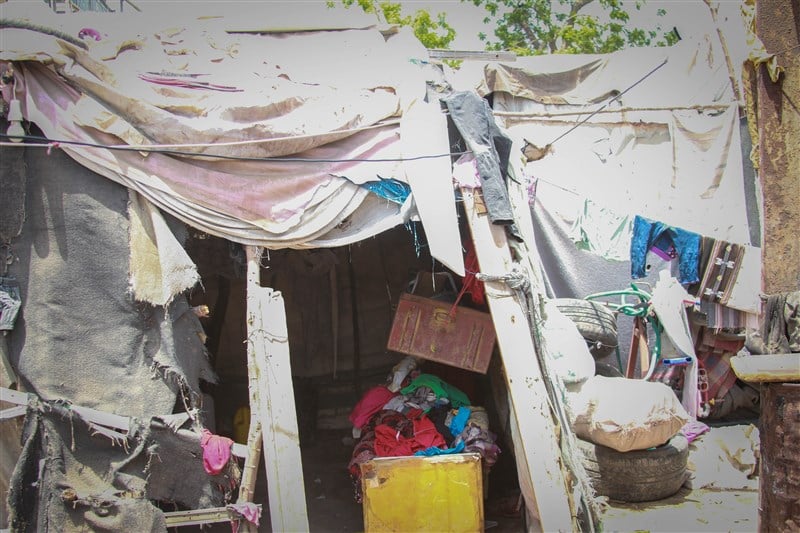
Armed conflicts and humanitarian crisis have caused Yemenis to seek safer refugee. Many have been living in camps for years.
“I was in one of these camps: a barren, open plain. There was no water to be seen in the wider area. When I asked for drinking water, one of the women showed me a jerrycan. The water in the jerrycan ws clearly polluted.“
Agnes Kroese, CEO Dorcas
Role of Dorcas
As a humanitarian organisation committed to addressing the structural causes of poverty and exclusion, Dorcas exemplifies core values such as compassion, justice, and stewardship in its efforts to improve access to clean drinking water. Through targeted interventions and community-led initiatives, Dorcas works alongside communities in vulnerable situations to implement sustainable water solutions that meet their specific needs and circumstances.
Practical solutions
Addressing the global water crisis requires a multifaceted approach that combines infrastructure development, community engagement, and policy reform. Practical solutions include:
- Investing in infrastructure: Building and maintaining water supply systems, including wells, boreholes, and water treatment facilities, to ensure reliable access to clean water.
- Promoting hygiene education: Empowering communities with knowledge about safe water practices, sanitation, and hygiene to prevent waterborne diseases and promote overall health.
- Supporting water harvesting and conservation: Implementing rainwater harvesting systems and promoting water conservation techniques to maximise the sustainable use of available water resources.
- Advocating for policy change: Advocating for policies and regulations that prioritise equitable access to clean water and sanitation services, particularly for marginalised people and communities.
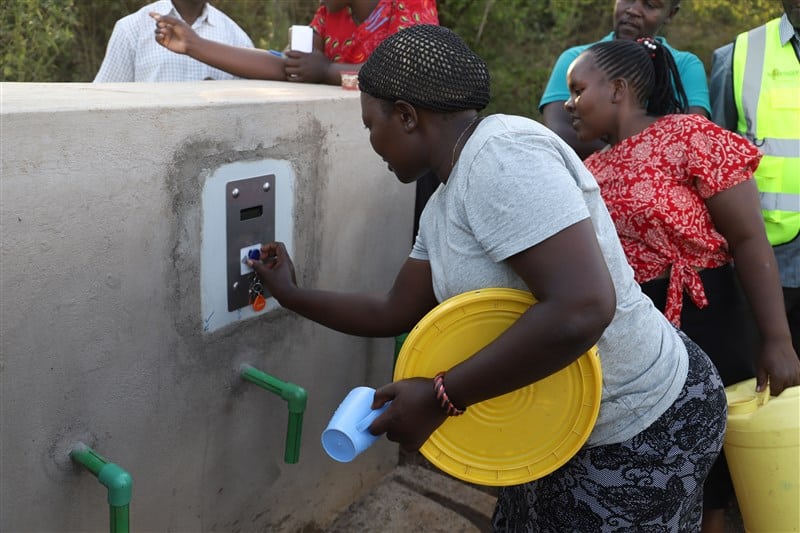
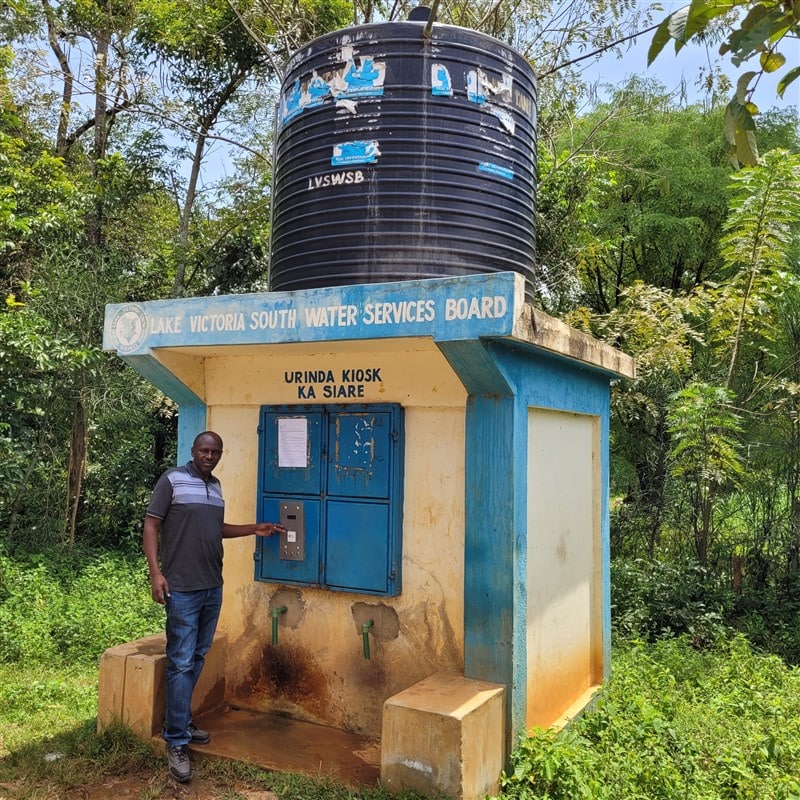
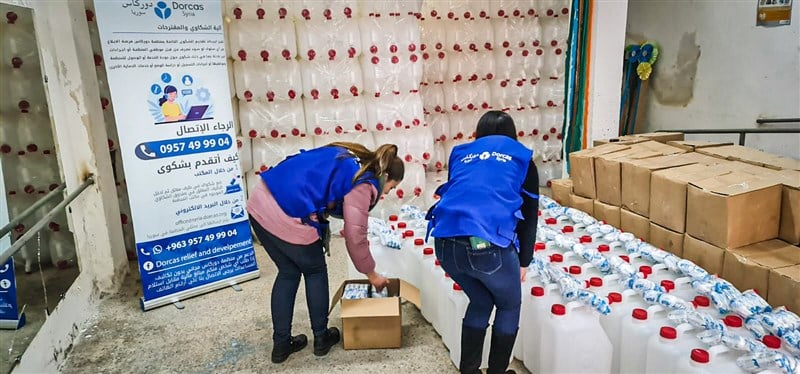
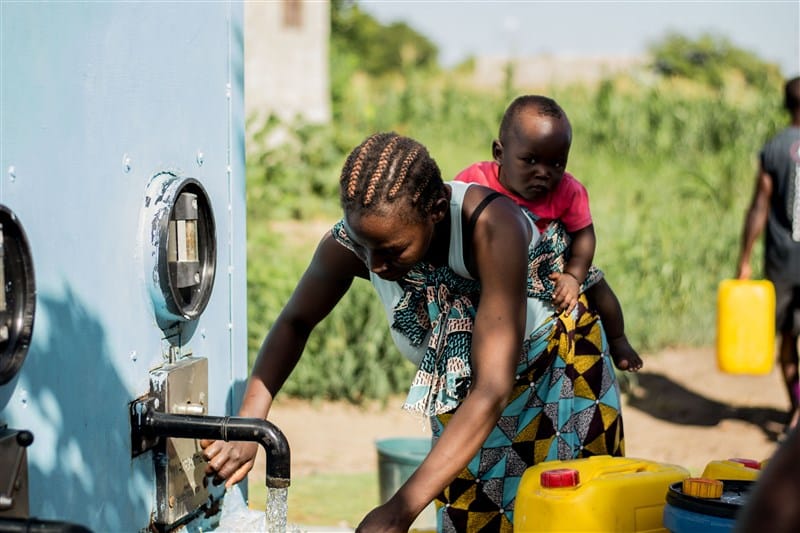
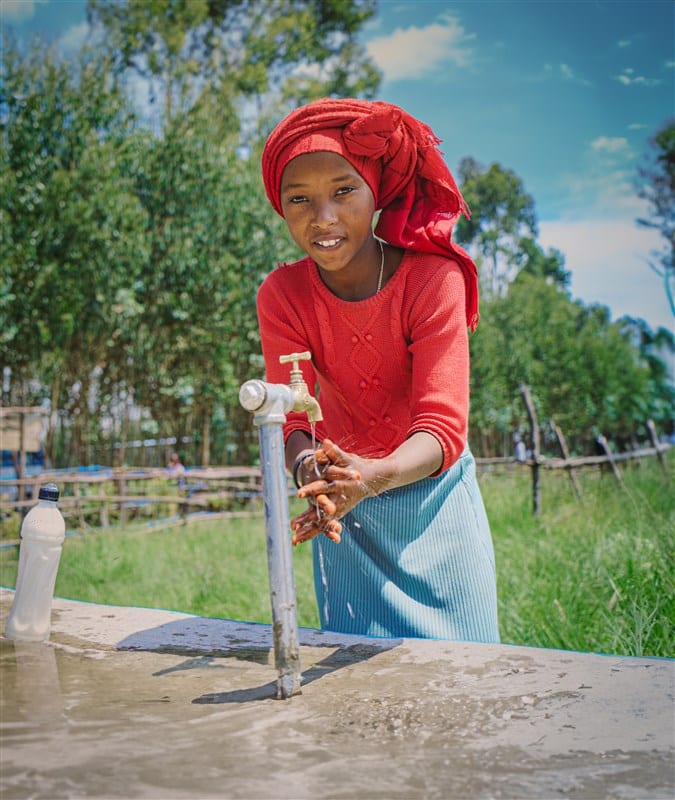
The consequences of limited access to clean drinking water are profound and multifaceted, affecting health, livelihoods, and overall well-being. Addressing this global challenge requires collective action, guided by principles of compassion, justice, and stewardship. By investing in practical solutions and empowering communities, we can ensure that everyone, regardless of their circumstances, has access to this essential resource and the opportunity to lead healthy and dignified lives. As we strive towards this goal, organisations like Dorcas play a crucial role in catalysing positive change and transforming the lives of those in need.
Around the world, as many as one in four people have no access to clean drinking water. Clean drinking water is of vital importance. Dorcas supports communities to improve access to clean and safe water. We do this by, for example, repairing boreholes in Iraq, distributing water in Yemen and building new water taps in Mozambique, Kenya and Ethiopia. Or by installing solar panels so that existing boreholes can be put to better use. In Mozambique, the limited access to safe drinking water causes major problems. With WaterTime, Dorcas Mozambique has improved the access of safe and clean water.
>> Dorcas organises Water Power (Actie Waterkracht) campaign to raise awareness about the lack of access to clean drinking water. More details on this campaign (in Dutch) via Actie Waterkracht.
Written by: Agnes Kroese, CEO of Dorcas
From all sides, women and children come running. By their side, a donkey with empty jerry cans. I am in Yemen. This mountain village depends on only one well. And this well only works when there is electricity. On average, this is maximum one hour per day. On average, because the last time the water pump worked was over two days ago. By now, all the jerry cans have been emptied to the last drops. No wonder everyone rushes to the water pump now that there is electricity for a moment. Water is literally vital in this parched area.
Yemen is located in the southwest of the Arabian Peninsula. It is a beautiful country with a rich culture. The Romans called Yemen ‘Arabia Felix’, Happy Arabia. Nowadays, Happy Arabia is hard to find. These days, we mainly know Yemen for the armed conflicts and the humanitarian crisis.
Flood
Due to these problems, Yemenis have fled massively. Many have been living in camps for years, both inside and outside the borders. I was in one of these camps: a barren, open plain. There was no water to be seen in the wide surroundings. When I asked for drinking water, one of the women showed me a jerry can. The water inside smelled and was clearly heavily contaminated.
One in four
Unfortunately, the water problems in Yemen are not unique. Worldwide, as many as one in four people lack access to clean drinking water. With serious consequences: people suffer from thirst daily, become ill, and get diarrhea, cholera, and typhoid. Due to climate change, the water problem is likely to only worsen in the future.
Bright spots
It could make you feel hopeless, but fortunately, during my visit, I also see bright spots. Like the extra wells we dig and the latrines being built. Or the installation of solar panels, so that existing wells can be betters. But above all, the sparkle in people’s eyes.
Water and life
The visit to Yemen makes an impression and has motivated me even more to participate in Actie Waterkracht (Water Power campaign). I take on the challenge of only drinking water from March 16th to 22nd. This means that I have to go a week without the refreshing cup of coffee in the morning. I also pass on the glass of soft drink at my niece’s birthday party. This way, I reflect on the people for whom a glass of water is already a luxury item. Especially during this Lenten season, the period of reflection in preparation for Easter.
Moreover, by drinking only water for a week, I save € 17.50. With this amount, Dorcas can provide one person with access to clean drinking water. So, we give water and life. For example, to the people in that mountain village in Yemen. That’s why I participate in Actie Waterkracht (Water Power campaign).
Agnes Kroes is CEO of Dorcas. Agnes:”I contribute with great dedication to our mission in creating opportunities for people and communities to flourish. One of the ways I do this is through a monthly column in Dutch newspaper Nederlands Dagblad. In this column, I share insights from my professional experience at Dorcas. My aim is to inspire, inform and encourage readers to engage with Dorcas’ initiatives, campaigns, and projects.“
This opinion article is written by Jochem Duinhof. He is a Political Advisor at Dorcas. With this opinion article, he argues for continued support for Ukraine. This article is published in Dutch newspaper Nederlands Dagblad (ND).
Solidarity with Ukraine is under pressure. Not only in the United States, but also in Europe and even in the Netherlands. On the one hand, there is the conflict in the Middle East, which understandably receives a lot of media attention, but pushes the conflict in Ukraine into the background. On the other hand, there seems to be an increasing Ukraine fatigue. In March 2022, only 11 per cent of Dutch people were not in favour of welcoming Ukrainian refugees. According to the most recent poll, this percentage currently stands at 23 per cent. In the week since the large-scale Russian invasion began two years ago, this is a painful conclusion.
Especially among Dutch right-wing parties, support for Ukraine is under pressure. The PVV (Party for Freedom) wants to end all direct support to Ukraine, the BBB (Famer-Citizen Movement) wavers on how unconditional the support should be and FvD (Forum for Democracy) is openly pro-Russian. Also, this week, several right-wing politicians expressed negative views on support for Ukrainians. This time it concerned the reception of Ukrainian refugees in the Netherlands. The politicians painted the picture that Ukrainians favour coming to the Netherlands and come to our country en masse to benefit from our prosperity. With that, the cost of hosting Ukrainians would be higher for the Netherlands than elsewhere, the message is.
This is a false frame that is not based on the facts. The fact that Germany, the Czech Republic and Poland receive at least twice as many Ukrainian refugees in terms of population as the Netherlands is ignored. As is the fact that Belgium receives only a fraction fewer Ukrainians than the Netherlands (0.0063 vs 0.0079 Ukrainians per inhabitant). That this sentiment is being stirred up is nothing new. Yet the frame created is incorrect. In a democracy, opinions are of course allowed to differ, but they should be based on the facts.
Self-interest
Furthermore, the suggestion that supporting Ukraine only costs us something does not do justice to reality. It is naive to turn our heads away from the conflict in Ukraine. Ukraine is our first line of defence: if Ukraine holds out, it is in the direct interest of the Netherlands. However, if Russian forces conquer Ukraine, it is highly questionable whether this will end Russian expansionism. More importantly, Ukraine is fighting for something bigger: self-determination, democracy and human rights. These core values are of great importance to the Netherlands. We benefit from a world in which these core values are respected. So, supporting the Ukrainian people is about much more than our jobs, healthcare and housing: it is about protecting the global system that we have reaped the benefits of for decades. With the growing influence of autocracies such as China and Iran, this system is under pressure. It is therefore essential that we as Europe continue to stand for our democratic values. A Russian victory could therefore have disastrous consequences for our position on the world stage.
Hypocrisy
Above all, tampering with solidarity with the Ukrainian people tends towards hypocrisy. After all, we have been pleading for years for “reception of refugees in the region”. This time, we are the region for Ukrainians. Take for instance a country like Lebanon, which, with its five-and-a-half million inhabitants, receives one-and-a-half million Syrians. That is no less than thirty-five times the number of Ukrainians per Dutch citizen. And to think that Lebanon has been facing a severe political and economic crisis for years. So as far as the reception of Ukrainians is concerned, it is up to us to take our responsibility; after all, we have passionately pleaded for this system for years.
Solidarity
Concluding, this is not the time to abandon Ukrainians. Two years after the large-scale invasion, the struggle continues unabated. This year, the UN calculated, 40 per cent of Ukrainians left behind need humanitarian assistance. Our solidarity with the Ukrainian people is not free, but the costs are low compared to the horrors the people of Ukraine have been facing for two years now. Polarising between Ukrainians and the Dutch is not the solution. We need politicians that bravely face the challenges we face as a country: showing solidarity with the victims of this conflict and effectively addressing problems within our own borders. The two need not be played against each other; we can both show solidarity with Ukraine and address our domestic problems. However, this requires political courage, and the will to show constructive leadership in times of scarcity. With the formation still in full swing, the stakes are high in that respect. Let us therefore hope and pray that our people’s representatives do not abandon Ukraine, especially now.
Written by: Agnes Kroese
A large group of people has gathered around the ambulance. It is July 2023 and I am in a remote village in Syria. The ambulance comes here once a month and is the only medical post in the wide area. In the vehicle lies a woman. She wipes the tears from her eyes. Years ago, she and her husband had already given up hope of having children, and now it turns out she is pregnant. I am happy for her and congratulate her warmly. At the same time, I wonder what the life of this child will be like. What does it mean when your cradle stands in Syria?
The Syrians have been in the grip of a gruesome conflict for years. Last year, on February 6th, a devastating earthquake occurred. Early that day, with a pounding heart, I called Najla, our Country Director for Syria. It took some effort to reach her. Not because she was injured – or worse – but because she and her team had immediately sprung into action, busy arranging safe shelters, food, water, and medical care. When I stood among the ruins myself last summer and spoke to the people who are still dependent on Dorcas and other organisations for their basic needs to this day, it touched me deeply: ‘What if I had been born here? Would I even still be alive?’
This month also marks the second ‘anniversary’ of the invasion in Ukraine. A few months ago, I visited my Dorcas colleagues close to the eastern front. The people here were concerned about the fighters at the front and feared for the future. At the same time, I saw determination; giving up was not an option. Once again, the same questions almost choked me. What if I had been born in Ukraine? How would I cope with the fear for the safety of my loved ones who would fight for my freedom?
My cradle stood in the Netherlands, allowing me to grow up in peace and good conditions and giving me the opportunity to develop into the person I am now. Being born here is a valuable gift, for which I did nothing. The opportunities I received because of this fill me with gratitude.
At the same time, I often struggle with the question of why I got those chances and others did not. I don’t have the answer to that question, but I do know that this gift also brings the responsibility to share and, following, to show something of God’s love and goodness through our actions. To people who need it here, but also in countries like Syria and Ukraine.
Agnes Kroes is CEO of Dorcas. Agnes: “I contribute with great dedication to our mission in creating opportunities for people and communities to flourish. One of the ways I do this is through a monthly column in Dutch newspaper Nederlands Dagblad. In this column, I share insights from my professional experience at Dorcas. My aim is to inspire, inform and encourage readers to engage with Dorcas’ initiatives, campaigns, and projects. “
International Humanitarian Law provides vital guidance and boundaries during war and conflict. But what exactly does this body of law entail and does Dorcas need to adhere to it? We explore the importance of international humanitarian law through four questions and answers.
What is International Humanitarian Law?
International Humanitarian Law, also known as the laws of armed conflict, has been established to safeguard human dignity during wars and conflicts, reduce unnecessary suffering and protect the rights of all parties involved, including civilians and combatants. This means, for example, that civilians, wounded soldiers, and even prisoners of war not participating in the armed conflict must be protected. Additionally, the law prohibits the use of children under fifteen as soldiers and specifies that women and children must be shielded from sexual violence. Furthermore, it provides guidelines on weapons not being deployed when civilians are involved in a situation.
Does this law address aid workers?
Yes, it does because according to the laws of war, humanitarian workers must always have unrestricted movement in a crisis area. Denying them access to such areas is prohibited.
What if parties fail to comply with humanitarian law?
Although the rules of international humanitarian law may seem logical, these are often not adhered to in practice. The legal provisions apply to states and, in principle, nations that violate international humanitarian law can be held accountable for their actions by organisations such as the United Nations or the International Court of Justice. However, independent investigators often face difficulties accessing areas where conflict or war is ongoing, making it extremely challenging to obtain the objective information required. Furthermore, although under international humanitarian law, aid workers and convoys must be granted access to war or conflict zones, this does not always happen in practice. And even if various parties exert pressure in such cases, enforcing access remains difficult.
What does humanitarian law mean for an organisation like Dorcas?
Dorcas is an organisation for development and humanitarian assistance that adheres to humanitarian principles and fully supports the provisions of international humanitarian law. Our primary objective is to assist all affected individuals in crisis areas. We remain impartial, neutral and independent, which means that during a conflict, we do not take sides and do not consider a person’s skin colour, political preferences, or which side of the conflict they belong to. Our role as a humanitarian assistance organisation is to identify the person in need and provide assistance under all circumstances.
Recently, the protracted conflict between Israel and the Palestinian territories has escalated. The situation currently remains uncertain.
We do not work in the affected areas. However, the conflict is exerting an influence on the stability in the Middle East. Since the escalation, tensions have also increased in Lebanon, Syria and Egypt, countries where Dorcas is active. The UN is very concerned that the conflict will spread to Lebanon.
For the time being, our programmes in Lebanon, Syria and Egypt can continue. The current situation does not directly affect our work in these countries. However, we will continue to closely monitor the developments, and if risks for the safety of our colleagues or project participants arise, we will take appropriate action. In Lebanon, we are also collaborating with partners on contingency plans in order to start an immediate response in case of escalation.
Dorcas and Woord en Daad will continue their cooperation on job creation for Ethiopian youth in 2023. Since 2016, Dorcas and Woord en Daad have collaborated in Ethiopia on job creation for young people. Within the Employable Youth Ethiopia (EYE) programme, they realised more than 20,000 jobs between 2016-2021 within a multi-party consortium through intensive cooperation with vocational schools, entrepreneurial training providers and private parties. Several networks were also launched to improve dialogue between stakeholders.
After the EYE programme ended, both parties decided not to terminate the infrastructure built up and to complete innovations. For instance, the Centre of Excellence model, in which vocational schools train young people for companies based on pre-made job and wage guarantees, will be further developed with in 2023. Entrepreneurship training providers are also developing new collaborations to better support young people get (digital) business support and access to start-up capital.
This week, Agnes Kroese, CEO of Dorcas and Rina Molenaar, CEO of Woord en Daad signed a new partnership agreement that reflects the intention to work together in the coming years to make structural changes in the youth and employment system and to create jobs on a large scale. ‘We know each other and have built a special shared history in Ethiopia,’ Agnes Kroese said, ‘It would be illogical not to do our utmost to continue to seek collaboration, be complementary to each other and continue to tap into the potential of each other and others. That serves the interest of the young people we are both committed to.’
Rina Molenaar agrees: ‘This partnership agreement is a starting point for a joint exploration of how to achieve large-scale change. In this, we must be able to put our own role into perspective, become ambitious to be modest and proactively engage in cooperation.’
The continuing EYE programme brings together key Ethiopian stakeholders such as the Ministry of Skills and Labour, the Chamber of Commerce, workers’ and employers’ organisations and micro-credit umbrellas to discuss and improve current schemes and policies. Meanwhile, the programme is innovatively creating hundreds of new jobs for young people. In this, Dorcas and Woord en Daad are supported by Dutch companies and thrift shops.
By the end of 2022, a total of 108.4 million people is forcibly displaced worldwide. An increase of 19.1 million people in just one year.
UNHCR recently published its annual global trend report. In this report they look back at 2022 and the indicated trends of forced displacement. Some facts mentioned in this report:
- A total of 76 percent of the world’s refugees and other people in need of international protection are hosted in low- and middle-income countries.
- A total of 70 percent lived in countries neighbouring their countries of origin.
- When looking at the location of origin, a total of 52 percent of all refugees came from just three countries: Syria, Ukraine and Afghanistan. This includes two countries where Dorcas is active (Syria and Ukraine).
Dorcas is active in fourteen countries in Eastern Europe, Eastern Africa and the Middle East. In twelve of these fourteen countries we see forced displacement, both from natural disaster and man-made disaster. Lebanon continues to provide assistance to Syrian refugees, even though the economic and political situation in the country worsens. They are hosting the largest number of refugees per capita, with an estimation of 1.5 million Syrian refugees plus a small number of refugees of other nationalities. South Sudan’s refugee crisis remains the largest in Africa, with over 2.3 million South Sudanese refugees hosted in neighbouring countries and another 2.3 million internally displaced. The conflict in Ukraine remains ongoing and is currently one of the largest human displacement crises in the world.
Numbers in Dorcas countries:
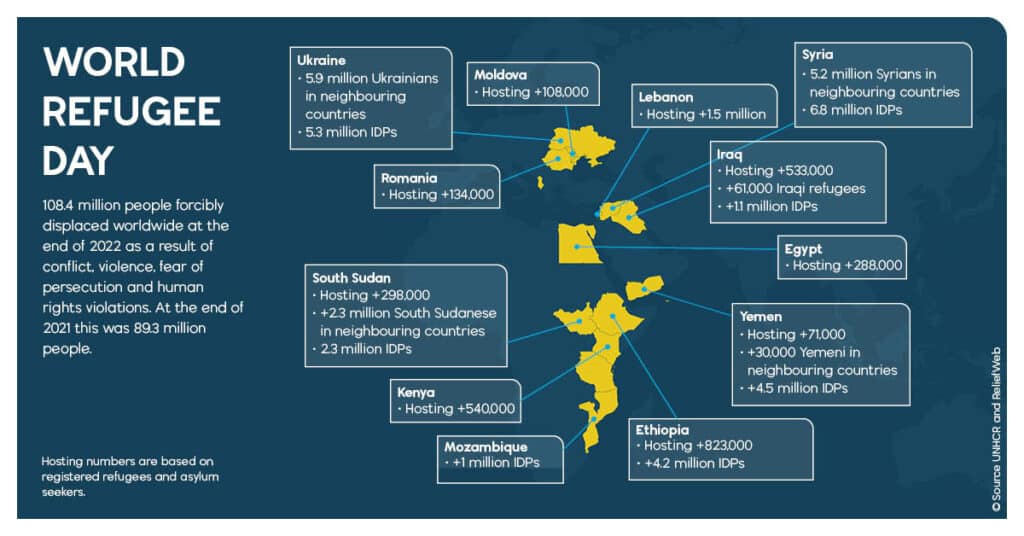
UNHCR found that by the end of 2022, the number of people displaced by conflict, persecution, violence and human rights abuses stood at a record 108.4 million, up 19.1 million on a year earlier, which was the biggest ever increase.
A total of 108.4 million forcibly displaced worldwide by the end of 2022:
- 35.3 million refugees.
- 62.5 million internally displaced people.
- 5.4 million asylum-seekers.
- 5.2 million other people in need of international protection.
Source: UNHCR Global Trends, forced displacement in 2022
2022 marked the first year of our new strategic period. Even though it was the start of a new strategic period and despite the change in leadership during the year, we can conclude that 2022 was characterised by moving forward on the chosen path. The crises in various project countries did not take Dorcas by surprise, even though these have demanded a lot from us. We faithfully moved forward thanks to the support of thousands of volunteers and tens of thousands of donors, but above all, because we knew and know that God is with us no matter the circumstances we find ourselves in. Dorcas has acted in these situations in line with its character. We put our shoulders to the wheel together with our partners, remain true to our mission and are inspired by our faith in Jesus Christ. We have learned to cope, adapt and adjust, but not to give up. God, who strengthened our hands in the past, was with us in 2022 and will remain with us in the future. Therefore: Faithfully moving forward!
Our collective efforts reached and impacted more than 1 million persons in 14 countries in Eastern Africa, Eastern Europe and the Middle East. Over 40 shops Dorcas shops and 10,500 volunteers, over 83,000 individual supporters, 428 companies and 2,000 churches worked together with 384 Dorcas staff and many valued partner organisations.
For the first time, we indicated our reached impact through long-term outcomes. Each Dorcas project is linked to the long-term outcomes of the Dorcas results framework and their corresponding indicators, and we link each project with the impact statements in our Theory of Change. By doing this, we illustrate how our Way of Working contributes to change for individuals, communities and societies. These long-term outcomes were chosen based on their level of contribution to the six impact statements of flourishing people and communities and the degree of compatibility with Dorcas’ fields of expertise.
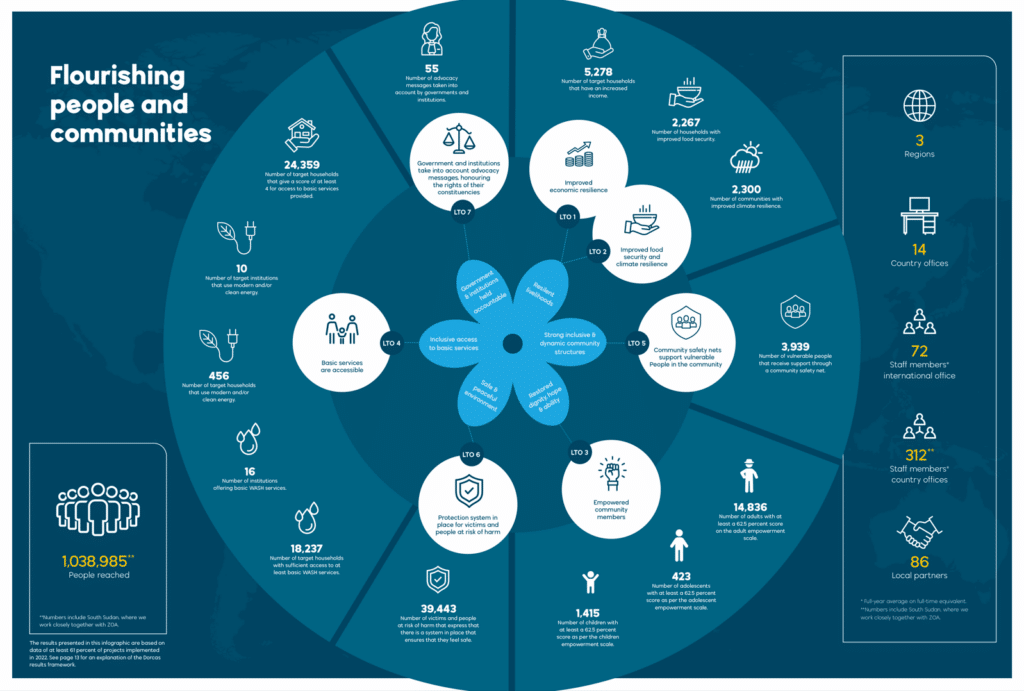
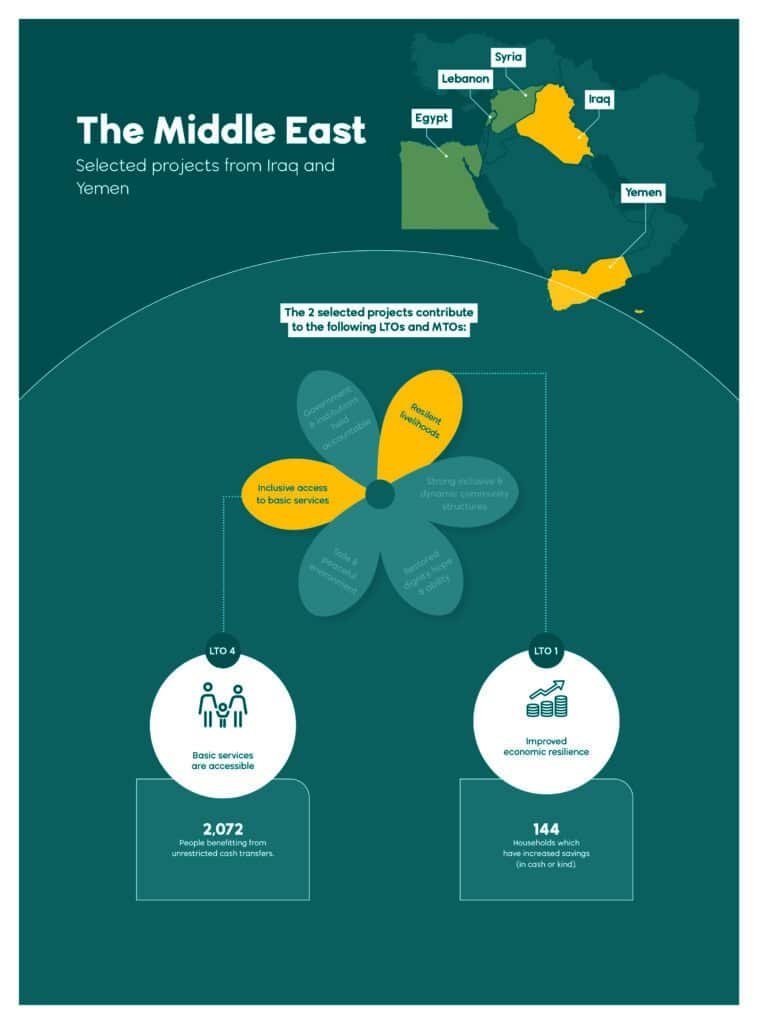
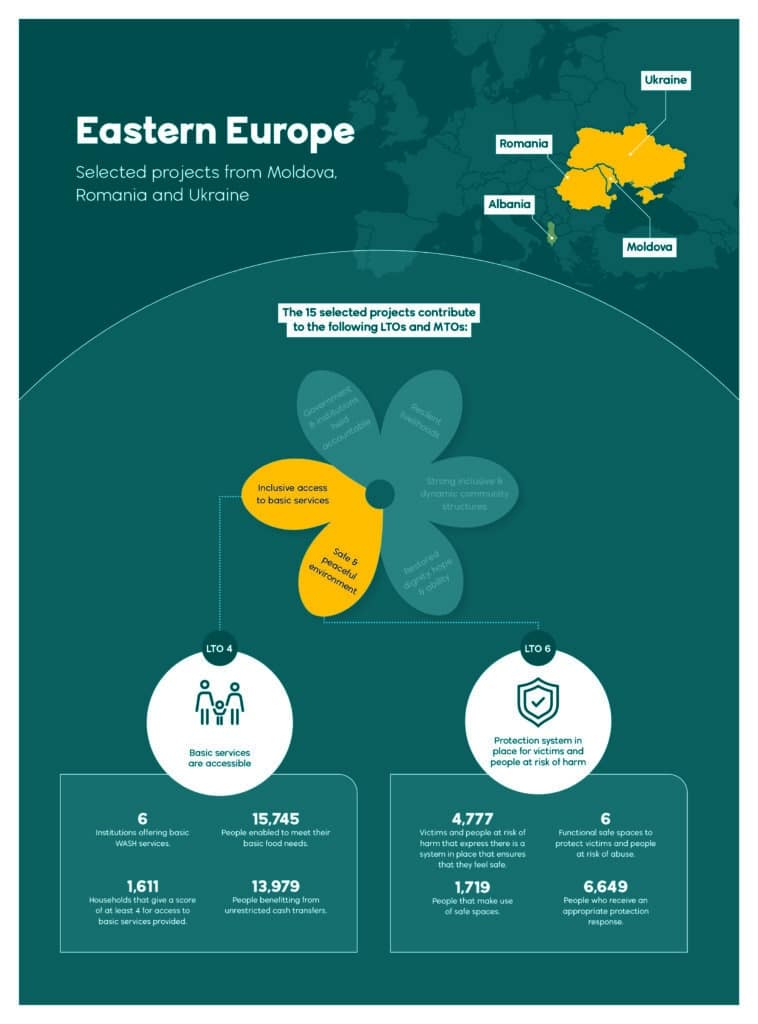
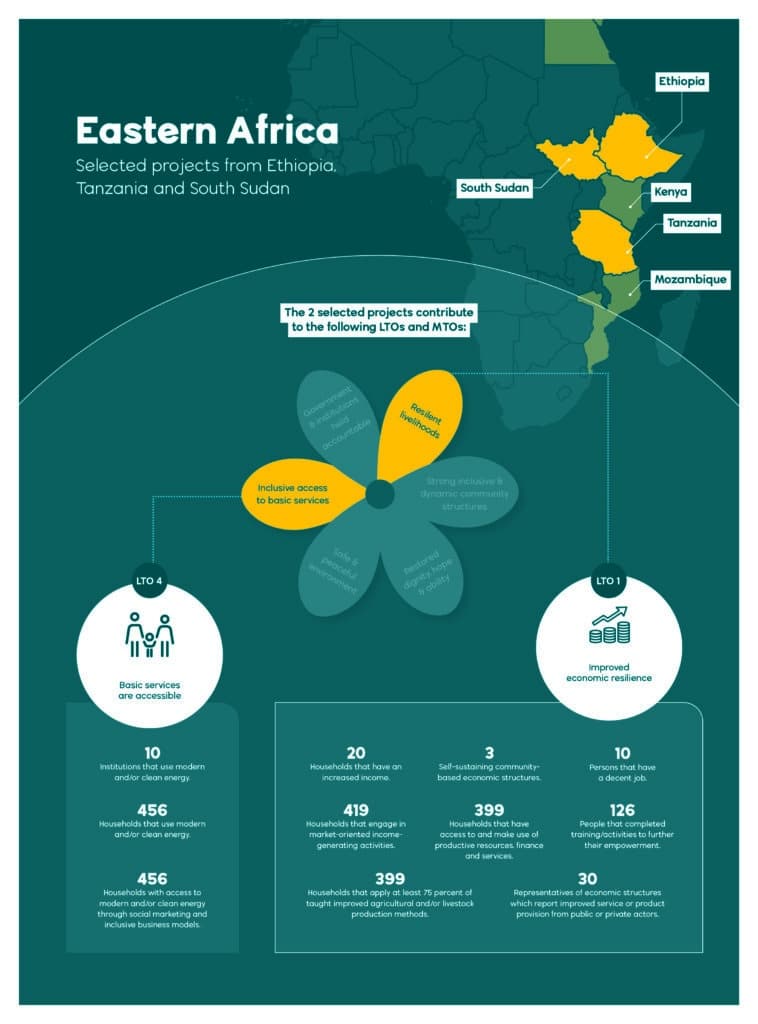
Within the 2022 annual report, the following impact results are highlighted:
- Ukraine crisis response (with selected projects from Eastern Europe).
- Sustaining food security and livelihoods (with selected projects from the Middle East).
- Climate, cooking and cattle (selected projects from Eastern Africa).
- Communities at work are stronger (selected projects from South Sudan).
More than 3.4 billion euros will be cut from the Dutch budget for development cooperation and humanitarian assistance in the coming years if the government’s “spring budget” (Voorjaarsnota) is approved. As more asylum seekers than expected are coming to the Netherlands, the government intends to use these funds from the development cooperation budget to provide housing for these asylum seekers within Dutch borders. This money would otherwise be spent on sustainable development and humanitarian assistance throughout the world. Over 100 Dutch development organisations, including Dorcas, are therefore calling for these cuts to be reversed and for the setting of a maximum amount for the asylum costs paid from the development cooperation budget.
Partos, the umbrella association for more than 100 Dutch development organisations, considers it very ill-advised that the Dutch government will cut back on tackling the root causes of conflict, climate change, poverty and humanitarian assistance. It therefore calls on the Dutch House of Representatives to reverse the budget cuts.
Liana Hoornweg, director of Partos: ‘Of course, the Netherlands must provide adequate asylum for refugees. However, the painful fact is that standard asylum has been subject to budget cuts for many years. As expensive emergency shelter is now being deployed, the very poorest in the world are the victims of a failing Dutch asylum policy. We call on the Dutch House of Representatives to tackle this problem structurally: introduce a maximum amount for the asylum costs that can be paid from the budget for development cooperation. That will allow the development budget to be used for its intended purpose: promoting sustainable development by tackling the root causes of conflict, climate change, hunger and poverty.’
Spokespersons from the coalition parties CDA, D66 and ChristenUnie confirmed the undesirability of increasing contributions from the budget for development cooperation to fund expenditure on housing for asylum seekers. Party congresses of D66 and CU adopted motions in 2022 to set a maximum amount from the budget for development cooperation that can be used on costs for asylum. Hoornweg: ‘Now is the time for action. We are counting on the coalition parties to stick to their own statements in the coming weeks. The debate on humanitarian assistance on 11 May is a good next opportunity to do just that.’