The conflict between Israel and Hezbollah has escalated significantly. People in Lebanon are once again living in fear and uncertainty, facing yet another crisis.
The history of conflict between Israel and Lebanon is long and complex, dating back to 1975. Since 7 October 2023, daily exchanges of fire have occurred between Hezbollah, located in southern Lebanon, and Israel. The escalation in late September 2024 resulted that both Israel and Hezbollah have been launching rockets at each other daily.
Crisis upon crisis
Lebanese citizens have faced a long history of instability and conflict. For many, it is yet another crisis in an already precarious situation. Beirut was devastated by a catastrophic blast in 2020, and the country has been enduring prolonged political and economic instability. The country’s economy left hospitals and infrastructure in poor condition and unemployment rates high. Inflation is soaring, and electricity is in short supply. Many young people are leaving the country in search of better opportunities abroad.
Compounding these issues, Lebanon hosts the highest number of refugees per capita in the world. Over two million of the country’s 5.4 million residents are refugees, with more than 70 per cent of them living in poverty. The large refugee population further straining local resources and exacerbating the challenges faced by the population.
Dorcas’ work in Lebanon continues despite the current tensions. We are upscaling the work to ensure that people affected by recent developments also receive the support they need.
Dorcas’ response to the current developments
In response to the recent surge in violence in Lebanon, Dorcas Lebanon has swiftly taken action to provide emergency humanitarian assistance to those displaced by the conflict. The team in Beirut has begun distributing essential supplies, including blankets, mattresses, food, and hygiene products, to displaced people. Alongside these immediate provisions, they are also offering mental health and psychosocial support. Many are grappling with feelings of fear, insecurity, and uncertainty.
Dorcas in Lebanon
Dorcas first worked in Lebanon in the 1990s, supporting reconstruction programmes after the civil war, and it returned to the country in 2014. Dorcas Lebanon seeks to meet the needs of communities affected by multiple crises, such as low-income households, people living with disabilities and older people. We support women in vulnerable situations by offering protection services and life skills through community centres, children in vulnerable situations through school meals and child development and protection, and young people through peacebuilding activities and teaching them transferable life skills.
In this time of great need, Dorcas remains committed to providing critical support to the people of Lebanon, ensuring that those most affected by the conflict receive both material and emotional assistance.
Written by: Agnes Kroese, CEO of Dorcas
What do I think of the government programme? Someone asked me that this week. Due to the setting I was in, I chose my words carefully and responded diplomatically (and rather euphemistically) that I found ‘the developments concerning’. International development and humanitarian assistance are clearly being sacrificed. In reality, it deeply affects me that the concept of ‘fellow human beings’ seems to stop at our borders. And certainly, there are enough concerns in the Netherlands that demand attention, but the solution does not lie in closing our borders or, more generally, in shutting our eyes to the needs close by and far away. And thankfully, a visit to Assen earlier this week proved to me that there are more people who feel the same way.
I was in Assen for the official opening of the 44th Dorcas shop. This shop was made possible thanks to the efforts of many dedicated volunteers. What began as the initiative of a few people grew into a shop that operates five days a week, run by a group of around 100 volunteers. As I stood there, surrounded by people who consciously choose to spend their free time helping others, I thought: There you go! We have not lost our humanity after all. And thank goodness for that, because volunteers are incredibly important. Not only for Dorcas, but also for most of community life.
In sports clubs, neighbourhood associations, and churches, countless people selflessly contribute to making all kinds of activities possible. Without volunteers, society grinds to a halt. Fortunately, figures from the Central Bureau of Statistics (CBS) show that the number of people doing volunteer work has returned to pre-COVID levels. Half of the Dutch population is active as volunteers, and older people have even become more involved than they were in 2019.
It is encounters with volunteers, like the one in Assen this week, and statistics like those from the CBS that give me hope and energy. Hope and energy to keep going, against the political tide of stricter, swifter, leaner, and cutbacks. I do not want to close my eyes or look away, but to keep seeing those in need. Together with my colleagues and the thousands of volunteers who are indispensable in this.
Words that motivate me in this come from the Bible: “Love your neighbour as yourself.” Jesus shows that love (for one’s neighbour) is the essence of our human existence. Love that makes no distinction but unites. Love that spurs us on to offer support and compassion to people both near and far. When I look around, I see that, fortunately, there are still many volunteers who embody this. No government programme can compete with that.
Agnes Kroes is CEO of Dorcas. Agnes: ‘I contribute with great dedication to our mission in creating opportunities for people and communities to flourish. One of the ways I do this is through a monthly column in Dutch newspaper Nederlands Dagblad. In this column, I share insights from my professional experience at Dorcas. My aim is to inspire, inform and encourage readers to engage with Dorcas’ initiatives, campaigns, and projects.‘
Storm Boris swept across Central and Eastern Europe, causing widespread devastation. Romania and Moldova were particularly hard hit by the exceptional rainfall, which led to devastating floods directly affecting thousands of people. The disaster has not only caused extensive damage to infrastructure and homes, but has also tragically claimed lives. Our local offices in Romania and Moldova have been mobilised to assess the situation where assistance is most urgently needed. This was done via partners and contacts in various locations and official government sources.
What is the situation in Romania following storm Boris?
Romania is one of the worst affected countries. In the south-western province of Galați, the situation is particularly severe due to rising water levels in the Danube River, especially near the border with Moldova.
More than 5,000 households in twelve towns have been directly affected by the floods. In some areas, the water level has risen by almost two metres, forcing many people to evacuate their homes. Romanian rescue teams are currently on the ground, using boats and helicopters to reach people in need.
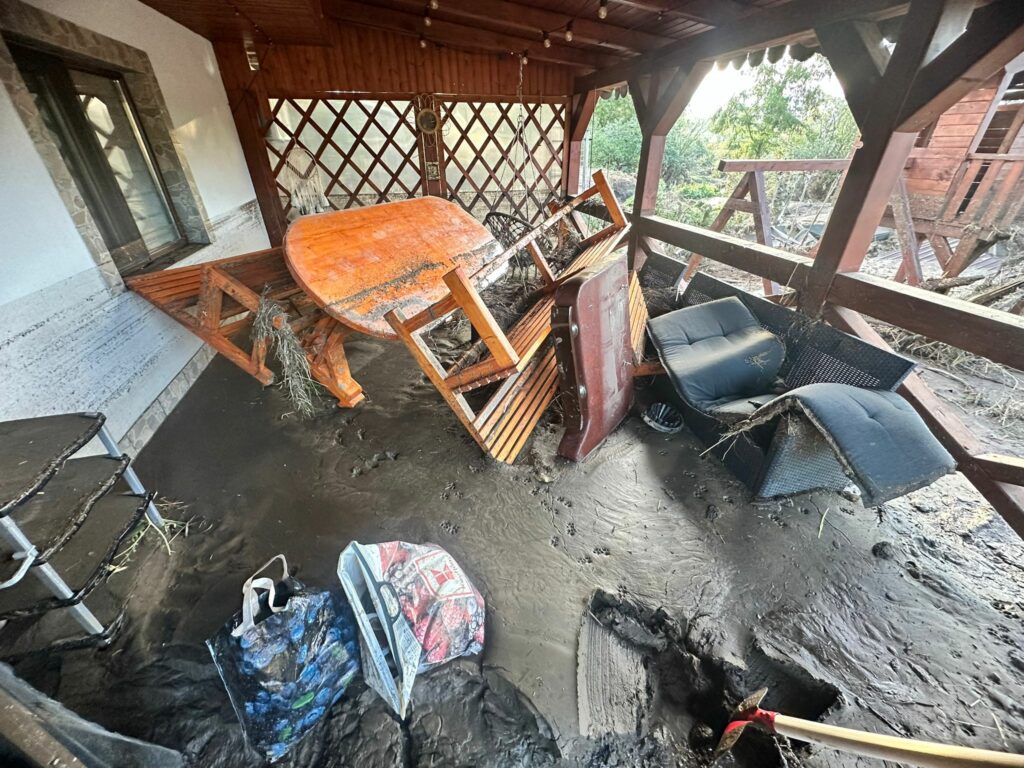
Severe damage to a home in Romania, where water levels reached up to two metres.
Dorcas has been active in Romania since 1990 and our local office is closely monitoring the situation. Although we are not currently working in the most affected areas, we have strong links with local partner organisations. Dorcas was one of the first organisations to work in Romania after the fall of the Berlin Wall, and we had active projects in Galați until a few years ago. Now that the city has been hit by this natural disaster, Dorcas is ready to assist.
While the Romanian government is leading the emergency response, our local colleagues have taken action to assess needs and provide support where necessary. Dorcas Romania staff have been on site to assess the situation and coordinate assistance. The immediate focus is on assessing the damage and the needs of the affected communities so that Dorcas can be ready to assist as soon as the water levels begin to recede. Only then can clean-up and reconstruction work begin.
Dorcas’ regular projects in Romania focus on food security, care for older people, family support and combating human trafficking. This expertise and experience is now being used to support the communities most affected by the floods.
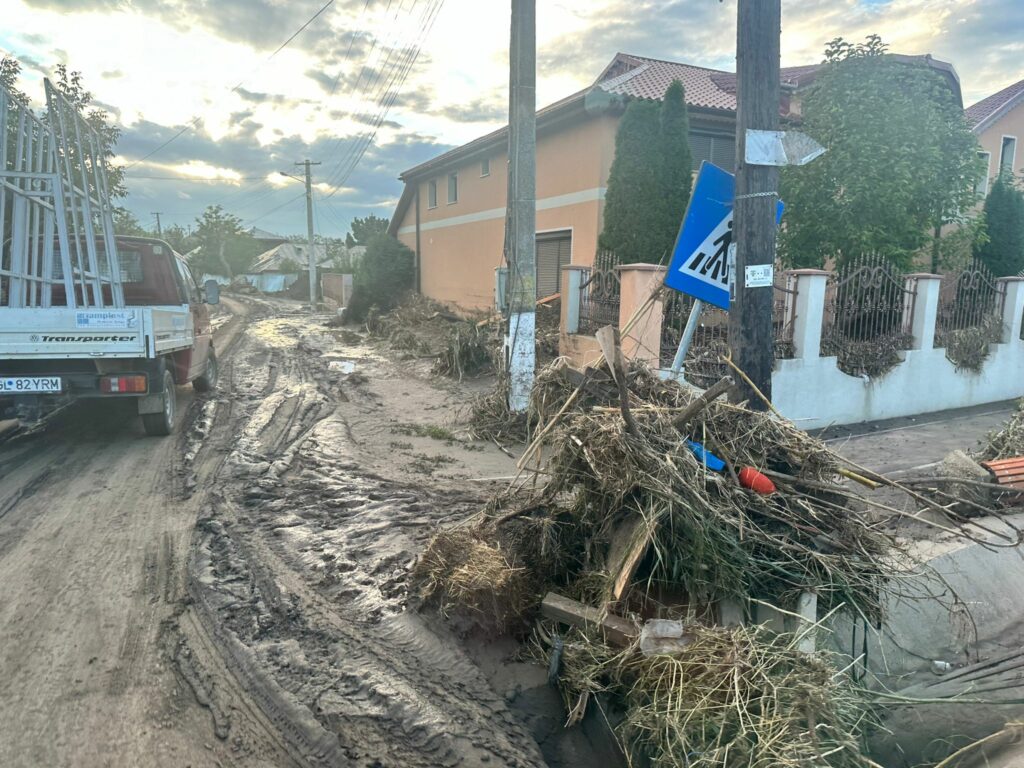
Moldova: Severe Damage in Leova District
Moldova was also severely affected by the floods caused by Storm Boris. In the south-west of the country, the district of Leova was particularly badly affected. Two bridges were completely destroyed, cutting off access to key roads. The situation is critical in the village of Sarata Noua, where a nearby reservoir is at risk of overflowing. This could lead to dam breaches, further exacerbating the flooding.
The emergency situation in the district of Leova remains unresolved. Local emergency services, together with international partners, are working tirelessly to mitigate the damage and save lives. While some areas were temporarily without power, electricity has been restored to most of the affected areas.
Country Director Leila informed us that, in addition to the floods, a 5.2 magnitude earthquake has struck, making conditions in the affected regions even worse.
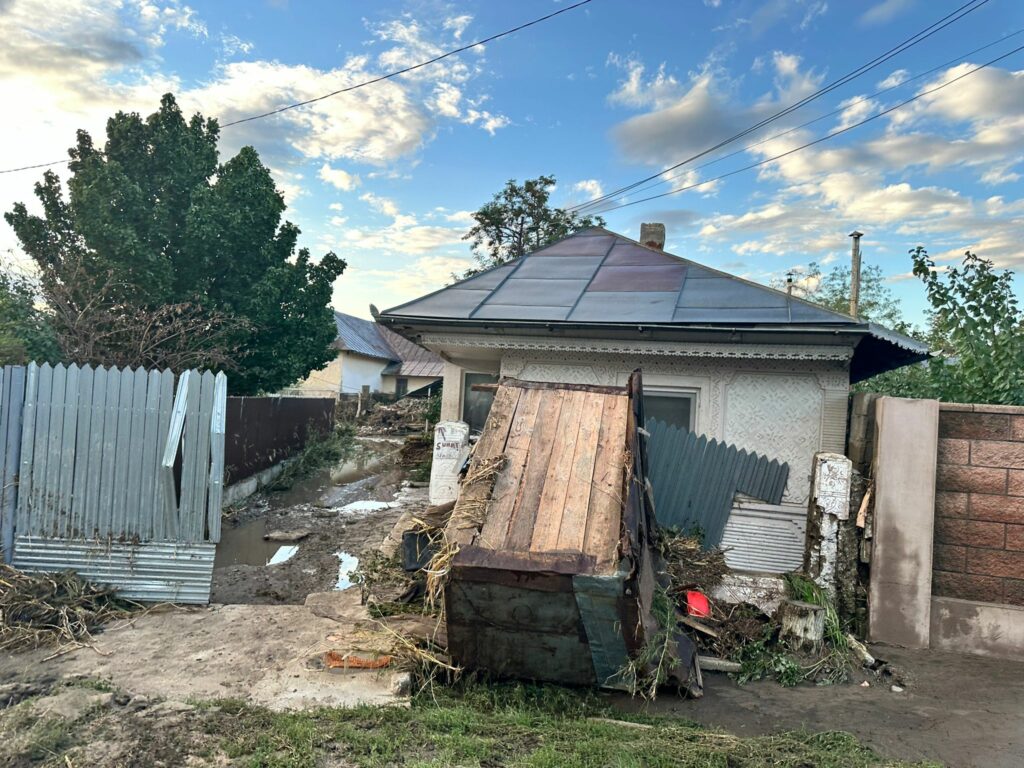
Dorcas primarily works in Moldova on community development, with a focus on protection and social safety nets for children, older people, and families, as well as improving livelihoods. Dorcas also provides emergency food assistance to refugees from Ukraine.
At the moment, our focus in Moldova is more on long-term development. We are monitoring the situation closely to determine if, where and how we can provide the most effective support.
While Dorcas has not yet travelled to Leova District due to government travel advisories, we are in close contact with local partners, volunteers, and churches. Dorcas awaits further official information to determine how best to assist the impacted communities.
What is Dorcas doing after the floods in Romania and Moldova?
The scale of damage in Romania and Moldova demonstrates the need for both immediate and long-term support. Although the governments of both countries responded swiftly to provide emergency support, the rebuilding of homes and infrastructure will be a prolonged and challenging process. Thousands of displaced people are currently residing in temporary shelters, where they are being provided with basic necessities such as food and water. However, this is only a short-term solution.
Once water levels recede, the focus will shift to large-scale clean-up and restoration efforts. The rebuilding of homes and infrastructure is expected to take months, if not years. Additionally, essential goods such as furniture, bedding, kitchen utensils, and other household items are also needed.
Both Dorcas Romania and Dorcas Moldova are monitoring the situation closely and looking into plans for potentially starting a reponse in assisting affected households.
ALMERE/NIJKERK – Eastern Europe lacks a stimulating business climate, hindering entrepreneurs in small and medium-sized enterprises (SMEs) from developing their businesses. Obtaining loans is complex and very costly. Moreover, specific knowledge, such as expertise in export, is not accessible to smaller entrepreneurs. These factors prevent otherwise successful companies from growing into solid SME enterprises. The Dutch foundations Dorcas and Kom over en help aim to offer entrepreneurs a new growth perspective through the investment company SharInvest, which they have jointly established.
SharInvest connects investors in the Netherlands with entrepreneurs in Eastern Europe. This initiative focuses not on startups but on established companies with growth potential. This growth aligns a healthy financial return with social impact. To qualify for an investment from SharInvest, companies must demonstrably contribute positively to the local community, for example, by creating jobs for people with fewer employment prospects. Investors in the Netherlands provide not only financial input but also knowledge and access to their networks to Eastern European entrepreneurs.
SharInvest offers Dutch investors a return that consists of social impact on local communities and a modest financial return. Dorcas and Kom over en help, the initiators, have been active in Eastern Europe for decades and possess extensive knowledge of the local (business) culture and social structure. Both foundations also have a large network and contacts with local churches, social organisations, and governments.
Several Dutch entrepreneurs are involved in the establishment of SharInvest. Over the coming years, the investment company aims to grow significantly to give a positive boost to local communities and increase the self-reliance of individuals. Investing in SharInvest is possible starting from €100,000.
About SharInvest
SharInvest invests in local small and medium-sized enterprises in emerging countries in Eastern Europe. The investment company is a driving force behind growth and sustainability by contributing to access to finance, knowledge, markets, and relevant networks. Through this, SharInvest invests in tangible and sustainable impact in Eastern Europe.
Our world is in turmoil: 2023 saw a marked increase in crises and people in need. And this immense need painfully highlighted the gaps and divisions in our fragmented world. Dorcas rose to this challenge and focussed on building bridges.
Through the power of partnership, we bridged gaps in equality and opportunity so that marginalised individuals could connect and participate and their communities flourish. We served as the bridge to connect our stakeholders and supporters with those in need. That bridge enabled us to respond immediately when Syria was hit by earthquakes, continue our support in Ukraine, and stand up for those whose needs are less visible, such as farmers in Tanzania and Mozambique. Throughout 2023, we also worked hard on the foundations needed to support strong bridges. For example, we improved our compliance with the Core Humanitarian Standard, continued key strategic partnerships, and expanded our advocacy efforts with a human rights campaign to raise awareness for just societies in which everyone can participate.
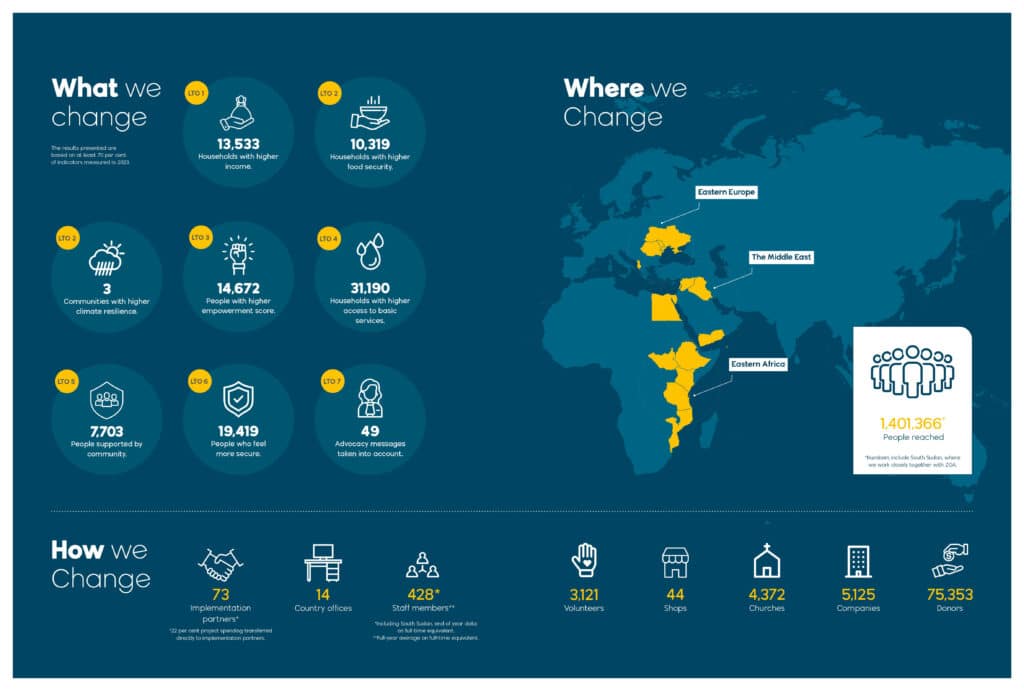
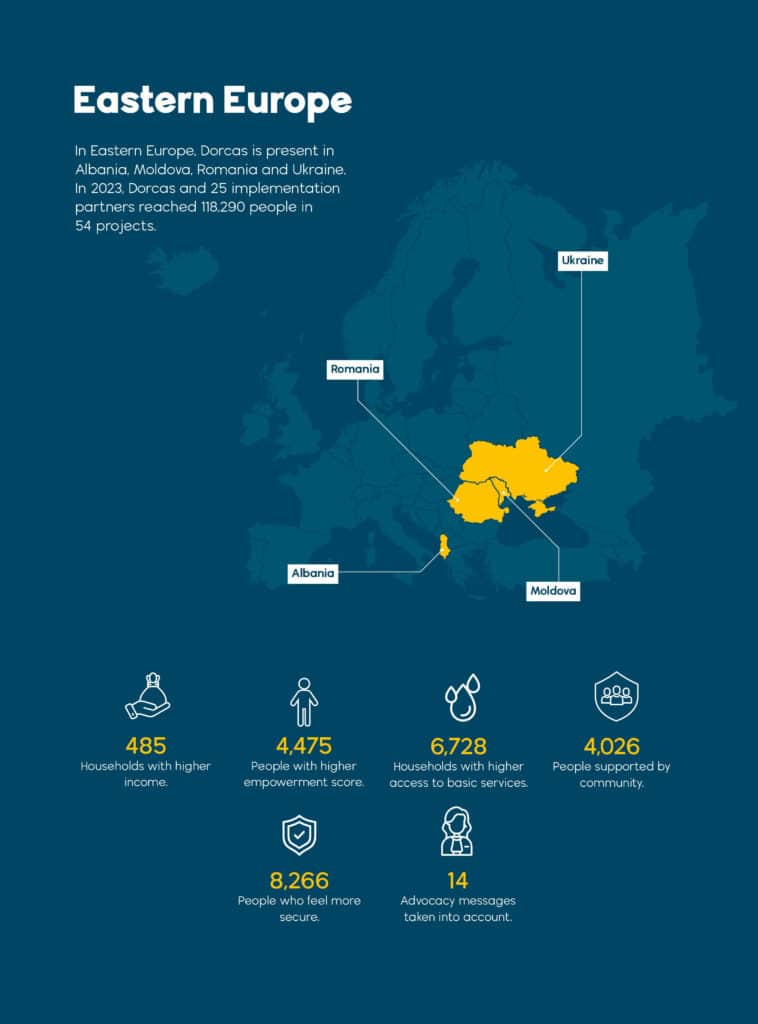
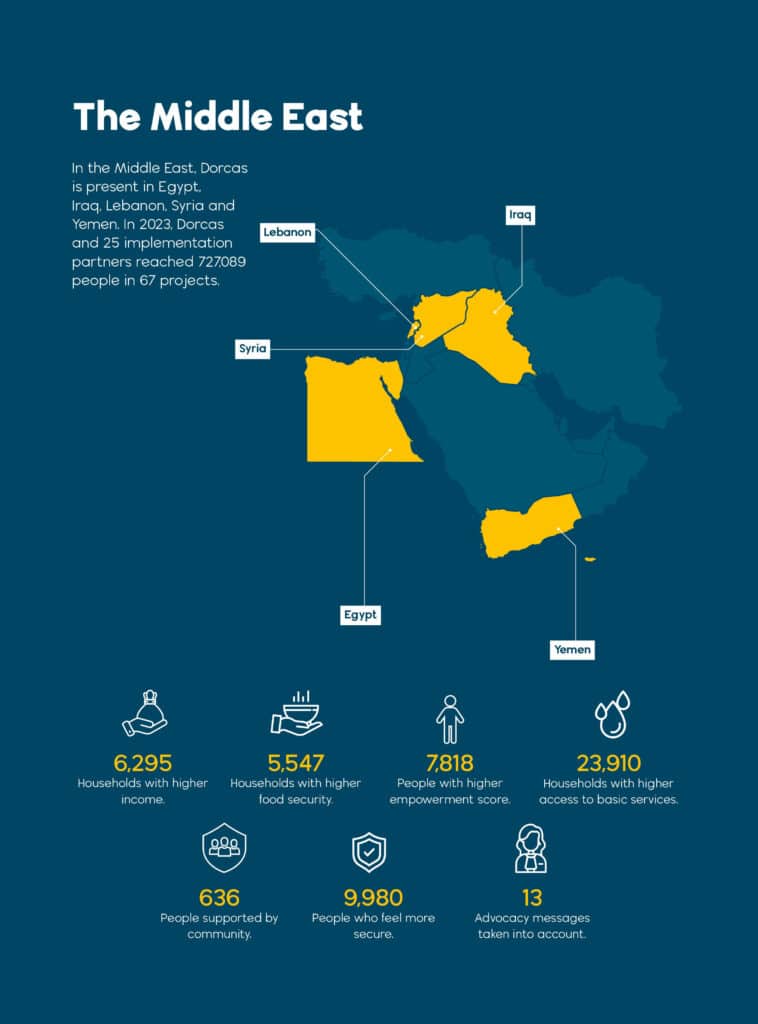
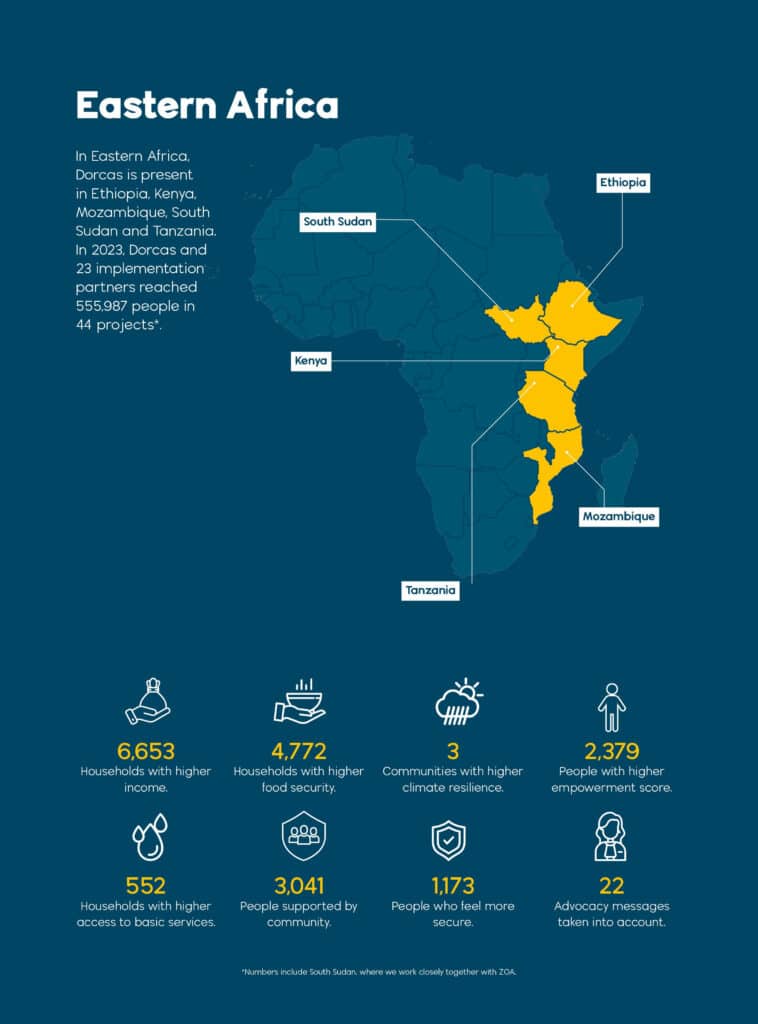
Our collective efforts enabled more than 1.4 million people in 14 countries in Eastern Africa, Eastern Europe and the Middle East to cross the bridge towards a more flourishing life. 44 Dorcas shops, 3121 volunteers, 75,353 individual supporters, 5125 companies, 4372 churches, 428 Dorcas staff and many valued partner organisations made this impact possible.
Bridges towards a more hopeful future highlighted in our Annual Report 2023 are:
- Ukraine – frontline resilience boosted through cash, mental health and psychosocial support.
- Albania and Moldova – community development projects enable marginalised individuals to flourish.
- Lebanon – protection and resilience of displaced persons and their host communities increased.
- Syria – markets and livelihoods restored in Aleppo.
- Yemen – humanitarian assistance provided through the Dutch Relief Alliance.
- Iraq – water supplies restored and hygiene improved.
Annual report 2023
Inspired to act?
Read the next story or contact us to get to know more about making an impact together.
The newly formed Dutch government presented the coalition agreement which show significant budgetary cuts within development cooperation. The overall budget will be cut by 2.4 billion euros annually. This means a reduction of no less than 30 per cent of the current development cooperation budget.
This decision will make it more difficult to support people in need. Dorcas is therefore disappointed in the result of the negotiations between the new government parties. A large portion of the budget has already been laid down in various multilateral treaties, leaving much less financial means for the work of organisations such as Dorcas.
This disappointing news does not mean that we will give up. Together, we work hard to continuously support those in need.
“The challenges faced by people in need demand more international cooperation, not less. The severe cuts by the Dutch government directly affect people living in very difficult circumstances. Fortunately, we are supported by a large and active group of supporters, donors, sponsors, and volunteers. It is mainly thanks to them that we can continue our work.”
Agnes Kroese, CEO
Written by: Agnes Kroese, CEO of Dorcas
Freedom?
I’m in Romania. Together with teacher Christina, I walk through a neighbourhood where most people are Roma. We visit projects of local partner organisations. Suddenly, Julia comes running towards us, a girl in a brightly coloured dress with a big smile on her face. Enthusiastically, she wraps her arms around her teacher. Christina responds to the embrace and hugs Julia back.
Julia feels it
This may seem normal to you, but for Julia, it isn’t. The Roma neighbourhood is usually avoided by her fellow villagers. And even though Julia is still so young, she feels it. She notices others talking about her.
At school, Julia struggled to keep up. Until Christina saw her and the other Roma children. She helped them by giving extra tutoring. What Christina does might not seem so important. But it is small gestures like these that make a big difference in the lives of people who are excluded.
Celebrating freedom
Today we pause and remember. Tomorrow, we celebrate freedom. These two days evoke mixed feelings in me every year. Of course, I am grateful for the freedom we live in, but it still feels double. Worldwide, there are still millions of people who are excluded, oppressed, or worse. I can’t celebrate freedom without thinking about all those people who don’t live in freedom.
Persecution of Roma
The Roma community that Julia is part of lives in freedom, but is still stigmatised and excluded. Most of them live in Romania, where there are about two million of them. They too were heavily persecuted during the Second World War. Up to half a million Roma lost their lives in labour and concentration camps.
After this horrific violence against them – and against all those other population groups – we have unanimously said, ‘Never again!’ And yet, the Roma community is still looked down upon today. They are marginalised and have fewer opportunities. So, they live in freedom, but are they truly free?
Never again!
Then I am grateful for people like Christina. People full of love for others, who dare to go against the tide. They don’t look away, they look around. Through all the prejudice, they see the person.
Let us follow the example of people like Christina. And let us work together, with love and compassion, for a world where freedom and equality are for all. Only then can we say, ‘Never again!’
Agnes Kroes is CEO of Dorcas. Agnes:”I contribute with great dedication to our mission in creating opportunities for people and communities to flourish. One of the ways I do this is through a monthly column in Dutch newspaper Nederlands Dagblad. In this column, I share insights from my professional experience at Dorcas. My aim is to inspire, inform and encourage readers to engage with Dorcas’ initiatives, campaigns, and projects.“
Written by: Agnes Kroese, CEO of Dorcas
Surrounded by children, I walk alongside the chief, the local leader of the village. I am back in South Sudan once again. The land I’ve come to call my ‘second home’. From 2019 to 2022, I served as Country Director for Dorcas here. South Sudan ranks high on lists where you don’t want your country to be at the top. The majority of the population depends on assistance and struggles daily to survive. Despite the challenging conditions, I have never regretted my decision to live and work in South Sudan for a few years. The country and its people have touched me in a way that cannot be put into words. And it feels special to be back here.
What do you share when you have nothing?
The chief and I walk towards the centre of the village. A large number of people have gathered under a big tree. They are mostly women and children. Years ago, these people left their homeland, South Sudan, seeking refuge in Sudan. They had just managed to build some semblance of a life when the conflict broke out in Sudan. Desperate, they saw only one way out: back to South Sudan. Back to this village where, as best they can, they find shelter with family. Family who want to be hospitable. But what can you share when you have nothing yourself?
Limited resources
Dorcas, along with ZOA, has initiated a project to support the returning refugees and their host families. We do what we can, but our resources are also limited. And when I see the large group of refugees there under that tree, I feel overwhelmed for a moment. Almost powerless. It’s heart-wrenching to see. What have these people already been through? And what lies ahead for them?
This is the reality of the work of organisations like Dorcas. The number of crises worldwide is rising, and with it, the number of people in need. However, we can only spend each euro once and sometimes have to make very difficult choices. It’s almost discouraging.
Giving up is not an option
But I cannot, I will not, accept the fact that so many people worldwide suffer from injustice and an unfair distribution of resources. We can indeed do something. Even if it’s just a drop in the ocean. You may wonder what the effect is. And indeed, sometimes you hardly see it reflected in the statistics. But I see the people behind the statistics. The people touched by such a drop. Also in South Sudan. The young man in a wheelchair receiving his vocational training certificate with a radiant smile. The mother proudly showing me her goods at the market and telling me that her children can go to school thanks to the income she generates. The group of villagers walking proudly across the newly built dike; when the next rains come, they will be safe from the water.
A sea of peace and justice
So, it may sometimes seem like a small drop, but all the small drops together form a stream. And many streams can grow into a wide river. Into a sea of peace and justice. Is this a utopia? An illusion? Perhaps, but still, I choose to believe in it. Because every drop counts.
Agnes Kroes is CEO of Dorcas. Agnes:”I contribute with great dedication to our mission in creating opportunities for people and communities to flourish. One of the ways I do this is through a monthly column in Dutch newspaper Nederlands Dagblad. In this column, I share insights from my professional experience at Dorcas. My aim is to inspire, inform and encourage readers to engage with Dorcas’ initiatives, campaigns, and projects.“
The current conflict in southern Lebanon is the latest in the country’s long list of crises. It is further eroding the weak economy, undermining food security and increasing the strain on basic health services. The worsening socioeconomic situation is sending more people into poverty, fuelling a growing need for humanitarian assistance. However, the geopolitical nature of the conflict and cuts in humanitarian funding from the UN are making it harder to meet people’s basic needs. The Lebanon Humanitarian INGO Forum recently published an urgent plea for the cessation of hostilities in Southern Lebanon, as these are exacerbating the country’s growing humanitarian needs. Dorcas is seeking what role it should play in this rapidly developing and sensitive situation.
Current situation in Southern Lebanon
Over 90,000 people have been displaced so far from southern Lebanon (mostly women and children), some 60,000 remain in the conflict zone, and more than 50 civilians have been killed. Medical facilities have been hit, and damage to water infrastructure has affected water supplies to over 100,000 residents in the South and Nabatieh governorates. Many schools have closed and so 20,000 children cannot continue their education. And almost 2,000 hectares of farmland have been destroyed by fires as a result of shelling, resulting in a loss of income for farmers and further harm to food supplies.
Impact on the work of Dorcas
Dorcas continues its long-established programmes to support Lebanese, Palestinian, Syrian, and migrant worker populations with psychosocial and legal support, school meals and educational support for children, and support to improve income stability. The conflict in Southern Lebanon has not yet impacted these programmes directly but that could change if rising humanitarian needs in the country call for different priorities to be set. Then Dorcas needs additional funding to expand its food security and livelihoods programmes. However, so far, and at the request of the Lebanese authorities, Dorcas has responded to the needs of displaced people from Southern Lebanon by providing food, blankets and mattresses. Dorcas is well-equipped to scale up such specific efforts should the need arise.
Growing and changing humanitarian challenges
The food insecurity crisis in Lebanon is growing. According to an IPC analysis, at least 21 per cent of the population will experience high food insecurity from April to September 2024, increasing the need for food assistance. Unemployment continues to rise, and over 60 per cent of people who have jobs work in the informal economy, where job security is low. Therefore, the need for cash assistance and livelihood support is set to grow. The healthcare situation in Lebanon is dire. Government spending on healthcare has decreased significantly, and the Lebanese pound’s devaluation has rendered the allocated funds almost worthless. Medicines are in short supply and their costs are soaring. Therefore, trying to meet the need for free or low-cost medicines for an increasingly impoverished population with a rising number of patients is an immense challenge.
These humanitarian challenges on the ground are compounded by actual and potential funding cuts. For example, the World Food Program reduced cash assistance to Syrian refugees by 30 per cent and discontinued in-kind food assistance to 33 per cent of assisted Lebanese households. The situation for the estimated 200,000-250,000 Palestinian refugees in Lebanon – most of whom are there as a result of previous conflicts – is particularly precarious. If current UN programmes in education, healthcare, and social safety net assistance stop, a huge humanitarian gap will arise that will be hard to fill. Although INGOs could step into such a gap, the process of transferring the entire responsibility for the Palestinian population across many different organisations would take time and be detrimental to the well-being of Palestinian refugees who rely on these services. Furthermore, the burden of these responsibilities could also have a negative impact on the existing programmes of the organisations concerned.
Dorcas role in the coming months
Dorcas will carefully monitor this funding situation so that in consultation with other INGOs and the Lebanese authorities, it can take appropriate action should the need arise. However, for now, our focus is prioritising food security for the most vulnerable.
Plea for the cessation of hostilities in Southern Lebanon as growing humanitarian needs are further exacerbated: Humanitarian organisation are urgently calling for an end to hostilities in Southern Lebanon. Six months of violence have displaced many people, resulting in severe disruptions to education and healthcare and more people depending on assistance. The financial implications are immense, at a time when the country was just emerging from its worst economic crisis in decades. Despite challenges, humanitarian organisations remain committed to providing assistance to those in need.
In response to the escalating humanitarian crisis in Yemen, Dorcas Yemen has signed a petition urging the international community to amplify its support for the conflict-torn country. The petition, initiated by the Norwegian Refugee Council (NRC), highlights the urgent need for enhanced funding and assistance as Yemen grapples with severe economic downturn, exacerbated by years of conflict.
Yemen, already one of the poorest countries in the Middle East, is facing an unprecedented humanitarian catastrophe. The economic downturn, now in its ninth year, has plunged millions of people deeper into poverty, pushing them to the brink of survival. The situation has been worsened by widespread food insecurity, with millions of Yemenis struggling to access basic necessities.
The ongoing conflict has led to the displacement of millions of people, with families forced to flee their homes in search of safety and shelter. Internally displaced persons (IDPs) face dire living conditions, lacking access to adequate healthcare, clean water and education.
Against this backdrop, Dorcas Yemen has joined forces with other humanitarian organisations to call for increased funding and support from the international community. Dorcas emphasises the critical importance of addressing the root causes of the crisis and providing immediate assistance to those in need.
The effects of the ongoing conflict continue to devastate Yemen, with civilians bearing the brunt of the violence and instability. As the situation worsens, the need for urgent action becomes ever more pressing.
Dorcas Yemen’s involvement in this petition reflects its unwavering commitment to alleviating the suffering of communities in vulnerable situations and advocating for sustainable solutions to humanitarian crises. We urge the international community to heed this call for increased support and solidarity with the people of Yemen during their time of dire need.