Dorcas expresses deep concern over the recent escalation of violence in Aleppo, Syria. According to humanitarian reports, intensified hostilities since early January have led to significant civilian displacement and increased humanitarian needs. Critical infrastructure, including health facilities and schools, has been damaged, further limiting access to essential services.
The situation remains volatile, with thousands of families seeking safety amid harsh winter conditions. The Syria NGO Forum (SNGOF), a platform representing national and international NGOs in Syria – including Dorcas Syria – urges in a statement for the urgent protection of civilians and unhindered access to assistance.
Dorcas stands in solidarity with affected communities and continues to monitor developments closely, advocating for peace and the safeguarding of human dignity.
Reading time: one minute.
Dorcas has joined a coalition of international and national organisations in Yemen to sign a joint statement highlighting the alarming increase in hunger and malnutrition. The statement, released on World Food Day, calls for urgent global action to address one of the world’s most severe humanitarian crises.
Recent reports indicate that food insecurity now affects nearly half of Yemen’s population, leaving millions of families at risk of severe hunger. Malnutrition rates have skyrocketed, with almost one in two children under five now suffering from chronic undernutrition. Furthermore, many communities’ livelihoods continue to collapse under the pressures of conflict, economic instability, and climate shocks.
The situation demands immediate funding to address the most pressing needs, as well as renewed efforts to ensure unhindered humanitarian access throughout the country. Investing in local organisations and integrating measures to protect at-risk communities, especially women and children, from the growing risks of hunger, forced labour and early marriage is also key.
Dorcas continues to work alongside its partners in Yemen to deliver humanitarian assistance, bolster local resilience and promote lasting security and stability. Only through collective commitment and coordinated action can Yemen move towards recovery and a future free from hunger.
Reading time: three minutes.
Dorcas is proud to announce the publication of its strategic plan 2026-2030: Local power creates lasting change. This roadmap sets out Dorcas’s vision for the coming years, focusing on empowering local communities, driving innovation, and creating measurable impact for people vulnerable to poverty, exclusion, and crises.
Facing a changing world
The world is rapidly evolving, with technological, economic, and demographic shifts often hitting the most marginalised the hardest. Dorcas recognises that the needs of the communities it serves are growing, even as funding environments become more challenging. From climate-induced agricultural issues in Africa to ongoing conflicts in the Middle East and the isolation of older people in Eastern Europe, Dorcas’s mission is more vital than ever.
Three pillars for impact
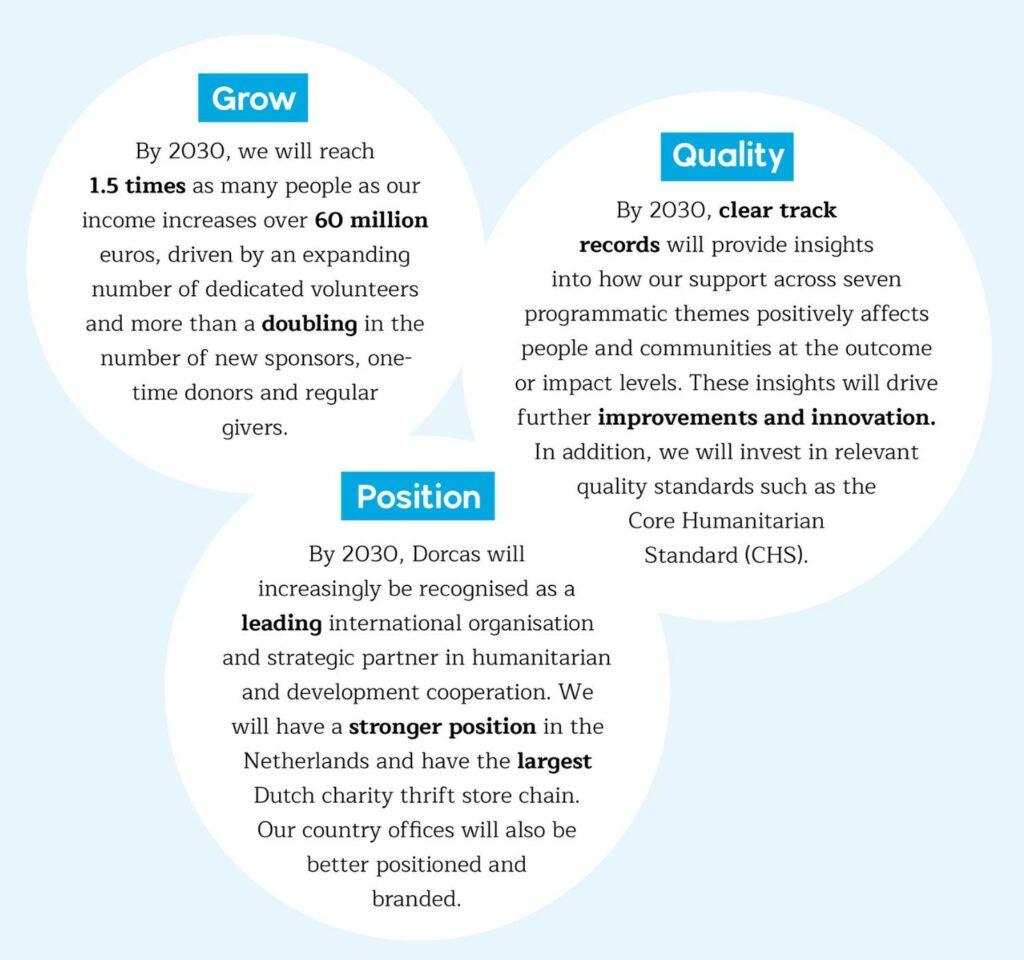
The new strategic plan is built on three core pillars:
- Grow: By 2030, Dorcas aims to reach 1.5 times as many people as our income increases over 60 million euros and a significant increase in volunteers and supporters.
- Quality: By 2030, Dorcas has a clear track record, invests in quality standards and continuous improvement to ensure its support leads to lasting, positive change.
- Positioning: Dorcas seeks to be recognised as a leading international partner in humanitarian and development cooperation, with a strong presence in the Netherlands and beyond.
Seven programmatic themes
Dorcas will apply seven programmatic themes to sharpen expertise, strengthen its track record, and define clear organisational positioning. By 2030, Dorcas aims to harmonise and standardise our approaches resulting from these themes through a lens of inclusion and vulnerability, with community-based programming as our core approach.
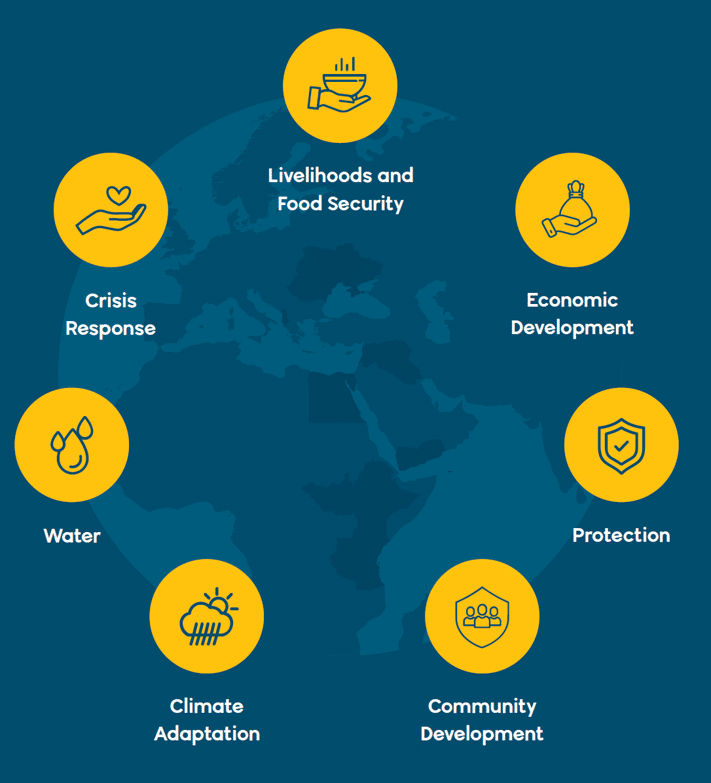
Dorcas’s approach is defined by the following programmatic themes:
- Crisis Response
- Protection
- Community Development
- Climate Adaptation
- Water
- Livelihoods and Food Security
- Economic Development
These themes guide Dorcas’s work across the Middle East, Eastern Europe, and Eastern Africa.
Empowering local communities
A key feature of the strategic plan is the commitment to localisation. Dorcas will invest in building the capacity of local partners and country offices, shifting expertise and resources closer to the communities served. By 2030, country offices will have expanded their programme portfolios by 40 per cent, strengthening both their sustainable presence and overall impact.
Innovation and collaboration
Dorcas will foster a culture of innovation, investing in new ideas and partnerships to address emerging challenges. The organisation will also strengthen its fundraising, aiming to double its supporter base and become the largest charity thrift store chain in the Netherlands.
Looking ahead
Dorcas’s strategic plan 2026-2030 is a response to a fragile and unpredictable world. By focusing on local power, operational excellence, and strategic partnerships, Dorcas is committed to enabling people and communities to flourish in the face of adversity.
Read the full strategic plan:
Reading time: three minutes.
For more than five years, the western parts of Ethiopia, particularly the Wollega area, have faced persistent conflict. On 6 June 2025, violence flared once again in the border villages of East Wollega and Benishangul Gumuz, where clashes between the UAGs (Unidentified Armed Groups) forced thousands to flee their homes. In just one day, more than 11,000 people were displaced, with the unrest quickly spreading to neighbouring communities and pushing the total number of newly displaced to over 22,000.
The crisis has left families seeking refuge in towns such as Angar under extremely difficult conditions, especially during the rainy season. Urgent humanitarian needs include shelter, food, clean water, and protection, with many people living in overcrowded temporary shelters or public buildings. Health risks are rising due to shortages of essential medicines and limited access to care, while children, women, and older people face heightened vulnerability.
Emergency response by Dorcas
Dorcas Ethiopia is launching a rapid emergency project through our project office to provide immediate support to families who have been forced to flee conflict. The project will provide 1,000 internally displaced households with unrestricted cash assistance for two consecutive months, giving them the flexibility to decide how to meet their most urgent basic needs. Priority will be given to households in the most vulnerable circumstances, including those headed by women, older people, people with disabilities, and households affected by chronic illness.
Dorcas will actively engage with displaced community members by holding community engagement sessions to explain the programme’s objectives, and by listening carefully to feedback through established channels. This ensures that assistance remains transparent and accountable. We will continue to play an active role in local coordination platforms alongside government bodies, UN agencies, and humanitarian partners. This will strengthen other responses and contribute to wider resilience in the region.
Expected outcomes:
- Improved food security and nutritional health for 1,000 displaced households.
- Greater economic stability, reducing financial stress and enabling families to meet essential needs while supporting local markets.
- Strengthened collaboration with local authorities and humanitarian partners, enhancing coordination in the wider response.
By addressing the shortfall caused by recent funding cuts, this project will deliver essential life-saving support. Dorcas Ethiopia remains committed to providing long-term support to communities facing hardship in one of the country’s most challenging contexts.
Reading time: two minutes.
Yemen is facing one of the world’s most severe humanitarian crises, with an estimated 21.6 million people requiring humanitarian assistance in 2025. Despite this urgent need, attention and humanitarian funding remain far too limited. The country is also experiencing a critical public health and protection emergency, with widespread outbreaks of waterborne diseases including cholera, acute watery diarrhoea (AWD), measles, diphtheria, dengue fever, malaria and vaccine-derived polio.
The World Health Organization (WHO) has issued an urgent appeal for emergency health funding, as millions of lives are at risk. Health services in Yemen are overstretched and unable to meet the demands of this major emergency. Approximately 19.6 million people lack access to even the most basic healthcare, and hundreds of healthcare facilities are at risk of closure. Climate-related disasters, such as floods, are increasingly affecting people’s lives and damaging health infrastructure, further exacerbating the situation.
Crisis response by Dorcas
Dorcas is responding to this devastating humanitarian crisis, specifically the cholera outbreak, which has seen 72,144 confirmed cases and nearly 300 fatalities since 2024. In collaboration with the Ministries of Health and Water, we are implementing a multi-sector programme in Taiz and Aden. The project provides urgent water, hygiene and sanitation (WASH) support to people in need, including internally displaced persons (IDPs) and returnees. This will restore access to safe drinking water, prevent the spread of disease, reduce infection risk for the most vulnerable communities, while building their capacity to respond to health emergencies.
To deliver this support, the programme focuses on the following activities:
Activities in Taiz:
- 145,971 people will receive safe, chlorinated water via water trucks for up to three months.
- The Ministry of Water will receive tools for sterilisation, chlorination and laboratory testing to improve local water management.
- Water safety will be regularly monitored.
Activities in Aden:
- 160 community health workers will be trained to promote hygiene practices and assist mobile medical teams in identifying and treating diseases, thereby reaching 4,000 people in need.
- The hygiene education programme will cover personal hygiene, safe water and food handling, and menstrual hygiene, and will use specially designed materials.
- 120 healthcare workers will receive refresher training.
- Mobile medical teams will provide essential health services to remote and displaced communities.
- 400 people will receive hygiene kits to support them in maintaining safe water and personal hygiene practices.
These efforts aim to reduce the spread of disease, improve community health and ensure access to vital services during the outbreak. Dorcas is committed to both providing much-needed humanitarian assistance and working towards sustainable solutions in Yemen.
Dorcas has received the Core Humanitarian Standard (CHS) certification by Humanitarian Quality Assurance Initiative (HQAI). The CHS is an international quality standard for humanitarian assistance which focuses on the needs and rights of those in need. This certification confirms that Dorcas’ projects adhere to the highest quality and accountability standards.
Gerben de Witte, Dorcas’ Quality Manager, explains what this means for the organisation: ‘We are proud that Dorcas is now CHS certified. It confirms that we deliver quality to our project participants. During the audit, participants expressed that they felt genuinely respected and affirmed that Dorcas actively listens and responds to their needs. The fact that this has been confirmed by an independent assessment is a meaningful recognition for the entire organisation, and especially for the dedicated teams in the countries where we are active.’
How the CHS audit was conducted
Gerben explains: ‘Auditors conducted interviews with employees in the Netherlands and at various country offices and studied extensive policy documentation. They also selected a number of projects for in-depth review to assess whether the policy is being implemented in practice within the projects and by our partners.
As part of this evaluation, the auditors also spoke with project participants about their experiences with Dorcas and the projects in question. This way, they verified independently that the organisation and their projects comply with the Core Humanitarian Standard.’
Strengthening accountability
Working towards CHS certification has provided Dorcas many new insights, which are used to enhance their work and projects. For instance, they have established feedback and complaint mechanisms in all their projects so that participants can inform them when something is not going well or when they feel certain things should be done differently.
As Gerben de Witte explains, “At Dorcas, we have always worked in and with communities, providing ample opportunity for participation. Feedback and complaint mechanisms help us to address any complaints quickly and learn from them, enabling us to continuously improve our projects. This ensures that the assistance we provide continues to meet the actual needs of those in need.”
Importance of certification
We believe it is important that our work and projects meet the highest quality standards. We want to be accountable to project participants and the communities in which we operate. Institutional donors also set high standards for the quality of our support. The CHS certificate objectively demonstrates that we meet these standards.
CHS certification strengths Dorcas’ position across its country programmes. José Salema, Country Director Yemen, explains
“The certification enhances credibility with communities, donors, and partners. It contributes to improved programme quality, encourages responsible working practices, and provides a competitive advantage in a complex humanitarian setting.”
As we move forward, we remain committed to upholding the highest standards of quality and accountability for our work.
Statement of Commitment to the CHS
- Knowledge of rights and participation: People can exercise their rights and participate in decisions affecting them.
- Timely and effective support: People receive timely and effective assistance tailored to their needs.
- Preparedness and resilience: People are better prepared and more resilient to potential crises.
- Support that does not cause harm: Assistance avoids causing harm to people or the environment.
- Reporting and addressing concerns: People can safely report concerns and complaints and have them addressed.
- Coordinated and complementary support: People receive coordinated and complementary support.
- Continual improvement based on feedback: Support is continually adapted and improved based on feedback and learning.
- Respectful staff and volunteers: People interact with respectful, competent, and well-managed staff and volunteers.
- Ethical and responsible resource management: Resources are managed ethically and responsibly for their intended purposes.
Read here more about CHS.
In early 2025, Dorcas in close partnership with our long-time partner Life Vision launched a new three-year PIP project in Upper Egypt. This innovative approach – relatively new to the Middle East – directly addresses some of the region’s most pressing environmental and social challenges, including climate change, land degradation, gender inequality and economic migration.
The project focuses on two rural communities in Minya Governorate, one of Egypt’s lowest income regions. Here, farming families face fragmented land ownership, dated agricultural practices, and limited income opportunities – especially for women. The PIP approach aims to transform this landscape by increasing the resilience and income generation of 1,090 smallholder households, ultimately reaching over 5,000 people directly and many more indirectly.
Women leading change
PIP builds on the previous success of the Farmer Field and Business Schools (FFBS) model implemented by Life Vision. The project will start with 50 proactive women farmers – many of whom are FFBS graduates – acting as Innovator Farmers. These women will become role models and trainers, cascading knowledge through three generations of farmers through peer-to-peer learning. By the end of the project, more than 1,000 households will have been trained, and the ripple effect is expected to reach up to 15,000 people in surrounding communities.
Integrated approach to farming
The PIP methodology, developed by Wageningen University, takes a whole-household approach. It empowers families to create a shared vision for their future and develop personalised, integrated farm plans – visually represented in what’s called a ‘PIP drawing’. These plans identify goals and strategies in seven core areas: crop production, land management, livestock, income generation, household improvements, training and savings. This inclusive approach ensures that everyone in the family contributes to and benefits from the household’s progress, promoting social cohesion, gender equality and long-term economic stability.
Beyond the households, two community-based organisations (CBOs) are also being supported to strengthen their capacity to lead development efforts and mobilise local resources. A key innovation in this project is the introduction of value chain development and improved market access, particularly in the village of El Tayeba, which is known for its higher level of entrepreneurial activity. By 2027, the project aims to have established a network of resilient, self-reliant farming families equipped with the tools, skills, and mindset to adapt, flourish, and inspire others.
A new step towards sustainable impact
Dorcas Mozambique is continuing as an independent local NGO under the name ‘Mãos Unidas’, which means ‘United Hands’. This change enables the organisation to create impact in a more sustainable way, with greater scope for tailor-made solutions and local leadership.
Agnes Kroese (CEO of Dorcas): “Sometimes, in order to grow, you need to dare to let go.”
Transition to an independent organisation
Mozambique, one of the poorest countries in the world, requires a specific approach. Since its start in 2001, Dorcas Mozambique has achieved a lot as a country office of Dorcas Aid International. However, over time it became clear that implementing projects in the country as an international organisation was no longer viable; the required investments no longer matched the level of impact that could be achieved in this way. Therefore, a process of becoming independent was initiated. As a local NGO, Mãos Unidas can now respond more flexibly to local needs and continue working in a small-scale, effective, and sustainable manner.
A considered, forward-looking step
The decision to become independent was made possible in part thanks to years of investment in local leadership. Although the name is changing, the mission of Mãos Unidas remains similar. The organisation focuses on long-term solutions in areas such as livelihoods, food security, economic development, water management, climate resilience, and community development. In times of crisis, Mãos Unidas not only provides emergency assistance but also supports communities to recover and develop.
Mãos Unidas is officially registered as a national NGO in Mozambique, ready to carry forward it’s important work. With this step, Mãos Unidas can now independently build on the foundation laid by Dorcas in Mozambique since 2001. This foundation creates opportunities for a sustainable future. Dorcas will remain involved until 2026 to ensure a smooth transition. This development in Mozambique aligns with the course Dorcas has been charting for 45 years: always focussed on lasting impact.
We confidently hand over the work to a strong, local organisation. We look back with appreciation on the collaboration with our colleagues in Mozambique and are grateful for the results we have achieved together over the years with our local colleagues, supporters, and partners. We wish Mãos Unidas all the best and God’s blessing for the future.
In South Sudan, the political, economic, security and humanitarian situation has recently further deteriorated, with security reaching its lowest point since 2018. Renewed clashes between government and opposition forces have escalated violence, putting countless lives at risk. The country has already endured decades of famine, conflict and flooding, and ZOA Dorcas, along with local partners, continues to provide critical support to communities in need in the face of these ongoing challenges.
Additional pressing issues in South Sudan include:
- The devaluation of the local currency and the rising prices of food and basic commodities are severely affecting the population.
- The conflict in Sudan has driven more than a million refugees into South Sudan, straining already limited resources.
- Humanitarian needs are increasing while international funding and support has decreased.
- Extreme weather events – floods, droughts and heatwaves – cause displacement, disrupt livelihoods and fuel conflict over scarce resources.
Our work in South Sudan
Dorcas has been present in South Sudan since 2008 and since 2022, we work in partnership with ZOA, forming the ZOA Dorcas South Sudan consortium. ZOA Dorcas supports communities affected by conflict and natural disasters, focusing on sustainable livelihoods for marginalised groups in hard-to-reach areas. Our aim is to reduce the risks associated with conflict, lack of resources and extreme climatic events.
With a long-term presence and strong local partnerships, we’re well positioned to support those in need. Recent impactful projects include a dyke project to prevent flooding, reclaim farmland, and resettle displaced families, and the installation of tubewells in areas affected by drought to improve access to water.
Find out more about our work in South Sudan.
Dorcas took part in the Netherlands Trade Mission to Kenya from 17–20 March 2025. Focusing on sustainable agriculture and water, the mission provided a valuable platform for engagement, collaboration and visibility. The event was led by the Dutch Minister of Foreign Trade and Development Cooperation, Reinette Klever, and timed to coincide with the State Visit of King Willem-Alexander and Queen Máxima. It brought together key stakeholders from government, the private sector, development organisations, and research institutions.
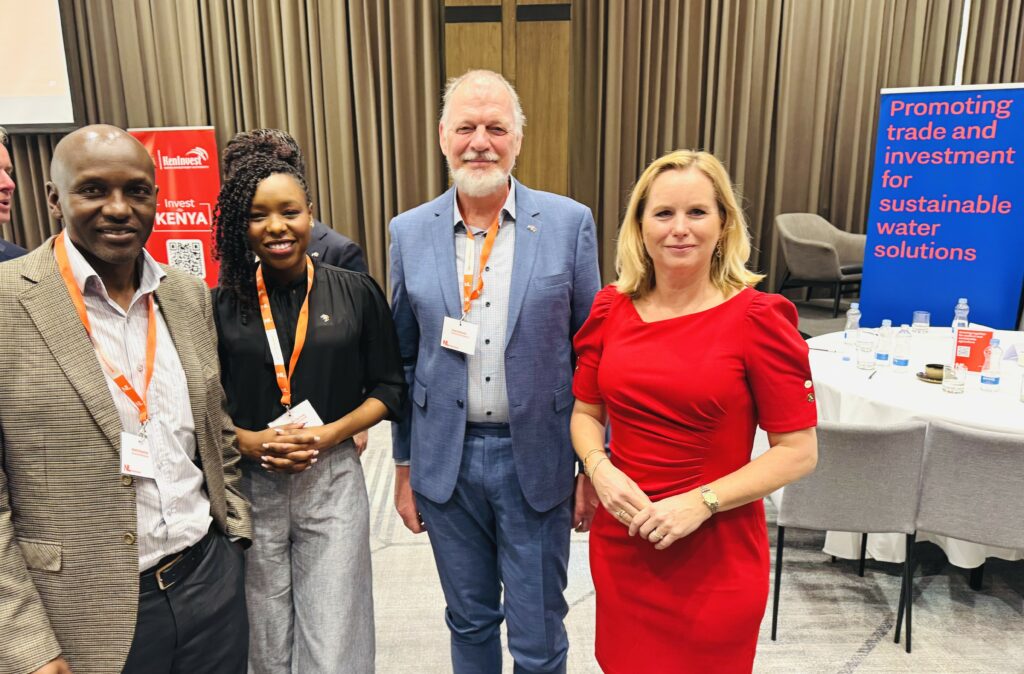
Highlighting the Siaya Water and Sanitation Project
One of the key moments for Dorcas was our presentation on the Siaya Water and Sanitation Project. Edwin, Country Director of Dorcas Kenya, and Daniella, Thematic Expert, shared insights on our partnership with Maji Milele, Siaya County Government, North Gem CDP and Netherlands Enterprise Agency (RVO). The Public Ownership-Private Management model used in this initiative received significant interest, with several organisations expressing a desire to replicate and scale up the approach in other regions. This underlines the growing demand for sustainable water solutions in Kenya.
So far, the project has had a substantial impact, providing access to safe water for more than 115,000 people and improved sanitation for more than 97,000 people.
Learn more about the impact by watching the video below:
Building partnerships and looking ahead
Dorcas participated in a series of high-level meetings, networking events and site visits. These engagements enabled us to connect with new partners who share our vision for sustainable development. We explored opportunities to collaborate with various organisations interested in sustainable agriculture and water solutions.
Participation in this mission has considerably boosted Dorcas’ visibility among key stakeholders in both Kenya and the Netherlands. The interest in the Siaya model, coupled with promising new contacts, offers exciting opportunities for future collaboration.
This mission reaffirmed our commitment to impactful and sustainable solutions in water and agriculture. We look forward to furthering our work for communities in Kenya and beyond.