Written by: Agnes Kroese, CEO of Dorcas
During the Christmas season, we often talk at length about peace. But when I reflect on the year 2024, peace seems hard to find. I think, for instance, of Ukraine and the Middle East. Images of bombed-out homes come to mind, of people who have lost everything: possessions, but also loved ones. Images of children, filled with fear and despair because they had to flee for safety. And I haven’t even mentioned the many forgotten crises that barely make the news, such as the conflict in Sudan. Nowhere in the world have so many people been displaced from their homes and communities.
In a world where conflict, poverty and crisis seem to overshadow everything, peace feels further away than ever. And yet. It is precisely at Christmas that we remember how, in the midst of brokenness, God began something new. At the time of Jesus’ birth, peace on earth also seemed a distant hope. And yet God began something new in the form of a small and vulnerable Child.
‘There’s a crack in everything, that’s where the light comes in’. This line from Leonard Cohen song captures the Christmas message for me. Through brokenness, light can shine – a glimmer of hope that makes life more bearable and gives us a new perspective.
In my work with Dorcas, I see time and time again that this glimmer begins with attention. Attention that can be offered even in the midst of conflict and chaos. What makes us feel hopeless is the idea that peace only comes when a conflict ends. On a literal level, of course, that’s true. But the harsh reality is that here in the Netherlands we can rarely influence the end of conflict. What we can do is offer support, give hope and bring a little peace to the hearts of those in need.
For me, peace is so much more than the absence of bombs and the sound of gunfire. True peace starts with a small gesture. Like handing out a blanket to keep someone warm on a cold night. Offering a listening ear to someone who feels lonely. Offering a plate of food when hunger is looming.
When I look at the statistics on poverty, inequality and global crises, I get sad. It seems so hopeless. But I believe in the power of small gestures. Just like the Child of Bethlehem, who began as a vulnerable baby in a manger, but who holds the world in His hands. ‘For to us a Child is born, to us a Son is given; the government will be on His shoulders. And He will be called Wonderful Counsellor, Mighty God, Everlasting Father, Prince of Peace.’
The peace He gives, in every sense of the word, is what I wish for you this season.
Agnes Kroes is CEO of Dorcas. Agnes: ‘I contribute with great dedication to our mission in creating opportunities for people and communities to flourish. One of the ways I do this is through a monthly column in Dutch newspaper Nederlands Dagblad. In this column, I share insights from my professional experience at Dorcas. My aim is to inspire, inform and encourage readers to engage with Dorcas’ initiatives, campaigns, and projects.‘
Recent developments in Syria have caused significant unrest and uncertainty. This situation also affects our colleagues working in Syria, the partners we collaborate with, and the participants in our projects. As a result, our projects in the region are temporarily on hold.
To ensure the safety of our staff and partners, we will not be making further statements at this time.
We kindly ask you to keep the people of Syria in your thoughts and prayers, and to join us in hoping for peace and stability in the region.
Written by: Agnes Kroese, CEO of Dorcas
How many things have you bought this December? It’s hard to resist the temptations of Black Friday deals, ‘Sinterklaas’ discounts, and those alluring ads from clothing stores trying to dress you up in a brand-new wardrobe for Christmas.
Speaking of that new outfit, I don’t want to spoil your festive spirits, but the numbers don’t lie. Producing just one cotton T-shirt can require up to 2,500 litres of water—that’s enough for one person to drink for three and a half years! And everything keeps getting faster and cheaper. As if fast fashion weren’t bad enough, we now even have ultra-fast fashion, where clothes appear in stores within days at an even lower price.
When I think about it, I can’t help but feel a sense of unease. This can’t be good for the world. I’m not just thinking about the workers enduring harsh conditions to produce these garments but also about the planet. We’re stripping it of resources and exhausting it while the piles of waste grow ever larger. The earth has been entrusted to us to care for, not to destroy.
Treating the planet with sustainability and fairness doesn’t have to be difficult. If I could give you one tip this December: skip the fast-fashion stores and visit a nearby Dorcas shop to discover the magic of second-hand shopping. I’m still on this journey myself. I still catch myself too often buying clothes and other items brand-new, even though I know a trip to second-hand shops is far more sustainable—and often yields hidden gems. My younger sister sets a great example for me; she very consciously made the choice to buy almost all her clothing second-hand.
 Conversations with colleagues often remind me of the consequences of our actions on the earth. Droughts in countries like Kenya, Iraq, and Yemen. Or severe floods in places such as South Sudan and Ethiopia. These events have devastating consequences: people are forced to flee, or crops fail, leaving hunger lurking. By purchasing something from a Dorcas shop, you help us support people in these countries. Whether through humanitarian assistance during crises or long-term projects teaching people and communities to adapt to changing weather conditions.
And it can all start with one thoughtful purchase in the Netherlands. Let’s make the holidays a bit more sustainable together. If the (second-hand) shoe, jumper, or party dress fits, wear it—you’ll have something new to shine in and also give the earth a gift this Christmas.
Agnes Kroes is CEO of Dorcas. Agnes: ‘I contribute with great dedication to our mission in creating opportunities for people and communities to flourish. One of the ways I do this is through a monthly column in Dutch newspaper Nederlands Dagblad. In this column, I share insights from my professional experience at Dorcas. My aim is to inspire, inform and encourage readers to engage with Dorcas’ initiatives, campaigns, and projects.‘
Written by: Agnes Kroese, CEO of Dorcas
Within ten minutes, you can have your bananas, soft drinks, or dessert delivered. Just add them to your basket in the app, check out, and all you have to do is open the door for the courier, who will be there in a flash.
I have to admit that I still do my shopping the old-fashioned way, but I couldn’t help but think about the phenomenon of rapid grocery delivery while we’re working on the Dorcas Food Campaign. It’s so easy to take for granted that we can have our groceries delivered quickly, or that we can choose from twenty types of cheese or a whole range of fresh bread in the supermarket.
I still clearly remember the first time I went to a supermarket in the Netherlands after living in South Sudan for years. As I looked at shelves stacked with various kinds of peanut butter, all I could see was the image of a severely malnourished little boy sitting on his mother’s lap in one of our clinics. In many countries, it’s far from guaranteed that there will be food on the table in a flash—or any food at all. In the Netherlands, we are quite privileged, though I’m fully aware that significant disparities exist here too. Where one person can easily order only top brands, another depends on whatever is included in their food bank package that week.
At Dorcas, we are committed to supporting people in need, for example in Ukraine, Ethiopia and Lebanon. One way we do this is through the Dorcas Food Campaign. Through this campaign, we ensure that people are fed who would otherwise have to miss out on healthy food. You may have seen our volunteers in the past standing in supermarkets asking people to donate one or more food items for the Food Campaign.
Nowadays, instead of shipping products or goods from the Netherlands, we buy them locally or support people to grow their own food. This allows us to better match local tastes and needs and support the local economy. And it’s much more sustainable.
It took some time to get used to, buying a symbolic parcel rather than a tangible bag of rice, pasta or canned vegetables. But it’s a great example of how, as a humanitarian organisation, we continue to learn and innovate to ensure the quality of our work and have the greatest possible impact for people in need. This new way of donating food parcels is actually much more effective, and that’s what it’s all about in the end!
If you want to support the Dorcas Food Campaign after reading this column, the national action week is about to start. And if you don’t see us in your local supermarket, a donation can be made in a flash using the QR code.
Agnes Kroes is CEO of Dorcas. Agnes: ‘I contribute with great dedication to our mission in creating opportunities for people and communities to flourish. One of the ways I do this is through a monthly column in Dutch newspaper Nederlands Dagblad. In this column, I share insights from my professional experience at Dorcas. My aim is to inspire, inform and encourage readers to engage with Dorcas’ initiatives, campaigns, and projects.‘
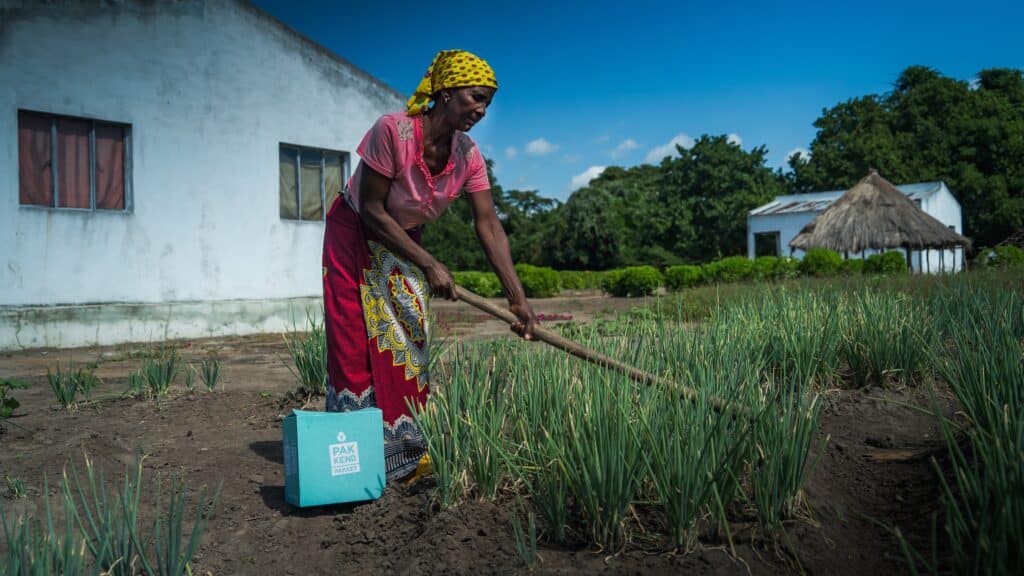
Kitui County, one of Kenya’s semi-arid regions, is facing severe challenges from climate change. Rising temperatures, erratic rainfall, prolonged droughts, floods, and invasive species are taking a heavy toll on the region’s ecosystems and livelihoods. With agriculture and natural resources under increasing strain, many residents have turned to activities such as tree logging and charcoal burning, further exacerbating land degradation and deforestation. These unsustainable practices have created a vicious cycle of environmental decline, making it critical to take action.
In response, Dorcas Kenya, in collaboration with Muangeni Rural Development Programme, launched the Kitui Climate Change Project in 2020. This initiative aims to enhance the climate resilience of communities through comprehensive interventions, such as behavior change, policy advocacy, and ecosystem restoration. The project aligns with global sustainability goals, including SDG 13 (climate action), SDG 1 (no poverty), and SDG 2 (zero hunger), promoting sustainable development practices to safeguard the future.
Afforestation efforts through schools
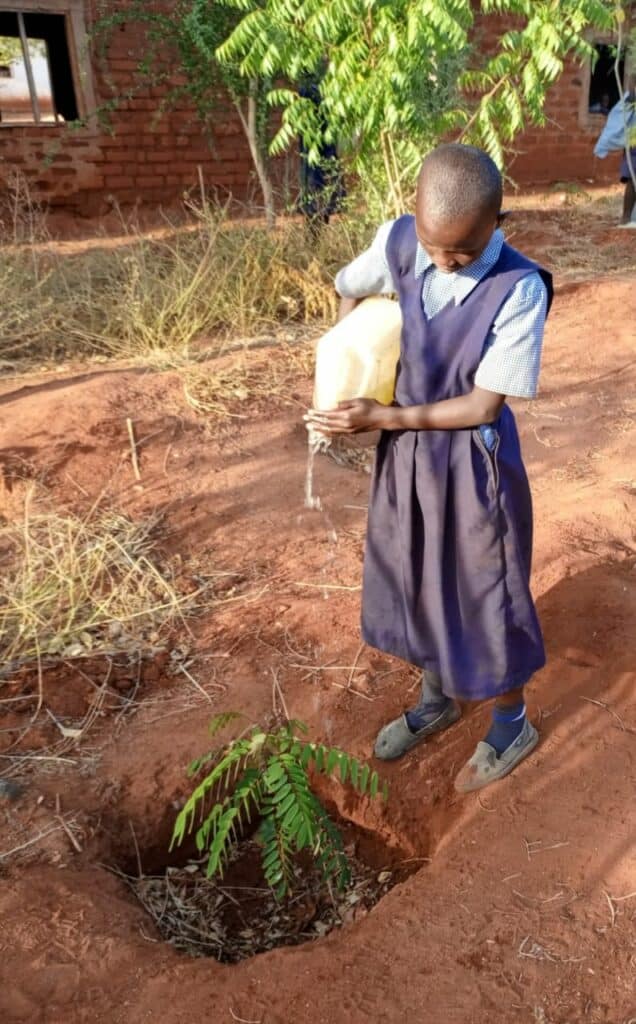
A key element of the Kitui Climate Change Project is afforestation, carried out through schools in the region. Since 2021, over 150 schools in Kitui South have participated in the tree-planting initiative, which is designed to address water scarcity challenges while fostering environmental stewardship among students. Tree planting is strategically aligned with the short rain season (October, November, December) when the climate is more stable, ensuring the newly planted trees benefit from two rainy seasons and thus have higher survival rates.
Under the slogan “A Child, A Tree,” each student is encouraged to adopt and care for a tree for a full year. This approach not only fosters environmental responsibility among the younger generation but also ensures that the trees are well-maintained. Each school receives 100 seedlings annually and, upon successfully nurturing them, qualifies for additional seedlings in subsequent years.
Notable success and impact
To date, the project has seen the survival of approximately 36,000 out of 55,000 trees planted between 2021 and 2022, representing a survival rate of 65-70 per cent. Schools like Athi Primary now boast over 300 thriving trees, thanks to the commitment of students, who even carry water from home to ensure their survival during dry spells. Additionally, Dorcas has invested in infrastructure like a 50,000m³ water pan at Kiange Mixed Secondary School to provide a reliable water source during droughts.
This afforestation initiative not only contributes to Kenya’s national goal of planting 15 billion trees by 2032 but also plays a crucial role in restoring degraded landscapes, reducing biodiversity loss, and promoting decarbonisation. By involving school children, Dorcas is inspiring the next generation of conservationists, ensuring that the fight against climate change continues for years to come.
Through such innovative projects, Dorcas Kenya continues to foster sustainable development and climate adaptation in regions that are vulnerable, empowering communities to build a more resilient and environmentally conscious future.
Written by: Agnes Kroese, CEO of Dorcas
I don’t cry easily, but the tears were close during the online meeting with my colleagues in Lebanon. The desperation they are in, their worries and hopelessness, I could feel them even through the screen. They are frightened, anxious, but also frustrated. Frightened and anxious about their own safety and that of their families. Frustrated because the resources to provide assistance are limited, while the need is so great. There is also frustration because they feel that the suffering currently taking place in Lebanon is not being noticed by the rest of the world. That the international community is turning a blind eye and remaining silent.
I recognise this because I see the same in the Netherlands when it comes to collective outrage about how innocent civilians are being forced to flee violence in haste. But, upon reflection, perhaps it’s not entirely accurate to speak of silence. Loud and clear are the negative reactions we at Dorcas received (and continue to receive) in response to the emergency assistance campaign for Lebanon.
Don’t misunderstand me: we’re not surprised by angry reactions. There are always people who are critical. It’s okay to be critical—I have absolutely no problem with that. I also understand that the situation in the Middle East is sensitive, and I realise that opinions differ widely, especially, or perhaps particularly, within Christian communities in the Netherlands. But the way some people feel the need to express their opinions—I do have something to say about that.
It has now even reached the point where, for the first time, we have had to stop a campaign on social media because of hateful comments. What also stood out was that we weren’t just receiving such responses online. Even in phone calls and emails from our own supporters, things sometimes got heated. A call to donate for emergency assistance doesn’t need to be an invitation for outright hurtful communication.
I enjoy a robust discussion and am open to critical questions, but with respect for one another. And what I’ve thankfully also often heard and seen happen in the past week is that people become more understanding when we explain why we do what we do. We’ve been working in Lebanon for over thirty years and have a large network within the Christian community. This allowed us to act quickly.
Dorcas is active in 14 countries, and when a crisis occurs in one of these countries, we roll up our sleeves. We will continue to do so, even when it’s difficult. We don’t choose political or theological sides. If we choose any side, it’s the side of the person in need.
Agnes Kroes is CEO of Dorcas. Agnes: ‘I contribute with great dedication to our mission in creating opportunities for people and communities to flourish. One of the ways I do this is through a monthly column in Dutch newspaper Nederlands Dagblad. In this column, I share insights from my professional experience at Dorcas. My aim is to inspire, inform and encourage readers to engage with Dorcas’ initiatives, campaigns, and projects.‘
Written by: Agnes Kroese, CEO of Dorcas
Perhaps you have seen it: our campaign for safe shelter in Lebanon. Our local colleagues are working hard to support displaced people fleeing the conflict, providing them with shelter and basic necessities.
We are receiving responses to the campaign. Some are negative, questioning why we are not offering assistance to people in Israel. We engage in conversation with these individuals, and fortunately, we receive understanding when we explain. We also get many positive responses and donations, for which we are very grateful.
However, we have noticed that it is relatively silent. Even though Lebanon is in the news. Dutch news site NOS headlines that almost half a million people are now on the run. Half a million people! But it seems like it has not got through to us. That it is not affecting us. We are not receiving the response we are used to for a campaign like this.
It is understandable. When we talk about the situation in the Middle East, and particularly in Lebanon at this moment, we are also talking about Israel. Opinions, even within the Christian community in the Netherlands, are sharply divided on this issue. This makes it a difficult, sensitive, and emotional topic at times. And on top of that, we are confronted with so much violence and suffering on a daily basis. All over the world there are people in need, nearby and far away.
It is overwhelming. So much to take in, to have an opinion on, and to be touched by. Right or wrong, it is sometimes very complex. However, that is not the point I want to make. What is most important to me, and to Dorcas, is that we want to be there for people in need. Impartial and regardless of one’s background. I want to invite you to join us.
I would like to ask you to be mindful on your fellow human beings in need. Like those in Lebanon right now. People, just like you and me. Notice the scared child in her pyjamas. She was woken up early and has already been stuck in traffic all day. The mother, near despair, because she has already lived through war. The grandfather, praying that his grandchildren will remain safe. This images, those stories about people in fear and need—these leave me speechless and silent.
The conflict between Israel and Hezbollah has escalated significantly. People in Lebanon are once again living in fear and uncertainty, facing yet another crisis.
The history of conflict between Israel and Lebanon is long and complex, dating back to 1975. Since 7 October 2023, daily exchanges of fire have occurred between Hezbollah, located in southern Lebanon, and Israel. The escalation in late September 2024 resulted that both Israel and Hezbollah have been launching rockets at each other daily.
Crisis upon crisis
Lebanese citizens have faced a long history of instability and conflict. For many, it is yet another crisis in an already precarious situation. Beirut was devastated by a catastrophic blast in 2020, and the country has been enduring prolonged political and economic instability. The country’s economy left hospitals and infrastructure in poor condition and unemployment rates high. Inflation is soaring, and electricity is in short supply. Many young people are leaving the country in search of better opportunities abroad.
Compounding these issues, Lebanon hosts the highest number of refugees per capita in the world. Over two million of the country’s 5.4 million residents are refugees, with more than 70 per cent of them living in poverty. The large refugee population further straining local resources and exacerbating the challenges faced by the population.
Dorcas’ work in Lebanon continues despite the current tensions. We are upscaling the work to ensure that people affected by recent developments also receive the support they need.
Dorcas’ response to the current developments
In response to the recent surge in violence in Lebanon, Dorcas Lebanon has swiftly taken action to provide emergency humanitarian assistance to those displaced by the conflict. The team in Beirut has begun distributing essential supplies, including blankets, mattresses, food, and hygiene products, to displaced people. Alongside these immediate provisions, they are also offering mental health and psychosocial support. Many are grappling with feelings of fear, insecurity, and uncertainty.
Dorcas in Lebanon
Dorcas first worked in Lebanon in the 1990s, supporting reconstruction programmes after the civil war, and it returned to the country in 2014. Dorcas Lebanon seeks to meet the needs of communities affected by multiple crises, such as low-income households, people living with disabilities and older people. We support women in vulnerable situations by offering protection services and life skills through community centres, children in vulnerable situations through school meals and child development and protection, and young people through peacebuilding activities and teaching them transferable life skills.
In this time of great need, Dorcas remains committed to providing critical support to the people of Lebanon, ensuring that those most affected by the conflict receive both material and emotional assistance.
Written by: Agnes Kroese, CEO of Dorcas
What do I think of the government programme? Someone asked me that this week. Due to the setting I was in, I chose my words carefully and responded diplomatically (and rather euphemistically) that I found ‘the developments concerning’. International development and humanitarian assistance are clearly being sacrificed. In reality, it deeply affects me that the concept of ‘fellow human beings’ seems to stop at our borders. And certainly, there are enough concerns in the Netherlands that demand attention, but the solution does not lie in closing our borders or, more generally, in shutting our eyes to the needs close by and far away. And thankfully, a visit to Assen earlier this week proved to me that there are more people who feel the same way.
I was in Assen for the official opening of the 44th Dorcas shop. This shop was made possible thanks to the efforts of many dedicated volunteers. What began as the initiative of a few people grew into a shop that operates five days a week, run by a group of around 100 volunteers. As I stood there, surrounded by people who consciously choose to spend their free time helping others, I thought: There you go! We have not lost our humanity after all. And thank goodness for that, because volunteers are incredibly important. Not only for Dorcas, but also for most of community life.
In sports clubs, neighbourhood associations, and churches, countless people selflessly contribute to making all kinds of activities possible. Without volunteers, society grinds to a halt. Fortunately, figures from the Central Bureau of Statistics (CBS) show that the number of people doing volunteer work has returned to pre-COVID levels. Half of the Dutch population is active as volunteers, and older people have even become more involved than they were in 2019.
It is encounters with volunteers, like the one in Assen this week, and statistics like those from the CBS that give me hope and energy. Hope and energy to keep going, against the political tide of stricter, swifter, leaner, and cutbacks. I do not want to close my eyes or look away, but to keep seeing those in need. Together with my colleagues and the thousands of volunteers who are indispensable in this.
Words that motivate me in this come from the Bible: “Love your neighbour as yourself.” Jesus shows that love (for one’s neighbour) is the essence of our human existence. Love that makes no distinction but unites. Love that spurs us on to offer support and compassion to people both near and far. When I look around, I see that, fortunately, there are still many volunteers who embody this. No government programme can compete with that.
Agnes Kroes is CEO of Dorcas. Agnes: ‘I contribute with great dedication to our mission in creating opportunities for people and communities to flourish. One of the ways I do this is through a monthly column in Dutch newspaper Nederlands Dagblad. In this column, I share insights from my professional experience at Dorcas. My aim is to inspire, inform and encourage readers to engage with Dorcas’ initiatives, campaigns, and projects.‘
Storm Boris swept across Central and Eastern Europe, causing widespread devastation. Romania and Moldova were particularly hard hit by the exceptional rainfall, which led to devastating floods directly affecting thousands of people. The disaster has not only caused extensive damage to infrastructure and homes, but has also tragically claimed lives. Our local offices in Romania and Moldova have been mobilised to assess the situation where assistance is most urgently needed. This was done via partners and contacts in various locations and official government sources.
What is the situation in Romania following storm Boris?
Romania is one of the worst affected countries. In the south-western province of Galați, the situation is particularly severe due to rising water levels in the Danube River, especially near the border with Moldova.
More than 5,000 households in twelve towns have been directly affected by the floods. In some areas, the water level has risen by almost two metres, forcing many people to evacuate their homes. Romanian rescue teams are currently on the ground, using boats and helicopters to reach people in need.
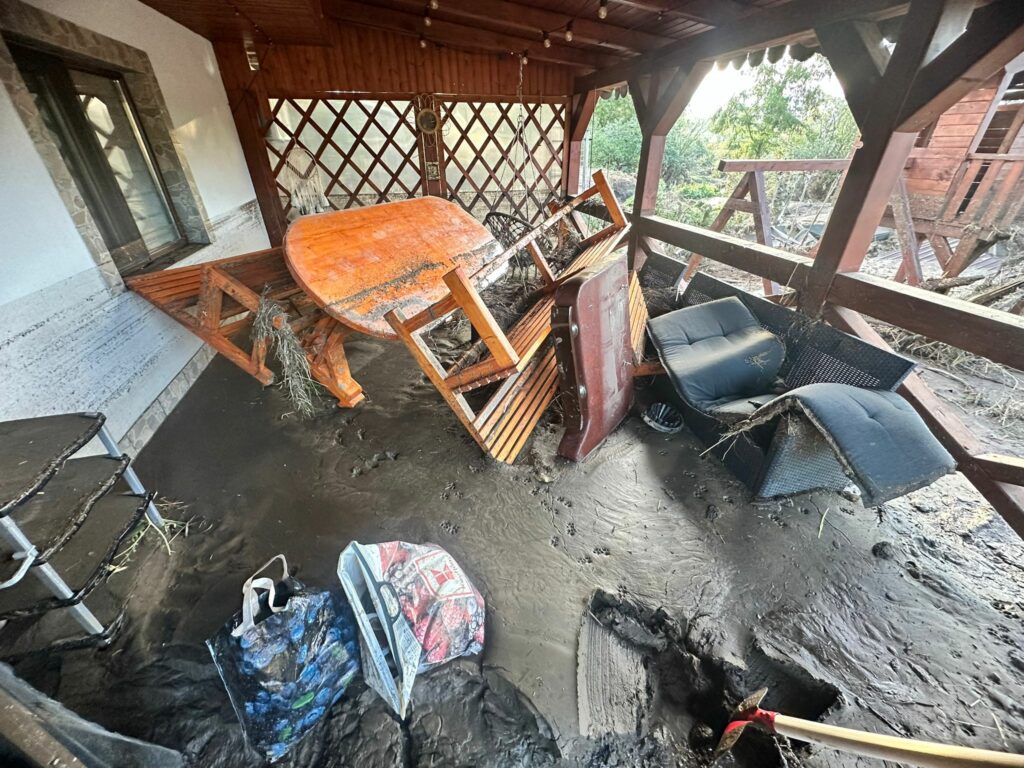
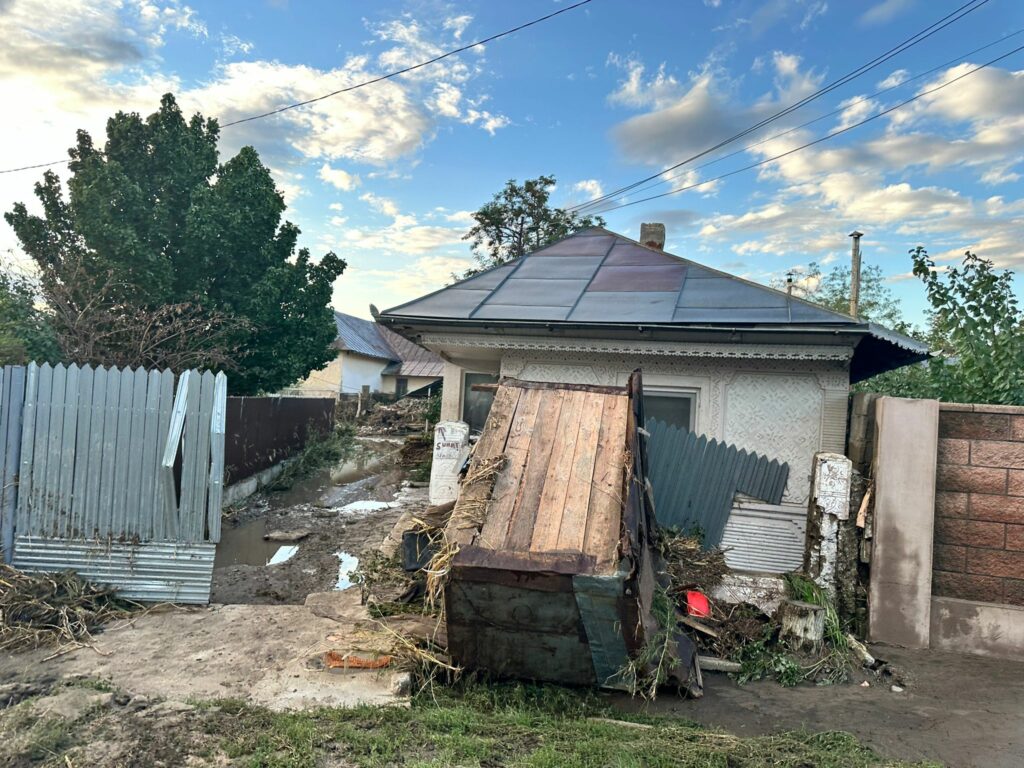
Severe damage to a home in Romania, where water levels reached up to two metres.
Dorcas has been active in Romania since 1990 and our local office is closely monitoring the situation. Although we are not currently working in the most affected areas, we have strong links with local partner organisations. Dorcas was one of the first organisations to work in Romania after the fall of the Berlin Wall, and we had active projects in Galați until a few years ago. Now that the city has been hit by this natural disaster, Dorcas is ready to assist.
While the Romanian government is leading the emergency response, our local colleagues have taken action to assess needs and provide support where necessary. Dorcas Romania staff have been on site to assess the situation and coordinate assistance. The immediate focus is on assessing the damage and the needs of the affected communities so that Dorcas can be ready to assist as soon as the water levels begin to recede. Only then can clean-up and reconstruction work begin.
Dorcas’ regular projects in Romania focus on food security, care for older people, family support and combating human trafficking. This expertise and experience is now being used to support the communities most affected by the floods.
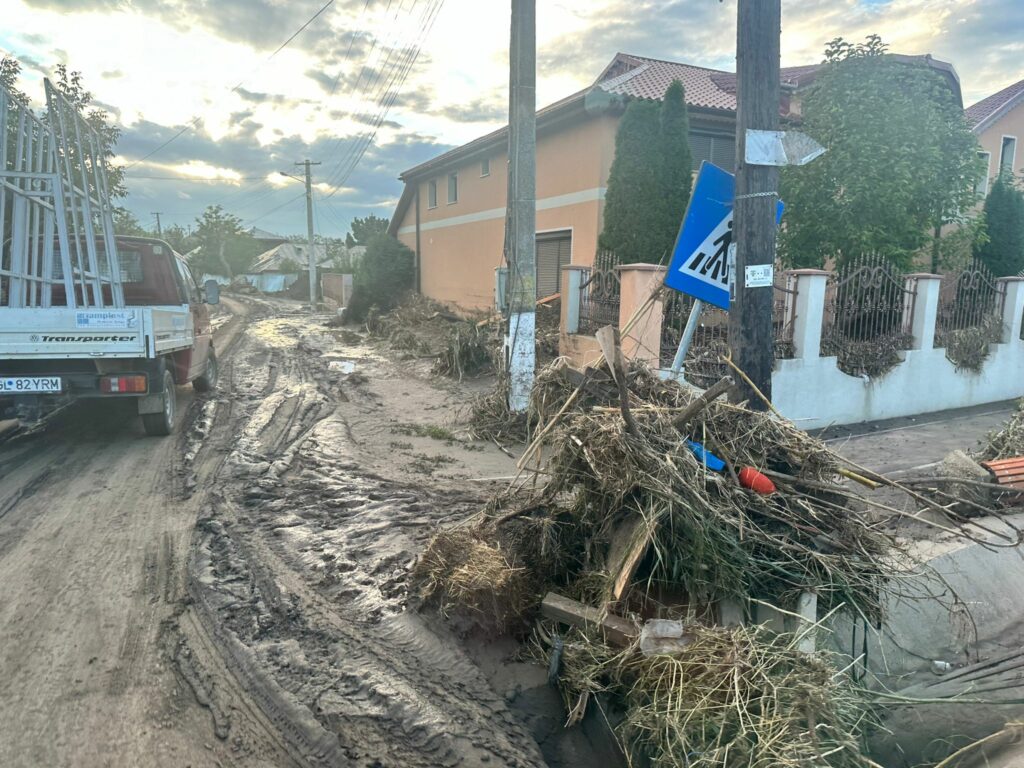
Moldova: Severe Damage in Leova District
Moldova was also severely affected by the floods caused by Storm Boris. In the south-west of the country, the district of Leova was particularly badly affected. Two bridges were completely destroyed, cutting off access to key roads. The situation is critical in the village of Sarata Noua, where a nearby reservoir is at risk of overflowing. This could lead to dam breaches, further exacerbating the flooding.
The emergency situation in the district of Leova remains unresolved. Local emergency services, together with international partners, are working tirelessly to mitigate the damage and save lives. While some areas were temporarily without power, electricity has been restored to most of the affected areas.
Country Director Leila informed us that, in addition to the floods, a 5.2 magnitude earthquake has struck, making conditions in the affected regions even worse.
Dorcas primarily works in Moldova on community development, with a focus on protection and social safety nets for children, older people, and families, as well as improving livelihoods. Dorcas also provides emergency food assistance to refugees from Ukraine.
At the moment, our focus in Moldova is more on long-term development. We are monitoring the situation closely to determine if, where and how we can provide the most effective support.
While Dorcas has not yet travelled to Leova District due to government travel advisories, we are in close contact with local partners, volunteers, and churches. Dorcas awaits further official information to determine how best to assist the impacted communities.
What is Dorcas doing after the floods in Romania and Moldova?
The scale of damage in Romania and Moldova demonstrates the need for both immediate and long-term support. Although the governments of both countries responded swiftly to provide emergency support, the rebuilding of homes and infrastructure will be a prolonged and challenging process. Thousands of displaced people are currently residing in temporary shelters, where they are being provided with basic necessities such as food and water. However, this is only a short-term solution.
Once water levels recede, the focus will shift to large-scale clean-up and restoration efforts. The rebuilding of homes and infrastructure is expected to take months, if not years. Additionally, essential goods such as furniture, bedding, kitchen utensils, and other household items are also needed.
Both Dorcas Romania and Dorcas Moldova are monitoring the situation closely and looking into plans for potentially starting a reponse in assisting affected households.