Dorcas has published a new report, Building Reliable Value Chains: Lessons from Dorcas’ multi-country experience, presenting lessons from an independent evaluation of five value chains in Eastern Africa. The report explores what enables value chains to deliver reliable benefits for producers and where challenges remain.
The evaluation examined value chains for honey, camel milk, pasture and milk, and chicken across Kenya, Ethiopia and Tanzania. It drew on household surveys with 933 producers, focus group discussions, key informant interviews, programme monitoring data and portfolio-wide analysis.
Reliability emerged as the defining factor
One of the report’s central findings is that sustainable value chains depend more on reliability than on training alone. Across the assessed value chains, stronger outcomes were associated with timely payments, trusted governance structures, functioning quality systems and secure market linkages. Where these systems worked consistently, producers experienced more stable incomes and stronger market participation. Where they fell short, gains often proved difficult to sustain.
The evaluation found that demand was rarely the main constraint. Instead, the reliability of supply systems, transaction processes and governance arrangements often determined whether value chains delivered long-term results.
‘We now use modern techniques to keep bees and that means we can earn a better income.’
Andrea Kosmas, Beekeeper from Chemba, Tanzania
Three patterns across countries
The report identifies three recurring patterns across different countries, products and contexts:
- Reliability predicts sustainability.
- Market-first value chains perform better than production-first approaches.
- Governance quality shapes who benefit.
Value chains that began by identifying buyers, confirming demand and establishing payment systems before scaling production consistently performed better than those that focused first on increasing production. The evaluation found that production growth without secure market access often led to increased output without corresponding income gains.
Governance also proved critical. Transparent leadership, clear rules and trusted payment systems contributed not only to stronger commercial performance but also to more equitable participation and benefit-sharing.
‘Before Dorcas, I waited for life to happen to me. Now I lead my life and others follow.’
Momina Dharar Abdi, Moyale, Ethiopia
Inclusion strengthens performance
The report highlights inclusion as an important design consideration rather than an add-on. Women achieved meaningful gains in income, decision-making and leadership across the value chains where formal cooperative structures and direct payment systems were in place. However, the evaluation also identified ongoing barriers for young people and people with disabilities.
The findings suggest that inclusion is strongest when barriers are addressed from the outset through programme design, including appropriate governance arrangements, accessible participation pathways and payment systems that reach producers directly.
Lessons for practitioners, donors, investors and partners
The report offers practical lessons for organisations involved in value chain development. For programme implementers, it highlights the importance of designing from the market backwards, building baseline data from the beginning and treating payment reliability as a core performance indicator.
For institutional donors, the findings emphasise the importance of assessing governance, market viability and long-term sustainability rather than focusing solely on production outputs. The report also notes that value chain enterprises rarely become fully self-sustaining within a single grant cycle and often require a realistic multi-year pathway to maturity.
For investors and corporate social responsibility partners, the evaluation points to the importance of commercial viability, operational reliability and post-programme sustainability when assessing investment opportunities.
‘Dorcas has shifted from facilitation to enterprise thinking. In programming, you think about impact. In business, you think about return on investment. We need to accept that failure is part of innovation.’
Mobisa Ronald Mose, Value Chain Programmes Manager, Dorcas Kenya
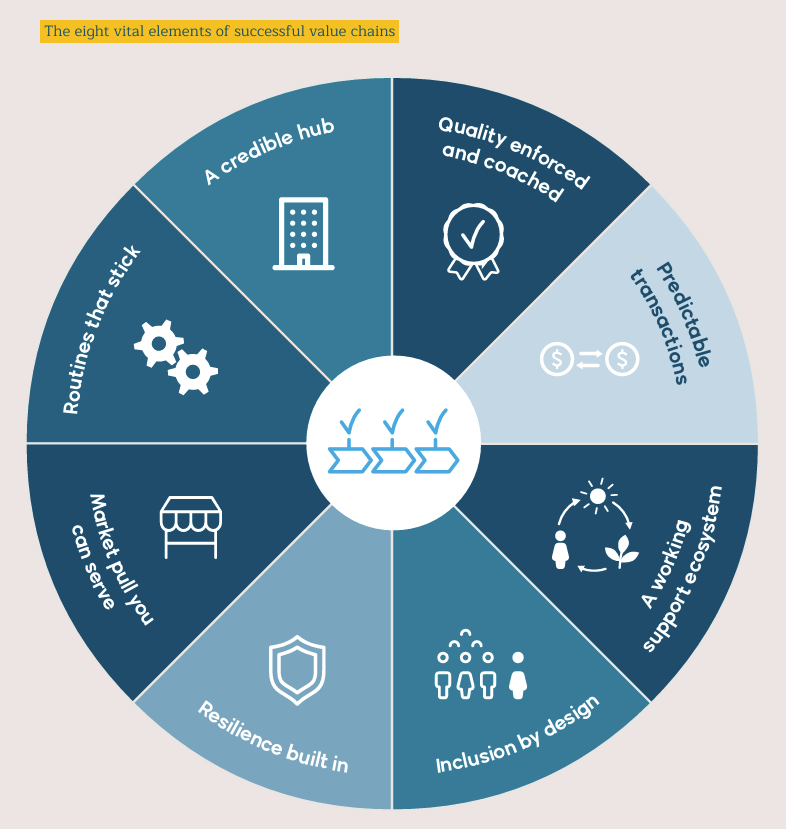
Across five value chains in three countries, the
evaluation identified eight non-negotiable elements. The absence of any one of them led to consistently weaker results. These are not a one-off checklist. They are ongoing design requirements that must be maintained throughout the life of a programme.
Looking ahead
The evaluation also identifies several areas for further learning. These include increasing opportunities for young people, strengthening the measurement of outcomes for women and girls, integrating climate resilience from the start of programme design, and understanding how the approach performs in different contexts beyond Eastern Africa. Early pilots in Albania and Egypt are helping Dorcas explore these questions.
The report concludes that value chains work best when producers can depend on the systems around them. Reliable payments, effective governance, functioning quality systems and trusted market relationships are not supporting conditions but fundamental building blocks for sustainable economic participation.
Connect with us!
Interested in connecting or exploring collaboration opportunities? Dorcas welcomes conversations with NGOs, institutional donors, investors, corporate social responsibility partners, researchers and practitioners who are working to build more inclusive and sustainable value chains. Whether you would like to discuss the report findings, exchange experiences, or explore opportunities for partnership, we would be pleased to hear from you.
‘Chicken farming is unstoppable on this farm. What we have learnt cannot be taken away from us — and that is what gives us confidence to keep moving forward.’
Annastacia Nyaimbo, Siaya, Kenya
Read the report: building reliable value chains
In 2025, Dorcas celebrated 45 years of standing alongside people in need across Eastern Africa, Eastern Europe and the Middle East. Our annual report 2025 tells that story: one person, one family, one community at a time.
William, a pastor and farmer in rural Tanzania, knows what it means to stand alongside people. Before he joined a Dorcas project, his family could barely make ends meet. Through training and support, he diversified his crops, improved his livestock and transformed his small plot into a thriving farm. His wife Elizabeth puts it simply: ‘I can choose what we eat from our own farm, and we can sell the rest.’ William now trains other farmers in his village.
His story of hope is just one of the many our projects made possible in 2025. In Lebanon and Syria, children learned in safe spaces with full stomachs. Roma children in Ukraine found hope through sport and psychosocial support. In Iraq, farmers facing drought and shrinking water sources strengthened their food security through climate-smart agriculture and water-efficient farming. And in Tanzania, Lucia received fruit trees and training, used her first harvest income to buy chickens, and built a chain of growth entirely by herself.
Our commitment to the one person in need goes all the way back to where Dorcas began. In a special interview, our founder, Dirk-Jan Groot, and his wife, Janneke, share what first moved them to act 45 years ago. And today, a whole community continues in the path they set out on: donors, churches, volunteers, businesses, Dorcas shop customers and local partners all play a role in making our work possible.
Forty-five years on, the conviction that Dirk-Jan and Janneke carried from the outset still drives everything we do: we can make a difference for that one person in need. Read our annual report to find out how we did that in 2025.
1 October is the UN International Day of Older People, and one of its aims is to ensure that people can grow old with dignity and continue to participate in society. In the countries where Dorcas works, older persons are often marginalised, lack access to basic services and struggle to survive on meagre incomes. With its community safety net programme, Dorcas tackles these issues by enabling local communities to care for and protect their older people.
What are community safety nets?
Dorcas started to develop and implement the community safety nets (CSN) approach in 2017. A community safety net (CSN) mobilises different organisations in a community to provide a safe and supportive environment for older people in which they can flourish. It also raises awareness about the issues older people face.
‘I have a large number of people to talk to now, and I feel like a human. I am back to normal.’ – Quote from a project participant.
Evaluation of the CSN approach
This year, Dorcas commissioned an evaluation of its CSN projects in Albania, Egypt, Ethiopia, Moldova, Romania, Tanzania and Ukraine to discover the impact of the programme and which best practices can be implemented to make it more sustainable.
Older people’s dignity restored
The dignity of older people is restored through the wide range of social, intergenerational, income-generating and spiritual activities that CSNs offer. Participants become more active in their local communities and feel valued. Less able-bodied participants are not forgotten either: those who are bedridden receive home visits. Valuable traditions are created, social cohesion is strengthened, and communities discover that they can do more than they originally realised to enable older people to flourish.
‘CSN taught us how to cook healthy food.’ – Quote from a project participant.
Challenges encountered
However, the transition from Dorcas’ original Adopt-a-Granny approach to sustainable community safety nets that make full use of local resources is not a straightforward path. There have been many challenges along the way for example:
- Many local communities are not used to taking ownership of a situation.
- Parties are often more willing to donate than become involved as partners.
- Advocacy efforts towards government are still in its very early stages.
- A better balance needs to be found between the positive and negative effects of providing material support to older persons.
Best practices?
The various CSN projects are still in a state of transition. As a result, no clear set of best practices has emerged from the evaluation. However, various successful practices were found, such as actively involving participants, churches as natural allies in caring for older people, creating a shared and diverse ownership of a CSN, and holding governments accountable.
‘Peer-to-peer and social support systems are gaining traction. What began with volunteers inviting attendees has flourished into a self-sustaining cycle where attendees extend the invitation to their friends. This exemplifies the power of social support in fostering a safe and inclusive community.’ – Actor from Egypt
Next steps for CSNs
The evaluation report made various recommendations about the next steps for CSNs. These include:
- Continuing to invest in asset-based community development.
- Realising a more strategic approach to advocacy.
- Promoting multistakeholder approaches.
- Seeking to diversify funding sources for CSN projects.
In the coming months, the Dorcas country offices in Albania, Egypt, Ethiopia, Moldova, Romania, Tanzania and Ukraine will use the evaluation to take appropriate measures to improve the sustainability and impact of their CSN projects.
Curious to learn more? Read the evaluation report below:
Our world is in turmoil: 2023 saw a marked increase in crises and people in need. And this immense need painfully highlighted the gaps and divisions in our fragmented world. Dorcas rose to this challenge and focussed on building bridges.
Through the power of partnership, we bridged gaps in equality and opportunity so that marginalised individuals could connect and participate and their communities flourish. We served as the bridge to connect our stakeholders and supporters with those in need. That bridge enabled us to respond immediately when Syria was hit by earthquakes, continue our support in Ukraine, and stand up for those whose needs are less visible, such as farmers in Tanzania and Mozambique. Throughout 2023, we also worked hard on the foundations needed to support strong bridges. For example, we improved our compliance with the Core Humanitarian Standard, continued key strategic partnerships, and expanded our advocacy efforts with a human rights campaign to raise awareness for just societies in which everyone can participate.
Which bridges did we build? Read our annual report
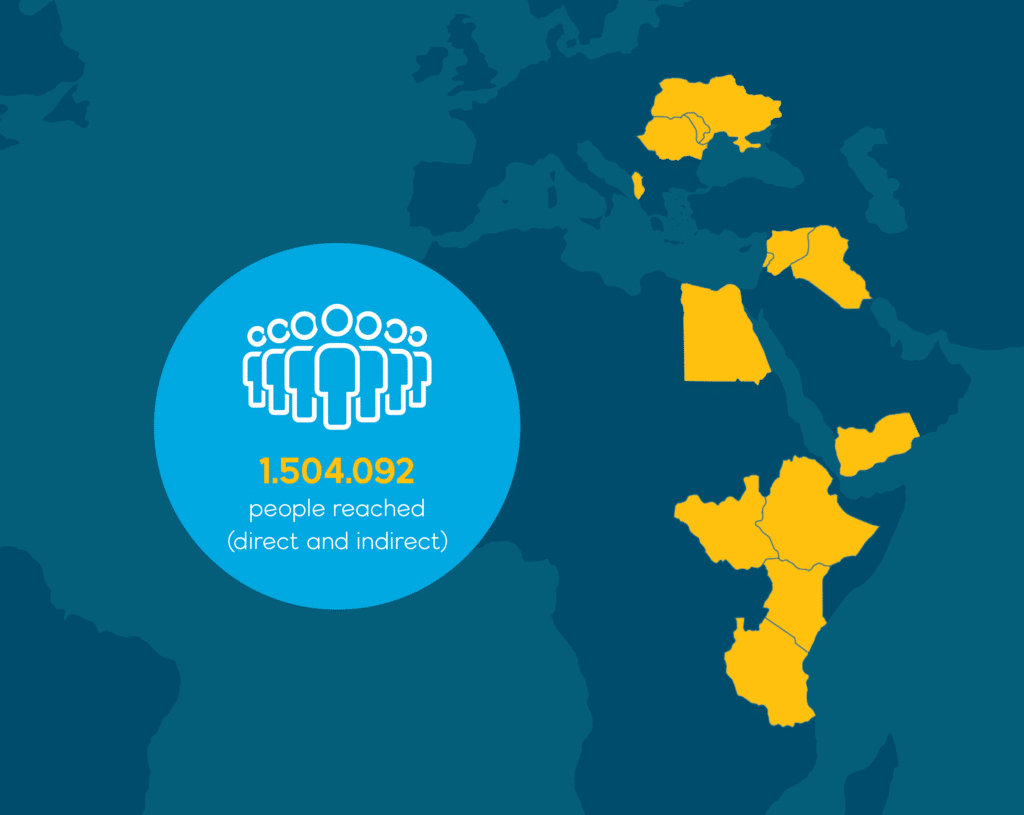
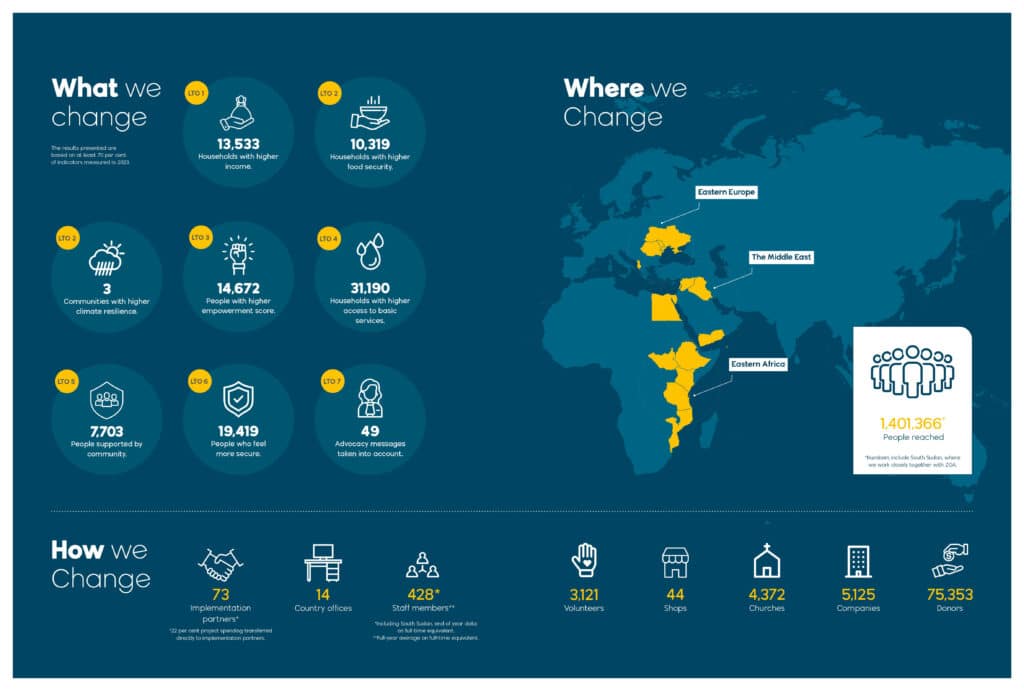
Our collective efforts enabled more than 1.4 million people in 14 countries in Eastern Africa, Eastern Europe and the Middle East to cross the bridge towards a more flourishing life. 44 Dorcas shops, 3121 volunteers, 75,353 individual supporters, 5125 companies, 4372 churches, 428 Dorcas staff and many valued partner organisations made this impact possible.
Bridges towards a more hopeful future highlighted in our Annual Report 2023 are:
- Ukraine – frontline resilience boosted through cash, mental health and psychosocial support.
- Albania and Moldova – community development projects enable marginalised individuals to flourish.
- Lebanon – protection and resilience of displaced persons and their host communities increased.
- Syria – markets and livelihoods restored in Aleppo.
- Yemen – humanitarian assistance provided through the Dutch Relief Alliance.
- Iraq – water supplies restored and hygiene improved.
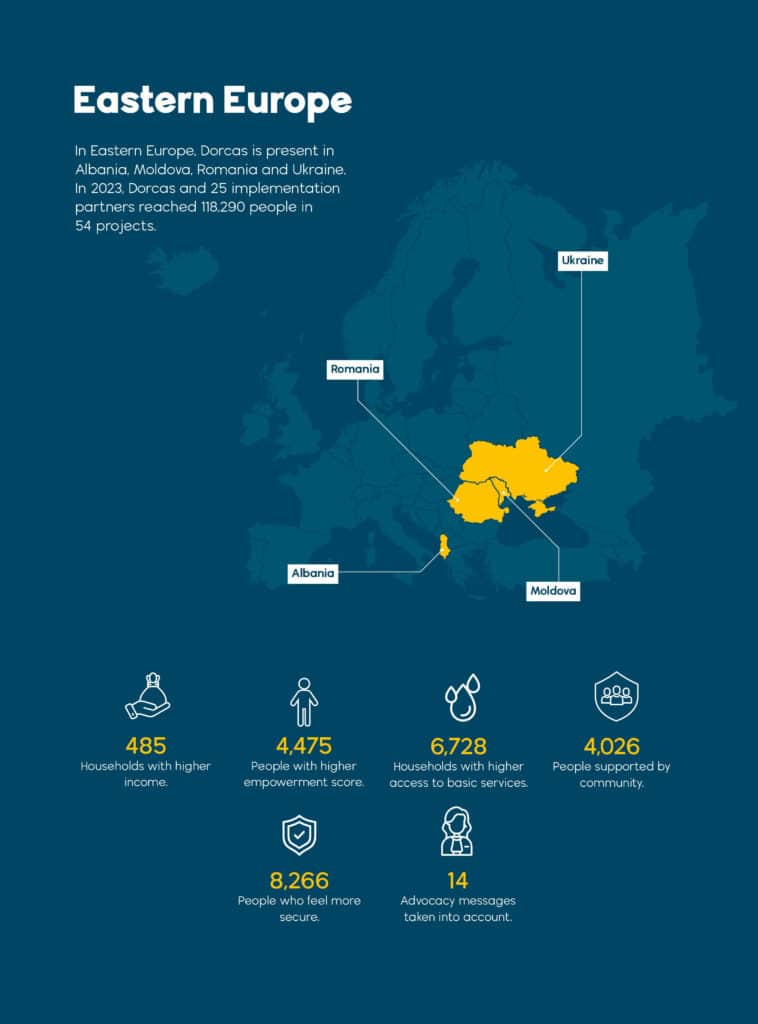
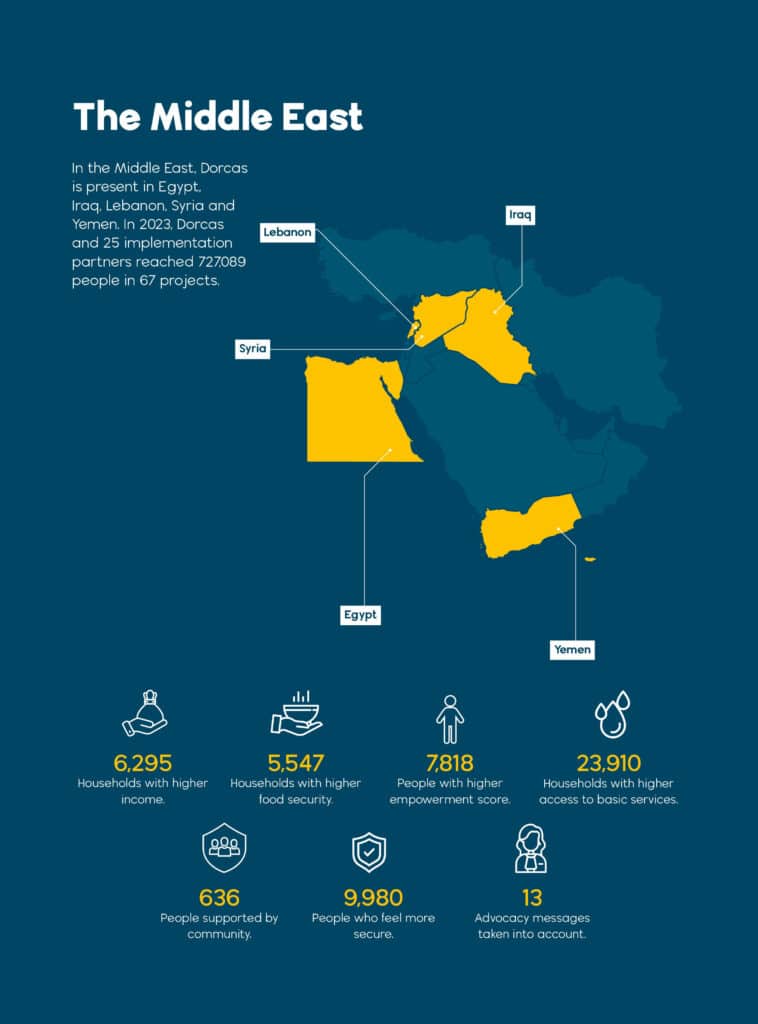
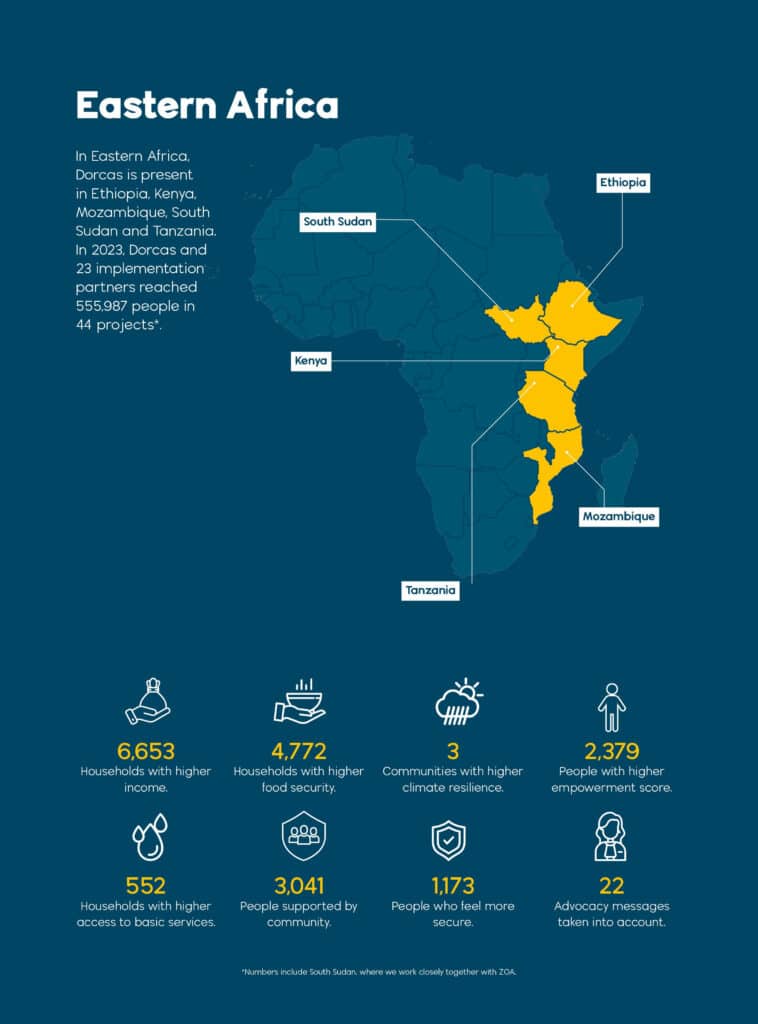
Read more about our impact in 2023
Annual report 2023
Inspired to act?
Read the next story or contact us to get to know more about making an impact together.
2022 marked the first year of our new strategic period. Even though it was the start of a new strategic period and despite the change in leadership during the year, we can conclude that 2022 was characterised by moving forward on the chosen path. The crises in various project countries did not take Dorcas by surprise, even though these have demanded a lot from us. We faithfully moved forward thanks to the support of thousands of volunteers and tens of thousands of donors, but above all, because we knew and know that God is with us no matter the circumstances we find ourselves in. Dorcas has acted in these situations in line with its character. We put our shoulders to the wheel together with our partners, remain true to our mission and are inspired by our faith in Jesus Christ. We have learned to cope, adapt and adjust, but not to give up. God, who strengthened our hands in the past, was with us in 2022 and will remain with us in the future. Therefore: Faithfully moving forward!
Our collective efforts reached and impacted more than 1 million persons in 14 countries in Eastern Africa, Eastern Europe and the Middle East. Over 40 shops Dorcas shops and 10,500 volunteers, over 83,000 individual supporters, 428 companies and 2,000 churches worked together with 384 Dorcas staff and many valued partner organisations.
How did we manage? Read our annual report
For the first time, we indicated our reached impact through long-term outcomes. Each Dorcas project is linked to the long-term outcomes of the Dorcas results framework and their corresponding indicators, and we link each project with the impact statements in our Theory of Change. By doing this, we illustrate how our Way of Working contributes to change for individuals, communities and societies. These long-term outcomes were chosen based on their level of contribution to the six impact statements of flourishing people and communities and the degree of compatibility with Dorcas’ fields of expertise.
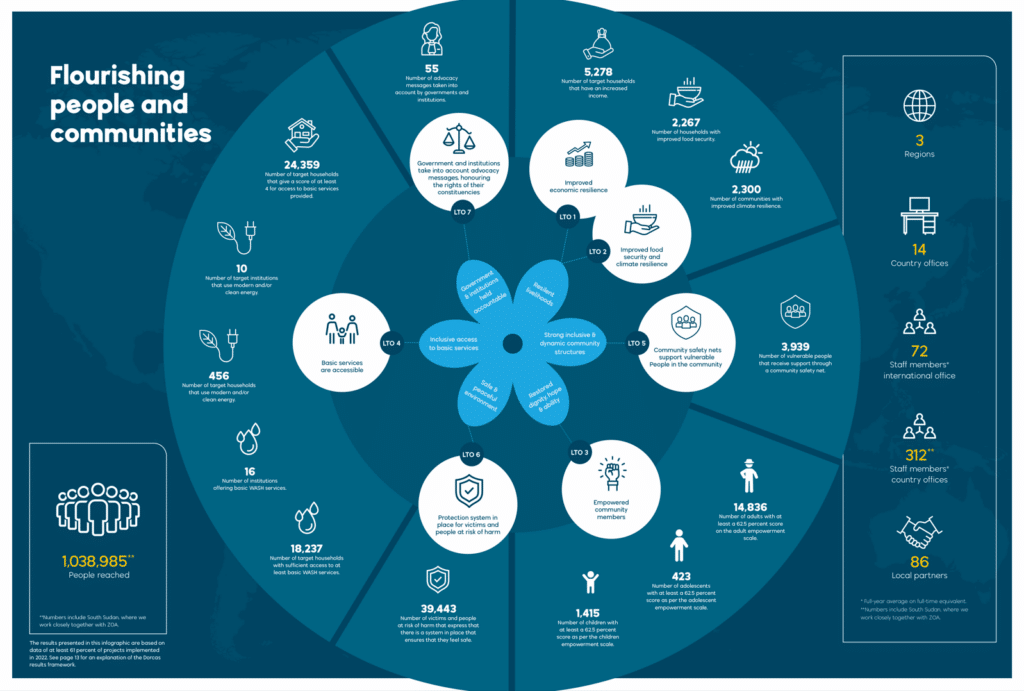
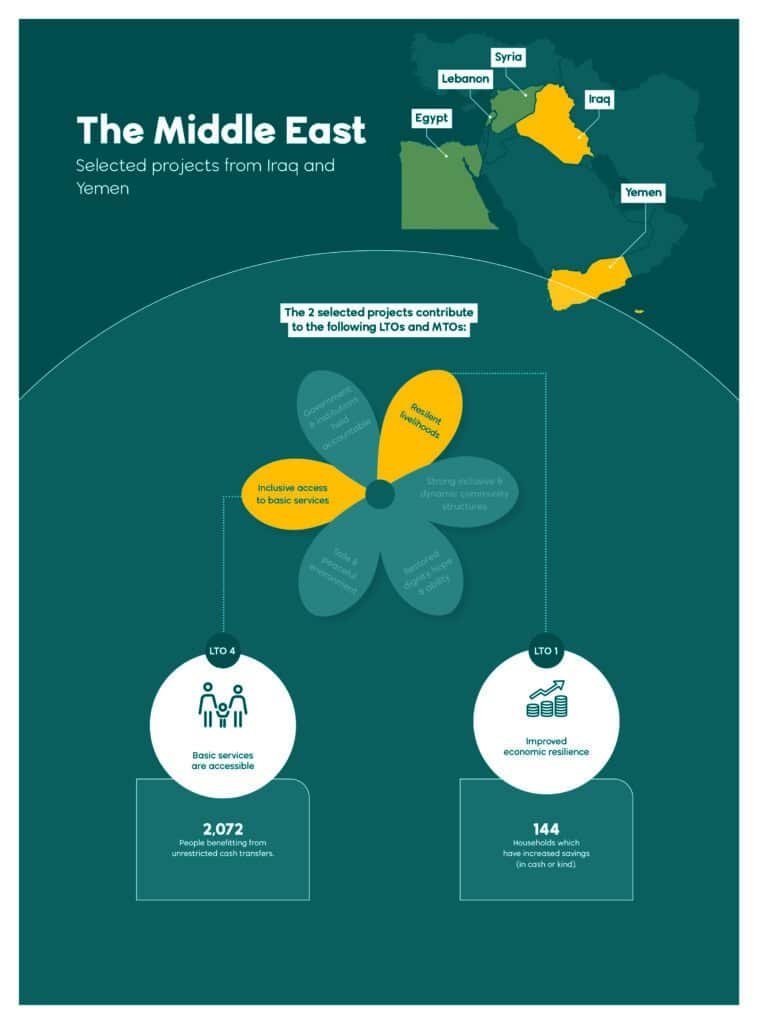
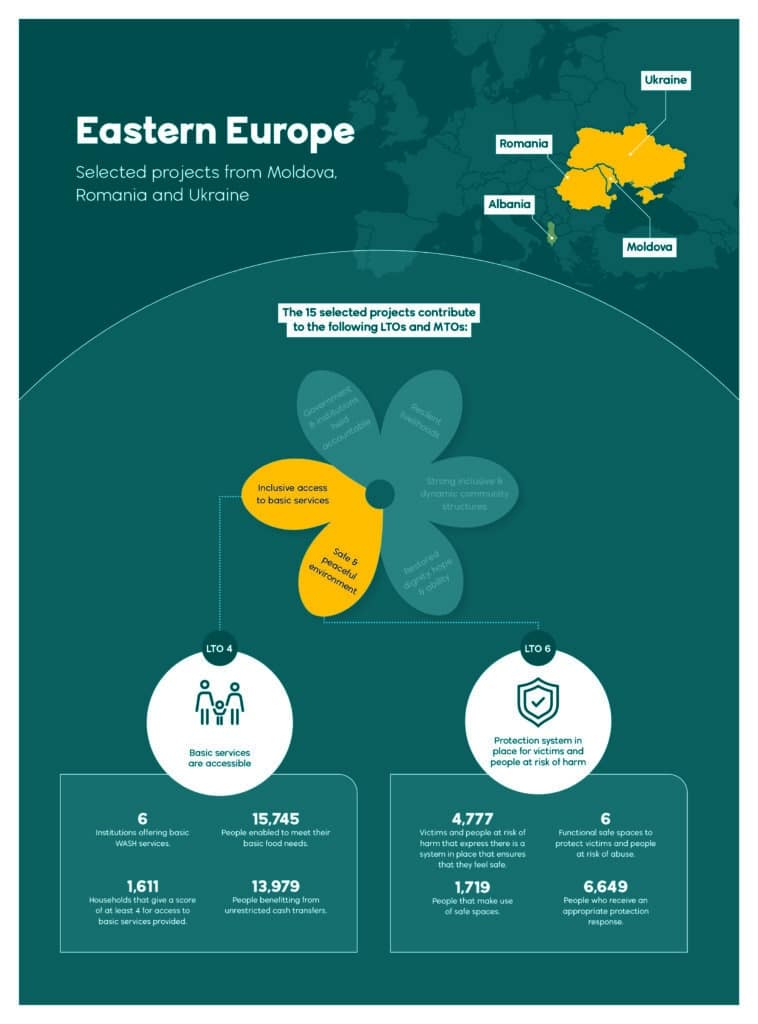
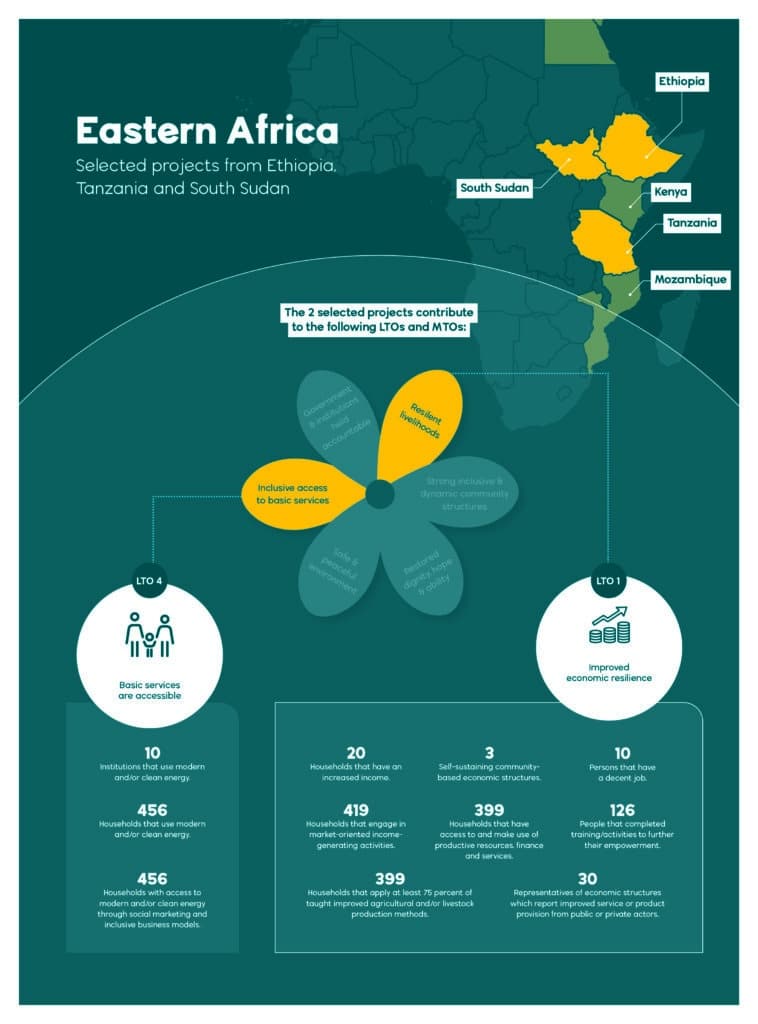
Within the 2022 annual report, the following impact results are highlighted:
- Ukraine crisis response (with selected projects from Eastern Europe).
- Sustaining food security and livelihoods (with selected projects from the Middle East).
- Climate, cooking and cattle (selected projects from Eastern Africa).
- Communities at work are stronger (selected projects from South Sudan).
Dorcas published a report entitled ‘Falling through the cracks’, which concludes that, in Ukraine, older people are particularly vulnerable to suffering the consequences of the war with Russia. The researchers based their conclusion on previously published reports and recent information from Ukraine.
The report states that too little is being done to ensure that the help provided meets direct needs of older people. In the report, the situations in Iraq, Yemen, South Sudan and Ukraine are discussed, and it is concluded that the rights of older people are often not protected well enough. The report suggests a UN human rights convention for the rights of older people as a possible solution for generating more attention for the specific needs of older people.
Loss of social safety net and reduced mobility
One of the causes of the vulnerable position of older people in conflict situations identified by the researchers is the lack of available data. Insufficient measurements are carried out about how many older people stay behind in a certain conflict area, and what the specific needs of these people are. Another reason for the particularly vulnerable position of older people in conflict situations is the sudden loss of the social safety net. Some older people depend on their children, neighbours or acquaintances for food, drinks, medication and so forth. When that social safety net is lost, it becomes much harder for older people to access these basic resources. Furthermore, older people are in general less mobile, as a result of which fleeing to a safe region or reaching a bomb shelter in the case of shelling is difficult or even impossible. This means that, during conflicts, older people will often stay in their homes and are therefore more likely to suffer from artillery attacks or to fall into the hands of one of the fighting parties. This means older people are more likely to become victims of burglary, (sexual) violence or even murder.
Older people in Ukraine fall between the cracks
Stories of older people who stay at home because they are unable to flee are coming from Ukraine. Previous research from the original conflict area in East Ukraine, prior to the large-scale invasion on February the 24th, reveals that 86% of older people have a limited mobility, with over 10% of interviewees being completely immobile. Furthermore, 98% of older people staying behind were found to suffer from one or more chronic illnesses, and 70% of older women had insufficient access to medical support. According to this same study, only 6% of older people in this particular conflict area have received humanitarian support during the past six months. These statistics reveal the vulnerability of older Ukrainians who are unable to flee.
In addition, prior to the escalation of February the 24th, the war with Russia was known as the “oldest conflict in the world”. This means that the percentage of older people experiencing negative consequences due to the war is higher in Ukraine than anywhere else in the world (30 percent). It is therefore feared that, following the escalation, many older people find themselves in a perilous situation without appropriate support. As many residents of Ukraine have fled and the men are obliged to join the fight against Russia, it is feared that older people will end up falling between the cracks without the support they need to access basic resources such as food, drinks and medication. Dorcas therefore calls for more attention to be paid to the effects of armed conflicts on older people so that nobody is left behind.
If there was any year in recent history where the importance of resilience was underlined, it was 2021. On a global scale! The COVID-19 pandemic continued to take its toll and surprised us time and again with its twists and turns as well as its secondary effects on society. Existing societal cracks became deeper and wider, and new ones emerged, resulting in sharper divisions and growing imbalances. Its impact could be felt in many public sectors, communities, and our lives. The degree of severity varied and was dependent on a person’s social status and where they lived. It became abundantly clear across the world: self-esteem and resilience are essential for maintaining hope and perspective in difficult times. And they are also the core elements of our interventions.
How did we manage? Read our 𝐀𝐧𝐧𝐮𝐚𝐥 𝐑𝐞𝐩𝐨𝐫𝐭.
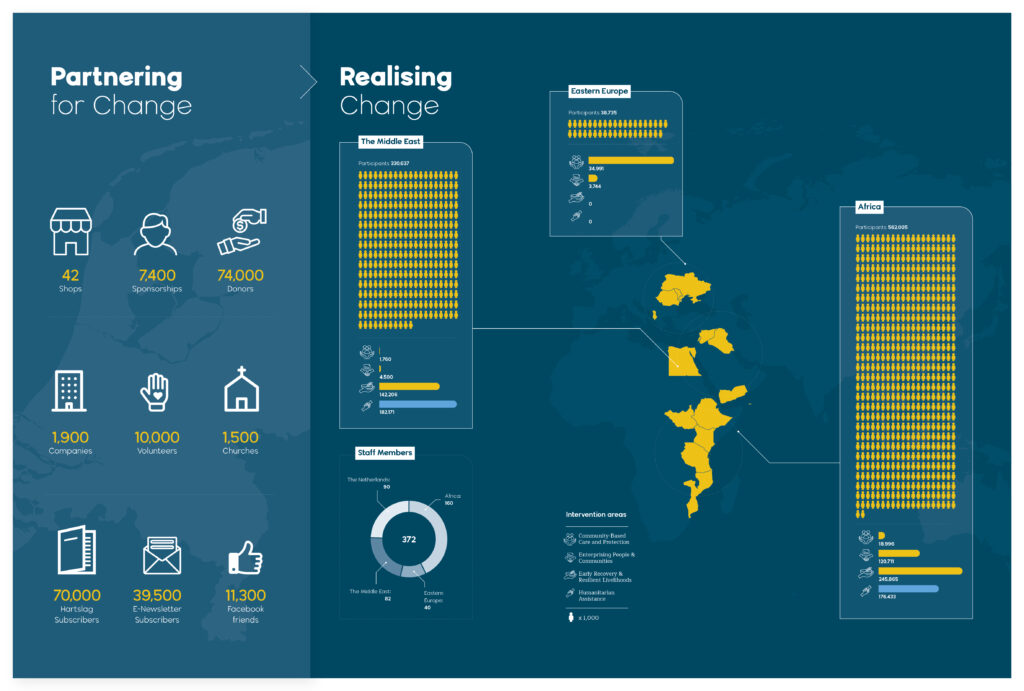
2021 Saw Dorcas grow in partnering for change for realising change. Our collective efforts reached and impacted almost 930,000 persons in 14 countries in Africa, Eastern Europe and the Middle East.
The annual report is meant to be a transparent look in to the ‘kitchen’ of Dorcas. You will read how and with who Dorcas has contributed to sustaining change in extraordinary times in 2020. Reading the report will give you the opportunity to learn from our successes and failures. Reading the report will help you to look beyond the ‘numbers’ and discover how change has taken place in the lives of individual people, communities and the societies they live in.
Contact us
When you have read the annual report, contact Dorcas! Get in touch! Let us know what we can do better. How can we work together to make sure no one is left behind and lasting impact is created in extraordinary times, for all and by all?