Kenya is severely affected by climate change, experiencing challenges such as prolonged droughts, rising temperatures, erratic rainfall and floods. These environmental stresses caused by global warming have led to land degradation and deforestation, further exacerbating the country’s vulnerability. To combat this, the Kenyan government has set a target to plant 15 billion trees by 2032 to reduce the country’s greenhouse gas emissions and enhance climate resilience. In addition to improving air quality, trees help prevent flooding, support biodiversity, and strengthen ecosystems, while also playing a key role in regenerative agriculture and sustainable land management practices by restoring soil health and preventing further degradation.
In line with these efforts, Dorcas Kenya launched the Kitui climate change project in 2021 to combat climate change while engaging children and supporting both their education and future resilience. This was done under the slogan ‘A child, a tree’, where each child is assigned a tree to plant, care for and maintain. The project has successfully planted 55,000 seedlings and distributed 100,000 seed balls of indigenous, bee-friendly trees. Survival rates measured one year after planting were over 65 per cent for the tree seedlings and 50 per cent for the seed balls. Building on these efforts, Dorcas Kenya launched the Marsabit climate change project in 2024, which aims to plant 8,400 tree seedlings in schools by 2027.
Why is the involvement of children and schools in solutions to climate change such a valuable practice? This article explores how engaging children not only empowers them to take ownership of their future, but also builds wider community resilience, and highlights why the education system is such a fruitful setting for these initiatives.
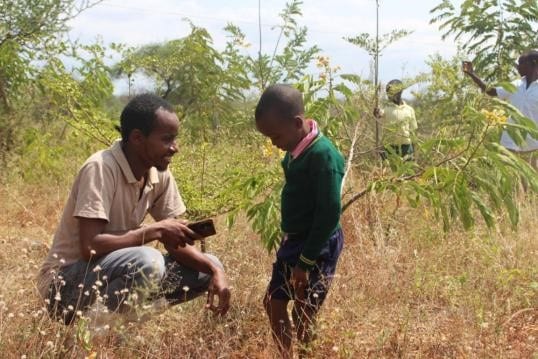
The role of education in climate action
Schools are an ideal setting for climate action projects as they provide a structured environment where children can learn and actively participate in initiatives such as tree planting. Dorcas works with schools that are motivated to get involved, have at least one hectare of land and an active environmental club. Through these school environmental clubs, children gain knowledge and skills about the impact of climate change awareness, particularly how it affects their future livelihoods, the country’s economy and biodiversity. This encourages a deep understanding of the importance of environmental conservation and climate action. Including climate education in schools not only equips students with the information they need to address climate challenges but also builds a sense of responsibility and ownership. In this way, education creates a generation that is more informed, engaged and ready to lead the way to climate resilience.
The power of children in the creation of a sustainable future
Children are powerful agents of change, and Dorcas’ projects have shown how quickly they can adapt to new practices and behaviours, especially when given the opportunity to participate in hands-on activities. Through involvement in tree planting and environmental clubs, children develop a strong sense of ownership.
Daniella Maroma, Thematic Expert on Climate Adaptation and Resilience at Dorcas, describes: ‘During my visit to the schools in Kenya, I witnessed something truly remarkable. The children proudly showcased their trees, their faces lighting up as they pointed out how tall they had grown. Each tree was a living testament to their care, dedication and belief in a brighter future. These children are not just caring for trees, they are actively shaping a more resilient and sustainable world. Their actions are a powerful reminder that meaningful change begins with simple, determined steps.’
Children who grow trees to maturity are further encouraged through individual and school awards, which motivate them to continue their efforts. One of the schools Dorcas has worked with, Athi Primary School, is a good example of how highly motivated children can be. It now has at least 300 surviving trees, and the children carry water from their homes to keep the trees from drying out. This commitment often inspires their peers to get involved, creating a ripple effect in their schools and communities. Tree planting not only improves the environment in various ways but also secures a sustainable future for children by promoting biodiversity and supporting long-term climate resilience in their communities.
Dorcas hopes to inspire young children to take a leading role in environmental conservation and in tackling the effects of climate change, ensuring a sustainable future for generations to come.
The provision of emergency cash assistance is a critical aspect of child protection, particularly in times of conflict and displacement. Through the work of Dorcas Ukraine and its sub-partner, Nevo, a dedicated field team provides timely and essential child protection services to children in need in the Zaporizhzhia region.
These children face challenges beyond the immediate threat of conflict. Many experience displacement, separation from family and friends, and the psychosocial impact of abandonment. Non-payment of child support following divorce also remains a common problem. In addition, many grandmothers or mothers are raising children alone because their husbands are away in military service. Children with disabilities in vulnerable situations are also a key priority for cash assistance, since mothers often lack jobs and steady income due to caregiving responsibilities.
To address these needs, case managers provide tailor-made cash assistance. The level of cash support is determined by the child protection cluster and may vary according to individual circumstances. This support is used to meet basic needs such as winter clothing, school supplies and materials to promote psychosocial well-being.
Thanks to funding from the Ukraine Humanitarian Fund (UHF), 99 children living near conflict zones have already received this vital support. By meeting their immediate needs, this emergency cash assistance provides not only practical support, but also hope and stability for children and their families at a difficult time.
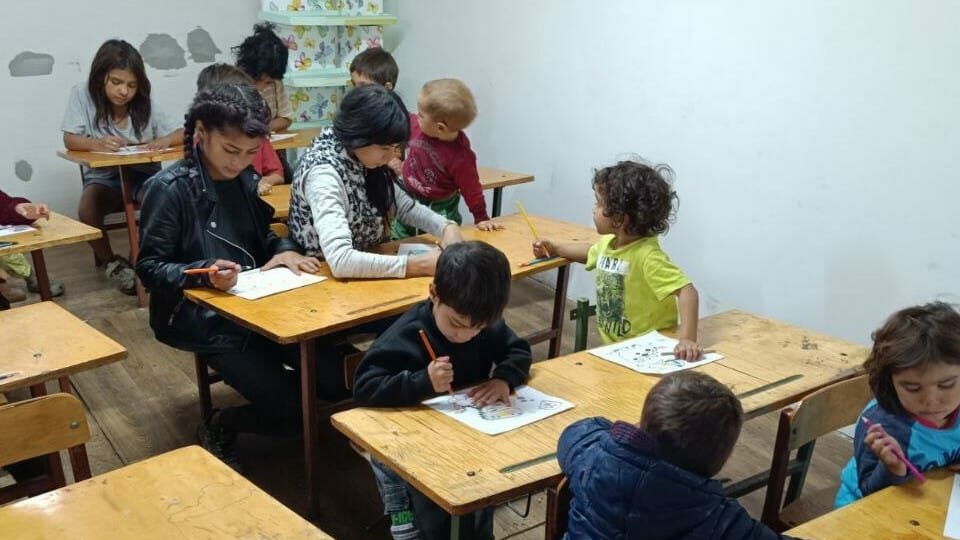
Extra-curricular activities are an important way for children to discover their talents, build confidence, socialise and develop positive habits. Recognising the importance of these opportunities, Dorcas Ukraine’s Future for Children programme works with its partner NGO ‘New Beginning’ to provide sports, educational and psychosocial activities for children in Transcarpathia. Each week, up to 80 children take part in these activities, 80 per cent of whom are from the Roma community.
During the warmer months, the children enjoy nature outings where they plant trees, bushes and flowers with volunteers, benefiting both the environment and their sense of community. Art therapy has proved to be a popular activity for participants, providing a creative outlet for self-expression. The programme also includes psychosocial workshops led by specialists focusing on feelings and emotions, visits to local museums, school preparation support and engaging activities such as photography challenges. More than just fun, these after-school initiatives provide children with essential skills, emotional resilience and a supportive community.
By investing in this programme, Dorcas Ukraine is supporting a brighter future for children in very vulnerable circumstances, empowering them to flourish.
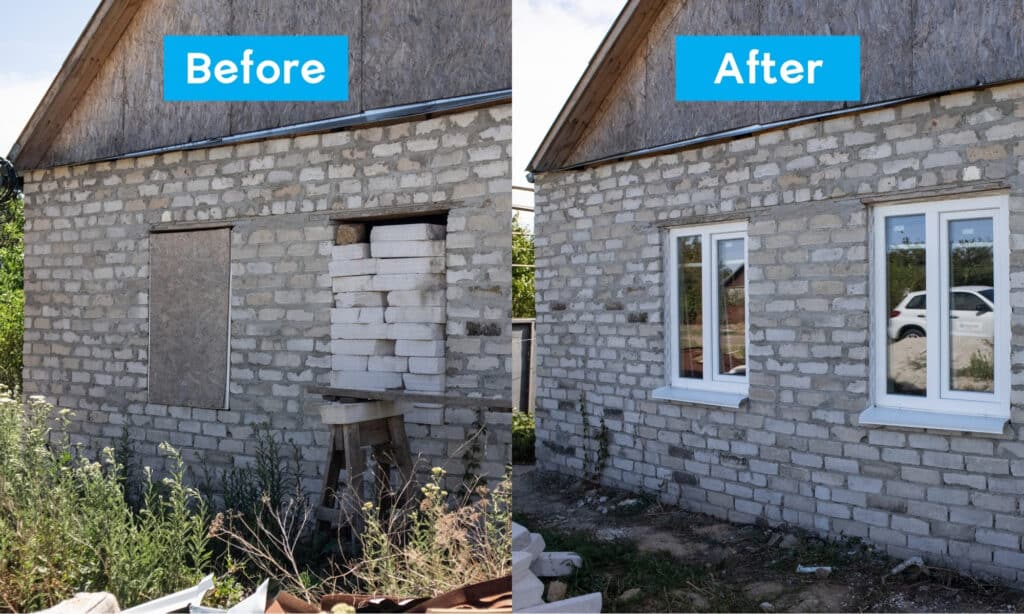
In conflict-affected regions, it is vital to ensure the well-being and safety of communities in vulnerable situations. The Dorcas Ukraine team, in partnership with organisations such as the Ukraine Humanitarian Fund, is providing vital support to the Zaporizhzhia region, offering not only material assistance but also hope for a safer future. Efforts are focused on restoring stability in the face of ongoing threats, particularly from shelling and bombing, and ensuring that local communities can maintain their homes and sense of security.
A key element of this work is the repair of damaged homes, which is particularly critical as winter approaches. Replacing windows and doors in 37 homes was an important step in preparing for the colder months. As well as protection against the harsh winter conditions, these repairs are a source of physical and psychological reassurance for the residents. Many of the people supported are older or have a disability and are unable to leave their homes due to health issues, lack of family support or fear of the unknown.
In addition to physical repairs, Dorcas places particular emphasis on ensuring that people in need have access to essential resources. Repairs, psychological support and non-food parcels are life-saving during periods of increased shelling when local infrastructure is damaged.
Through these initiatives, we are not only rebuilding homes, but also fostering the belief that despite the challenges they face, the people of Zaporizhzhia can persevere and overcome adversity. A warm, safe home is not only a refuge, but also a symbol of support and resilience in these difficult times.
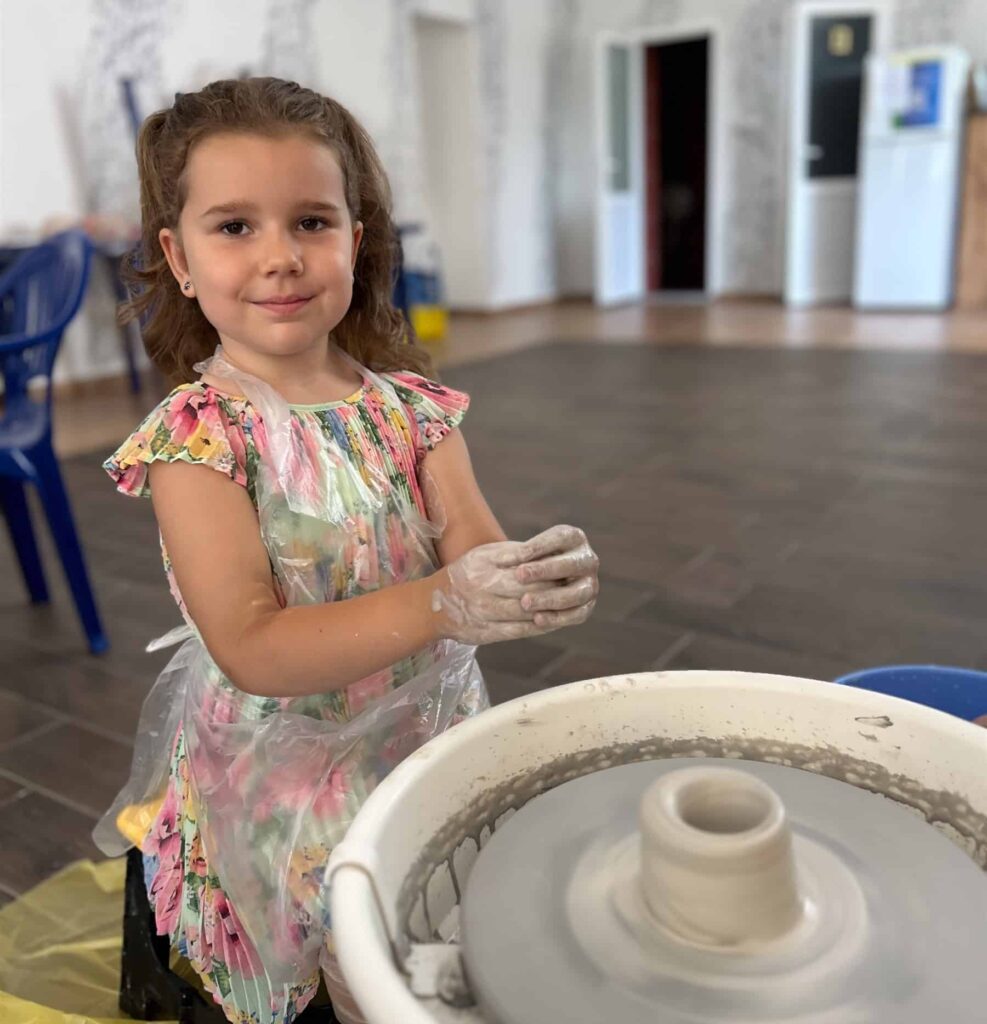
In times of conflict, ensuring access to quality psychosocial support is essential to maintaining people’s well-being. In the regions affected by the ongoing conflict in Ukraine, significant efforts are being made to provide therapeutic and educational opportunities for children and adults. Art therapy has become an important part of this support, promoting mental health and building community resilience.
Dorcas is working with the organisation ‘Nevo’ to create child-friendly spaces in communities across the Zaporizhzhia region. As part of a comprehensive multi-sectoral support project, clay therapy groups have been set up to provide support. This form of art therapy encourages self-expression, has a calming effect and reduces stress. Participants develop their ability to concentrate, improve their fine motor skills and stimulate their imagination and creativity. The sessions have a wide range of participants, with the youngest member of the group being just five years old. Parents also appreciate this type of support, as many children don’t have many opportunities to develop and interact with their peers because they have to study online due to the conflict.
The clay therapy sessions are complemented by interactive sessions led by legal experts, who remind children and young people of their fundamental rights in an engaging and playful way. In addition, Nevo specialists use these sessions to educate participants about the importance of preventing and addressing domestic and gender-based violence.
Thanks to funding from the Ukrainian Humanitarian Fund (UHF), these activities are currently held in six locations in the communities of Pavlivska, Vilnyanska and Kushugumska. This initiative is an important step in the provision of psychosocial support and in building the resilience of the affected communities during these difficult times.
In Iraq, the challenges posed by climate change are enormous, with temperatures rising seven times faster than the global average. Over the next decade, Iraq is expected to experience significant increases in flooding, drought and desertification. These conditions severely affect livelihoods, undermining household economic resilience and contributing to increased poverty.
- By 2035, Iraq is expected to face a severe water deficit of around ten billion cubic metres, which will have a profound impact on the country’s agriculture and livelihoods.
- Iraq’s water shortage leads to drought and soil salinisation, resulting in the loss of 25,000 hectares of agricultural land each year.
- Already 70 per cent of Iraq’s agricultural land is at risk of total degradation from climate change.
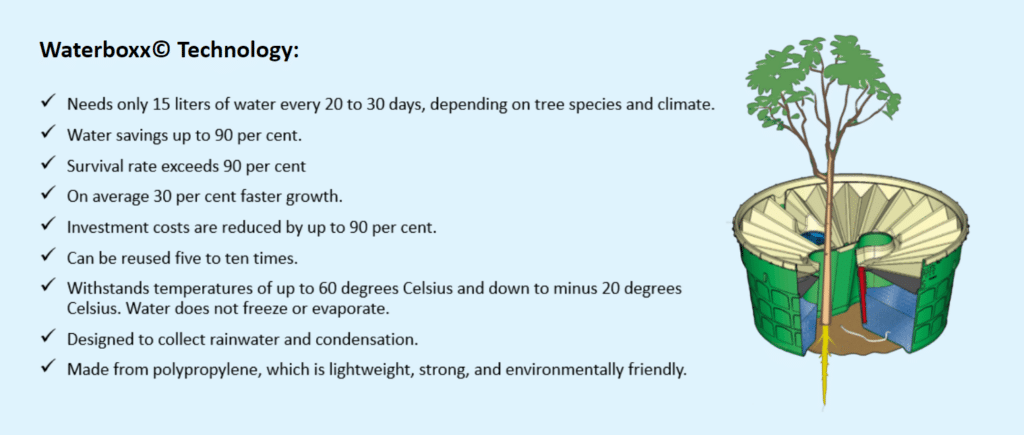
To address these challenges, it is essential to implement climate-smart agricultural approaches that enhance climate resilience and strengthen communities. The Waterboxx is a technology that can contribute to this effort.
The Waterboxx technology
The Waterboxx is an innovative device developed by Groasis to tackle water scarcity and promote sustainable agriculture in arid areas. It is a cylinder-shaped container that collects and stores rainwater for plants and trees. Its design incorporates features that make it particularly useful in difficult climates such as Iraq.
The Waterboxx works by collecting rainwater and dew through its top, which directs the moisture into a central reservoir. The stored water is then slowly released into the ground through a drip system. This provides a steady supply of water for plants and creates a better environment for seeds to grow in.
The need for sustainable water management in Iraq is urgent and this technology can contribute to addressing these challenges in a number of ways:
- Water conservation: By collecting and storing rainwater, the Waterboxx reduces the need for increasingly scarce traditional water sources. This is particularly important in areas of severe drought.
- Soil fertility: The gradual release of water from the Waterboxx helps to keep the soil moist, which is vital for plant health and prevents soil problems such as salinisation.
- Increased agricultural productivity: By providing a reliable source of water, the Waterboxx supports more consistent growth of crops and trees. This can help ensure stable food production and support local livelihoods in areas affected by climate change.
- Ecosystem restoration: By enabling plants to grow, the Waterboxx also contributes to the restoration of degraded land, which can help combat desertification and promote biodiversity.
Supporting marginalised households
Dorcas Iraq is working in Sinjar, Iraq, to support people who are particularly at risk to the effects of climate change. This includes female-headed households, households with people with disabilities or chronic illnesses, and older people without support.
Dorcas Iraq is training nearly 2,500 people in climate-smart agricultural practices and livelihood diversification strategies. Dorcas also provided 50 people with the Waterboxx, tree seedlings and the necessary training to use and maintain the technology. Next year, Dorcas Iraq plans to distribute around 8000 more Waterboxes. This project has already yielded significant positive results, and Dorcas will continue to build on these efforts. One of the project participants who can attest to these positive outcomes is Amin.
Amin is a farmer who has been tending to the fig, olive and grape trees on his ancestral land for a long time. Recently, he began to notice alarming climate changes that threatened his livelihood. Unpredictable rainfall was causing flooding, while extreme summer heat and prolonged drought were threatening his crops. Concerned about the future of the farm, Amin looked for ways to adapt to these new environmental challenges.
Amin came into contact with Dorcas and was introduced to the Waterboxx technology. This was exactly what Amin needed to make his farm sustainable, and after installing the Waterboxes he saw significant improvements in water conservation. He was able to grow crops even in drought conditions. The technology’s ability to collect rainwater and condensation makes it a vital tool for farmers in Sinjar, allowing them to adapt to extreme weather patterns.
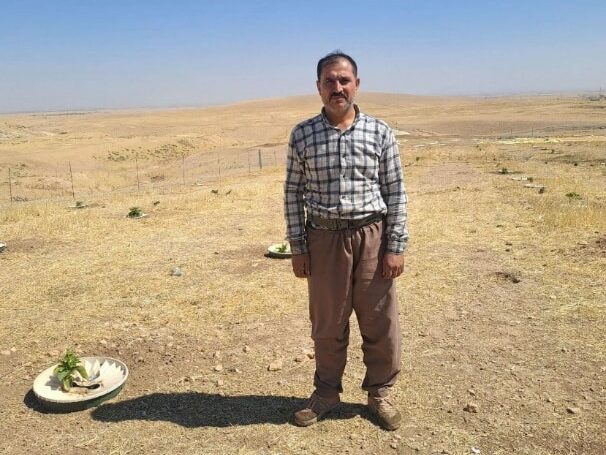
Amin’s farm became a model of success and he actively participated in community programmes, sharing his knowledge of sustainable agriculture. His efforts not only ensured the survival of his crops, but also inspired others by demonstrating the impact of innovative technologies.
Kitui County, one of Kenya’s semi-arid regions, is facing severe challenges from climate change. Rising temperatures, erratic rainfall, prolonged droughts, floods, and invasive species are taking a heavy toll on the region’s ecosystems and livelihoods. With agriculture and natural resources under increasing strain, many residents have turned to activities such as tree logging and charcoal burning, further exacerbating land degradation and deforestation. These unsustainable practices have created a vicious cycle of environmental decline, making it critical to take action.
In response, Dorcas Kenya, in collaboration with Muangeni Rural Development Programme, launched the Kitui Climate Change Project in 2020. This initiative aims to enhance the climate resilience of communities through comprehensive interventions, such as behavior change, policy advocacy, and ecosystem restoration. The project aligns with global sustainability goals, including SDG 13 (climate action), SDG 1 (no poverty), and SDG 2 (zero hunger), promoting sustainable development practices to safeguard the future.
Afforestation efforts through schools
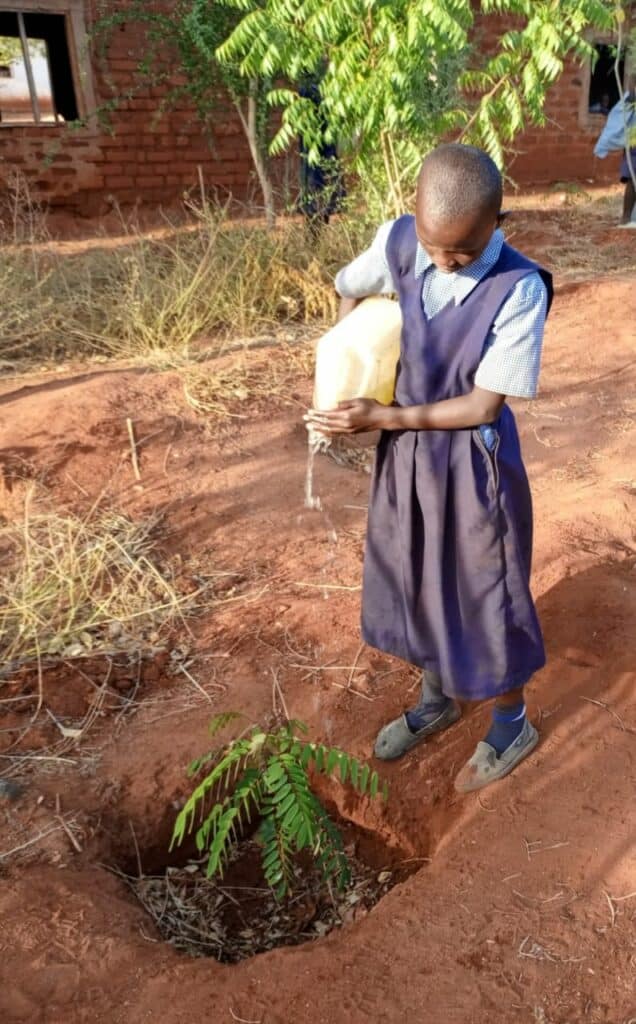
A key element of the Kitui Climate Change Project is afforestation, carried out through schools in the region. Since 2021, over 150 schools in Kitui South have participated in the tree-planting initiative, which is designed to address water scarcity challenges while fostering environmental stewardship among students. Tree planting is strategically aligned with the short rain season (October, November, December) when the climate is more stable, ensuring the newly planted trees benefit from two rainy seasons and thus have higher survival rates.
Under the slogan “A Child, A Tree,” each student is encouraged to adopt and care for a tree for a full year. This approach not only fosters environmental responsibility among the younger generation but also ensures that the trees are well-maintained. Each school receives 100 seedlings annually and, upon successfully nurturing them, qualifies for additional seedlings in subsequent years.
Notable success and impact
To date, the project has seen the survival of approximately 36,000 out of 55,000 trees planted between 2021 and 2022, representing a survival rate of 65-70 per cent. Schools like Athi Primary now boast over 300 thriving trees, thanks to the commitment of students, who even carry water from home to ensure their survival during dry spells. Additionally, Dorcas has invested in infrastructure like a 50,000m³ water pan at Kiange Mixed Secondary School to provide a reliable water source during droughts.
This afforestation initiative not only contributes to Kenya’s national goal of planting 15 billion trees by 2032 but also plays a crucial role in restoring degraded landscapes, reducing biodiversity loss, and promoting decarbonisation. By involving school children, Dorcas is inspiring the next generation of conservationists, ensuring that the fight against climate change continues for years to come.
Through such innovative projects, Dorcas Kenya continues to foster sustainable development and climate adaptation in regions that are vulnerable, empowering communities to build a more resilient and environmentally conscious future.
Dorcas supports older people through our Community Safety Net (CSN) approach. This involves mobilising different actors and organisations so that everyone is involved. Only by working together can we provide the right support to ensure older people can live with dignity and flourish. In our CSN report, we found that involving churches as natural allies is one of the best practices in this approach.
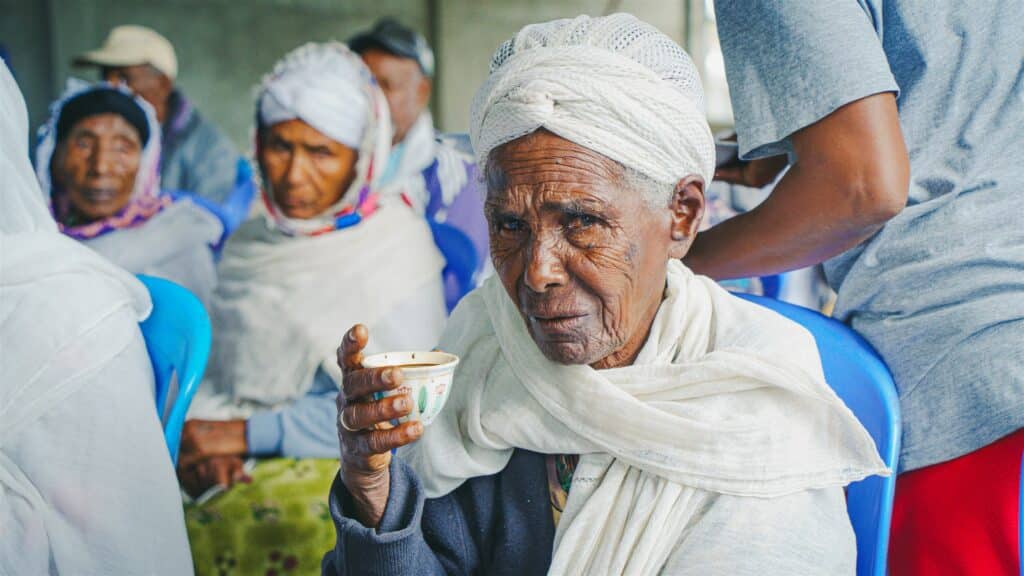
One such partner is the Ethiopian Guenet Church (EGC) in Bishoftu. Dorcas Ethiopia runs a project in Bishoftu that supports around 150 older people, with the EGC playing a key role. The majority of participants in the project are women over the age of 60, representing up to 75 per cent. Most of them are widows. After losing their husbands, Ethiopian women often face considerable challenges, as many have no formal education and were financially dependent on their spouses. They are left to manage on their own, often with a small pension and little or no other income.
Dorcas and the EGC support these project participants in a number of ways. They receive practical assistance such as food, clothing, blankets and medical check-ups. Bedridden older people receive regular visits and support in their homes. Their clothes are washed and household chores are done. This is done by volunteers from the EGC, but young people are also involved to encourage contact between the generations.
As well as practical support, the project offers a range of activities for older people. There are weekly coffee ceremonies and holidays are celebrated together. On special occasions such as Christmas and Easter, the older people receive something extra: a chicken, eggs and flour to make injera (a traditional dish).
Dorcas and the EGC also encourage the community to care for their older people and organise training sessions to empower older people to advocate for themselves.
We also invest in partnerships, including with the government, to support older people in securing safe, private housing, to advocate for their rights and to raise awareness on special occasions such as the international day of older persons.
In Kajiado South, Kenya, the Ilaramatak Esukuta Village Savings and Loan Association (VSLA), a women’s savings group comprising 38 women, is a symbol of hope and resilience. This group is one of 30 VSLAs supported by Dorcas Kenya through the Loitoktok Future for Children project in partnership with Shokut Naretoi community programme organisation. The project uses the Dorcas Future for Children approach, which focuses on life skills for children and parents, household strengthening, community child protection and advocacy for improved government child protection policies.
The project reaches 235 households, identified through a community-led participatory process and grouped by geographical location to facilitate training and follow-up. These households have been through six consecutive failed rainy seasons from October 2020 to December 2023, resulting in devastating drought conditions across the Horn of Africa. The impact has been severe, leading to livestock losses, food insecurity and reduced access to education and healthcare for many families.
An integrated approach to empowerment
The process began with training in positive parenting, where parents learned essential skills such as communicating clearly and becoming role models for their children. Households were also trained in entrepreneurship, smart agriculture, financial literacy and child rights and protection. These small groups eventually evolved into VSLAs, with the Ilaramatak Esukuta VSLA being the first to be trained and officially formed on 24 March 2021.
Initially consisting of 38 women, 15% of whom were subsistence farmers, petty traders or casual labourers, and 60% of whom were housewives or unemployed, the group faced significant economic challenges. However, their determination and the training they received paid off. From May 2021 to May 2022, the group saved a substantial amount, issued numerous loans, and made a considerable profit. In their second cycle, the group saved a larger amount and made an even greater profit from loans.
The financial success of the group has been transformational. Members have gained confidence in managing their finances and many have opened personal bank accounts, further increasing their financial independence.
Impact beyond finance
The Ilaramatak Esukuta VSLA has promoted social growth and economic empowerment among its members. Business growth within the group has had a positive ripple effect, with their children attending school more regularly, leading to better learning outcomes. The group’s culture of savings and financial management has also deepened, with members consistently saving a notable amount per week.
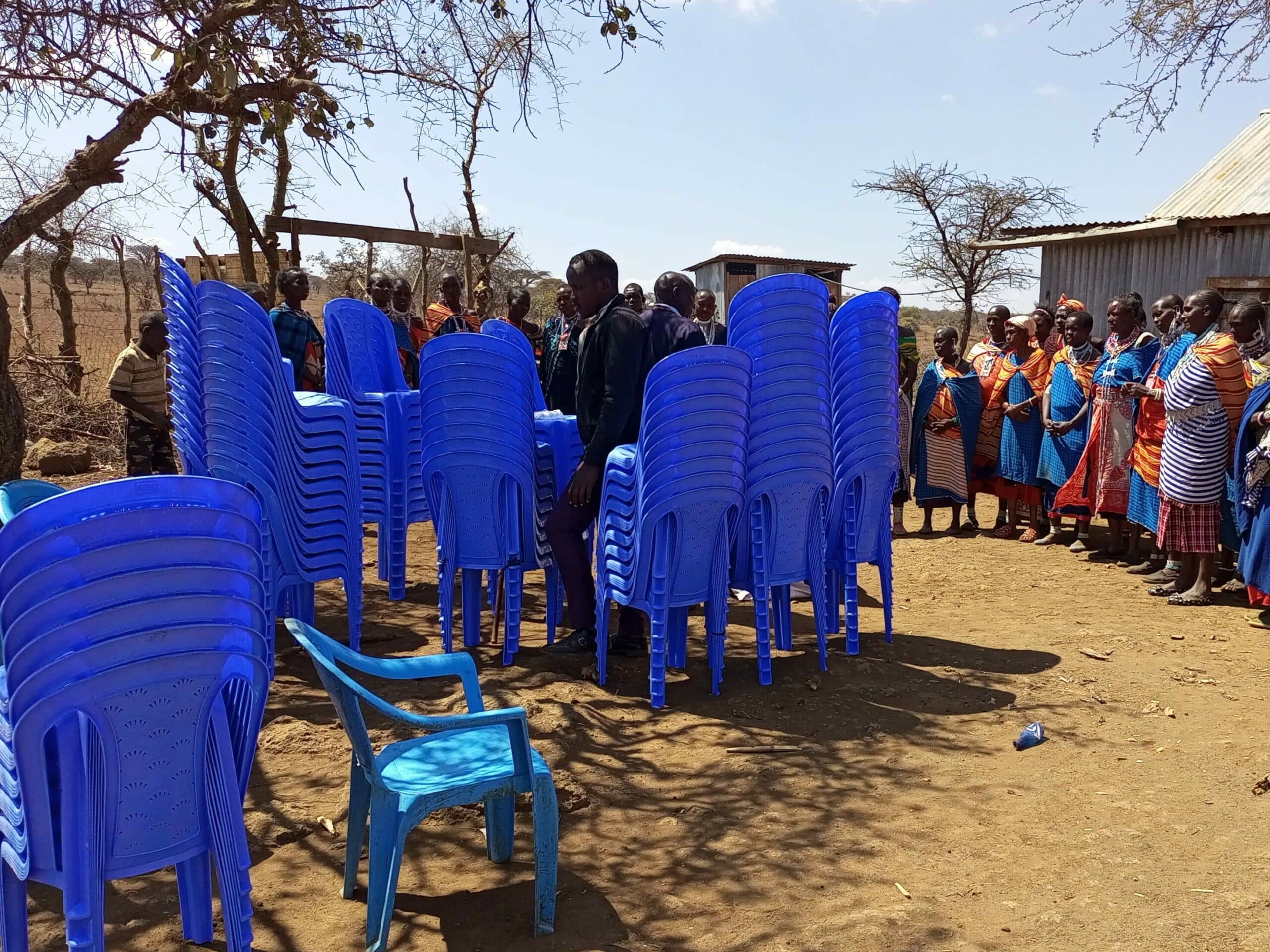
Together, the group invested in a 100-seat tent and 100 plastic chairs, which they rent out for social events. This income-generating activity (IGA) has provided additional financial support for members. Individually, members have started or expanded their businesses, attributing their success to the skills they learned through VSLA training. For example, Somoina expanded her charcoal business and now saves a significant amount per week. Through backyard gardening and selling excess vegetables to the community, Katito Elizabeth has improved her family’s nutrition and income.
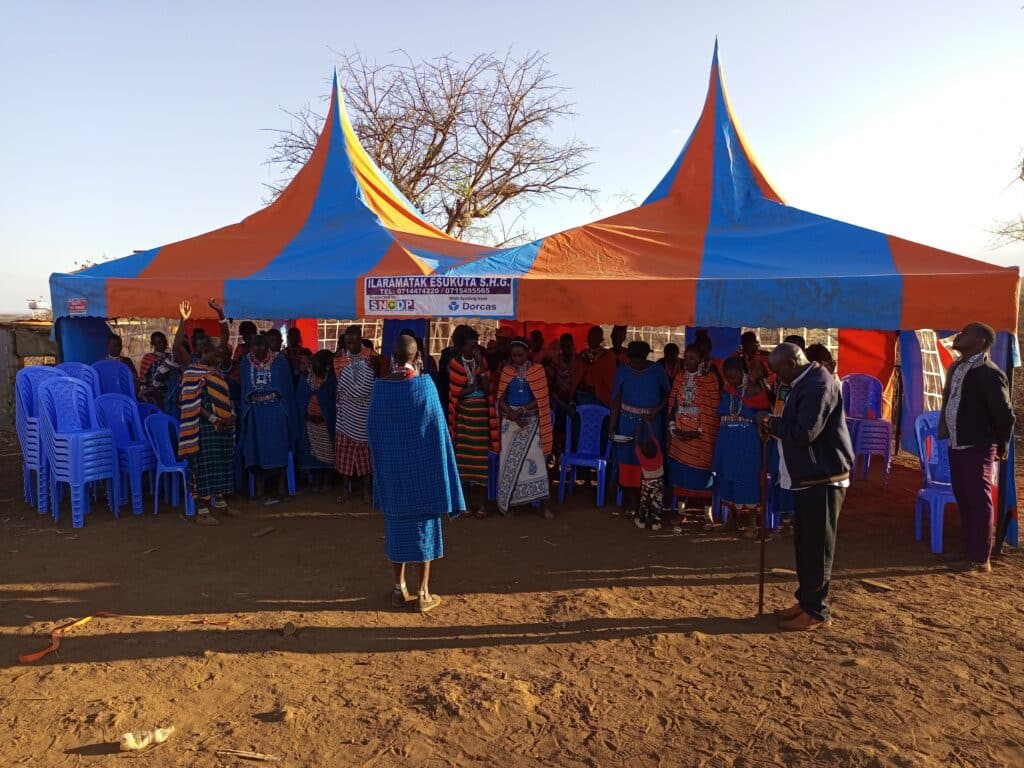
Mary, the group’s chairperson, describes how VSLA’s leadership training transformed her from a shy person to a confident leader: ‘Before joining the VSLA, I was a very shy person, someone who avoided speaking in public or taking on leadership roles. But through the leadership training, I started to build my self-esteem and believe in my abilities. It was a gradual process, but eventually I found myself taking on the role of chairperson for our group. At 57 years old, I never imagined I would be a leader, let alone one who could speak confidently and resolve conflicts within a group. This experience has opened my eyes to my potential and I now believe that I can aspire to any position within the group or in the wider community. The transformation has been incredible and has given me a sense of purpose and confidence that I never had before.’
As the Ilaramatak Esukuta VSLA enters its third cycle, all of the original members remain active. The group now plans to support members without IGAs to set up their own, and they are looking to buy another tent to increase their income.
Ilaramatak Esukuta’s story of resilience, empowerment and hope is a reflection of Dorcas’ Future for Children’s profound impact in transforming lives and communities.
Human trafficking is one of the most pressing social issues in Romania, one of the top five EU countries in terms of victims. Dorcas Romania is tackling this pressing issue through a comprehensive project focusing on key areas: awareness raising and prevention, building and strengthening partnerships with stakeholders, handling direct cases and reducing the vulnerability of young people at risk.
Trafficking in persons in Romania
Romania’s geographical location and socio-economic challenges make it a prime location for human trafficking. The main destinations for Romanian victims of trafficking include Italy, France, Germany, Spain and the United Kingdom. Exploitation takes place in various sectors, including prostitution, agriculture, construction and domestic work. Children make up more than a third of identified trafficked persons in Romania. The recruitment of children for trafficking has increased through the internet and social media.
Traffickers in Romania are largely Romanian nationals operating as part of organised crime groups. Their exploitation of Romanian women and children is mainly in the form of sex trafficking within Romania and to other European countries. Traffickers often lure victims with the promise of a better life abroad by using the ‘lover boy’ strategy, in which they feign romantic interest.
Several factors contribute to the extent of human trafficking in Romania:
- Low digital literacy: Many Romanians lack the skills to verify online information, making them easy targets for human traffickers.
- Social media: Young people, often unsupervised online, are vulnerable to manipulation and recruitment by traffickers.
- Lack of educational programmes: Rural areas in particular suffer from a lack of human trafficking prevention programmes in schools.
- High NEET rates: Young people who are not in education, employment or training (NEET) are at increased risk of poverty and social exclusion, making them prime targets for traffickers.
Dorcas Romania’s anti-trafficking programme
Working in the at-risk regions of Vaslui, Botoșani, and Bihor, Dorcas Romania has developed a multi-faceted programme with a focus on:
- Raising awareness: Educational initiatives in schools aim to increase digital literacy and awareness of the risks of online trafficking. Dorcas Romania uses engaging materials such as films and interactive sessions, and works with local stakeholders to spread anti-trafficking messages.
- Strengthening networks: Expanding collaborations with local, regional, and national stakeholders to increase the effectiveness of anti-trafficking efforts.
- Support for victims: Providing tailored medical, psychological, social and material support to actual and potential victims. Through interviews and assessments, Dorcas Romania identifies the specific needs of victims and provides comprehensive support. Victims are also supported to find employment and housing, which are crucial steps towards reintegration into society.
- Education and employment: Creating opportunities for vulnerable young people to gain education and employment, thereby reducing their risk of falling prey to traffickers. Dorcas Romania offers programmes that encourage entrepreneurship and income generation, helping participants to build stable and independent lives.
Elena’s* journey
Elena’s story illustrates the impact of Dorcas Romania’s efforts. Growing up in a financially unstable and abusive household, Elena’s life was full of challenges. When she was 18, her parents’ separation led her to Oradea, where she was forced into prostitution. Despite her attempts to escape, financial pressure and abusive relationships trapped her in a cycle of exploitation.
Elena’s turning point came when she reached out to her mother for help and eventually connected with Dorcas Romania through the intervention of a counsellor named Cristina. This connection provided Elena with the emotional and practical support she needed to rebuild her life.
With the support of the project, Elena secured a job and received support for her recovery. Reflecting on her journey, Elena says, ‘After 28 years, I can finally say that my life has meaning now. I am truly happy and content, surrounded by the love and prayers of my family and co-workers.’
For those in need
Dorcas Romania’s anti-trafficking project is an example of a holistic and multi-faceted approach to a deeply entrenched problem. By addressing the root causes of vulnerability and providing comprehensive support to victims, the project not only rescues individuals but also empowers communities. As Elena’s story shows, with the right support and opportunities, the road to recovery is possible.
The scale of the challenges posed by human trafficking in Romania is considerable and requires all stakeholders and partners to play their part. Together with local, regional and national stakeholders, Dorcas Romania is committed to this issue and will continue to fight human trafficking to support those in need.
*Not her real name. At the participants request, we have used a pseudonym for this contribution.