As a result of the ongoing conflict in Ukraine, most Ukrainians have experienced increased anxiety and decreased psychological well-being. Therefore, Dorcas Ukraine is focusing on initiatives to improve the mental health of people in the affected regions through mental health and psychosocial support (MHPSS).
Nadiia is one of the project participants supported by Dorcas through MHPSS. She attended a psychological support group with her neighbour. She enjoyed talking to like-minded people, but felt she needed specialist support. ‘The passing of my husband put a lot of pressure on me, and I realised that I needed to deal with my feelings. I had heard good things about counselling from psychologist Anna, so I went to see her,’ she explains.
When her grandson went off to defend the country, Nadiia was overcome with feelings of fear and needed to deal with them. ‘With the help of exercises from my psychologist, I reduced my fear. But the conflict continues, and I still live in constant stress. In difficult moments, I remember what Anna taught me. Drawing, planting flowers in the garden and observing nature are ways to distract myself.’
With the support she received, Nadiia was able to feel the ground under her feet again. In the realities of conflict, such support is invaluable in maintaining hope and well-being.
Ahmed, a 20-year-old young man from Abosto Kebele in Shashamene Town, Ethiopia, faced significant challenges early in life. He dropped out of school due to financial difficulties and moved to Addis Ababa in search of work. He found a job as a waiter in a café, where he worked for five months. Despite his efforts, his meagre income was not enough to cover basic living expenses such as rent, food and clothing. Struggling to make ends meet, he returned to his family in Shashamene.
Discovering the SHINES project
Fortunately, while in Shashamene, Ahmed came across information about Dorcas Ethiopia’s SHINES project, which offered vocational training to unemployed youth. Ahmed was selected as one of 670 participants for a five-day training session. The training, facilitated by experts from DOT Ethiopia, covered key areas such as business development skills, life skills and entrepreneurship.
Reflecting on his experience, Ahmed said: ‘The five-day training helped me understand my potential, set clear goals and develop a vision for my future. I gained essential skills in business planning, teamwork and the positive attitude needed to succeed in the business world. I can now map my business assets, communicate effectively, manage stress and make informed decisions to succeed in life and business.’
Growing the business and providing employment
Inspired by the training, Ahmed decided to use his five months’ experience in Addis Ababa to start a breakfast and snack service business. Although he struggled to secure start-up capital from credit service providers due to a lack of collateral, he turned to his family, relatives and friends for support. With their support, he raised enough money to start the business. Ahmed’s business began to flourish. He employed three local youths, saved some money and earned his own income.
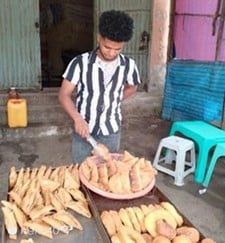
Expressing his satisfaction with his progress, Ahmed said: ‘I am happy to provide employment for the young people who work with me. I have become a reason for them to lead a productive life without having to migrate. I have bought a modern machine to make chips from local potatoes. I now have substantial savings in my bank account and continue to save. In the near future, I plan to expand my fast-food business into a café near the main road.’
Ahmed is not only transforming his own life, he is also contributing to the success and progress of his employees. He is optimistic about his future and the impact he can continue to have on his community.
Today marks three years since the full-scale invasion of Ukraine began. Over this time, many have endured immense suffering and loss. Yet despite these challenges, Dorcas Ukraine has seen the extraordinary resilience of our project participants, who continue to show unwavering strength.
Meet Tetiana (60)
Tetiana and her husband Serhii lived in Pologi, a town occupied in 2022. After the occupation, they were evacuated to Zaporizhzhia. Tetiana recounts: ‘There was constant shelling and we ran out of food, money and medicine for Serhii, who had suffered a stroke. With no communication or electricity, we had to travel across the city just to charge our phones. We left everything behind, taking only our cats.’
Reflecting on the last few years, Tetiana shares: ‘We have endured much. Though we carry on with our daily lives, we’re constantly confronted with the cycle of mourning what we’ve lost, followed by healing and growing stronger. I’ve had to let go of the pain of losing our home, which is now occupied by others.’
A new beginning in Zaporizhzhia
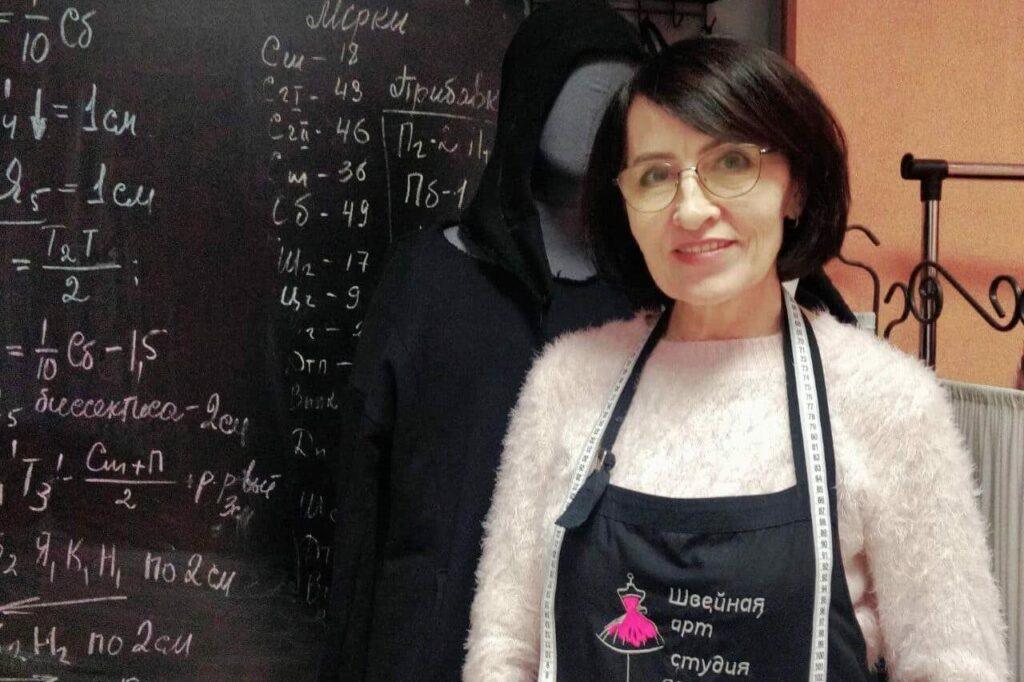
In Zaporizhzhia, Tetiana connected with Dorcas Ukraine through our ‘restoring hope’ project. Through this initiative, she enrolled in a sewing course, which has contributed to improving her family’s livelihood. Learning to sew had always been a dream of Tetiana, and despite the challenges, she was able to make it a reality.
Tetiana now plans to start by repairing clothes before moving on to tailoring. Together with her daughter, she also aims to create adaptive clothing for the wounded in hospitals.
At Dorcas, we remain committed to supporting people like Tetiana to rebuild their lives with dignity and hope. Her story is a reminder that even in the face of immense loss, new beginnings are possible.
In Kajiado South, Kenya, the Ilaramatak Esukuta Village Savings and Loan Association (VSLA), a women’s savings group comprising 38 women, is a symbol of hope and resilience. This group is one of 30 VSLAs supported by Dorcas Kenya through the Loitoktok Future for Children project in partnership with Shokut Naretoi community programme organisation. The project uses the Dorcas Future for Children approach, which focuses on life skills for children and parents, household strengthening, community child protection and advocacy for improved government child protection policies.
The project reaches 235 households, identified through a community-led participatory process and grouped by geographical location to facilitate training and follow-up. These households have been through six consecutive failed rainy seasons from October 2020 to December 2023, resulting in devastating drought conditions across the Horn of Africa. The impact has been severe, leading to livestock losses, food insecurity and reduced access to education and healthcare for many families.
An integrated approach to empowerment
The process began with training in positive parenting, where parents learned essential skills such as communicating clearly and becoming role models for their children. Households were also trained in entrepreneurship, smart agriculture, financial literacy and child rights and protection. These small groups eventually evolved into VSLAs, with the Ilaramatak Esukuta VSLA being the first to be trained and officially formed on 24 March 2021.
Initially consisting of 38 women, 15% of whom were subsistence farmers, petty traders or casual labourers, and 60% of whom were housewives or unemployed, the group faced significant economic challenges. However, their determination and the training they received paid off. From May 2021 to May 2022, the group saved a substantial amount, issued numerous loans, and made a considerable profit. In their second cycle, the group saved a larger amount and made an even greater profit from loans.
The financial success of the group has been transformational. Members have gained confidence in managing their finances and many have opened personal bank accounts, further increasing their financial independence.
Impact beyond finance
The Ilaramatak Esukuta VSLA has promoted social growth and economic empowerment among its members. Business growth within the group has had a positive ripple effect, with their children attending school more regularly, leading to better learning outcomes. The group’s culture of savings and financial management has also deepened, with members consistently saving a notable amount per week.
Together, the group invested in a 100-seat tent and 100 plastic chairs, which they rent out for social events. This income-generating activity (IGA) has provided additional financial support for members. Individually, members have started or expanded their businesses, attributing their success to the skills they learned through VSLA training. For example, Somoina expanded her charcoal business and now saves a significant amount per week. Through backyard gardening and selling excess vegetables to the community, Katito Elizabeth has improved her family’s nutrition and income.
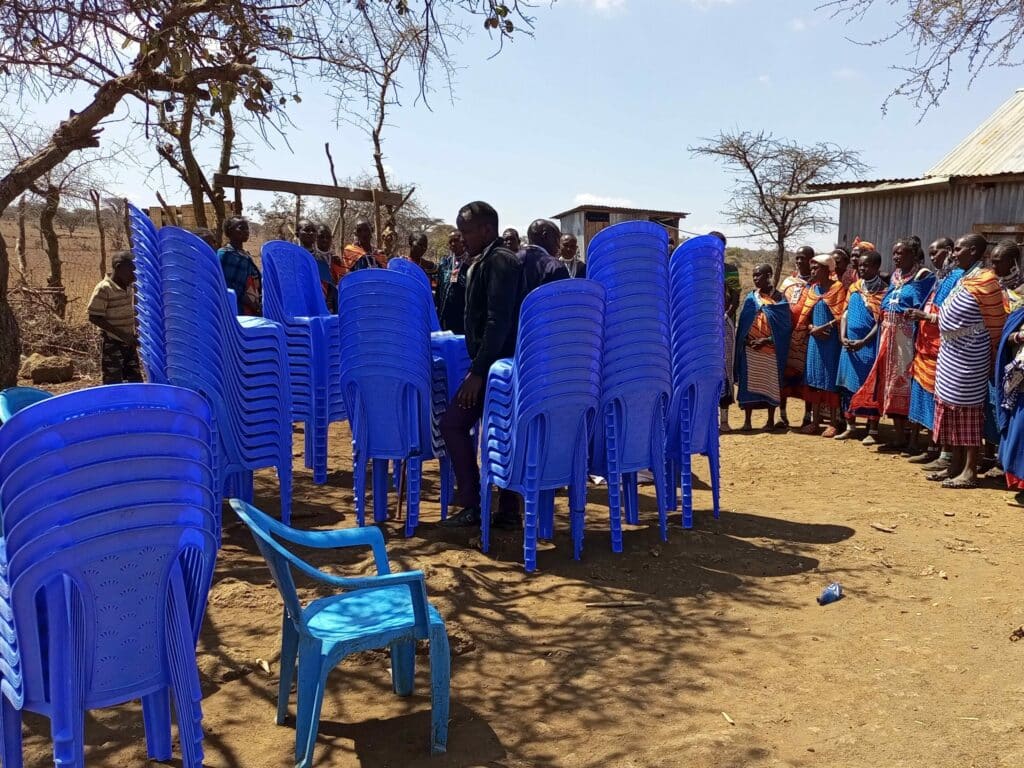
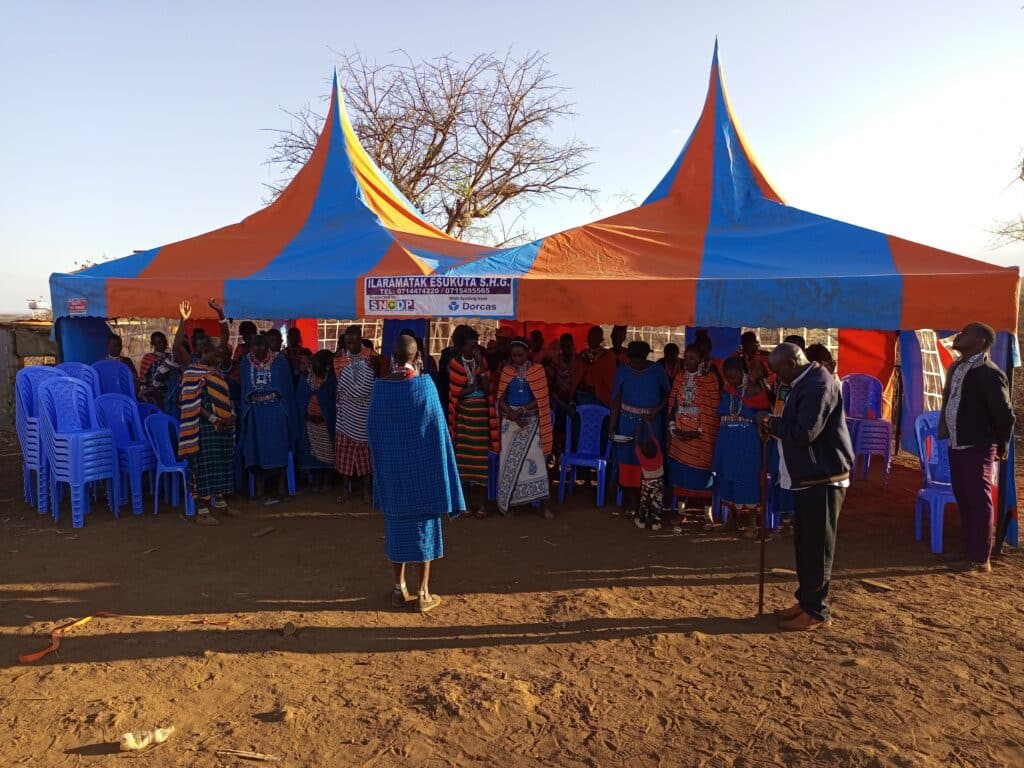
Mary, the group’s chairperson, describes how VSLA’s leadership training transformed her from a shy person to a confident leader: ‘Before joining the VSLA, I was a very shy person, someone who avoided speaking in public or taking on leadership roles. But through the leadership training, I started to build my self-esteem and believe in my abilities. It was a gradual process, but eventually I found myself taking on the role of chairperson for our group. At 57 years old, I never imagined I would be a leader, let alone one who could speak confidently and resolve conflicts within a group. This experience has opened my eyes to my potential and I now believe that I can aspire to any position within the group or in the wider community. The transformation has been incredible and has given me a sense of purpose and confidence that I never had before.’
As the Ilaramatak Esukuta VSLA enters its third cycle, all of the original members remain active. The group now plans to support members without IGAs to set up their own, and they are looking to buy another tent to increase their income.
Ilaramatak Esukuta’s story of resilience, empowerment and hope is a reflection of Dorcas’ Future for Children’s profound impact in transforming lives and communities.
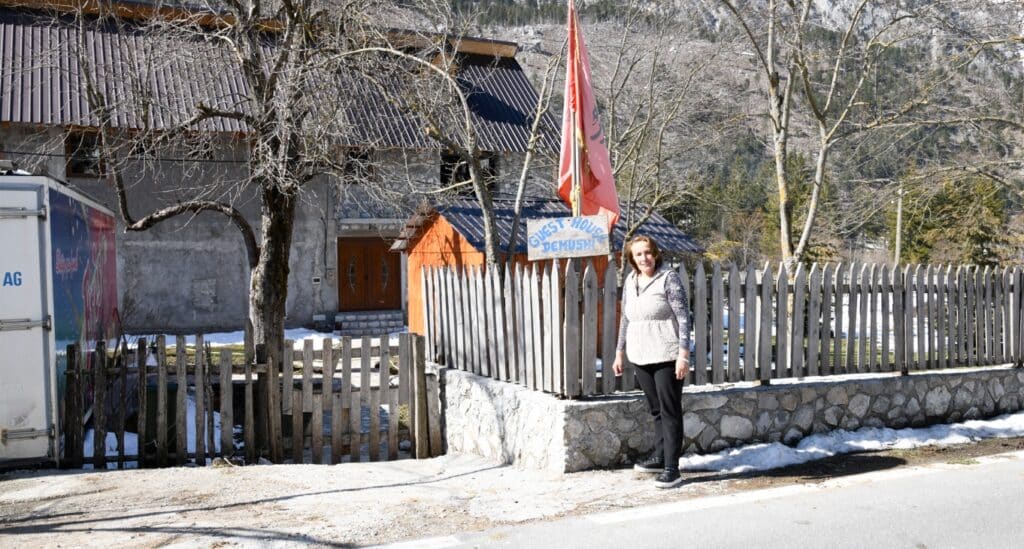
Edmira (51) lives with her husband and three children in the village of Valbona, Tropoja, Albania. A few years ago, she participated in a project by Dorcas Albania, receiving support in the form of potato seeds. This initial assistance marked the beginning of a transformative journey for her family.
As time passed, Edmira generated a good income from her agricultural efforts. Her husband, a tourist guide, led hikers through the scenic mountains. Recognising the potential of tourism, Edmira and her family decided to convert their home into a guesthouse to accommodate visitors.
With financial support from the TICP Programme, funded by Dorcas and Kom over en help, Edmira was able to apply for a soft loan under the Enterprising People and Communities (EPC) component. This loan enabled her to renovate their house into a guesthouse, aiming to boost the family’s income.
Edmira’s determination to grow her business and develop her entrepreneurial skills was unwavering. The soft loan allowed her to enhance the quality of her guesthouse, improving both service and accommodation for tourists. She also participated in capacity-building activities focused on tourism service quality, management, business planning, and technical assistance.
Today, Edmira is a shining example for other women aspiring to start their own businesses and invest in their communities. Her business is thriving, thanks to the initial support she received. She now mentors other women, offering support and guidance to those who wish to follow in her footsteps.
In her guesthouse, tourists can enjoy comfortable accommodation and delicious meals prepared with organic produce grown by Edmira. Her prices are competitive, and she is dedicated to providing the best service to visitors exploring Valbona and its surroundings. Her husband continues to work as a tourist guide, assisting travellers with their luggage on horseback.
Edmira and her family are deeply grateful for the help they received through the programme, which has enabled them to build a successful business and contribute to their community.
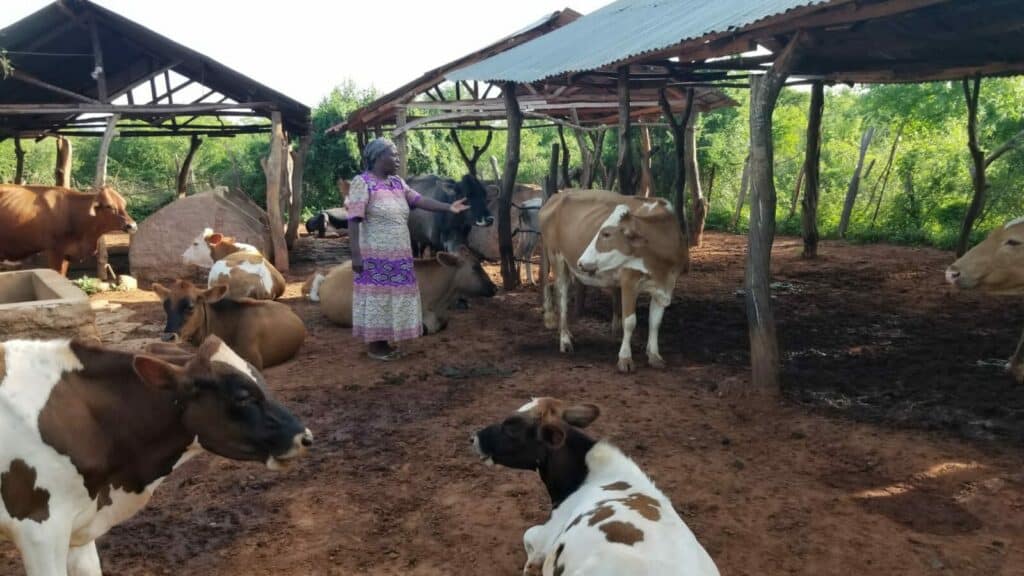
‘Welcome to my farm’, says a proud 79-year-old Bernard Mutisya. ‘I’m blessed with six daughters and a son, and we have grandchildren too.’
‘I used to keep five indigenous cows that each produced two litres of milk per day and I grew some crops like maise. But my crops regularly failed due to severe drought. Then I received commercialised pasture and dairy farming training through the Farmer Field School project. I set aside two hectares of land to use as pasture and I sold the native cows and bought three Ayrshire cows. Our farm expanded thanks to the training and extension options we received, and we started to grow drought-resistant grass and crops for silage’, explains Bernard.
‘Now we have twenty cows: seven lactating cows, four calves and nine heifers’, says Bernard’s wife Philomena. ‘We produce more than 50 litres of milk each day, which we sell to Kitise Farmers’ Cooperative Society’, adds Bernhard as he continues their story.
‘We are grateful to Dorcas for supporting the installation of a mini-processing plant at the cooperative society where the milk is processed into yoghurt and a local dairy product mala. Thanks to the plant, I have a reliable market for my milk and a good income. That means I can now invest more in our dairy business to create opportunities for my children and grandchildren. My dream is a more mechanised farm that can produce homemade supplements, including dairy meal, maise germ and maise bran. And I’d like to have more pasture, improve my dairy breeds and hire a qualified vet’, concludes Bernard enthusiastically.
Sargon (39) was born and grew up in Bagdad. But in 2006, his family fled due to the conflict and moved to Dohuk. Sargon, who had recently graduated, experienced first-hand what it was like to be internally displaced and live in a new place where you have nothing.
In 2018, he joined Dorcas in Dohuk. He leads a team in the area of domestic violence and child abuse. Sargon experiences the Dorcas working environment as a family that allows him to grow and he transfers the kindness he experiences there to the people his team helps. ‘I am happy to wake up every day and know that my work for Dorcas is not just a job, but a thing that I love to do.
Safety is definitely not something you can take for granted in Iraq. Many women experience domestic violence, rape and enslavement, and child abuse occurs far too often. Ensuring the victims of such violence and abuse receive access to protection and appropriate support is far from easy. ‘We help people acquire the papers they need to obtain the right help. For example, children need papers to go to school or divorced women need a divorce contract to be able to live independent lives. We also help people returning home to obtain the documents they need to reclaim ownership of their property even if the house where they once lived no longer stands.’
Although Sargon is proud of everything his team does, he realises they still have a long way to go.
‘Of all displaced people in Iraq, 80% still have no papers and so no access to all kinds of support and assistance. We’re not there yet’, he says.
Haifa lives in Aden with her husband and has two children. She holds a degree in business administration and is the founder of our partner organisation LOYAC.
Back in 2011, she briefly worked on a project with another international NGO, which she really enjoyed. She then went into banking, but that was not where her heart lay. That was the moment she realised humanitarian work was her vocation and established LOYAC. This NGO has supported hundreds of people, but one story, in particular, sticks in her mind.
Abdullah’s story
‘A few years ago we visited an orphanage in Shaab. There I met Abdullah, a young boy who had already experienced so many intense things in life. His parents had divorced and when his mother remarried he went to live with his father, a soldier. Unfortunately, his father died one day during a fight and Abdullah ended up in the orphanage.
Due to all these traumatic events, Abdullah suffered from a psychological disorder. He was also very sad about losing his father. I was very touched by Abdullah’s story and offered him psychological counselling. At first, Abdullah was very withdrawn and only wanted to draw during the sessions. He drew the same thing every time: a soldier in a field and a man on the ground riddled with bullets. This is how Abdullah expressed his grief at losing his father.
However, Abdullah has gradually learned to talk about things. His grades have also improved and he is increasingly excited about life. When he grows up, he wants to become a pilot!’
Future dreams
Haifa is convinced that Yemen has a brighter future. ‘Peace will prevail and Yemen will once again become a happy country. We wish it, strive for it and dream it. We all hope that our wish will come true.’
In the Zummar sub-district in Iraq, Dorcas provided agricultural assets and supported the improvement of livelihoods for income generation for returnees and internally displaced persons. This project was done in partnership with World Vision International and Harikar NGO and was funded by the Iraq humanitarian fund of OCHA. Othman and Ibrahim, two project participants, share how this project has benefited them.
When Othman returned to his village after the IS conflict, his agricultural business and land had been destroyed. He struggled to get enough income for his family. Dorcas provided Othman with agriculture inputs, training and an irrigation system to be able to rebuild the family’s agricultural business.
Othman describes: ‘We didn’t have enough income to cover our expenditures, but after I received the agricultural inputs from Dorcas, the expenditures have been reduced. This project has made me more self-reliant, and it has had a very good impact on the community.’
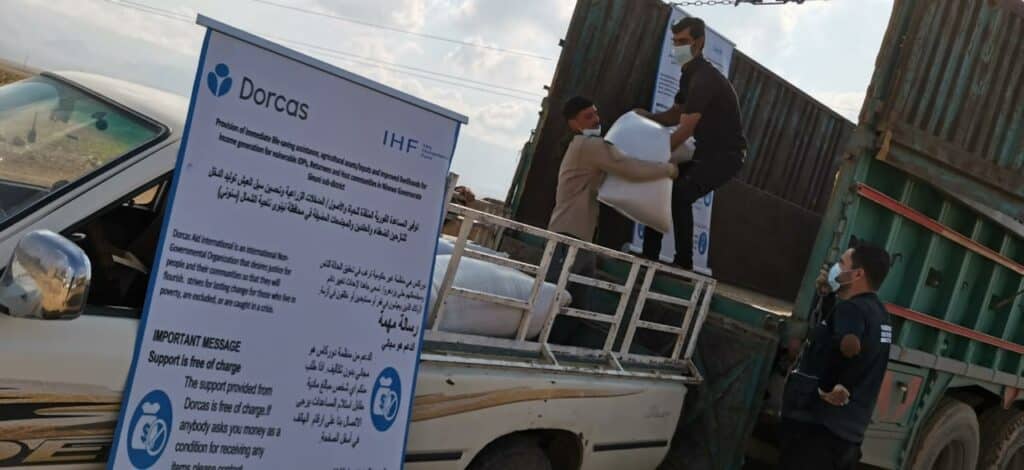
Ibrahim also returned to his village after the conflict. When he arrived, he did not have enough income to purchase seeds, fertilisers and to plow the land before planting. As part of the sustainable livelihood project, Ibrahim received rain-fed inputs and training.
Ibrahim describes: ‘Through this support, we have recultivated our lands. Due to the high prices of seeds, fertilisers and pesticides we were not able to purchase this, but now we are on the right track in our agricultural business.
Water affects us all. Clean water is a fundamental human need and an essential resource for life. Ensuring access to safe and clean water is not only important for public health and well-being, but it also impacts economic development and environmental sustainability. Therefore, it is critical to prioritise the provision of clean water to communities worldwide.
In Mozambique, the limited access to safe drinking water causes major problems. Dorcas Mozambique has improved the access of safe and clean water in the area with the project waterTime. With the token tap, members of the community can get clean water for a small fee. People who can’t afford this, get the water for free. The proceeds go to the maintenance of the water system and are used to train members of the community on how to maintain the system. In this way, Dorcas also creates jobs in the area.