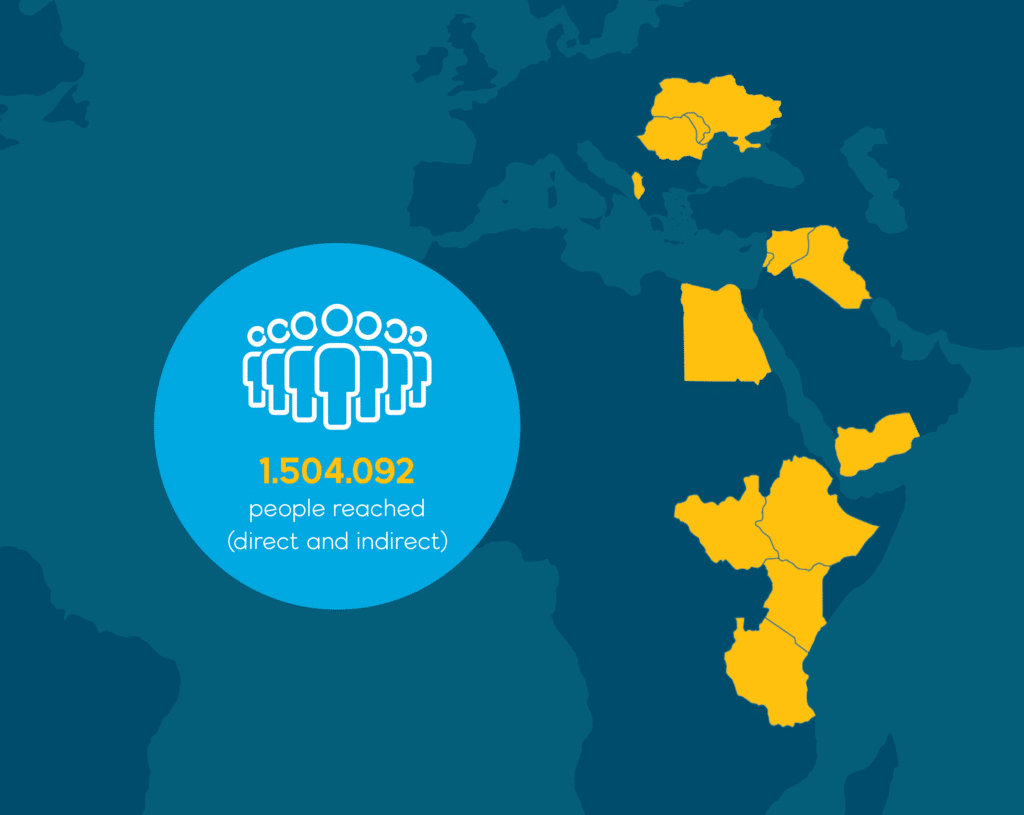
Dorcas Yemen has joined international and national organisations in signing a new joint statement warning that families across Yemen are running out of options as hunger deepens and resilience continues to erode.
The statement highlights the growing impact of conflict, economic decline, climate-related shocks and severe funding shortages. Millions of people are facing acute food insecurity, while children, pregnant women and breastfeeding mothers are among those most at risk.
With humanitarian assistance already reduced, humanitarian organisations are calling on the international community to provide urgent funding, ensure safe and unhindered humanitarian access, and invest in local organisations that are best placed to respond to the needs of their communities.
Dorcas continues to work alongside local partners in Yemen to support people and communities affected by the crisis, strengthen resilience and contribute to protection, recovery and stability. The joint statement underlines the need for collective action to prevent further deterioration and to help families move towards a safer and more secure future.
In 2025, Dorcas celebrated 45 years of standing alongside people in need across Eastern Africa, Eastern Europe and the Middle East. Our annual report 2025 tells that story: one person, one family, one community at a time.
William, a pastor and farmer in rural Tanzania, knows what it means to stand alongside people. Before he joined a Dorcas project, his family could barely make ends meet. Through training and support, he diversified his crops, improved his livestock and transformed his small plot into a thriving farm. His wife Elizabeth puts it simply: ‘I can choose what we eat from our own farm, and we can sell the rest.’ William now trains other farmers in his village.
His story of hope is just one of the many our projects made possible in 2025. In Lebanon and Syria, children learned in safe spaces with full stomachs. Roma children in Ukraine found hope through sport and psychosocial support. In Iraq, farmers facing drought and shrinking water sources strengthened their food security through climate-smart agriculture and water-efficient farming. And in Tanzania, Lucia received fruit trees and training, used her first harvest income to buy chickens, and built a chain of growth entirely by herself.
Our commitment to the one person in need goes all the way back to where Dorcas began. In a special interview, our founder, Dirk-Jan Groot, and his wife, Janneke, share what first moved them to act 45 years ago. And today, a whole community continues in the path they set out on: donors, churches, volunteers, businesses, Dorcas shop customers and local partners all play a role in making our work possible.
Forty-five years on, the conviction that Dirk-Jan and Janneke carried from the outset still drives everything we do: we can make a difference for that one person in need. Read our annual report to find out how we did that in 2025.
Across the world, many women continue to face barriers that limit their full participation in society, including in economic life. Limited access to markets, finance, and decision-making restricts their opportunities. Creating equal economic opportunities requires deliberate action.
At Dorcas, inclusion is central to our work. We apply a gender lens and an intersectional approach in selecting project participants, considering age, disability, poverty, and ethnicity to identify those most at risk of exclusion. Through this approach, we strengthen women’s economic participation.
In Dorcas’ economic development work, value chains play a key role. These programmes are designed to strengthen the participation of marginalised groups, including women, by providing chances to learn new skills, take part in production and sales, manage savings and finances, and have a stronger voice in household and community decisions. To see whether these intentions are realised, we studied our value chain projects across Tanzania, Kenya, and Ethiopia. While the study included multiple marginalised groups, this article focuses on what we found about women.
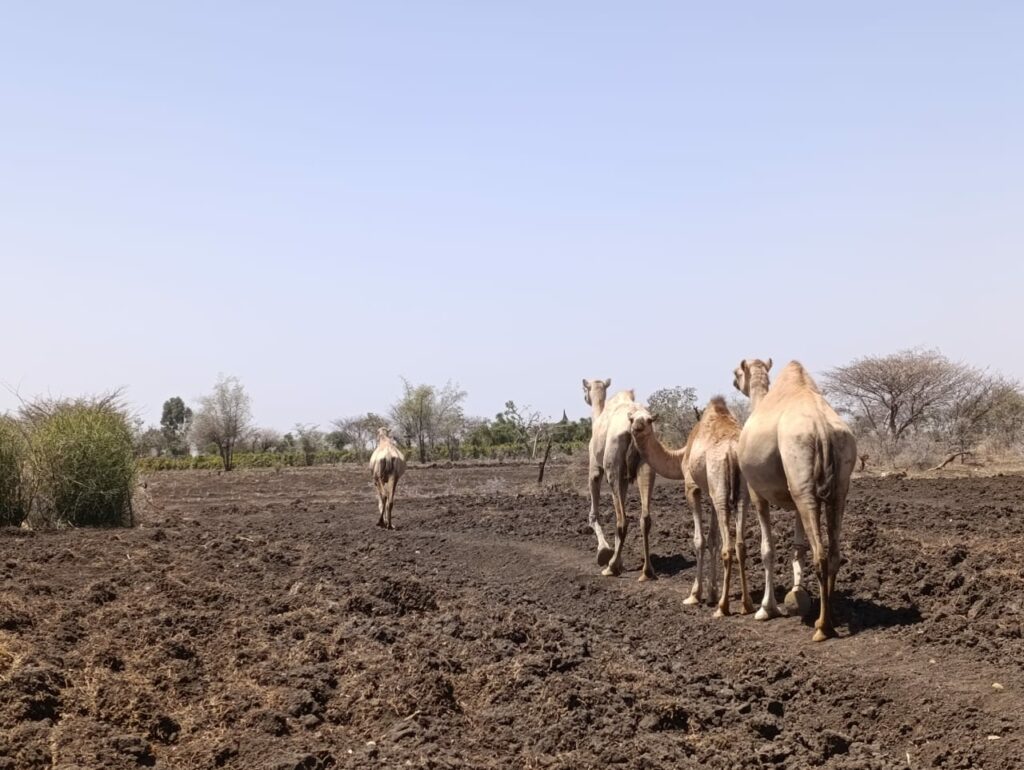
- Camel milk in Moyale, at the Kenya-Ethiopia border.
- Honey in Chemba, Tanzania.
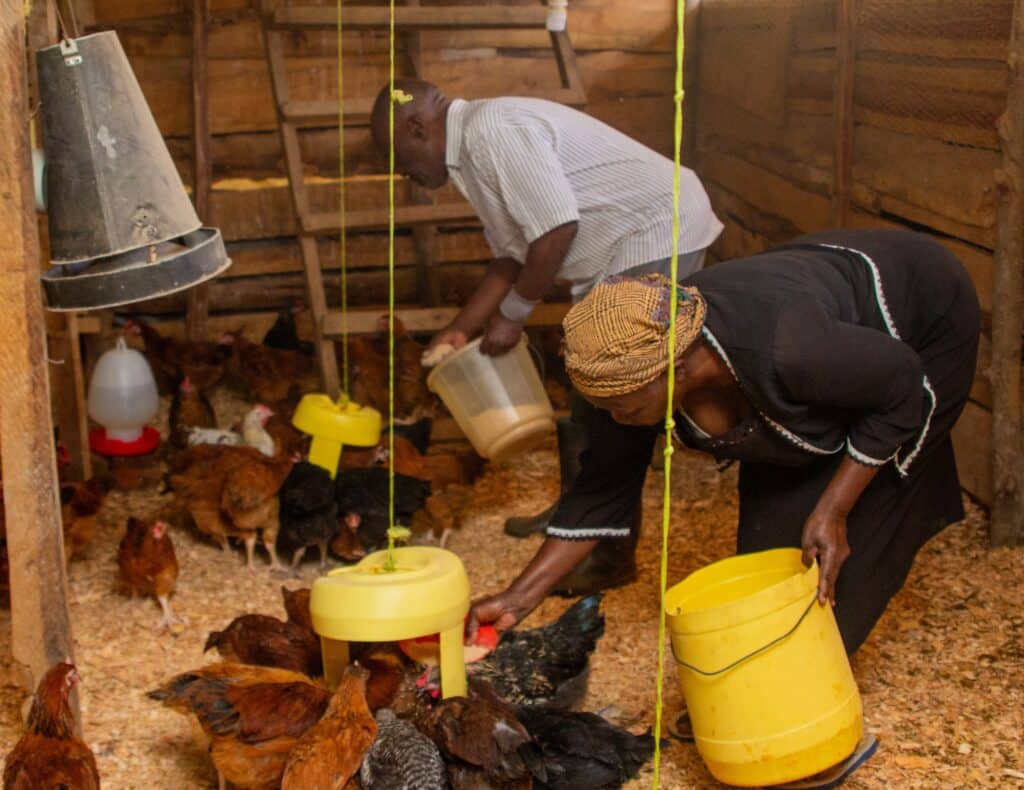
- Chicken in Siaya, Kenya.
- Honey in Kitui, Kenya.
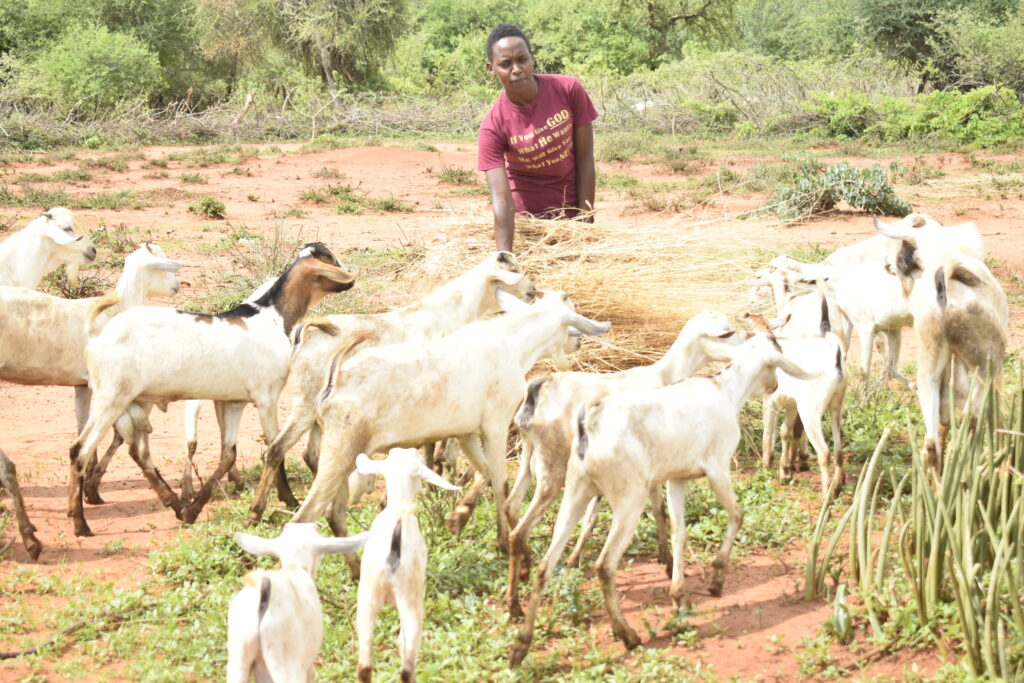
- Pasture and milk in Makueni, Kenya.
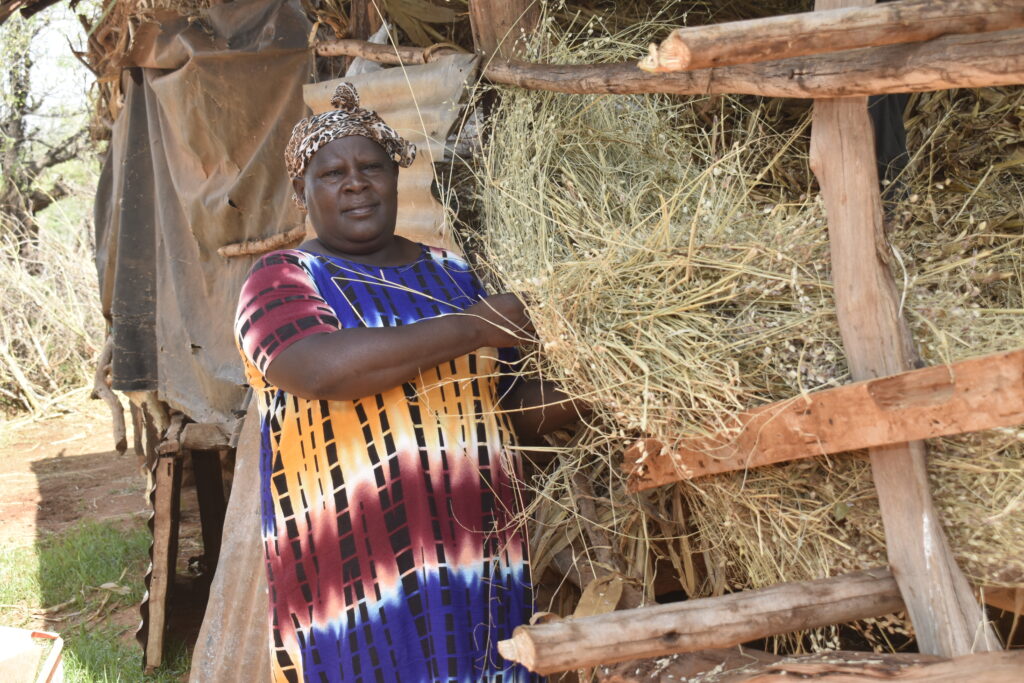
Women’s participation in value chains
The study shows that women participate actively and consistently. They attend trainings, join group activities, and engage in production linked to markets. Many gain new skills, earn a steadier income, and contribute more to household welfare. Participation also made women’s contributions more visible, leading to more discussion and shared decisions in households and groups, especially where income was regular and institutions strong. In Siaya, for example, predictable poultry income sparked household discussions about expenses: ‘When the chickens started bringing money regularly, I was asked how it should be used,’ a female poultry producer said.
But participation does not automatically mean control. While more households reported joint decision-making, women were rarely sole decision-makers. Traditional norms around asset ownership and authority often limited women’s long-term control.
Certain programme features supported women to participate more fully. Cooperatives and groups offered structure, shared responsibility, and formal recognition of women’s roles. Savings mechanisms helped women manage income and plan ahead. Direct access to markets reduced dependence on middlemen and removed the hassle of daily price negotiations.
Challenges and mitigation
Inclusion brings opportunities but also pressures. Increased participation can mean heavier workloads, exposure to safety risks, and vulnerability to economic shocks. Women, youth, persons with disabilities, and households facing poverty are particularly affected.
Dorcas works to reduce these pressures through group structures, peer support, and savings systems that help households manage uncertainty. Systematic risk management remains important to ensure all participants can benefit safely and fairly.
Lessons for women’s empowerment
From the study, four core lessons emerge for strengthening women’s empowerment in value chains:
- Participation alone is not enough. Empowerment requires not only involvement but also influence over outcomes. Women need a say in how income is used and resources managed. Without control over benefits, participation risks remaining symbolic rather than transformative.
- Working together strengthens resilience. Cooperatives, savings groups, and Farmer Field Schools provide structure, peer support, and safe spaces to learn and plan. Collective approaches increase predictability, reduce vulnerability, and strengthen women’s voice and legitimacy.
- Context matters. Women’s experiences differ. Age, disability, ethnicity, and prevailing social norms shape how they can participate and benefit. Recognising these differences ensures inclusion reaches those most at risk and that empowerment gains last.
- Diversifying income increases stability. Relying on a single activity exposes households to shocks. Combining value chain roles with savings, micro-enterprises, or service-based work spreads risk and strengthens long-term economic security.
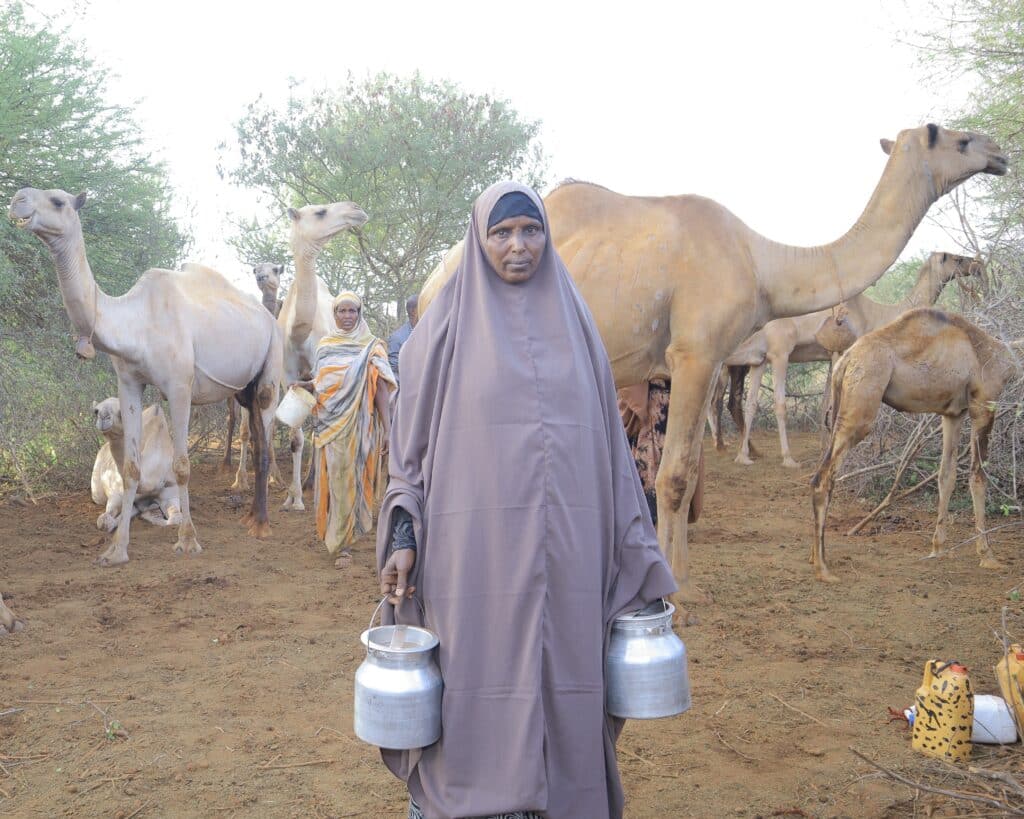
‘Today, I see myself as a businesswoman’
Kadija, a 50-year-old woman from Moyale, Ethiopia, joined the camel milk cooperative to overcome seasonal poverty and uncertainty. She recalls:
‘Before I joined the cooperative, my life was very uncertain. During the dry seasons, work would completely disappear. Some days we struggled just to get food.’Through the milk collection centre, Kadija gained a stable income and became a recognised economic contributor in her household and community. She explains:
‘Today, I see myself as a businesswoman. I have a stable income, I save money, and I plan better. People respect me more, and I have a voice not only in my home but also in the community.’
She also highlights the importance of working together:
‘Working together changed everything for me. Through the cooperative, women support each other, share responsibilities, and inspire one another to keep going.”
Her story reflects the broader findings: when women gain access to skills, markets, income, and collective support, economic participation can translate into greater stability, recognition, and confidence.
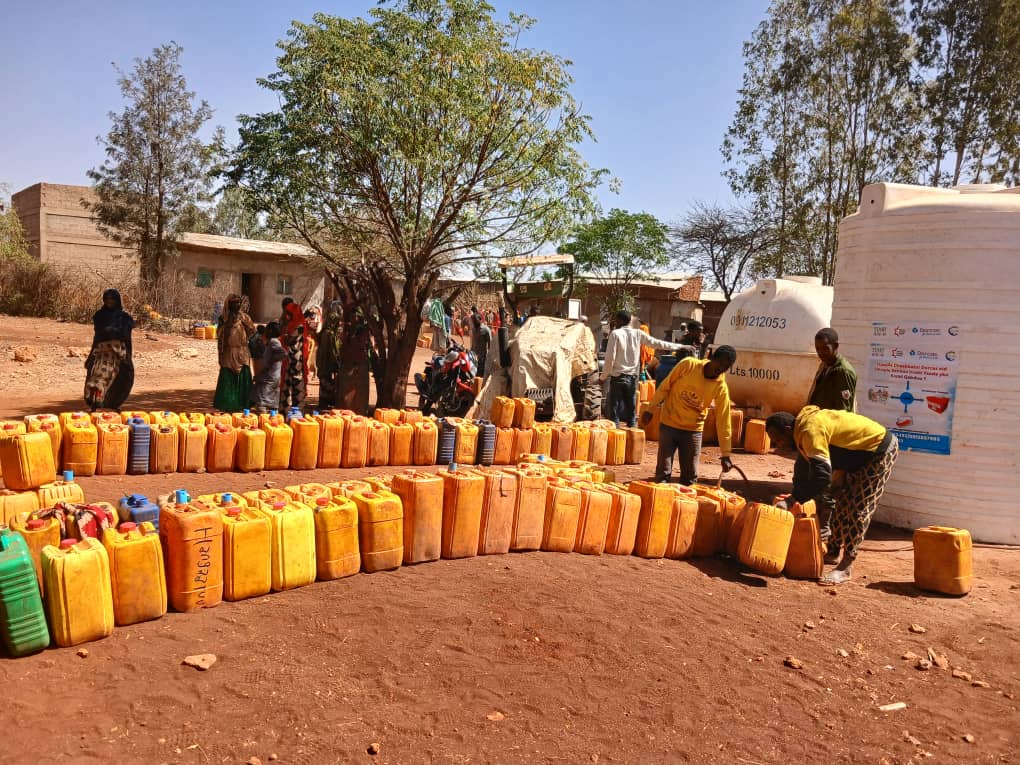
Communities in Fedis and Midega Tola woredas, East Hararge, Ethiopia, are facing acute and rapidly worsening food insecurity following prolonged drought conditions. In response, Dorcas has launched a rapid, multi‑sectoral emergency intervention to support 28,000 drought‑affected people in the Fedis and Midega Tola woredas, as well as surrounding towns and market centres including Harar and Dire Dawa.
Running from 31 January to 16 April 2026, the programme is designed to deliver immediate, life‑saving assistance while helping households stabilise their living conditions and reduce reliance on harmful coping strategies. The intervention is funded by the Start Network and implemented by World Jewish Relief, Dorcas Ethiopia, and Coalition Child Support Association at £350,000.
Targeting those in the most vulnerable situations
The crisis disproportionately impacts people already experiencing multiple vulnerabilities. Dorcas prioritises households headed by women and girls, pregnant and caregiving women, persons with disabilities, older adults, and Indigenous populations. These groups were identified through rapid assessments and community consultations as being at the highest risk of deteriorating food security, protection concerns, and loss of income.
A multi‑sectoral approach to an urgent crisis
To respond effectively to diverse and urgent needs, the programme integrates cash assistance, in‑kind support, WASH interventions, and protection services.
Cash transfers
More than 12,600 people will receive multipurpose cash transfers, enabling families to immediately purchase essential food and basic items. Market assessments confirm that local markets are functional and able to absorb increased demand, making cash the most efficient and dignified means of support.
In‑kind support
An additional 13,850 people will benefit from distributions of food and non‑food items. These include WASH materials, shelter kits and health‑related supplies—items that are critical when household resources are severely strained.
WASH activities
Safe access to water, sanitation and hygiene services is essential to preventing disease outbreaks during food crises. The project therefore restores access to safe water and provides hygiene materials to reduce health risks for affected families.
Livelihoods and early recovery support
In addition to meeting immediate survival needs, the project includes activities aimed at protecting and restoring livelihoods. This includes provision of animal feed to prevent further loss of livestock—an asset central to rural livelihoods in East Hararge.
Protection and psychosocial support
Crises heighten risks of exploitation, violence, and social exclusion. Dorcas therefore integrates safeguarding, psychosocial support, and community‑based feedback mechanisms to protect dignity and ensure assistance is appropriate and accountable.
Measuring impact
Success for this rapid response is defined by measurable improvements in household safety, well‑being, dignity, and coping capacity within a 45‑day window. By supporting both immediate needs and early recovery, the intervention aims to reduce the use of negative coping strategies – such as skipping meals, forced migration, or selling essential assets – and to strengthen resilience ahead of longer‑term recovery efforts.
Building foundations for longer‑term recovery
While this emergency response provides urgent assistance, it also creates a foundation for more sustainable interventions. The combination of cash support, livelihood protection and strengthening of local market systems supports communities maintain critical stability while recovery and development programmes are mobilised.
Dorcas remains committed to standing alongside vulnerable households in East Hararge, ensuring they receive the support they need. Not only to survive the current crisis, but to rebuild their lives with dignity and hope.
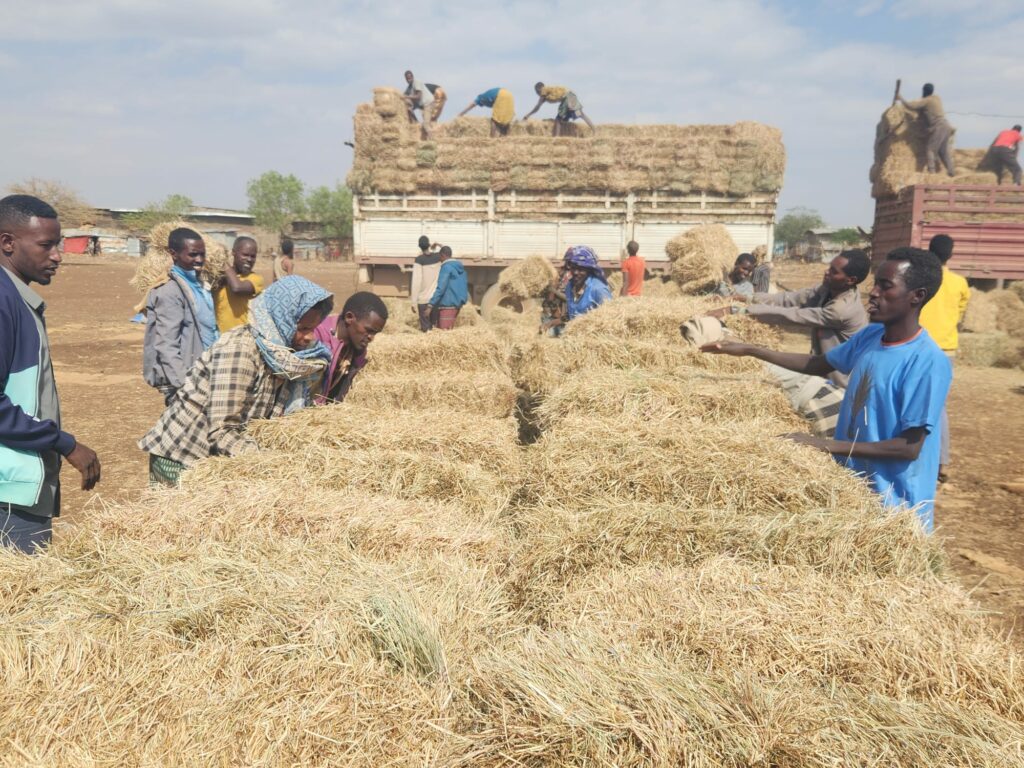
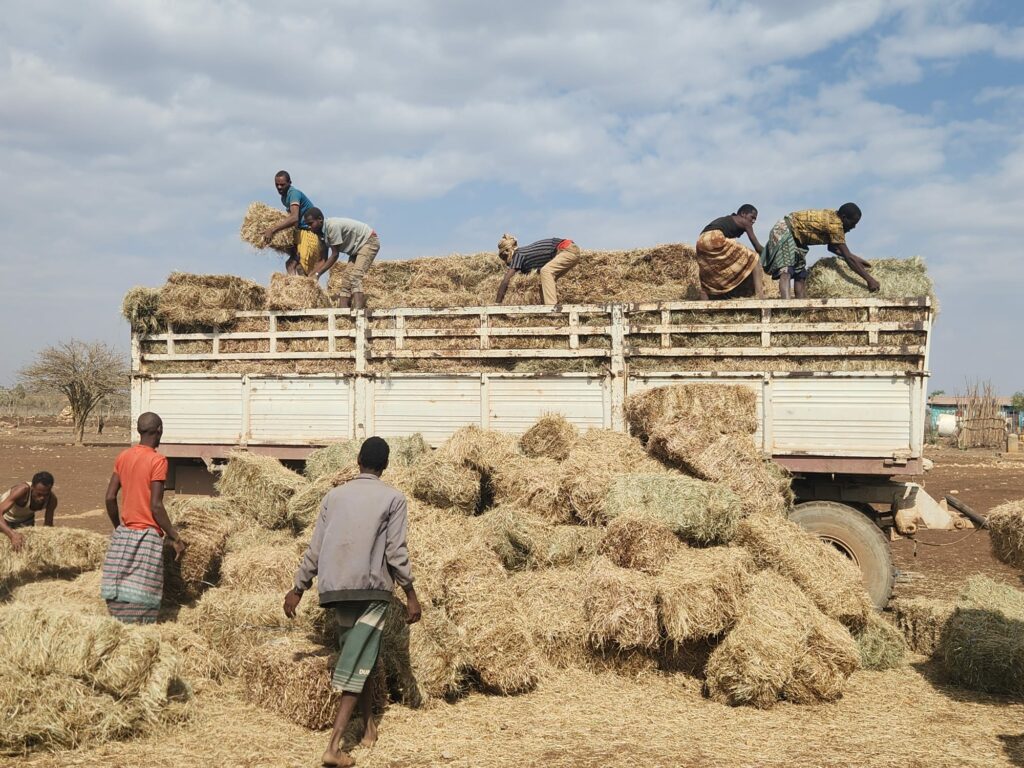
Between 2022 and 2025, Dorcas reached more people facing poverty, displacement and crisis across multiple regions. Five strategic ambitions guided this work. They focused our efforts, deepened our impact, and strengthened our capacity to respond in an increasingly complex world. This period brought both significant achievements and valuable lessons that now shape our path forward.
1. Focus on people who are marginalised
During the period 2022–2025, Dorcas stayed true to its core mission: standing alongside people and communities who are marginalised due to poverty, exclusion or crisis. Across all regions, programmes increasingly focused on groups such as older people, displaced families, and socially excluded communities. This led to tangible progress in areas such as empowerment, protection, access to basic services and community support, demonstrating the strength and relevance of our’ approach. During the strategic period, we also further strengthened and refined our approaches. For example, we strengthened programming on Livelihoods and Economic Development, and developed new programming that targets climate adaptation and resilience.

2. Develop coherent and community‑based programmes
Dorcas made steady progress in developing coherent, community‑based programmes. In our programming, the nexus approach was strengthened by further integrating humanitarian assistance with longer-term development objectives within the context of a community-based approach. Additionally, we increased our lobbying and advocacy efforts, primarily in the Netherlands, where we influenced policymakers. We developed a strategic lobbying and advocacy framework, which we will use to strengthen similar efforts in the countries where we work. We have invested in measuring the outcomes and impact of our work, specifically through a comprehensive results framework based on our theory of change. Furthermore, we have increased learning across our country offices through learning events and cross-country cooperation.
3. Increase the scale and effectiveness of our work
Between 2022 and 2025, Dorcas significantly expanded the scale of its work. Partnerships with local organisations and institutional donors grew stronger, enabling Dorcas to reach more people in need. We invested in strengthening the capacity of our implementation partners by realising systematic capacity assessment and development plans. Additionally, we invested in proposal development capacity to enable us to write higher-quality proposals with a greater chance of success. And we explored new funding methods to complement traditional institutional donor funding, a necessary step in the changing funding landscape, where funding availability is decreasing, and competition for these funds is increasing. This is an ongoing journey that will continue in the coming years.
We explored a potential merger with Help a Child to increase scale, but after careful consideration, decided not to proceed along this route. Nevertheless, we remain committed to collaboration with other organisations to increase our scale and effectiveness in the coming strategic period.
4. Mobilise resources and engage communities
Dorcas’ strong connection with communities in the Netherlands remained a cornerstone of the organisation throughout the strategic period. We developed a new private fundraising strategy and strengthened the processes related to it. We also adapted our internal operations to improve the support we provide to private fundraising and the Dorcas shops. As a result, Dorcas shops grew in number and professionalism, volunteer engagement remained high, and supporter trust and satisfaction were consistently strong. At the same time, we also face challenges due to economic developments and increased competition, which influence donor behaviour. However, with the foundations laid in previous years, we have a strong basis for future growth.
5. Become an agile catalyst and ConnActor
The years 2022–2025 were marked by significant organisational development. Dorcas strengthened its foundations through leadership training, development and implementation of internal processes and systems, enhanced integrity and quality management systems, and increased attention to sustainability. These efforts enabled us to achieve successful (re-)certification on all relevant quality standards, including Core Humanitarian Standard certification. The strategic period also further supported the decentralisation trajectory, in which country offices are strengthened and supported to operate in line with their portfolio and capacity. We will continue these efforts in the coming years, as they are also a cornerstone of our strategy for 2026-2030.
The period 2022-2025 strengthened both our impact and our foundations. We reached more marginalised communities, deepened partnerships, expanded our volunteer network, and built systems that enable quality programming. These achievements, alongside lessons learned about funding challenges and the need for continued adaptation, directly informed our new strategic plan for 2026-2030: Local Power Creates Lasting Change. We enter this next phase better equipped to stand alongside those in need.
Dorcas expresses deep concern over the recent escalation of violence in Aleppo, Syria. According to humanitarian reports, intensified hostilities since early January have led to significant civilian displacement and increased humanitarian needs. Critical infrastructure, including health facilities and schools, has been damaged, further limiting access to essential services.
The situation remains volatile, with thousands of families seeking safety amid harsh winter conditions. The Syria NGO Forum (SNGOF), a platform representing national and international NGOs in Syria – including Dorcas Syria – urges in a statement for the urgent protection of civilians and unhindered access to assistance.
Dorcas stands in solidarity with affected communities and continues to monitor developments closely, advocating for peace and the safeguarding of human dignity.
Running from the northernmost tip of Groningen to the southernmost point in Limburg in eight days. Matthias Jagersma took on this 420-kilometre challenge. His motivation: to raise money for Dorcas projects in Yemen . With his run, Matthias managed to raise no less than 6,000 euros.
How did you come up with the idea for this run?
‘I saw a video on social media of a man who ran the length of Africa. I thought it was such a great idea that I decided to do it too. But I wanted to make it a bit more achievable, as I wasn’t really a runner at all. That’s how the idea arose to run the length of the Netherlands.’
Matthias (right) ran together with his father Adriaan (left)

Why did you run for Yemen ?
‘I myself lived in Yemen for more than six years. I grew up there and saw that it’s not an easy place to live. It’s such a beautiful country, but it’s being completely destroyed. People are hungry, in fact, they lack all basic necessities. There is especially a need for water, food, and a safe place to live. My father set up the country office in Yemen for Dorcas, and that’s how I ended up with this organisation.’
Did you prepare in any special way?
‘I really started running from scratch. First just a few kilometres a week, eventually up to about fifty to sixty kilometres. We also mapped out the entire route ourselves and put together a support team. They travelled along each day with a van and took care of food, drinks, and setting up the tents.’
How did you experience the run?
‘It was a really great experience. It was wonderful to see how different the Netherlands is. We started out among the fields in Groningen, went across the Veluwe, and ended in the hills of Limburg. But it wasn’t all beautiful. On day 2 my friend Floris had to drop out due to an injury. And on the fifth day, I had knee trouble myself. That was really a low point, physically and mentally. I started doubting whether I would make it. Together with my father, I adapted the plan. With the help of a brace and walking poles, I was still able to keep going by walking.’
And did you actually make it to the finish?
‘Yes, fortunately I did. On the last day my knee had recovered enough and I could even run again! Which was just as well, as we made it in just before a huge hailstorm. Crossing the finish line was truly a fantastic feeling.’
Reading time: three minutes.
Dorcas is proud to announce the publication of its strategic plan 2026-2030: Local power creates lasting change. This roadmap sets out Dorcas’s vision for the coming years, focusing on empowering local communities, driving innovation, and creating measurable impact for people vulnerable to poverty, exclusion, and crises.
Facing a changing world
The world is rapidly evolving, with technological, economic, and demographic shifts often hitting the most marginalised the hardest. Dorcas recognises that the needs of the communities it serves are growing, even as funding environments become more challenging. From climate-induced agricultural issues in Africa to ongoing conflicts in the Middle East and the isolation of older people in Eastern Europe, Dorcas’s mission is more vital than ever.
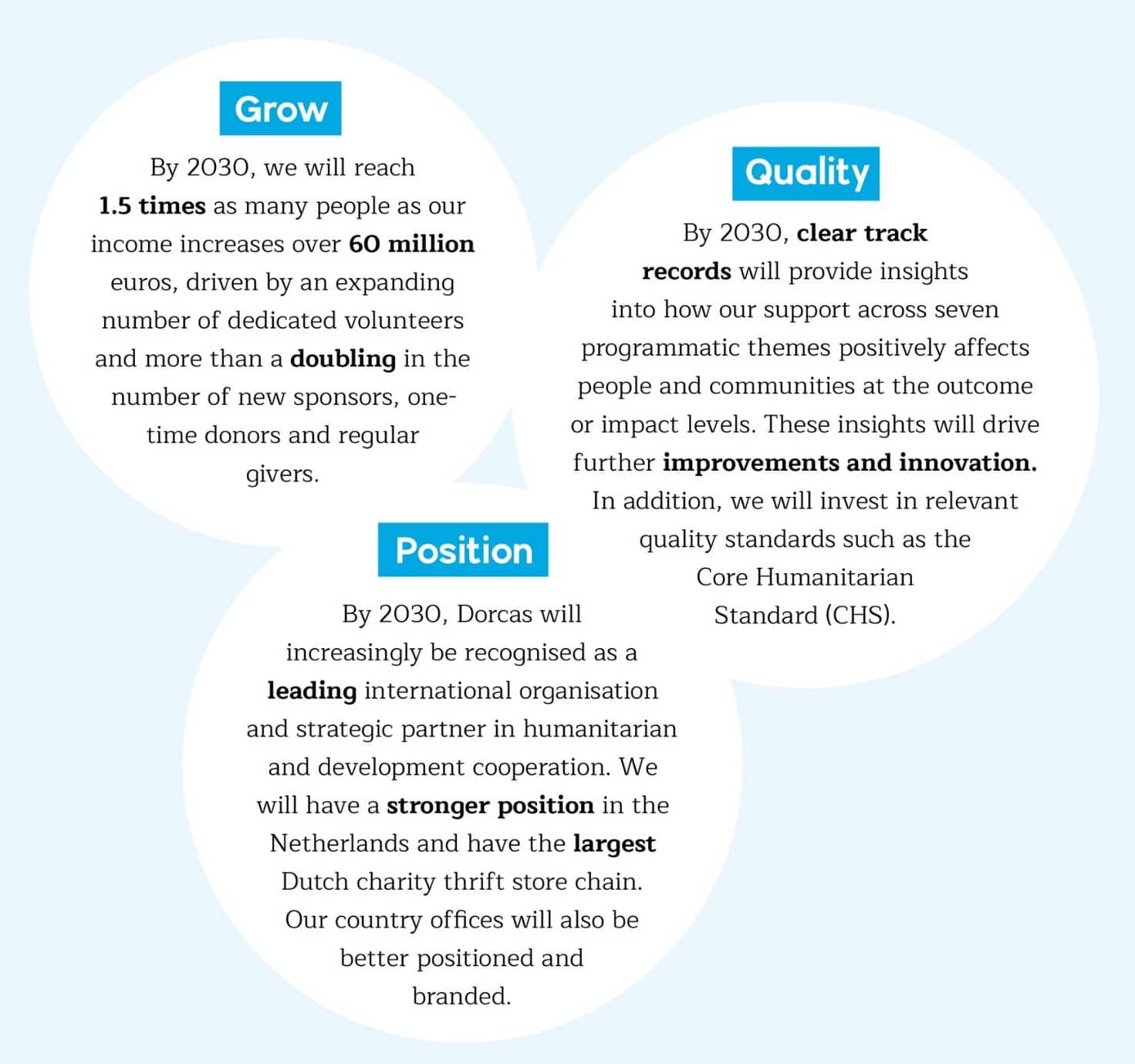
Three pillars for impact
The new strategic plan is built on three core pillars:
- Grow: By 2030, Dorcas aims to reach 1.5 times as many people as our income increases over 60 million euros and a significant increase in volunteers and supporters.
- Quality: By 2030, Dorcas has a clear track record, invests in quality standards and continuous improvement to ensure its support leads to lasting, positive change.
- Positioning: Dorcas seeks to be recognised as a leading international partner in humanitarian and development cooperation, with a strong presence in the Netherlands and beyond.
Seven programmatic themes
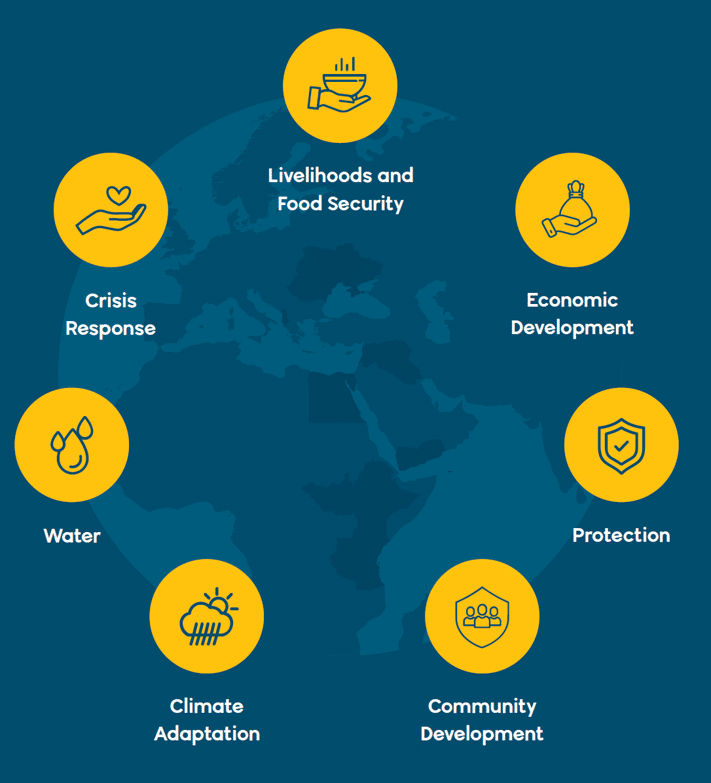
Dorcas will apply seven programmatic themes to sharpen expertise, strengthen its track record, and define clear organisational positioning. By 2030, Dorcas aims to harmonise and standardise our approaches resulting from these themes through a lens of inclusion and vulnerability, with community-based programming as our core approach.
Dorcas’s approach is defined by the following programmatic themes:
- Crisis Response
- Protection
- Community Development
- Climate Adaptation
- Water
- Livelihoods and Food Security
- Economic Development
These themes guide Dorcas’s work across the Middle East, Eastern Europe, and Eastern Africa.
Empowering local communities
A key feature of the strategic plan is the commitment to localisation. Dorcas will invest in building the capacity of local partners and country offices, shifting expertise and resources closer to the communities served. By 2030, country offices will have expanded their programme portfolios by 40 per cent, strengthening both their sustainable presence and overall impact.
Innovation and collaboration
Dorcas will foster a culture of innovation, investing in new ideas and partnerships to address emerging challenges. The organisation will also strengthen its fundraising, aiming to double its supporter base and become the largest charity thrift store chain in the Netherlands.
Looking ahead
Dorcas’s strategic plan 2026-2030 is a response to a fragile and unpredictable world. By focusing on local power, operational excellence, and strategic partnerships, Dorcas is committed to enabling people and communities to flourish in the face of adversity.
Read the full strategic plan:
Wim van Dorp (71) from Delft took part in the Nijmegen Four Days Marches for the 40th time this year. With his participation in the walking event, he raises money for Dorcas every year. This year, he walked for water projects in Kenya.
‘Everything went very well. On to next year!’ Wim reflects on the 2025 edition.
With his participation, Wim has raised over 2,000 euros for Dorcas’s water projects in Kenya. ‘Water is the most important thing a person needs. You can nicely link that to the Nijmegen Four Days Marches; drinking enough water always plays a big role there, too.’
Wim started walking the Nijmegen Four Days Marches forty years ago, encouraged by his father, who had already been taking part for years. ‘I thought walking was more for children or old people, not for a young lad like me,’ Wim says. Yet his father persuaded him, and he joined in once.
He appeared at the start untrained. ‘It was very tough. I crossed the finish line more dead than alive.’ Yet from that moment, Wim was hooked. ‘It was fantastic. The atmosphere, the people, the whole spectacle. I really caught the walking bug.’
Wim decided to take part again the following year, and every year after that. A total of forty times. However, he never walked together with his father. ‘Because of his age, my father walked the shorter distance, so we never started at the same time. We did meet each other along the route sometimes. My father passed away two years ago. For me, taking part now feels like a tribute to him.’
Except for once, Wim has completed every edition. ‘My grandmother had passed away and was buried on the last day of the Nijmegen Four Days Marches. As the eldest grandson, I had to be there, of course. If you miss a day, you are excluded and unfortunately do not receive a cross.’
Besides raising money during the Nijmegen Four Days Marches, Wim also supports Dorcas in other ways. For 35 years, he has been collecting clothing and other textiles. The reason was the conflict in former Yugoslavia in the 1990s. ‘I saw images of the conflict on television. All those people fleeing. That affected me deeply, and I wanted to do something for them,’ Wim says.
He called the churches in his area and asked them to join a collection campaign for clothing and other items. Around ten churches from Delft and the surrounding area took part. The proceeds from the campaign were overwhelming. ‘A lorry even had to be organised to transport all the items.’
In the years that followed, Wim organised a collection campaign every year. He also placed a container at his house, where people could hand in clothing and other textiles throughout the year. The proceeds were always for Dorcas. ‘Dorcas is simply a reliable organisation that does what it promises. And what I find beautiful about this organisation is that it is Christian and bears witness to this by practically supporting people in need.’
The large-scale collection campaigns are now a thing of the past. However, the textile container is still prominently placed in Wim’s front garden. ‘I’ve stopped all the campaigns and now only collect textiles on a small scale.’
And he continues to raise money for Dorcas through the Nijmegen Four Days Marches. He also plans to be at the start again next year. ‘I hope to continue as long as my health allows. It’s just so incredibly fun. I don’t like big crowds or all that music and noise at all. Yet I really enjoy it. Every time is actually the same, but each time it’s also different.’

A new step towards sustainable impact
Dorcas Mozambique is continuing as an independent local NGO under the name ‘Mãos Unidas’, which means ‘United Hands’. This change enables the organisation to create impact in a more sustainable way, with greater scope for tailor-made solutions and local leadership.
Agnes Kroese (CEO of Dorcas): “Sometimes, in order to grow, you need to dare to let go.”
Transition to an independent organisation
Mozambique, one of the poorest countries in the world, requires a specific approach. Since its start in 2001, Dorcas Mozambique has achieved a lot as a country office of Dorcas Aid International. However, over time it became clear that implementing projects in the country as an international organisation was no longer viable; the required investments no longer matched the level of impact that could be achieved in this way. Therefore, a process of becoming independent was initiated. As a local NGO, Mãos Unidas can now respond more flexibly to local needs and continue working in a small-scale, effective, and sustainable manner.
A considered, forward-looking step
The decision to become independent was made possible in part thanks to years of investment in local leadership. Although the name is changing, the mission of Mãos Unidas remains similar. The organisation focuses on long-term solutions in areas such as livelihoods, food security, economic development, water management, climate resilience, and community development. In times of crisis, Mãos Unidas not only provides emergency assistance but also supports communities to recover and develop.
Mãos Unidas is officially registered as a national NGO in Mozambique, ready to carry forward it’s important work. With this step, Mãos Unidas can now independently build on the foundation laid by Dorcas in Mozambique since 2001. This foundation creates opportunities for a sustainable future. Dorcas will remain involved until 2026 to ensure a smooth transition. This development in Mozambique aligns with the course Dorcas has been charting for 45 years: always focussed on lasting impact.
We confidently hand over the work to a strong, local organisation. We look back with appreciation on the collaboration with our colleagues in Mozambique and are grateful for the results we have achieved together over the years with our local colleagues, supporters, and partners. We wish Mãos Unidas all the best and God’s blessing for the future.