We are deeply concerned about the rise in violence, inequality and crises around the world. That is why we, a broad coalition of Dutch political parties and civil society organisations, are calling on the government to make a significant investment in development cooperation and to put an end to the unprecedented cuts.
Budget cuts on development cooperation
In the recently published coalition agreement, the government states its intention to invest more in development cooperation. This is an encouraging sign at a time of global unrest and instability. However, recent figures show that the promised investments are not being delivered. In fact, the budget for international development cooperation is set to fall in 2027, 2028 and 2030 compared to the previous government. This is happening at precisely the moment when global needs are rising. In April 2026, the OECD warned that global spending on development cooperation had fallen by almost a quarter in 2025. The Netherlands is contributing to this.
Behind the unfulfilled commitments to development cooperation lie personal stories. Stories of people who are denied life-saving care and children who cannot go to school or who grow up in extreme poverty. As a prosperous country that has benefited for decades from open trade and international cooperation, we have a duty to reach out to these people. According to independent research, global spending cuts will lead to millions of additional deaths as a result of hunger, poverty and preventable diseases.
Why development cooperation is in the Dutch national interest
Development cooperation is not merely a matter of humanity: it also serves Dutch interests. It helps to build and strengthen economies, which in turn benefits Dutch trade and investment. It also contributes to security by tackling the root causes of poverty, forced migration and conflict. It is no coincidence that our national security strategy identifies development cooperation as an indispensable pillar of foreign policy.
Keep your commitments
It is therefore crucial to re-establish the link between the development budget and our national income, and to work towards the international commitment to spend 0.7 per cent of national income on development cooperation. This link ensures that the development budget grows in line with the economy. In this way, we share our prosperity in good times and adjust our contribution in leaner times. For 2026, that would mean an additional investment of € 355 million in development cooperation. This is how we give concrete expression to international solidarity in a fair and sustainable manner.
Furthermore, it is essential that additional investments, such as the planned € 257 million, are directed towards the priority areas highlighted by the government, such as youth, education, women’s rights, civil society, global health and food security. In this way, it will not be at the expense of other priorities within the BHOS budget, such as emergency assistance and efforts to intensify sustainable economic development. If the link to national income is not restored in accordance with the international OECD agreement, and the government continues to cut back on development cooperation, this will not only undermine the effectiveness of the Netherlands’ global efforts, but also our own security and economy.
We therefore call on the government to honour the agreements made:
- Restore the link between the development budget and the national income, in line with the international OECD agreement.
- Ensure that the promised € 257 million goes towards international development goals.
- Present a credible path towards the 0.7 per cent target for development cooperation.
The Netherlands has the expertise, the resources and the responsibility to make a difference on the international stage. It is up to all of us to continue to fulfil that role with conviction.
These weeks, foreign policy is at the centre of debates in the Dutch parliament. Members of parliament are discussing the historic cuts in development cooperation and Dutch diplomatic clout. While the consequences of almost every other cut are calculated to the last decimal point, this is not the case with foreign policy. This is risky, because these major cuts will not only affect people in vulnerable situations abroad. They also damage our own economy, security and safety. So the government needs to stop pretending that this is free money and properly map out the consequences of these large-scale cuts.
First the numbers. Between 2025 and 2029, the Schoof government will cut more than €10 billion from development cooperation and €267 million from diplomacy. This austerity operation is therefore historically large. This is the result of the coalition agreement between the PVV, VVD, NSC and BBB and of decisions in the latest budget documents. For example, the cabinet has gone beyond the coalition agreement and made a substantial additional cut in development cooperation. This is the result of the historic decision not to allow the development cooperation budget to grow in line with economic growth for the first time in 50 years.
Abroad, the cuts will mainly affect marginalised people in low-income countries. For example, we know that when the British government made significant cuts in development cooperation, the consequences were disastrous, especially in the lowest-income countries. For example, the UK prevented 60 per cent fewer mothers from dying in childbirth and 550,000 children were unable to go to school. And the £17 million cut to a social safety net fund in Ethiopia immediately deprived 350,000 people of vital financial and food assistance.
But the cuts will also have major consequences closer to home. After all, a third of our collective income is earned abroad. Development cooperation contributes directly to this, as civil servants calculated in 2014, when cuts were also made. For every euro of assistance to partner countries, Dutch exports increased by 70 to 90 cents. The added value for our economy was 40 to 55 cents per euro of assistance, which resulted in around 15,000 jobs at the time. The substantial cuts in development cooperation are therefore costing us jobs and income.
The cuts also weaken the Netherlands’ position and influence on the world stage at a strategic level. Whether it is security, conflict prevention or human rights, these commitments require more and more capacity. In the latest budget, the government itself states that the Netherlands ‘should stand up more actively for its interests and values’ as ‘the economic and demographic centre of gravity in the world’ shifts east and south.
The previous government also emphasised the growing importance of partnerships with emerging countries in Asia and Africa. Think of the access to strategic raw materials from Africa that we will desperately need for the energy transition. Or containing the growing number of wars in the regions around Europe, which are damaging our important trade. The budget, which is currently being cut, is an important instrument for responding to these developments.
In short, cuts in the Netherlands’ international involvement are not free. To pretend that they are is to ignore the fact that our economy, our security and our very existence depend to a large extent on other countries. The least this cabinet can do is to properly map out the consequences of the budget cuts. Then politics can do its job and, if it wishes, limit the negative consequences. If you do not want to do this for people who have to deal with war, crisis and exclusion on a daily basis, then do it out of a well understood self-interest. This is not only a gesture of humanity, but also of good governance.
Written by: Jochem Duinhof – Political Advisor at Dorcas and Bas Bijlsma – Executive Director & Founder of Data for Peace and Security.
The Dutch Africa strategy is ‘the vehicle par excellence’ for increasing social protection for vulnerable groups, state Jochem Duinhof and Zina Nimeh in this opinion article. That is how you give these groups space ‘to assume their role in the community’ – and such an opportunity does not come along that often is their urgent message to the government ministers responsible for the strategy.
By: Jochem Duinhof and Zina Nimeh
A while ago, one of us was in Tanzania and visited Noni’s family. Noni is an eight-year-old girl and she enthusiastically spoke about her good school results. Her grandmother Adamma listened with pride. Due to rising food prices as a result of inflation, she has difficulty taking care of Noni and her older brother.
Noni’s parents are both absent: her father fled the family immediately after Noni was born, and the mother now lives and works in a city far away. If civil society actors had not intervened, Adamma would have been on her own in raising her grandchildren. Then Noni would have almost certainly have been removed from school to help provide for the family’s livelihood.
Lack of safety nets
As the story shows, older persons in Africa are vulnerable to poverty and, in particular, they frequently suffer from a lack of social protection: only 27 percent receive some form of financial support after their working life (figures from 2020). They often then become dependent on those around them, and not everyone has access to a social safety net.
Urbanisation and the deterioration of traditional extended families mean that older persons are left to take care of themselves. The lack of governments that can provide financial support also affects African older persons. According to research, the number of older persons receiving a pension is below ten percent in almost all African countries.
As a result, they often have to provide for their livelihood and that of their grandchildren on their own and the risk that they end up in long-term poverty is very high. In Africa, only nine percent of persons with disabilities receive some form of financial support, and in 2020, just fifteen percent of mothers received some form of social benefits for their children.
Opportunities within the strategy
On Tuesday, 30 May, the Dutch government ministers Hoekstra (Foreign Affairs) and Schreinemacher (Foreign Trade and Development Cooperation) published the Dutch Africa strategy, which outlines the policy for ten to fifteen years. The strategy is an excellent opportunity to boost the development of social safety nets for older persons, persons with disabilities and vulnerable families with children so that they can play their part in the community.
In its current form, the strategy pays little attention to this specific development challenge even though plenty of opportunities exist to tackle it effectively. For example, the Netherlands could more actively support African governments in providing a financial safety net to potentially vulnerable people, including older persons, in the form of benefits, pensions and health insurance.
Such a safety net improves people’s resilience in the face of adversity, helps to prevent children from being taken out of school to contribute to the family’s livelihood or stops essential production assets from being sold to meet short-term needs. An additional advantage is that a financial safety net has no strings attached: recipients decide what they spend the money on, such as water, food or education. And research has demonstrated that this approach is effective.
The Dutch government could help to realise this change by putting its own tax system in order so that Western multinationals can no longer channel African tax money through the Netherlands. And the Netherlands, together with the international community, could invest more in cancelling the debts of African nations. Both interventions are necessary to give African governments sufficient financial strength to provide social safety nets.
Another way to contribute is to advocate internationally for a global social protection fund. New research has outlined for the first time how social protection funding could be available to all at a relatively low cost and that it would have tremendously positive effects on reducing poverty and inequality. The Africa strategy is the vehicle par excellence for developing such activities in the near future.
Financial safety nets offer children like Noni a more stable home base from which they can develop and look forward to the day when they will be grandparents themselves – no child should be deprived of that perspective.
Jochem Duinhof is a political advisor at Dorcas Aid International, and Zina Nimeh is an associate professor of public policy at the United Nations University in Maastricht.
If you look at the figures, there is only one conclusion: Africa is ageing rapidly and will be doing so till at least 2050. It is obvious that this will have consequences for the way in which sustainable economic development and poverty reduction can be achieved on the African continent. In 2009, the Dutch Advisory Council on International Affairs (AIV) concluded that anticipating the ageing population in low-income countries should be an integral part of Dutch development policy. In the same study, the AIV concluded that the mainstreaming of ageing in development policy is “not progressing well”. The AIV formulates this as follows:
“The lack of prospects of retirement provision for the majority of people living in developing countries means minimal income security for old age.”
Despite the fact that this problem has been known for quite some time, global ageing and its consequences for international cooperation are not an integral part of Dutch development cooperation yet. In fact, Dutch development cooperation policies do not mention global ageing and the rising social protection burden for low-income countries once. However, the Dutch Africa Strategy offers a second chance. In this article, I explain why mitigating the consequences of an ageing continent deserves a place in the Dutch Africa Strategy, and where the first starting points for concrete measures for social protection can be found. Social protection is defined here as policies and programs developed to mitigate the direct consequences of poverty, for example through cash transfers or viable pensions.
Ageing increases the need for social protection
The AIV is not alone in its conclusion that the ageing population should be an integral part of international development agendas: the UN also concluded this and other more recent studies show that, towards 2050, it will be a great challenge to prevent African adults from falling into poverty after their working life. On the African continent challenges regarding ageing are as great as in the rest of the world. Research shows that in all African countries the number of people over the age of 60 will (almost) double towards 2050. Many of these older persons traditionally depend on their social environment, such as neighbours, acquaintances and their children. However, this social environment has been subjected to change: urbanisation (the migration of young people to the city) and the breakdown of traditional extended families (families in which 3 generations live together) mean that African older persons are increasingly dependent on themselves.
In addition, according to research, the percentage of older people receiving a pension is below 10 percent in almost every African society. The lack of viable pensions on this continent often leads people aged 60 and over to depend on their social environment after their working life. This dependency makes older persons potentially vulnerable when the social environment faces adversity such as loss of income, or when the social safety net is not there in the first place. There is therefore an urgent need for social protection for older persons, for example in the form of living pensions, to prevent older persons from falling into (extreme) poverty.
Why simply working more and longer is not the solution
All this means that, without effective policy interventions, more and more older people will have to continue working to individually generate a living income. This is not always possible for every older person due to physical constraints or a lack of skills. An additional problem is that the percentage of older people participating in work worldwide fell between 1960 and 2010. In Sub-Saharan Africa, the labour participation of people over the age of 65 fell from 57 to 48 percent. In the Middle East and North Africa combined the decline is even stronger: from 29 percent in 1960 to 18 percent in 2010. The conclusion is therefore that, instead of working more to meet their increasing needs, older persons have participated less in labour over the last 50 to 60 years.
This confluence of circumstances in which an increase in the number of older people, a lack of social protection and a decreasing labour participation of older people come together, is an obstacle for achieving the SDGs. SDG1 (no poverty) and SDG2 (zero hunger) are directly at risk if mitigating the effects of ageing of the African continent is not integrated into future development strategies.
Starting points for the Africa Strategy
Fortunately, there are always glimmers of hope. An example: the ever-increasing penetration of the mobile phone on the African continent, also among older persons, in combination with the mobile payment technology popular in (Eastern) Africa, makes it relatively easy to reach older persons in remote and rural areas. This is important, because (extreme) poverty is often more concentrated around rural areas. This mobile payment technology does not require any personal data, bank accounts or proof of identity: the telephone number is sufficient to receive and send payments. This enables governments and NGOs to reach individuals in vulnerable situations and to offer social protection in the form of cash transfers, also in remote and rural areas. Small-scale experiments are already underway in countries such as Kenya, Lesotho and Rwanda, with promising results at first glance. With technological heavyweights such as Adyen and Capgemini Nederland, the Netherlands have the knowledge to further develop this infrastructure. This could be the prime example of a successful aid and trade combination: strengthening African public services for marginalised people with the help of Dutch knowledge and skills.
Strengthening social cohesion between young and old, and preventing young people from moving to the cities is more complex. This requires a socio-cultural dialogue that cannot be imposed from European countries. However, local and international NGOs can stimulate the debate in collaboration with diplomatic offices. Also, the Dutch ministry can provide the financial means for lobby & advocacy on the benefits of social protection for potentially vulnerable people such as older persons, people with a disability or women.
Let’s go!
The Africa Strategy specifies how the Netherlands intend to relate to the African continent, both in the European context and bilaterally. A hefty task, especially since the strategy aims to be relevant for the next 10 to 15 years. A wide range of themes such as trade, equal partnerships, climate change, security and migration are therefore incorporated in the strategy. Given the facts presented above, ageing deserves an integral place in this strategy. Let the Africa Strategy therefore be a first step towards finally working on restoring social protection for older persons, making use of Dutch knowledge and expertise where relevant. Only by doing this, we can keep track of achieving the SDGs.
Older people are left behind in Dutch foreign policy. They are not mentioned once in the policy note ‘Doen waar Nederland goed in is’ (Doing what the Netherlands does best), which the government shared with Dutch parliament last June. This is remarkable, as women are cited 36 times in the same note as a group that needs specific attention, and children six times. In addition, the Ministry of Foreign Affairs lacks a strategy to engage and protect older people worldwide through Dutch engagement. The ministry does have such a strategy for young people, called ‘Youth at heart’. Finally, the Netherlands does not participate in the United Nations working group that is drafting a convention on the rights of older persons. While countries such as Germany, Italy, Austria and Great Britain are represented in this group.
It is unfair, however, to solely point to the Dutch government: there are very few Dutch humanitarian aid and international cooperation organisations that specifically target older people. In short, the Dutch lack of attention to older people worldwide is present in both government policies and practices from Dutch international organisations.
Left to their own devices
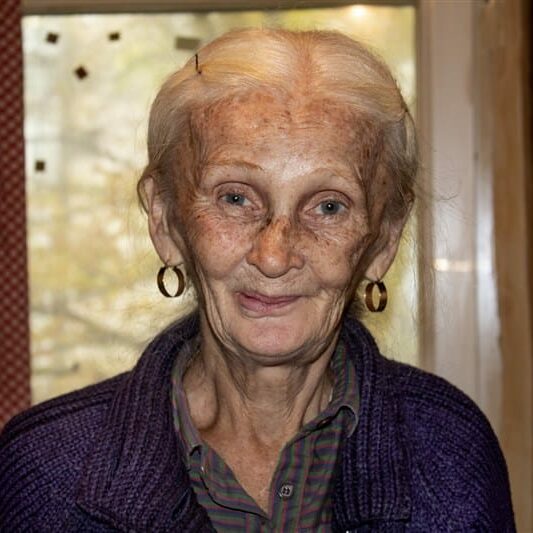
Given global ageing, the trend that is likely to push the proportion of older people worldwide to more than one in five by 2050, the lack of attention for older persons is a problem. Indeed, it is expected that eighty percent of older persons will live in low- and middle-income countries by 2050. That is precisely where older people are potentially vulnerable. For instance, research shows that in less prosperous countries, more and more (young) residents are moving to the cities. As a result, older people in rural areas are becoming increasingly isolated and dependent upon themselves.
Whereas, for example, the Dutch government supports older persons when the social safety net fails, this is not the case in many other countries. The fact that only 20 percent of older people in low-income countries receive a pension exemplifies this.
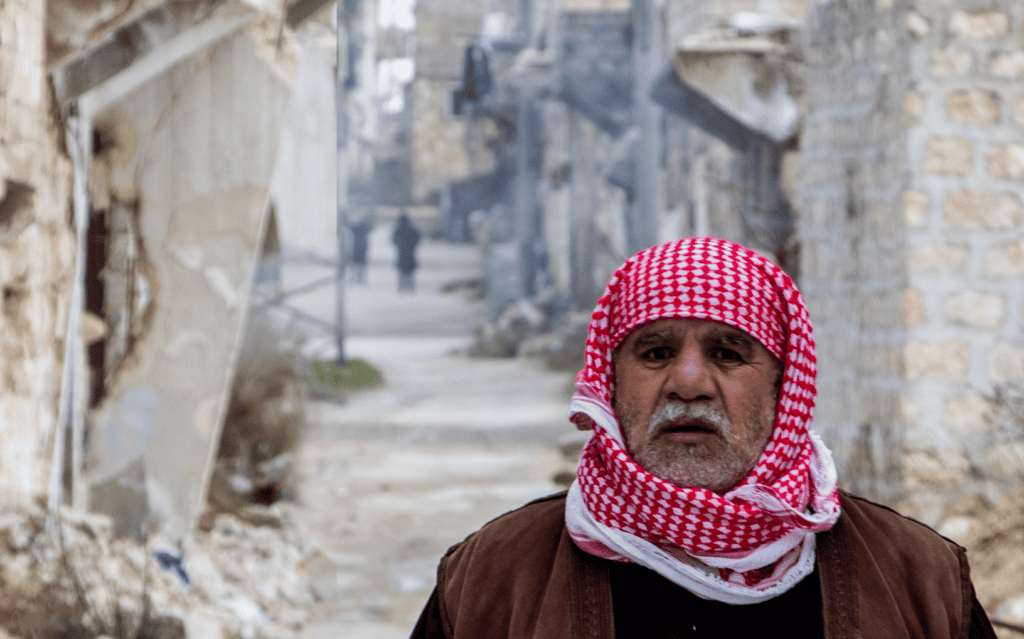
It is also known that in conflict situations older people more often stay behind in their endangered place of residence, because they cannot or do not want to flee. We see this in Ukraine, among others, where relatively many older people do not leave their homes. Newspaper Trouw has already written about Anatoli and Irina, two Ukrainian older persons who became trapped in Russian artillery fire. Anatoli suffers from Parkinson’s and cannot flee his home. The two just managed to survive the shelling early May, as proven by the damage to their flat. Like Anatoli and Irina, there are unfortunately many older people who are left behind during conflicts, with potentially dire consequences.
Specific needs
Finally, we know that older people are protected on paper through international law, but little attention is paid to their specific needs and requirements. Case in point, only one of the nine human rights treaties pays specific attention to older people and their rights. As mentioned, a blueprint for a treaty on the rights of older people is being worked on at UN level, unfortunately without the active participation of Dutch representation. The signal that emanates from this is that older people are not a priority in Dutch foreign policy.
It is therefore time for Dutch foreign policy to pay more attention to the sometimes vulnerable position of older people worldwide. A good start would be to concretely safeguard the rights of the older people in Dutch foreign policy, such as in the aforementioned policy paper ‘Doen waar Nederland goed in is’ (Doing what the Netherlands does best).
In addition, the Netherlands could become part of the UN group of countries writing the blueprint for an international treaty on the rights of older people. Finally, it is up to the Dutch humanitarian aid and development cooperation sector to give protection of the rights of older people a higher priority. After all, those who want to work inclusively should not leave older people behind!