‘People need to know they are seen’
One crisis has followed another in Lebanon, stretching public systems and community resilience to their limits. Existing challenges have been exacerbated by economic collapse, political instability and an influx of refugees. Amid these challenges, Mario has worked at Dorcas for two and a half years as a Communications and Reporting Officer. ‘Given all that Lebanon has been through, I felt I had to contribute to the humanitarian response. I want to support those living in the most vulnerable situations.‘
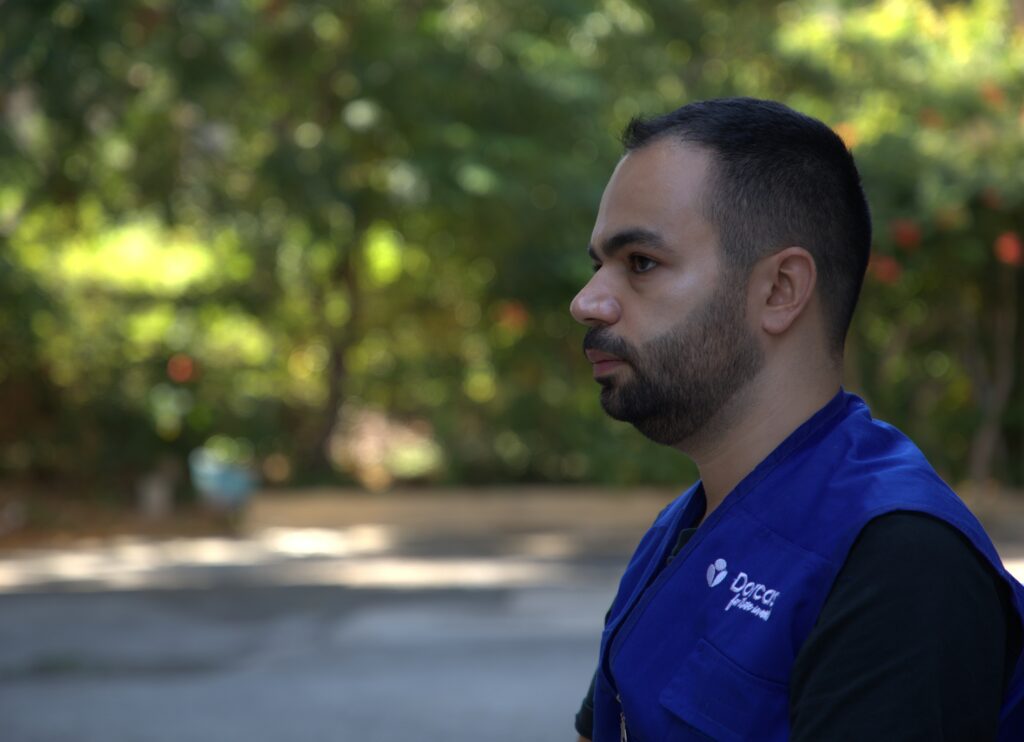
Supporting people in dire need is exactly what Mario and the team of Dorcas Lebanon are doing right now in Akkar, where they are distributing food parcels. ‘When you witness hunger and see people being forced into situations that no one should have to endure, it marks you’, Mario says.
Living at a graveyard
Mario now works extensively in Akkar, one of the poorest regions in northern Lebanon and one of the areas hardest hit in recent years. Thousands of Syrians have arrived here after fleeing their homes. They left everything behind, crossing rivers and fields on foot with little more than the clothes on their backs.
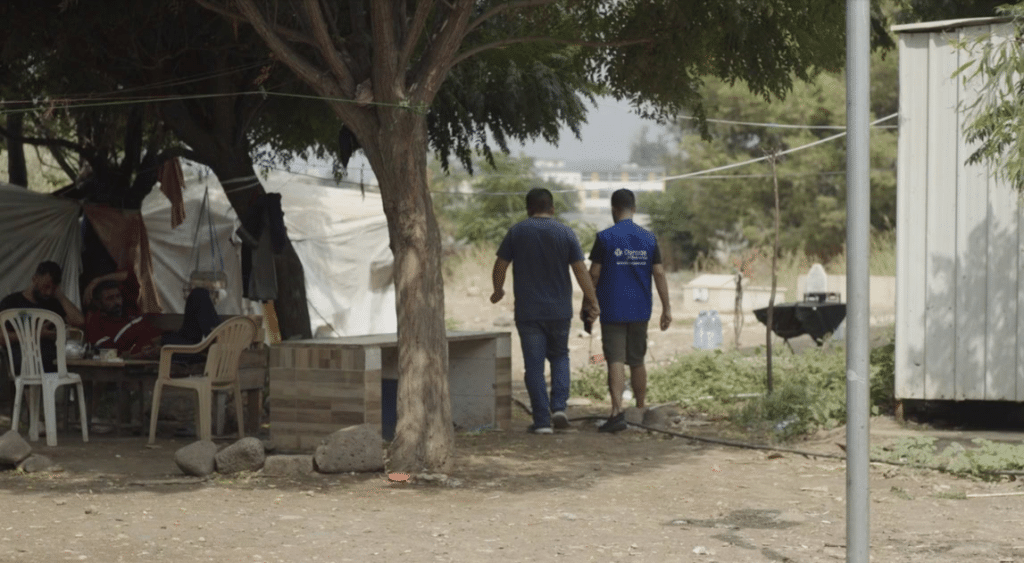
Some ended up in Akkar’s cemeteries. Mario recalls: ‘On day when we went to Akkar, we came across an area that was essentially a graveyard. Families had pitched tents between the graves, with washing lines strung over the tombs and children playing next to the gravestones. People were living there in impossible conditions.’
Food parcels are a lifeline
‘When people receive a food parcel, it is not just food that is received. It provides a sense of relief and reassurance that they are not forgotten. It gives them ten or fifteen days of stability.’
The distribution of the parcels is organised and efficient. Trucks arrive, people gather and lists are checked. Roles are assigned: someone counts, someone carries and someone ensures that everything is fair. ‘It is order in the midst of chaos,’ says Mario. ‘It is dignity in the midst of hardship.’
‘When I’m there, the Dorcas projects stop being anonymous numbers. Instead, you encounter people that have faces and names. They are children tugging at their mother’s sleeve and asking when they will eat. They are fathers carrying boxes with tired arms but proud eyes.’
He recalls a mother who placed her Dorcas parcel in the centre of her tent as if it were a treasure. Rice, lentils and oil – items so ordinary that they might go unnoticed in any kitchen – were laid out here like a feast. ‘Food parcels are a lifeline’, says Mario. ‘When I visit the area, I just try to be present and listen. I want to show people that they are seen.’
02 February 2026
Are you inspired?
Read the next story or contact us to get to know more about making an impact together.