From risk to resilience: Prioritising climate action in Iraq
Iraq is facing one of the most severe climate crises in the region. Temperatures are rising seven times faster than the global average, and the country is expected to experience increasing flooding, drought, and desertification over the coming decade. These pressures are already undermining livelihoods and economic resilience at the household level, contributing to rising poverty.
By 2035, Iraq is expected to have a water deficit of around ten billion cubic metres, driving drought, soil salinisation, and the loss of around 25,000 hectares of agricultural land each year. It is estimated that 70 per cent of Iraq’s agricultural land is at risk of total degradation due to climate change.
Climate needs assessment
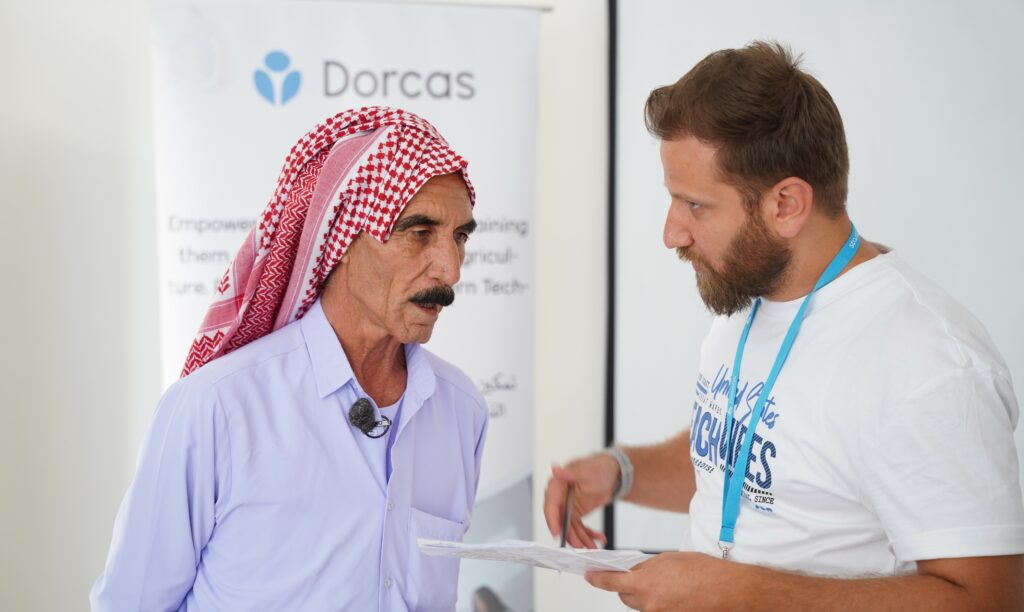
Against this backdrop, Dorcas Iraq conducted a qualitative climate needs assessment in Basra, Ninewa (Sinjar) and Duhok between November and December 2025. The assessment aimed to identify priority climate risks and practical actions to strengthen resilience in agriculture, water management, and ecosystems.
Data was gathered through fifteen key informant interviews across Basra, Ninewa, Duhok and Mosul, as well as two focus group discussions in Sinuni (Balef and Ware Khidre villages), involving 21 participants in total.
Key findings
The assessment highlights a consistent pattern across all locations:
- Climate adaptation is taking place, but largely in a reactive and project-driven manner.
- Water scarcity poses the greatest challenge across sectors and regions.
- The limited uptake of climate-smart practices reduces resilience and productivity.
- The groups most affected are smallholder farmers, women (including those in female-headed households), young people, households dependent on the climate and displaced people in Sinjar.
Priority needs per governorate
In Basra, severe water scarcity, high salinity, desertification and industrial pollution are all major issues. Priority areas include the implementation of water-efficient irrigation systems, the establishment of local water storage facilities, the rehabilitation of canals, and the strengthening of governance, particularly with regard to industrial water use.
In Ninewa (Sinjar), prolonged drought, high temperatures and erratic rainfall are causing soil degradation and losses to crops and livestock. Support for climate-smart agriculture, including drip irrigation, rainwater harvesting and coaching through demonstration plots, is especially needed for women, youth, smallholders and internally displaced people.
In Duhok, drought, irregular rainfall, land degradation and frequent wildfires are having an impact on forests and livelihoods. Key priorities include integrated water resource management, community water committees and forest fuel management linked to wildfire prevention.
How Dorcas is contributing
Dorcas addresses these needs by planting trees using water-saving methods such as the Waterboxx, distributing fruit tree seedlings, and providing practical climate adaptation training. Forest-focused activities include pruning and establishing a biomass-to-compost value chain to reduce fire risk and improve soil quality. Dorcas also supports institutional capacity building and green jobs programs, including vocational training in mushroom cultivation.
Sargon, Country Director of Dorcas Iraq, explains:
‘Our climate resilience strategy prioritises proactive, evidence-based action. In Basra, we focus on expanding community- and farm-level water storage, improving irrigation efficiency, and addressing soil salinity. In Duhok and Ninewa, we are promoting climate-smart agriculture, restoring degraded land, and strengthening wildfire prevention.
Central to this approach is improved coordination between water authorities, agricultural departments, and local communities, enabling lasting, inclusive climate resilience across Iraq.’
24 February 2026
Are you inspired?
Read the next story or contact us to get to know more about making an impact together.