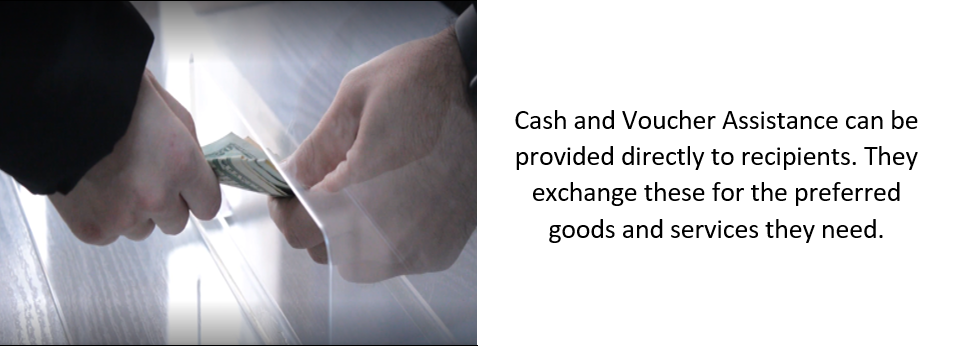
People affected by crisis or exclusion have various needs depending on their personal situation. Cash and Voucher Assistance has become a key delivery modality for addressing humanitarian needs as it supports people’s independence and dignity to decide on their own needs. The 121 Platform offers a suitable solution for Cash and Voucher Assistance with a Humanitarian Organisation Portal, Aid Worker App and Person Affected App. It aims to make cash-based aid easier, safer and faster so that people affected by disasters can meet their own needs. Dorcas conducted a pilot of the 121 Platform in Beirut, Lebanon, where host communities, refugees and migrants were supported with cash.
Lebanon is home to the highest concentration of refugees per capita in the world. Almost half of Lebanese citizens live below the poverty line and many urgently need humanitarian assistance. Lebanon has struggled with a history of war. Furthermore, the 2020 Beirut explosion had a significant impact on the country, which reverberates to this day. The economic and political situation is worsening and a growing number of Lebanese are becoming dependent on aid.
The pilot in Beirut
Dorcas Lebanon started the 121 Platform Pilot in December 2021 for a period of 3 months. A total of 485 project participants (members of the host community, refugees and migrants) disaggregated by gender, participated in the project.
Within the pilot, the following steps were taken:
1. Registration
A group of participants was selected and received a text message about the project. Also, a link was shared so that people could register their request for assistance directly in the Person Affected App via a smartphone. People could do this themselves at their own convenience but if they needed help, they could go to one of the community centres where Dorcas staff members were available to assist with registration.
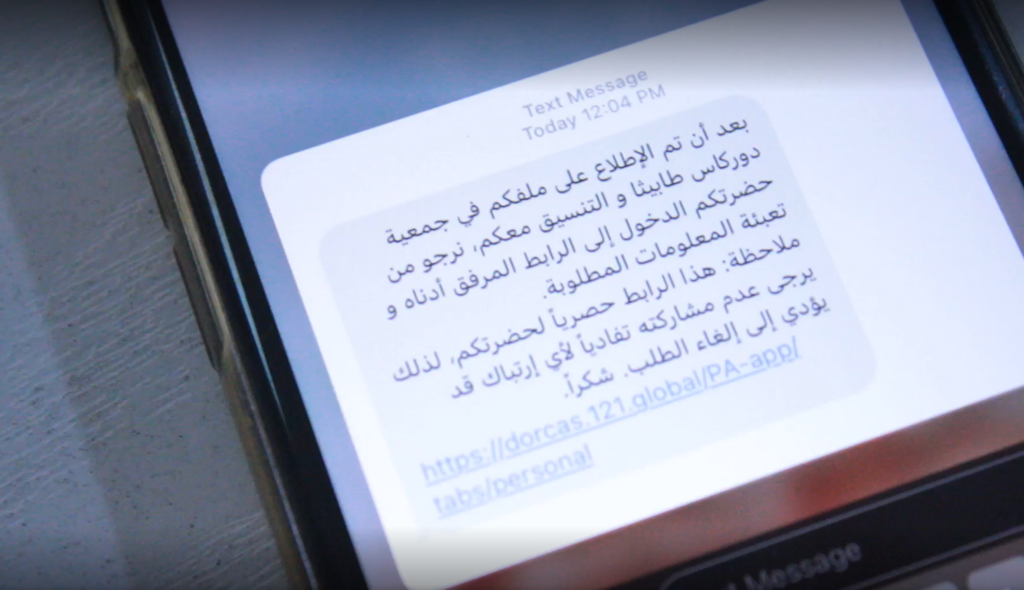
“I was worried that the registration process might be complex, but that was not the case. The questions were clear and specific. It was very easy and smooth to use!”
Male participant
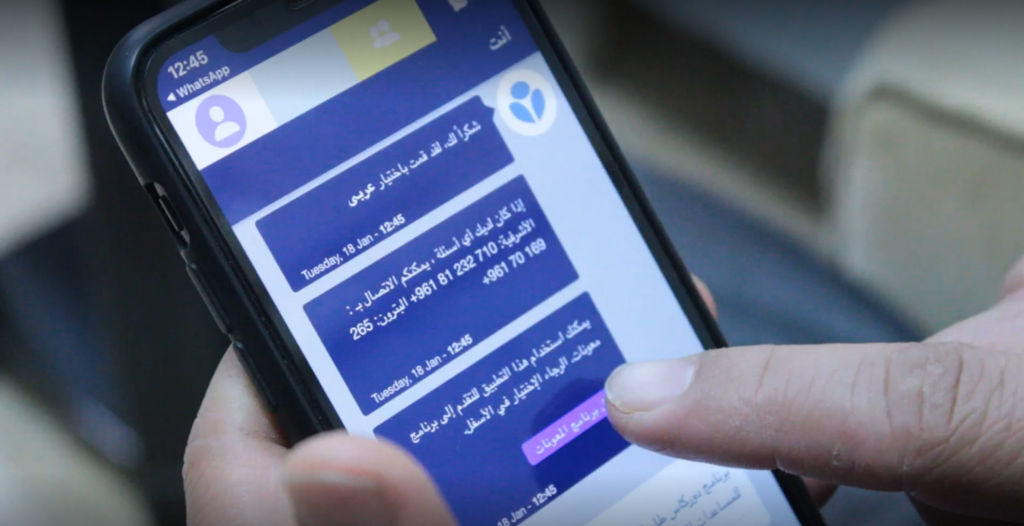
“When you register yourself, you are not ashamed of the situation. Some things are hard to share with someone.”
Anonymous participant
Findings:
- Persons affected viewed self-registration as a more dignified and transparent process than registering directly with aid workers.
- 93 percent of participants experienced no problems in registering.
- 7 percent of them experienced certain issues, such as inability to use the technology or difficulty in understanding the questions.
Lessons learned:
- Register persons affected directly with aid workers if they struggle with literacy and/or digital access.
- Consider other modalities of registration when persons affected are not (sufficiently) familiar with using smartphones.
- Provide flexibility for people with disabilities and older people to appoint a family member to register on their behalf.
- Limit the amount of text in blocks between certain questions in the Person Affected App. This may help to avoid the person affected thinking they have completed the registration when they have not.
- Test registration questionnaires with a diversity of people for language simplicity, comprehensibility and feasibility of self-registration.
2. Validation
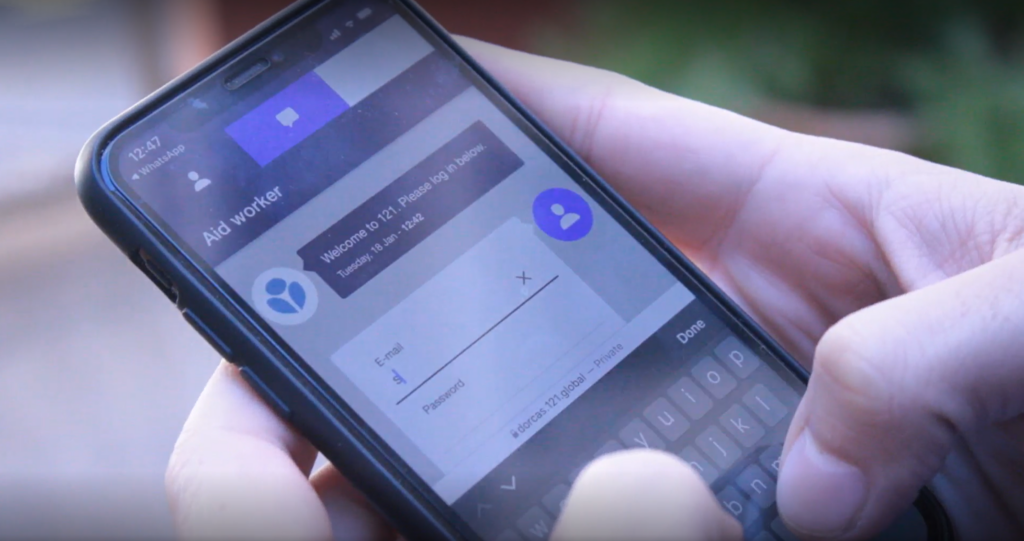
A total of 600 people registered. All registrations were reviewed and Dorcas Lebanon selected 485 project participants who were included in the project. A text message confirmed participation in the project towards the project participants. Other registered people received a text message informing them why they were not selected.
“With the Aid Worker App, validating has never been easier. When the registration was finalised, I immediately received a message with all of the applicant’s details. These can be viewed on a tablet or mobile phone and changes can be made when something is incorrect. And most importantly, the Aid Worker App works offline. Which makes it broadly usable in the field.”
Norma Nazarian (Social Worker and Case Manager at Dorcas Lebanon)
Findings:
- Using the Platform for selection and verification processes helped create confidence in the programme, supported a transparent selection process for the Cash and Voucher Assistance pilot and reduced conflict between community members about validation.
- Having an automated system of validation was perceived to remove potential personal bias.
- Verification and validation of registered persons affected by the Aid Worker App was especially appreciated.
- COVID-19 created new challenges on how to reach people affected and to provide inclusive, safe and quality Cash and Voucher Assistance without physical contact in communities. However, through the Person Affected App and self-registration, the 121 Platform enabled the remote registration of participants.
Lessons learned:
- Consider allowing two phone numbers to be linked to a registration.
3. Payment
The process of authorisation and payment of cash transfers can be handled and monitored online by designated responsible employees. The next step is to inform project participants regarding the payment via bulk messages. Relevant information, such as the amount of money they receive and where and when to collect this, is shared so that project participants can receive the cash.
Findings:
- Persons affected perceived cash distribution through financial services providers as easier, safer and faster than previous cash distribution by hand or through cash machines (ATMs).
Lessons learned:
- Coordinate with financial service providers to ensure the availability of cash in the right currency at all times at cash withdrawal points.
- Assist people with disabilities and older people with transportation to withdrawal points if this is needed.
Aid Worker App and HO-Portal
The solutions within the 121 Platform facilitated data gathering and communication between the project participants and Dorcas Lebanon. The use of the Aid Worker App and the HO-Portal is very easy and efficiently supports the work. It helped to store data securely and ensured the safety of all parties, especially considering the COVID-19 situation in Lebanon.
“Using the 121 Platform helped us to manage our cash project and provide cash support. When people register, their information is immediately included in the HO-Portal. From here you can send people notifications and make payments. Everything that is needed to provide the support is visible. The HO-Portal is fast, easy to use, safe and very reliable.”
Samer El Jamal (Project Officer at Dorcas Lebanon)
Overall experience
Given the generally positive experience in Dorcas Lebanon, we will investigate the possibility of further deploying the use of the 121 Platform within Dorcas in Lebanon and beyond. The 121 Platform is a suitable platform for managing Cash and Voucher Assistance programmes in the context of Lebanon. The simplicity of all stages in the process makes it an easy-to-use system. As contexts vary, we still need to ascertain whether 121 Platform is a suitable solution in new emergency relief settings. However, based on the experiences in Dorcas Lebanon, 121 Platform is definitely a suitable candidate for streamlining cash interventions.
“The 121 Platform is close to perfect. It is fast and the way it is connected to the Person Affected app is good. You cannot see all information, but you can see what you need. And it is user-friendly. Besides the advantages of the Person Affected App, Aid Worker App and HO-Portal, using the 121 Platform might also provide additional assurance to the donor that everything is well-tracked.”
Samer El Jamal (Project Officer at Dorcas Lebanon)
When working on cash programmes it can be an overabundance of information for aid workers with a lot of admin work and time spend on aligning with fellow team members. These programmes in addition tend to change often which can cause a challenge for keeping all documents updates. The Cash Program Design Wizard is a simple web-based tool that helps humanitarian organisations to design cash programmes in line with international standards and best practices and address challenges based on real experiences across multiple contexts. Its main purpose is to guide aid workers through a simple set of intuitive questions that results in a quality cash program. It does so by starting with the reality of the human context rather than the cash solution, reducing uncertainty on cash program parameters and it increases the speed to set up usage across locations and organisations.
The Design Process
25 Aid workers from the consortium partners of Dorcas, ZOA, Help a Child, Tearfund, Cordaid and 510 (Data & Digital initiative of The Netherlands Red Cross) have co-designed the Cash Program Design Wizard. The Cash Program Design Wizard was co-designed using Human Centered Design methodologies. Human Centered Design is a design and management framework that develops solutions to problems by involving the human perspective in all steps of identifying the problem and solution process which is applied in the co-design sessions.
In 2021 co-design sessions were held across Burundi, DRC, Ethiopia, Iraq, Lebanon, South Sudan, Syria and Yemen. In total 25 aid workers shared their experience with cash programming. In 2022 some of these co-designers user tested and improved the product linking it to real cash programmes. From 2018 until 2022 there were many other aid workers that co-designed the Cash Program Design Wizard sharing their learnings and needs as aid workers asked to set up cash programmes including people affected. These sessions included many disaster response types across the Caribbean, Ukraine, Malawi, Kenya, The Netherlands, Chad, Lesotho, Namibia and Nigeria. Together we looked at the tools, trainings and processes that aid workers found useful within their organisation and we clustered their challenges.
The needs and challenges of the aid worker
The Cash Program Design Wizard is created across 3 different aspects: desirability of the humans involved (including people affected), the feasibility of the technological and the viability within the humanitarian context. The needs and challenges of the aid worker expressed during the co-design sessions can be concluded into the following:
- “We would like to have guidelines, policies and tools, but not an information overload! A tool that is not telling you what to do… but facilitating on how to do it!” (desirability of the human)
- “We often are not reachable during office hours when in the field and have poor connectivity….but we need to make sure we are aligned with headquarters and the other members of the team across different working hours” (feasibility technological)
- “Things change so often when planning a cash program and often we have to change many documents to keep them up to date and realign with the other team members….” (viability humanitarian)
The benefits of the Cash Program Design Wizard
The learnings of the co-design sessions were incorporated into the Cash Program Wizard. The Cash Program Design Wizard provides the following benefits:
- Easier: It’s a total package tool and provides guidance through the program for both inexperienced and experienced aid workers to create quality cash programmes.
- Faster: It delivers an outcome report that is instantly useable.
- Faster: It saves admin time and enables alignment across a wider team.
- Easier: It has an online and offline function to ensure no loss of data.
The Cash Program Design Wizard helps aid workers in field offices, country offices and (inter)national headquarters, who want to set up cash programming for people affected within multiple contexts. The tool allows one main owner of the program design (often a Field Officer) to flow through the guiding questions, answering them and changing those answers as and when needed. The latest information automatically updates a standard report structure ensuring that there is one central point of truth on the program design at any given time. A comment section per question allows for other stakeholders in the country office or (inter)national headquarters to input on the latest design or simply stay up to date on the latest status.
The 121 Platform
The 121 platform consists of easy-to-use Cash-Based Aid products for people affected, and aid workers alike in response to the increasing global demand for cash and voucher-based aid in the humanitarian sector (such as the Self Registration App and Humanitarian Organisation Portal). To ensure its scalability the Cash Program Design Wizard has been created to function outside of the 121 Platform. If an organisation has designed the cash program with the Cash Program Design Wizard, they can also consider using the 121 platform. Through the 121 Platform they can ensure that people receive Cash and Voucher Assistance in an easy, safe and fast way. Read more about the 121 Platform here.
The consortium
The development of the Cash Program Design Wizard by the consortium (Dorcas, ZOA, Help a Child, Tearfund, Cordaid and 510) is made possible by funding of the Dutch Relief Alliance through the DRA Innovation Fund. The Dutch Relief Alliance Innovation Fund is a fund created by the Dutch Relief Alliance with financial support of the Dutch Ministry of Foreign Affairs. The Dutch Relief Alliance operates at a global level through an alliance of Dutch humanitarian organisations and in partnership with the Netherlands Ministry of Foreign Affairs since 2015. They work together with more than 100 local organisations.
The 121 Platform has been designed to help humanitarian INGOs and local NGOs to increase the quality and scale of Cash and Voucher Assistance. Through the 121 Platform they can ensure that people receive Cash and Voucher Assistance in an easy, safe and fast way. Local humanitarian actors are first to respond to emergencies, and they often have access to areas that other international actors do not. Localisation means increasing international investment and respect for the role of local actors, with the goal of reducing costs and increasing the reach of humanitarian action.
Maintaining quality whilst upscaling cash assistance is tackled through the 121 Platform, the Cash Program Design Wizard and providing Cash Information Management trainings. This case study will go into depth on the latter.
The Cash Information Management trainings build the capacity for organisations to be more effective when it comes to data for cash projects. The goals of the training series can be formulated as:
- Improve the quality of Cash and Voucher Assistance implementation
- Increase Cash Information Management preparedness of ground member’s staff
(HQ and field staff) - Stimulate knowledge exchange between organisations
The need for Cash Information Management trainings
Cash Information Management is not new, but Cash and Voucher Assistance is Information Management heavy. In Cash projects, significant amounts of personal information are gathered, stored, analysed and shared. Furthermore, there is more pressure from donors to do detailed Monitoring & Evaluation (such as reconciliation), for fraud and aid diversion detection.
Because Cash and Voucher Assistance projects are Information Management heavy, involved staff should be capable to deal with these significant amounts of data. However, this is not always the case and different staff have very different skill levels when it comes to Information Management. Therefore the training curriculum was designed: to bring all participants up to a base level of Information Management understanding.
The 121 Platform Information Management trainingThis training was conducted in 6 weekly sessions (of 2 hours) and was delivered online. The training methodology was a mix of presentations, group discussions, group and individual exercises, practical examples, and brainstorms. This allowed participants to engage with each other and facilitators in the online setting, as well as put the learned skills to practical use. For each session there were two facilitators, one with a cash background and one with an Information Management background to diversify the shared experiences.
The curriculum consisted out of the following sessions:
- Week 1: Cash Information Management introduction
- Week 2: Introduction to data (collection)
- Week 3: Basic Mobile data collection in the field
- Week 4: Data cleaning
- Week 5: Advanced Mobile data collection
- Week 6: Data analysis and visualisation
We have trained over 50 people from 17 different organisations. Organisational focal points as facilitators aimed at creating a sustainable communication mechanism between participants and their focal points for addressing any future training needs.
“Thank you for giving me the opportunity to learn and acquire the skills that will impact my organisation’s work for many years to come.”
(Munyimwa Tembo, Monitoring and Evaluation Office at Partners for Life Advancement and Education Promotion)
Main findings
On average, participants gave our training a Net Promoter Score (NPS) of 8.5 (on the question of: How likely is it that you would recommend this training to your colleagues?). People in general were quite happy with the training provided. The learnings from delivering the training were that there is indeed a large need for capacity building around Cash Information Management.
The training series was designed by 510 and facilitated by Dorcas, Tearfund, ZOA and 510. The 510 Cash Information Management team will use the material to train other National Societies on Cash Information Management. In addition, all training materials will be made easily accessible on the Cash Hub. All consortium partners can provide Cash Information Management Training on request.
All learning materials are currently available through our Google Drive
Want to know more on the 121 platform? Visit www.121.global for more information or to sign in for information on all developments. You can also contact Anton van Wijk (Humanitarian Aid Expert at Dorcas) via a.vanwijk@dorcas.nl.
The consortium
The scaling up of the 121 platform by the consortium (Dorcas, ZOA, Help a Child, Tearfund, Cordaid and 510) is made possible by funding of the Dutch Relief Alliance through the DRA Innovation Fund. The Dutch Relief Alliance Innovation Fund is a fund created by the Dutch Relief Alliance with financial support of the Dutch Ministry of Foreign Affairs. The Dutch Relief Alliance operates at a global level through an alliance of Dutch humanitarian organisations and in partnership with the Netherlands Ministry of Foreign Affairs since 2015. They work together with more than 100 local organisations.
The complexity of disaster response projects makes it hard for developers to understand how to develop effective digital tools that meet the needs of the users. Human Centered Design is a design and management framework that develops solutions to problems by involving the human perspective in all steps of the problem-solving process. It aims to help people get a better understanding of the problems they face and the solutions they develop.
Using science based and data driven methods and products to help improve humanitarian aid is very important. Ensuring people trust and use them with ease is just as important. ‘When we started with 510 we began with a data-driven approach, as we have evolved, we were able to introduce Human Centered Design into the digital creation process,’ says Orla Canavan, Strategic Product Design Lead at 510.
Human Centered Design has played a key role in developing the 121 platform to where it stands now. The 121 Platform has been designed to help humanitarian INGOs and local NGOs to increase the quality and scale of humanitarian cash programming. Through the 121 Platform they can ensure that people receive Cash and Voucher Assistance in an easy, safe and fast way.
Read and download case study on Building Cash Products Through Human Centered Design:
The scaling up of the 121 platform by the consortium (Dorcas, ZOA, Help a Child, Tearfund, Cordaid and 510) is made possible by funding of the Dutch Relief Alliance through the DRA Innovation Fund. This Innovation Fund is a fund created by the Dutch Relief Alliance with financial support of the Dutch Ministry of Foreign Affairs. The Dutch Relief Alliance operates at a global level through an alliance of Dutch humanitarian organisations and in partnership with the Netherlands Ministry of Foreign Affairs since 2015. They work together with more than 100 local organisations.