‘We train young people for the jobs that actually exist’
An interview with Lenard Hofland about Dorcas’s vocational training programme in Ethiopia.
Youth unemployment in Ethiopia is high. Despite economic growth, many young people are unable to find work or establish a stable livelihood. Through its vocational training programmes, Dorcas aims to equip young people with technical and social skills. We spoke to Lenard Hofland, Programme Adviser at Dorcas, about this.
‘The situation is concerning: many young people simply cannot find employment. We want them to be able to participate in the economy, find work, and flourish along with the development of the country. To improve their prospects, Dorcas offers vocational training programmes. As well as learning technical skills, young people develop social skills such as communicating with customers, working with colleagues, and cultivating a strong work ethic. Combined, those skills greatly increase their chances of finding employment.’

‘Dorcas has been involved in vocational education in Ethiopia for over twenty years. We have a strong track record: 89 per cent of our graduates have found employment. We understand the market well and have strong relationships with businesses. This experience enables us to respond precisely to the needs of young people and employers.
We recently opened a new vocational training centre on a different location, because the training site we previously used was located on government-owned land which has since been repurposed.’
What does vocational training entail?
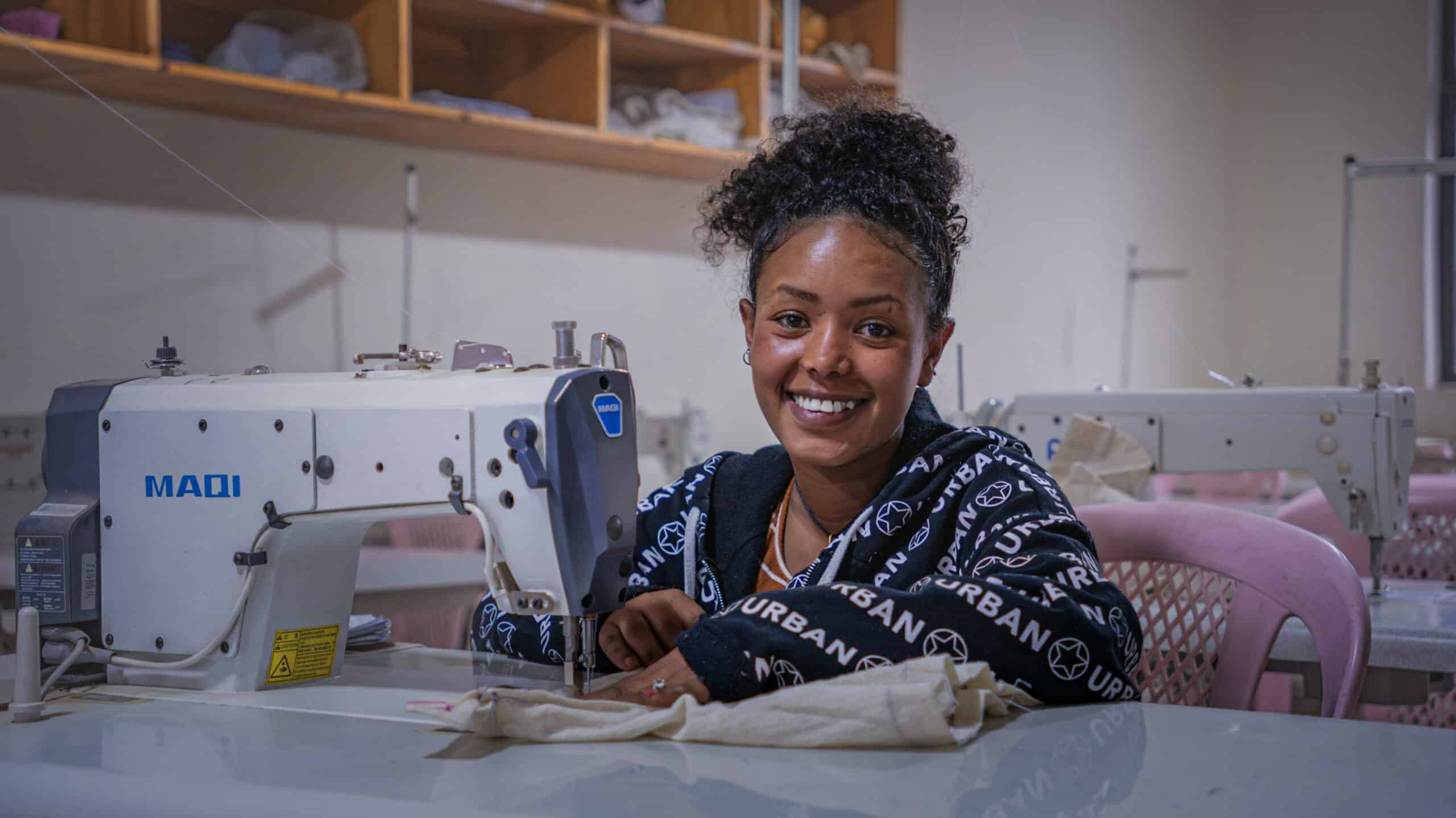
‘We focus on traditional skills in textiles, metalwork and carpentry. In coming years, we plan to expand to include training for electricians and those in the hospitality sector. What makes our approach distinctive is that we offer short courses. Young people in vulnerable situations cannot afford to study for years – they need to be able to earn an income relatively quickly.
In addition, we align closely with market demand. To tackle youth unemployment, particularly in urban areas and especially among young women, we train young people in the exact skills that employers require. We maintain regular and structured dialogue with the sector to find out which products are in demand. Which technical skills are essential? We discuss this with companies that may later employ our students.
Our vocational training has two major advantages: young people have a better chance of finding employment, and businesses gain well-trained employees. We combine technical training with the social skills required in the workplace. You will learn not only how to make a well-crafted chair, but also how to answer the telephone and assist customers professionally.
Over time, the programme also recovers part of its own costs. Young people make products in the training classrooms that are then sold. This gives them practical work experience while contributing to the programme’s sustained viability.’
What has made the programme so successful?
‘It is a combination of understanding the local context, our many years of experience in this sector in Addis Ababa, and our new focus on financial sustainability.’ The programme generates part of its own income, which makes it future-proof.
Many young people travel to the capital every day in search of work, but there simply aren’t enough jobs for everyone. Some graduates find employment with companies, while others start their own businesses. That is why we also focus on the skills needed for self-employment.
Entrepreneurship training is part of the vocational programme. We are exploring the possibility of offering this as a standalone course, by bundling the lessons into a compact, one-week training programme. The same trainers who teach on the vocational programme could deliver this short course, enabling us to support even more young people.’
Why did Dorcas choose to offer short training programmes?
‘Vocational education does exist in Ethiopia, but it is often expensive and usually takes four years to complete. That is far too long for young people without an income. Our six-month programme equips participants with all the necessary skills. This allows us to reach more students and facilitate their transition into employment more quickly. We maintain close links with the workplace and focus primarily on the manufacturing sector, where there is strong demand for products.’

30 April 2026
Are you inspired?
Read the next story or contact us to get to know more about making an impact together.